This site is supported by our readers. We may earn a commission, at no cost to you, if you purchase through links. This content is for general informational and educational purposes only and is not a substitute for professional medical, dermatological, or nutritional advice.
You meant to dye your hair, not your forehead—yet here you are, staring at a brownish-purple streak creeping down your hairline. It happens to everyone, even people who’ve been coloring their hair for years.
Hair dye clings to skin because its alkaline formula actually softens your skin’s surface, letting pigment lock into the outer keratin layers before you’ve even finished rinsing. That’s why scrubbing with plain soap feels like it’s doing absolutely nothing. The good news: the same chemistry that makes dye stubborn also makes it predictable, and knowing how to remove hair dye from skin turns a frustrating problem into a five‑minute fix.
Table Of Contents
- Key Takeaways
- Why Does Hair Dye Stain Skin?
- Quick Methods to Remove Hair Dye From Skin
- Natural and Gentle Hair Dye Removal Options
- Stronger Hair Dye Stain Removal Methods
- Removing Hair Dye From Sensitive Facial Skin
- How to Remove Hair Dye From Hands and Nails
- Tips to Prevent Hair Dye Stains on Skin
- Frequently Asked Questions (FAQs)
- Can I dye my hair if I have telogen effluvium?
- What quickly removes hair dye from skin?
- What is the best hair color remover for skin?
- Does vaseline remove hair dye from skin?
- Does hand sanitizer remove hair dye from skin?
- How do you remove hair dye from skin?
- Can hair dye damage split ends?
- Can you remove hair dye at home?
- What if I get hair dye on my Skin?
- How do I prevent hair dye from staining my Skin?
- Conclusion
Key Takeaways
- Hair dye stains skin because its alkaline formula softens the surface and lets pigment bond to your skin’s keratin proteins almost instantly, which is why plain soap rarely works on its own.
- Speed is everything—fresh stains lift easily with soap and warm water, baby oil, or petroleum jelly, but waiting even a few minutes gives the dye time to dig in deeper.
- For stubborn stains, rubbing alcohol, baking soda mixed with dish soap, or toothpaste all break the dye’s bond effectively, though you should always moisturize afterwards to protect your skin.
- thin layer of petroleum jelly or barrier cream along your hairline before you dye is the easiest way to stop stains from forming in the first place.
Why Does Hair Dye Stain Skin?
Ever wonder why hair dye seems to grab onto your skin so stubbornly? It’s not just bad luck — there’s real chemistry behind it.
The pigments in dye bond with your skin’s proteins almost instantly, which is why knowing how to get black hair dye off skin makes the whole process a lot less stressful.
Here’s what’s actually happening and why some spots are harder to clean than others.
How Hair Dye Binds to Skin
just sit on top of your skin — it actually works its way in.
The moment dye touches your skin, oxidative precursors penetrate the stratum corneum through tiny lipid channels, bonding with keratin proteins in those outer layers.
The alkaline formula raises your skin’s pH, softening the surface and letting pigment settle in deeper. That’s what makes simple soap-and-water dye removal techniques feel frustratingly useless.
Common Areas Prone to Staining
Knowing stains tend to land makes cleanup faster.
The hairline forehead area is the usual culprit, followed by the ear helix and the skin just behind it.
Your neck nape catches drips from rinsing, while hand cuticles soak up color during mixing.
If you’re dyeing a beard, expect the sideburn beardline and jawline edges to show it too.
using a protective barrier can reduce skin staining.
Factors Affecting Stain Severity
Not all stains are created equal. Several factors decide whether you’re dealing with a quick wipe-off or a three-day scrubbing project:
- Dye type — permanent dye penetrates deeper than semipermanent dye
- Contact time — longer exposure means stronger binding
- Skin condition — dry or rough skin absorbs more pigment
- Barrier effectiveness — unprotected skin stains harder
- Application technique — heavy pooling worsens skin irritation and staining
A patch test can reveal allergic reactions to PPD.
Quick Methods to Remove Hair Dye From Skin
Good news: you don’t need a special trip to the store to fix a dye mishap.
Most of the time, something you already have on hand will do the job in just a couple of minutes. Here are the quickest ways to get that stain off your skin before it sets.
Soap and Warm Water Technique

Your first move should always be soap and warm water — it’s the simplest of all DIY methods and genuinely works if you catch the stain early. Wet a soft cloth with warm water, add a gentle soap, then use circular massage motions for 30 to 60 seconds.
Rinse thoroughly and repeat twice if needed. Warm water benefits skin by softening the surface, making gentle cleansing far more effective.
For best results, pair this rinsing routine with tips from how to fix patchy hair dye to keep your color looking even and salon-fresh.
Using Makeup Remover Wipes

Reaching for makeup remover wipes is one of the smartest DIY beauty solutions you can try right after rinsing your color. Dermatologist-recommended micellar lift technology pulls pigment off your hairline and neck without harsh scrubbing.
Choose fragrance-free formulas or oil-based pads if your skin is sensitive.
Always do a post-wipe rinse with lukewarm water to clear any leftover surfactants.
Rapid 2-Minute Solutions
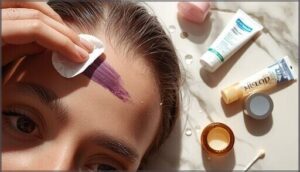
Two minutes is genuinely all you need if you move fast. Keep these five hair dye removal methods within arm’s reach before you even open the box:
- Dab hand sanitizer on a cotton pad and rub gently for 30 seconds.
- Press a micellar water‑soaked pad along your hairline.
- Scrub toothpaste in small circles, then rinse with a cold water rinse.
- Dissolve fresh pigment using baby oil or petroleum jelly.
- Use an alcohol swab on hands only — never near eyes.
Natural and Gentle Hair Dye Removal Options

Sometimes the gentlest fix is already sitting in your kitchen or bathroom cabinet. If you’d rather skip the harsh chemicals, a few natural options work surprisingly well on fresh and even day-old stains. Here’s what you can reach for.
Olive Oil or Coconut Oil Application
Your kitchen cabinet holds one of the best hair dye removal methods around. Both olive oil and coconut oil lift pigment by dissolving the dye’s oily bonds — no harsh chemicals needed.
| Factor | Olive Oil | Coconut Oil |
|---|---|---|
| Skin Type Suitability | Dry or sensitive skin | Most skin types |
| Leave‑On Duration | 10–15 minutes minimum | 10–15 minutes minimum |
Apply using a gentle massage technique with a cotton pad, let it soak, then rinse. Always patch test first, and finish with post‑removal moisturizing to keep skin calm.
Baking Soda and Dish Soap Paste
Baking soda and dish soap together punch above their weight for Hair Dye Removal Methods. Mix one tablespoon of each into a paste — the baking soda’s Abrasive Strength lifts pigment while dish soap’s surfactants cut through oily residue.
Mind your Skin Sensitivity and pH Balance: let it sit 5–10 minutes, then rinse with lukewarm water. Moisturize after.
Toothpaste for Mild Abrasion
Your toothpaste does double duty as a hair dye stain removal method. A plain white, non-gel formula works best — its abrasive ingredients like silica gently lift pigment without wrecking your skin. Whitening vs regular matters here: whitening versions tackle darker stains faster.
For application technique, rub a pea-sized amount in small circles for 20–30 seconds, then rinse. Mind your skin sensitivity — skip this on irritated spots.
Stronger Hair Dye Stain Removal Methods
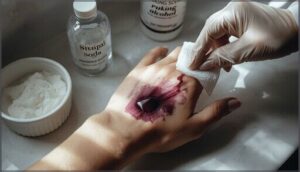
Sometimes the gentle stuff just doesn’t cut it, and that’s okay. When a stain is really dug in, you’ll need to bring out something stronger.
Here are a few more powerful options worth trying.
Nail Polish Remover or Rubbing Alcohol
When gentler options just aren’t cutting it, rubbing alcohol and nail polish remover are your heavy hitters. Both work through solvent strength — breaking the dye’s bond with your skin fast. Before applying, always do a patch test procedure on a small area.
Key things to keep in mind:
- Use 70% isopropyl for hair dye removal with less skin dryness risk
- Acetone vs isopropyl: acetone works faster but irritates more
- Apply nail polish remover with a cotton swab for precision
- Follow up with moisturizer for skin protection
- Eye safety precautions are non‑negotiable — keep both away from eyes
Commercial Hair Dye Removers
If rubbing alcohol still leaves a shadow, a professional hair dye stain remover is worth keeping in your kit. These products combine solvent ingredients and surfactant action to lift color without aggressive scrubbing.
They come in various packaging formats — wipes, pumps, liquids. Always do a patch test safety check first, since even gentle formulas can surprise reactive skin.
When to Seek Professional Help
Sometimes, stain removal isn’t the real problem. If you notice any of these after dyeing, skip the home remedies and get medical help:
- Swelling of the lips, tongue, or throat — classic systemic allergy symptoms that signal a serious allergic reaction
- Open sores, raw patches, or ongoing burning — chemical burn indicators that won’t respond to cleansers
- Persistent scalp irritation, patchy hair loss, or vision or eye involvement after dye contact
These go beyond cosmetic removal procedures.
Removing Hair Dye From Sensitive Facial Skin

Your face needs a gentler touch than the rest of your body — the skin’s thinner, more reactive, and a lot less forgiving.
Getting hair dye near your hairline or forehead is frustrating, but the good news is you don’t need anything harsh to fix it. Here’s how to handle it safely without irritating your skin.
Safe Practices for Face and Hairline
Because facial skin is more delicate than the rest of your body, your approach to hair dye removal here needs to be gentler. Apply a petroleum jelly barrier along the hairline before you start.
Use circular pad motion with an oil-based cleanser to lift stains. Always do a patch test protocol first, then follow up with a fragrance‑free moisturizer. A cool damp compress soothes any redness.
Avoiding Harsh Chemicals Near Eyes
The eye area is where you really want to play it safe.
Skip rubbing alcohol, nail polish remover, and anything without Eye-Safe Ingredients listed — the skin is paper-thin. Stick to petroleum jelly, baby oil, or olive oil for dye removal near the brows.
Choose Ammonia-Free Formulas and Low-PPD Alternatives next time, and use Gentle Application Techniques with a cotton swab for control.
Aftercare to Soothe Irritated Skin
Once the dye is off, your skin needs a little TLC.
Hold a cool compress — a damp washcloth works perfectly — against the area for 5–10 minutes to calm redness fast.
Then follow up with:
- A gentle cleanser and fragrance‑free soothing moisturizer
- An oatmeal mask for 10–20 minutes to ease tightness
- SPF protection daily while skin heals
Skip harsh actives until things settle.
How to Remove Hair Dye From Hands and Nails
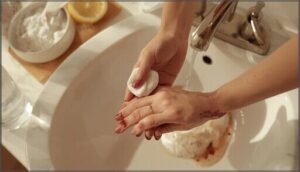
Hands and nails take the brunt of any at-home dye job, and those stains can be stubborn.
The good news is you don’t need anything fancy to get your skin looking clean again.
Here are a few simple methods that actually work.
Dish Soap and Baking Soda Scrub
Mix equal parts baking soda and dish soap into a toothpaste-like texture — that’s your texture consistency nailed.
This classic hair dye removal combo works because baking soda physically lifts pigment while dish soap breaks down the dye’s oily base.
Massage the paste onto stained skin for one to two minutes, rinse with warm water, and follow with moisturizer as post-scrub care.
Liquid Laundry Detergent Use
Reaching for your laundry detergent isn’t as unconventional as it sounds.
Its surfactant action — those molecules that grab onto dye and rinse it away — makes it genuinely effective for hand stain removal.
Stick with a fragrance‑free choice to lower your skin sensitivity risk, dilute it well (enzyme considerations matter on chapped skin), and scrub gently for 20 to 30 seconds before rinsing.
Preventing Future Hand Stains
Prevention beats cleanup every single time. Lock these five habits into your next hair coloring session:
- Nitrile Glove Choice — nitrile outperforms vinyl and latex, blocking pigments through the whole process.
- Pre‑Dye Hand Wash — clean, dry hands help gloves seal properly at the fingertips.
- Barrier Cream Layering — apply petroleum jelly to nails and cuticles before starting.
- Tool Hand Application — use a tint brush to keep dye off your palms.
- Quick Spot Wipe — keep damp wipes nearby and blot splashes immediately before they set.
Tips to Prevent Hair Dye Stains on Skin

Removing dye from your skin is one thing, but stopping it from staining in the first place is so much easier. A little prep before you open that box goes a long way toward keeping your skin clean throughout the process.
Here’s what to do before, during, and right after dyeing to stay ahead of the mess.
Pre-Dye Barrier Creams and Oils
Think of a barrier cream as a force field between your skin and the dye. Applied before you start, it creates an occlusive film that keeps pigment from bonding at all. Petroleum jelly (Vaseline) is the reference, but baby oil and olive oil work just as well depending on your skin type.
A barrier cream acts as a force field, blocking dye from bonding to your skin before it ever gets the chance
| Barrier Option | Skin Type Compatibility | Application Technique Tips |
|---|---|---|
| Petroleum jelly | All skin types | Fingertip or cotton swab along hairline |
| Baby oil | Dry or sensitive | Light layer on ears and nape |
| Olive oil | Sensitive, fragrance-free needs | Thin coat; keep off hair roots |
| Thick moisturizer | Normal to dry | Press gently into hairline curves |
Protective Gloves and Tools
The right gear makes all the difference — and nitrile gloves top the list for good reason. Their textured grip design keeps bowls and bottles steady, while long‑cuff protection shields your wrists from runoff. Here’s what to have ready:
- Nitrile gloves for chemical resistance and latex‑free safety
- Ear shields to guard sensitive folds from pigment
- A tint brush and bowl for precise, mess‑free application
- Tail combs to lift sections without dragging dye onto skin
- Dedicated, organized color tools kept clean between sessions
Immediate Stain Cleanup Steps
Even with gloves on, drips happen. The moment you spot a fresh stain, act within that first minute or two — the dye hasn’t fully bonded yet.
Use Cotton Swab Dabbing with a touch of dish soap, then work in a Gentle Circular Motion. Follow with a Warm Water Rinse, and finish with Barrier Moisturizer Application to calm your skin.
Frequently Asked Questions (FAQs)
Can I dye my hair if I have telogen effluvium?
Yes, but with care.
If your scalp is healthy and irritation-free, gentle formulas are generally safe.
Timing considerations matter — avoid dyeing during peak shedding or active inflammation, and always prioritize professional consultation first.
What quickly removes hair dye from skin?
Soap and warm water work fastest on fresh stains.
For stubborn spots, rubbing alcohol, makeup remover, baby oil, petroleum jelly, baking soda paste, toothpaste paste, or apple cider vinegar all lift color quickly.
What is the best hair color remover for skin?
Framar Kolor Killer wipes top the list for application speed and user safety — no rinsing needed.
For cost effectiveness, baking soda and dish soap paste delivers solid results using ingredients you already own.
Does vaseline remove hair dye from skin?
Vaseline works surprisingly well as a petroleum jelly dye remover — massage it in circular motions, let it sit 15–20 minutes, then wipe clean.
Fresh stains respond best; older marks need repeat applications.
Does hand sanitizer remove hair dye from skin?
Hand sanitizer works as a hair dye stain removal option because its alcohol solvent power breaks down dye pigments quickly.
It’s best on fresh stains, but watch for skin sensitivity risks.
How do you remove hair dye from skin?
Act fast, and the stain barely stands a chance. Warm soapy water, olive oil, or petroleum jelly are your first line of defense — gentle, effective, and kind to your skin barrier.
Can hair dye damage split ends?
Yes, hair dye can worsen split ends.
Ammonia Dryness and Peroxide Brittleness break down keratin, while Split End Absorption pulls in extra chemicals. Cuticle Weakening spreads damage fast.
Protective Protein Treatments help seal and minimize harm.
Can you remove hair dye at home?
Absolutely. Most hair dye stain removal happens right at home using budget-friendly solutions you already own — think petroleum jelly, baking soda, or kitchen ingredient hacks like olive oil.
Just mind your DIY stain timing and safety precautions.
What if I get hair dye on my Skin?
Don’t panic — it happens to everyone. Fresh stains lift easily with soap and water.
Dry skin absorbs dye faster, so act quickly. Most marks fade naturally within one to three days.
How do I prevent hair dye from staining my Skin?
ounce of prevention is worth a pound of cure.
barrier cream or petroleum jelly along your hairline, wear nitrile gloves, and wipe spills instantly to stop stains before they start.
Conclusion
A little dye on your skin isn’t a battle scar—it’s just part of the process. Now that you know how to remove hair dye from skin using everything from olive oil to rubbing alcohol, you’re never stuck waiting for stains to fade on their own.
Match the method to your skin type, act quickly when it’s fresh, and keep a barrier cream handy next time. Your skin bounces back faster than you’d think.