
This site is supported by our readers. We may earn a commission, at no cost to you, if you purchase through links.

Your body’s growth isn’t just about waiting for genetics to do their thing. Between the ages of 10 and 20, your height can increase by up to 10 inches—but only if you create the right conditions. The difference between reaching your full potential and falling short often comes down to three controllable factors: what you eat, how you move, and when you sleep.
Most people miss their window because they don’t realize that growth isn’t passive. Your bones respond to resistance training, your cells rebuild during deep sleep cycles, and your hormones surge when you fuel them correctly.
The science is clear: you can actively influence your growth trajectory through strategic daily choices.
Table Of Contents
- Key Takeaways
- Nutrition Essentials for Stimulating Growth
- Exercise and Physical Activity for Growth
- Maximizing Growth Through Quality Sleep
- The Role of Hormones in Growth
- Genetics and Environmental Growth Factors
- Posture, Clothing, and Confidence
- Safe Supplementation for Growth Support
- Potential Risks and Considerations in Growth Stimulation
- Frequently Asked Questions (FAQs)
- Conclusion
Key Takeaways
- Your height potential during ages 10-20 hinges on three controllable levers: strategic nutrition (protein, calcium, vitamin D, zinc), resistance training combined with high-intensity aerobic activity, and 8-10 hours of deep sleep nightly when 60-70% of growth hormone floods your system.
- Genetics set your ceiling at 60-80% of final height, but the remaining 20-40% responds directly to environmental factors—proper hydration, consistent exercise, quality sleep, and avoiding growth inhibitors like nicotine, corticosteroids, and chronic stress.
- Growth plates fuse permanently around ages 14-17, creating a non-negotiable deadline where bone lengthening stops completely, making adolescent years the critical window for maximizing natural height through lifestyle optimization.
- Synthetic HGH treatments carry serious risks including fluid retention, joint pain, elevated cancer risk, and stroke potential—medical intervention should only happen under specialist oversight for diagnosed growth hormone deficiency, not as a shortcut for healthy individuals.
Nutrition Essentials for Stimulating Growth
Your body is like a construction site—it needs the right materials to build strong bones and muscles. What you eat directly fuels your growth potential, especially during your teen years when your body is in overdrive.
Let’s break down the key nutritional building blocks that’ll help you optimize your natural growth.
Balanced Diet and Hydration
Your body craves nutrient balance to realize its full growth potential. A balanced diet packed with whole grains, fruits, vegetables, and healthy fats creates the foundation.
But here’s what most people miss: proper nutrition means nothing without healthy hydration. Water intake drives nutrient absorption and keeps your cells firing.
Aim for a nutrient-rich diet with plenty of dietary fiber, and drink about half an ounce per pound of body weight daily.
Protein Sources for Muscle and Bone Growth
Protein intake powers both muscle building and bone density. You’ll want 1.6–2.2 grams per kilogram of body weight daily for ideal muscle growth.
Chicken breast delivers 31 grams per 100-gram serving, while Greek yogurt packs 15–20 grams. Plant sources like tofu and lentils work too—studies show soy protein matches milk protein for strength gains.
Nutrient timing matters: spread 20–40 grams across three to four meals for maximum amino acid absorption.
Calcium, Vitamin D, and Zinc Intake
Three minerals anchor your growth potential. Adolescents need 1,300 mg of calcium daily—think four servings of dairy or fortified foods to fuel bone mass during peak growth years.
Pair that with 600 IU of vitamin D to boost calcium absorption and height velocity by 0.15 cm per year for every 10 nmol/L increase.
Add 10 mg of zinc daily to prevent stunting, especially if you’re avoiding animal proteins.
Why Hydration Matters?
Water powers every cell in your growing body. Missing your daily 64–88 ounces during adolescence cuts growth hormone release by a third and slows protein synthesis in muscle cells. Here’s how fluid balance fuels development:
- Cellular hydration drives protein creation in muscles
- Mineralized drinks deliver calcium and magnesium for bones
- Water intake preserves performance and training volume
- Fluid balance maintains hormone pulses during deep sleep
Exercise and Physical Activity for Growth
Moving your body isn’t just about burning calories—it’s one of the most powerful ways to tap into your growth potential, especially during your teen years. The right mix of activities can strengthen your bones, build muscle, and even support healthy hormone production.
Here’s what you need to focus on to make exercise work for your growth goals.
Resistance Training and Muscle Development

Building muscle isn’t rocket science—it’s about showing up and putting in the work. Resistance exercises drive muscle hypertrophy when you exercise regularly with proper training volume. Aim for at least two sets per muscle group, twice weekly, to spark muscle growth. Higher volumes deliver bigger gains when your muscle recovery allows it.
Pair your workout routine with solid nutrition advice and consistent hormone regulation through smart fitness routine choices. Understanding the effects of resistance training is essential for maximizing muscle growth.
Sports and Aerobic Activities

Jump into endurance sports like basketball, running, or track to tap into aerobic exercise benefits that go beyond cardio. Sports nutrition fuels athletic performance while fitness training at higher intensities triggers growth hormone surges during and after workouts.
Exercise regularly above your lactate threshold to double HGH secretion over weeks. The role of exercise in hormone regulation makes your fitness routine a growth accelerator.
Engaging in high impact bone health activities can have long-term benefits on overall physical well-being.
Daily Activity Recommendations

Most days, you’ll want to hit at least 8,000 steps—research shows that’s where mortality risk drops by half compared to 4,000. Beyond step targets, aim for 150–300 minutes of moderate exercise weekly while keeping sedentary time under eight hours.
Even light daily movement matters for growth monitoring, especially when you pair consistent physical activity with solid sleep, nutrition, and posture habits.
Maximizing Growth Through Quality Sleep

Sleep is one of the most underrated growth tools you have at your disposal. While you’re catching those Z’s, your body is actually working overtime to repair tissues, build muscle, and release the hormones that drive growth.
Let’s break down how to turn your bedroom into a growth powerhouse.
Importance of Deep Sleep for HGH Production
Your body turns sleep into a growth engine. During deep sleep stages, you access the most powerful HGH production window—about 60% to 70% of your daily growth hormone floods your system in those first few hours after you drift off.
Sleep transforms into your growth engine, releasing 60-70% of daily growth hormone during the first few hours of deep sleep
This sleep-driven hormone surge drives muscle development, bone strength, and tissue repair. Without quality deep sleep, you’re basically hitting pause on your body’s natural growth stimulation process.
Sleep Duration by Age
Your sleep needs shift dramatically as you move through growth stages. Adolescents aged 13–17 need 8–10 hours nightly to support hormone regulation and development, while school-age kids require 9–12 hours. Toddlers thrive on 11–14 hours of total sleep, including naps.
These sleeping hours aren’t arbitrary—they’re tied directly to your body’s developmental phases and how growth hormones work during different age groups.
Tips for Better Sleep Hygiene
Your sleep environment shapes everything. Keep your bedroom around 65°F, dim the lights below 10 lux, and silence disruptive noise.
Establish consistent sleep schedules—wake at the same time daily, even weekends. Try relaxation techniques like deep breathing before bed.
Ditch screens 60+ minutes before sleep; blue light crushes melatonin production. These bedtime routines directly improve sleep quality, sleep patterns, and sleep and recovery for maximum growth.
The Role of Hormones in Growth

Your body runs on a complex system of chemical messengers, and in the context of growth, human growth hormone (HGH) is the star player.
Understanding how this hormone works and what influences its production can help you make smarter choices about your health.
Let’s break down what you need to know about HGH and how to work with your body’s natural processes.
How HGH Affects Height and Development
Your body releases human growth hormone in pulses during deep sleep, driving chondrocyte proliferation in your growth plates—the zones where bone lengthens. This hormone regulation directly determines your height potential until puberty stages trigger epiphyseal fusion.
HGH also builds lean tissue, strengthens bone density, and aids cellular growth across nearly every organ.
Growth hormone deficiency can limit stature, but treatment before fusion may add several centimeters to final height.
Factors Influencing HGH Levels
Your hormone regulation doesn’t operate in a vacuum. Age plays the biggest role—HGH secretion drops roughly 15% per decade after 30, reducing pulse amplitude as slow-wave sleep patterns fragment. Declining testosterone and estrogen independently lower output.
Extra body fat suppresses release through elevated free fatty acids.
Poor sleep patterns, physical inactivity, and chronic stress each disrupt your physiological rhythms, throttling the growth cycles that drive metabolism and tissue repair.
Natural Ways to Boost HGH
You can reverse those downward growth patterns through strategic lifestyle shifts. Intermittent fasting for 24–72 hours can double or triple your human growth hormone levels—longer fasts push increases past 1,000%. High-intensity workouts at 70% max heart rate spike HGH within minutes.
Prioritize deep sleep, cut refined sugar to prevent insulin blunting, and consider arginine supplementation to boost natural hormone regulation and metabolism.
Genetics and Environmental Growth Factors

Your height potential isn’t entirely in your hands—genetics write the first draft of your growth story, accounting for 60-80% of how tall you’ll ultimately become. But here’s the good news: the remaining 20-40% is yours to shape through lifestyle choices and environmental factors.
Let’s break down what you can control, what you can’t, and how to avoid the pitfalls that could hold you back.
Genetic Limits on Height
Your natural height is largely locked in by genetics—research shows 60–80% of your adult stature comes from inherited factors. Think of it as a ceiling set by your DNA, influenced by hundreds of polygenic variants working together. Once your growth plates undergo epiphyseal fusion (usually ages 14–17 for boys, 12–15 for girls), height increases stop completely.
- Twin studies reveal heritability factors reach 0.70–0.83 during adolescence
- Mid-parental height predicts your target range within roughly ±8.5 cm
- Genetic height potential expresses fully only before growth plates close
Impact of Environmental Influences
Beyond your DNA blueprint, the world around you shapes your height potential every single day. Early nutrition and development, sanitation quality, and socioeconomic factors together account for up to 40% of childhood growth variance.
Climate change patterns—temperature swings and rainfall—now predict height-for-age scores globally. Urban planning matters too: environmental toxins and polluted air disrupt hormone regulation and growth.
Geographic variations in living conditions create measurable differences in adult stature, even within the same genetic background. Your environment either unlocks or limits your genetic ceiling.
Avoiding Growth-Inhibiting Substances
When you’re building your growth foundation, eliminating the wrong exposures matters as much as adding the right ones. Toxic exposure from nicotine effects—even secondhand smoke—can shave nearly 3 cm off your height.
Corticosteroid use for chronic conditions may slow growth velocity, while endocrine disruptors like BPA quietly undermine hormone regulation and growth.
Substance abuse during development? That’s a non-negotiable red line.
Posture, Clothing, and Confidence

You don’t need to wait years to look taller—simple changes in how you stand and dress can make an immediate difference.
Your posture and clothing choices send powerful signals about confidence and presence, affecting how others see you and how you see yourself.
Let’s explore practical ways to boost your height appearance starting today.
How Posture Affects Perceived Height
Think of your spine as a flexible tower—when it’s stacked vertically, you capture every inch of your natural height. Standing tall with ears over shoulders and shoulders over hips can instantly reclaim 1–2 inches lost to slouching.
Correcting forward head posture and strengthening your spinal extensors also boosts height perception but also radiates confidence, making you look—and feel—taller in any room.
Clothing Tips to Enhance Height Appearance
Your wardrobe choices can add inches without altering your actual height. Strategic clothing tips leverage visual tricks that stretch your silhouette upward and boost body image and confidence through smart height appearance.
- Vertical stripes — they guide the eye up and down, making you look taller and slimmer.
- Monochrome outfits — unbroken color lines eliminate visual breaks that compress your frame.
- High heels — even modest lifts of 3–5 cm deliver measurable stature gains.
- Slim fits — fitted cuts preserve vertical body lines instead of adding bulk.
- Dark colors — they create a sleek, elongated column that enhances perceived height.
Safe Supplementation for Growth Support
Supplements can play a supporting role when your nutrition, exercise, and sleep habits are already solid. They won’t work miracles, but the right ones can fill gaps and give your body what it needs to reach its potential.
Here’s what actually works and what you should know before spending your money.
Natural Height Growth Vitamin Gummies
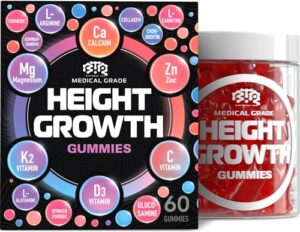
Many height supplements come as gummies packed with micronutrient benefits like vitamin D, calcium, and zinc—ingredients that support bone health and natural height increase. Some vitamin formulations combine these with ashwagandha or B vitamins, creating an easy way to cover gummy ingredients proven to aid growth factors.
The catch? These products reference studies on nutrition and height, but clinical trials tested controlled doses, not the branded gummies themselves. Results vary widely, and you’ll need patience.
For genuine impact, pair any height supplements with proper diet and exercise—no magic pill exists.
Best For: Kids, teens, and adults looking for a convenient gummy supplement to support bone health and height potential alongside a balanced diet and active lifestyle.
- Combines multiple growth-supporting nutrients (vitamin D, calcium, zinc, ashwagandha) in one easy-to-take gummy form with a kid-friendly mixed berry flavor
- Gluten-free formula made with natural ingredients and tested for quality, suitable for various dietary needs
- Clinical evidence shows similar micronutrient combinations can improve height velocity in children when used consistently over several months
- Customer reviews report mixed results on actual height gains, and effectiveness depends heavily on age, diet, and individual health factors
- No independent trials specifically testing this branded gummy formulation—most supporting studies used controlled supplement doses, not commercial products
- Not a substitute for proper nutrition and exercise, and results require patience with consistent use over months to see any potential benefit
Amino Acids and Protein Supplements
Protein powder and amino acids deliver essential nutrients your body needs for muscle builders, hormone regulation, and metabolism. Studies show specific combos—like lysine and arginine—can trigger short-term growth hormone responses, while complete amino acid benefits support muscle synthesis better than isolated BCAAs.
If you’re supplementing for HGH or targeting protein gaps, choose blends with all nine essential amino acids. Timing matters less than consistency in your overall nutrition strategy.
Consulting Healthcare Providers
Before you add any supplement—especially one claiming to boost human growth hormone—get your growth monitoring done right.
If your height falls below the 3rd percentile or growth slows unexpectedly, healthcare referral to pediatric endocrinology is the smart move. Specialists can run a medical evaluation to rule out growth disorders and determine if hormone therapy makes sense for your situation.
Potential Risks and Considerations in Growth Stimulation

Pushing for growth sounds great until you realize some methods come with real risks. Not every strategy is safe, and some can backfire in ways that affect your health long-term.
Here’s what you need to watch out for before going down certain paths.
HGH Treatments and Side Effects
Synthetic human growth hormone therapy treats growth hormone deficiency in children and adults, but you’ll want to understand the trade-offs. Medical research shows treatment options come with real side effects—particularly fluid retention issues that affect 5% to 18% of patients:
- Swelling and joint pain from excess fluid
- Carpal tunnel syndrome symptoms
- Headaches and muscle discomfort
- Injection site reactions
Your doctor can adjust dosing if problems arise.
Long-Term Safety Concerns
Beyond immediate side effects, growth hormone injections carry significant long-term risks you need to understand. Research tracking childhood recipients revealed cancer concerns—particularly bone and bladder tumors—alongside elevated stroke risk at higher doses.
Supplement toxicity from muscle-building products has caused organ damage, kidney stress, and hospitalizations in young users.
Hormone therapy for growth disorders requires careful monitoring because decades-long safety data remains incomplete, especially regarding longevity impact and cardiovascular outcomes in aging patients.
When to Seek Medical Advice
Given these serious concerns with hormone therapy for growth disorders, you should know when medical referrals are warranted. Growth monitoring becomes critical if your child shows severe short stature, height loss exceeding normal patterns, or growth disorders like growth hormone deficiency.
Seek hormone tests and growth hormone deficiency treatment when:
- Your child’s height falls 3+ standard deviations below average
- No measurable growth occurs for 10+ months
- Feeding difficulties persist despite nutritional interventions
- Puberty timing seems markedly delayed or premature
Human growth hormone therapy requires specialist oversight.
Frequently Asked Questions (FAQs)
Can stretching exercises permanently increase your height?
Stretching feels like it should add inches, yet it won’t. Once growth plates close around age 16–18, no stretch can reopen them. You’ll gain temporary spinal decompression and better posture—not permanent height increase.
Does intermittent fasting affect growth during adolescence?
Intermittent fasting during adolescence can suppress growth hormones and reduce pubertal development. While short overnight fasts seem safe, longer fasting windows risk inadequate caloric intake—potentially stunting height gain when your body needs consistent nutrition most.
How does stress impact growth hormone production?
Your stress hormones can work against you—acute stress briefly spikes growth hormone, but chronic stress crushes it through elevated cortisol and sleep disruption, stunting development when it persists.
Can yoga or Pilates improve growth outcomes?
You can gain height through improved posture rather than actual bone growth. Pilates and yoga strengthen your core, correct spinal alignment, and decompress your spine—making you appear taller by standing straighter.
What role does gut health play in growth?
Your gut microbiome directly shapes growth development through hormone regulation and nutrient absorption. Intestinal health affects IGF-1 production, while gut inflammation disrupts growth signals.
Probiotic benefits and microbiota balance support the importance of nutrition for health and wellness.
Conclusion
Think of your body like a telegraph wire—it only transmits signals when conditions align. You now understand how to stimulate growth through four controllable channels: nutrition that fuels your cells, exercise that stresses your bones, sleep that releases hormones, and lifestyle choices that protect your potential.
The window won’t stay open forever. Apply these strategies consistently during your growth years, and you’ll optimize every inch your genetics allow.