
This site is supported by our readers. We may earn a commission, at no cost to you, if you purchase through links.

That maddening itch after shaving your legs isn’t just annoying—it’s your skin sending an SOS signal. Every time a razor glides across your skin, it creates microscopic trauma that triggers inflammation, and when you add dull blades, dry shaving, or harsh products to the mix, you’re practically giving your legs a recipe for irritation.
The good news? You don’t have to choose between smooth skin and comfort. Understanding what causes post-shave itching—from folliculitis to mechanical trauma—puts you back in control. With the right techniques, products, and aftercare routine, you can transform your shaving experience from a scratchy nightmare into a genuinely comfortable part of your routine.
Table Of Contents
Key Takeaways
- Post-shave itching stems from three primary causes: mechanical microtrauma that triggers inflammatory responses, dull blades or poor technique that create microscopic cuts, and compromised skin barriers that allow bacterial folliculitis to develop in sensitive individuals.
- Prevention requires sharp razors replaced regularly, shaving with the grain to reduce irritation by 30%, and avoiding dry shaving with hot water since this increases moisture loss by over 40% and doubles itching incidence.
- Effective aftercare combines immediate cooling with cold compresses to block itch signals, application of fragrance-free moisturizers within minutes of shaving to repair the skin barrier, and wearing loose breathable fabrics to prevent friction-induced irritation that can spike symptoms by 70%.
- You should consult a dermatologist if itching persists beyond three days, pus-filled bumps appear around hair follicles, or you notice spreading redness and fever—signs that indicate bacterial infection requiring prescription treatment rather than home remedies.
Why Do Legs Itch After Shaving?
That post-shave itch isn’t just in your head—it’s your skin reacting to the physical stress of shaving. When you run a razor across your legs, you’re doing more than just removing hair.
Let’s break down the three main culprits behind that maddening itch.
Skin Irritation and Razor Burn
Razor burn symptoms—that blotchy redness and burning itch—happen because shaving creates microtrauma to your skin’s surface. Each stroke triggers cytokine release and mast cell degranulation, sparking inflammation you feel immediately.
Razor burn’s blotchy redness and burning itch stem from shaving-induced microtrauma that triggers immediate inflammatory responses in your skin
This mechanical irritation compromises your barrier function, leaving underlying layers exposed to irritants. The result? Those telltale itchy legs that make you question every shaving decision you’ve ever made.
You can soothe the irritation by using a cold compress.
Dull Razors and Improper Techniques
Your blade’s sharpness matters more than you think. Dull razor blades force you to press harder, creating microabrasions that spike blood flow to shaved areas—clinical studies show over 57% of legs develop redness immediately.
Dry shaving without gel? That’s asking for 35% more microscopic cuts. Shaving against hair growth doesn’t help either—31% of people who do this report itchy bumps afterward.
Using products with harsh chemicals can also contribute to irritation and redness.
Sensitive Skin and Folliculitis
If you’ve got sensitive skin, shaving doesn’t just irritate—it triggers folliculitis, an inflammation of hair follicles that shows up as itchy red bumps. Think of it as your body sounding the alarm after microtrauma makes way for bacterial colonization.
With 71% of women reporting sensitive skin, you’re dealing with compromised barrier recovery time, disrupted skin pH balance, and irritant contact dermatitis that can linger for weeks if not managed properly.
Best Ways to Prevent Itchy Legs

You don’t have to resign yourself to itchy legs every time you shave. A few smart adjustments to your routine can make all the difference between irritation and smooth, comfortable skin.
Here’s what you need to focus on before your razor ever touches your legs.
Use Clean, Sharp Razors
Think of your razor like a surgeon’s scalpel—sharpness matters. Dull blades require up to 50 grams of cutting force, tugging at hair and increasing irritation. Sharp razors cut cleanly with fewer passes, reducing friction and itchiness.
Swap out blades regularly to extend their lifespan and maintain razor hygiene. Your shaving routine depends on proper blade maintenance for smooth, itch-free results every time.
Shave in The Direction of Hair Growth
When you follow your hair’s natural direction, you cut down irritation by nearly a third. Shaving with the grain reduces mechanical trauma and drops the risk of pseudofolliculitis barbae—those painful ingrown hairs—by 30%.
This technique refinement tip helps your razor glide smoothly while protecting sensitive skin. You’ll notice fewer micro-cuts and less itching as your legs regrow hair naturally.
Avoid Dry Shaving and Hot Water
Dry shaving strips away moisture and spikes TEWL increase by over 40%, leaving you with dry skin that itches relentlessly. Hot water shifts your skin pH and triggers an 18% erythema increase—that’s the redness you see post-shave. You’ll double your itching incidence without proper lubrication.
Stick with lukewarm water and quality gels to lock in moisture and prevent skin dryness.
Pre-Shave and Shaving Techniques for Comfort
What you do before and during your shave makes all the difference in preventing that maddening post-shave itch. The right prep work creates a protective barrier and allows your razor to glide smoothly instead of dragging across vulnerable skin.
Here are four essential techniques that set you up for a comfortable, irritation-free shave.
Exfoliate Before Shaving

Before shaving legs, exfoliating skin clears away dead cells that clog your razor and trap hairs—key triggers of itchy legs and ingrown hairs.
Use a gentle physical scrub or chemical exfoliant (like salicylic acid) one to two days before your shave to reduce folliculitis and prevent postshave itch.
Focus on knees and ankles, and avoid harsh pressure to keep your skin smooth, not irritated.
Apply Pre-Shave Oils or Creams

Adding a preshave oil or cream before shaving legs softens hair and creates a protective barrier that lets your razor glide smoothly, reducing skin irritation by up to 30%.
- Choose oils with almond or grapeseed for moisture barrier strength
- Apply thin layer on damp skin before shave gel
- Prioritize fragrance-free formulas for sensitive skin
- Expect 40% less blade drag and tugging
- Maintain hydration levels for 8 hours post-shave
Trim Hair Before Shaving Sensitive Areas

Trimming benefits start before your razor ever touches skin—shortening coarse or long hair with clippers can drop irritation risk by half. Use an electric trimmer with an adjustable guard to reduce hair to a few millimeters, especially on legs and sensitive zones.
This technique safety measure cuts down on tugging, lowers ingrown prevention concerns, and prepares skin for a smoother, itch-free shave.
Use Gentle, Moisturizing Shave Gels

Your shave product can make or break your comfort. Moisturizing shave gels create a cushioned barrier between blade and skin, reducing friction and locking in hydration where dry shaving strips it away.
- Gel Hydration Benefits: Humectants like glycerin keep moisture in your skin
- Irritation Reduction: Lubricating formulas decrease redness and razor burn
- Barrier Damage Prevention: Gentle gels protect your skin’s outer layer
- Soothing Ingredients: Aloe vera and oatmeal calm inflammation
- Gel vs. Foam: Creams outperform traditional foams for hydration
Choose fragrance-free, alcohol-free options for sensitive legs.
Effective Aftercare for Itch-Free Legs

What you do after shaving matters just as much as the shave itself. Your skin’s protective barrier has been disrupted, and the next few minutes determine whether you’ll experience relief or regret.
These four aftercare steps will help you lock in moisture, calm irritation, and keep your legs comfortable all day long.
Rinse and Pat Skin Dry Gently
Right after shaving your legs, rinse with lukewarm water to remove debris without stripping natural oils. Then, gently pat—don’t rub—your skin dry with a clean, soft towel.
This prevents mechanical skin irritation and preserves hydration balance. Allow brief air drying before applying products.
These simple steps greatly reduce dryness and post-shave itching by protecting your skin’s barrier while prepping it to absorb moisture.
Apply Fragrance-Free Moisturizer
Once your legs are dry, lock in skin hydration with a fragrance-free moisturizer. Clinical observations show these hypoallergenic options reduce irritation by up to 75% compared to fragranced products.
Look for soothing ingredients like ceramides or chamomile that repair your skin barrier without triggering reactions. This simple step transforms rough, itchy legs into calm, comfortable skin within days of consistent moisturizing.
Use Aloe Vera or Oatmeal Soaks
After moisturizing, reach for aloe vera gel—96–99% pure formulas work best—to utilize anti-inflammatory aloe mechanisms that calm razor-induced microtrauma. Alternatively, try an oatmeal soak: add one cup of colloidal oatmeal (FDA-approved at 0.007% minimum) to lukewarm bathwater and relax for 10–15 minutes. These home remedies deliver clinical effects you can feel, offering powerful itch relief options that soothe irritated skin within hours.
- Use aloe vera gel at 96–99% concentration for maximum soothing
- Soak in colloidal oatmeal baths for 10–15 minutes
- Apply product forms like gels or soaks immediately after shaving
- Follow practical parameters: lukewarm water prevents additional dryness
- Repeat oatmeal standards two to three times weekly for persistent itch
Wear Loose Clothing After Shaving
Once you’ve nourished your skin, don’t trap it in tight denim or leggings. Fabric friction against freshly shaved legs can spike irritation by up to 70%, preventing proper skin recovery and triggering sweat accumulation.
Choose cotton or breathable materials that promote air circulation—this simple swap cuts razor burn symptoms in half. Loose clothing materials minimize contact dermatitis and keep itchy legs at bay while your skin heals naturally.
Home Remedies and When to Seek Help

Most of the time, you can handle post-shave itch at home with simple, effective remedies that calm irritated skin fast. A few go-to treatments can make a real difference in how quickly your legs recover.
But if your symptoms don’t improve or you notice signs of infection, it’s time to consult a professional.
Cold Compresses and Hydrocortisone Cream
When your legs won’t stop itching after shaving, reach for a cold compress first. It activates TRPM8 receptors that block itch signals at the spinal level.
Apply it for 15–20 minutes, then follow with over-the-counter 1% hydrocortisone cream. This combined therapy addresses both immediate relief and inflammation.
Just remember the safety limits: use hydrocortisone for no more than seven consecutive days.
Aveeno Soothing Bath Treatment Oatmeal Soak
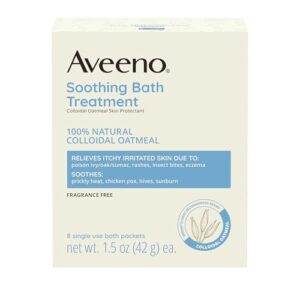
For stubborn post-shaving itch, consider Aveeno Soothing Bath Treatment—a colloidal oatmeal soak that restores your skin barrier through proven mechanisms. Clinical studies show a 64% improvement in itching at four weeks, with patients achieving up to 83% better overall skin condition.
The formula creates a protective moisturizing film while reducing inflammation, making it safe for pediatric use and effective for eczema symptom relief.
You’ll soak for 15–20 minutes, and most users report reduced dependence on other topical treatments within weeks of starting this home remedy.
Best For: People dealing with persistent itchy skin from eczema, razor burn, or irritation who want a clinically proven, fragrance-free treatment that’s gentle enough for all ages.
- Clinical results show 64% improvement in itching within four weeks, with some users seeing up to 83% better skin condition after three months
- Creates a protective barrier that reduces inflammation and locks in moisture without harsh chemicals, dyes, or fragrances
- 88% of users were satisfied enough to keep using it, and 78% were able to cut back on other medications
- Can leave oatmeal residue in the tub that requires extra cleanup after each soak
- Needs 15-20 minutes per session, which might not fit into rushed schedules
- Some people find it doesn’t work for their specific skin issue, so results vary by individual
Signs of Infection or Persistent Itching
When should post-shave irritation raise a red flag? If your itch persists beyond a few days or you notice pus-filled bumps clustered around hair follicles, you’re likely dealing with folliculitis—a bacterial infection requiring medical attention.
Watch for these infection symptoms:
- Red, painful pustules that crust over or ooze
- Itching that intensifies rather than improves after 48 hours
- Dark patches or persistent hyperpigmentation in shaved areas
- Fever, warmth, or spreading redness suggesting deeper skin infection
Compromised immunity, tight clothing, and contaminated razors increase your risk factors for complications.
Consulting a Dermatologist
When home remedies fail to resolve persistent itchiness within three days, it’s time to consult a dermatologist. A dermatologist will perform a diagnostic workup to differentiate between irritant dermatitis, allergic reactions, or bacterial folliculitis, and then tailor treatment options accordingly. These treatments can range from prescription-strength corticosteroids to targeted antibiotics.
| Concern | Evaluation | Typical Intervention |
|---|---|---|
| Recurrent razor bumps | Dermoscopy, allergy testing | Laser hair reduction, prevention strategies |
| Infected follicles | Bacterial culture | Oral or topical antibiotics |
| Chronic inflammation | Biopsy if needed | Improved barrier repair, follow-up care |
This specialized approach not only protects your skin health but also addresses underlying skin sensitivity or conditions that go beyond surface-level irritation.
Frequently Asked Questions (FAQs)
How long does post-shaving itchiness typically last?
Mild razor burn usually fades within 24 to 72 hours. Razor bumps from ingrown hairs take three to seven days to settle, while contact dermatitis can persist two to three weeks after stopping the irritating product.
Can certain fabrics worsen itching after shaving?
Yes, synthetic fabrics like polyester and nylon can trap heat and moisture against freshly shaved legs, worsening itching. Tight clothing increases friction, while natural fibers offer better breathability and reduced irritation.
Does shaving frequency affect how much legs itch?
Surprisingly, shaving your legs like it’s a competitive sport doesn’t win you smoother skin—daily shaving risks more irritation and itchiness than spacing sessions out, especially if your technique matters less than speed.
Are electric razors better for preventing itchy legs?
Electric razors cause less irritation than manual blades—studies show 49% versus 78% report skin problems. They reduce friction and micro-cuts, making them dermatologist-recommended for sensitive skin and preventing postshave itch.
Can diet or hydration reduce post-shaving itchiness?
Hydration and itch are surprisingly linked—drinking 2 liters of water daily improves skin elasticity by 20–30%.
Omega-3s reduce inflammation, while antioxidant diets accelerate healing, tackling dry skin and post-shave itch causes effectively.
Conclusion
Think of your post-shave routine as a shield—when properly assembled, it protects your skin from the battlefield of irritation. Sharp razors, proper technique, strategic moisturizing, and consistent aftercare are your arsenal against inflammation and folliculitis.
These aren’t just suggestions—they’re your tools to stop itchy legs after shaving. Apply them systematically, and you’ll reclaim the smooth, comfortable skin you deserve. Your legs will thank you with every itch-free day ahead.