This site is supported by our readers. We may earn a commission, at no cost to you, if you purchase through links. This content is for general informational and educational purposes only and is not a substitute for professional medical, dermatological, or nutritional advice.
That tiny red dot on your jaw always seems to show up right before you’re walking out the door. Shaving nicks bleed more than their size suggests, thanks to the dozens of small blood vessels packed just under the skin’s surface. Add a fresh razor blade cutting straight through, and even a pinprick nick can drip for several minutes.
Don’t panic, these things happen to almost everyone who’s ever picked up a razor.
The good news? You likely already have what you need to stop it, whether that’s a cold compress or a swipe of the right product. Here’s exactly how to stop the bleeding from shaving fast, plus how to care for the cut once it’s under control.
Table Of Contents
- Key Takeaways
- How to Stop Bleeding From Shaving Immediately
- Best Products for Stopping Shaving Cuts
- Safe Home Remedies for Shaving Nicks
- Shaving Cut Aftercare and Prevention
- When a Shaving Cut Needs Medical Attention
- Frequently Asked Questions (FAQs)
- How long does shaving bleeding last?
- Does Vaseline stop bleeding from shaving?
- What product stops bleeding after shaving?
- Why do shaving cuts bleed so badly?
- How do you stop a shaving cut from bleeding?
- Do shaving cuts bleed a lot?
- How long does it take to stop bleeding from a shaving cut?
- Does a After Shave stop bleeding?
- How do you stop a cut from bleeding?
- Why does my shave bleed a lot?
- Conclusion
Key Takeaways
- Rinse the cut with cool water, then press firmly with clean gauze for a full 5 minutes without peeking, since checking too soon breaks the clot and restarts the bleeding.
- A cold compress and elevation work together to slow blood flow quickly, so hold ice wrapped in cloth on the nick while raising it above your heart.
- Products like a styptic pencil, alum block, or witch hazel can stop stubborn bleeding in seconds by tightening the skin around the cut.
- See a doctor if bleeding lasts past 10-15 minutes, the cut is deep or gaping, you’re on blood thinners, or you notice signs of infection like spreading redness or pus.
How to Stop Bleeding From Shaving Immediately
Nicked yourself shaving? Don’t panic, it looks worse than it is. Here’s exactly what to do, in order, to get the bleeding stopped fast.
First, stop shaving and press a clean tissue firmly on the cut, then check out this guide to shaving techniques for healthy, nick-free skin to prevent the next one.
Rinse With Cool Water
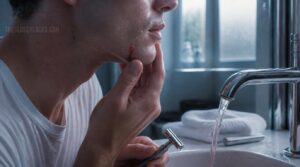
A little nick, a lot of drama—your first move is the sink. Turn the tap to cool, not icy, around 12–14°C, and rinse for 30 to 45 seconds. This speeds clotting and calms sensitive skin.
- Keep water flow gentle
- Avoid scalding-hot rinses
- Stop once bleeding slows
Apply Firm Direct Pressure
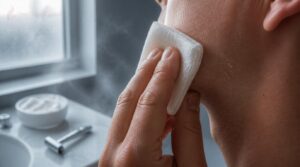
Once rinsed, grab clean gauze and press firmly for a full 5 minutes—don’t peek! Peeking breaks the clot.
| Material | Pros | Cons |
|---|---|---|
| Sterile gauze | Uniform, gentle | Needs replacing if soaked |
| Clean cloth | Widely available | Rougher texture |
| Paper towel | Emergency backup | Less absorbent |
Reapply immediately if bleeding resumes, keeping steady pressure for proper wound care.
Use a Cold Compress
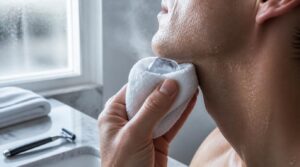
Still bleeding? Cold works fast. Wrap ice in a thin cloth, or use a chilled washcloth, and press it against the cut for 10 minutes—blood vessels constrict, slowing flow almost immediately.
Keep the compress between 4°C and 8°C, never bare ice on skin. After removing it, pat dry with gauze. If bleeding lingers, rest 5 minutes, then reapply.
Elevate The Cut Area
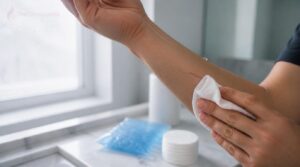
Gravity helps too. Raise the cut above your heart while you apply pressure to the cut—supporting surrounding skin rather than squeezing the wound itself.
Gravity-assisted drainage cuts pooling fast. Hold steady for a few minutes past the cold compress; avoiding friction from clothing matters here. Once bleeding stops, keep elevating briefly for post-clot confirmation before lowering your hand back to normal position.
Avoid Disturbing The Clot
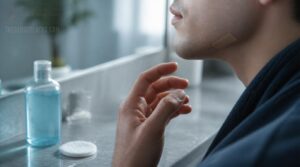
Resist the urge to check! Peeking disrupts clot stabilization and invites rebleeding.
- Blot gently at the edge, never the center
- Skip soap on open edges
- Keep the first bandage on, no picking
Avoid disturbing the clot by staying still—stretching skin pulls edges apart. Once bleeding stops, don’t rush; wound healing needs that undisturbed clot protection to hold. Proper wound irrigation technique helps remove debris and reduce infection risk after initial bleeding control.
Best Products for Stopping Shaving Cuts
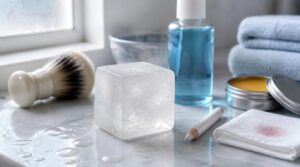
Sometimes pressure and patience aren’t quite enough, and that’s where the right product comes in. Keeping a few of these on hand turns a stubborn nick into a quick fix instead of a five-minute ordeal. Here are five options worth stocking in your medicine cabinet.
While you’re restocking that cabinet, don’t overlook your lips—a great best lip balm for men with SPF and shea butter can prevent the cracked, chapped skin that leads to those annoying nicks in the first place.
Styptic Pencil
Think of a styptic pencil as your medicine cabinet’s fire extinguisher. It’s a solid stick of aluminum sulfate, a mineral astringent that tightens tissue on contact. Wet the tip, dab it on the cut for 5 to 10 seconds, and let it work.
A styptic pencil is your medicine cabinet’s fire extinguisher, an aluminum sulfate stick that tightens tissue on contact to stop bleeding fast
You’ll feel a quick sting, that’s just tissue constriction doing its job. A chalky residue may appear; rinse once bleeding stops. Don’t swallow it, it’s for skin only.
Liquid Styptic
When a pencil feels too harsh, reach for liquid styptic instead. It’s a roll-on or dab solution, often blending aluminum chloride with lidocaine hydrochloride for numbing, benzalkonium chloride for antisepsis, and an alcohol carrier for fast drying.
Some formulas add zinc chloride for extra hemostatic support.
- Faster application
- Gentler sting
- Antiseptic protection
- Dries in seconds
Alum Block
An alum block looks like a plain stone, but it’s a mineral powerhouse. Made from potassium alum, it’s naturally astringent and antiseptic.
Wet it, press it to the nick for 15–30 seconds. It tightens tissue for hemostasis, much like a styptic pencil, minus the harsh sting. Non-staining, scentless, and safe for daily use.
Witch Hazel
Already have a bottle in your medicine cabinet? Good, because witch hazel is a tannin-based astringent pulled from the Hamamelis plant, and it doubles as a natural hemostatic agent.
Soak a cotton pad, press it on for 30 seconds. It triggers blood vessel constriction and topical skin tightening, plus anti-inflammatory properties that calm redness—gentler than a styptic pencil, no sting involved.
Sterile Gauze or Bandage
Once bleeding slows, cover it. Sterile gauze, sterilized to a 1-in-a-million contamination rate, comes in 2×2" or 4×4" squares at just 0.5 mm thick—soft, low-lint protection.
Press with direct pressure, apply the bandage, hold firmly 15 seconds. Choose one with strong absorbency for oozing nicks.
Keep the wound clean, raise it if needed, and change daily.
Safe Home Remedies for Shaving Nicks
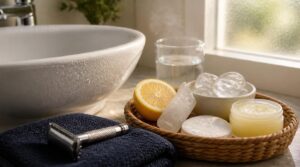
No styptic pencil on hand? Don’t worry, your kitchen and bathroom cabinet probably have you covered. A few household staples can calm a nick just as well, and one or two things you should skip. Here’s what actually works, and what to leave alone.
Cooled Tea Bag
Reach for your tea kettle before your medicine cabinet. Black tea holds real tannins that constrict blood vessels, working like a natural styptic pencil.
Steep a bag three minutes, chill it 10-15 minutes, then press it on the nick for one to two minutes. Fresh bag each time, no rubbing, no reapplying old ones.
Petroleum Jelly
No tea bag handy? Your bathroom shelf has a fix.
Petroleum jelly won’t stop bleeding like a styptic pencil, but once you’ve used direct pressure or an ice cube, dab a thin layer on. It seals in moisture, blocks bacteria, and helps wound healing through simple barrier function — gentle, non-irritating, and reliable for everyday nicks.
Unscented Lip Balm
No petroleum jelly on hand? Check your medicine cabinet — plain lip balm works too.
Unscented lip balm gives you a beeswax moisture barrier plus shea butter hydration and vitamin E protection, all in a hypoallergenic formula with no fragrance to sting the cut. Its aluminum tube keeps things clean. Use it only after direct pressure or an ice cube stops the bleeding.
Clean Tissue Barrier
Sometimes the simplest fix is the best one. A clean tissue or piece of gauze pressed firmly over the cut acts as an instant physical barrier, keeping bacteria out while the clot sets.
- Protects raw skin from touch
- Blocks dirt and clothing fibers
- Keeps the wound quiet and undisturbed
- Buys time for a stable clot
Skip cotton balls, they shed fibers into the cut.
Remedies to Avoid
Before you grab whatever’s under the sink, know this: alcohol swabs and hydrogen peroxide disrupt clotting and sting badly.
Essential oils and DIY herbal pastes (garlic, turmeric) risk chemical burns or infection. Skip antiseptic sprays too.
Stick with a styptic pencil, lip balm, or cooled tea/coffee, deodorant works only in a pinch.
Shaving Cut Aftercare and Prevention
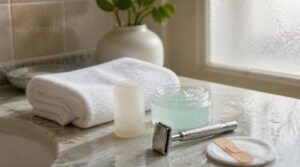
Once the bleeding stops, your job isn’t quite done. A little extra care now helps the cut heal cleanly and keeps new nicks from popping up. Here’s what you should do in the hours and days after you shave.
Keep The Wound Clean
Once bleeding stops, cleanliness takes over. Wash your hands for 20 seconds before touching the cut, then rinse it with cool water for 30 seconds.
Dab on a bit of antiseptic, let it sit briefly, and skip the alcohol—it stings and slows healing.
Watch daily for redness, swelling, or discharge; these signal infection brewing beneath the surface.
Protect The Healing Cut
Once cleaned, that little nick needs a shield. A thin petroleum jelly barrier locks in moisture and blocks bacteria, supporting tissue repair.
- Apply a sterile bandage, changing daily
- Reapply jelly 2–3 times a day
- Let scabs form untouched
- Try silicone sheets for scar-prone skin
Don’t forget sun protection—SPF 30 guards healing skin once it closes.
Shave With The Grain
Here’s a fix that prevents cuts before they start: shave with the grain.
Rub dry stubble to map hair-growth direction, then stroke your razor that way using light, gentle pressure. It’s less aggressive than fighting the angle, which means less irritation and fewer nicks—especially on your neck, where hair often shifts direction.
Replace Dull Razor Blades
A dull blade drags instead of cutting, and that drag is what nicks you. Change your razor every 5 to 7 shaves—cartridges lose sharpness fast, raising irritation risk after just 10 uses.
Store blades upright and dry between shaves; moisture speeds dulling. A sharp razor costs pennies per shave and cuts plastic waste, too.
Moisturize After Shaving
Once bleeding stops, your skin still needs care. Reach for fragrance-free moisturizers or hypoallergenic formulas within 5 minutes of shaving—this locks in hydration and calms irritation fast.
- Aloe vera gel cools redness in 15 minutes
- Non-comedogenic oils keep follicles clear
- Silicone-based barriers protect up to 6 hours
Reapply every 4 hours to maintain skin hydration and support post-shave skincare.
When a Shaving Cut Needs Medical Attention

Most shaving cuts stop bleeding fast and heal without any fuss. But every once in a while, a cut acts differently, and that’s your cue to pay closer attention. Here’s what to watch for that means it’s time to call a doctor.
If a cut bleeds longer than expected, your body’s post-shower sweating and temperature regulation responses can actually interfere with normal clotting.
Bleeding Lasts Too Long
Ten minutes of firm pressure should stop most shaving nicks. If it doesn’t, something’s interfering with normal blood clotting—caffeine, dehydration, or a clotting disorder.
| Time Bleeding | What It May Mean |
|---|---|
| Under 5 min | Normal |
| 5–10 min | Try ice, lift the area |
| Over 10 min | Seek evaluation |
| Over 15 min (on blood thinners) | Call your doctor |
Cut is Deep or Gaping
Time isn’t the only red flag—size matters too. A cut deeper than 1.5 centimeters, or one gaping wide enough to fit a fingertip inside, needs professional closure.
If you can see fat or muscle in there, don’t reach for another bandage. Keep direct pressure on, raise the area, and get medical attention—deep wounds like these carry real scar risk without proper stitches.
Signs of Infection Appear
Size and depth aren’t the only warning signs—watch the healing process too. Redness spreading outward, warmth, swelling, or pus discharge all point to infection. So does pain increasing days later instead of fading.
Fever or fatigue means it’s gone beyond the skin. When basic antiseptic care and skin protection aren’t controlling things, see a doctor.
Blood-Thinning Medications
If infection wasn’t your issue, your medication list might be. Blood-thinning medications like warfarin, apixaban, or daily aspirin slow clotting, so bleeding runs longer than normal.
Direct pressure and raise the affected area first. Still bleeding past 10-15 minutes? See your doctor—dose adjustments or INR checks may be needed.
Frequent Unexplained Bleeding
One nick heals fast; a pattern doesn’t. If shaving leaves you bleeding often, think vascular fragility, platelet disorders, vitamin deficiency, or hormonal imbalance—even certain medications interfere with normal clotting.
Basic bleeding control (direct pressure, lift the affected area, let blood vessels constrict) should work quickly. When it doesn’t, ask your doctor about bloodwork. Recurring bleeding deserves answers, not repeat styptic pencils.
Frequently Asked Questions (FAQs)
How long does shaving bleeding last?
Most nicks stop in 30 seconds to two minutes with direct pressure and an ice cube. Deeper cuts or high blood flow spots can take up to 10 minutes—beyond 15, try a styptic pencil or raise the wound.
Does Vaseline stop bleeding from shaving?
Not quite, not fully. Vaseline doesn’t stop bleeding, it seals it. Petroleum jelly forms a protective barrier, not a clotting agent like a styptic pencil—so pair it with pressure first, then apply once bleeding slows.
What product stops bleeding after shaving?
Reach for a styptic pencil or liquid styptic with alum—both stop bleeding in seconds. An alum block, witch hazel, or even alcohol-based aftershave works too, tightening skin and sealing the nick fast.
Why do shaving cuts bleed so badly?
Your face packs high vascular density, so even a shallow nick hits many tiny blood vessels.
Dull blades, poor technique, and skin friction worsen capillary bleeding, slowing the natural clotting process and platelet aggregation that would otherwise constrict vessels and stop the flow.
How do you stop a shaving cut from bleeding?
Don’t panic, don’t fuss, just act fast: press a clean tissue on the cut for 30 seconds straight, then follow with an ice cube for vessel constriction. Cold therapy plus firm pressure speeds clotting time and stops bleeding cold.
Do shaving cuts bleed a lot?
Yes, often more than expected. Facial skin packs dense capillaries, so even a shallow nick bleeds freely. Sharp razors cut cleanly, which delays clotting, while dull blades and shaving against the grain raise blood loss further.
How long does it take to stop bleeding from a shaving cut?
Think of it as a small fire you’re smothering, not dousing. With firm pressure, most cuts stop within 5 to 7 minutes; a cold compress or elevated wound can shave off another minute or two.
Does a After Shave stop bleeding?
Aftershave with 70% alcohol works as a vasoconstrictor, tightening vessels within 30 seconds. Patting it on (not rubbing) stops bleeding faster. If it lingers past 2 minutes, switch to a styptic pencil for stronger clotting power.
How do you stop a cut from bleeding?
Press a clean cloth against the cut for 10-15 minutes straight, no peeking. Add an ice cube for cold therapy, or dab a styptic pencil if it lingers. Raise the area, then cover with gauze.
Why does my shave bleed a lot?
Don’t panic—it can look like a horror movie in there! Your face is packed with blood vessels near the surface, and a sharp razor’s clean nick, plus dry skin, angle, or blade friction, all slow clotting.
Conclusion
Your bathroom mirror isn’t a battlefield, so stop treating every nick like a war wound. Once you know how to stop the bleeding from shaving, that little red dot loses its power to ruin your morning. Press, cool, hold up, done.
A sharp blade and a steady hand prevent most cuts before they start. Keep your kit stocked with a styptic pencil, and that pinprick becomes a two-minute pause, not a five-alarm event.