This site is supported by our readers. We may earn a commission, at no cost to you, if you purchase through links.
A thin beard won’t stop you from looking sharp—it just demands smarter strategy. Most men ditch their patchy growth too soon, assuming fuller is always better.
But thin beards have a secret advantage: they frame your face with precision that bushy styles can’t touch. The trick isn’t fighting what you’ve got. It’s maximizing definition through clean lines, strategic trimming, and styles built for your natural growth pattern.
With the right approach to styling a thin beard, you’ll create more impact with less hair than most guys achieve with a full face of fuzz.
Table Of Contents
- Key Takeaways
- Best Thin Beard Styles for Men
- How to Make a Thin Beard Look Fuller
- Essential Grooming Techniques for Thin Beards
- Overcoming Common Thin Beard Challenges
- Lifestyle Tips to Support Beard Growth
- Frequently Asked Questions (FAQs)
- How to make a thin beard look good?
- How can I make my thin beard appear thicker?
- Are there specific tools for thin beard grooming?
- What are natural remedies to enhance beard growth?
- How does diet impact the thickness of a beard?
- Can stress contribute to thinning beard hair?
- Can thin beards work for all face shapes?
- How long does beard growth typically take?
- Are there medications that affect beard thickness?
- What age does facial hair stop growing?
- Conclusion
Key Takeaways
- Thin beards create sharper definition through precision trimming and clean edges rather than fighting for fullness you don’t have.
- Strategic styles like chin straps, Balbos, and stubble work with your natural growth pattern while sharp borders and defined lines make sparse coverage look intentional.
- Daily hydration with lightweight oils, exfoliation every 1-2 weeks, and trimming every 3-7 days keep your thin beard looking polished instead of patchy.
- Beard health depends on what you eat, how you sleep, and managing stress—protein, vitamins, and consistent grooming routines fuel better growth over time.
Best Thin Beard Styles for Men
Let’s be real—thin beards don’t have to look weak. You’ve got options that turn sparse growth into a sharp, intentional style that works with what you have.
If you’re aiming to boost density over time, check out proven strategies to grow a fuller beard that work even with patchy areas.
Here are the top thin beard styles that’ll make you look put-together without the guesswork.
Classic Chinstrap Beard
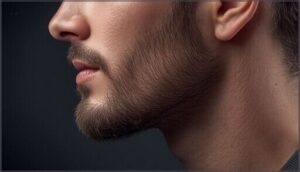
The classic chinstrap beard is your weapon for jawline enhancement—a sharp frame along your chin strap that screams precision. You’ll trim every 2–3 days to keep beard symmetry dialed in, especially if you’ve got a square or oval face.
Here’s how to own it:
- Keep cheeks clean or ultra-light stubble
- Pair with a short mustache ending at mouth corners
- Use a precision trimmer for defined chin contours
To further perfect your look, learn how face shape determines beard style.
Thin Balbo and Goatee Variations

If you want facial hair that breaks the mold, the Balbo delivers—a trimmed mustache paired with a separate chin beard, no sideburn connection.
Keep your goatee styles lean at 6–10 millimeters to emphasize beard texture without bulk. Perfect your beard symmetry with daily conditioning and precision shaping.
This thin beard style works best on rectangular faces, creating vertical balance through strategic thin lines.
5 O’Clock Shadow and Stubble Looks

You’re ready to master the art of stubble maintenance. That 1–3 millimeter shadow effects sweet spot frames your facial contours without the commitment of heavier facial hair styles. Regular trimming techniques keep your 5 o’clock shadow uniform across your jaw.
Want that sleek edge? Here’s your stubble roadmap:
- Exfoliate weekly to crush patchiness and boost beard texture
- Trim every 2–3 days for consistent shadow effects
- Keep blade settings locked at 1–2 millimeters
- Hydrate daily—dry stubble kills the vibe
Pencil Mustache With Thin Beard
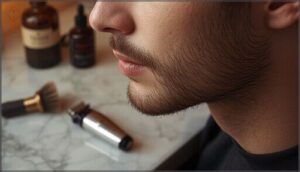
The pencil mustache brings old-school swagger to your thin beard game. Keep that fine line 1–2 millimeters thick above your upper lip, then balance it with minimal facial hair along your jaw.
Beard symmetry matters here—your trimmer becomes your precision tool. Daily mustache care prevents patchiness, while conditioning keeps everything sharp. This facial hair style owns slim face shapes by adding vertical balance you can’t fake.
Thin Beard With Faded Sideburns
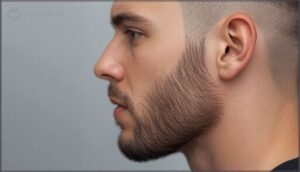
Faded sideburns transform your thin beard into a smooth gradient that screams modern style. Start at your temple and fade downward over 2–4 weeks of growth—that gradient creates facial harmony your sharp edges can’t match.
Keep the skin beneath healthy with gentle exfoliation to prevent flaky buildup that can disrupt your fade’s clean appearance.
Pair this beard blending with short hairstyles for high-impact style. Your trimmer manages the fade techniques while light stubble completes the look.
How to Make a Thin Beard Look Fuller

You don’t need a thick beard to make a statement. With the right approach, you can create the illusion of fullness and definition that turns heads.
Here’s how to make the most of what you’ve got and own your look with confidence.
Choosing The Right Beard Style for Your Face
Your face shape is the blueprint for your thin beard. Oval faces handle nearly any facial hair styles, while round faces need angular chin straps for jawline enhancement.
Square jaws look sharp with fuller cheek volume and clean lines. Face shape analysis reveals which thin beard styles enhance your facial contours best.
For advice on matching beard types to your bone structure, review this guide to beard styles for different face shapes. Match your beard styling to your bone structure, and beard symmetry follows naturally.
Strategic Trimming for Volume
Your trimming techniques dictate how much beard density you reveal from thin beard styles. Start with a wide guard to lift hair texture and trim upward along the jawline for volume enhancement. Strategic trimming transforms beard maintenance into an art.
- Use trimming tools in upward strokes to create rounded fullness
- Keep center length longer while tapering sides for front impact
- Check symmetry in bright light for balanced thin beard trimming
Creating Defined Edges for Impact
Sharp borders separate amateur looks from refined thin beard styles. Edge precision along your jawline creates instant facial symmetry and transforms weak growth into intentional beard styling and trimming. Use a fine trimmer at 0.5 mm for beard contouring that defines every angle. Rework edges every 3-4 days to maintain that sharp, intentional vibe thin beard styling techniques demand.
| Technique | Tool Setting | Result |
|---|---|---|
| Jawline carving | 0.5 mm trimmer | Defined jawline with crisp edges |
| Cheek line shaping | Vertical motion | Even, sharp borders across both sides |
| Upper lip border | Natural lip line trim | Clean symmetry without overshaping |
| Edge refresh | Light pass every 3-4 days | Consistent beard shaping and trimming |
| Final inspection | Angled mirror check | Hidden gaps eliminated for precision |
Essential Grooming Techniques for Thin Beards
You can’t build a sharp beard without the right grooming techniques in your arsenal. The difference between a patchy mess and a polished look comes down to consistent care and smart maintenance habits.
Here’s what you need to master to keep your thin beard looking clean and intentional.
Washing and Exfoliating The Face
Your face is the foundation—ignore it and your thin beard won’t have a chance. Start with smart face cleansing and exfoliation tips to set the stage for sharper facial hair and better beard maintenance.
- Use a sulfate-free cleanser with a pH near 5.5 to protect your skin barrier without stripping natural oils.
- Exfoliate 1–2 times weekly using gentle AHAs or fine jojoba beads to remove dead skin cells.
- Massage cleanser in circular motions for 20–30 seconds using lukewarm water—hot water dries you out.
- Pat dry with a clean towel instead of rubbing to minimize irritation and friction.
- Follow up with lightweight moisturizer to lock in skin hydration after every wash.
This men’s grooming ritual—facial massage included—prepares your skin for beard preparation and keeps your facial hair looking intentional, not patchy.
Hydrating With Beard Oils and Balms
Your thin beard needs moisture—without it, you’re left with brittle hairs and flaky skin. Beard oil benefits include deep skin hydration and hair conditioning, while balm ingredients like beeswax add light hold.
Here’s how to lock in moisture:
| Product | Key Ingredients | Best For |
|---|---|---|
| Beard Oil | Jojoba, argan, sweet almond oil | Daily skin hydration and shine |
| Lightweight Oil | Vitamin E, coconut oil | Fine, sparse thin beads |
| Beard Balm | Shea butter, beeswax, cocoa butter | Styling and moisture seal |
| Hydrating Balm | Calendula, chamomile extracts | Soothing irritated skin |
| Combo Formula | Carrier oils plus light wax | All-in-one beard maintenance |
Apply 3–4 drops of beard oil to damp skin, work it through with a boar brush, then follow with balm for hold. This beard care routine keeps your beard looking sharp and intentional.
Regular Trimming and Edge Maintenance
Once your beard is hydrated, it’s time to control the shape. Beard trimming every 3 to 7 days keeps thin beard styles crisp and intentional.
Use consistent trimmer settings and symmetry checks at eye level to maintain balance.
Edge maintenance defines your jawline and neckline—trim one finger width above your Adam’s apple. Stick to grooming schedules for beard shaping that commands respect and turns heads.
Using Precision Trimmers for Clean Lines
Now you need the right tool to bring those edges to life. Look for trimmers with Zero Gap Design and quality Blade Material like stainless steel or ceramic—they deliver sharp lines that last. An Ergonomic Grip prevents hand fatigue during Beard Shaping. Cordless Power gives you freedom. Use a Guide for uniform length. Master these Shaving Techniques, and your Grooming for Thin Beards becomes easy.
Key features for Thin Beard precision:
- Narrow blades (0.1–0.4 mm) slice tight edges around your jawline
- Self-sharpening steel holds its edge through hundreds of trims
- 120+ minutes of runtime lets you perfect every angle without rushing
- T-blade attachments and combs lock in repeatable Beard Styling Tips
Overcoming Common Thin Beard Challenges

Let’s be real—thin beards come with their own set of headaches. Patchy spots, dry skin, and rookie mistakes can turn your look from sharp to scruffy fast.
Here’s how to tackle the most common issues and keep your beard looking intentional and clean.
Managing Patchy or Uneven Growth
Let’s be real—patchy beard causes like genetics and hormonal differences don’t have to win. You can master uneven growth solutions by trimming strategically around sparse zones.
Use beard fillers or lightweight oils to mask gaps while you work on growth enhancement through better skin health tips. Regular maintenance every week keeps your thin beard styles looking intentional, not accidental. You’ve got this.
Preventing Dryness and Itchiness
Dry skin triggers flaking and beard dandruff, so you’ll want fragrance-free beard moisturizers packed with ceramides to lock in skin hydration. Apply beard oil right after washing—lukewarm water only—to seal moisture for up to 12 hours.
- Use beard balm twice daily on dry patches for itch relief and dryness prevention
- Keep showers under 10 minutes to protect natural oils
- Pat your face dry instead of rubbing to reduce skin irritation
- Boost facial care with omega-3s and 2-3 liters of water daily
Mistakes to Avoid With Thin Beards
Precision separates a sharp thin beard from a scraggly mess. Cheekline errors—trimming too high—strip away density you can’t afford to lose.
Neckline mistakes expose skin and kill flow. Product misuse with heavy balms flattens volume instead of building it.
Master edge definition with consistent boundaries, tackle patchy growth through strategic shaping, and your thin beard transforms from afterthought to statement.
Boosting Beard Health With Proper Care
Healthy hair follicles start beneath the surface. Wash your beard care 2–3 times weekly with a mild shampoo, then exfoliate to clear dead skin blocking growth.
Beard conditioning with lightweight oils seals moisture and strengthens strands. Fuel beard nutrition through vitamins A, C, E, and zinc. Consistent facial hair care—hydration, trimming, balm application—turns weak growth into durable, fuller coverage.
Lifestyle Tips to Support Beard Growth

Your beard doesn’t grow in a vacuum—it reacts to how you treat your body. What you eat, how you move, and even how much you sleep all play a role in whether your facial hair thrives or struggles.
Let’s look at the lifestyle changes that’ll give your thin beard the best shot at reaching its full potential.
Nutrition and Key Beard-Boosting Nutrients
Your beard’s strength starts on your plate. Protein Intake fuels keratin production for thicker strands, while Vitamin Benefits like A, B, and E improve blood flow and sebum regulation.
Zinc addresses Nutrient Deficiency issues that slow Hair Growth. Don’t skip Healthy Fats—omega-threes reduce inflammation and support Beard Health.
Pair Beard Supplements with a Healthy Diet for real results, not empty promises.
Exercise and Blood Circulation Benefits
Getting your blood moving does more than build muscle—it drives Beard Growth from the inside. Cardio Benefits include improved Blood Flow and Vascular Health, delivering oxygen straight to follicles.
An Active Lifestyle boosts Circulation, which speeds Exercise Recovery and promotes Hair Growth. You’ll notice better Beard Health and a stronger Thin Beard when your body’s working at peak efficiency.
Reducing Stress and Getting Enough Sleep
Your body needs downtime to fix what cardio breaks down. Stress Management and Sleep Quality directly impact testosterone levels—one of the key Causes of Thin Beards is inadequate sleep and chronic tension.
- Wind down with Mindful Breathing or other Relaxation Techniques before bed
- Aim for 7 to 8 hours nightly to enhance hormone production
- Build Calming Routines that support an active lifestyle and healthy diet
- Lower cortisol, raise follicle fuel
Consistency in Beard Care Routine
Skip a day and your beard shows it—commitment matters. Lock in Daily Grooming Tips: wash twice weekly with sulfate-free cleanser, apply 2 to 3 drops of beard oil each morning for Beard Oil Benefits, and stick to Trimming Schedules every 1 to 2 weeks.
Sync your Skin Care Routines with Beard Maintenance Tools for consistent Beard Growth and Health—predictable effort, predictable results.
Frequently Asked Questions (FAQs)
How to make a thin beard look good?
Choose a style that follows your natural growth lines—like a chinstrap or subtle goatee.
Keep edges sharp with precision trimming, and use light beard oil to add healthy shine without weighing things down.
How can I make my thin beard appear thicker?
You’ll want to focus on strategic trimming that concentrates hair along your chin and jawline.
Use beard oils for hair thickening, and create sharp, defined edges to boost beard thickness through contrast.
Are there specific tools for thin beard grooming?
Let’s be real—most guys grab any trimmer and hope for the best.
You need precision tools like beard trimmers with 5-5mm guards, edge shapers, styling aids, and grooming kits to nail those ultra-thin lines.
What are natural remedies to enhance beard growth?
Boost beard growth with vitamin supplements like biotin and zinc, nourishing beard oils such as jojoba or castor, and natural serums rich in growth boosters.
Healthy hair follicles thrive on proper nutrition and consistent facial hair growth care.
How does diet impact the thickness of a beard?
Your protein intake fuels keratin synthesis, building stronger beard strands.
Biotin benefits thickness, while omega-3 effects nourish follicles.
Iron supplements boost oxygen delivery. Diet directly impacts facial hair growth and care—it’s your foundation for density.
Can stress contribute to thinning beard hair?
Stress hormones disrupt hair growth cycles and follicle health, pushing strands into resting phases that cause beard thinning.
Lower stress levels stabilize hormone levels, improving circulation and supporting thicker, healthier beard growth over time.
Can thin beards work for all face shapes?
Absolutely—thin beard styles work across all facial contours when you match the shape to your face.
Beard symmetry and jawline enhancement matter most: round faces need length at the chin, while square faces benefit from softer, tapered edges.
How long does beard growth typically take?
Growing a beard isn’t an overnight miracle. Most men see visible stubble in 4 to 6 weeks, while full density takes 3 to 4 months as follicles gradually thicken and fill gaps.
Are there medications that affect beard thickness?
Yes. Finasteride and dutasteride may slightly thin facial hair, while minoxidil often boosts beard growth.
Testosterone therapy can increase beard thickness in appropriate candidates. Antiandrogens sometimes reduce beard density depending on dosage.
What age does facial hair stop growing?
Spoiler: your facial hair won’t retire at Beard growth peaks in your 20s, but hormone levels and genetics keep things going.
Beard density shifts with the aging process, though growth patterns slow after your mid-30s.
Conclusion
Picture your jawline transformed—sharp edges, clean definition, every hair working in your favor. That’s the power of knowing how to style a thin beard the right way.
You’ve got the techniques, the styles, and the grooming tactics to turn sparse growth into an advantage. Stop waiting for thickness that may never come. Start maximizing what’s already there.
Your thin beard isn’t a limitation—it’s precision weaponry for your face.
- https://my.clevelandclinic.org/health/articles/24101-testosterone
- https://www.yourhormones.info/hormones/dihydrotestosterone/
- https://health.clevelandclinic.org/cant-grow-a-full-beard-theres-an-explanation-for-that/
- https://www.sutterhealth.org/ask-an-expert/answers/nutrition-for-hair-regrowth
- https://www.ncbi.nlm.nih.gov/pmc/articles/PMC5500728/