This site is supported by our readers. We may earn a commission, at no cost to you, if you purchase through links. This content is for general informational and educational purposes only and is not a substitute for professional medical, dermatological, or nutritional advice.
Most guys grow a beard and call it good grooming. Then they wonder why it still looks sloppy at week three.
The difference between a beard that turns heads and one that just exists usually comes down to one thing—tapering. A tapered beard doesn’t happen by accident. It’s the result of intentional fading, where the hair gradually shortens as it moves up toward your cheekbones, giving your face structure that a full, unshaped beard simply can’t.
Learning how to taper your beard puts that control in your hands, and once you nail the technique, every day becomes a good beard day.
Table Of Contents
- Key Takeaways
- What Does Tapering Your Beard Mean?
- Essential Tools for Tapering Your Beard
- Preparing Your Beard for Tapering
- Step-by-Step Guide to Tapering Your Beard
- Tapering Techniques for Different Beard Lengths
- Maintaining Your Tapered Beard
- Fixing Common Tapering Mistakes
- Frequently Asked Questions (FAQs)
- How to taper a beard for beginners?
- How do I taper down my beard?
- What does it mean to taper a beard?
- How to properly fade a beard?
- How to taper a beard neckline?
- How to taper a beard?
- Does castor oil help with the growth of a beard?
- What happens when you taper a beard?
- How do you trim a tapered beard?
- How often should you taper your beard?
- Conclusion
Key Takeaways
- Tapering your beard means deliberately fading the hair shorter as it moves up toward your cheekbones, giving your face structure that a uniform-length beard simply can’t deliver.
- The right tools — a quality trimmer with precise guard increments, a wide-tooth comb, and beard oil applied before you trim — make the difference between a clean fade and a choppy mess.
- Blending is where most guys slip up: overlapping guard zones and using small upward flicking motions (not hard straight passes) is what creates those smooth, seamless transitions.
- Maintenance is what keeps a taper looking intentional — short beards need a cleanup every 7–14 days, and quick neckline and cheek line touch-ups every few days prevent a sharp fade from turning into a grow-out.
What Does Tapering Your Beard Mean?
Tapering your beard is all about controlling how your hair transitions from one length to another — creating a gradient effect that looks clean, intentional, and sharp.
If you’re dealing with patchy spots, mastering the gradient technique can make a real difference — this guide on fading your beard for balanced, even growth walks you through exactly how to do it.
It’s the difference between a beard that just grows and a beard that’s actually styled. Here’s what you need to know before picking up your trimmer.
Tapered Vs. Non-Tapered Beards
Think of it this way — a tapered beard gradually shortens from your jaw up toward the sideburns, creating that smooth, faded gradient barbers love. A non-tapered beard just keeps one uniform length from ear to ear.
Depending on your face shapes, hair texture, and beard lengths, one approach will suit you better. A beard trimmer makes the difference when you want to taper a beard cleanly versus blocking it out.
For additional guidance on choosing between beard taper styles, check out this explanation of taper vs. fade cuts.
Key Benefits of a Tapered Beard
So why bother with a tapered beard in the first place? Simple — it does a lot of heavy lifting for your look.
- Face Definition: Shorter sides and more chin length sharpen your jawline instantly.
- Professional Look: Clean cheek and neckline edges signal serious grooming.
- Beard Fade Appeal: Strategic blending hides patchy spots naturally.
- Skin Health: Less bulk means less friction, sweat, and irritation.
- Beard Maintenance: A clear shape makes weekly beard trimmer touch-ups fast and foolproof. Learning about the key differences between taper and fade can help you choose the right style for your grooming goals.
Popular Tapered Beard Styles
Now that you know why a tapered beard works, let’s talk style. There’s no one-size-fits-all here — beard fade types vary widely, and the right pick depends on your face shape, facial hair textures, and lifestyle.
| Tapered Beard Trends | Best For |
|---|---|
| Low Tapered Beard Fade | Round or broad faces |
| Faded Full Beard | Bold, fashion-forward looks |
| Short Boxed Tapered Beard | Office professionals |
| Sharp Cheek Line Taper | Strong cheekbones |
| Tapered Stubble | Conservative environments |
Essential Tools for Tapering Your Beard

Before you touch your beard, you need the right gear in your hands. A bad tool won’t just slow you down — it’ll wreck the whole taper.
Here’s what you actually need to get the job done right.
Choosing Quality Clippers and Trimmers
Your clippers are only as good as what’s under the hood. For clean tapering, the right beard trimmer makes all the difference. Here’s what to look for:
Pairing your trimmer with the right technique matters too—scissor grooming methods for beard shaping can help you get those clean, precise lines that clippers alone sometimes can’t nail.
- Motor Types — Rotary motors handle thick, coarse beards without snagging.
- Blade Sharpness — Titanium-coated blades stay sharper longer on tough growth.
- Guard Settings — Precise 0.5mm increments give you smooth, controlled fading.
- Battery Life — Aim for 60–90 minutes cordless runtime minimum.
- Ergonomic Design — Textured grips and balanced clippers keep your barbering techniques accurate.
Tools like the PT45 Beard and Hair Trimmer check most of these boxes straight out of the box.
The Role of Beard Combs and Scissors
Two unsung heroes in your trimming tools lineup — a beard comb and scissors — are what separate a sharp tapered beard from a sloppy one.
Beard comb types matter: wide-tooth for thick jaw hair, fine-tooth for mustache detail work. Comb materials like wood reduce static so your taper lies flat.
Pair that with scissor techniques — short, controlled snips — and you’re sculpting, not just trimming.
Using Beard Oil for Trimming
Beard oil isn’t just a finishing touch — it’s a trimming tool. A few drops before you pick up the beard trimmer coats each hair, so blades glide cleanly instead of snagging. That lubrication method also flattens frizz, letting you see your tapered beard’s true shape as you work.
Beard oil is a trimming tool: it coats each hair so blades glide cleanly and reveal your taper’s true shape
Beard oil benefits go further too: it conditions hair, protects skin from clipper irritation, and keeps your beard care game sharp.
Preparing Your Beard for Tapering

Before you even pick up a trimmer, your beard needs to be in the right condition — otherwise you’re working against yourself.
Think of it like painting a wall: the prep work is what separates a clean finish from a patchy mess. Here’s what to do before the first guard touches your face.
Washing and Drying Your Beard
Start with lukewarm water — it’s one of those simple beard wash tips that makes a real difference. Hot water strips your facial hair’s natural oils, leaving it brittle and dry.
Use a gentle, sulfate-free shampoo two to three times weekly to keep your beard care game strong without over-cleansing. Pat it dry with a microfiber towel, then apply beard oil before any heat styling. That’s solid mens grooming right there.
Detangling and Combing Techniques
Skip the detangling step and your clippers will chew through knots instead of gliding cleanly. For proper beard detangling, divide your beard into sections — cheeks, chin, then neck — and work each zone separately.
Grab a wide-tooth beard comb, start at the ends, and slowly work toward the roots. Follow up with a beard brush to smooth everything down. That’s real beard care before the fade begins.
Defining Your Neckline and Cheek Lines
Think of your neckline and cheek line as the frame around a painting — get them wrong, and the whole picture suffers.
For solid neckline placement, sit two fingers above your Adam’s apple and follow a gentle U-curve toward each ear. Your cheek line should trace naturally from sideburn to mustache corner.
These two lines define your jawline definition, beard symmetry, and overall beard taper before your beard trimmer even starts moving.
Step-by-Step Guide to Tapering Your Beard
Now we’re getting to the good part — the actual work. Tapering a beard isn’t complicated once you break it down into clear, manageable steps.
Here’s exactly how to do it right.
Selecting Guard Lengths for Gradual Fading
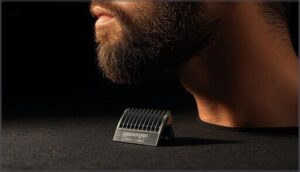
Guard length options make or break your beard fade — get them wrong and you’ll end up with harsh steps instead of a clean taper. Most trimmers use millimeter measurements as your real guide, not just numbers.
A solid starting sequence looks like this:
- Drop from 12mm on your full beard to 9mm near the cheeks
- Step down to 6mm approaching the neckline
- Finish around 3mm at the fade’s edge
Match your trimmer settings to your beard density — thicker beards fade cleanly at shorter lengths, while finer growth needs a longer beard guard to avoid exposing patchy spots.
Trimming The Main Beard Area

Now that your guard lengths are locked in, it’s time to take control of the main beard area. Hold your beard trimmer at roughly 90 degrees to your face and use slow, overlapping passes — this is where beard length management gets real.
Work from your chin outward, applying light pressure. Your tapered beard lives or dies right here.
Creating Smooth Transitions and Blending

Blending is where a beard fade either clicks or falls apart. Small, upward flicking motions with your beard trimmer — rather than hard straight passes — erase those stubborn lines between guard lengths.
Here’s how smooth transitions actually happen:
- Overlap each guard zone by about half to soften gradual fading.
- Use lever adjustments for half-step lengths where gaps appear.
- Recheck angles on both sides to keep tapered edges symmetrical.
Refining Edges With Scissors

Once blending is done, scissors take over for the finishing work. Edge refining is where your tapered beard gets its sharp, clean personality.
Use short scissors for precision trimming along your cheek line — small snips, not full strokes. Comb hair upward to expose strays, then chip them away. That’s beard shaping and hair texturing working together for a polished finish.
Tapering Techniques for Different Beard Lengths

Beard length changes everything about how you approach a taper. A short beard and a long beard aren’t just different in size — they need completely different techniques to look clean and intentional.
Here’s how to handle both, plus how to nail that natural fade finish.
Tapering a Short Beard
Short beard, big impact — but only if your Fade Techniques are on point. Start with your main guard at the chin, then step down one size as you move up the cheeks toward the sideburns.
Trimming Tools like a quality clipper make this a breeze. Those small guard shifts define your Tapered Beard without killing fullness.
Maintenance Tips? Touch up every week — short styles show everything.
Tapering a Long Beard
Long beard tapering is a whole different game. Your goal with Long Beard Styling isn’t to shrink the beard — it’s to sculpt it.
Use Beard Layering to keep your chin length full while stepping down guards along the sidewalls toward the sideburns. Fade Techniques like micro-adjustments between guard sizes keep transitions smooth.
This beard tapering guide keeps your Tapered Beard structured, intentional, and powerful — never overgrown.
Achieving a Natural-Looking Fade
The secret to a convincing Beard Fade is making it look unforced. Use Fade Techniques like flicking your trimmer away from the face at each pass — that small motion does all the heavy lifting for Beard Blending.
Natural Transitions happen when you stick to one guard size difference at a time. Soft Edge Creation and Gradual Layering around the Cheek Line keep your Tapered Beard looking sculpted, not shaved. That’s real Beard Tapering mastery.
Maintaining Your Tapered Beard

Getting a clean taper is one thing — keeping it sharp is a whole different commitment.
Like a fresh haircut, a tapered beard starts losing its edge the moment you walk out the door.
Here’s what it actually takes to stay on top of it.
Setting a Regular Trimming Schedule
Your tapered beard is only as sharp as your grooming schedule. For beard maintenance, trim frequency matters — short beards need cleanup every 7 to 14 days, while medium lengths hold shape every 2 to 4 weeks.
Growth tracking helps you nail your trimming intervals before things get scruffy. Build a schedule planning routine around your lifestyle, and your beard styling stays intentional. Consistent trimmers and a solid grooming schedule make all the difference.
Daily Grooming and Beard Care Tips
Beard hygiene isn’t glamorous, but it’s what keeps your taper looking intentional rather than neglected. Rinse with lukewarm water every morning, and use a dedicated beard wash two to three times a week.
Follow up with beard conditioning oil, massaging it down to the skin — that’s your facial massage moment. It helps skin exfoliation, improves hair texturing, and keeps everything underneath healthy and itch-free.
Touch-Up Methods for Lasting Results
Your taper touchups don’t need to be a full reset — just small, consistent moves. Every three to five days, grab your trimmers and clean up the neckline and cheek lines with edge trimming using a guard one size shorter than your main beard length.
That’s your growth control play. Short upward strokes preserve the beard fade without carving new hard lines. Consistent beard maintenance is what keeps beard refining from becoming beard rebuilding.
Fixing Common Tapering Mistakes
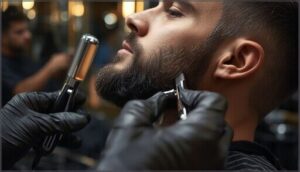
Even the most careful tapers go sideways sometimes — it happens to everyone, barbers included.
The good news is that most mistakes are fixable once you know what to look for.
Here are the most common tapering slip-ups and exactly how to correct them.
Addressing Uneven Taper Lines
Uneven lines happen to everyone — even seasoned barbers catch a crooked cheek line mid-session. The fix is simpler than you think once you know what to look for.
- Step back and run symmetry checks from a distance, tilting your head left and right.
- Use ear and jawline landmarks for beard balancing across both sides.
- Apply fade blending with slow, flicking strokes for smooth line smoothing.
Trust the process.
Correcting Patchy or Thin Areas
Patchy spots don’t have to kill your tapered beard game. For thin area correction, lean into your fade — taper the weak zones higher so sparse growth blends naturally into the gradient instead of standing out.
Beard density tips like trimming thick sections slightly shorter help even everything out. Letting thin areas grow a touch longer is one of those quiet beard care tips that actually works.
Preventing and Soothing Skin Irritation
Skin care doesn’t stop at the fade line. Razor burn and irritation are real, but they’re also avoidable with the right grooming tips baked into your routine.
- Wash with a gentle cleanser before trimming — beard hygiene starts before the clippers even touch your face.
- Apply a fragrance-free aftershave balm immediately for irritation relief.
- Skip alcohol-based products post-trim — they sting and inflame.
- Use beard oil every couple of days for solid facial hair care.
- Exfoliate gently once or twice a week to prevent ingrown hairs.
That’s real post-shave treatment and men’s hygiene working together for cleaner beard grooming results.
Frequently Asked Questions (FAQs)
How to taper a beard for beginners?
Getting a sharp look isn’t rocket science — it’s all about the trim.
Start with quality trimmers, pick the right guard lengths, and blend your facial hair upward for a clean, seamless Tapered Beard every time.
How do I taper down my beard?
Start with your longest guard on your trimmers to set the base beard length, then step down one guard size at a time as you move up toward your sideburns for a clean tapered beard fade.
What does it mean to taper a beard?
Think of a tapered beard as your facial hair’s glow-up — instead of one blunt length, you create a smooth hair gradation that fades from full beard to skin, making your beard texture and beard shaping look intentional.
How to properly fade a beard?
A proper beard fade uses clipper guards in sequence, moving shorter guards higher toward the ear.
Short, flicking upward motions blend each length smoothly, creating that clean gradient effect barbers are known for.
How to taper a beard neckline?
Place your neckline one to two finger widths above your Adam’s apple, following a soft U-curve from ear to ear. That clean line is where great beard shaping always begins.
How to taper a beard?
Some guys rock a full, untamed beard style. Others want precision.
A tapered beard uses trimmers to fade length from chin to sideburns, giving your beard fade that sharp, sculpted look without looking overdone.
Does castor oil help with the growth of a beard?
Castor oil won’t conjure new follicles, but it genuinely promotes beard growth by hydrating strands, reducing breakage, and boosting circulation — solid beard care that makes your facial hair look noticeably fuller over time.
What happens when you taper a beard?
When you taper a beard, hair length gradually shifts from shorter at the cheeks to fuller at the chin, softening your facial structure and creating a cleaner, more intentional look overall.
How do you trim a tapered beard?
Start with your longest guard on the chin, then step down one size toward the sideburns. Use upward flicking motions to blend. Finish with scissors to clean stray hairs.
How often should you taper your beard?
The shorter your beard, the more often you’ll need to taper it. For most guys, every two to four weeks keeps your tapered beard sharp and your grooming game tight.
Conclusion
Funny how a little less beard ends up saying more. Once you know how to taper your beard, that wild, untamed growth stops working against you and starts working for you.
Every guard swap, every blended line, every clean edge is a decision—and those decisions stack up into something that looks seamless. That’s the quiet trick behind every great beard: it never looks like work. But now you know exactly how much work it actually is.