This site is supported by our readers. We may earn a commission, at no cost to you, if you purchase through links.
That relentless itch beneath your beard isn’t just annoying—it’s your skin sending an SOS. Dry skin under facial hair affects nearly 70% of bearded men at some point, turning what should be a badge of masculinity into a source of constant discomfort.
The problem goes deeper than surface-level flaking. Your beard hairs act like wicks, pulling moisture away from the skin beneath while simultaneously trapping dead cells and irritants against your face. This creates a perfect storm of itchiness, flaking, and inflammation that no amount of scratching will fix.
The good news? Learning how to treat dry skin under beard doesn’t require expensive dermatology appointments or complicated routines. With the right combination of cleansing, moisturizing, and lifestyle adjustments, you can transform that desert landscape back into healthy, comfortable skin.
Table Of Contents
- Key Takeaways
- What Causes Dry Skin Under Your Beard?
- How to Identify Dry Skin Under Beard
- Best Cleansing and Exfoliation Practices
- Moisturizing and Conditioning Techniques
- Lifestyle and Grooming Adjustments for Prevention
- Frequently Asked Questions (FAQs)
- How can I moisturize skin under my beard?
- How to fix dead skin under beard?
- How do I fix dry skin under my beard?
- Why is under my beard flaky?
- Is coconut oil good for dry skin under a beard?
- How to exfoliate skin under a beard?
- How can stress affect skin under the beard?
- What role does hydration play in beard health?
- Can specific fabrics irritate skin under the beard?
- How do environmental factors impact skin dryness?
- Conclusion
Key Takeaways
- Dry skin under your beard stems from moisture-wicking facial hair, environmental factors like low humidity, underlying conditions such as seborrheic dermatitis, and poor hydration or nutrition that weakens your skin’s natural oil barrier.
- Effective treatment requires washing your beard only 2-3 times weekly with sulfate-free cleansers, gentle exfoliation once or twice weekly to remove dead skin, and avoiding hot water that strips protective oils.
- Daily application of beard oil or balm while your skin is still damp from showering maximizes moisture absorption, with ingredients like jojoba oil or argan oil mimicking your skin’s natural sebum for optimal hydration.
- Prevention depends on drinking at least eight glasses of water daily, consuming omega-3 rich foods for skin barrier support, protecting your face from harsh weather with scarves and SPF, and regularly sanitizing grooming tools to avoid irritation.
What Causes Dry Skin Under Your Beard?
That dry feeling under your beard doesn’t appear out of nowhere. Several factors can strip away the natural oils your skin needs to stay healthy and comfortable.
Using beard oil at the right frequency helps restore moisture balance and prevents that uncomfortable dryness from settling in.
Let’s look at what’s likely triggering your dryness so you can tackle the root cause.
Environmental Factors (weather, Humidity, Wind)
From winter’s icy grip to summer’s scorching heat, environmental factors constantly challenge your beard’s dry skin. Climate change intensifies these extremes.
Here’s what affects your skin health:
- Humidity Control – Air below 40% relative humidity accelerates moisture loss, worsening dryness beneath facial hair.
- Wind Protection – Strong gusts strip natural oils, demanding barrier creams for beard care.
- Seasonal Adjustments – Indoor heating drops humidity in winter, while air quality fluctuates year-round.
Skin moisturizing routines must adapt as conditions shift.
Skin Conditions (dermatitis, Psoriasis)
Beyond weather, skin conditions like dermatitis and psoriasis can turn the skin under your beard into a dry, irritated battleground.
Seborrheic dermatitis creates greasy scales on your face, while atopic dermatitis triggers relentless itching and flaking. Psoriasis forms thick, red plaques with silvery scales.
These chronic skin inflammation issues demand dermatology-backed care, not just basic moisturizers, to restore skin health beneath facial hair. It’s important to recognize that different types of dermatitis may require customized treatments to effectively relieve symptoms and improve skin condition.
Genetics and Oil Imbalance
Sometimes your genes stack the deck against you. Genetic predisposition affects how your sebaceous function works, controlling oil regulation beneath your beard.
If your family tends toward dry skin, you’ve likely inherited genetic variants that limit sebum production or alter hormone balance. These inherited traits influence how your skin reacts to androgens, determining whether you’ll battle dryness or enjoy naturally moisturized skin under your facial hair.
If your family has dry skin, you likely inherited genes that limit oil production and determine how your facial skin handles moisture
Poor Nutrition and Dehydration
Your diet and fluid intake directly impact beard care and skin health beneath your facial hair. When you don’t drink enough water—about 2 to 3 liters daily—your skin loses moisture and elasticity. Nutrient deficiencies in essential fatty acids, vitamin A, and zinc weaken your skin’s barrier, while poor electrolyte balance and calorie management further compromise hydration timing and skin moisturizing.
Applying beard oil regularly replenishes those lost nutrients and seals in hydration, especially when your diet falls short.
- Chronic dehydration leaves your beard skin feeling tight and rough
- Missing out on omega-3s and vitamins accelerates flaking and dryness
- Skipping meals reduces your skin’s energy to repair itself
- Low iron intake makes your facial skin pale and fragile
- Inadequate protein starves your skin of repair resources
How to Identify Dry Skin Under Beard
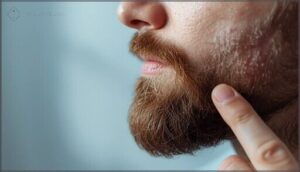
You might suspect dry skin under your beard, but pinpointing the exact problem isn’t always straightforward. The symptoms can range from mild irritation to more persistent issues that affect your comfort and confidence.
Let’s walk through the key signs so you can identify what’s actually happening beneath your facial hair.
Common Symptoms (itching, Flaking, Tightness)
Dry skin under your beard often announces itself with persistent itching that intensifies at night or after washing. You’ll notice white or gray flakes gathering on your clothing and beard hairs, while your skin feels uncomfortably tight—especially along the jawline and neck.
These dry patches may develop small red bumps or rough texture, signaling your skin’s desperate need for moisture and itch relief. Most commonly, these signs can be caused by common skin conditions such as eczema or psoriasis.
Signs of Beard Dandruff Vs. Dry Skin
You can tell the difference by examining the flakes themselves. Beard dandruff produces larger, yellowish, oily flakes that cling to hair strands, especially around your chin and mustache.
Dry skin creates fine, powdery white flakes that brush away easily. Check for redness too—dandruff often brings visible irritation and intense beard itch, while dry skin feels tight without much inflammation.
When to Suspect Underlying Skin Issues
When does simple dryness cross into something more serious? If your dry skin persists despite proper moisturizing, or you notice thick, scaly patches that won’t heal, underlying skin conditions like psoriasis or dermatitis may be at play.
Genetic predisposition, oil imbalance, or hidden infections can cause chronic itching and stubborn beard dandruff that standard treatments won’t fix.
Best Cleansing and Exfoliation Practices
Cleaning your beard the right way makes all the difference when you’re dealing with dry skin underneath. You need to strike a balance between removing dirt and dead skin cells without stripping away the natural oils your skin desperately needs.
Let’s walk through the cleansing and exfoliation practices that actually work.
Choosing Gentle, Sulfate-Free Cleansers
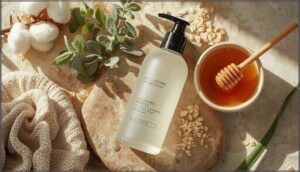
You can’t fight dry skin under your beard if harsh cleansers keep stripping away protective oils. Look for sulfate-free beard care formulations featuring gentle surfactants like cocoglucoside or decyl glucoside.
Three essentials matter most:
- pH balance around 5.0–5.5 to protect your skin barrier
- Hydration ingredients like glycerin or panthenol for moisture retention
- Fragrance-free options if you have sensitive skin or existing skin issues
Proper Washing Frequency
Finding the sweet spot for beard hygiene means washing 2-3 times per week, not daily. Your activity level and climate dictate the schedule—humid weather needs less frequent cleaning, while dry windy conditions may call for more. Hot showers dehydrate skin, so rinse with lukewarm water to preserve oils and maintain skin pH balance.
| Activity Level | Climate Type | Recommended Frequency |
|---|---|---|
| High (outdoor work, exercise) | Dry/windy | 3x per week |
| Moderate (mixed indoor/outdoor) | Temperate | 2x per week |
| Low (mostly indoors) | Humid | 1-2x per week |
Overwashing strips protective sebum and triggers skin issues, so adjust your washing schedules based on sweat and exposure rather than habit.
Exfoliating Dead Skin Cells Safely

Gentle exfoliation clears flaky skin without worsening beard care challenges. Use a soft brush on damp skin in circular motions for 20-30 seconds, then rinse with lukewarm water. Limit this to once or twice weekly to protect your skin barrier.
- Chemical peels with lactic acid work for sensitive types
- Enzyme therapy dissolves dead cells without scrubbing
- Skin brushing devices need low settings and clean heads
- Facial steaming before exfoliating softens stubborn dry skin issues
Always moisturize immediately after to lock in hydration.
Moisturizing and Conditioning Techniques

After you’ve cleaned and exfoliated your beard area, the next step is locking in moisture to protect your skin from drying out again.
This means choosing the right products and applying them correctly so your skin stays hydrated throughout the day. Here’s how to select and use moisturizers that actually work.
Selecting Beard Oils and Balms
Your beard care arsenal needs two key products: beard oil and beard balm. Oils like jojoba or argan mimic your skin’s natural sebum, penetrating quickly without greasiness. Balms blend butters with beeswax for moisture plus light hold.
Choose cold-pressed, unrefined formulas free from mineral oils. For sensitive skin, skip synthetic fragrances and patch-test first.
| Product Type | Best For |
|---|---|
| Lightweight oils (jojoba, grapeseed) | Short beards, daily hydration |
| Rich oils (argan, sweet almond) | Dry skin, deeper nourishment |
| Butter-based balms | Longer beards, styling needs |
| Fragrance-free options | Sensitive or eczema-prone skin |
| Oil-balm combos | Maximum moisture with control |
Application Tips for Maximum Hydration
Timing unlocks the real power of your chosen products. Apply beard oil while your skin is still warm from the shower—heat opens pores and boosts oil absorption into the skin barrier. Layer a hyaluronic acid serum first for serum benefits, then add oil, finishing with balm for moisture locking.
- Massage gently for 20 to 30 seconds to stimulate blood flow and spread product evenly
- Split your routine into two light applications rather than one heavy dose for better hydration techniques
- Reapply a small amount midday if tightness returns, especially in dry climates
- Focus on the skin beneath your beard where dryness starts, not just the hair itself
Natural Remedies for Soothing Dry Skin
Beyond store-bought options, your kitchen holds powerful dry skin treatment allies. Aloe vera gel calms redness on contact, while coconut oil benefits include deep moisture locking when massaged into damp beard skin.
Oatmeal baths soothe itch, and honey masks draw hydration inward. These herbal remedies for skin moisturizing work gently, supporting your beard care routine without harsh chemicals.
Lifestyle and Grooming Adjustments for Prevention

Treating dry skin under your beard doesn’t stop with the right products. Your daily habits and grooming routine play a major role in keeping that skin healthy and hydrated.
Let’s look at three lifestyle adjustments that make a real difference in prevention.
Diet and Hydration for Skin Health
What you eat and drink shapes your skin health from the inside out. Aim for at least eight glasses of water daily to support skin moisturizing and hydration.
Include omega balance from fatty fish, flaxseeds, and walnuts—these healthy fats strengthen your skin barrier. Add water-rich foods like cucumbers and berries for skin nutrition.
Your skin care routine works better when you’re properly hydrated with smart hydration tips.
Protecting Skin From Harsh Weather
When cold winds blow, you’re facing more than discomfort—you’re risking dry skin treatment setbacks. Wind protection starts with a scarf or balaclava for skin shielding across your cheeks and beard.
Apply broad-spectrum SPF 30 to prevent sunburn, even in winter. Run a humidifier indoors for humidifier benefits that counter harsh weather.
Cold therapy means avoiding hot showers that strip moisture. Weather resilience requires consistent skin moisturizing and barrier care.
Regular Tool Cleaning and Beard Maintenance
You can’t skip tool sanitizing if you want to prevent skin irritation and infection. Rinse trimmers and brushes after each use with warm water, then dry completely before storage to avoid rust and bacteria.
Replace razor blades every 5 to 7 shaves for proper blade maintenance. Weekly brush cleaning with mild soap promotes grooming hygiene and keeps your beard health on track.
Frequently Asked Questions (FAQs)
How can I moisturize skin under my beard?
You want soft skin, yet scrubbing too hard backfires.
Apply beard oil or balm daily after washing, massaging it down to your skin.
Natural oils like jojoba lock in moisture without clogging pores.
How to fix dead skin under beard?
Gently exfoliate with a soft brush or beard scrub to remove dead skin buildup.
Follow with a sulfate-free cleanser, then apply beard oil while skin’s damp for facial hydration and beard revitalization—essential for skin renewal.
How do I fix dry skin under my beard?
You notice persistent itching beneath your beard, a sign of dehydration.
Fix dry skin by washing gently two to three times weekly, applying beard oil daily, and exfoliating dead cells regularly to restore moisture balance.
Why is under my beard flaky?
Beard flakes develop when your skin’s oil balance gets disrupted—whether from harsh cleansers stripping natural sebum, cold weather stealing moisture, or underlying conditions like seborrheic dermatitis causing flaky patches beneath your facial hair.
Is coconut oil good for dry skin under a beard?
Coconut oil can help hydrate dry skin under a beard by trapping moisture and softening both hair and skin.
However, it may clog pores if you’re acne-prone, so use it sparingly.
How to exfoliate skin under a beard?
Soak your facial hair with lukewarm water, then massage a sugar-based beard scrub in small circles for one to two minutes.
Rinse thoroughly and follow with beard oil to lock in moisture.
How can stress affect skin under the beard?
Stress hormones like cortisol weaken your skin barrier, making the beard area lose moisture faster.
Inflammation effects worsen itching and flaking, while slower healing leaves dry patches that feel rough and irritated longer.
What role does hydration play in beard health?
Your skin loses up to 25% more water per hour under a beard.
Hydration keeps that barrier strong, cuts down on flaking, and helps facial moisture reach deeper layers where it softens both dry skin and coarse beard hair.
Can specific fabrics irritate skin under the beard?
Yes—rough wool scarves, stiff collars, and synthetic materials trap heat and create friction that worsens dry skin, flaky skin, and textile allergies.
Choose soft cotton fabrics and looser clothing choices to reduce skin friction around your beard.
How do environmental factors impact skin dryness?
Cold weather, wind exposure, and low humidity levels strip moisture from your beard area. UV radiation weakens your skin barrier, while air pollution disrupts natural oils, making dry skin worse.
Conclusion
An ounce of prevention beats a pound of cure—especially when that cure involves scratching your face raw. Now that you know how to treat dry skin under beard through proper cleansing, targeted moisturizing, and strategic lifestyle changes, you hold the blueprint for lasting comfort.
Your beard should boost your confidence, not undermine it. Start with one adjustment today, stay consistent with your routine, and watch that irritated skin transform into the healthy foundation your beard deserves.