This site is supported by our readers. We may earn a commission, at no cost to you, if you purchase through links. This content is for general informational and educational purposes only and is not a substitute for professional medical, dermatological, or nutritional advice.
That brown bottle under your bathroom sink probably cost less than two dollars, and chances are you’ve already wondered whether it could clear a stubborn pimple overnight. Hydrogen peroxide kills bacteria on contact—that part is true—but the same oxidizing reaction that disinfects a scraped knee also disrupts the fibroblasts your skin needs to heal cleanly.
Dermatology guidelines don’t list it as a first-line acne treatment for good reason. Used carelessly, it can leave behind discoloration or a scar that outlasts the breakout by months. Used correctly, at the right dilution and with the right boundaries, it’s a limited but workable spot option.
Here’s exactly how to do it without trading one problem for another.
Table Of Contents
- Key Takeaways
- Should You Use Hydrogen Peroxide?
- Apply Diluted Peroxide as Spot Treatment
- Follow Safe Dilution Rules
- Watch for Skin Side Effects
- Compare Better Acne Alternatives
- Frequently Asked Questions (FAQs)
- Is it good to put hydrogen peroxide on open pimples?
- Can I put hydrogen peroxide on my acne?
- Are you supposed to use hydrogen peroxide on cuts?
- What kills acne bacteria fast?
- How to remove age spots with hydrogen peroxide?
- Can I use hydrogen peroxide on a pimple?
- How long will my skin be white from hydrogen peroxide?
- How to use hydrogen peroxide to remove blackheads?
- Can hydrogen peroxide clear acne?
- Can you use hydrogen peroxide on your skin?
- Conclusion
Key Takeaways
- Always dilute 3% hydrogen peroxide down to 1% before touching it to your skin — one part peroxide, two parts water — and never apply it more than once a day as a spot treatment.
- Hydrogen peroxide can slow down the skin cells that heal wounds, so keep it away from open or popped pimples entirely, or you’re trading a breakout for a potential scar.
- Proven options like benzoyl peroxide, salicylic acid, and retinoids have far stronger evidence behind them, making hydrogen peroxide a backup tool at best, not a go-to acne solution.
- Watch for burning that doesn’t fade, spreading redness, or blistering — any of these means stop immediately, because your skin barrier is taking damage, not getting better.
Should You Use Hydrogen Peroxide?
Hydrogen peroxide isn’t a bad option across the board, but it’s not the right fit for everyone or every breakout. Before you reach for that brown bottle, there are a few honest realities worth knowing. Here’s what dermatologists actually want you to keep in mind first.
Occasional Spot Use Only
Hydrogen peroxide works best as an occasional spot treatment, not a daily face wash. Apply your 1% dilution only to individual pimples — never across broad areas.
Getting the technique right makes all the difference, so check out this guide on how to use hydrogen peroxide safely on skin before your first application.
- Target one lesion at a time
- Use no more than once daily
- Avoid active or open wounds
- Store solution in an opaque container
This protects your microbiome balance and limits skin irritation.
Not First-line Acne Care
Think of hydrogen peroxide as a backup option, not a go‑to.
Dermatology guidelines don’t list it as a first‑line acne treatment, and for good reason — clinical trial evidence remains limited. Proven therapies like benzoyl peroxide have decades of safety data behind them.
For consistent acne management, professional guidance points elsewhere before reaching for this home remedy.
The treatment adherence guidelines emphasize a 6–8‑week response window.
Avoid Open Pimples
Even if hydrogen peroxide isn’t your first choice for acne, knowing where not to apply it matters just as much as how you dilute it.
Avoid open pimples entirely. Research shows that applying an antibacterial agent like hydrogen peroxide — even at a 1% concentration — to broken skin slows fibroblast activity and raises your scarring risk.
Keep these habits in place:
- Hands off technique — never touch active lesions with unwashed hands
- Gentle cleansing only around blemishes, not over broken skin
- Pillowcase hygiene — swap cases every one to two weeks to reduce bacterial transfer
- Avoid friction from towels or tight fabrics rubbing against pimples
After any pimple treatment, moisturize with a non-comedogenic product to restore your skin barrier.
Scarring Risk Concerns
Scarring risk is where things get serious.
When peroxide contacts inflamed or broken skin, it impairs fibroblast activity — the cells that rebuild your skin after damage. That disruption pushes healing toward abnormal collagen remodeling, which can leave atrophic pits or raised tissue.
Peroxide on broken skin disrupts fibroblast activity, steering healing toward scarring instead of recovery
People with deeper skin tones face additional risk: post-inflammatory hyperpigmentation can linger for months, even after the lesion clears.
Dermatologist Guidance
Most dermatologists are clear on this: hydrogen peroxide isn’t a go‑to acne treatment.
It can also irritate already-sensitive skin, so if you notice persistent redness, check out these dermatologist-backed tips for calming reactive skin before continuing any treatment.
If you try it, stick to a 1% dilution ratio — mix one part 3% peroxide with two parts water.
Always patch test first, limit use to once daily, and follow up with a non‑comedogenic moisturizer to protect your skin barrier from dryness and adverse reactions.
Apply Diluted Peroxide as Spot Treatment
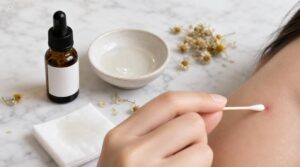
Getting the application right matters just as much as getting the dilution right. Done carefully, this is a simple five-step process you can work into your routine without much hassle. Here’s exactly how to do it.
Cleanse and Pat Dry
Start with clean, dry skin before anything else. Wash your face with a gentle cleanser and warm water, then pat dry with a clean towel — don’t rub.
Rubbing creates friction that irritates active breakouts and can make redness worse. Patting until your skin is just barely dry gives you a controlled surface, so the peroxide goes exactly where you intend.
Mix 3% With Two Parts Water
Getting the dilution right is the difference between a useful spot treatment and unnecessary skin irritation. Take your standard 3% hydrogen peroxide and mix one part with two parts water — one teaspoon of peroxide to two teaspoons of water, for example. That brings the concentration down to roughly 1%, which is the safe upper limit for facial skin.
- Measure peroxide first, then add exactly twice that volume of water
- Use the same unit — teaspoons, caps, or milliliters — for consistency
- Mix gently until fully combined before touching it to your face
- Prepare only what you need that day; don’t store leftovers
- Never use the 3% solution undiluted directly on acne-prone skin
Fresh mixture preparation matters because hydrogen peroxide breaks down over time, losing potency and reliability. Mixing only what you’ll use right now means you’re always working with the intended concentration — no guessing, no waste.
Dab Pimples With Cotton
Once your diluted 1% solution is ready, dip a fresh cotton swab or cotton pad into it — just enough to dampen, not soak. Press gently onto each pimple using a light dabbing motion. Don’t drag across the surrounding skin.
Use a fresh cotton piece for each spot to avoid spreading bacteria. Avoid the eyes, lips, and any broken skin entirely.
Wait Five to Seven Minutes
Once the solution is on your skin, start timing immediately — and let it sit for five to seven minutes. This contact duration gives the oxidizing agent enough time to work at the pore level without overexposing your skin.
Watch for these signals during the wait:
- Mild tingling is normal at 1% concentration
- Strong burning means rinse off now, don’t wait
- Keep the treated area still to prevent hydrogen peroxide from spreading
- Avoid re-dabbing during this window — one application is enough
Rinse timing matters. If irritation worsens before five minutes, skin recovery starts sooner when you act quickly.
Rinse and Moisturize
After five to seven minutes, rinse the treated area with lukewarm water — not hot, which can worsen irritation. Pat dry gently with a clean, soft towel; no rubbing.
If you’d like a gentler routine from start to finish, this step-by-step guide to removing makeup the right way shows how to keep skin calm and clean.
For the full technique from start to finish, using a silicone face scrubber correctly means keeping every step — including rinse time — brief and gentle.
If you’re unsure whether tonight calls for a full double cleanse, this guide on how to double cleanse your face properly can help you decide based on your skin’s needs.
Then apply a thin layer of oil-free moisturizer while skin is still slightly damp to lock in hydration and support your barrier.
Follow Safe Dilution Rules
Getting the concentration right isn’t optional — it’s the whole ballgame. Too strong, and you’re risking burns; too weak, and you’ve wasted your time. Keep these rules in mind before you apply anything to your skin.
Use One Percent Maximum
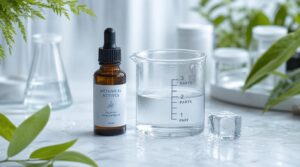
When using hydrogen peroxide for acne, 1% concentration is your ceiling. Start with standard 3% pharmacy peroxide and apply the 1:2 dilution ratio — one part peroxide, two parts water.
Measure carefully; eyeballing leaves the final strength higher than intended.
Before treating any blemishes, patch test first on a small area to confirm your skin tolerates it.
Never Apply High Strengths
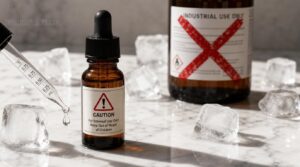
Measuring carefully matters — and so does knowing which concentrations to avoid entirely. Never apply hydrogen peroxide stronger than a diluted 1% concentration to acne-prone skin. The 3% concentration sold in pharmacies is already the maximum safe starting point, not an application-ready strength. Anything above that can cause chemical burns, blistering, and lasting tissue damage within minutes of contact.
High-strength peroxide, such as 35% industrial-grade solutions, has no place in acne care. It strips your skin barrier aggressively, worsening inflammation rather than calming it.
Patch Test First
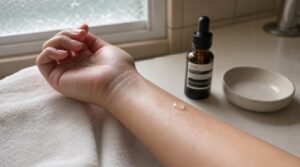
Before you apply diluted hydrogen peroxide to your face, do a home patch test first. Apply a small amount of your 1% solution to the back of your arm or behind your ear — areas easy to watch closely.
Key things to check during patch test timing:
- Wait 24 hours before drawing conclusions
- Watch for redness, swelling, or burning
- Note any delayed skin reaction that develops hours later
- A negative result reduces risk but doesn’t guarantee facial tolerance
Skin sensitivity varies from person to person, so even a correctly diluted solution can trigger adverse skin reactions on some individuals. If anything looks irritated after testing, don’t move forward with facial application.
Avoid Eyes and Hair
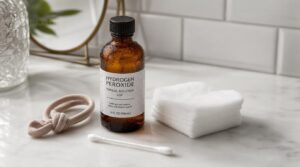
Once your patch test is clear, keep one rule front of mind during application: keep peroxide away from your eyes and hair. The skin around your eyelids is thinner than the rest of your face, so even a small amount of hydrogen peroxide can cause lasting redness there.
Pull your hair back first, then use a cotton swab for targeted application to each acne spot only.
Limit to Once Daily
Once daily is the hard limit for hydrogen peroxide on acne — no exceptions. Using a diluted 1% concentration more often doesn’t speed up results; it stacks irritation.
If you’re already using retinoids or salicylic acid, space your treatments across different days.
Watch your skin closely after each application, and if redness lingers into the next morning, stop.
Watch for Skin Side Effects

Hydrogen peroxide can irritate your skin even at low concentrations, so knowing what to watch for matters. Some reactions show up quickly, while others develop over time with repeated use. Here are the key side effects to keep an eye on.
Burning and Redness
Burning and redness are your first warning signals. When you apply hydrogen peroxide, a brief, mild sting is common — but burning that intensifies means you’ve crossed your skin’s irritant threshold.
- Redness appearing within minutes signals irritant contact, not progress
- Prolonged burning indicates the skin barrier is already stressed
- Worsening inflammation after reapplication means stop immediately
Protect your skin barrier protection by discontinuing use when symptoms escalate.
Dryness and Peeling
Dryness and peeling are hydrogen peroxide’s quieter side effects — easy to overlook until your skin starts flaking.
Repeated daily use keeps your skin in an irritated cycle, stripping the hydrolipid film that locks moisture in.
Combat this with moisturizer application immediately after rinsing, and ease friction by patting — never rubbing — dry.
Chemical Burn Signs
There’s a clear line between normal irritation and a chemical burn — and hydrogen peroxide can cross it fast. Watch for redness and swelling that intensifies rather than fades, along with a sharp burning or tingling sensation at the contact site.
Blister formation signals deeper tissue injury.
In more severe cases, you may notice skin discoloration — white, brown, or black — or eschar development, the dark dead skin that forms with serious burns.
Stop use immediately if any of these appear.
Delayed Wound Healing
Hydrogen peroxide doesn’t just irritate — it can quietly stall your skin’s ability to repair itself. Research shows it impairs fibroblast activity, the cellular work behind collagen production and tissue rebuilding.
Even at 1%, it can slow that process down. Apply it to an open pimple, and you’re disrupting the very oxygen supply and moisture balance your skin needs to close the wound cleanly.
Stop if Irritation Worsens
Your skin is telling you something — don’t ignore it. Stop burning immediately if stinging goes beyond mild discomfort or doesn’t fade within a minute or two.
Redness escalation signs, like spreading warmth, swelling, or hives, mean hydrogen peroxide is causing skin barrier disruption, not clearing your acne.
Discontinue use and consult a dermatologist if adverse skin effects persist after stopping.
Compare Better Acne Alternatives
Hydrogen peroxide isn’t your strongest option for clearing acne, and dermatologists have better tools to recommend. The good news is that several well-tested treatments work with your skin instead of against it. Here’s what’s worth considering.
Benzoyl Peroxide Benefits
If you’re looking for a more reliable alternative to hydrogen peroxide, benzoyl peroxide is worth your attention. Unlike hydrogen peroxide, it’s oil-soluble, meaning it reaches deep into pores where acne actually starts. Here’s why dermatologists favor it:
- Antibacterial action — kills Cutibacterium acnes directly
- Anti-inflammatory effect — reduces redness and swelling
- Prevents breakouts — works inside follicles continuously
- Multi-type treatment — treats both inflammatory and noninflammatory acne
- Reduces antibiotic use — its oxidative mechanism doesn’t drive resistance
Salicylic Acid Uses
Salicylic acid works differently from hydrogen peroxide — instead of oxidizing bacteria, it acts as a keratolytic exfoliant, loosening dead skin cells and clearing debris from inside your pores. That’s what makes it particularly effective for blackheads and whiteheads.
It penetrates the pore itself, targeting congestion at the source rather than just treating the surface.
Retinoids for Breakouts
Retinoids take a different approach altogether. While salicylic acid clears what’s already clogged, a topical retinoid stops new clogs from forming — it speeds up cell turnover so dead skin sheds before it blocks pores.
- Reduces microcomedone formation — fewer future breakouts
- Calms inflammation around active lesions
- Works for both blackheads and inflamed bumps
Gentle Moisturizer Support
Once retinoids are in your routine, your skin barrier needs backup. Any active treatment — including hydrogen peroxide — can leave skin dry and reactive.
That’s where a fragrance-free moisturizer earns its place. Look for a non-comedogenic lotion with ceramides for barrier repair, glycerin as a hydration humectant blend, and no heavy oils.
Apply it after treatment to lock in comfort without clogging pores.
Severe Acne Treatment Options
When hydrogen peroxide and standard topicals aren’t enough, prescription options take over.
Systemic antibiotics like doxycycline reduce bacteria and inflammation but are limited to 12 weeks. Isotretinoin therapy targets severe, recalcitrant acne by shrinking oil glands — though it requires strict medical monitoring.
Corticosteroid injections quickly flatten painful cysts.
For hormonal acne, spironolactone or oral contraceptives help regulate androgen-driven flares.
Frequently Asked Questions (FAQs)
Is it good to put hydrogen peroxide on open pimples?
Not ideal. Putting peroxide on an open pustule risks healing time delay and irritation. It disrupts your microbiome balance, damages the skin barrier, and can worsen inflammation rather than calm it.
Can I put hydrogen peroxide on my acne?
Yes, but with caution. Hydrogen peroxide has antibacterial properties that may help, but it can irritate skin, disrupt your microbiome, and delay healing. Use it only as a diluted spot treatment.
Are you supposed to use hydrogen peroxide on cuts?
Not exactly. Most wound-care experts now recommend rinsing cuts with clean water instead. Hydrogen peroxide can damage healthy cells alongside bacteria, which slows healing and may increase scarring risk.
What kills acne bacteria fast?
Benzoyl peroxide kills acne bacteria fastest by releasing oxygen directly into pores. Salicylic acid clears buildup, while retinoids prevent new clogs.
If you’re wondering how long until spot treatment works, most people notice less redness and swelling within just a few days of consistent use.
Tea tree oil offers mild antibacterial support. All outperform hydrogen peroxide for consistent acne control.
How to remove age spots with hydrogen peroxide?
Hydrogen peroxide can lighten age spots when applied carefully. Dab a 1% diluted solution on spots once daily, wait five minutes, then rinse. Always patch test first and follow with moisturizer.
Can I use hydrogen peroxide on a pimple?
You can use hydrogen peroxide on a pimple, but spot use only — never across your whole face. Keep it diluted to 1%, and don’t apply it to open or popped lesions.
How long will my skin be white from hydrogen peroxide?
That white tinge is your skin’s warning flag. It fades within minutes to hours after rinsing. Sensitive skin or longer exposure may extend discoloration. At 3% concentration, effects clear quickly; persistent whitening signals irritation.
How to use hydrogen peroxide to remove blackheads?
To remove blackheads, dab diluted 1% concentration onto clogged pores using a cotton swab. Leave it for five to seven minutes, then rinse and moisturize. Don’t apply it daily — your skin barrier needs recovery time.
Can hydrogen peroxide clear acne?
Yes, but only partially. As an antibacterial agent, diluted 1% concentration hydrogen peroxide can reduce surface bacteria linked to acne. It won’t address clogged pores or hormones — the deeper drivers of most breakouts.
Can you use hydrogen peroxide on your skin?
Hydrogen peroxide can be applied to skin, but only in a diluted 1% concentration. Dermatologists don’t recommend it as a routine treatment — it’s best reserved for careful, occasional spot use.
Conclusion
What you do next determines whether that pimple fades cleanly or leaves something behind. Knowing how to use hydrogen peroxide for acne means recognizing its hard limits—dilute it properly, spot‑treat only, and stop the moment your skin pushes back. It’s a narrow tool, not a routine.
If breakouts keep returning, a proven treatment like benzoyl peroxide or salicylic acid will serve your skin far better than that brown bottle ever could.