
This site is supported by our readers. We may earn a commission, at no cost to you, if you purchase through links.
Most guys loading a shaving brush for the first time make the same mistake—they treat it like a bar of hand soap, swirl it around for five seconds, and wonder why their lather looks like watery disappointment. Here’s the truth: shaving soap isn’t difficult to use, but it requires a completely different technique than squirting foam from a can.
The payoff? Skin hydration jumps by 15% immediately after shaving, razor drag drops by up to 18%, and a single puck delivers 200 to 350 shaves—which means that $15 investment suddenly looks pretty smart.
Learning how to use shaving soap properly transforms your morning routine from a rushed chore into something closer to a deliberate ritual, one that your face will actually thank you for.
Table Of Contents
- Key Takeaways
- What is Shaving Soap and Why Use It?
- What You Need to Use Shaving Soap
- How to Prepare for Shaving With Soap
- How to Lather Shaving Soap Correctly
- Step-by-Step Guide to Shaving With Soap
- Post-Shave Care After Using Shaving Soap
- How to Maintain Your Shaving Soap and Brush
- Frequently Asked Questions (FAQs)
- Conclusion
Key Takeaways
- Shaving soap delivers measurable benefits over canned foam—15% better skin hydration, 12-18% less razor drag, and 200-350 shaves per puck versus 60-90 from creams, making it both more effective and cost-efficient at under 25 cents per shave.
- The technique matters more than the product: soak your brush for 2-5 minutes, load soap with circular motions for 30 seconds, build thick lather (bowl method creates 15-30% more volume), and always shave with the grain to cut irritation by 14%.
- Proper prep transforms your shave—warm water softens facial hair by 22%, a clean face improves razor glide by 15%, and blooming your soap for 8 minutes boosts lather stability by 15-25%.
- Tool maintenance extends their life significantly: dry your brush upright to reduce moisture retention by 20%, store soap below 70% humidity with the lid off between uses, and rinse your razor after each stroke to cut nicks by 9%.
What is Shaving Soap and Why Use It?
Shaving soap isn’t just another grooming product—it’s a breakthrough that transforms your daily routine into something closer to an old-school barbershop experience. If you’ve been using canned foam or basic creams, you’re missing out on protection, comfort, and results that actually last.
Here’s why making the switch matters for your skin, your wallet, and the quality of your shave.
Benefits Over Shaving Creams
When you stack shaving soap against typical shaving cream, the differences jump out fast. Traditional wet shave methods deliver real advantages you’ll notice from the first pass of your razor:
- Skin hydration improves by up to 15% immediately after shaving compared to mainstream foams
- Lather quality stays thicker longer, reducing razor drag by 12–18% for smoother glide
- Cost savings add up quickly—one puck gives you 200–350 shaves versus 60–90 from most creams
- Soap longevity means your investment lasts, with quality pucks maintaining performance for 12+ months
- Fewer irritation reports (22% reduction) when you master proper shaving techniques with soap-based lathers
How Shaving Soap Protects Skin
You’re not just slathering on lather for fun—you’re building a skin barrier that matters. That dense foam reduces blade friction by up to 35%, giving you razor glide that feels smooth.
Shaving soap builds a protective barrier that cuts blade friction by 35%, delivering smooth, effortless razor glide
Your stratum corneum stays moisturised longer, cutting transepidermal water loss by 9–14%. For sensitive skin, that means real irritation reduction—about 15% less redness in the first 24 hours.
Shaving soap delivers actual skin care, not empty promises.
Cost-Effectiveness and Longevity
Beyond protecting skin, your wallet gets a break too. A quality shaving soap puck lasts 6–12 months with daily use—that’s 2–3 times longer than cream. You’ll spend under 25 cents per shave versus 50 cents to a dollar with premium shaving products.
Switch from foam to soap in your shaving routine, and you’ll pocket 25–40% savings annually. That’s smart budget shaving with zero compromise.
What You Need to Use Shaving Soap
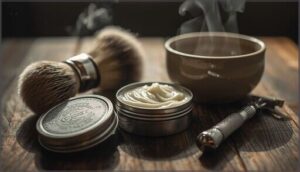
Before you can build that perfect lather, you’ll need to gather a few essential tools. The good news is that once you’ve got the basics down, you’re set for months—or even a year—of great shaves.
Let’s break down what belongs in your shaving kit and how to choose the right gear for your needs.
Choosing a Shaving Brush
Your shaving brush is the backbone of a great lather—it’s what transforms a hard puck of shaving soap into protective cream. Here’s what you need to keep in mind:
- Brush materials: Badger hair brushes hold water exceptionally well, while synthetic options retain moisture up to twice as long and cost less overall.
- Bristle types: Silvertip badger offers peerless softness; boar creates denser lather but needs more loading time.
- Handle ergonomics: Nonslip grips reduce hand fatigue during longer grooming sessions.
- Brush maintenance: Proper drying cuts bacteria by 95% within a day.
Selecting The Right Razor
The razor you choose makes or breaks your shave. Traditional safety razors need 15–20% less pressure than cartridge models, which translates to fewer nicks and reduced razor burn. Stainless steel construction cuts corrosion risk by 98%, while double-edge blades show 12% lower micro-cut rates than multi-blade systems.
| Razor Type | Best For |
|---|---|
| Safety Razor | Precision control, cost savings |
| Cartridge Razor | Quick shaves, travel convenience |
| Adjustable Razor | Customizing blade exposure, sensitive skin |
Picking The Best Shaving Soap
Your skin chemistry dictates the formula. Tallow-based soaps deliver 12–18% better lubricity than plant options, but vegetable oils dominate 68% of artisan offerings for good reason—they’re gentler.
Check shaving soap reviews for lather quality feedback. Fragrance-free formulas reduce irritation by 15–20% if you’re sensitive.
A quality shave soap puck with glycerin keeps moisture locked in, essential for protecting your face during each pass.
How to Prepare for Shaving With Soap

Think of prep work like a good warm-up before a workout—you wouldn’t skip it, and the same goes for shaving.
Getting your tools and skin ready makes the difference between a mediocre shave and one that feels seamless. Here’s what you need to do before you even touch that razor.
Soaking The Brush Properly
Think of your brush like a sponge—it needs proper hydration to work its magic. Soak your shaving brush in warm water (around 97–104°F) for 2–5 minutes before loading. This simple step boosts lather quality by up to 25% and helps with brush hydration.
Natural bristles benefit most from wet shaving prep, while synthetic knots just need a quick dunk. Proper soak timing matters.
Softening Hair and Skin
Want a blade to glide like butter? Warm water is your secret weapon. A quick 3-minute soak softens facial hair by 22%, making shaving techniques more effective on sensitive skin.
Try this: hop in a warm shower or press a hot towel against your face—heat opens pores and preps hydrated skin for lather benefits. Hair hydration transforms tough stubble into something manageable, setting you up for skin care success with your shaving soap.
Cleaning The Area to Be Shaved
You wouldn’t paint a dirty wall, right? Same goes for your shave zone. A quick cleanse before lathering shaving soap removes oils and debris that kill razor glide—we’re talking 15% smoother strokes.
For sensitive skin, gentle exfoliation slashes irritation by 8-12% while keeping microbiome balance intact.
Clean skin preparation means better lather stability and serious skin care wins.
How to Lather Shaving Soap Correctly
Getting the lather right is where most people stumble, but it’s honestly the most satisfying part once you nail it. You’re not just slapping soap on your face—you’re building a cushion that’ll make your razor glide like it’s on silk.
Let’s break down the three key steps that’ll turn you from a novice into someone who knows their way around a soap puck.
Blooming The Soap (Optional Step)

Blooming your shaving soap puck isn’t required, but it’s a key improvement for lather quality. Pour hot water over the soap and let it sit for about 8 minutes—this soap hydration process softens the surface and boosts lather stability by 15–25%.
Just pour off the bloom water into your shaving bowl before loading your shaving brush, and you’ll notice the difference immediately.
Loading The Brush With Soap

Once you’ve poured off that bloom water, it’s time to load your shaving brush with soap. Use tight circular motions on the puck for about 30 seconds—this loading technique maximizes soap uptake while keeping brush hydration balanced.
You’ll see a thick paste forming on the bristles. Don’t press too hard; let the brush do the work, and your lather quality will skyrocket.
Building Lather in a Bowl Vs. Face

Now you’ve got soap loaded—time to build that lather. Bowl lathering gives you denser foam with 15–30% more volume and stays stable for 60–90 seconds, perfect for multi-pass shaves.
Face lathering creates a creamier, wetter texture with excellent lubrication, though it breaks down faster at 40–70 seconds.
Your shaving brush technique and soap hydration determine lather stability either way.
Step-by-Step Guide to Shaving With Soap

Now that you’ve built a solid lather, it’s time to put that brush to work and get the actual shave done right. The key is working methodically—applying your lather where it needs to go, respecting the direction your hair grows, and keeping your razor clean as you move along.
Let’s walk through each step so you can nail the technique every time.
Applying Lather Evenly
Evenly spread shaving soap across your face to cut drag by up to 12%—texture matters. Use your shaving brush at gentle angles, painting lather in circular motions to guarantee consistent soap distribution and proper lather thickness.
Skin preparation pays off here: well-hydrated skin grabs lather consistency better, letting your brush glide smoothly. Face lathering works, but don’t rush it—cover every inch you’re planning to shave.
Shaving With The Grain
Once your lather’s in place, here’s where shave techniques really count: follow the grain direction of your hair. Mapping your hair texture first prevents razor burn and cuts—facial hair grows in different patterns across your face.
Keep your razor angle at about 30 degrees and apply gentle skin tension with your free hand. This shaving routine cuts irritation by up to 14% while your shaving soap does the heavy lifting.
Rinsing The Razor for Best Results
Between passes, proper rinse techniques make all the difference—your razor maintenance routine cuts nicks by 9% compared to skipping this step. Hold your razor at 35–45 degrees under warm water after every other stroke:
- Remove lather removal and hair buildup that clogs the blade
- Reduce drag by 12% for smoother blade cleaning
- Keep water temperature steady (25–40°C) to maintain lather stability
This prevents razor burn while preserving your shaving brush work.
Post-Shave Care After Using Shaving Soap

What you do after shaving matters just as much as the shave itself. Your skin’s just been through a lot—razor passes, lather, friction—and now it needs some TLC to stay smooth and irritation-free.
Let’s walk through the essentials of rinsing, moisturizing, and handling any post-shave issues that pop up.
Rinsing and Moisturizing Skin
Once you’ve finished shaving, splash your face with cool water—it helps maintain skin pH balance and reduces post-shave redness by up to 22%. Pat (don’t rub) your skin dry, then lock in hydration within three minutes. Choose your moisturizer wisely:
| Moisturizer Types | Best For |
|---|---|
| Oil-based balms | Dry skin, delivers 7% more hydration |
| Ceramide formulas | Skin barrier repair, reduces water loss 16% |
| Fragrance-free lotions | Sensitive skin, prevents contact dermatitis |
Your post-shave hydration routine is crucial—daily moisturizing lowers skin roughness by 13%.
Treating Razor Burn or Irritation
Despite your best efforts, irritation happens—but quick action makes all the difference. Within five minutes, apply an alcohol-free balm to cut redness by 26% and soothe that burning sensation.
For razor burn remedies that really work, reach for fragrance-free moisturizers with ceramides; they lower itch by 17% in 24 hours.
Cooling gels provide fast relief, and gentle hydrocortisone cream addresses persistent ingrown hair treatment needs when irritation prevention falls short.
How to Maintain Your Shaving Soap and Brush
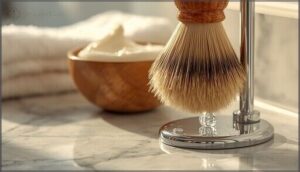
Taking care of your shaving tools isn’t complicated, but it makes all the difference in how long they last and how well they perform. A little attention after each shave keeps your brush in great shape and your soap ready for the next use.
Here’s what you need to know to keep everything working like it should.
Cleaning and Drying The Brush
Your brush deserves the same care you give your blade. After each shave, rinse thoroughly under warm water—38–43°C works best—using your fingers to scrub trapped lather from the knot.
This soap removal cuts residue buildup by 60% over two weeks. Shake out excess water, then stand your brush upright on a proper holder.
Vertical drying reduces moisture retention by 20% and keeps mildew at bay.
Storing Shaving Soap Properly
Where you store your shaving soap determines how long it lasts. Humid bathrooms can soften your puck by 8–12% within weeks, cutting its life short.
Keep these grooming products in peak condition:
- Humidity Control: Store below 70% relative humidity to preserve firmness
- Ventilation Tips: Leave the lid off 24–48 hours between shaves for complete drying
- Storage Locations: Use sealed containers away from shower steam
- Moisture Management: Never close wet soap—it’ll trap water and degrade faster
Extending The Life of Your Tools
Your gear can last years if you treat it right. Dry your shaving brush bristles-down on a stand after every use—proper brush care cuts breakage by 12–18% annually. Rinse your razor under hot water between strokes and store it dry to extend blade life by 15–25%. Rotate between multiple brushes if possible.
These grooming techniques and storage tips make tool maintenance easy while maximizing soap longevity and razor sharpening intervals.
Frequently Asked Questions (FAQs)
Can shaving soap be used on sensitive skin?
Yes, quality shaving soap works beautifully on sensitive skin—especially fragrance-free, pH-balanced formulations. Dermatologists often recommend them because they reduce razor burn and irritation better than conventional foams, protecting your skin’s natural barrier.
How long does shaving soap take to dry?
After you rinse your shave soap, surface moisture evaporates in about 12 to 24 minutes under typical bathroom humidity.
Leave the lid off for a couple days to fully dry and prevent hardening issues.
What water temperature works best for lathering?
Warm water around 89–100°F works best for lathering shaving soap, maximizing foam volume and soap dissolution.
Cooler temperatures reduce skin irritation but slightly decrease lather stability, while water above 110°F compromises foam quality.
Can you travel with shaving soap easily?
Solid soaps breeze through airport security without liquid restrictions—TSA allows them unrestricted in carry-on luggage essentials.
Most frequent flyers prefer compact soap pucks for men’s grooming, making shaving soap travel-friendly and trouble-free for personal care on the go.
Does shaving soap expire or go bad?
Most shaving soap stays stable for two to five years when stored properly.
Watch for color changes, unusual odors, or cracking—those signal it’s time to replace your puck and refresh your shaving products.
Conclusion
Think of learning how to use shaving soap like mastering a manual transmission—awkward at first, second nature after a few attempts. You’ve got the technique now: soak, load, build lather, shave with the grain, and maintain your tools.
The difference between foam-can convenience and this traditional approach isn’t just about nostalgia—it’s about control, skin health, and results you can actually feel. Your face deserves better than shortcuts. Give it the real thing.