This site is supported by our readers. We may earn a commission, at no cost to you, if you purchase through links. This content is for general informational and educational purposes only and is not a substitute for professional medical, dermatological, or nutritional advice.
Most people treat nose hair grooming like a minor inconvenience—something to handle quickly before heading out the door. But the method you choose matters more than you’d think, and one popular salon option carries risks that most clients never hear about until something goes wrong.
Nose hair isn’t just an aesthetic nuisance; it’s your respiratory system’s first physical defense against dust, pollen, bacteria, and airborne debris. Removing too much—or removing it the wrong way—can quietly compromise that protection.
Whether you’re deciding between trimming and waxing, understanding what doctors and dermatologists actually recommend makes the choice a lot clearer.
Table Of Contents
Key Takeaways
- Trimming is the only doctor-approved method because it keeps your nose hair’s protective barrier intact, while waxing pulls hair out at the root and opens the door to serious infections like nasal vestibulitis or an abscess.
- Your nose hair isn’t just cosmetic — it filters dust, allergens, and bacteria before they reach your lungs, and removing too much of it quietly weakens that defense every day.
- Waxing inside your nostrils creates micro-tears in warm, bacteria-rich tissue that sits close to blood vessels connected to your brain, making even a "quick salon fix" a genuine medical risk.
- A rounded-tip trimmer or small scissors, used every one to four weeks on only the hairs you can visibly see, is all you need to stay clean, safe, and fully protected.
Trim or Wax Nose Hair?

Choosing between trimming and waxing nose hair isn’t just a grooming preference — it’s a decision that directly affects your health. Doctors are pretty clear about which method is safer, and the reasons come down to a few key factors.
Trimming wins on safety for good reason, and understanding why trimming nose hair is healthier than plucking makes it easy to see why doctors consistently recommend it.
Here’s what you need to know before picking up any tool.
Best Choice for Safety and Comfort
When comfort and safety are the priority, trimming wins every time. Non‑invasive grooming with a well-designed electric trimmer — think ergonomic grip, quiet motor technology, and low‑heat operation — keeps the process simple and pain‑free. This aligns with the principle of adjustable ergonomic features that increase comfort while maintaining safety.
trimming the smarter choice:
- Cuts only the visible hair, leaving protective hairs intact
- Reduces infection risk compared to waxing or plucking
- Comfortable device design makes regular upkeep genuinely easy
Which Method Preserves Nasal Filtration
Trimming nasal filtration function of hair by keeping most of the barrier intact. Waxing removes hair at the root, disrupting particle capture efficiency and the barrier healing process.
Here’s each method stacks up:
| Factor | Trimming | Waxing |
|---|---|---|
| Mucus Retention | Maintained | Compromised |
| Ciliary Beat Coordination | Unaffected | Disrupted by inflammation |
| Airflow Turbulence Management | Preserved | Reduced |
| Particle Capture Efficiency | High | Considerably lowered |
When Trimming is The Better Option
Once you know how much filtration depends on keeping hair in place, the case for gentle hair management becomes hard to ignore.
Safe nose hair trimming makes sense when:
- You want mucosal protection without infection risk
- Cost-effective maintenance matters — no salon visits required
- Minimalist grooming fits your routine
Proper techniques for nose hair trimming, guided by otolaryngologists, preserve nasal hygiene while offering a reduced bleeding risk.
Why Waxing is Usually Discouraged
Waxing pulls hair from the root, which opens follicles and disrupts mucosal integrity loss in a warm, bacteria‑rich environment. That breach creates a real vascular infection pathway — bacteria can travel quickly toward the cranial cavity, raising cranial complication risk.
Nasal vestibulitis and nasal abscess are documented outcomes. Skin barrier breaches from cosmetic procedures here aren’t trivial.
Doctors discourage it for good reason.
Why Nose Hair Matters

Nose hair doesn’t get much credit, but it’s doing more work than most people realize. It’s not just there to look awkward or catch you off guard in photos — it’s actually a built-in defense system your body relies on every day.
Here’s what it’s quietly handling for you.
Filtering Dust, Pollen, and Debris
Your nose hair works like a layered filtration system — trapping large dust particles through impaction capture, catching mid-sized debris via interception mechanism, and pulling tiny airborne particles in through diffusion filtration. Think of it as your body’s built-in pre-filter function, reducing the filter loading impact on your lungs.
Your nose hair is your body’s built-in air filter, trapping dust, debris, and particles before they reach your lungs
Dust, pollen, and other airborne particles don’t stand much of a chance.
Supporting Respiratory Protection
Beyond trapping particles, your nose hair plays a quiet but critical role in full respiratory protection — and that matters more than most people realize.
Here’s what it provides daily:
- Allergen Load Reduction — filters airborne allergens before they reach your airways
- Airflow Resistance — helps regulate breathing pressure naturally
- Respiratory Hygiene — forms a front-line barrier against pathogens
- Mask Seal Compatibility — irritation-free skin provides a better fit
- Fit Testing Integration — healthy nasal tissue means consistent, comfortable seals
Helping Trigger The Sneeze Reflex
Your nose hair does more than filter — it’s the trigger wire for your sneeze reflex. When irritants contact the nasal mucosa, sensory nerves fire a signal straight to the brainstem, launching a reflexive sneeze to clear your nasal passages.
Waxing removes that hair at the root, leaving fewer contact points for this response. Trimming versus waxing matters here because trimming keeps enough hair intact to maintain that protective sensitivity.
Preserving Nasal Moisture and Comfort
Your nose hair actually helps regulate nasal moisture — it slows airflow just enough to let exhaled humidity recirculate back into the nasal mucosa.
For cleaner results without irritation, precision grooming tools with ergonomic handles let you work carefully around sensitive areas without disrupting that natural moisture balance.
Waxing strips remove that mechanism, leaving your nasal passages more vulnerable to dryness, especially in low-humidity environments. Trimming preserves this natural barrier.
If dryness follows any grooming, then saline nasal spray, steam inhalation, humidifier use, or barrier ointment application can restore comfort quickly.
Waxing Risks and Complications

Waxing might seem like a quick, clean fix, but inside your nostrils, it’s a different story.
The skin is thin, sensitive, and sits dangerously close to blood vessels that connect directly to your brain.
Here’s what can go wrong when wax meets your nasal lining.
Skin Barrier Damage in The Nostrils
Your nostril lining depends on a delicate hydrolipid layer to stay protected — waxing strips that strip away entirely.
This epithelial barrier compromise leaves the tissue open to infection, dryness, and ongoing irritation.
Occlusive moisture build-up inside the nose then traps bacteria against already‑vulnerable skin.
Combined with mechanical friction stress during extraction, these skin barrier breaches from cosmetic procedures create conditions where nasal mucosal injury and post‑extraction healing become genuinely difficult to manage.
Burns, Irritation, and Pain
Hot wax inside your nostril isn’t just uncomfortable — it can cause real thermal burns to sensitive mucosal tissue. Wax heat burns trigger inflammatory mediator release, including histamine and bradykinin, which sensitize nerve endings and intensify the burning sensation long after the wax is removed.
That inflammation damages your skin barrier further, causing redness and irritation that can linger for days.
Sensory nerve activation from heat exposure makes even mild airflow feel sharp and painful.
Folliculitis, Vestibulitis, and Abscess Risk
Damaged skin from waxing doesn’t just hurt — it opens the door to folliculitis, where bacteria like Staph aureus enter wounded follicles and trigger painful, pus-filled inflammation. That’s folliculitis pathogenesis in brief.
Left unchecked, it can progress to nasal vestibulitis, spreading into facial cellulitis or a nasal abscess requiring drainage.
If you have diabetes or immune suppression, these infection risks associated with nasal hair removal escalate quickly.
Ingrown Hairs and Chronic Inflammation
Waxing and plucking don’t just risk infection — they trigger a folliculitis cycle that keeps repeating. When pulled hairs curl back into the follicle, your immune response triggers swelling, redness, and fluid buildup.
That trapped pressure can lead to cyst formation mechanics: blocked follicles, chronic skin barrier disruption, and recurring nasal vestibulitis.
Recurrence prevention starts with never removing hair at the root.
Why Root Removal is The Main Concern
Root removal is where the real danger begins. Every pluck or wax session causes microtrauma exposure at the follicle base, creating entry points for bacterial invasion before your skin can recover.
Sensory nerve irritation follows quickly, making the area hypersensitive to air and debris.
Follicle disruption also causes delayed regrowth, leaving your nasal mucosa injury prevention compromised for days — and the infection risks associated with nasal hair removal multiply with each session.
Why Trimming Wins
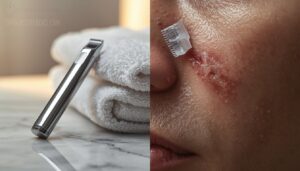
Trimming beats waxing for one simple reason — it cleans up what’s visible without wiping out the protection underneath. Doctors consistently point to this as the smarter long-term choice, both for your health and your grooming routine.
Here’s why it holds up across every angle.
Keeps The Protective Hair Barrier Intact
Think of your nose hairs as a mesh screen — trimming keeps the screen intact while waxing tears it out entirely. When you trim, follicle preservation means each hair stays rooted, maintaining barrier continuity across the nostril entrance. Your filtration layer maintenance stays effective because shortened tips still intercept dust and pollen. Hair length optimization through trimming also helps moisture retention, and nasal hair and respiratory protection.
- Hairs stay rooted, so coverage gaps don’t form
- Filtration continues between grooming sessions without interruption
- nasal passage retention inside the nasal passage remains stable
- Your respiratory protection works consistently, not just until regrowth catches up
Lowers Infection and Injury Risk
Trimming keeps blades at the surface, so you limit root extraction and avoid the micro-tears that invite bacteria in.
Clean blade technique and basic hand hygiene before each session dramatically cut your infection prevention odds in your favor.
Unlike waxing or plucking — which doctors warn, carry a real risk of nasal abscess and other medical complications from nose hair plucking — safe alternatives to nasal hair waxing, like trimming let you avoid cross-contamination and monitor healing without worry.
Better for Cosmetic Upkeep
Cosmetically, nose hair trimming delivers a clean, natural result that’s genuinely easy to maintain. Because you’re only cutting visible, protruding hairs, regrowth uniformity stays consistent — no patchy gaps, no sharp stubble phases.
Redness minimization is another real advantage; trimming avoids the root-level trauma that waxing causes, so your appearance consistency holds without post-session inflammation.
For professional vs DIY nasal hair removal, trimming wins on immediate visual impact every time.
Safer for Regular Maintenance
Because you’re maintaining rather than overhauling, trimming fits naturally into routine pain assessment — stop if it pulls, and you’re done.
Non-invasive hair management keeps microbial load reduction simple: clean tools, shallow cuts, no open follicles. A quick visual length check every one to four weeks controls allergen exposure monitoring without disrupting your protective barrier.
Safe alternatives to nasal hair waxing don’t get more straightforward than this.
When Trimming May Still Be Too Much
Even a safe method has a threshold. Cut too short, cut too often, or cut with a dull blade — and the benefits of trimming start to reverse.
- Overcutting symptoms include dryness, tenderness, and a patchy barrier that leaves your nasal passage exposed to dust and pollen.
- Dull blade irritation and frequent grooming irritation inflame follicles, raising inflammation risk similar to deeper injury.
- Deep tissue injuries, though rare, signal you’ve gone past the vestibule.
trim what’s visible, leave the rest.
Best Tools for Safe Trimming

The right tool makes a real difference regarding keeping things safe and simple. Not everything sold for nose grooming is worth your trust, so knowing what to look for saves you from unnecessary irritation or injury.
Here are the options doctors and dermatologists consistently recommend.
Rounded-tip Scissors
Rounded scissors might seem old-fashioned, but otolaryngologists still recommend them for good reason. Their stainless steel blades cut cleanly without pulling, and soft grip grips give you steady control in a tight space. Ergonomic handle shapes make the difference between a quick trim and an accidental nick.
| Feature | Why It Matters |
|---|---|
| Rounded tips | Prevents accidental skin punctures |
| Stainless steel blades | Durable, rust-resistant, stays sharp |
| Soft grip grips | Reduces slipping, improves control |
| Size variants | Short sizes suit detail work best |
| Pediatric safety design | Originally built to protect delicate skin |
Proper techniques for nose hair trimming start with the right tool — and rounded scissors check every box.
Electric Nose Hair Trimmers
Electric nose trimmers take the guesswork out of grooming. A rotary motor spins quietly at high speed, cutting hair before it snags — no tugging, no pain.
USB charging keeps your trimmer ready without hunting for batteries. The ergonomic grip steadies your hand in a tight space, and a built-in dust collection chamber catches trimmings.
Guidelines from otolaryngologists consistently favor electric nose trimmers for safe, precise cosmetic maintenance.
Protective Guards and Blade Design
Guard design is what separates a safe trimmer from a risky one. Whether you choose a manual nose hair trimmer or an electric trimmer, the hardware matters more than you’d think.
Here’s what actually protects you:
- Guard Opening Size controls how much hair enters the cutting zone — smaller openings mean less chance of snagging tissue.
- Recessed Cutting Head keeps small rotating blades away from sensitive nostril skin, even if your hand shifts slightly.
- Blade Edge Shape — rounded-tip variety blades shear cleanly instead of slicing aggressively, reducing irritation.
- Guard Fit Alignment between the plastic or metal guard and the blade maintains the correct clearance every use.
- Debris Collection Chamber captures trimmed hairs so you’re not breathing them back in.
Waterproof and Easy-to-clean Models
A good waterproof housing changes your whole cleaning routine. Look for an IPX7 rating — that means full-rinse capable, not just splash-resistant.
A rinseable blade head flushes trapped clippings in seconds, preventing the hair jam buildup that dulls performance.
Cordless wet use means no fumbling near outlets. Both electric trimmers and over-the-counter trimmers benefit from these features, making hygiene practices genuinely easy.
| Feature | What It Means | Why It Matters |
|---|---|---|
| IPX7 Rating | Submersion-safe waterproofing | Safe for full rinsing under tap |
| Rinseable Blade | Detachable or open-rinse head | Clears hair clippings quickly |
| Waterproof Housing | Sealed exterior casing | Protects internal parts during cleaning |
| Cordless Wet Use | Battery-powered, no cord needed | Convenient bathroom or shower grooming |
| Hair Jam Prevention | Blade channels resist clogging | Maintains cutting performance longer |
Sanitizing Tools Before Each Use
Rinsing your trimmer isn’t the same as sanitizing it. Clean the blades first to remove debris, then apply your sanitizer — that order matters because grime blocks germs from being reduced.
Give the sanitizer enough contact time to work, then rinse if the label requires it. Dry storage keeps bacteria from rebuilding between sessions. Proper hygiene and tool care for nasal grooming genuinely lower infection risk.
How to Trim Nose Hair Safely
Trimming nose hair is simple, but doing it right makes all the difference between a clean result and an irritated, uncomfortable nostril.
A few small habits — like knowing where to cut and when to stop — keep the process safe and effective every time.
Here’s what doctors and skin care professionals recommend you follow each session.
Trim Only Visible Protruding Hairs

The safest way to trim nose hair starts with mirror guidance — only cut what you can actually see at the nostril opening. Tip-only cutting is the goal here.
- Use scissor angle carefully: a clean, controlled snip beats rushing.
- Watch your pain threshold — tugging means stop immediately.
- Post-trim hygiene matters: rinse away clippings and wipe clean.
Protruding hairs are the only ones that need managing.
Avoid Cutting Deep Inside The Nostril
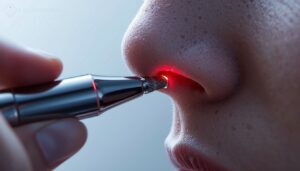
Keep your insertion depth limit to about 1–2 cm — past that, you’re brushing the nasal wall and risking micro-tears. Guard positioning matters here: the trimmer’s protective tip is designed to prevent that contact.
Any pain signal awareness cue, like sudden stinging or pressure, means you’ve gone too far. Nasal vestibulitis and nasal abscess can both develop from those small skin barrier breaches.
Use Gentle, Controlled Movements
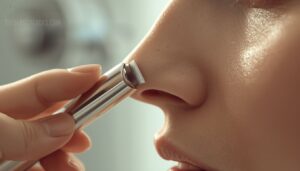
How you move the trimmer matters just as much as where you place it. Think of it like applying a topical treatment — slow, deliberate contact prevents damage.
- Controlled Blade Speed: Move slowly so you can see exactly what the guard contacts
- Light Tool Pressure: Let the blade do the work; pressing harder doesn’t help
- Clear Hand Alignment: Angle the tool along the nostril’s natural curve before starting
- Stop and Reassess: Check hair height after each short pass using a mirror
- Gentle Post-Move Stabilization: Hold still briefly after trimming to avoid disturbing sensitive tissue
These hair removal safety principles follow guidelines from otolaryngologists on nose grooming — the difference between proper tools for nose hair trimming used correctly versus a rushed DIY attempt that irritates the vestibule.
Stop if You Feel Pain or Tugging

Pain is your clearest pause indicator — don’t ignore it. If you feel a tugging sensation or sharp discomfort, stop immediately.
That signal means the tool is likely too deep or pulling rather than cutting cleanly. Continuing past your pain threshold risks small tears in sensitive tissue, creating real injury prevention concerns.
Temporary pain that lingers after stopping warrants watching closely for warning symptoms like swelling or redness.
Soothe Irritation After Trimming

After trimming, rinse the area with cool water to calm any skin irritation — no scrubbing, just a gentle flow. Pat dry, then apply a thin layer of fragrance-free moisturizer.
Alcohol-free aftercare matters here; alcohol stings already-sensitive tissue and slows recovery.
Watch for infection monitoring cues like spreading redness or pus.
Reducing trauma to the area means keeping hands away and skipping re-grooming until tenderness clears.
How Often to Trim Nose Hair

Most people don’t need to trim nearly as often as they think. A few simple cues can tell you when it’s actually time to pick up the trimmer — and when to leave things alone.
Here’s what to pay attention to.
Typical Trimming Frequency
Most adults do fine trimming every one to four weeks, but growth rate variability means your schedule won’t look exactly like anyone else’s. Lifestyle impact matters too — outdoor exposure, dust, and seasonal adjustment in drier months can all shift your timing.
best frequency and timing of nose hair trimming is simply whenever hairs visibly protrude, no sooner.
Signs It is Time for a Touch-up
Your nose hairs will tell you when they’re ready — you just have to listen. Protruding hairs that catch the light or create a snagging sensation when you tilt your head are clear signals.
uneven hair shape looks patchy in photos.
itching or redness inside the nostril, odor buildup near the entrance, or visible debris collecting at the nostril opening all mean it’s time to reach for your nose hair trimmer.
Avoiding Overtrimming and Overgrooming
More isn’t always better here. Overdoing it — pushing tools too deep, trimming daily, or ignoring your skin irritation threshold — causes microtrauma awareness to matter more than the grooming itself.
Keep a gentle grooming rhythm:
- Trim every 1–4 weeks only
- Use light tool pressure control
- Stop at first tug or sting
- Allow recovery interval planning between sessions
- Avoid overgrooming with over-the-counter trimmers
Adjusting Care for Sensitive Skin
Sensitive skin changes everything. Your vestibular tissue — the soft lining just inside the nostril — reacts faster to friction, heat, and tool pressure than normal skin does.
After trimming, reach for fragrance-free moisturizers and cooling aftercare like Aquaphor to support gentle barrier support without added irritants. pH-balanced cleansers keep the area clean without stripping.
Watch for medical help signs: worsening redness, swelling, or pain needs professional attention.
Maintenance for Clean, Natural Results
Good maintenance starts with your tools. Store your trimmer in a clean, dry spot — Storage Dryness Practices prevent bacterial buildup before it ever reaches your nostrils.
Follow a consistent Tool Hygiene Routine: sanitize before each session, trim only what’s visible using Light-Driven Precision, and apply Post-Trim Moisturizing with fragrance-free balm after.
Seasonal Maintenance Adjustments matter too — ease up during allergy season when tissue is already irritated.
What Doctors Recommend

Doctors don’t leave much room for debate on this one — trimming wins, every time.
Dermatologists, ENTs, and general practitioners all point to the same concerns around plucking and waxing, and they’re equally clear about what works better.
Here’s what the medical community actually recommends.
Dermatologist and ENT Guidance
Both a board‑certified dermatologist and a board‑certified otolaryngologist agree on one thing: trimming beats every other method.
Their Clinical Screening Protocols and Patient Education Materials consistently rank safety considerations for nasal hair removal by risk level:
- Trimming — lowest risk
- Manual scissors — low risk
- Laser — moderate risk
- Waxing or plucking — highest risk
Pre‑existing Conditions like diabetes automatically shift your Referral Criteria upward.
Why Plucking and Waxing Are Avoided
Both plucking and waxing remove hair at the root, and that’s where the real trouble starts. Each pull creates microtrauma inflammation in follicle tissue, opening tiny channels for bacterial entry — a direct threat to your mucosal defense.
| Risk Factor | What It Causes |
|---|---|
| Nerve sensitivity | Lingering pain and tissue stress |
| Bacterial entry | Nasal vestibulitis, abscess |
| Microtrauma inflammation | Chronic irritation, ingrown hairs |
| Scar formation | Uneven healing, texture changes |
These aren’t minor side effects — they’re documented medical complications from nose hair plucking that doctors consistently warn against.
Safer Alternatives for Grooming
So what do doctors actually recommend instead? Stick with trimming — rounded-tip scissors or an electric trimmer with a protective guard.
Sanitize blades using alcohol blade disinfection before each session, and practice hygienic tool storage between uses.
Some trimmers offer disposable trimmer heads for extra cleanliness.
Finish with a post-trim moisturizer if irritation occurs.
Professional grooming services remain an option, though most otolaryngologists favor careful DIY nasal hair removal at home.
Special Caution for Diabetes or Low Immunity
If you have diabetes or a weakened immune system, nose hair removal carries extra risks worth taking seriously. Poor blood sugar monitoring means your body’s wound healing slows, making even a tiny follicle injury an infection pathway.
Immune support matters here — compromised defenses can’t contain nasal vestibulitis before it spreads.
For infection prevention, trimming only visible hairs is non‑negotiable.
When to Seek Care for Infection Signs
Certain symptoms mean you need medical care right away, not tomorrow.
Expanding redness around the nostril, severe local pain, or swelling that keeps growing are early signs that nasal vestibulitis or nasal abscess formation is taking hold.
High fever, confusion onset, or any breathing difficulty signal the bacterial infection may be spreading deeper.
Don’t wait — get evaluated the same day.
Frequently Asked Questions (FAQs)
Can nose hair grow back thicker after trimming?
No, trimming doesn’t make nose hair grow back thicker.
That’s regrowth perception bias — the blunt tip from hair tip morphology creates an illusion of density, but your hair growth cycle and follicle size stay unchanged.
Does nose hair increase with age in men?
Yes, nose hair does increase with age in men. Androgen influence and rising testosterone levels push vellus to terminal hair conversion, making age-related visibility more noticeable — especially after
Are there scented products safe for nasal grooming?
Most nasal grooming products work best fragrance-free. Synthetic scents and even low-irritant aromas can inflame sensitive mucosal tissue.
For safety, choose fragrance-free formulations and follow medical advice on nasal grooming hygiene practices.
Can allergies worsen after removing too much nose hair?
Removing too much nose hair compromises your filtration barrier, allowing seasonal allergens direct access to the nasal mucosa — triggering an inflammatory cascade that amplifies allergy symptoms far beyond what you’d normally experience.
Is laser hair removal ever safe for nostrils?
Laser hair removal inside the nostrils is rarely safe.
The mucosa is too delicate—mucosal burn risk is real, and infection potential rises quickly when follicular targeting goes even slightly off.
Conclusion
Trim or wax nose hair—the answer isn’t really a debate once you understand what’s at stake. Your nose hair is a quiet, tireless gatekeeper, filtering out what your lungs were never meant to handle.
Waxing pulls that gatekeeper out by the roots, leaving the door open to infection, inflammation, and real respiratory vulnerability.
A good trimmer, used with care, keeps your protection intact while still looking clean. That’s not compromise—that’s the smarter choice.