
This site is supported by our readers. We may earn a commission, at no cost to you, if you purchase through links. This content is for general informational and educational purposes only and is not a substitute for professional medical, dermatological, or nutritional advice.

Your skin keeps score. A sulfate cleanser, a week of dry wind, a stressful deadline, and suddenly your cheeks burn and your patches flare.
Skin inflammation rarely has one cause. It builds from small insults, outside and within, that wear down the lipid barrier meant to shield you. Many people assume stronger products will fix it. Usually, gentler care works better.
Managing skin conditions naturally starts with understanding that barrier. Ceramides, colloidal oatmeal, and a few carefully diluted oils can calm irritation and restore comfort. Knowing which remedies help, which ones need caution, and which symptoms demand a doctor keeps you in control.
Table Of Contents
Key Takeaways
- Your skin flares when small triggers like harsh cleansers, stress, weather, and gut or hormone shifts wear down its protective barrier, so a two-week diary of products, meals, and sleep helps you spot your own patterns.
- You’ll calm and rebuild that barrier best with gentle care: a ceramide moisturizer on damp skin twice daily, less exfoliating, and plant oils that soften without stripping.
- Match remedies to your condition and respect their limits, since colloidal oatmeal soothes eczema itch, tea tree oil must stay diluted to 5% or less, and aloe and licorice extract have only modest evidence behind them.
- Give natural care eight to twelve weeks, add one remedy at a time, and see a doctor if symptoms last past two weeks, spread, ooze, or come with fever, and never swap a prescribed treatment for a natural one without approval.
Identify What Triggers Skin Inflammation

Why does your skin flare up one day and stay calm the next? Usually, something set it off. Learning to spot your personal triggers puts you back in control.
Once you know what sets your skin off, a gentle effective skin care routine for rosacea can help keep those flare-ups calmer and more predictable.
Start outside. Harsh cleansers with sulfates, alcohol, or synthetic fragrance can strip your skin’s protective lipid barrier. Pollen, pet dander, and certain metals can spark allergic reactions. Pollution and extreme weather add oxidative stress. Sun matters too, and some antibiotics make skin react to even brief UV exposure. Even friction can set off mast cell degranulation, releasing histamine that causes redness, swelling, and itching.
Next, look within. Hormonal shifts, ongoing stress, gut imbalance, and immune overreaction all feed skin inflammation. Chronic stress raises cortisol, which weakens your barrier.
Keep a simple diary. Log products, meals, sleep, and flare-ups for two weeks. Add patch testing for new products. Patterns appear quickly.
Strengthen Your Skin Barrier Naturally
Once you know what sets your skin off, the next step is making it harder to provoke. A sturdy barrier does that.
Think of your barrier as a brick wall. Skin cells are the bricks, and ceramides, cholesterol, and fatty acids are the mortar. Ceramides make up about half of that mortar, so when they run low, water escapes and irritants slip in.
When your skin’s protective lipids run low, moisture leaks out and irritants walk straight in
Choose a moisturizer that pairs ceramides, cholesterol, and fatty acids. Apply it on damp skin, twice daily. Look for glycerin, hyaluronic acid, or panthenol to hold moisture in.
Plant oils help too. Sunflower seed oil supplies linoleic acid, which softens rough patches and replenishes lost oils.
Squalane, jojoba, and marula oils soften skin too, and these best ingredients for skin barrier repair show how to pair them.
Cleanse gently, and exfoliate less often. Your barrier rebuilds when you stop stripping it.
Choose Natural Remedies for Specific Skin Conditions
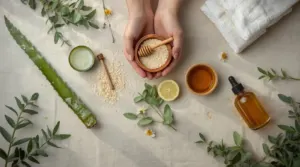
Not every skin concern calls for the same remedy. Match the right natural remedy to your specific condition, and you’ll get gentler, steadier results. Here’s what works for acne, eczema, psoriasis, and dark spots, plus the limits you should know.
Acne: Tea Tree Oil and Precautions
Picture a stubborn pimple that flares before a big meeting. You dab on pure oil, and by morning your skin stings.
Dilute first. Mix one to two drops of tea tree oil with 12 drops of jojoba oil, keeping it at 5% or less. Its antibacterial properties and anti-inflammatory effects help, but patch test first and stop if swelling appears.
Eczema: Colloidal Oatmeal for Itching
Tea tree oil can sting, but an itchy eczema patch needs something gentler. Reach for colloidal oatmeal.
Its avenanthramides calm inflammation and ease the urge to scratch, while its beta-glucans hold moisture against your skin barrier.
Try this routine:
- Stir 1 cup into a warm bath.
- Soak for 10 to 15 minutes.
- Pat your skin damp.
- Smooth on an oatmeal cream.
Psoriasis: Aloe as Complementary Care
How much can aloe vera really do for plaque psoriasis? Less than the headlines promise, but it’s still worth knowing. Early trials showed striking results, yet later studies found no gain over placebo.
Think of it as a soothing helper. It hydrates and calms itch, though dryness can occur.
Use it beside your prescribed plan, never instead of it.
Hyperpigmentation: Licorice Extract and Evidence Limits
A brighter tone is possible with licorice extract, though it asks for realistic expectations. Its glabridin slows tyrosinase activity, so your skin makes less melanin, while liquiritin helps loosen pigment already there.
Human trials are limited, and products vary widely. Choose one that lists its concentration, patch test first, and keep wearing daily sunscreen.
Support Skin Health Through Diet and Lifestyle

Water makes up about 60% of your body weight, and your skin feels every drop. Hydrate steadily, and your barrier stays supple and sealed.
Diet and skin health go hand in hand. Fill your plate with anti-inflammatory foods: berries, leafy greens and avocado. Add omega-3 fatty acids from fatty fish to help your skin hold moisture.
Feed your gut, too. The gut-skin axis means a calm gut often shows up as calmer skin. Try yogurt, kefir or kimchi for probiotics, and garlic, onions or bananas to nourish them.
Then protect your sleep. Even one rough night can weaken your barrier and slow repair. Aim for steady, restful nights, and let your skin rebuild while you rest. Sleep is quiet skincare.
Know When Skin Conditions Need Medical Care
Natural care can soothe your skin, but it can’t fix everything. Knowing when to call in a professional keeps you safe and in control. Here are the two key points to keep in mind.
Warning Signs and Persistent Symptoms
Your skin talks. Most of the time it whispers, and home care quiets it. When it won’t quiet down, listen.
Itching, scaling, or inflammation that lingers past two weeks needs a professional look. So do rashes that spread fast, sores that won’t heal, and anything warm, oozing, or streaked with red. Fever or joint pain alongside skin changes matters too. Changing moles deserve a prompt check.
Combining Natural Remedies With Prescribed Treatments
Your prescription and your pantry shouldn’t meet by accident. Tell your dermatologist about every herb, oil, and supplement you use. Some weaken medications, and some irritate skin your treatment is already working to calm.
Stagger topical timing instead of layering everything at once. Skip unlicensed products, and never swap a prescribed dose for a natural alternative without approval.
Frequently Asked Questions (FAQs)
How long until natural treatments show visible results?
Wondering when your skin will finally show a change? Give it eight to twelve weeks. Your skin renews every 28 to 30 days, so real progress takes several cycles. Small gains can appear within weeks.
Are natural remedies safe during pregnancy or breastfeeding?
Natural" isn’t a safety stamp, just a label. Some remedies are gentle, others aren’t. Colloidal oatmeal and aloe gel on skin are fine; avoid oral licorice and tea tree near nipples. Ask your provider first.
Can I use multiple natural remedies simultaneously?
Wondering if more is better? Not usually. Stack too many natural ingredients and you risk irritation, so add one at a time, patch test, and wait a week. Skip mixing photosensitizing oils entirely.
Do natural treatments work for all skin types?
Picture two friends trying tea tree oil on breakouts. One clears up fast. The other ends up red and flaky. Skin type matters because oily skin tolerates it, while dry or sensitive skin often doesn’t.
Is coconut oil safe for sensitive skin?
It depends on your skin. Virgin coconut oil can boost hydration and calm inflammation, but its heavy, pore-clogging nature may trigger acne or rosacea. Patch test behind your ear for 48 hours first, then stop if stinging appears.
Do omega-3 supplements help with skin flare-ups?
In one German study, purified fish oil cut eczema symptoms by about 18 percent. Omega-3 fatty acids may help by calming inflammatory signaling molecules and supporting your skin barrier. Results vary, so ask your doctor.
Conclusion
Louder isn’t better, and gentler isn’t weaker. Your skin reacts to patience, not punishment.
Managing skin conditions naturally means protecting the barrier, spotting your triggers, and choosing remedies with care. Oatmeal soothes, aloe comforts, and tea tree oil demands dilution. Feed your skin well, rest deeply, and keep your routine simple.
Yet know your limits. Persistent, spreading, or painful symptoms deserve a doctor’s eyes. Calm skin is built slowly, one kind decision at a time.