This site is supported by our readers. We may earn a commission, at no cost to you, if you purchase through links. This content is for general informational and educational purposes only and is not a substitute for professional medical, dermatological, or nutritional advice.

Your skin flares up right when you need it calm, before a big meeting or the moment you step outside on a hot day. Rosacea works that way. It reacts to heat, certain foods, harsh products, even stress you didn’t know you were carrying.
The good news: your daily habits control more of this than you think. An effective skin care routine for rosacea isn’t about finding one miracle product. It’s about the right steps, done in the right order, morning and night.
Get the sequence right, and calmer, more predictable skin follows.
Table Of Contents
- Key Takeaways
- Morning Rosacea Skin Care Routine
- Night Rosacea Skin Care Routine
- Top 5 Rosacea Skin Care Products
- Preventing Rosacea Flare-Ups
- Frequently Asked Questions (FAQs)
- What are the 4 stages of rosacea?
- What not to put on rosacea skin?
- What calms rosacea quickly?
- Should I wash my face in the morning if I have rosacea?
- What skincare products are good for rosacea?
- What skincare should I avoid if I have rosacea?
- What is the number one trigger for rosacea?
- How often should I moisturize my face if I have rosacea?
- Can rosacea be diagnosed before a major flare-up occurs?
- Is rosacea hereditary and can it run in families?
- Conclusion
Key Takeaways
- Follow a consistent morning and night routine—gentle lukewarm cleansing, prescription treatment like azelaic acid, ceramide moisturizer, and mineral SPF 30—to keep rosacea calm and predictable.
- Avoid mechanical irritation and harsh ingredients, including hot water, washcloths, scrubs, fragrance, alcohol, and menthol, since these strip your barrier and trigger flares.
- Identify and manage your personal triggers by tracking food reactions over 2 to 4 hours, protecting your skin from heat and sun exposure, and seeing a dermatologist regularly.
- Choose products with barrier-supporting ingredients like ceramides, glycerin, and azelaic acid, since simple, fragrance-free formulas reduce irritation and rebuild your skin’s protective layer.
Morning Rosacea Skin Care Routine
Mornings set the tone for how your skin reacts to the rest of the day. With rosacea, every step matters, from the water temperature to the last layer you apply. Here’s exactly how to build a routine that calms your skin instead of triggering it.
If you’re unsure where to start, this gentle morning skincare routine guide breaks down each step so calming your rosacea becomes second nature.
Lukewarm Fingertip Cleansing

Starting your day with the right water temperature sets the tone for calmer skin. Use lukewarm water only — hot water strips natural oils, while cold water won’t loosen residue properly.
Apply cleanser with fingertips using light, circular pressure. Avoid washcloths or brushes, which cause mechanical irritation. Rinse promptly, then pat dry gently with a cotton towel instead of rubbing. To prevent irritation, always use non-abrasive cleanser during your routine.
Fragrance-free Gentle Cleanser
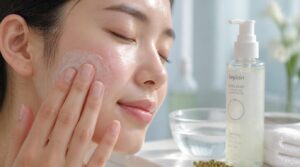
Once your skin is wet, reach for a fragrance-free, soap-free cleanser. Skip essential oils and alcohol entirely — they disrupt pH balance and trigger irritation.
Look for mild, low-foaming surfactants that lift residue without stripping lipids. Many gentle formulas include barrier-supporting ingredients like ceramides or glycerin, so cleansing feels calming instead of tight.
Simplicity wins here: fewer additives means fewer chances for reactive skin to flare.
Prescription Topical Application
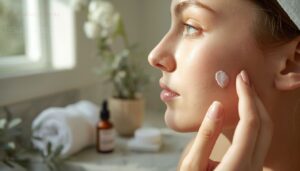
Once skin is dry, apply your prescription treatment — azelaic acid or metronidazole, depending on what your dermatologist prescribed. Use a thin layer, covering only affected areas.
Timing matters: apply before moisturizer, so the active ingredient contacts skin directly. If burning or stinging occurs, don’t stop cold turkey — call your dermatologist about adjusting frequency instead.
Barrier-repair Moisturizer
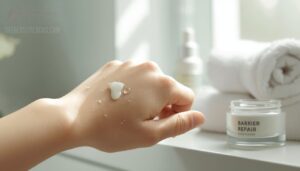
Now give your skin two minutes to absorb the treatment before layering on moisturizer. This step helps with skin barrier repair through ceramides, hyaluronic acid, and glycerin.
If irritation lingers beyond this routine, it’s worth revisiting your approach with this guide to treating scalp product buildup before assuming a deeper issue is at play.
- Ceramides replenish lipids
- Hyaluronic acid binds water
- Occlusives lock in hydration
- Fragrance-free formulas reduce irritation
- Apply while skin’s still damp
A soothing moisturizer calms redness while sealing moisture in, prepping skin for sunscreen next.
Mineral SPF 30 Sunscreen

Never skip sunscreen, even indoors near windows. Reach for a mineral sunscreen with zinc oxide, titanium dioxide, or both, offering true broad spectrum coverage.
These physical UV blockers reflect rays instead of absorbing them, so they won’t sting sensitive skin. Worried about a white cast? Tinted mineral formulas melt in smoothly while still protecting your barrier daily.
Night Rosacea Skin Care Routine

Your skin works to repair itself overnight, so your evening routine needs to support that job. Nighttime is also when treatments like azelaic acid do their best work, undisturbed by sunscreen or makeup. Here’s how to build a routine that helps, not hinders, that process.
Gentle Makeup Removal
Rubbing your face to strip off makeup does more harm than the makeup itself. Use a soft cotton pad with a gentle oil-based remover, pressing on closed eyes to dissolve mascara first. Emulsify with lukewarm water, then wipe—don’t scrub.
If your skin tends toward redness, skip fragranced formulas altogether and reach for a gentle face wash for redness-prone skin to follow up your makeup removal.
This double cleansing step protects sensitive, rosacea-prone skin by minimizing mechanical friction before your regular cleanser finishes the job.
Soap-free Evening Cleanse
Rinse thoroughly, then reach for a syndet cleanser—soap-free formulas skip harsh lye chemistry for gentle surfactants that won’t strip your skin’s barrier lipids.
Look for options near pH 5.5 with:
- Glycerin for hydration
- Ceramides for barrier support
- Prebiotics for microbiome balance
This mild approach avoids irritation and keeps sensitive, reactive skin calm before treatment application.
Azelaic Acid or Treatment
Azelaic acid works quietly but effectively, easing inflammation and calming redness at its source.
Start three times a week, then build to nightly as tolerance improves. Patch-test on your jaw first.
| Formula | Best For | Feel |
|---|---|---|
| Gel | Oily skin | Lightweight |
| Cream | Dry skin | Rich |
| Foam | Sensitive skin | Airy |
Mild tingling is normal; persistent burning isn’t.
Ceramide-rich Moisturizer
Think of ceramides as mortar between bricks, holding your skin barrier together. After azelaic acid, your skin needs that support rebuilt.
Apply moisturizer to damp skin within minutes for better absorption.
- Look for ceramide NP or ceramide E on labels
- Pseudo-ceramides work just as well for barrier repair
- A lipid complex with cholesterol adds hydration
- Choose creams if texture-sensitive; lotions if oilier
Avoid Exfoliating Scrubs
That walnut-shell scrub in your shower? It’s sandpaper for rosacea skin.
That walnut-shell scrub in your shower is basically sandpaper for rosacea-prone skin
Physical exfoliants cause mechanical abrasion, creating microtears that worsen barrier damage and irritation.
| Skip This | Do This Instead |
|---|---|
| Scrubs, walnut shell | Gentle cleanser only |
| Daily exfoliating | Skip during flares |
Overexfoliation signs include stinging and dryness. Choose barrier repair over abrasion, always.
Top 5 Rosacea Skin Care Products
Picking the right products makes your routine actually work. You don’t need a crowded shelf, just a few trusted formulas that calm and protect your skin. Here are five worth adding to your rosacea care lineup.
1. Avene Thermal Spring Water Mist
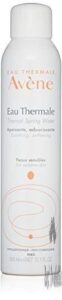
Avène Thermal Spring Water comes in a spray can, delivering a fine mist with one click, so you never rub irritated skin. Its mineral profile is genuinely low, with calcium, magnesium, and bicarbonate, plus trace silica for barrier support. Neutral pH near 7.5 means no sting on broken skin.
Keep the can upright, don’t shake it, and pat dry after two to three minutes. Use it post-cleansing, after sun exposure, or as a midday refresher when redness flares up unexpectedly.
| Best For | People with sensitive, easily irritated skin who need a gentle, fragrance-free way to calm redness and support their skin barrier. |
|---|---|
| Skin Type | Sensitive |
| Non-Comedogenic | Not Specified |
| Dermatologist Tested | Clinically Studied |
| Redness Relief | Yes |
| Product Format | Spray Mist |
| Fragrance Free | Not Specified |
| Additional Features |
|
- Fine, even mist that soothes skin without any rubbing or friction
- Low mineral content backed by clinical study, so it won’t dry out sensitive skin
- Versatile enough for face and body, use after cleansing, sun exposure, or midday flare-ups
- Must be held upright and never shaken, so it takes a bit more care than a typical spray
- Requires patting dry after 2-3 minutes rather than letting it air-dry on its own
- Small 8-ounce size means frequent users may go through it quickly
2. La Roche-Posay Thermal Spring Water
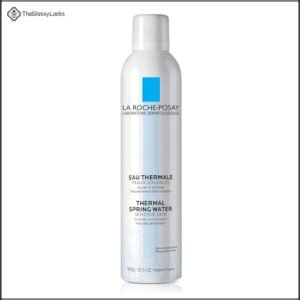
La Roche-Posay Thermal Spring Water works on the same principle, but its mineral makeup leans on selenium, a trace element with antioxidant and anti-inflammatory action. Levels run 40 to 60 micrograms per liter, drawn from 30 to 80 meters deep and warmed naturally to 13°C.
Spray it as a micro-mist after cleansing or midday. It’s fragrance-free, paraben-free, and safe for the whole family, including babies. Non-comedogenic and allergy tested, it won’t clog pores or trigger new breakouts.
| Best For | anyone with sensitive, easily irritated skin looking for a gentle, fragrance-free mist to soothe and refresh throughout the day. |
|---|---|
| Skin Type | Sensitive |
| Non-Comedogenic | Yes |
| Dermatologist Tested | Allergy Tested |
| Redness Relief | Yes |
| Product Format | Spray Mist |
| Fragrance Free | Not Specified |
| Additional Features |
|
- Naturally rich in soothing, antioxidant selenium and trace minerals
- Gentle enough for the whole family, including babies, with allergy-tested, non-comedogenic formula
- Versatile use on face and body, and pairs well with other dermatological treatments
- Water-based mist offers refreshment rather than deep, long-lasting hydration
- Not a substitute for a heavier moisturizer or cream in a full skincare routine
- Fine mist format means it may require frequent reapplication throughout the day
3. Vanicream Gentle Facial Cleanser
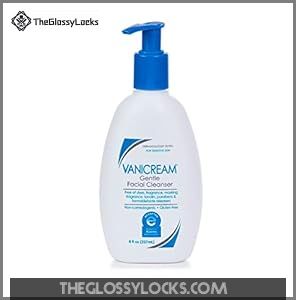
Once your skin’s calmed, cleansing needs a formula that won’t undo the work. Vanicream Gentle Facial Cleanser fits that job well.
It’s built on Coco Glucoside and Sodium Cocoyl Glycinate, mild surfactants that lift dirt and makeup without stripping natural oils. No soap, sulfates, dyes, or fragrance means less risk of triggering redness. Glycerin and Caprylyl Glycol keep skin from feeling tight afterward.
It’s dermatologist-tested, National Eczema Association accepted, and non-comedogenic. Apply with fingertips only, using lukewarm water for best results.
| Best For | People with dry or sensitive skin, including those prone to eczema, who need a gentle daily cleanser that won’t leave their face feeling tight or irritated. |
|---|---|
| Skin Type | Sensitive/Dry |
| Non-Comedogenic | Yes |
| Dermatologist Tested | Dermatologist-Tested |
| Redness Relief | Indirect |
| Product Format | Cleanser |
| Fragrance Free | Yes |
| Additional Features |
|
- Free from soap, sulfates, dyes, and parabens, making it gentle on reactive skin
- PH-balanced and non-comedogenic, so it cleanses without clogging pores
- Dermatologist-tested and accepted by the National Eczema Association
- Doesn’t include a moisturizer, so you’ll need a separate product for hydration
- Scent can vary slightly from batch to batch
- Packaging design may change over time, which could affect dispensing consistency
4. Cetaphil Redness Relieving Foaming Face Wash
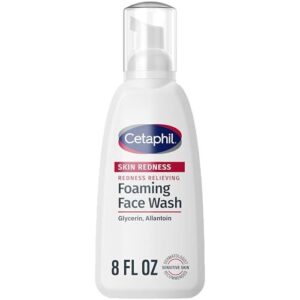
Some days you want foam, not lotion. Cetaphil Redness Relieving Foaming Face Wash gives you that lift while still playing it safe for sensitive skin.
The formula pairs Dipotassium Glycyrrhizate, a licorice-derived soothing agent, with Allantoin and Caffeine to calm visible redness. Sodium Cocoyl Glutamate and Sodium Cocoamphoacetate create gentle foam without stripping oils, while Glycerin keeps skin hydrated.
It’s dermatologist tested and non-comedogenic. One catch: it does list Fragrance, so patch test first if your skin reacts easily to scent.
| Best For | People with sensitive, redness-prone skin who want a foaming cleanser that cleans without causing irritation or dryness. |
|---|---|
| Skin Type | Redness-Prone |
| Non-Comedogenic | Yes |
| Dermatologist Tested | Dermatologist Tested |
| Redness Relief | Yes |
| Product Format | Foaming Cleanser |
| Fragrance Free | Not Specified |
| Additional Features |
|
- Contains licorice extract, allantoin, and caffeine to calm visible redness
- Non-comedogenic and dermatologist tested, so it’s gentle enough for sensitive skin
- Foams up nicely without stripping away natural oils or over-drying skin
- Contains fragrance, which may irritate very reactive skin types
- Packaging design may differ from what’s shown in product images
- Formulated specifically for redness-prone skin, so it may not suit every skin concern
5. The Ordinary Azelaic Acid Suspension
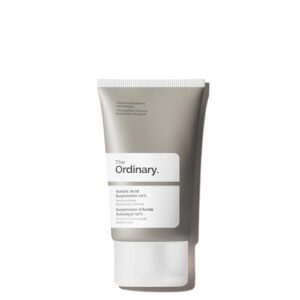
Ten percent azelaic acid puts this suspension in a different league than most drugstore treatments. It targets dullness, uneven tone, and rough texture without the sting typical exfoliants cause.
Rosacea-prone skin tolerates it well, though the cream-like formula can feel heavy for some. Apply a thin layer, avoiding your eyes and mouth.
Daily sunscreen is non-negotiable here. Use it AM or PM, but never skip SPF the morning after.
| Best For | Anyone dealing with dullness, uneven skin tone, or rough texture—including those with rosacea-prone skin looking for a gentle yet effective brightening treatment. |
|---|---|
| Skin Type | Rosacea-Prone |
| Non-Comedogenic | Not Specified |
| Dermatologist Tested | Not Specified |
| Redness Relief | Indirect |
| Product Format | Cream |
| Fragrance Free | Not Specified |
| Additional Features |
|
- Contains 10% azelaic acid to visibly target dullness, uneven tone, and rough texture
- Antioxidant properties help enhance overall radiance
- Gentle enough for rosacea-prone skin and flexible enough for AM or PM use
- Cream-like formula may feel heavy on the skin for some users
- Must avoid the eye and mouth area during application
- Requires strict daily sunscreen use to stay effective and safe
Preventing Rosacea Flare-Ups

Your routine matters, but so does what happens outside the mirror. Rosacea flares often trace back to daily habits you can actually control. Here are four steps that make a real difference.
Track Food Triggers
Ever notice a flare hours after dinner and blame the wrong thing? Rosacea reactions often show up 2 to 4 hours later, not instantly.
Track meals and symptoms:
- Log ingredients, not just meals
- Tag symptom severity levels
- Record a 1-2 week baseline diet
- Review patterns every 2-4 weeks
Consistent logging reveals real triggers behind your flare-ups.
Skip Fragrance and Menthol
That fresh, "clean" scent might be the very thing setting your face on fire. "Fragrance" on a label can hide dozens of hidden aroma chemicals, even in tiny amounts.
Menthol and peppermint create cooling sensory triggers that overwhelm compromised skin.
Read labels for parfum, menthol, and mint terms. Choose fragrance-free, hypoallergenic products with fewer ingredients. Simpler formulas mean fewer chances for skin irritation triggers to sneak into your routine.
Protect Against Heat
Heat and sun exposure double-team your skin, making rosacea flares worse fast. Seek shade during peak hours, wear breathable fabrics, and skip the SPF shortcut—use broad spectrum sunscreen daily. Sunburn wrecks your skin’s cooling ability, so photoprotection isn’t optional.
Stay hydrated, and watch for dizziness or overheating symptoms. Your skin can’t fight heat and flare-ups at once.
See a Dermatologist Regularly
Your bathroom cabinet can only do so much. Dermatological care catches what mirrors miss.
- Ocular rosacea signs
- Medication tolerance monitoring
- Flare-up pattern tracking
- Professional laser interventions
- Prescription adjustment protocols
A dermatologist reviews prescription options and fine-tunes your routine before small flares become chronic ones. Regular visits mean better medical skin management, period.
Frequently Asked Questions (FAQs)
What are the 4 stages of rosacea?
Redness comes, redness stays, redness scars, redness thickens. Rosacea moves through four stages: early flushing, persistent redness with telangiectasias, inflammatory papules and pustules, then rhinophyma or ocular involvement. Catching it early protects your skin from lasting damage.
What not to put on rosacea skin?
Skip harsh chemical exfoliants, abrasive scrubs, and alcohol-based toners. Avoid essential oils, fragrance, and warming skincare products—they trigger sensitivity and irritation.
These ingredients weaken your barrier, cause contact dermatitis, and worsen flushing, making flare-ups harder to control.
What calms rosacea quickly?
Keep your cool, literally: a cooling compress calms flares fast. Chill your moisturizer, stick to a gentle cleanser, skip hot water and spicy food, and simplify your routine to cut irritation and reduce redness quickly.
Should I wash my face in the morning if I have rosacea?
Yes, morning cleansing clears overnight oil buildup. Use lukewarm water and fingertips, never a washcloth. Choose a mild, fragrance-free cleanser with a creamy texture, then moisturize within minutes to lock in hydration and calm sensitive skin.
What skincare products are good for rosacea?
Think of your rosacea routine like a telegraph line: simple, reliable signals only. Choose a gentle cleanser, ceramide moisturizer, mineral broadspectrum sunscreen, and azelaic acid. Add niacinamide for barrier support and soothing botanicals for calm, hydrated skin daily.
What skincare should I avoid if I have rosacea?
Avoid fragranced products, alcohol-based toners, and menthol cooling agents. Stay fragrance-free and steer clear of harsh surfactants, strong acid exfoliation, physical exfoliants, and sensitizing acne actives like benzoyl peroxide, all common skin sensitivity triggers that worsen inflammatory skin conditions.
What is the number one trigger for rosacea?
Sun exposure tops the list. UV rays trigger flushing fast, and heat, wind, humidity, stress, and alcohol pile on too. Daily sun protection with mineral SPF matters more than any other step in your routine.
How often should I moisturize my face if I have rosacea?
Twice daily, morning and night, works best for rosacea skincare routine consistency.
Apply moisturizer after cleansing and any prescription treatment to lock in skin hydration and support skin barrier repair, keeping sensitive skin calm and comfortable all day.
Can rosacea be diagnosed before a major flare-up occurs?
An ounce of prevention beats a pound of cure. Yes — prerosacea flushing, prolonged redness, skin stinging, and early ocular symptoms often show up first. A dermatologist reviews your clinical history, ruling out lupus, before flare-ups fully develop.
Is rosacea hereditary and can it run in families?
Yes. Rosacea often runs in families, driven by genetic risk factors tied to immune pathways plus shared household exposures like sun and lifestyle habits.
Ancestry patterns show higher rates in Northern Europeans, reflecting this multifactorial inheritance model rather than a single inherited gene.
Conclusion
Think of your skin like a garden fence: simple, strong boundaries keep the weeds out.
Rosacea doesn’t need dozens of products. It needs consistency. An effective skin care routine for rosacea works because it protects your barrier, calms inflammation, and steers clear of triggers, day after day. Skip a step, and flares creep back in. Follow the sequence, and your skin learns to trust you again. That trust is worth building.