This site is supported by our readers. We may earn a commission, at no cost to you, if you purchase through links. This content is for general informational and educational purposes only and is not a substitute for professional medical, dermatological, or nutritional advice.
Acne affects roughly 85% of people at some point in their lives, yet the skin care aisle keeps growing taller with synthetic solutions. Here’s what many dermatologists quietly acknowledge: some of the most effective interventions trace back to biology, not a lab formula.
Hormonal shifts, a diet heavy in processed carbohydrates, chronic stress, and even your phone screen all contribute to breakouts in ways that prescription pads don’t always address.
Understanding those root causes opens the door to something more sustainable. Natural acne treatments, when chosen carefully and used correctly, can work with your skin’s own repair systems rather than against them.
Table Of Contents
- Key Takeaways
- What Causes Acne Naturally?
- Best Natural Acne Treatments
- Skin-Safe Oils and Toners
- Diet and Lifestyle Acne Fixes
- Safe At-Home Acne Care
- Frequently Asked Questions (FAQs)
- What is the best natural cure for acne?
- How can I treat my pimples naturally?
- What kills acne completely?
- What kills acne the fastest?
- How did I cured my acne naturally?
- How do you get rid of acne asap at home?
- What clears acne asap?
- How long do natural acne treatments take to work?
- Can natural remedies make acne temporarily worse?
- Should natural treatments be used during pregnancy?
- Conclusion
Key Takeaways
- Acne usually has a root cause—hormones, blood sugar spikes, chronic stress, or nutrient gaps—and treating those underlying drivers works better than chasing surface symptoms.
- Natural remedies like tea tree oil, green tea extract, and aloe vera have real clinical backing, but they work best when used consistently and correctly, not as quick fixes.
- What you eat quietly shapes your skin—cutting high-glycemic foods, adding zinc and omega-3s, and staying hydrated can meaningfully reduce breakouts from the inside out.
- If you’re dealing with cystic or nodular acne, persistent flares, or pregnancy-related skin changes, natural remedies have limits—a dermatologist’s visit isn’t a last resort, it’s smart timing.
What Causes Acne Naturally?

Acne doesn’t just show up randomly — your body is usually sending a signal.
Understanding those signals is the first step — and these best acne treatments for men can help you actually address what’s causing the breakouts.
Several internal and external factors work together to trigger breakouts, and knowing them puts you in control.
Here’s what’s actually behind it.
Hormones and Excess Oil
When hormonal shifts occur — during your menstrual cycle, pregnancy, or due to birth control changes — sebaceous glands can overproduce oil. Androgen spikes signal the skin to generate excess sebum, while genetic predisposition influences gland reactivity.
Common hormonal acne triggers include:
- Elevated androgens driving excess sebum production
- Pregnancy-related hormonal shifts causing sebaceous surges
- Birth control adjustments altering androgen sensitivity
Zinc helps regulate oil production, counteracting imbalances. Research confirms that testosterone increases sebum during these hormonal fluctuations.
Diet and Sugar Spikes
What you eat matters more than most people realize. High-glycemic foods — white bread, added-sugar drinks, pastries — cause rapid blood sugar spikes that raise IGF-1 and drive sebum production.
Cutting back on these foods can calm breakouts at the source, which pairs well with knowing safe ways to get rid of whiteheads without resorting to picking or squeezing.
Glycemic Load, not just glycemic index, determines that impact. Protein-Carb Pairing and Fiber Strategies flatten the blood sugar curve.
A low-glycemic diet, with smart meal timing, can significantly reduce breakouts linked to insulin resistance.
Stress and Cortisol
Sugar spikes aren’t the only internal trigger — your stress response runs a close second. When you’re chronically stressed, HPA axis dysregulation keeps cortisol elevated longer than it should be. That chronic cortisol elevation fuels cortisol-driven inflammation, disrupts your stress-immune response, and ramps up sebum production.
Chronic stress keeps cortisol elevated, fueling inflammation and driving excess oil production
Consistent stress management — meditation, deep breathing, even a walk — genuinely calms stress-induced acne from the inside out.
Friction and Clogged Pores
Beyond internal triggers, physical contact plays a bigger role than most people realize. Helmet rubbing, backpack straps digging into shoulders, and hairline friction from headbands all mechanically irritate follicles.
Phone contact transfers oil and debris directly onto your cheeks. Mask sweat traps heat against skin, softening it for deeper pore clogging.
Choosing noncomedogenic, oil-free skin care helps — but so does simply cleaning what touches your face.
Nutrient Deficiencies
What you eat — or don’t get enough of — quietly shapes your skin’s ability to fight breakouts. Several nutrient deficiencies raise acne risk:
- Zinc deficiency slows wound healing and weakens your skin barrier
- Vitamin A deficiency disrupts cell turnover, causing pore-clogging buildup
- Vitamin D deficiency impairs immune regulation and promotes inflammation
- Iron deficiency reduces oxygen delivery to skin tissues
- B-vitamin deficiency compromises cellular repair across skin layers
Adding vitamin A-rich foods, targeted dietary supplements, or addressing selenium deficiency can meaningfully shift your skin’s baseline.
Pairing these internal changes with smart topical habits—like knowing how to layer facial moisturizer with other skincare products—helps lock in those nutritional gains at the surface level.
Best Natural Acne Treatments
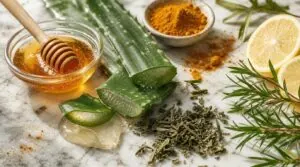
The good news is that your skin doesn’t always need a prescription to start clearing up. Several well-studied natural remedies have real evidence behind them — not just anecdotal buzz. Here are the ones worth knowing about.
Tea Tree Oil
Tea tree oil earns its place among natural acne treatments for good reason. Its active compound, terpinen-4-ol, drives both the antibacterial properties and anti-inflammatory effects that calm breakouts.
To avoid irritation, always dilute it — a few drops in a carrier like jojoba or witch hazel works well. Before applying broadly, do a patch test first. Your skin will thank you.
Aloe Vera Gel
Aloe vera is a quiet powerhouse in natural acne treatments. Nearly 99% water, it delivers polysaccharide hydration that soothes irritated skin without clogging pores.
Its antibacterial and anti-inflammatory compounds work together to reduce lesion counts naturally. Here’s what makes it effective:
- Acemannan immunity support calms inflammation
- Phenolic antioxidants neutralize acne-triggering free radicals
- Mineral support (including zinc) aids skin healing and pH balancing
Green Tea Extract
Your skin might respond better to green tea than you’d expect. Polyphenol catechins — particularly EGCG concentration — drive its antioxidant activity and anti-inflammatory effects, helping reduce redness and lesion counts. Clinical data show topical treatment with green tea polyphenol extract cut comedones by 79–89% over eight weeks.
Catechin potency also facilitates microbiome modulation, while formulation stability in leave-on serums ensures antioxidant synergy remains active on your skin.
| Property | Detail | Benefit |
|---|---|---|
| Active compound | EGCG (catechin) | Reduces inflammation |
| Antioxidant synergy | Polyphenol complex | Neutralizes free radicals |
| Topical form | Serum/gel | Stable delivery |
| Microbiome modulation | Antimicrobial activity | Limits C. acnes growth |
| Clinical result | 79–89% comedone reduction | Fewer visible breakouts |
Diluted Apple Cider Vinegar
Apple cider vinegar’s acetic acid benefits extend beyond culinary uses. When diluted 1:3 with water, it serves as a topical treatment to promote skin pH balance through microbial inhibition against C. acnes. Always conduct a patch test first, as it may sting sensitive skin.
For oral use, employ the straw drinking method to protect tooth enamel. This approach safeguards against acidity while allowing internal consumption.
Its anti-inflammatory and antibacterial properties make it a worthwhile remedy, but caution is essential due to potential skin sensitivity.
Jojoba Clay Masks
Clay might sound counterintuitive for oily skin — but that’s exactly what makes jojoba clay masks work so well as natural acne treatments.
- Oil Balancing Clay absorbs excess sebum while jojoba’s Wax Ester Film keeps skin from over-drying
- Ingredient Synergy between noncomedogenic jojoba and pH Balancing Agents aids pore unclogging without irritation
- Dry Time Guidance: rinse before the mask fully hardens to avoid tightness
Skin-Safe Oils and Toners

Not every oil clogs your pores — some actually help calm breakouts and keep your skin balanced. The right toners can do the same, tightening pores and cutting excess oil without stripping your skin dry.
Here are five skin-safe options worth knowing about.
Argan Oil
Argan oil earns its place in natural acne treatments for good reason. Packed with omega-rich fatty acids and a potent vitamin E antioxidant, it aids barrier repair benefits without clogging pores — its non-comedogenic rating makes it genuinely safe for breakout-prone skin.
It absorbs quickly, with a light texture and absorption profile that won’t feel greasy.
It also helps with sebum regulation and delivers mild anti-inflammatory effects.
Rosehip Oil
Rosehip oil takes things a step further than argan. Rich in linoleic acid — a fatty acid many acne-prone skin types lack — it bolsters skin barrier function and may help with acne scar reduction over time.
Its cold-pressed purity preserves photoprotective antioxidants like tocopherols, making it a true antioxidant powerhouse.
The formula delivers lightweight moisture, anti-inflammatory effects, no greasiness, ensuring a comfortable, non-comedogenic experience.
Worth trying for its multifaceted benefits.
Witch Hazel
While rosehip oil nourishes from within, witch hazel works differently — it tightens and tones. As a natural astringent, its tannin-rich extract delivers real astringent action, temporarily shrinking pores and reducing surface oil.
Its anti-inflammatory benefits calm redness, while antimicrobial polyphenols target acne-causing bacteria directly.
Smart application tips for your routine:
- Apply post-cleanse using a cotton pad
- Start once daily to gauge tolerance
- Always follow with moisturizer
- Try as a spot treatment on active breakouts
- Always patch test safety first — some skin finds it drying
Zinc Oxide
Witch hazel tightens and tones, but zinc oxide forms a physical shield—thanks to its unique Wurtzite structure, this mineral delivers real barrier support while acting as a UV filter against UVA and UVB rays.
Its antiseptic action and astringent effect help calm inflamed skin, making zinc a genuinely useful antibacterial ingredient in natural acne treatments.
Coconut Oil Caution
Coconut oil sounds like a natural acne treatment hero, but it comes with real caveats. Its high saturated fat content makes it one of the more comedogenic ingredients around, meaning pore blockage is a genuine risk for oily skin. Rancid spoilage from poor storage can also trigger irritation.
- Practice allergy testing on your inner arm first
- Respect application limits — a thin layer only
- Prioritize oil control by monitoring breakouts closely
Diet and Lifestyle Acne Fixes

What you eat and how you live each day can quietly shape what shows up on your skin. Small, consistent choices — from the food on your plate to how much you sleep — often make a bigger difference than any product you apply.
Here’s what the evidence actually points to. What the evidence actually points to is the impact of these daily habits.
Low-Glycemic Foods
What you eat can quietly fuel your breakouts. High glycemic foods spike blood sugar rapidly, triggering an insulin surge that ramps up oil production. This hormonal response creates an environment where acne thrives.
A low glycemic diet works differently: it stabilizes glucose release, mitigating these effects. Key components include Legume Power from lentils and chickpeas, nutrient-rich Quinoa Benefits, and High-Fiber Meals that ease sugar into your system gradually.
Practical strategies like Low-GI Breakfast options, nourishing Veggie Soups, and mindful blood sugar control directly combat insulin resistance. By addressing root causes through diet, these choices help resolve acne sustainably.
Dairy and Breakouts
Dairy might be quietly worsening your breakouts. The Milk Protein Impact comes down to two culprits: whey raises insulin, while Casein IGF-1 signaling promotes excess oil. Surprisingly, the Skim Milk Link is stronger than whole milk, likely because processing concentrates these proteins.
If you notice a Yogurt Breakout Pattern, consider a short Dairy Elimination Test — two to four weeks without conventional dairy can reveal whether these dietary factors are driving your hormonal imbalance.
Zinc and Omega-3s
Two nutrients quietly do a lot of heavy lifting for your skin: zinc and omega-3 fatty acids. Zinc provides Enzyme Cofactor Support across multiple biological pathways, while omega-3 fatty acids—especially EPA and DHA from fish oil—deliver Anti-Inflammatory Synergy through NF‑kB Modulation, calming the signals that trigger breakouts.
Together, this Dietary Pairing promotes Sebum Regulation.
Consider adding zinc supplements and dietary supplements containing omega-3s to your routine.
Hydration and Skin Barrier
Your skin barrier is fundamentally a guardian — and hydration is what keeps it working.
When Water Loss Reduction breaks down, pores become more reactive and prone to breakouts. Supporting Ceramide Support and Aquaporin Function with a gentle topical moisturizer helps maintain Acid Mantle Balance.
Try these daily habits:
- Drink at least 2 liters of filtered water to support your Moisturizing Factor.
- Choose natural moisturizers that protect your skin microbiome without clogging pores.
- Pair hydration with Omega-3 fatty acids to reinforce your barrier from the inside out.
Sleep and Exercise
Think of sleep and exercise as a tag team for your skin. A consistent routine of at least 150 minutes weekly — including weight lifting — lowers cortisol and other stress hormones that trigger breakouts. Evening exercise works well, as the body temperature drop afterward promotes sleep structure and deeper rest.
Poor sleep raises cortisol again, creating a cycle where both habits reinforce each other.
Safe At-Home Acne Care
Using natural remedies at home takes a little know-how to do it safely and effectively. A few key guidelines can help you protect your skin, avoid common mistakes, and get real results.
Here’s what you need to keep in mind before getting started.
For the full step-by-step breakdown, removing facial hair with egg white at home walks you through the process safely, from prep to peel-off.
Dilution Guidelines
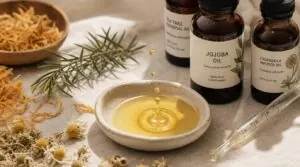
Dilution ratios matter more than most people realize. Start low (0.5–2%) and use a non-comedogenic carrier choice like jojoba to spread it safely.
- Always patch test first on your inner forearm
- Limit application frequency to once daily initially
- Store blends away from heat for storage stability
- Discard anything that smells or looks off
Pregnancy Safety Notes

Pregnancy changes everything — including which natural acne treatments are actually safe. Label scrutiny becomes non-negotiable, since "natural" doesn’t always mean harmless. Essential oils safety varies widely, and many topical products and oral supplements lack pregnancy-specific evidence. Always prioritize clinician consultation before starting anything new.
| Category | Generally Safer | Use With Caution |
|---|---|---|
| Topicals | Aloe vera, gentle exfoliation | Tea tree oil, ACV |
| Supplements | Vitamin D, probiotics | High-dose zinc, oral vitamin A |
| Sun safety | Mineral sunscreen | Chemical UV filters |
Patch testing remains important regardless of trimester. If burning or swelling occurs, stop immediately and seek dermatologist consultation.
Acne Scar Prevention
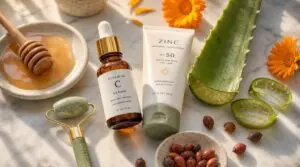
Once you’ve sorted pregnancy-safe options, keeping scars at bay becomes the next priority. Early inflammation control matters most — the sooner you address a breakout, the less damage it leaves behind.
- Sun Protection — UV exposure deepens hyperpigmentation; daily SPF preserves collagen.
- Pick Avoidance — Squeezing drives deeper injury and worsens acne scars.
- Gentle Skincare — Harsh scrubs disrupt healing; antioxidant-rich products with vitamin C support recovery.
Do a quick risk assessment if breakouts are frequent.
When to See Dermatologist

Natural remedies can only go so far. If you’re dealing with persistent nodules, cystic acne, or hormonal cycle spikes that keep flaring monthly, it’s time to call a dermatologist.
| Warning Sign | What It Means | Next Step |
|---|---|---|
| Sudden fever flares | Possible systemic infection | See a clinician urgently |
| Unhealing lesions | May not be acne | Dermatological evaluation needed |
| Medication-induced acne | Drug-related trigger | Prescription acne medication review |
| Nodular acne worsening | High scarring risk | Clinical evidence confirms early care |
Frequently Asked Questions (FAQs)
What is the best natural cure for acne?
There’s no single best cure, but combining tea tree oil, aloe vera, zinc, and green tea targets acne from multiple angles — bacteria, inflammation, and oil — far better than any one remedy alone.
How can I treat my pimples naturally?
You can calm pimples naturally using tea tree oil, honey masks, apple cider vinegar, and probiotic skincare — remedies that directly combat acne-causing bacteria to reduce breakouts.
For inflammation, aloe vera, zinc, green tea, cold compresses, herbal poultices, and vitamin C serums soothe redness and swelling, supporting the skin’s healing process.
What kills acne completely?
Nothing kills acne completely — but the right combination comes close.
Oral isotretinoin offers the strongest remission, while benzoyl peroxide, salicylic acid, zinc, and tea tree oil consistently reduce breakouts with regular use.
What kills acne the fastest?
Benzoyl peroxide clears inflamed pimples fastest — often within one to three days. Salicylic acid works as a quick pore unclogger for blackheads, usually showing results in three to seven days.
How did I cured my acne naturally?
Think of clear skin as a puzzle — each piece matters.
A consistent face wash, tea tree oil as a DIY spot treatment, aloe vera, zinc, and a low glycemic diet all helped.
How do you get rid of acne asap at home?
Dab diluted tea tree oil directly on the blemish or try a spot patch.
A honey mask, aloe vera, or witch hazel can calm redness fast.
A cold compress or ice cube rub reduces swelling immediately.
What clears acne asap?
For fast results, apply a benzoyl peroxide or salicylic spot treatment, then press an ice compress on the area.
A hydrocortisone patch, zinc serum, or rapid light therapy can also calm a breakout overnight.
How long do natural acne treatments take to work?
Most natural acne treatments need consistent use over six to twelve weeks for full results.
Expect small weekly milestones around week four, with an adjustment flare-up possible in the first two to three weeks.
Can natural remedies make acne temporarily worse?
Yes, they can. Acid irritation, over-drying effects, and comedogenic oils may trigger barrier disruption or allergic flare, temporarily worsening acne lesions before skin adjusts to any home treatment.
Should natural treatments be used during pregnancy?
Pregnancy changes everything about your skin. Before using any topical natural remedy, patch testing, ingredient safety checks, and medical consultation aren’t optional — they’re essential.
Dosage limits and barrier-friendly formulas matter most now.
Conclusion
Think of your skin as a garden—when you remove what’s choking it and give it what it actually needs, it finds its way back to balance. The most effective natural acne treatments don’t force results; they restore conditions where your skin can heal itself.
Hormones, diet, stress, sleep—each one matters. Small, consistent changes tend to outperform dramatic interventions every time.
Your clearest skin likely isn’t hiding behind a complicated routine. It’s waiting for a simpler one.
- https://www.stratumclinics.com/a-guide-to-tea-tree-oil-and-using-it-for-acne-spots/
- https://www.paulaschoice.com/expert-advice/skincare-advice/acne-and-breakouts/does-tea-tree-oil-help-acne.html?srsltid=AfmBOorm8f4qrbgzCIq7uqV0h5GZiQOvkUc6Y2Gl9d-TY1WYsprWD-Lk
- https://health.clevelandclinic.org/tea-tree-oil-for-acne