This site is supported by our readers. We may earn a commission, at no cost to you, if you purchase through links. This content is for general informational and educational purposes only and is not a substitute for professional medical, dermatological, or nutritional advice.
Most men blame their genes when their beard refuses to cooperate—and honestly, genetics do matter. But they only account for about 80% of your beard’s potential.
That remaining 20% sits firmly in your hands, shaped by what you eat, how you sleep, and whether chronic stress is quietly tanking your testosterone.
DHT, the hormone that actually activates facial hair follicles, depends on a cascade of biological conditions you can influence.
Thin patches and slow growth are often the body’s way of signaling nutritional gaps or lifestyle friction—not a life sentence.
The natural ways to stimulate beard growth that actually work target that biology directly.
Table Of Contents
- Key Takeaways
- Key Factors Affecting Beard Growth
- Best Foods for Natural Beard Growth
- Essential Beard Care Habits
- Natural Home Remedies for Beard Stimulation
- Lifestyle Changes to Boost Beard Growth
- Common Beard Growth Mistakes to Avoid
- Frequently Asked Questions (FAQs)
- How can I make my beard hair grow faster?
- How do you get a beard to grow a full beard?
- How can I make my beard grow thicker?
- How can a beard grow & look better?
- What foods help a beard grow faster?
- What is the best way to grow beard faster?
- Is there a way to stimulate your body to grow beard fast?
- Why is my beard growing slowly?
- How long do I have to wait to achieve full beard growth?
- Does trimming help grow beard fast?
- Conclusion
Key Takeaways
- Genetics controls about 80% of your beard’s potential, but the remaining 20% is fully in your hands through diet, sleep, stress management, and consistent skincare habits.
- DHT — the hormone that actually activates facial hair follicles — depends on testosterone, quality sleep, and regular resistance training, all of which you can directly influence.
- Nutritional gaps in protein, zinc, biotin, and omega-3s are among the most common and correctable reasons beards grow slowly or unevenly.
- Consistency beats intensity every time — daily beard massage, gentle cleansing, natural oils, and a stable routine compound quietly into real, visible growth over months.
Key Factors Affecting Beard Growth

Before you try any growth hack or fancy oil, it helps to understand what’s actually driving your beard in the first place. Some of these factors are out of your hands, but others you can work with once you know what they are.
Pairing that self-awareness with the right tools makes a real difference — beard growth products that actually support your biology can help you work with what you’ve got, not against it.
Here’s what’s shaping your beard from the inside out.
Genetics and Age
Your beard potential is largely written in your DNA. Androgen receptor genes and DHT sensitivity determine how readily your follicles respond to hormones — and roughly 80% of that blueprint comes from your family line.
Peak density commonly arrives between 25 and 35.
Surprisingly, FOXO3A variants linked to cellular repair may also influence how well follicles age, affecting your long-term beard genetics.
Hormone Levels (Testosterone, DHT)
Think of testosterone as fuel — but DHT is the spark that actually ignites follicle activity. The enzyme 5 alpha reductase converts testosterone into DHT, which binds androgen receptors far more powerfully, flipping vellus hairs into thick terminal growth.
Testosterone fuels the follicle, but DHT is the spark that turns thin vellus hairs into thick terminal growth
- Low serum testosterone threshold (below 300 ng/dL) signals a hormonal imbalance worth investigating medically.
- Poor DHT ratio or weak androgen receptor sensitivity can stall growth regardless of effort.
- DHT blockers may protect scalp hair but quietly limit facial coverage.
Leydig cells produce testosterone, the primary hormone driving facial hair growth.
Lifestyle and Environmental Influences
Hormones set the stage — but your environment runs the show day to day.
Chronic stress spikes cortisol, cutting testosterone by up to 25%.
Poor sleep slows overnight hormone synthesis.
Skipping regular exercise means missing a 10–15% natural testosterone boost.
Urban lifestyle factors like air pollution, water hardness, and UV exposure quietly irritate follicles too.
Smart stress management, quality sleep, smoking cessation, and hydration timing all compound.
Small daily choices either feed your beard or starve it.
| Factor | Impact on Beard Growth |
|---|---|
| Quality Sleep | Maximizes nocturnal testosterone synthesis |
| Smoking Cessation | Restores follicle blood flow and nutrient delivery |
| Humidity Management & UV Protection | Reduces follicle irritation and skin barrier damage |
Best Foods for Natural Beard Growth

What you eat directly fuels your follicles — beard hair is mostly keratin, and keratin doesn’t build itself. The right foods supply the raw materials your body needs to push out stronger, thicker growth.
Here are the best ones to add to your plate.
Protein-Rich Foods (Meat, Fish, Eggs)
Your follicles are basically a construction crew — and protein is their raw material. Without enough high-quality protein in your daily diet, hair growth stalls fast. Lean meat protein from chicken and beef delivers zinc and iron alongside every amino acid your body needs for keratin synthesis. Omega-3 fish like salmon and mackerel take it further, strengthening the hair shaft while feeding follicle receptors. Egg amino acids round out the picture — eggs are a complete protein source, meaning nothing’s missing.
Pairing that protein-rich diet with a quick scalp massage routine for hair growth a few times a week helps drive those nutrients directly to your follicles where they’re needed most.
Here’s what to prioritize:
- Lean beef and chicken — zinc-rich, iron-packed, and loaded with B vitamins
- Omega-3 fish (salmon, mackerel) — helps follicle health and hair elasticity
- Eggs — complete egg amino acids plus biotin for stronger strands
Consistent dietary protein intake is one of the most direct connections between nutrition and beard growth foods that actually work.
Leafy Greens and Vegetables
Leafy greens don’t just fill your plate — they fuel your follicles. Spinach and kale deliver vitamin A, vitamin C, and iron, the core building blocks behind healthy hair growth.
Their phytonutrient variety and antioxidant richness protect follicle cells from oxidative stress.
Add glucosinolates presence from kale and beta-carotene levels from spinach, and you’ve got powerful diet and nutrition for facial hair — with a low calorie profile to boot.
Nuts and Seeds (Brazil Nuts, Walnuts)
Brazil nuts and walnuts are two of the most underrated players in your beard nutrition toolkit. Just one or two Brazil nuts hit roughly 175% of your daily selenium needs — a mineral that aids protein metabolism and follicle function.
Walnuts bring omega-3s and polyphenol antioxidant capacity to the table. Together, their mineral synergy is real. Keep portions small, though; selenium excess causes problems.
Vitamins and Minerals (A, B, C, D, E)
Think of vitamins as your beard’s internal construction crew — each one has a specific job, and when one goes missing, the whole project stalls.
- Vitamin A Skin support starts with sebum production, keeping follicles moisturized and shielded from daily damage.
- Vitamin B Metabolism keeps energy flowing to rapidly dividing follicle cells — biotin and vitamin B complex vitamins strengthen each hair shaft from the inside out.
- Vitamin C Collagen synthesis builds the structural scaffolding your beard hair grows through, while neutralizing free radicals that damage follicles.
- Vitamin D Immunity connection matters too — vitamin D activates dormant follicles and regulates healthy hair cycling.
- Vitamin E Cell membrane protection reduces oxidative stress and boosts circulation directly to follicle tissue.
Pair these with zinc from pumpkin seeds and vitamin E from sunflower seeds for sustained, noticeable growth.
Essential Beard Care Habits
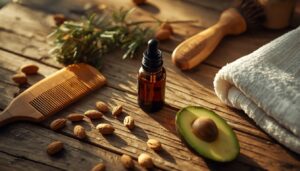
What you eat matters, but how you care for your skin matters just as much. Good beard habits keep your follicles clear, hydrated, and ready to grow.
Here’s what your daily routine should look like.
Gentle Cleansing and Exfoliation
Your skin is the soil your beard grows from — neglect it, and even good genetics won’t save you.
Cleanse twice daily using Mild Cleanser Formulas or a gentle natural soap that respects your skin barrier. Harsh products strip protective sebum, and that’s the last thing your follicles need.
Two to three times weekly, add skin exfoliation using Fine Particle Scrubs or an exfoliating facial cleanser with Short Contact Time — just 30 to 60 seconds.
Barrier Protective Ingredients like glycerin help maintain comfort after washing.
Low-pH Chemical Peels offer a gentler alternative for clearing blocked pores without irritation, keeping follicle openings clear and ready for growth.
Moisturizing With Natural Oils
Your follicles are thirsty — and the right oil makes all the difference.
After cleansing, apply beard oil to damp skin while pores are open and receptive. Damp Skin Application locks in moisture before it evaporates, giving you visibly softer skin underneath.
For those with reactive skin, pairing this routine with gentle, skin-safe hot tub chemicals helps prevent irritation that can undermine even the best grooming habits.
Here’s your daily beard oil application lineup:
- Jojoba Oil — mirrors your skin’s natural Jojoba Oil Sebum, preventing overproduction
- Argan Oil — delivers Argan Oil Protection through vitamin E and fatty acids
- Rosehip — packed with Rosehip Vitamin Hydration via vitamins A and C
- Squalane — offers Lightweight Squalane Benefits for sensitive skin without clogging pores
Skip essential oils unless diluted — they’re potent.
Brushing and Combing Techniques
Your grooming tools are only as good as how you use them. After washing, let your beard dry slightly before reaching for your beard brush — post-wash grooming on soaking-wet hair increases breakage risk. Match brush bristle firmness to your thickness: softer for shorter beards, firmer for dense growth. Use sectioned detangling with your beard comb, starting at the ends.
| Tool | Best Use |
|---|---|
| Boar bristle brush | Distributes natural oils evenly |
| Wide-tooth comb | Comb tooth shape reduces snagging |
Apply gentle tension — never force it.
Natural Home Remedies for Beard Stimulation
Sometimes the best tools are already in your kitchen or bathroom cabinet. A few targeted remedies can make a real difference in how your follicles respond — without a trip to the pharmacy.
what’s worth trying.
Castor and Coconut Oil Application

Start with a patch test — dab a small amount behind your ear and wait 24 hours before committing to the full beard area. Skin preparation matters, so apply to a clean, dry face.
For your blend ratio, mix equal parts castor oil and coconut oil; castor’s ricinoleic acid drives blood flow to follicles, while coconut oil locks in moisture. Keep your portion size small — a pea-sized amount is enough.
Build this into your beard care routine, two evenings per week.
Beard Massage Methods

once you’ve oiled up, don’t stop there — let your fingers do the real work. daily beard massage drives blood circulation directly to your follicles.
Use circular motion across your cheeks and jawline, then switch to kneading and pinching along your chin. directional stretching for deeper stimulation. With oil assisted flow, everything glides smoothly.
consistency and timing matter most — five minutes daily beats an hour once a week.
Benefits of Microneedling

Massage wakes up circulation — but microneedling takes it further. Using a 0.5–0.75 mm roller once weekly, this technique creates micro‑injuries that trigger your skin’s natural repair response, stimulating fibroblasts to ramp up Collagen Production and improving the foundation your beard actually grows from.
That’s where Hair Follicle Stimulation really kicks in. Up to 82% of users report over 50% improvement in density — not bad for a natural beard growth method you can do at home.
Microneedling benefits go beyond just hair:
- It delivers a real Topical Absorption Boost, making minoxidil or rosemary oil penetrate far deeper.
- It helps Scar Reduction and Hyperpigmentation Lightening, evening out patchy skin tone over time.
Microneedling for hair growth pairs well with beard growth vitamins for compounding results.
Lifestyle Changes to Boost Beard Growth

What you eat and put on your face matters, but what you do every day matters just as much. Beard growth is deeply tied to your hormones, your blood flow, and how well your body recovers — all of which your lifestyle directly controls.
Here are the key changes worth making.
Managing Stress Levels
Chronic stress is basically a silent beard killer — elevated cortisol can suppress testosterone by up to 25%.
Start with trigger identification: track what consistently spikes your stress and adjust your exposure. Mindful breathing and mindfulness meditation calm the nervous system fast. Cognitive reframing shifts how you interpret pressure, while social support keeps stress from building privately. Schedule recovery breaks daily — consistent stress reduction is non‑negotiable for testosterone production and real beard progress.
| Stress Strategy | How It Works | Beard Benefit |
|---|---|---|
| Trigger Identification | Spot and limit recurring stressors | Reduces cortisol spikes |
| Mindful Breathing | Slows nervous system response | Promotes testosterone balance |
| Cognitive Reframing | Replaces negative thought patterns | Lowers chronic stress load |
| Social Support | Shares burden, reduces isolation | Prevents hormone suppression |
| Recovery Breaks | Planned daily downtime | Restores hormonal rhythm |
Regular Exercise and Sleep Quality
Think of exercise as beard’s natural fuel source. Resistance Timing matters—Morning Workouts raise testosterone 10–15%, while Evening Aerobics still improve Blood Circulation to follicles. Exercise Consistency across 3–4 weekly sessions drives real exercise‑induced testosterone gains. Sleep Hygiene seals the deal; your body synthesizes most testosterone during deep sleep.
- Lift weights 3–4 times weekly
- Keep aerobic sessions 15–30 minutes
- Target 7–8 hours nightly
- Maintain consistent Sleep Hygiene routines
Quitting Smoking for Beard Health
Smoking quietly strangles your beard from the inside. Nicotine triggers vasoconstriction — narrowing the blood vessels responsible for blood circulation to your follicles — while cigarette toxins pile on oxidative stress relief problems that damage follicle cells directly.
Quitting smoking restores vascular health, improves blood flow boost, promotes hormone balance aid, and facilitates real follicle repair. Within months, you’ll notice meaningful beard density gain returning.
Common Beard Growth Mistakes to Avoid

Even with the best intentions, a few common habits can quietly sabotage your beard progress. Most guys don’t realize they’re making these mistakes until they’ve already lost weeks of growth.
Here’s what to watch out for.
Over-Shaving Myths
Shaving every day won’t make your beard thicker or darker — that’s the Growth Rate Myth.
What you’re seeing is the Optical Thickness Effect: blunt, freshly cut ends reflect light differently, creating a Thicker Hair Illusion.
The Color Change Myth works the same way. Your genetics set the pace.
Worse, avoid shaving over irritated skin — that’s where Irritation vs. Ingrown becomes a real problem, not progress.
Poor Diet Choices
Your beard is only as strong as what you feed it.
From protein intake to hormone shifts, understanding how beard growth works for young adults can help you give your facial hair exactly what it needs to thrive.
Processed Food Dependence and Added Sugar Overload flood your body with insulin spikes that suppress testosterone — the very hormone driving follicle activity.
Refined Carb Excess crowds out the protein-rich foods, leafy greens, and omega-3 sources your follicles actually need.
Micronutrient Deficiency — especially Low Iron Intake and Zinc shortfalls — slows keratin production noticeably.
Fix these four diet and beard growth food gaps:
- Skip ultra-processed snacks — they displace zinc and iron-rich whole foods
- Cut added sugars — sweet drinks worsen blood sugar regulation and shift the body away from growth priorities
- Add protein daily — amino acids are the raw material for keratin synthesis
- Include omega-3 sources — fatty fish, walnuts, and flaxseed reduce inflammation that stalls follicle repair
Inconsistent Beard Care Routine
Routine is everything. Irregular Washing, Random Oil Use, Inconsistent Brushing, Skipping Exfoliation, and Unpredictable Trimming all quietly work against your progress.
| Habit | What Goes Wrong |
|---|---|
| Irregular Washing | Buildup blocks follicles |
| Random Oil Use | Skin dries between gaps |
| Inconsistent Brushing | Tangles cause breakage |
| Skipping Exfoliation | Dead skin clogs pores |
| Unpredictable Trimming | Shape looks uneven |
Daily routine consistency beats sporadic effort every time.
Frequently Asked Questions (FAQs)
How can I make my beard hair grow faster?
Faster beard growth comes down to a few key drivers: protein-rich foods, quality sleep for nighttime nutrition, regular exercise, natural oils for scalp microcirculation, and consistent hydration strategies.
Stack these habits, and your follicles respond.
How do you get a beard to grow a full beard?
Growing a full beard comes down to genetics, hormones, and consistency.
Fuel follicles with protein, zinc, and biotin; build healthy habits; and give it months — not days — to show real results.
How can I make my beard grow thicker?
Think of your follicles like sleeping seeds — they need the right soil to wake up.
Eat protein-rich foods, add omega-3 sources and biotin supplements, exercise regularly, prioritize quality sleep, and explore minoxidil application or microneedling for follicle activation and blood flow boost.
How can a beard grow & look better?
Your beard grows better when follicle activation, skin pH balance, and consistent care align. Prioritize protein-rich foods, quality sleep, natural oils, regular exercise, and beard massage for visible, lasting results.
What foods help a beard grow faster?
Eggs, salmon, and lean meats deliver the protein and iron your follicles need.
Add walnuts for omega-3 sources, pumpkin seeds for zinc, and spinach for antioxidant-rich foods that keep growth steady.
What is the best way to grow beard faster?
Want a faster beard? Stack the right habits. Eat protein, sleep 8 hours, lift weights, apply natural oils, and keep stress low. Consistency — not shortcuts — is what actually moves the needle.
Is there a way to stimulate your body to grow beard fast?
You can’t hack your genetics, but you can work with them.
Lifting weights, prioritizing sleep, eating protein, and keeping skin clean all support the hormonal environment your follicles need to perform at their best.
Why is my beard growing slowly?
About 45% of men deal with patchy or slow beard growth. Genetics control roughly 80% of the outcome — your follicles’ sensitivity to DHT largely determines density, no matter how hard you try.
How long do I have to wait to achieve full beard growth?
Full beard growth takes most men 2 to 6 months, though genetics and age shape your personal timeline. Stubble appears in 2 to 3 weeks, but true patchiness fill-in often needs 3 months or more.
Knowing which stage you’re in makes all the difference, so check out this breakdown of beard growth phases before you reach for the trimmer too soon.
Does trimming help grow beard fast?
Trimming won’t speed up beard growth — but it does control split ends, sharpen edge line definition, and give your beard a visual density boost that makes it look fuller while your follicles do their work.
Conclusion
Genetics set the ceiling—your habits determine how close you get to it. The natural ways to stimulate beard growth aren’t shortcuts; they’re compounding investments.
Take shaving, for instance: despite the persistent locker-room lore, shaving and beard thickness are not actually connected, so that razor won’t do the heavy lifting genetics already assigned.
One popular myth worth clearing up first: shaving cuts hair bluntly rather than tapering it, and understanding why shaving doesn’t actually accelerate beard growth can save you from chasing a routine that never moves the needle.
Eat for DHT. Sleep for testosterone. Manage stress like it’s costing you something, because it’s. Oil your skin, move your body, and stay consistent when progress feels invisible.
A beard isn’t built in a week, but every right choice you make today is quietly laying another brick.