This site is supported by our readers. We may earn a commission, at no cost to you, if you purchase through links.

Most hair oils sit on the surface like a raincoat, but penetrating oils work differently. These lightweight formulations contain small molecules that slip past the cuticle layer and reach the cortex inside your hair shaft. That’s where real structural change happens.
Coconut oil’s lauric acid, for example, has a low molecular weight that lets it diffuse deep into damaged areas, reducing protein loss and breakage from the inside out.
The difference between coating your hair and actually nourishing it comes down to molecular structure. Your choice of oil determines whether you’re getting surface shine or genuine repair at the cortex level.
Table Of Contents
- Key Takeaways
- What Are Penetrating Oils for Hair?
- How Penetrating Oils Work on The Hair Shaft
- Benefits of Using Penetrating Oils
- Most Effective Penetrating Oils Explained
- How to Choose The Best Oil for Your Hair
- Best Ways to Use Penetrating Oils
- Top 10 Penetrating Oils for Hair Shaft
- 1. Brooklyn Botany Avocado Oil
- 2. Coco And Co Raw Coconut Oil
- 3. Pure Olive Oil for Skin and Hair
- 4. Sky Organics Castor Oil
- 5. Sky Organics Sweet Almond Oil
- 6. Vera Botanics Babassu Oil
- 7. Sky Organics Shea Butter
- 8. Ucuuba Butter For Hair And Skin
- 9. OGX Argan Oil Hair Treatment
- 10. OGX Coconut Hair Oil Treatment
- Frequently Asked Questions (FAQs)
- Conclusion
Key Takeaways
- Penetrating oils like coconut and avocado work differently than surface-coating oils because their small molecular structures—especially medium-chain fatty acids like lauric acid—slip past the cuticle layer and reach the cortex where real structural repair happens
- Your hair’s porosity level determines which oils work best: low-porosity hair needs lightweight molecules that can squeeze through tight cuticles, while high-porosity hair absorbs heavier oils faster but needs them to seal damage and prevent moisture loss
- Pre-shampoo oil treatments (pre-poos) reduce protein loss during washing by up to 20% and prevent hygral fatigue—the repetitive swelling and shrinking that lifts cuticles and creates frizz—making them more effective than post-wash applications
- Molecular weight matters more than brand or price: oils rich in oleic, lauric, or linoleic acids penetrate deeper than bulkier molecules, so matching fatty acid profiles to your hair’s damage level delivers better results than expensive formulations with heavy triglycerides
What Are Penetrating Oils for Hair?

Penetrating oils are specialized hair care products that work differently than the oils sitting on top of your strands. Their unique molecular structure allows them to actually absorb into the hair shaft, delivering nutrients where they’re needed most.
Understanding what makes an oil “penetrating” starts with three key factors that separate them from surface-level treatments.
Definition and Key Characteristics
Penetrating oils are lightweight, non-sealing formulations designed to diffuse into the hair shaft rather than just coat the surface. Their ability to reach the cortex depends on three critical factors:
- Low molecular weight – smaller saturated fatty acids boost oil penetration through the cuticle
- Lipid interactions – triglycerides interact with hair structure’s natural lipids
- Chain length – medium-chain triglycerides promote deeper hair penetration
Understanding the importance of scientific study summaries can help improve the analysis of hair care products.
How Penetrating Oils Differ From Sealing Oils
Unlike sealing oils that create a hydrophobic film on your hair shaft barrier, penetrating oils diffuse through the cuticle layer and reach the cortex. Sealing oils rely on heavier molecular weight to form a lasting oil film, while penetrating oils use medium-chain fatty acids to achieve deeper hair penetration.
The oil molecular structure determines whether you’re coating strands or actually nourishing them from within—that’s the key difference in oil penetration depth. Understanding the language related concepts can help in finding the right terms to describe oil properties.
Why Molecular Structure Matters for Penetration
Your hair shaft won’t let just any oil through. Molecular size and oil polarity control hair penetration—smaller molecules like those in coconut oil slip past the cuticle layer more easily than bulkier ones.
Triglycerides rich in medium-chain fatty acids penetrate deeper, while long-chain versions stay on the surface. Hair porosity also determines how much fatty acid content actually reaches your cortex, making oil molecular structure the deciding factor in real nourishment.
How Penetrating Oils Work on The Hair Shaft

Understanding how penetrating oils actually work requires looking at your hair’s structure and the science of absorption. The process isn’t magic—it’s about molecular size, hair porosity, and the specific conditions of your strands.
Let’s break down the mechanics so you can make informed choices about which oils will actually deliver results.
Hair Shaft Structure and Oil Absorption
To understand how oil penetration works, you need to know your hair shaft’s three-layer structure:
The cuticle (outer layer), cortex (middle), and medulla (inner core) each respond differently to oils, especially coconut oil’s unique molecular structure before bleaching treatments.
- Cuticle Layer – Overlapping scales that guard deeper layers and control penetration
- Cortex – Keratin-rich zone where triglycerides and fatty acids strengthen fiber integrity
- Medulla – Central core in thick hair, often absent in fine strands
- Hair Porosity – Cuticle damage level determining molecular size entry
- Absorption Pathway – Oils diffuse through cuticle gaps into cortex for lasting benefits
Science Behind Oil Penetration
Precision meets chemistry in the way penetrating oils move through your hair shaft. Smaller molecular weight oils—think lauric or myristic acid—slip past cuticle barriers, driven by Oil Diffusion Rates and Fatty Acid Interactions.
If you have sensitive skin, choosing the right oil matters even more—gentle hair removal methods for dry skin can help you avoid unnecessary irritation while keeping hair healthy.
Triglycerides bind within the cortex, boosting Oil Penetration Depth. Your hair fiber structure welcomes these fatty acids, locking in strength and lasting nourishment.
Factors Influencing Oil Penetration (Porosity, Damage)
Your hair’s porosity determines how fast penetrating oils reach the cortex. High porosity from cuticle damage creates larger gaps, boosting oil diffusion and penetration depth. Low porosity resists molecular size entry, slowing oil penetration into the hair shaft.
Structural cracks from heat or chemical hair damage open pathways, letting oils bypass surface barriers and deliver deeper nourishment where your strands need it most.
Benefits of Using Penetrating Oils

Penetrating oils deliver measurable improvements to your hair’s structural integrity and appearance. They work from the inside out to address damage at the cortex level while improving surface characteristics.
For example, argan oil’s antioxidant-rich profile helps shield strands from thermal damage while reinforcing the hair shaft against breakage.
Here’s what you can expect when you incorporate these oils into your routine.
Reducing Hair Breakage and Damage
When you pre-treat your hair with penetrating oils like coconut, you markedly cut protein loss during washing—protecting the cortex from structural weakening that leads to hair breakage.
Look for cold-pressed, unrefined coconut oil for low porosity hair to maximize those protective antioxidants and nutrients without weighing down your strands.
Oil penetration reduces friction between fibers, lowering combing forces and preventing damage from routine grooming.
For those dealing with scalp sensitivity or flare-ups, exploring natural remedies for scalp psoriasis can help you maintain a calm, irritation-free environment while keeping hair protected.
This improved lubrication smooths the cuticle, reinforcing the hair shaft against mechanical stress while supporting long-term hair strengthening and damage prevention.
Preventing Hygral Fatigue and Frizz
Repeated swelling and shrinking from moisture cycles cause hygral fatigue—lifting your cuticle and creating gaps that trap humidity and trigger frizz.
Penetrating oils deliver low-molecular-weight lipids into the hair shaft, reducing water ingress and cuticle stress.
For high hair porosity types, pre-poo treatments with these oils minimize dimensional changes, keeping your strands smooth and frizz-free through better hair moisture management.
Enhancing Moisture, Shine, and Softness
Moisture lives in your cortex, not on your surface—that’s why penetrating oils deliver lasting hydration. Lauric and oleic acids move past the cuticle layer, improving hair moisture balance and reducing breakage.
You’ll see shine enhancement through smoother cuticle layer repair and faster oil diffusion rates. The result? Softer hair shaft texture, better frizz reduction, and moisture that survives multiple washes instead of rinsing away.
Promoting Hair Growth and Scalp Health
Stronger hair strands mean fewer breaks—and that’s what drives growth stimulation. Penetrating oils nourish your hair follicle and improve scalp health by delivering fatty acids directly to the hair shaft.
Pair oil blending with scalp massage to boost circulation and support hair thickness. You’re not growing faster, you’re keeping more of what you grow—that’s real hair growth.
You’re not growing hair faster—you’re keeping more of what you grow, and that’s real growth
Most Effective Penetrating Oils Explained
Not all penetrating oils work the same way on your hair shaft. Their effectiveness depends on molecular structure, fatty acid composition, and how well they interact with your specific hair type.
Here’s a breakdown of the most effective penetrating oils and what makes each one unique.
Coconut Oil – Lauric Acid and Deep Nourishment
Coconut oil stands out among penetrating oils because of its high lauric acid content—roughly 45-50% of its fatty acid profile.
This medium-chain triglyceride slips into your hair shaft more effectively than many heavier oils, especially if you have porous or damaged strands.
You’ll get deep hair conditioning that reduces protein loss during washing and strengthens each strand from within.
Avocado Oil – Vitamins and Fatty Acids

Rich in oleic acid (up to 70%), avocado oil delivers vitamin E effects that shield your strands from oxidative stress while its fatty acids slip into the cuticle and smooth surface roughness. You’ll notice less frizz because these hair emollients fill micro-gaps along each strand.
Avocado nutrition includes vitamins A and K, supporting scalp health and moisture retention better than many lightweight natural oils.
Olive Oil – Moisture and Strength

While avocado softens roughness, olive oil addresses dryness head-on. Its oleic acid seals microfissures along your cuticle, locking moisture into the cortex and minimizing water loss during styling. You’ll see fewer snapped ends because this emollient keeps keratin hydrated, indirectly boosting tensile strength.
- Delivers triglycerides that repair barrier integrity in damaged outer layers
- Improves combability in coarse or frizzy textures by smoothing the surface
- Replenishes lipids where your cuticle has worn thin
Argan Oil – Lightweight Hydration

If olive oil feels heavy on fine strands, argan oil delivers hydration without weight.
Its low molecular weight lets oleic and linoleic acids slip past cuticle gaps, depositing tocopherols and antioxidants that shield your cortex from heat damage.
You’ll notice faster absorption and less greasy residue, making this penetrating oil ideal when your scalp runs oily but mid-lengths stay parched.
Jojoba Oil – Balancing and Scalp Benefits

Unlike heavier penetrating oils, jojoba oil mimics your natural sebum, signaling glands to cut back when they overproduce and nudging them along when your scalp runs dry.
That wax-ester structure forms a breathable film around each hair follicle, locking in scalp hydration without clogging pores.
You’ll get oil balance, antimicrobial protection against flakes, and the scalp comfort that keeps your hair shaft happy from root to tip.
How to Choose The Best Oil for Your Hair
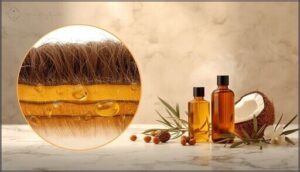
Your hair’s unique structure determines which penetrating oil will work best for you. Porosity, thickness, and current condition all affect how oils absorb into your hair shaft.
Let’s break down how to match the right oil to your specific hair needs.
Matching Oil to Hair Porosity
Your hair porosity determines how well penetrating oils work for moisture retention and hair diffusion. Low porosity hair resists oil absorption, so you’ll want lightweight options with small molecules. High porosity hair drinks up oils fast but needs heavier formulations for cuticle repair.
Try porosity testing—drop a strand in water to assess absorption patterns and discover better hair oil benefits through strategic hair penetration.
Selecting Oils for Hair Thickness and Texture
Texture analysis matters as much as porosity testing when you’re building your oil selection guide. Fine hair needs lightweight penetrating oils—think argan or sweet almond—for quick oil absorption rates without flattening. Coarse hair thrives with richer formulations like avocado or coconut that tackle thickness management.
Your hair texture dictates oil penetration success, so match molecular weight to strand diameter for ideal results.
Considerations for Oily, Dry, or Damaged Hair
Your scalp’s moisture balance determines which penetrating oils work best for you. Oily hair needs lightweight formulations to prevent buildup while maintaining oil absorption without weighing down roots.
Dry hair thrives with oleic-rich options that seal the cuticle and address hair porosity issues.
Damaged hair requires fatty acid blends that restore hair elasticity and tackle scalp sensitivity—patch test first to verify your scalp tolerates the treatment.
Best Ways to Use Penetrating Oils
You’ve picked the right oil for your hair type—now it’s time to use it correctly. The way you apply penetrating oils determines how well they work, from protecting against damage to maximizing moisture retention.
Let’s cover the most effective application methods and how to tailor them to your specific hair needs.
Pre-Poo, Deep Treatment, and Hot Oil Methods
You control how penetrating oils transform your hair by choosing the right treatment method. Pre-poo treatments protect against protein loss during washing, while deep conditioning maximizes oil diffusion into the hair shaft over 20–60 minutes. Hot oil treatments use gentle heat to open the cuticle and accelerate hair penetration.
- Pre-poo: Apply coconut or olive oil 15–30 minutes before shampooing to reduce friction and preserve moisture in high-porosity hair
- Deep conditioning: Combine penetrating oils with conditioning agents and leave for extended periods to improve scalp preparation and cortex saturation
- Hot oil treatment: Warm oil to 110–140°F, apply with a plastic cap for 15–20 minutes to increase diffusion rate
- Hair oil blending: Mix lightweight and heavier oils based on your hair porosity for tailored treatment timing and results
Application Tips for Maximum Absorption
Maximizing oil absorption isn’t guesswork—it’s technique. Warm your penetrating oils to body temperature before applying to boost absorption rates by up to 20%.
Section hair into 4-6 parts and massage oil into each strand for 1-2 minutes to improve hair penetration. Apply on damp (not soaking) hair after a gentle towel blot.
These hair care tips deliver measurable hair oil benefits through controlled scalp massage and optimized leave-in times.
Frequency and Quantity for Different Hair Types
Once you’ve dialed in your technique, dial in frequency and oil dosage. Fine, low-porosity hair needs 1–2 weekly penetrating oil sessions using just 1–2 drops—any more and you’ll weigh down strands.
Medium porosity? Aim for 2–3 times per week with 3–5 drops.
High-porosity or damaged hair thrives on 3–5 weekly treatments with 4–6 drops, but watch for buildup.
Mixing Oils and Rotating Treatments
Switching your penetrating oils every 1–2 wash cycles prevents saturation fatigue and keeps your hair responsive. Oil blending works best when you rotate treatment combinations—try coconut one week, avocado the next—so different fatty acids reach varying penetration depths.
This rotation schedule reduces buildup while letting you track hair response across cycles. For high porosity, start light (argan), then move to heavier oils (olive) as your hair oil treatment progresses.
Top 10 Penetrating Oils for Hair Shaft
Now that you know how to apply penetrating oils effectively, it’s time to choose the right product for your hair’s needs.
The following list highlights ten formulations that combine proven penetrating oils with practical delivery systems. Each option includes specific fatty acid profiles and application considerations to help you make an informed decision.
1. Brooklyn Botany Avocado Oil
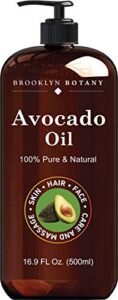
Brooklyn Botany Avocado Oil delivers oleic and linoleic acids straight into your hair shaft, making it one of the standout penetrating oils for effective hair nourishment. You get vitamin E for antioxidant protection plus a lightweight texture that won’t weigh down fine strands.
Apply it as a pre-poo treatment to boost hair hydration and improve manageability after washing. The oil penetration potential comes from its molecular profile, which facilitates film formation while maintaining strand integrity during moisture exchange.
It’s 100% pure with no added silicones or mineral oil benefits.
| Best For | People with fine or medium hair looking for a lightweight, pure oil that penetrates the hair shaft to improve softness and manageability without weighing strands down. |
|---|---|
| Product Type | Oil |
| Primary Ingredient | Avocado Oil |
| Hair Benefits | Growth & hydration |
| Skin Use | Yes |
| Natural/Organic | 100% natural |
| Volume | 16.9 fl oz |
| Additional Features |
|
- High oleic and linoleic acid content penetrates deeply to nourish hair from within while forming a protective film on the shaft
- Lightweight texture absorbs quickly and won’t leave fine hair feeling greasy or heavy
- 100% pure avocado oil with vitamin E and no silicones, mineral oils, parabens, or sulfates
- Some users experienced leakage problems with the bottle packaging
- Unscented formula may not appeal to those who prefer fragrant hair oils
- Bottle design could be more secure to prevent product waste during storage or travel
2. Coco And Co Raw Coconut Oil
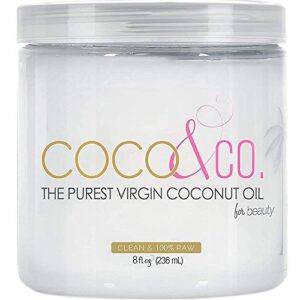
Coco And Co Raw Coconut Oil packs approximately 90% lauric acid, a medium-chain fatty acid that slips into your hair shaft faster than bulkier molecules.
You can use it as a pre-poo to shield strands from protein loss during washing, or warm it for a hot oil treatment that boosts scalp health and circulation.
Its odor-free, chemical-free formula suits dry hair without heavy buildup when you apply small amounts.
Patch test first if you have sensitive skin, then adjust frequency based on your porosity and fatty acid balance needs.
| Best For | People with dry or damaged hair looking for a pure, chemical-free treatment oil that penetrates deeply without fragrance. |
|---|---|
| Product Type | Oil |
| Primary Ingredient | Coconut Oil |
| Hair Benefits | Moisturizes dry hair |
| Skin Use | Yes |
| Natural/Organic | 100% raw organic |
| Volume | 8 fl oz |
| Additional Features |
|
- High lauric acid content helps the oil actually absorb into your hair shaft instead of just sitting on top
- Works multiple ways—pre-shampoo protector, hot oil treatment, or light conditioning mask
- Clean formula with no added chemicals or scent, so you know exactly what you’re putting on your hair
- Can get too heavy or cause buildup on fine or low-porosity hair if you use too much
- Texture changes with temperature, turning hard when cool or fully liquid when warm
- Pricier than some basic coconut oils, which might not matter if a little goes a long way for you
3. Pure Olive Oil for Skin and Hair
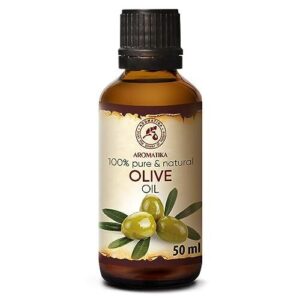
AROMATIKA’s 50-milliliter cold-pressed extra-virgin olive oil delivers oleic acid’s moisture-boosting power straight into your hair shaft when you apply a few drops to damp strands. You’ll notice reduced frizz and improved shine thanks to its fatty acid profile that lubricates cuticle layers and softens fiber.
Use small amounts to avoid tackiness, or warm it gently as a pre-wash treatment to lock in conditioning benefits.
Store it in a cool spot to prevent rancidity, and patch test before applying to your scalp.
| Best For | Anyone looking for a natural, multipurpose oil to moisturize dry hair, smooth frizz, nourish skin, or use as a massage and aromatherapy base. |
|---|---|
| Product Type | Oil |
| Primary Ingredient | Olive Oil |
| Hair Benefits | Wrinkles & hair loss |
| Skin Use | Yes |
| Natural/Organic | 100% pure natural |
| Volume | 1.7 fl oz |
| Additional Features |
|
- Cold-pressed and unrefined with vitamins A, D, E, and K for deep conditioning and antioxidant benefits
- Versatile use for hair, skin, nails, and as a carrier oil for essential oils in beauty treatments
- Pure formula with no synthetic additives, preservatives, or colorants
- Small 50-milliliter size may run out quickly with regular use
- Can feel greasy or tacky if you apply too much, requiring careful dosing
- Glass bottle is fragile and needs careful handling during shipping and storage
4. Sky Organics Castor Oil
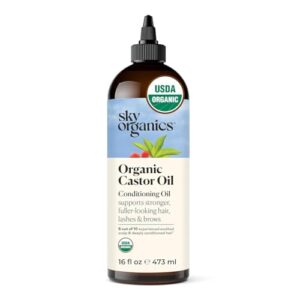
Sky Organics’ 16-ounce organic castor oil brings ricinoleic acid’s thick, penetrating power to your hair shaft, strengthening strands and conditioning your scalp with omega-9 fatty acids.
You’ll see reduced breakage when you massage a teaspoon through damp hair as a pre-poo treatment, letting its viscous texture lock in moisture before shampooing. Mix it with lighter oils like almond or coconut to improve spreadability, or warm it gently for deeper penetration.
Patch test first—its concentrated formula can irritate sensitive skin. Store your bottle in a cool spot to preserve potency.
| Best For | People with coarse, frizzy, or breakage-prone hair who want a thick, deeply conditioning treatment to strengthen strands and nourish their scalp. |
|---|---|
| Product Type | Oil |
| Primary Ingredient | Castor Oil |
| Hair Benefits | Growth & strengthening |
| Skin Use | Yes |
| Natural/Organic | USDA organic |
| Volume | 16 fl oz |
| Additional Features |
|
- 100% pure, USDA-certified organic formula with ricinoleic acid delivers serious conditioning power without fillers or hexane processing
- Works across multiple uses—hair growth support, scalp treatment, skin hydration, and even eyelash/eyebrow care
- Large 16-ounce bottle offers great value compared to smaller castor oil products
- Extremely thick consistency requires mixing with lighter oils or warming to spread easily through hair
- Requires patch testing and consistent use over time—not everyone sees quick results, especially for brow or lash growth
- Natural variations in color and scent between batches may be off-putting if you prefer standardized products
5. Sky Organics Sweet Almond Oil
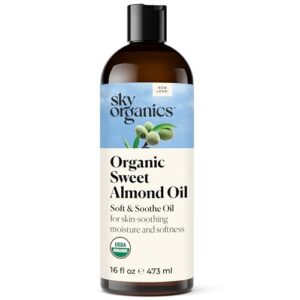
This lightweight hair oil delivers penetrating oils’ hair nourishment without the grease. Sky Organics’ 16-ounce cold-pressed formula glides through your strands with vitamin E and omega-9 fatty acids that boost hair moisture and scalp health.
You’ll notice improved oil absorption when you apply a few drops to damp ends, letting its small molecular structure work into the hair shaft to soften texture and reduce frizz.
The almond oil benefits extend to pre-wash treatments too, protecting against protein loss while keeping your hair manageable and naturally glossy.
| Best For | People with dry, frizzy hair looking for a lightweight, natural oil that moisturizes without weighing hair down or leaving a greasy residue. |
|---|---|
| Product Type | Oil |
| Primary Ingredient | Sweet Almond Oil |
| Hair Benefits | Moisturizes & softens |
| Skin Use | Yes |
| Natural/Organic | Organic |
| Volume | 16 fl oz |
| Additional Features |
|
- Cold-pressed and hexane-free processing preserves vitamins and nutrients for maximum hair benefits
- Lightweight formula absorbs quickly into hair strands, making it ideal for fine or easily weighed-down hair
- Versatile enough to use as a pre-wash treatment, leave-in conditioner, or scalp massage oil
- Shorter shelf life of 6-12 months means you need to use it relatively quickly and store it carefully
- May require reapplication throughout the day for all-day moisture, especially in very dry climates
- Some confusion about bottle size in customer reviews, with mentions of both 8 oz and 16 oz versions
6. Vera Botanics Babassu Oil
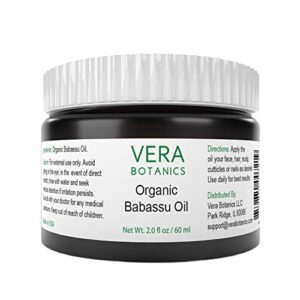
This unrefined formula from Vera Botanics brings babassu oil benefits through medium-chain fatty acids that mirror coconut oil’s lauric acid profile. Its oil molecular structure allows for hair shaft penetration, while its fatty acid composition offers slightly lighter conditioning than heavier penetrating oils.
Apply a few drops to damp hair for natural hair products that smooth without weighing down fine strands. The cold-pressed extraction preserves nutrients that support scalp irritation prevention, making it a solid choice when you want hair oil that conditions without buildup.
| Best For | People with fine or normal hair looking for a lightweight penetrating oil that conditions and smooths without heaviness or buildup. |
|---|---|
| Product Type | Oil |
| Primary Ingredient | Babassu Oil |
| Hair Benefits | Reduces breakage |
| Skin Use | Yes |
| Natural/Organic | 100% natural organic |
| Volume | Travel size |
| Additional Features |
|
- Medium-chain fatty acids similar to coconut oil allow some penetration into the hair shaft for internal conditioning rather than just surface coating
- Cold-pressed and unrefined formula preserves natural nutrients and antioxidants that support both hair health and scalp comfort
- Lighter texture than many penetrating oils makes it versatile for multiple hair types, especially those that get weighed down easily by heavier products
- Limited scientific research specifically on babassu oil’s penetration depth compared to more studied oils like coconut or avocado
- Small 1-ounce size at $23 may feel expensive for users who need larger quantities for regular treatments or longer hair
- May require heat or extended contact time to maximize penetration in highly porous or damaged hair, unlike some more readily absorbed options
7. Sky Organics Shea Butter
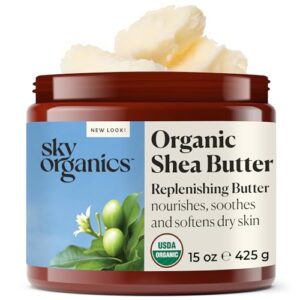
You’ll find that shea butter benefits extend beyond surface coating when you choose Sky Organics’ raw formula. Its oleic and stearic fatty acids enable oil penetration into the hair shaft, delivering hair nourishment that conditions from within.
This natural moisturizer works especially well for textured hair care, reducing frizz while supporting scalp health.
Warm a small amount between your palms and work through damp strands to let these penetrating oils soften your hair shaft without synthetic additives in your natural hair products routine.
| Best For | People with textured or curly hair looking for a natural, chemical-free moisturizer that penetrates deeply to reduce frizz and nourish from within. |
|---|---|
| Product Type | Butter |
| Primary Ingredient | Shea Butter |
| Hair Benefits | Nourishes & softens |
| Skin Use | Yes |
| Natural/Organic | Organic |
| Volume | 15 oz |
| Additional Features |
|
- Rich in fatty acids that actually penetrate the hair shaft instead of just coating the surface
- 100% pure and unrefined formula with no synthetic additives or unnecessary ingredients
- Works great as a multi-purpose product for both hair and skin, giving you more value
- Solid texture requires warming between your hands before application, which takes extra time
- Natural scent can be strong and might not appeal to everyone
- Texture and color can vary between batches since it’s an unrefined natural product
8. Ucuuba Butter For Hair And Skin
Ucuuba butter applications combine surface conditioning with modest hair shaft penetration, making this ingredient valuable for both hair health and skin conditioning. Its triglyceride-rich profile creates a protective film that locks in moisture, while its fatty acids soften strands.
These hair emollients work best when you apply small amounts to damp ends, reducing frizz without heaviness. Cosmetic safety data confirms low toxicity, but patch testing ensures compatibility.
Mix ucuuba benefits with lighter penetrating oils to balance occlusion and absorption in your natural oils routine.
| Best For | People with dry, frizzy hair or rough skin who want a natural emollient that locks in moisture and adds shine without synthetic additives. |
|---|---|
| Product Type | Butter |
| Primary Ingredient | Shea Butter |
| Hair Benefits | Promotes growth |
| Skin Use | Yes |
| Natural/Organic | Fairly traded |
| Volume | 8 fl oz |
| Additional Features |
|
- Creates a protective barrier that reduces moisture loss and tames frizz, especially in low-humidity conditions
- Rich in vitamin E and fatty acids that nourish both hair and skin while supporting barrier function
- Sourced sustainably and works well blended with lighter oils for a balanced moisture routine
- Some customers report receiving less product than advertised or finding contaminants like hair strands in the jar
- May feel heavy on fine hair if too much is applied, requiring careful dosing to avoid weighing down strands
- Limited evidence for deep penetration into the hair cortex—most benefits occur at the surface level
9. OGX Argan Oil Hair Treatment
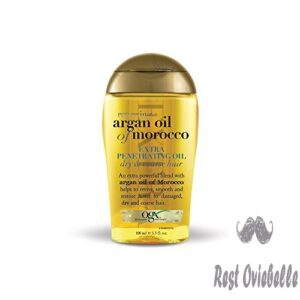
OGX Argan Oil Hair Treatment delivers oleic and linoleic fatty acids that condition the outer cortex while adding shine and taming frizz. This lightweight serum penetrates without greasy buildup, making it ideal for most hair types seeking argan oil benefits and improved manageability.
Apply a few drops to damp mid-lengths and ends before or after heat styling to protect strands and seal moisture. Vitamin E and polyphenols offer antioxidant support, reducing damage from thermal tools.
Patch test if you have sensitive skin, and use sparingly near roots to avoid scalp buildup.
| Best For | Anyone with dry, damaged, frizzy, curly, or coarse hair looking for a lightweight serum that adds shine, tames frizz, and protects against heat styling without weighing hair down. |
|---|---|
| Product Type | Serum |
| Primary Ingredient | Argan Oil |
| Hair Benefits | Repairs & restores |
| Skin Use | No |
| Natural/Organic | Natural ingredients |
| Volume | 3.3 fl oz |
| Additional Features |
|
- Cold-pressed Argan oil with oleic and linoleic fatty acids deeply conditions and restores moisture without greasy residue
- Water-based silk proteins strengthen weak, over-processed hair while vitamin E and polyphenols offer antioxidant protection during heat styling
- Paraben-free and sulfate-free formula works for daily use on most hair types, from fine to thick and curly
- May cause buildup on very oily hair or scalps if applied too close to roots or in heavy amounts
- Dispenser type isn’t a pump, which some users find less convenient for controlled application
- Not labeled as vegan or cruelty-free, so those with specific ethical preferences may need to verify with the brand
10. OGX Coconut Hair Oil Treatment
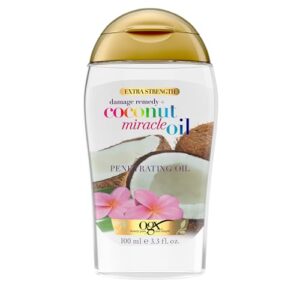
Coconut oil’s lauric acid makes this OGX hair treatment a standout for deep cortex nourishment and frizz control. Apply a small amount to damp mid-lengths and ends to lock in moisture while taming flyaways.
The vanilla bean and tiare extracts add a pleasant scent, but watch your roots—too much can weigh hair down. At under $8, you get solid penetration benefits for dry or coarse hair.
Use it pre-shampoo or as a leave-in, and clarify weekly if buildup appears.
| Best For | People with dry, coarse, or frizzy hair who want an affordable, coconut-scented oil treatment that adds shine and helps with damage repair. |
|---|---|
| Product Type | Oil |
| Primary Ingredient | Coconut Oil |
| Hair Benefits | Repairs & softens |
| Skin Use | No |
| Natural/Organic | Natural ingredients |
| Volume | 3.3 fl oz |
| Additional Features |
|
- Lauric acid in coconut oil can penetrate the hair shaft to nourish from within, especially on damaged or porous hair
- Works multiple ways—use it as a pre-shampoo treatment, leave-in conditioner, or styling product depending on your needs
- Budget-friendly at under $8, and it’s free of parabens and sulfates
- Easy to overdo it—too much leaves hair greasy and weighed down, especially near the roots
- Not ideal for fine or low-porosity hair since it can sit on the surface and cause buildup
- May require regular clarifying washes to prevent product accumulation over time
Frequently Asked Questions (FAQs)
Can penetrating oils cause protein overload in hair?
Here’s the protein puzzle: no, penetrating oils can’t cause protein overload. These lipid-based products don’t contain proteins—they simply fill gaps in your hair shaft’s structure, protecting existing proteins from damage and loss.
How long should oils stay on before washing?
Most penetrating oils need 4 to 12 hours for ideal hair penetration and oil absorption.
Hair porosity tests help determine your treatment timing—high-porosity hair benefits from longer contact, while low-porosity requires shorter applications to prevent product buildup.
Do penetrating oils work on color-treated hair?
Yes, they work—but choose wisely. Color-treated hair has higher hair porosity from chemical damage, which boosts oil uptake into the hair shaft. Lighter penetrating oils improve manageability without compromising color retention or color protection.
Can you use penetrating oils on wet hair?
You can apply these oils to damp strands, though absorption rates slow slightly due to water’s boundary layer effect.
Towel-dry first to enhance penetration dynamics and maintain proper hair moisture balance without weighing down your hair shaft.
Are penetrating oils safe during pregnancy or breastfeeding?
Most cosmetic oils used on hair aren’t explicitly contraindicated during pregnancy or breastfeeding, but data on transdermal absorption remain limited.
Patch test first, consult your obstetrician-gynecologist, and minimize scalp coverage to reduce fetal exposure risks.
Conclusion
Your hair’s been surviving on surface-level solutions for too long. Penetrating oils for hair shaft don’t just coat—they infiltrate the cortex, rewriting the damage story from the inside. Lauric acid molecules slip past barriers that other ingredients can’t cross. That’s not maintenance; that’s reconstruction.
Choose oils based on molecular weight and hair porosity, apply them strategically, and watch your strands transform from fragile to fortified. Real repair starts beneath the cuticle.
- https://pmc.ncbi.nlm.nih.gov/articles/instance/9553038/bin/pone.0275964.s005.docx
- https://www.scribd.com/document/356795007/Research-Methods-Knowledge-Base
- https://github.com/tugcekonuklar/msc-computer-science-notes/blob/main/research-methods/Home.md
- https://www.cancer.org/cancer/cancer-causes/radiation-exposure/uv-radiation.html
- https://www.instagram.com/p/C-FdtizRXRy/