
This site is supported by our readers. We may earn a commission, at no cost to you, if you purchase through links.

Most hair growth treatments come with long ingredient lists, but one botanical extract keeps surfacing in both clinical research and centuries-old remedies: peppermint oil. Studies show it can trigger follicles to shift into active growth phases, sometimes outperforming conventional options like minoxidil in animal models.
The mechanism centers on menthol’s ability to boost scalp circulation while simultaneously extending the anagen cycle—the period when your hair actually grows. Yet concentration matters immensely, and misuse carries real risks.
Understanding how peppermint oil for hair growth works at the follicular level, along with evidence-based application methods, separates effective treatment from wishful thinking.
Table Of Contents
- Key Takeaways
- What is Peppermint Oil for Hair Growth?
- How Peppermint Oil Promotes Hair Growth
- Benefits of Peppermint Oil for Scalp Health
- Research on Peppermint Oil and Hair Growth
- How to Use Peppermint Oil for Hair
- Safety Precautions and Side Effects
- Who Can Benefit From Peppermint Oil Hair Treatments?
- Frequently Asked Questions (FAQs)
- Conclusion
Key Takeaways
- Peppermint oil’s menthol activates blood vessel dilation and extends the anagen growth phase, with animal studies showing it can outperform minoxidil in follicle stimulation—but human clinical trials remain limited.
- Proper dilution is non-negotiable: use 0.5–1% concentration with carrier oils like jojoba, apply 2–3 times weekly, and expect 8–12 weeks before seeing results while watching for irritation.
- The oil tackles scalp health from multiple angles by disrupting fungal and bacterial membranes, reducing dandruff, and creating an environment where dormant follicles can shift into active growth.
- Don’t expect miracles with genetic baldness or alopecia—peppermint oil supports scalp conditions for natural growth but won’t reverse androgenetic hair loss, and sudden hair loss always warrants a dermatologist visit.
What is Peppermint Oil for Hair Growth?
Peppermint oil comes from the leaves of the peppermint plant, and it’s packed with menthol—the compound that gives it that signature cooling kick and most of its hair benefits.
People have used it for decades in everything from cosmetics to scalp treatments, and today it’s gaining serious attention for promoting hair growth.
Before you start using it, though, you’ll want to understand what it actually is, how it’s made, and why not all peppermint oils work the same way.
Extraction and Key Components
Peppermint essential oil comes from steam distillation of peppermint leaves, yielding a concentrated blend rich in menthol and menthone. Here’s what makes it effective:
- Menthol usually ranges from 25–55% depending on quality grade
- Menthone adds cooling sensation and antimicrobial effects
- Gas chromatography verifies purity and potency
- Extraction method affects terpene concentration
- Trace compounds like pulegone may appear in some batches
This composition determines how well it works for your scalp. Understanding the literature review process is essential for evaluating the effectiveness of peppermint oil.
Historical and Modern Uses in Hair Care
For centuries, herbalists prized peppermint oil for scalp comfort and shine—18th-century botanical texts note its cooling sensation. By the 1800s, cosmetic history shows it in tonics marketed for hair vitality, though ancient remedies varied widely.
Modern formulations now specify 0.5–3% concentrations in shampoos and treatments, pairing this essential oil with carriers like jojoba for better scalp health and natural hair growth support.
Students preparing for AP Biology exams may find the properties of peppermint oil interesting in relation to their studies.
Differences Between Peppermint Oil and Peppermint Essential Oil
Not all bottles labeled “peppermint oil” deliver the same punch. Essential oil is the pure, steam-distilled concentrate—packed with menthol content and higher oil potency, so you’ll need just 1–2% diluted in carrier oils like jojoba to dodge skin irritation.
Regular peppermint oil blends often include carriers already, which means gentler application but less concentrated punch for your scalp.
How Peppermint Oil Promotes Hair Growth

Peppermint oil doesn’t just sit on your scalp—it actually triggers specific biological responses that encourage your hair to grow. The menthol in peppermint oil works through several pathways, from boosting circulation to waking up dormant follicles.
Here’s how it influences your hair growth cycle at a cellular level.
Increased Scalp Blood Circulation
When you apply peppermint oil, menthol acts as a vasodilator, opening blood vessels to increase scalp blood flow by 10–20% within 20 minutes. This circulatory boost delivers more oxygen and nutrients to your hair follicles, creating an environment that fosters healthier hair growth.
You’ll even notice scalp temperature rising slightly—evidence of those vasodilation effects working beneath the surface.
Follicle Stimulation and Anagen Phase
Activation of dormant follicles is where peppermint oil truly shines. Studies show it accelerates your hair cycle, pushing follicles into the anagen stage—the active growth phase—up to 14 days faster than untreated scalp. This follicle stimulation triggers regrowth patterns you can actually see.
Peppermint oil accelerates your hair cycle, pushing dormant follicles into active growth up to 14 days faster than untreated scalp
- Your follicles shift from resting to growing, building thicker strands
- Anagen induction extends growth phases by 10–25%, maximizing length potential
- Scalp health improves as more follicles enter productive cycles simultaneously
Menthol’s Role in Hair Regrowth
Menthol benefits your hair follicle by activating TRPM8 channels, triggering cellular signals that launch regrowth mechanisms. This vasodilation effect pumps oxygen-rich blood to your scalp, supporting follicle nutrition for up to two hours post-application.
You’ll notice scalp stimulation within minutes—that cooling tingle means menthol’s working to shift follicles toward anagen. For hair growth, it’s peppermint oil’s secret weapon.
Benefits of Peppermint Oil for Scalp Health
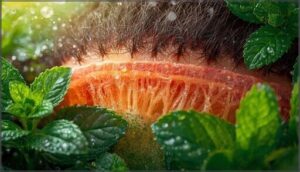
Your scalp is where hair growth begins, and keeping it healthy isn’t optional—it’s the foundation. Peppermint oil works beyond just stimulating follicles; it actively tackles the underlying scalp conditions that can slow or stop hair growth altogether.
Here’s how peppermint oil protects and restores scalp health in three critical ways.
Antimicrobial and Antifungal Properties
Your scalp is a battleground—bacteria and fungi compete for territory every day. Peppermint oil’s antimicrobial mechanisms disrupt microbial membranes, tackling issues from bacterial resistance to fungal infections like Malassezia. Think of it as rebalancing your scalp microbiome naturally:
- Inhibits Staphylococcus aureus and Candida albicans at low concentrations
- Disrupts fungal membrane integrity through menthol action
- Enhances antimicrobial effects when combined in essential oil blends
- Promotes scalp health benefits without harsh synthetic agents
Dandruff and Itchy Scalp Relief
You don’t have to live with flakes and scalp irritation—peppermint oil offers real relief. Menthol delivers cooling scalp soothing while antifungal action targets Malassezia, one of the key dandruff causes.
Studies show diluted peppermint oil reduces flake removal needs and provides itchy relief within weeks. This natural remedy promotes scalp health without harsh chemicals, making it a practical option for managing your itchy scalp symptoms.
Balancing Scalp Oil Production
Your scalp’s oil balance dramatically affects hair health—and peppermint oil might help. While evidence on direct sebum regulation remains limited, menthol may influence glandular activity and support microbial control that impacts oil perception.
- Dilute to 0.5–1% with carrier oils like jojoba
- Apply weekly to avoid disrupting your scalp’s natural barrier
- Combine with pH-balanced shampoos for stability
- Expect gradual improvements over 4–6 weeks
- Patch test first—5–10% experience irritation
Individual results vary based on genetics and scalp type.
Research on Peppermint Oil and Hair Growth

You’re probably wondering if peppermint oil actually works or if it’s just another beauty trend making big promises. The good news is that researchers have looked into this, and one pivotal animal study caught the attention of dermatologists worldwide.
Let’s break down what the science shows, how peppermint oil appears to work at the follicle level, and why we need to be cautious before declaring it a miracle cure.
Key Study Findings on Hair Regrowth
Research on peppermint oil efficacy shows promising Hair Regrowth Studies. A 2014 rat model found that 3% peppermint oil increased hair follicle number and hair density by approximately 28% after four weeks.
Human trials with menthol-containing formulations demonstrated a 12% increase in hair counts over 12 weeks, while in vitro studies revealed enhanced keratinocyte proliferation by 22%, suggesting genuine Hair Follicle Stimulation and natural hair growth potential.
Mechanism of Action in Scientific Studies
What powers that hair regrowth? In laboratory models, peppermint oil triggers Vasodilation Effects through menthol’s activation of TRPM8 receptors, boosting Scalp Perfusion to your hair follicles.
Studies show it ramps up VEGF Expression, sparking new blood vessel formation around follicles while nudging them into an active growth phase—Hair Cycle Regulation at work.
This Follicle Stimulation appears to lengthen anagen, giving you thicker, longer strands.
Limitations and Need for Human Research
Here’s the catch: those promising lab results haven’t made the leap to large-scale Human Trials yet. Research Gaps in Clinical Efficacy mean you can’t count on Peppermint Oil like you’d proven therapies for Hair Growth.
Translational Studies connecting mouse follicles to your scalp remain scarce, and Safety Profiles for this Natural Remedy need standardized testing before dermatologists can confidently recommend Essential Oil treatments for your Hair Follicles.
How to Use Peppermint Oil for Hair
You can’t just slap undiluted peppermint oil on your scalp and hope for the best—it needs proper preparation and application to work safely. The key is diluting it correctly and using techniques that optimize contact with your scalp without causing irritation.
Here’s how to incorporate peppermint oil into your hair care routine effectively.
Diluting With Carrier Oils

You’ll want to dilute peppermint oil to 1-2% in a carrier oil like coconut or jojoba before applying it to your scalp. This dilution ratio protects against irritation while preserving the essential oil’s hair growth benefits.
Jojoba mimics your scalp’s natural sebum, making it an excellent carrier option.
Always patch test your diluted formula first, and store it in a cool, dark place to maintain potency.
Scalp Massage Techniques
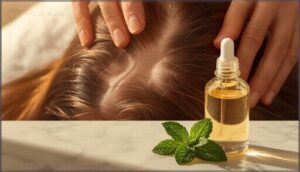
Once you’ve diluted your peppermint oil, apply it using circular, upward-pressure strokes across each scalp region for 3–5 minutes.
This scalp massage technique boosts blood circulation to hair follicles without causing irritation. Use gentle-to-moderate pressure, and aim for 2–3 sessions weekly—clinical guides suggest longer massage times show diminishing returns, so keep it focused and consistent.
Adding to Shampoos and Hair Masks

Curiosity meets practicality when you blend peppermint oil into shampoo formulations or DIY hair mask recipes. Stick to a Peppermint Oil Concentration below 2%—anything higher risks scalp irritation, especially for sensitive types.
Essential Oil Blends with carrier oils keep things balanced, offering a cooling boost for natural remedies in hair care. Try this for an invigorating twist on your usual hair mask.
Frequency and Duration of Use

Most users see results when they apply peppermint oil treatments two to three times weekly for at least eight weeks, though daily scalp massage shows stronger hair follicle stimulation in recent trials. Usage frequency and treatment duration matter—consistency beats intensity every time in natural remedies for hair care.
- Start with 10–15 minute sessions and track your scalp’s response over the first month
- Dial back oil concentration if irritation develops, even with proper dilution
- Plan for 8–12 weeks before judging effectiveness on hair growth outcomes
- Application timing before bed allows overnight absorption without daytime greasiness
- Adherence drops after three months, so set realistic goals and celebrate small wins
Safety Precautions and Side Effects
Peppermint oil can work wonders for your hair, but it’s not without risks if you use it incorrectly. Undiluted oil can cause irritation, burning, or even allergic reactions on your scalp.
Here’s what you need to know to use it safely and avoid common pitfalls.
Proper Dilution Ratios
Getting the dilution right isn’t just helpful—it’s critical to protect your scalp from irritation while still enjoying peppermint oil’s hair growth benefits. Here’s what the evidence shows:
| Concentration | Carrier Oil Ratio | Best For |
|---|---|---|
| 0.25% | 400:1 (carrier:essential) | Sensitive skin, first-timers |
| 0.5% | 200:1 (carrier:essential) | Most adults, regular use |
| 1% | 100:1 (carrier:essential) | Maximum recommended strength |
Start conservatively with jojoba or coconut oil as your carrier—concentrations above 2% frequently cause redness and discomfort.
Who Should Avoid Peppermint Oil
Not everyone can safely embrace peppermint oil’s essential oil benefits, and knowing your limits protects your skin health. Menthol’s potency means certain groups face heightened risks:
- Pregnant and breastfeeding individuals – Limited safety data means pregnancy risks warrant caution or avoidance
- Children under 12 – Concentrated applications can trigger mucous membrane irritation and bright flushing
- Those with contact dermatitis history – Your reactive skin magnifies allergic reactions
- Medication users (retinoids, steroids) – Drug interactions may worsen scalp irritation
- High-sensitivity skin types – 5–10% experience skin irritation even when diluted properly
Consult your clinician before starting treatment.
Who Can Benefit From Peppermint Oil Hair Treatments?

Peppermint oil isn’t a one-size-fits-all solution, and understanding whether it’s right for you matters before you start experimenting.
Some hair types and scalp conditions respond better than others, while certain situations call for professional guidance instead of DIY treatments.
Let’s break down who stands to gain the most from peppermint oil and when you should think twice.
Suitable Hair and Scalp Types
Your scalp type matters when using peppermint oil for hair growth. Oily scalps respond well to a 1:10 dilution with carrier oils, reducing flaking in about four weeks. Dry or sensitive scalps need gentler ratios, like 1:20, to avoid irritation. Normal scalp conditions usually tolerate standard dilutions without issues.
If you have dermatitis or eczema, consult your dermatologist before trying peppermint oil treatments.
Considerations for Hair Loss Prevention
Think of peppermint oil as a supportive tool, not a miracle cure for hair loss prevention. It won’t reverse genetic baldness or alopecia, but it can strengthen your scalp health and create better conditions for natural hair growth factors to work.
Combine it with proven prevention strategies—balanced nutrition, stress management, and proper scalp care—for realistic results with these natural remedies for hair loss.
When to Seek Professional Advice
While peppermint oil promotes scalp health and natural hair growth, it’s not for every situation. If you’re dealing with sudden hair loss, persistent itchy scalp, burning sensations, or visible scalp lesions, skip the home remedies and get a proper hair loss diagnosis.
A dermatologist referral can uncover underlying issues like thyroid problems or deficiencies that need medical consultation, not just essential oils.
Frequently Asked Questions (FAQs)
Can peppermint oil reverse male pattern baldness?
No substantial human studies confirm that peppermint oil reverses androgenetic alopecia. While animal research shows vasodilation effects and increased hair follicle depth, clinical evidence for baldness reversal remains exploratory, and scalp irritation risks exist.
How long until I see hair growth results?
Most people notice fuller strands after 8–12 weeks of consistent use, though some see early scalp improvements around 4 weeks.
Individual factors—like baseline density and formulation strength—shape your visible results timeline considerably.
Does peppermint oil work on chemically treated hair?
You can safely use peppermint oil on chemically treated hair, though damaged cuticles may increase scalp sensitivity.
Start with diluted formulations under 1% concentration, patch test first, and monitor for irritation—your hair regrowth outcomes depend on gentle application.
Can I use peppermint oil with minoxidil together?
Before mixing the two, it’s better to err on the side of caution—human data on combined therapy remains scarce.
You can try peppermint oil with minoxidil, but watch for scalp irritation and start cautiously.
Whats the best carrier oil for peppermint oil?
You’ll want jojoba oil or fractionated coconut oil—both spread peppermint oil evenly without weighing hair down.
Sweet almond and grapeseed work well for sensitive scalps, offering gentle carrier oil blends that support hair growth.
Conclusion
Something as simple as a cooling tingle can trigger profound changes beneath your scalp—that’s the paradox of peppermint oil for hair growth. You’ve seen the evidence: menthol widens blood vessels, pushes follicles into anagen, and resolves underlying scalp issues that sabotage regrowth.
But potency demands respect. Dilute properly, stay consistent, and monitor your response. If you’re not seeing progress within three months or experience irritation, consult a dermatologist. Your follicles won’t wait forever.