This site is supported by our readers. We may earn a commission, at no cost to you, if you purchase through links. This content is for general informational and educational purposes only and is not a substitute for professional medical, dermatological, or nutritional advice.
Your shampoo might be doing less for your hair than a jar of coconut oil from your kitchen cabinet. Across clinical and consumer research, natural ingredients for hair consistently outperform many synthetic alternatives at repairing damage, restoring moisture, and supporting scalp health.
The difference comes down to molecular compatibility. Coconut oil penetrates the hair cortex itself, not just the surface. Rosemary activates scalp circulation the same way minoxidil does, without the pharmaceutical price tag.
This guide breaks down the oils, products, and kitchen treatments that actually deliver results, so you can stop guessing and start choosing with intention.
Table Of Contents
- Key Takeaways
- Best Natural Oils for Hair Health
- Top 5 Natural Hair Care Products
- Natural Ingredients for Dry, Oily, and Damaged Hair
- DIY Hair Treatments With Kitchen Staples
- Frequently Asked Questions (FAQs)
- What is the best natural ingredient for hair?
- What do Chinese use for hair growth?
- What drink makes hair grow?
- What is the best homemade hair treatment?
- How often should I use natural hair treatments?
- Can natural ingredients cause allergic reactions or irritation?
- Whats the shelf life of homemade hair products?
- Are natural ingredients effective for hair loss prevention?
- How do I choose ingredients for low porosity hair?
- Can natural ingredients help with color-treated hair?
- Conclusion
Key Takeaways
- Coconut oil is the only natural oil proven to reduce protein loss by penetrating the hair shaft directly, not just coating the surface.
- Rosemary essential oil supports scalp circulation at the follicle level through the same mechanism as minoxidil, making it a cost-effective alternative for scalp health.
- Matching ingredients to your specific hair type — oily, dry, damaged, or color-treated — matters more than using any single "best" ingredient.
- Natural doesn’t mean universally safe: roughly 10% of people react to botanical ingredients, so patch-testing before use isn’t optional.
Best Natural Oils for Hair Health
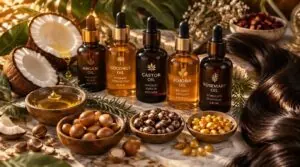
Hair oil selection shapes everything from strand strength to scalp health. Coconut oil penetrates deeply to reduce protein loss, while argan oil coats and smooths without weighing your strands down. Jojoba closely mimics your scalp’s natural sebum, so it’s ideal for maintaining balance. Castor oil thickens and conditions, and rosemary essential oil helps healthy scalp circulation. Use each one strategically.
For a polished finish that complements these oils, explore how beard oil techniques for lasting shine can inform your overall hair care routine.
Top 5 Natural Hair Care Products
Knowing which ingredients work is only half the battle—finding products that actually deliver them matters just as much. These five options bring together clinically supported natural ingredients in forms you can use right away. Each one targets a specific concern, from growth to scalp health to moisture retention.
If you’re ready to act on that research, browsing clinically tested hair growth options can help you match the right formula to your specific scalp and growth needs.
1. Pure Rosemary Essential Oil Drops
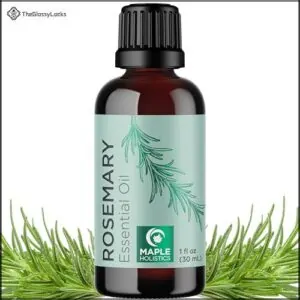
Scalp health is where rosemary essential oil earns its reputation. Research points to its role in supporting circulation at the follicle level, making it a natural hair care staple.
You’ll need to dilute it before use. The standard recommendation is a 3% essential oil to carrier oil ratio, meaning a few drops mixed into jojoba or argan oil. Applying it undiluted risks irritation, especially on skin that’s sensitive or already irritated.
Once diluted, it’s flexible. Use it for scalp massage, stir a small amount into your shampoo, or run it through a diffuser for its sharp herbal scent. A 1-ounce bottle lasts longer than you might expect with consistent use.
| Best For | Anyone looking to support scalp health and hair wellness with a natural, versatile essential oil they can incorporate into their existing routine. |
|---|---|
| Natural Source | Plant-derived essential oil |
| Scalp Focus | Circulation support |
| Carrier Oil | Jojoba or argan oil |
| Skin Caution | Dilute to 3% ratio |
| Hair Benefits | Supports hair wellness |
| Use Versatility | Massage, shampoo, diffuser |
| Additional Features |
|
- Supports scalp circulation, making it a well-researched choice for natural hair care
- Highly versatile — works in diffusers, scalp massages, or mixed into shampoo
- A 1-ounce bottle goes a long way with proper dilution, offering solid value
- Must always be diluted before skin contact, adding an extra step to every use
- Not suitable for internal use, limiting its applications compared to some other wellness oils
- Requires purchasing a separate carrier oil, which adds cost and preparation time
2. Tea Tree Essential Oil Blend
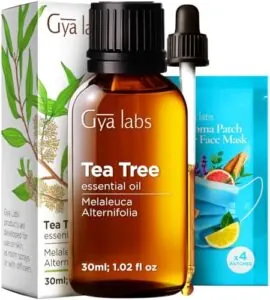
Where rosemary targets circulation, tea tree focuses on microbial activity at the scalp. Steam distilled from Australian tea tree foliage, it contains terpinen-4-ol as its primary active compound, which disrupts microbial cell membranes, making it useful when flaking or irritation has a yeast-related cause.
Pairing tea tree with a hair fall control shampoo formulated for scalp health can help extend its antimicrobial benefits through daily cleansing.
Like rosemary, it needs a carrier oil before hitting your skin. Mix it with coconut oil before washing for a pre-shampoo scalp treatment, or mix it into jojoba for targeted cleansing. Undiluted, it can irritate, especially if your barrier’s already compromised.
One practical note: the 30ml bottle doesn’t include a dropper, so measure carefully to avoid over-dispensing. Store it somewhere cool and dark.
| Best For | People dealing with flaking or irritation that may have a yeast-related cause, who want a natural, targeted scalp treatment. |
|---|---|
| Natural Source | Steam distilled Australian tea tree |
| Scalp Focus | Microbial and yeast control |
| Carrier Oil | Coconut or jojoba oil |
| Skin Caution | Always dilute before use |
| Hair Benefits | Cleanses and treats scalp |
| Use Versatility | Pre-shampoo or cleanser |
| Additional Features |
|
- Steam distilled from Australian tea tree foliage, giving it a natural, high-quality source
- Versatile — works as a pre-shampoo scalp treatment with coconut oil or a targeted skin cleanser with jojoba oil
- Can also double as a natural bathroom cleaner when diluted in warm water
- Must be diluted before every topical use — applying it undiluted risks irritating already-sensitive skin
- The 30ml bottle has no dropper, making it easy to accidentally over-dispense
- Not suitable for use around pets, children, or during pregnancy, which limits its household versatility
3. Biotin Hair Thickening Shampoo Set
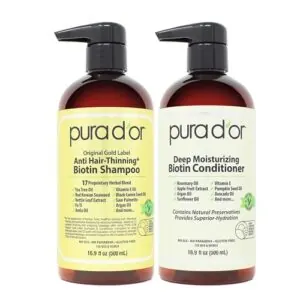
Where tea tree works on your scalp environment, a biotin hair thickening shampoo set shifts attention to the strand itself.
Ingredients like caffeine and hyaluronic acid plump each strand from within, which is why a biotin thickening shampoo and conditioner for thin hair can visibly boost density even before you address underlying causes.
Biotin, a vitamin B cofactor tied to keratin production, is the headline ingredient. Most people aren’t deficient in biotin, so the thickening effect you’ll notice comes mainly from how the formula coats and conditions each strand, creating visible fullness. Companion ingredients like nettle and pumpkin seed add proteins and nutrients that support both hair growth and strength over time.
Fine or breakage-prone hair usually sees the biggest improvement. Within a few weeks of consistent use, you’re likely to notice more body and less shedding with each wash.
| Natural Source | N/A |
|---|---|
| Scalp Focus | N/A |
| Carrier Oil | N/A |
| Skin Caution | N/A |
| Hair Benefits | N/A |
| Use Versatility | N/A |
| Additional Features |
|
4. Natural Peppermint Hair Oil Blend
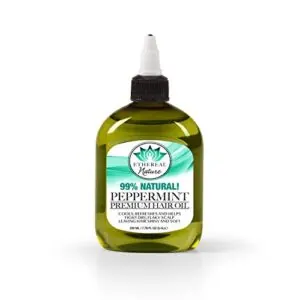
Cooling your scalp with a peppermint oil mix does more than feel invigorating. Menthol activates cold-sensitive receptors just beneath the skin’s surface, boosting circulation and creating the tingle you’ll notice right after you apply it. This 99% natural mix combines peppermint essential oil with carrier oils like coconut or jojoba, which soften strands and help the formula spread evenly without overwhelming your scalp.
It’s built to fight flaky, dry scalp while leaving hair shiny and soft, and it suits multicultural hair types. One practical note worth knowing: some users find it a bit heavy, so start with a small amount. If your skin is sensitive, patch test first since peppermint concentrations vary and can irritate reactive scalps.
| Best For | Anyone with a dry, flaky scalp who wants a natural, lightweight treatment that works across all hair types. |
|---|---|
| Natural Source | 99% natural peppermint blend |
| Scalp Focus | Dry, flaky scalp relief |
| Carrier Oil | Coconut or jojoba (included) |
| Skin Caution | Patch test recommended |
| Hair Benefits | Shiny, soft hair |
| Use Versatility | Suits all hair types |
| Additional Features |
|
- 99% natural formula with peppermint that soothes and refreshes a dry, flaky scalp
- Leaves hair visibly shiny and soft, with carrier oils like coconut or jojoba that spread evenly
- Suitable for multicultural hair types, making it a versatile everyday option
- Some users find it heavy or greasy, especially when using too much product
- Peppermint concentration can irritate sensitive scalps, so a patch test is recommended
- Mixed reviews on value for money, meaning results can vary from person to person
5. Viva Naturals Organic Coconut Oil
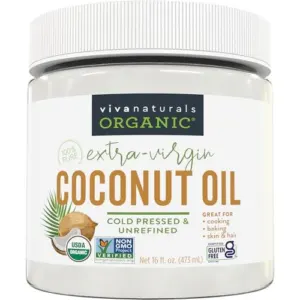
For dry or damaged hair, cold-pressed coconut oil is one of the most well-researched conditioning options you’ll find. Viva Naturals sources fresh, USDA-certified organic coconuts and uses no added chemicals, keeping the lauric acid structure intact so it can penetrate individual strands rather than simply coating the surface.
That’s what makes it stand out from heavier, less targeted oils. It reduces surface friction, easing detangling, and forms a light occlusive barrier that limits moisture loss through the day.
It solidifies at cooler room temperatures, so warm a small amount between your palms before applying to hair. Use it as a pre-wash hair mask, a light conditioner, or scalp treatment. Keep applications light since buildup from repeated heavy use is real.
| Best For | People with dry or damaged hair who want a clean, chemical-free conditioning treatment that genuinely penetrates the hair shaft rather than just sitting on top. |
|---|
- Cold-pressed and USDA-certified organic, so you’re getting pure lauric acid without processing that degrades its ability to absorb into hair strands
- Versatile enough to use as a pre-wash mask, light conditioner, scalp treatment, or even a skin moisturizer and makeup remover
- Free from harmful chemicals, GMOs, and gluten, making it a safe choice for people with sensitivities
- Solidifies at room temperature, which means you need to melt it before each use — a small but real extra step
- The natural coconut scent and flavor can be overpowering in certain recipes or for people sensitive to strong aromas
- Easy to over-apply, and repeated heavy use can lead to buildup that weighs hair down
Natural Ingredients for Dry, Oily, and Damaged Hair
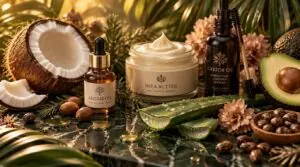
Picture your scalp as a barrier system, constantly managing oil, moisture, and microbial balance. When it tips, you’ll notice immediately: greasy roots, tight-feeling ends, or strands that snap instead of bend.
Your scalp is a barrier system—when balance tips, your hair tells you immediately
For oily scalps especially, sebum buildup control matters most. Lightweight options like aloe vera gel soothe without adding residue, keeping the follicle environment cleaner between washes.
Dry or damaged hair needs lipid barrier repair. Coconut oil penetrates the cortex and reduces protein loss during washing. Argan oil smooths lifted cuticles, cutting frizz and improving light reflection. Shea butter seals surface moisture without heaviness, making it ideal for coarser or chemically processed strands.
For thickening and scalp circulation support, castor oil‘s dense viscosity delivers. Apply it targeted, not all over.
DIY Hair Treatments With Kitchen Staples
A client once swapped her store-bought deep conditioner for a mashed avocado and honey mix and noticed softer strands within two uses. She later found a pre-made avocado honey mask that delivered the same results without the kitchen prep.
Your kitchen holds more than you’d think. Eggs deliver protein for strengthened hair, yogurt adds moisture with its lactic acid content, and mayonnaise combines both. Mix what suits your hair type, apply to dry strands, and rinse thoroughly.
Frequently Asked Questions (FAQs)
What is the best natural ingredient for hair?
A 2003 study found coconut oil was the only tested oil to reduce protein loss noticeably. Its fatty acids penetrate your hair shaft directly. Pair it with rosemary essential oil to support your hair growth.
What do Chinese use for hair growth?
Thousands of years of tradition don’t lie: Chinese hair growth routines center on rice water rinses, sesame oil, ginseng-based herbal washes, and daily scalp massage to stimulate local circulation and keep each strand well conditioned.
What drink makes hair grow?
Amla juice leads the pack. It’s rich in vitamin C, effectively boosting hair growth and collagen production. Onion juice adds sulfur to strengthen your roots. Try drinking either one each morning on an empty stomach.
Beyond these two, drinks like aloe vera juice and spinach-carrot blends are among the powerful drinks supporting hair growth naturally by nourishing follicles and improving scalp health.
What is the best homemade hair treatment?
Research shows honey pulls moisture toward hair effectively. Mix it with coconut oil, aloe vera gel, saw palmetto extract, and rosemary essential oil for a deeply nourishing hair growth mask you can make at home.
How often should I use natural hair treatments?
Every single day is way too much. Aim for 1-2 times weekly with most natural hair care treatments, and let your scalp health always guide you. If your hair starts feeling heavy, scale back immediately.
Can natural ingredients cause allergic reactions or irritation?
About 10% of people develop contact allergies to botanical ingredients. Natural doesn’t mean safe for everyone. Tea tree oil, lavender, and patchouli essential oil can all trigger reactions. Always patch-test before applying any new product.
Whats the shelf life of homemade hair products?
A poorly stored aloe spray can go bad within just a few days. Most homemade hair products last 3–6 months when refrigerated, but pure oils extend to 12–24 months if kept in dark, airtight containers.
Are natural ingredients effective for hair loss prevention?
Natural ingredients like rosemary oil, saw palmetto, and caffeine show real promise, but the evidence for true hair loss prevention is limited. They’re better at supporting scalp health and reducing breakage than reversing follicular loss.
How do I choose ingredients for low porosity hair?
Choosing the wrong ingredients for low porosity hair basically ruins everything. Your cuticle opening barely budges, blocking hair shaft penetration. Lean on humectant properties like glycerin, and avoid heavy oils that worsen your hair porosity.
Can natural ingredients help with color-treated hair?
Dyed hair is like stained glass: vibrant, but fragile once your surface layer breaks down. Avocado, argan, and coconut oil seal the cuticle, while vitamin E benefits drive hair shaft repair to extend color life.
Conclusion
Someone switching from a sulfate-heavy shampoo to a rosemary oil routine noticed less shedding within six weeks, not because of luck, but because the ingredient finally matched what her scalp actually needed.
That specificity is what separates guesswork from results. Natural ingredients for hair work because they align with your hair’s biology, not against it. Choose based on your hair type, stay consistent, and the difference will speak for itself.