This site is supported by our readers. We may earn a commission, at no cost to you, if you purchase through links. This content is for general informational and educational purposes only and is not a substitute for professional medical, dermatological, or nutritional advice.
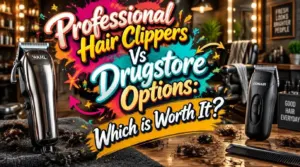
I’ve watched a $40 drugstore clipper stall halfway up a thick fade, tugging hair like it owed the thing money. Meanwhile, a pro model hums along at 6,000 to 8,000 strokes per minute without breaking a sweat.
That gap shows up fast. Cheaper blades dull three to five times quicker, and they stop cutting around 0.8mm while zero-gappable pro blades reach 0.1mm. Drugstore units last a year or three. Pro clippers can run a decade with care.
So is the extra cash worth it? It depends on your hands, your budget, and how much control you want…
Table Of Contents
- Key Takeaways
- Professional Hair Clippers Vs Drugstore Options
- Motor Power, Blade Quality, and Cutting Precision
- Comfort, Cordless Runtime, and Maintenance Needs
- Upfront Prices and Long-Term Ownership Costs
- Professional and Drugstore Clippers Worth Comparing
- Which Clippers Suit Your Skills and Budget?
- Frequently Asked Questions (FAQs)
- What kind of hair clippers do professionals use?
- What is the 3:2:1 haircut rule?
- What brand of clippers do professional groomers use?
- What clippers do hairdressers use?
- Can I use hair clippers on wet hair?
- How often should clipper blades be replaced?
- Are clippers safe for cutting pet fur?
- What guard sizes do beginners need most?
- Can clippers be used on all hair types?
- Conclusion
Key Takeaways
- Pro clippers keep their speed on thick, wet, or curly hair, while drugstore models often bog down, and their sharper, longer-lasting blades can zero-gap down to 0.1mm compared with about 0.8mm for cheaper ones.
- You’ll pay more upfront for a pro clipper ($65 to $200), but it can last 5 to 10 years versus 1 to 3 for a drugstore model, so it often costs less over time.
- Pro clippers are also easier to live with, thanks to comfier grips, cordless runtimes of 3+ hours versus 40 to 60 minutes, and removable blades that are simple to oil and resharpen.
- Pick your clipper by your skill and how often you cut: a drugstore set is a forgiving place to start, a mid-range model suits monthly cuts, and pro gear makes sense for weekly cuts or clean zero-gapped fades.
Professional Hair Clippers Vs Drugstore Options
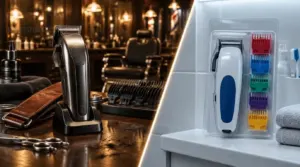
Why do some clippers cost as much as a nice dinner while others hang on the drugstore shelf for the price of a pizza? We get asked that a lot, and the answer is… well, it depends on you.
Professional hair clippers are built for barbershop days, which means years of daily use. Consumer clippers are made for an occasional home trim, usually a year or two of it. Both can cut hair, so don’t panic.
The real split shows up in the cost of equipment over time, plus how much control you want. Cordless hair clippers exist on both sides. Popular hair clipper brands like Wahl, Andis, BaBylissPRO, and Remington cover both worlds, so we’ll sort through them together…
Motor Power, Blade Quality, and Cutting Precision
So where does that price gap actually go? Mostly into the motor, the blades, and how cleanly the two work together.
Motor Power is the big one. Professional clippers run rotary or magnetic motors at 6,000 to 8,000 strokes per minute, and they keep that speed when you hit thick, wet, or curly hair. Drugstore models often sit under 5,000 and bog down… right when you need them most. Newer cordless pro models also use brushless DC motors, which pair rotary-level torque with less heat, lower noise, and no brush wear.
Blade Quality matters just as much. Pro blades use harder steel, hold an edge through 15 to 20 cuts, and can be resharpened. Cheaper ones dull three to five times faster.
That’s why Cutting Precision differs too. Zero-gappable pro blades get down to 0.1 to 0.2mm for bald fades, while drugstore blades stop around 0.8mm. Stick with trusted hair clipper brands, and your blending gets easier.
If you’re shopping for a bald fade, this roundup of the best balding clippers shows which models actually deliver that close, smooth finish.
Comfort, Cordless Runtime, and Maintenance Needs
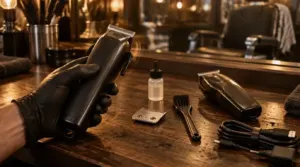
Power is only half the story. The other half is how a clipper feels in your hand an hour into a long session… and whether it’s still running.
Ergonomic design is where pro models pull ahead. Rubberized grips, balanced weight, and dampened vibration keep your wrist happier. Drugstore housings use harder plastic with sharper edges, which can leave pressure points.
On corded vs cordless clippers, runtime matters most. Here’s the rough picture:
- Battery life on drugstore models: 40 to 60 minutes
- Wahl Color Pro: up to 2 hours
- Pro lithium-ion packs: 3+ hours, with steady power
- Quick charging: 1 to 3 hours
Clipper maintenance is simpler with pro gear: removable blades, oil kits, self-sharpening options. Drugstore blades may need more frequent alignment.
If you’re comparing models, this guide to the best hair clippers for men shows which blade types and motors hold up longest between adjustments.
Try noise level testing, too. Your ears will tell you plenty.
Upfront Prices and Long-Term Ownership Costs
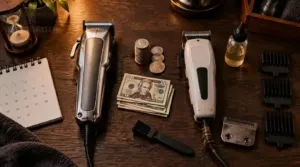
Maintenance is where money quietly leaks out, so let’s talk dollars… and where it goes.
Price ranges first. Drugstore models like Remington run $30 to $50, while entry-level pro clippers from Wahl and Andis start around $65 to $120. Mid-range pro gear lands at $120 to $200.
That initial cost stings a little. But drugstore clippers often last just 1 to 3 years, while pro models can run 5 to 10 years with care. Add cheap cords that fray and accessories you’ll buy separately, roughly $15 to $25, and the gap shrinks fast.
The upfront sting of a pro clipper fades fast once you count how long it lasts versus cheap ones
That’s longterm value you can feel. Kits help with cost efficiency too, averaging $89 with combs and oil. Maintenance requirements add 5 to 15 percent yearly.
Professional and Drugstore Clippers Worth Comparing
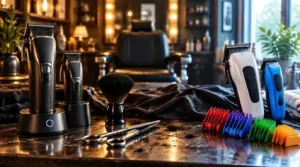
Ready to see which clippers actually earn a spot in your kit? We’ve picked a few trusted brands from both the pro and drugstore sides, so you can compare them without the guesswork. Take a look below, and you might be surprised by what holds up…
Professional Picks: Wahl, Andis, BaBylissPRO
Ready to meet the heavy hitters? Professional hair clippers usually earn their price, and we think these three are a good place to start…
The Wahl Professional 5Star Series gives you steady torque on thick hair. The Andis Master lets you adjust the blade for tapered lines. BaBylissPRO brings a titanium T-blade for crisp outlines. Professional clippers? Worth a look…
Drugstore Picks: Wahl and Remington
Remington and Wahl drugstore picks make a smart home grooming kit, usually $20 to $60. Blade sharpness lasts longer on Wahl, while Remington wants more oil.
Corded clippers keep power steady, and the Wahl Professional 5Star Series waits if you outgrow them…
- Pride in your clean fades
- Control over every pass
- Safety from snagging
- Savings that stay put
- Growing mastery
Which Clippers Suit Your Skills and Budget?
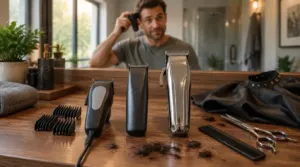
Say your buddy Dave wants to start cutting his own hair at home, and he’s eyeing a $250 setup because it looks so official. We’d tell Dave to hold on a minute…
If you’re a beginner, grab a drugstore pair like the Wahl Home Pro ($30-$50). It’s light, simple, and forgiving, which is what you want while you’re learning.
Cutting monthly and getting the hang of it? Step up to the Andis reVITE (around $90). You’ll notice the better blade quality right away.
Cutting weekly, or doing the whole family? Professional hair clippers like the Wahl Senior or the Andis Fade Master make sense. They last years, and they give you real professionalism, plus cleaner styling and overall finish.
Start small, build your skills, and upgrade when your hands are ready…
Frequently Asked Questions (FAQs)
What kind of hair clippers do professionals use?
Professional hair clippers are what we reach for, you included, once professional barber training kicks in.
Think premium hair clippers with metal housing, strong motors, and detachable blades. Salonquality results need hair clipper maintenance too…
What is the 3:2:1 haircut rule?
Think of it as a staircase for your head. The 3:2:1 rule means a No. 3 guard on top, a No. 2 on the sides, and a No. 1 at the nape, so you get haircut precision… mostly.
What brand of clippers do professional groomers use?
Walk into most salons and you’ll spot the same three names: Andis, Wahl, and Oster. We trust these professional clippers for brand reliability, so you can too… Andis AGC2 and Wahl KM lead the pack.
What clippers do hairdressers use?
Most professional haircutters grab Wahl, Andis, or BaBylissPRO. We’d say these professional hair clippers are your safest bet, since good barber tools and hair salon equipment make your hair styling techniques easier to control, promise…
Can I use hair clippers on wet hair?
Short answer: usually no, and we’d hold off… Most consumer clippers choke on wet hair, which clumps, tugs, and rusts blades fast. Professional hair clippers handle it better, but dry cutting still gives you real hair length control.
How often should clipper blades be replaced?
Blade replacement runs every 3-6 months for daily professional clippers, and 6-12 months for weekly cuts. Snagging or chips mean it’s time. Blade material science and clipper durability favor oiling, keeping cost per haircut low.
Are clippers safe for cutting pet fur?
Picture your doodle’s fleecy coat jamming a drugstore trimmer… Human clippers aren’t safe here, since they overheat, pull, and rattle. Choose pet clipper blade types, corrosion-resistant steel blades, low noise and vibration, and ergonomic design.
What guard sizes do beginners need most?
Clipper guard sizes matter at 3, 4 and 5, so you’ll start there. Beginner home use equipment should include a 2 for fade haircut styles. Hair texture considerations and adjustable blade systems can wait, promise…
Can clippers be used on all hair types?
Yes, clippers can handle every hair type, but hair texture considerations matter. Professional clippers power through coarse, curly hair, while consumer clippers may stall… Match your hair clippers and clipper guard sizes to your texture, and you’re good.
Conclusion
A cheap clipper costs less today, but a good one costs less over time. That’s the real math behind professional hair clippers vs drugstore options, and it’s why your budget and your skill level matter more than any brand name.
Just starting out? A drugstore set is a fine, forgiving place to practice… Chasing clean, zero-gapped fades? Invest in pro blades, keep them oiled, and they’ll pay you back for years. Grow into your tools.