This site is supported by our readers. We may earn a commission, at no cost to you, if you purchase through links.

Your scalp is home to roughly 100,000 hair follicles, each one a complex biological factory that can be disrupted by everything from microscopic yeast to your own immune system. When something goes wrong up there, the effects ripple outward: relentless itching during meetings, flakes dotting your shoulders, or clumps of hair circling the shower drain.
These aren’t just cosmetic annoyances—they’re signals that your scalp’s delicate ecosystem has shifted out of balance. The good news? Most scalp issues and solutions follow predictable patterns once you understand what’s actually happening beneath the surface.
Whether you’re dealing with stubborn dandruff, mysterious bald patches, or scalp pain that won’t quit, identifying the root cause puts you halfway toward relief.
Table Of Contents
Key Takeaways
- Most scalp problems—from dandruff to hair loss—stem from identifiable causes like fungal overgrowth, autoimmune attacks, or environmental damage, meaning you can target treatment once you know what’s disrupting your scalp’s balance.
- Medicated shampoos with ketoconazole or selenium disulfide resolve 89% of fungal and inflammatory scalp issues within weeks, while prescription options like topical corticosteroids or minoxidil tackle more stubborn conditions.
- Your daily habits—washing frequency, product choices, stress levels, and nutrition—directly shape scalp health, with simple adjustments like five-to-six weekly washes and Mediterranean-style eating cutting flare-ups by up to 30%.
- Persistent symptoms lasting beyond two to four weeks, sudden hair loss, or signs of infection require professional evaluation to prevent complications and address underlying health issues before they worsen.
Common Scalp Conditions and Symptoms
Your scalp can develop a range of conditions that affect how it looks and feels. Some cause flaking or redness, while others lead to hair loss or discomfort that won’t quit.
Let’s walk through the most common issues you might encounter and what they usually look like.
Dandruff and Seborrheic Dermatitis
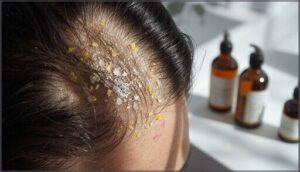
Flakes on your collar? You might be dealing with dandruff or its more aggressive cousin, seborrheic dermatitis—both driven by Malassezia yeast and scalp inflammation. While dandruff appears as light, white-to-yellow flakes without redness, seborrheic dermatitis brings visible inflammation and, in infants, cradle cap. Seborrheic dermatitis is also observed more frequently in individuals who have Parkinson’s disease.
Risk factors include:
- Male sex and ages 40–60
- Immune suppression or HIV
- Stress and sleep deprivation
Treatment efficacy is proven with antifungal shampoos targeting Malassezia furfur.
Psoriasis of The Scalp
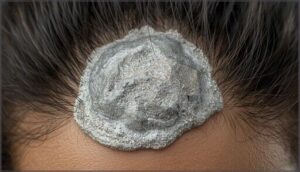
When thick, silvery plaques cross your hairline and refuse to budge, you’re likely facing scalp psoriasis—a condition affecting 50–80% of people with psoriasis. Unlike dandruff’s light flakes, scalp psoriasis symptoms include well-defined plaques, intense itching, and sometimes temporary psoriasis hair loss from scratching.
Topical psoriasis treatments like corticosteroids or vitamin D analogues work well initially, but moderate-to-severe cases may need systemic psoriasis therapies.
The psoriasis quality of life impact is significant—88% report emotional distress. It’s estimated that 3.2% of adults have psoriasis.
Fungal and Bacterial Infections
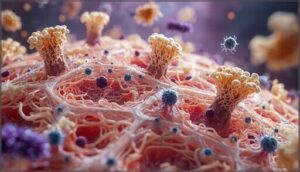
Beyond the inflammation of psoriasis lie microbial culprits—fungal infections of the scalp and bacterial infections that demand different strategies. Tinea capitis, a fungal infection, accounts for 92.5% of dermatophyte infections in kids under ten, causing scaling, broken hairs, and bald patches. Meanwhile, folliculitis decalvans—driven by bacterial biofilms—can scar permanently if you delay antibiotics or antifungal treatments.
Key infection risk factors:
- Crowded living conditions and close contact with infected pets
- Diabetes, which fuels more severe bacterial infection
- Compromised immunity that lets fungi flourish unchecked
Autoimmune Disorders (e.g., Alopecia Areata)

When your immune system mistakenly attacks your own hair follicles, alopecia areata can cause smooth, round patches of hair loss on your scalp. This autoimmune disorder affects roughly 2% of people worldwide, with CD8+ T cells targeting follicles during active growth phases. You’re not alone—about 2.4 million U.S. clinic visits each year involve this condition, which often strikes adults between 19 and 50.
Alopecia areata is an autoimmune disorder where your body attacks its own hair follicles, affecting 2% of people worldwide with round patches of hair loss
| Immune Mechanisms | Treatment Options | Psychosocial Impact |
|---|---|---|
| CD8+ T cells infiltrate follicles | Topical JAK inhibitors | Elevated anxiety, depression |
| Loss of follicle immune privilege | Oral JAK inhibitors | Reduced work productivity |
| Shared pathways with thyroid disease | Intralesional corticosteroids | Quality-of-life decline |
| Links to atopic dermatitis | Hydroxychloroquine for scarring types | Emotional burden disproportionate to hair loss |
| Association with vitiligo, lupus | Emerging therapies under study | Higher healthcare utilization |
Emerging therapies like JAK inhibitors have transformed outcomes—trials show that many patients achieve 50% or greater regrowth, though ongoing treatment is often needed to maintain results. Because autoimmune disorders affecting the scalp can also appear alongside thyroid disease or atopic conditions, your doctor may screen for related health issues while tailoring your treatment plan to address both your physical symptoms and the psychosocial impact of hair loss.
Scalp Pain, Soreness, and Lesions
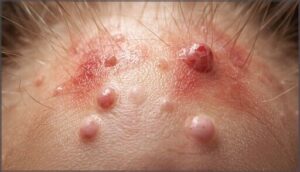
Have you ever felt a sharp ache when simply brushing your hair? That’s trichodynia, affecting about one-third of adults with hair loss.
Scalp pain and scalp tenderness stem from folliculitis infections, allergic reactions to hair products, or neuropathic pain like postherpetic neuralgia after shingles.
Recognizing causes of scalp soreness—whether tender pustules, eczematous scalp lesions, or nerve damage—is essential for managing scalp pain effectively.
Causes of Scalp Issues

Your scalp issues don’t just appear out of nowhere—there’s always something behind them. Some causes are rooted in your genetic makeup, while others stem from infections, stress, or what you’re exposed to every day.
Let’s break down the main culprits so you can identify what might be affecting your scalp.
Genetic Predisposition
Your genes can shape your scalp’s destiny more than you might think. Heritability estimates suggest that up to 80% of male pattern baldness risk comes from your DNA, not just lifestyle.
Susceptibility loci linked to androgenetic alopecia and rare disorders like alopecia areata reveal how inherited variants influence hair thinning.
Understanding your genetic blueprint helps you anticipate and manage hair loss more effectively.
Infections (Fungal, Bacterial, Parasitic)
Infections from fungi, bacteria, and parasites threaten your scalp in ways you can’t always see. Ringworm strikes up to 29% of children in some regions, while bacterial folliculitis from Staphylococcus aureus inflames hair follicles and resists treatment.
Head lice infest nearly 20% of schoolchildren worldwide. Pediatric tinea accounts for over 90% of dermatophyte infections in young kids, making early recognition essential for preventing permanent hair loss.
Environmental and Lifestyle Factors
Your daily habits shape your scalp’s health more than you might expect. Air pollution damages follicles, UV exposure weakens shafts, and smoking disrupts circulation—all triggering inflammation and shedding. Thermal stress from hot water strips protective oils, while poor diet and sleep deprive follicles of nutrients. Environmental exposures and scalp health connect directly:
- Air pollution inflames sebaceous glands
- UV exposure oxidizes follicle cells
- Smoking effects constrict blood vessels
- Thermal stress opens cuticles excessively
- Diet & sleep fuel keratin production
Adjusting scalp care practices and hair care products reduces irritation. Dietary changes and skin health improvements often show results within six to eight weeks.
Allergic Reactions and Irritants
Hair dye allergy and shampoo ingredients trigger more scalp irritation than most people realize. Cosmetic allergens like para-phenylenediamine affect up to 11.8% of tested patients, while harsh surfactants strip your scalp’s protective barrier.
Irritant dermatitis from fragrances and preservatives causes redness and burning within hours.
Occupational exposure in salons shows that repeated contact amplifies allergic reaction risk, turning everyday products into persistent scalp problems.
Hormonal Imbalances and Stress
When your body’s stress hormones spike, your scalp pays the price. Chronic activation of the HPA axis raises cortisol levels that push hair follicles into telogen, triggering diffuse shedding in telogen effluvium and worsening DHT impact in androgenetic alopecia.
Endocrine disorders like thyroid dysfunction and PCOS increase hair loss through hormone disorders, while emotional disorders increase inflammation and itching, making early treatment essential.
Diagnosing Scalp Problems

Figuring out what’s going on with your scalp isn’t always straightforward, but knowing what to look for can save you time and worry.
Your doctor will use a combination of observation, testing, and conversation to pinpoint the problem.
Let’s walk through how scalp conditions are diagnosed and when it’s time to get professional help.
Recognizing Key Symptoms
How do you know when a minor annoyance signals something serious? Recognizing the key symptoms of scalp conditions helps you take control early. Look for these warning signs:
- Persistent itching or pruritus that doesn’t improve with regular washing
- Scaling severity, from light flakes to thick, greasy crusts
- Hair loss signs like patchy bald spots or increased shedding
- Lesion identification, including redness, bumps, or pustules
- Pain assessment, such as burning, tenderness, or soreness
These symptoms of scalp conditions often overlap, so careful observation matters.
Physical Examination and Scalp Assessment
Once you notice the warning signs, your doctor uses structured methods to pinpoint the problem. Inspection techniques check hair density, color, and scalp redness. Palpation methods assess skin thickness and tenderness. Pull tests measure active shedding by gently extracting 40–60 hairs. Trichoscopy—dermoscopic imaging at 10× magnification—boosts diagnostic accuracy to 85%, often replacing invasive biopsies.
| Examination Method | What It Reveals |
|---|---|
| Inspection | Hair patterns, scalp inflammation, follicle condition |
| Palpation | Skin elasticity, swelling, pain triggers |
| Trichoscopy | Vascular changes, scaling type, follicle detail |
Laboratory and Diagnostic Tests
When visual inspection isn’t enough, targeted tests nail down the diagnosis. Trichoscopy applications—using a dermoscope on your scalp—distinguish psoriasis from seborrheic dermatitis with over 90% specificity. Mycological testing via potassium hydroxide smear catches fungal infections quickly, while scalp biopsy confirms scarring alopecias when other methods fall short.
Patch testing uncovers allergens in hair products, and biochemical analysis checks ferritin or thyroid levels driving unexplained shedding.
When to Seek Medical Advice
Persistent symptoms lasting beyond two to four weeks despite over-the-counter treatments signal it’s time for medical consultation. Infection signs—yellowish crusts, pustules, or spreading redness—demand prompt evaluation.
Sudden hair loss, systemic issues like fatigue or fever, or scalp pain worsening over days warrant urgent attention.
Early medical examination prevents complications and resolves underlying health concerns before they become harder to manage.
Effective Treatments for Scalp Conditions

Once you’ve identified what’s going on with your scalp, the next step is finding the right treatment to tackle it. Most scalp conditions respond well to targeted therapies, whether that means a specialized shampoo, a prescription medication, or a few simple lifestyle tweaks.
Let’s walk through the main treatment approaches that can help you get relief and restore your scalp health.
Medicated Shampoos and Topical Therapies
When your scalp flares up, the right medicated shampoo can make all the difference. Your treatment options range from antifungal medications targeting Malassezia to prescription medications that calm inflammation:
- Ketoconazole efficacy: The 2% formulation delivers better results, with 89% of users seeing improvement in severe seborrheic dermatitis.
- Selenium disulfide: Reduces itch faster than alternatives, often within three days.
- Coal tar benefits: Cost-effective for psoriasis, though it may stain.
- Topical corticosteroids: Paired with medicated shampoos for enhanced control.
- Adverse effects: Usually mild—temporary dryness or irritation that’s manageable.
Prescription Medications and Corticosteroids
When inflammation takes hold, prescription medications step in where over-the-counter options fall short. Topical corticosteroids like clobetasol propionate clear moderate to severe scalp psoriasis in 81% of patients within two weeks.
For stubborn alopecia areata patches, intralesional injections achieve nearly complete regrowth in 47% of cases. Novel formulations improve penetration through hair, though you’ll need to watch for adverse effects like skin thinning with prolonged use.
Hair Loss Treatments (Minoxidil, Transplants)
When hair loss resists other interventions, you have two proven medical routes. Twice-daily 5% topical minoxidil stabilizes shedding within eight to twelve weeks, with 40% of users achieving moderate regrowth after six months.
Hair transplants carry a 4.7% complication rate—low but real.
Combination minoxidil–finasteride formulations add 9.22 hairs per square centimeter over minoxidil alone, though early shedding often precedes visible gains.
Managing Fungal and Bacterial Infections
When tinea capitis or Malassezia flare-ups resist over-the-counter remedies, you need prescription-strength antifungal medications like ketoconazole shampoo, which clears 89% of scalp fungal infections within four weeks.
Bacterial folliculitis often heals in seven to ten days, but deeper abscesses warrant clindamycin or trimethoprim-sulfamethoxazole to prevent the 23% one-year recurrence rate.
Twice-daily mupirocin and chlorhexidine washes cut household skin infection transmission by 19 percentage points.
Lifestyle and Dietary Modifications
Your plate shapes your scalp more than you think. Mediterranean-style eating—loaded with raw vegetables, fresh herbs, and omega-3 fatty acids from fatty fish—improves hair density and dials down inflammation.
Stress reduction, better sleep quality, and weight management slash seborrheic dermatitis flares by up to 30%.
Cutting dietary triggers like fried foods and sweets, correcting vitamin deficiencies, and staying hydrated fortify your scalp’s natural defenses.
Preventing and Managing Scalp Issues

You don’t have to wait until scalp problems show up to take action. A few simple, daily habits can keep your scalp healthy and reduce your risk of developing irritation, flaking, or hair loss down the road.
Here’s what you need to focus on to protect your scalp and manage issues before they become difficult to treat.
Gentle Scalp Care Practices
Think of your scalp as soil—it needs the right care to support healthy hair follicles. Wash frequency matters: five to six times per week balances scalp moisture and controls sebum without damage. Use warm, not hot, water temperature to protect your scalp’s natural barrier.
Gentle combing practices distribute oils and remove buildup, while regular scalp massage boosts blood flow. These scalp care practices support microbiome balance and long-term scalp health.
Choosing The Right Hair Products
Beyond washing frequency, your product choices directly shape scalp health. Match shampoos to your scalp type: stronger detergents like sulfates clear oily builds, while ceramide-rich, sulfate-free shampoos soothe dry or sensitive skin.
Watch for product allergies—ingredients like paraphenylenediamine trigger reactions in 9% of patch-tested patients.
Ethnic hair often needs specific formulas that respect coil structure and prevent dryness, making ingredient awareness central to effective hair care product selection.
Protecting The Scalp From Sun and Injury
Sunscreen application and UPF clothing work together as your scalp’s first defense against sunburn and skin cancer—scalp melanomas carry double the mortality risk of melanomas elsewhere. Wide-brimmed hats cut UV exposure by up to seven-fold on your forehead.
For trauma prevention, helmet effectiveness is proven: unhelmeted riders face 5.6 times the scalp laceration risk, making protective headgear essential in occupational hazards and high-speed activities.
Importance of Nutrition and Hydration
Nutrition anchors your scalp defense from the inside. Deficiencies in key micronutrients—iron, vitamin D, zinc—show up in nearly half of telogen effluvium cases, while omega-3 fatty acids and antioxidants tamp down inflammation.
Dietary patterns rich in proteins, B vitamins, and high-water foods improve barrier hydration and follicle function. Meeting your hydration targets daily keeps the scalp resilient against irritants.
Reducing Stress for Scalp Health
Chronic stress isn’t just a mood killer—it disrupts cortisol, inflammation markers, and immune signaling, all of which can trigger or worsen scalp conditions like psoriasis and telogen effluvium.
Six-week CBT programs triple response rates in scalp psoriasis treatment, while mindfulness practices and yoga measurably reduce stress biomarkers.
Integrated interventions pairing psychological support with topical therapy produce the most durable scalp health gains.
Frequently Asked Questions (FAQs)
Can scalp massage improve hair growth results?
Yes, daily scalp massage can modestly improve hair thickness over several months.
Clinical evidence shows massage protocols generate mechanical stress in hair follicles, supporting hair growth as a safe adjunct therapy alongside standard treatments.
How often should I wash my hair?
Research on Asian adults found that shampooing five to six times weekly maximized satisfaction without damage.
Your ideal frequency depends on hair type, scalp oiliness, ethnic practices, activity levels, and product buildup affecting hair follicles and sebum production.
Are natural remedies effective for scalp problems?
Some herbal remedies show measurable benefits for scalp conditions—like peppermint oil for itch relief or indigo naturalis for psoriasis—but ACV risks irritation, and most natural treatments lack strong evidence supporting standalone efficacy or remedy safety.
Can hair dye worsen existing scalp conditions?
Dye-induced inflammation definitely disrupts delicate scalp skin. Hair dye containing PPD can trigger allergic reactions on the scalp, worsen dermatitis and eczema exacerbation, cause skin irritation, precipitate hair loss, and potentially activate autoimmune triggers through allergen cross-reactivity in susceptible individuals.
Is scalp health linked to overall wellness?
Your scalp reflects your body’s inner state. Systemic inflammation, autoimmune links, mental health struggles, nutritional deficiencies, and even neurologic associations can manifest through hair follicles, making scalp and skin health important windows into dermatological conditions and overall wellness.
Conclusion
Here’s the truth: your scalp won’t fix itself if you ignore the warning signs. Every flake, itch, or patch of thinning hair represents a specific disruption you can address once you pinpoint the cause.
Understanding scalp issues and solutions means you’re no longer guessing with random products—you’re targeting the actual problem.
Whether it’s adjusting your routine, choosing medicated treatments, or consulting a dermatologist, you now have the framework to restore balance and reclaim your scalp’s health.