This site is supported by our readers. We may earn a commission, at no cost to you, if you purchase through links. This content is for general informational and educational purposes only and is not a substitute for professional medical, dermatological, or nutritional advice.
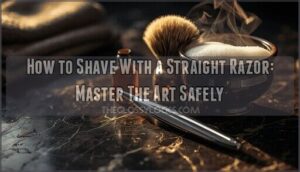
Most men quit straight razor shaving within a week. Not because it’s too hard—because nobody showed them the right way to start.
A cartridge razor gets the job done, sure, but it’s like eating a microwave dinner when you could have a proper meal.
Shaving with a straight razor changes the whole experience. You slow down, get deliberate, and walk away with a shave so close it feels like your face forgot it ever had stubble.
Once you nail the basics—blade angle, skin prep, lather consistency—you’ll wonder why you waited so long to make the switch.
Table Of Contents
- Key Takeaways
- Benefits of Shaving With a Straight Razor
- Essential Tools for Straight Razor Shaving
- Preparing for a Straight Razor Shave
- Mastering Straight Razor Shaving Technique
- Straight Razor Safety and Maintenance
- Top Straight Razor Shaving Products
- 1. Dovo 6/8 Black Straight Razor
- 2. DOVO Inox Straight Razor Olive Wood
- 3. Norton Japanese Waterstone 4000 8000 Grit
- 4. Fromm Razor Strop Blade Sharpener
- 5. Porter Badger Shaving Brush
- 6. Taylor Old Bond Street Sandalwood Shaving Cream
- 7. Manscaped Plow 2.0 Safety Razor
- 8. Parker SRX Stainless Steel Straight Razor
- 9. CeraVe Hydrating Facial Cleanser
- Troubleshooting Common Shaving Issues
- Frequently Asked Questions (FAQs)
- Can shaving cause hyperpigmentation?
- Is it better to shave with a straight razor?
- Why did men stop using straight razors?
- Do you go against the grain when shaving with a straight razor?
- How to use a straight razor for beginners?
- How do I choose a beginner-friendly razor?
- What’s the best way to sanitize razors?
- Can straight razors be used on sensitive skin?
- How often should I replace a strop?
- What’s the history behind straight razor shaving?
- Conclusion
Key Takeaways
- A straight razor pays for itself in about 14 months and saves you $2,000+ over a decade — cartridges are just a subscription you never signed up for.
- Nail three things before you touch your face: blade angle at 30 degrees, hot towel prep, and a lather thick as yogurt.
- A 5/8 round-point stainless blade is the right starting point — forgiving enough to learn on, sharp enough to actually work.
- Stropping before every shave and a full hone every few months keeps your blade performing; skip that routine and you’re just dragging dull steel across your face.
Benefits of Shaving With a Straight Razor
Switching to a straight razor isn’t just about shaving — it changes the whole experience.
If you’re curious about finding the right blade for your routine, this guide to the best straight razors for beginners and pros breaks down top choices and what makes them stand out.
Once you understand the real advantages, it’s hard to go back to that plastic cartridge sitting on your bathroom shelf.
Here’s what makes straight razor shaving worth the investment.
Smoother, Closer Shave
Getting a baby-smooth shave isn’t luck — it’s straight razor shaving technique done right. Daily strop maintenance routine keeps your blade edge fine‑tuned, slicing hair at skin level without drag.
Nail your hot towel timing, lather consistency, and pass sequence optimization, and here’s what you get:
- Zero tugging — honed edges glide effortlessly
- No ingrown hairs — polished blade, clean cuts
- Skin‑level smoothness — three‑pass results no cartridge razor touches
regular stropping on linen helps align the burr before leather.
Cost Savings Over Time
That baby-smooth result has another payoff — your wallet notices too. Cartridges run you $182 a year.
A quality straight razor? Around $150 upfront, with a break-even timeline of roughly 14 months. After that, straight razor shaving benefits your bank account greatly.
Lifetime expense comparison over ten years shows $2,000-plus in cartridge savings projection. Maintenance cost reduction stays under $20 annually. That’s long-term ROI you can actually feel.
Switch to a straight razor and pocket over $2,000 in savings across a decade, with upkeep costing less than $20 a year
The closer shave advantage comes from the razor‑sharp edge of a traditional straight razor.
Environmental Advantages
wallet isn’t the only thing that wins here. Straight razor shaving benefits the planet too.
Over 2 billion disposable razors hit US landfills every year. One straight razor replaces 52 razor cartridges annually — that’s 90% less plastic waste.
blade recycling is simple: drop steel blades in a can, take it to any metal center.
Sustainable materials, zero plastic. Wet shaving never looked this clean.
Meditative Shaving Experience
You’re not just shaving; you’re stepping into a ritual.
Mindful Stropping and Zen Stroke Timing force your attention on the blade’s path. Breathing Rhythm anchors your nerves, especially near the throat.
Ritualistic Whisking builds lather and calm.
Focused Angle Awareness turns every stroke into a meditation.
Wet shaving isn’t just beard prep—it’s a quiet reset for your day.
Enhanced Self-Confidence
Ritualistic Empowerment isn’t just a fancy phrase—it’s what happens when you master a straight razor. Each shave builds Mental Resilience and sharpens your Grooming Identity Boost. You get Post‑Shave Pride every morning, and your Professional Presence follows you out the door.
- Confidence grows with each shave
- Mastery rewires your swagger
- Clean look boosts daily interactions
- Ritual strengthens personal care
Essential Tools for Straight Razor Shaving
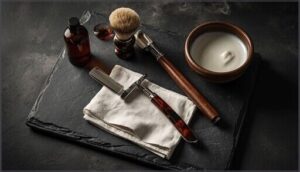
Before you even think about shaving, you’ll need the right gear.
Every tool has its job, and skipping one usually leads to trouble. Here’s what you’ll want on your bathroom counter before you start.
Choosing The Right Straight Razor
Start with the blade width. A 5/8 straight razor is your best friend as a beginner — it’s forgiving without feeling clunky.
Go full hollow grind for feedback and closeness.
Choose stainless steel if your bathroom gets humid; carbon steel if you love easy sharpening.
Round point keeps straight razor safety intact.
Solid handle balance is non‑negotiable for control.
Honing Stones and Strops
Keeping your blade sharp is what separates a great shave from a rough one. For honing, start around 1000–3000 grit to set the bevel, move through mid-range stones at 4000–8000, then finish at 10000+. Synthetic water stones are consistent and beginner‑friendly; natural stones reward experience.
For your strop, cowhide is reliable. Strop every one to seven shaves; hone every six months.
Shaving Brushes and Creams
Your brush and cream are what turn a decent shave into a great one. Brush fiber types matter more than you’d think—badger hair holds water beautifully, while synthetic dries in 30 minutes flat. Knot size impact is real too: 22 mm hits the sweet spot.
- Synthetic vs Badger: Badger for luxury, synthetic for travel
- Knot size: 22–24 mm loads hard‑shaping soap efficiently
- Cream Ingredient Benefits: Glycerin keeps skin hydrated mid‑shave
- Lather Consistency Tips: Aim for yogurt‑thick sh lather
- Shaving cream vs soap: Creams lather faster; soaps last longer
Pre-Shave Oils and Accessories
pre-shave oil is your razor’s wingman. A few drops on damp skin — that’s your Application Timing sweet spot — softens coarse hair and cuts friction fast.
Ingredient Benefits vary by skin type, so Skin-Type Matching matters: dry skin craves castor-rich blends, sensitive skin needs lighter, non-comedogenic oils.
Fragrance-Free Options keep things simple.
Post-Shave Pairings like alum blocks and balms seal the deal.
Preparing for a Straight Razor Shave

great shave doesn’t start when blade meets skin — it starts before you even pick up the razor. prep your face makes the difference between a smooth, comfortable shave and a red, angry one.
Here’s what you need to do before that blade touches your face.
Skin Preparation and Cleansing
Your skin is the canvas — treat it right before that blade touches your face.
- Gentle Cleanser Choice: Use a pH balanced wash (4.5–5.5) to remove oil without stripping moisture.
- Exfoliation Timing: Scrub 24 hours before if you have sensitive skin.
- Facial Mapping Prep: Stroke lather four directions to read your grain.
- Barrier Cream Application: Seal moisture in before your pre‑shave oil goes on.
Using Hot Towels or Showers
Once your face is clean, it’s time to soften that beard — and nothing beats a proper Steam Pre‑Soak.
Wrap a hot towel (around 100–110°F) over your face for 2–3 minutes. That Towel Heat Retention does real work, swelling each whisker so the blade glides instead of tugs. Follow Water Temperature Guidelines — too hot strips your skin. Once your skin is prepped and softened, the right nighttime aftershave lotion can lock in that moisture while you sleep.
| Method | Temp Range | Time |
|---|---|---|
| Hot Towel | 100–110°F | 2–3 min |
| Hot Shower | 100–110°F | 2–3 min |
| Steam Towel | 135–150°F | 60–90 sec |
| Sensitive Skin | 90–100°F | 2 min |
| Mature Skin | 90–100°F | 60–90 sec |
This wetshaving step sets up Moisture‑Boosted Lather and aids Post‑Shave Skin Recovery — it’s where your shaving ritual truly begins.
Applying Pre-Shave Oils
Now the oil comes in. After that hot towel, your skin’s ready — don’t waste it.
Warm 3 to 4 drops of preshave oil between your palms, then massage it in with slow circular motions for about 30 seconds. That’s your Drop Quantity, your Application Timing, your Massage Technique — all locked in.
Match your oil to your skin type. Oily skin? Go light. Dry or winter-rough? A richer blend earns its keep.
Creating The Perfect Lather
Now that your pre-shave oil is set, it’s lather time.
Load your shaving brush with warm water — Soap Temperature Control matters here.
Too hot breaks down the lather.
Swirl on your shaving soap for 20 to 30 seconds, then build in your shaving bowl using the Bowl Textured Surface.
Do your Lather Consistency Test: glossy sheen, no big bubbles.
That’s your green light.
Mastering Straight Razor Shaving Technique
So you’ve got your straight razor ready and your face prepped—now comes the tricky part. Getting your technique right makes all the difference between a smooth shave and a rough morning.
Here’s what you need to know to master the basics.
Proper Grip and Angle
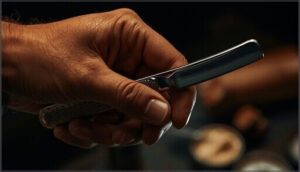
Think of holding the razor like a firm handshake — not a death grip.
Open the scales to 270 degrees, rest two fingers on the tang, and let your thumb sit underneath for balance.
Wrist alignment stays straight; your shoulder drives the stroke.
Keep blade tilt at 30 degrees and remember: shaving pressure should be almost nothing.
Let the blade do the work.
Shaving With and Against The Grain
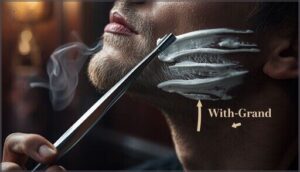
Mapping your grain before touching the blade to skin is the move most beginners skip — and pay for later.
Run your fingers across your stubble and feel which direction resists.
That’s your grain map.
Start your shaving direction with growth first.
Your shaving technique should ease into it: light shaving pressure, correct blade angle, working outward from cheeks.
Save against‑grain strokes for tolerant skin only.
Multiple Passes for Closeness
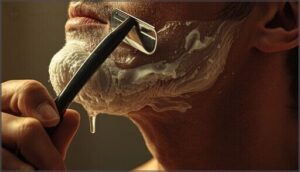
Pass sequencing is where the magic happens.
Your first shave stroke goes with the grain — removes the bulk.
Second pass cuts perpendicular, tightening things up.
Third pass is against the grain for baby‑smooth results.
Refresh lather between every pass — never skip this.
Keep angle precision at 30 degrees, stretch skin taut, and limit touch-up limits to five small areas.
Multiple passes, done right, transform an average shave.
Techniques for Different Facial Areas
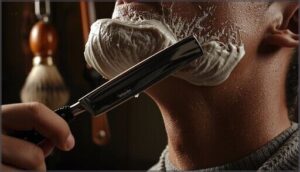
From the tip of your nose to your jawline, straight razor shaving techniques shift with every curve.
Upper Lip Strokes call for tiny motions under the nostrils.
Chin Contour Shaving needs slick lather and a steady 30‑degree angle.
Jawline Definition: stretch and shave upward.
Neck Hair Mapping is essential; follow growth patterns.
Sideburn Edging sets your visual guide.
Preparation and precision—never skip them.
Straight Razor Safety and Maintenance
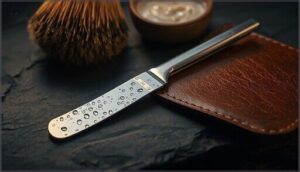
A sharp razor is only as good as the care you give it.
Treat it right, and it’ll reward you with years of perfect shaves — treat it wrong, and you’re just holding an expensive liability.
Here’s what you need to know to keep your blade safe, sharp, and ready to go.
Safe Handling and Storage
A falling razor doesn’t forgive hesitation — never try to catch it.
let it drop.
Finger protection starts with one rule: let it drop.
For razor storage, dry is everything.
Moisture prevention matters more than most guys realize, so keep your blade in travel blade cases or a bedroom drawer with silica gel.
Humidity monitoring and secure folding practice aren’t optional — they’re straight razor maintenance basics.
Regular Blade Honing and Stropping
Think of honing and stropping like gym training — one builds strength, the other keeps you sharp.
Stropping before every shave (20–30 light laps) realigns your edge without removing steel.
Your bevel angle is set automatically by resting the spine and edge flat on the stone.
For stone grit selection, finish around 8,000–12,000 grit.
Full honing? Every few months, depending on use.
Cleaning After Each Use
Your razor just did real work — now take care of it.
Post‑shave care takes two minutes but adds years to your blade. Follow these razor maintenance basics every single time:
- Rinse techniques: warm water, edge down, mild soap to cut through oils
- Drying methods: pat dry, never wipe the edge, air out the pivot
- Disinfection practices: 70% isopropyl alcohol, let it sit 5–10 minutes
- Oil application: one drop mineral oil, spread thin on both sides
Store it dry. Always.
Preventing and Managing Cuts
Once your postshave care is done, let’s talk shaving safety and nicks and cuts. Most mishaps come from poor Blade Angle Control, sloppy Skin Stretching, or ignoring Light Pressure. For instance, a quick dab of styptic powder stops bleeding fast.
Here’s a cheat sheet:
| Cause | Prevention | Solution |
|---|---|---|
| Wrong angle | 30° angle | Styptic powder |
| Loose skin | Stretch taut | Cold water |
| Dull blade | Sharpness Maintenance | Postshave care |
Top Straight Razor Shaving Products
Choosing the right gear makes all the difference when you’re shaving with a straight razor. You want tools that work hard and last long. Here are some of my top picks to help you get started.
1. Dovo 6/8 Black Straight Razor
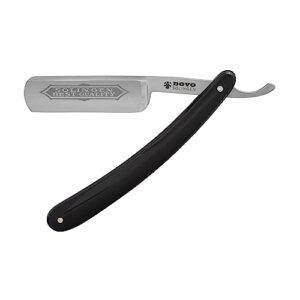
If you’re serious about straight razor shaving, the Dovo 6/8 Black is worth every penny. Made in Solingen, Germany since 1906, this thing is built to last.
The carbon steel blade hits 61 HRC hardness — that’s sharp enough to glide through thick facial hair without tugging. The full hollow grind gives it that satisfying hum you’ll actually look forward to.
It ships shave-ready and even includes a free resharpening in the first year. Solid choice for beginners and veterans alike.
| Best For | Men who want a classic, close shave — whether they’re just starting out with straight razors or have been using one for years. |
|---|---|
| Dimensions | 3 x 2 x 3 inches |
| Weight | 1.76 ounces |
| Model | DOV100681 |
| Rank | 442 in Men’s Straight Shaving Razors |
| Material | N/A |
| Suitable For | Men with thick facial hair |
| Additional Features |
|
- German-engineered blade that handles thick facial hair with ease
- Compact and lightweight at under 2 ounces — easy to control
- Trusted brand with over a century of craftsmanship behind it
- May need stropping or sharpening before it’s truly shave-ready
- The handle can feel flimsy and may be prone to cracking over time
- Pricier than most modern shaving options, and quality control can vary between units
2. DOVO Inox Straight Razor Olive Wood
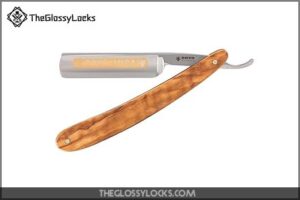
If you want a razor that’s as handsome as its practical, the DOVO Inox Olive Wood is your ticket. Stainless steel means it shrugs off water and soap—so upkeep’s a breeze.
Olive wood handle is tougher than oak, and it won’t turn mushy in a damp bathroom. Plus, each handle has its own unique grain, so yours won’t look like anyone else’s.
The 5/8 inch hollow ground blade glides smoothly, making every shave feel almost smooth.
| Best For | Guys who are ready to ditch disposables and want a classic, close shave with a razor that actually looks great on the shelf. |
|---|---|
| Dimensions | 0.74 x 6.9 x 2.2 inches |
| Weight | 10g |
| Model | 13581027 |
| Rank | N/A |
| Material | Stainless steel and olive wood |
| Suitable For | Various hair types |
| Additional Features |
|
- Stainless steel blade holds up well against moisture, so rust isn’t something you’ll stress about
- Olive wood handle feels solid and looks unique — no two are exactly the same
- A quality blade you can sharpen and reuse for years, saving you money over time
- Not the best pick for beginners — you’ll need to learn proper technique and pick up a strop or sharpening stone
- Some buyers have had concerns about the handle’s build quality holding up long-term
- It’s a bit of an investment upfront, both in cost and in learning the routine
3. Norton Japanese Waterstone 4000 8000 Grit
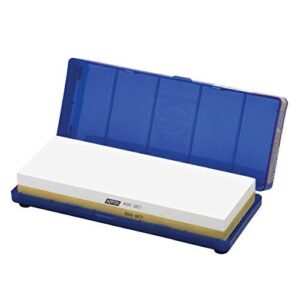
Now, if you’re chasing a shave that’s smoother than a jazz solo, you’ll need a sharp blade—and that’s where the Norton Japanese Waterstone comes in. This dual‑grit stone (4000/8000) makes honing easy. The 4000 side resets tired edges, while the 8000 side polishes things up for a glassy finish.
Just soak it for 15 minutes, splash a little water, and get to work. It’s stable, compact, and lasts ages. Think of it as the secret sauce behind your razor’s performance.
| Best For | Anyone who wants to keep kitchen knives, utility blades, or straight razors in top shape without a lot of fuss. |
|---|---|
| Dimensions | 7.4 x 3.3 x 4 inches |
| Weight | 2.05 pounds |
| Model | 61463624336 |
| Rank | N/A |
| Material | Corundum |
| Suitable For | Kitchen knives, utility knives, tools, straight razors |
| Additional Features |
|
- The dual 4000/8000 grit setup takes you from refreshing a dull edge all the way to a polished, razor-sharp finish in one stone.
- Water-only setup keeps things simple—no messy oils, and cleanup is a breeze.
- Built to Japanese Industrial Standards, so you know the grit ratings actually mean something.
- You need to soak it 15–20 minutes before use, so it’s not a grab-and-go option.
- At 2 pounds, it’s solid but not exactly pocket-friendly for travel or field use.
- Corundum stones can wear down over time and may need occasional flattening to stay effective.
4. Fromm Razor Strop Blade Sharpener
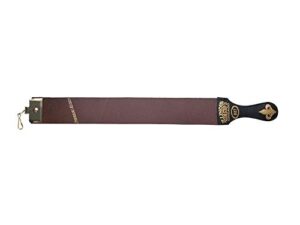
Stropping your blade after every shave is non‑negotiable — and the Fromm Razor Strop makes it easy to get right. It’s 2.5 inches wide and 24 inches long, giving you plenty of room to work.
The canvas side manages initial alignment, while the top grain cowhide leather side polishes your edge to a mirror finish.
Handcrafted in the USA, this strop meets professional barber standards. Run 15 to 20 passes per side, and your blade stays shave‑ready without touching a hone.
| Best For | Wet shavers and barbers who want to keep straight-edge blades sharp without constantly replacing them. |
|---|---|
| Dimensions | 2.5 x 23 x 4 inches |
| Weight | 6.4 ounces |
| Model | IRS127 |
| Rank | N/A |
| Material | Top grain cowhide leather and canvas |
| Suitable For | Woodworking tools, fine edges, blades |
| Additional Features |
|
- Handcrafted in the USA from top grain cowhide — feels solid and built to last
- Dual-sided design (canvas leather) covers both sharpening and finishing in one tool
- Works beyond razors too — great for knives, woodworking tools, and other fine edges
- The leather can be stiff right out of the box and may need conditioning before your first use
- Hardware quality has gotten some complaints — don’t expect premium metal fittings
- Technique matters a lot here, so beginners might need some practice before seeing great results
5. Porter Badger Shaving Brush
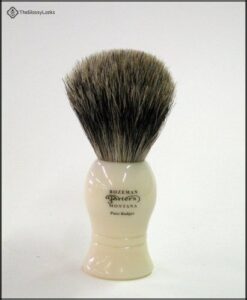
A good lather brush is the unsung hero of any straight razor routine. The Porter Badger Shaving Brush earns its place on the shelf.
Pure badger hair means real backbone — it loads soap fast, holds heat well, and lifts your beard before the blade even touches skin.
At just 2 ounces, it won’t tire your wrist mid-shave. The ergonomic handle grips well even with soapy hands.
For $35, it punches above its weight class.
| Best For | Shavers who want a classic brush that balances softness and stiffness without breaking the bank. |
|---|---|
| Dimensions | 6.7 x 3.4 x 3.1 inches |
| Weight | 2 ounces |
| Model | N/A |
| Rank | 423 in Shaving Brushes |
| Material | Plastic, Badger Hair |
| Suitable For | Applying shaving creams |
| Additional Features |
|
- Pure badger hair provides great lather and heat retention.
- Lightweight and easy to handle during shaving.
- Helps reduce ingrown hairs and razor burn.
- Plastic handle feels light and may show casting marks.
- Some users report bristle shedding over time.
- Smaller than expected for some, especially compared to pricier brushes.
6. Taylor Old Bond Street Sandalwood Shaving Cream
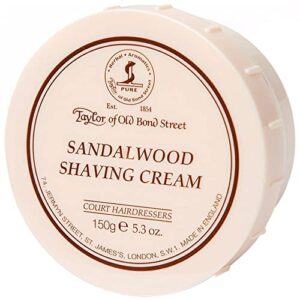
Taylor of Old Bond Street has been doing this since 1854 — and the Sandalwood Shaving Cream proves they haven’t lost a step. It builds a rich, dense lather fast, even with minimal product.
Users rate its slickness at 8.5 out of 10, and you’ll feel why on the first pass. Paraben‑free, gentle on sensitive skin, and that sandalwood scent?
Geranium, lavender, patchouli — it’s a proper fragrance, not a gimmick.
At around $21 for 150 g, it’s honest value.
| Best For | Men with sensitive skin who want a premium daily shaver with a classic, sophisticated scent. |
|---|---|
| Dimensions | 8 x 8 x 6 inches |
| Weight | 150g (5.3 oz) |
| Model | AD1564 |
| Rank | N/A |
| Material | N/A |
| Suitable For | Men with sensitive skin |
| Additional Features |
|
- Builds a rich, dense lather fast — even with a small amount of product
- Paraben-free and gentle enough for sensitive skin
- The sandalwood fragrance (geranium, lavender, patchouli) smells genuinely luxurious
- The scent can feel overpowering if you prefer something subtle
- Pricier than most drugstore shaving creams
- The bowl packaging isn’t the most durable option out there
7. Manscaped Plow 2.0 Safety Razor
Not ready for a straight razor yet?
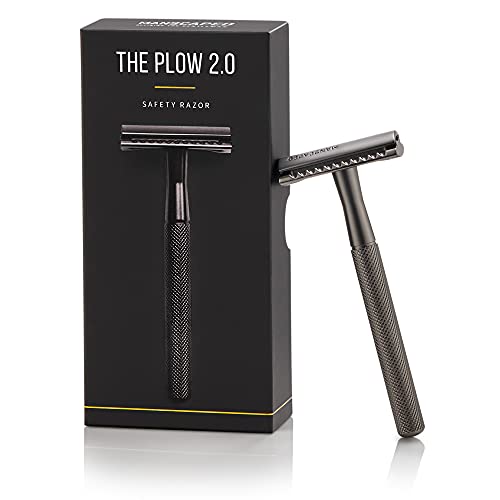
The Manscaped Plow 2.0 is a solid bridge.
It’s a double-edged safety razor built from brass and zinc alloy — heavier than it looks at 5 ounces, which is actually a good thing.
That weight does the work for you.
The gunmetal coating looks sharp, the cutting angle reduces burn, and it manages face, body, and sensitive areas without drama.
Around $35, it punches well above its price.
| Best For | Anyone wanting a clean, close shave without the learning curve of a straight razor — especially guys ready to ditch disposables for good. |
|---|---|
| Dimensions | 1.97 x 3.94 x 1.97 inches |
| Weight | 5 ounces |
| Model | MS-RZ2-01 |
| Rank | 5 in Men’s Safety Shaving Razors |
| Material | Brass handle, Zinc alloy head |
| Suitable For | Face, body, sensitive areas |
| Additional Features |
|
- The 5-oz brass handle gives you real control — the weight does most of the work so you’re not pressing down and causing irritation
- Works on face, body, and sensitive areas, so it’s genuinely an all-in-one tool
- Way better for the environment (and your wallet) than burning through disposable razors
- Swapping blades takes some patience — it’s a little fiddly and you need to be careful not to nick yourself in the process
- Not a great fit if you have moles or very sensitive skin, since the blade geometry doesn’t leave much room for error
- Blades need regular replacing, so factor that into the ongoing cost
8. Parker SRX Stainless Steel Straight Razor
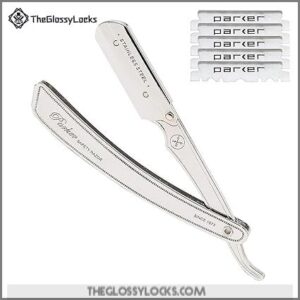
The Parker SRX is where tradition meets convenience. This stainless steel shavette weighs in at 2.3 ounces — balanced enough for full passes without your wrist complaining.
The clip-to-close blade holder snaps half DE blades in place with an audible click. No tools, no fuss.
It folds like a classic straight razor but takes disposable blades, so forget honing and stropping.
Barbers worldwide trust it for clean outlines and close shaves.
Around the ears or down the neck — it manages both without drama.
| Best For | Barbers and home shavers who want the classic straight-razor feel without the hassle of honing or stropping. |
|---|---|
| Dimensions | 4 x 1 x 1 inches |
| Weight | 2.29 ounces |
| Model | UK-VEN-PARKER-SRX |
| Rank | 17 in Men’s Straight Shaving Razors |
| Material | Stainless steel |
| Suitable For | Home and barbershop use |
| Additional Features |
|
- Full stainless steel build that’ll outlast cheap plastic alternatives
- Clip-close blade holder makes swapping half DE blades quick and easy
- Balanced weight gives you real control for outlines, necklines, and full shaves
- Takes some getting used to if you’ve only ever used lightweight cartridge razors
- Beginners risk razor burn or nicks until they dial in their technique
- The blade lock needs a gentle touch — force it and you’re asking for trouble
9. CeraVe Hydrating Facial Cleanser
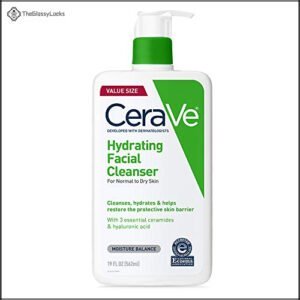
Your skin takes a beating after a straight razor shave. That’s where CeraVe Hydrating Facial Cleanser earns its spot in your kit.
It’s non-foaming, fragrance-free, and packed with hyaluronic acid, ceramides, and glycerin — exactly what irritated post-shave skin needs. No harsh stripping, no redness triggers. The MVE technology releases moisture for 24 hours, so your face stays comfortable all day.
At under $17, it’s cheap insurance against razor burn and dryness. Gentle enough for sensitive skin, strong enough to actually clean.
| Best For | Anyone with normal to dry or sensitive skin who wants a gentle, hydrating cleanser that soothes and protects after shaving. |
|---|---|
| Dimensions | 2.03 x 3.52 x 8.54 inches |
| Weight | 1.26 pounds |
| Model | B07RL88DD2 |
| Rank | 19 in Facial Cleansing Washes |
| Material | N/A |
| Suitable For | Normal to dry skin |
| Additional Features |
|
- Packed with hyaluronic acid, ceramides, and glycerin to keep skin moisturized and healthy all day
- Fragrance-free and non-irritating — a safe bet for sensitive or post-shave skin
- Versatile enough to use as a face wash, hand wash, or body wash for under $17
- Not a great fit for oily skin types
- The non-foaming texture means you might need to use more product to feel like it’s actually cleansing
- With dimensions and weight on the bulkier side, it’s not the most travel-friendly option
Troubleshooting Common Shaving Issues

Even the best barbers run into snags — that’s just part of the craft.
The good news is most shaving problems have simple fixes once you know what to look for.
Here’s what to do when things don’t go quite as planned.
Irritation and Razor Burn Solutions
Razor burn usually comes down to two culprits: bad blade angle and too many aggressive passes.
Dial in that 30-degree angle and let the blade do the work — no pressure needed.
A Cooling Aftershave Gel with Anti-Inflammatory Ingredients like aloe vera calms shaving irritation fast.
Follow up with a Post-Shave Moisturizer for Skin Barrier Repair.
It’s that simple.
Handling Nicks and Cuts
Even the best barbers nick themselves.
Bleeding control starts simple — cold water, firm pressure, thirty seconds.
Don’t keep lifting the tissue to check; you’ll just restart the clock.
For weepers, alum application works fast.
Glide a wet alum block over the cut.
Styptic use goes deeper — touch a wet styptic pencil directly to stubborn nicks.
Infection prevention means rinsing first, then aftershave.
Seek medical help if bleeding won’t stop after fifteen minutes.
Improving Shave Consistency
After patching up a nick, you want smoother shaves next time, right? Focus on Blade Angle Consistency—keep that 30-degree tilt steady.
Use light Pressure Control; let the razor do the work. Stretch skin just before each stroke (Skin Stretch Timing), and keep Lather Hydration up.
Stick to your shaving routine and steps, using short, even shaving strokes and passes.
Overcoming The Learning Curve
You’ve got your routine down, but straight razor shaving mastery takes patience. Think of it like learning guitar—awkward at first, then muscle memory kicks in. Try this:
- Stick to a Practice Schedule (daily or every other day).
- Focus on Angle Mastery and Skin Stretching.
- Track progress—note improvements, stropping frequency, and troubleshoot common shaving issues.
Frequently Asked Questions (FAQs)
Can shaving cause hyperpigmentation?
Yes, shaving can cause hyperpigmentation.
Micro‑abrasion inflammation triggers melanin overproduction, especially in Fitzpatrick risk skin types.
Ingrown hair pigment, shaving irritation, and shaving cuts all worsen dark spots without proper postshave care.
Is it better to shave with a straight razor?
Think of it like cooking from scratch — more effort, but the results beat anything from a box.
For many shavers, the closer cut, lower long-term cost, and satisfying ritual make it absolutely worth it.
Why did men stop using straight razors?
King Gillette’s 1904 patent changed everything. Safety razors were cheap, fast, and disposable — mass production and clever advertising campaigns made them irresistible. Industrialization sealed the deal.
Why fight a blade when convenience wins?
Do you go against the grain when shaving with a straight razor?
You can, but it depends on your skin. Against the grain delivers a glass-smooth finish, though ingrown hair prevention matters most. Start with the grain, master your angle, then decide.
How to use a straight razor for beginners?
Picture steam rising from a hot towel, your razor poised like a surgeon’s scalpel.
For beginners, focus on Blade Angle Practice, Grip Comfort Adjustments, Lather Consistency Tips, Strop Maintenance Routine, and Post-Shave Skin Care—safety first, always.
How do I choose a beginner-friendly razor?
Go with a 5/8 inch round point, half hollow grind in stainless steel. Dovo and Boker are solid starting brands. You’ll thank yourself later.
What’s the best way to sanitize razors?
Soak your blade in 70% isopropyl alcohol for 10 minutes. That kills 99% of bacteria. Barbicide Immersion works great too. Always follow with Dry Air Storage — never seal a damp razor.
Can straight razors be used on sensitive skin?
Yes, but it demands respect.
A sharp blade, light grip pressure control, and solid lather cushioning make all the difference.
Nail those, and sensitive skin can actually thrive with straight razor shaving.
How often should I replace a strop?
Swap your strop every four years if you’re stropping daily—especially when leather condition signs like deep cuts or stiff spots appear.
Thick beards and high daily pass counts wear it faster, so watch for blade tugging and rising replacement cost.
What’s the history behind straight razor shaving?
Straight razor shaving history runs deep — Ancient Blade Origins trace back to bronze-age Egypt. Sheffield Craftsmanship refined the folding blade around
a Golden Age Evolution followed. Safety Razor Impact nearly killed it, yet the Modern Revival Trend brought it roaring back.
Conclusion
Funny how the razor that looks most dangerous is actually the one that treats your skin best.
Shaving with a straight razor isn’t about being old-fashioned—it’s about doing things right.
Every pass you make builds muscle memory.
Every clean edge proves the technique works.
You started this to get a better shave.
Now you’ve got a skill most guys will never bother learning.
That’s not just a close shave.
That’s an edge.