This site is supported by our readers. We may earn a commission, at no cost to you, if you purchase through links.
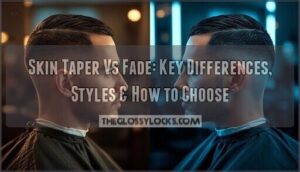
Your barber tilts the chair back, fires up the clippers, and asks the question that stumps half the guys in the shop: “You want a taper or a fade?” Most people nod confidently, then walk out wondering if they got what they actually wanted.
The confusion makes sense—both cuts shave your sides down close, but the skin taper fade differences change everything about your final look. A taper eases into your skin with a gentle slope that whispers restraint. A fade drops to bare skin, then climbs back up in sharp increments that announce you’re not playing it safe.
Knowing which cut matches your style, face shape, and maintenance tolerance puts you in control of the chair.
Table Of Contents
- Key Takeaways
- Skin Taper Vs Skin Fade: Key Differences
- How Each Cut is Achieved
- Appearance and Visual Impact
- Popular Skin Taper Styles
- Popular Skin Fade Styles
- Suitability for Different Face Shapes
- Maintenance and Upkeep Comparison
- Versatility With Hairstyles
- Choosing The Best Option for You
- Pros and Cons of Each Style
- Frequently Asked Questions (FAQs)
- Conclusion
Key Takeaways
- A taper keeps more hair length on the sides with a gentle, gradual blend, while a fade shaves down to bare skin and creates sharp, high-contrast lines that demand more attention.
- Your face shape determines which cut works best—oval faces handle both styles easily, square faces benefit from high fades that soften angles, and round faces need vertical height from fades to elongate the silhouette.
- Maintenance separates the two cuts: skin fades require barber visits every 2-3 weeks to keep sharp lines fresh, while tapers stretch 4-6 weeks between trims and demand less upkeep.
- The choice comes down to your lifestyle and style goals—tapers deliver professional polish with flexibility, while fades make a bold, modern statement that requires commitment to frequent touch-ups.
Skin Taper Vs Skin Fade: Key Differences
You’ve probably heard your barber throw around “taper” and “fade” like they’re interchangeable, but they’re not. These two cuts create completely different looks, and knowing the distinction helps you walk out with exactly what you want.
If you want something that splits the difference, a taper fade haircut keeps length up top while gradually shortening the sides and back.
Let’s break down what each style actually means and how they stack up against each other.
Definition of Skin Taper
A skin taper shaves hair down to the skin at your temples and nape, creating a clean line that blends into longer hair on top. Unlike a fade, the taper keeps more length at the bottom—think gradual shortening that stops before completely fading to skin across wide areas. You get crisp borders around your ears and neck while preserving scalp coverage.
| Feature | Skin Taper |
|---|---|
| Edge Treatment | Shaved to skin at hairline |
| Shift Width | Narrow, focused zone |
| Scalp Coverage | More hair preserved |
| Blend Style | Gradual, subtle |
| Overall Look | Clean but understated |
For more on the importance of, using specific terms like “skin taper” helps guarantee you get the style you want.
Definition of Skin Fade
A fade slices your sides down to bare skin, then blends upward in smooth increments until it meets your top length. Clippers with no guard create that exposed base, while progressively longer guards build the gradient.
The result? Sharp edges and clean lines that draw every eye. Whether you go low, mid, or high skin fade, you’re announcing confidence.
| Aspect | Skin Fade Details |
|---|---|
| Base Finish | Bare skin exposed |
| Blend Direction | Skin to longer hair |
| Visual Effect | High contrast, bold |
| Guard Progression | No guard → increasing lengths |
For more detailed information on the history and versatility of this cut, explore the origins of skin fades.
Primary Distinctions
Now that you know what each cut delivers, here’s how they actually differ when your barber gets to work.
Taper vs Fade comes down to contrast levels and edge definitions. A skin taper leaves more hair length on the sides with a gentle slope. A skin fade strips down to bare skin, creating bold contrast. Different fade types and taper styles suit different looks—choose based on the statement you want to make.
A skin taper keeps length and blends gently; a skin fade goes to bare skin for bold, high-contrast drama
| Feature | Skin Taper | Skin Fade |
|---|---|---|
| Hair Length | More length retained | Down to bare skin |
| Edge Definition | Soft, natural boundary | Sharp, high-contrast line |
| Contrast Level | Subtle gradient | Dramatic shift |
How Each Cut is Achieved
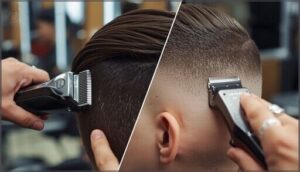
Getting the right cut isn’t magic—it’s about the barber’s technique and tools. A skin taper and a skin fade might look similar at first glance, but the way your barber creates each one is completely different.
Let’s break down the exact methods, equipment, and blending approaches that bring these two styles to life.
Barbering Techniques
Your barber’s hands are the real difference-makers here. For a skin taper, you’ll see smooth clipper-over-comb work that gradually lifts hair length from about 0.5 millimeters upward. Skin fades demand freehand shear techniques and zero-degree guardless passes right at skin level. Both barbering techniques rely on:
- Controlled blade angles for sharp fade designs
- Feathering passes that soften transitions
- Steady wrist rotation during tapered blending
- Regular blade sharpening for clean lines
Tools Used for Each Style
Your barber’s toolbox tells the whole story. For a skin taper, expect close trimming clippers with guards from 0 to 1, plus a straight razor for snapping crisp lines around your ears.
Skin fades demand adjustable clippers with fade blade sets, thinning shears for edge blending, and razors for sharp contrast.
Clipper maintenance and trimmer safety keep every haircut technique razor-sharp and consistent.
Transition and Blending Methods
Getting from long to short without a harsh line separates amateurs from pros. Your barber uses these blending techniques to nail smooth transitions and perfect hair gradients:
If patchy coverage or slow growth is holding you back, these beard growth and thickening tips can help you build a fuller foundation before shaping.
- Stacked clipper over comb builds smooth fade designs without visible steps
- Scissor over comb at the boundary cushions abrupt length changes
- Freehand shears soften harsh corners for natural texture blending
- Point cutting reduces bluntness between tapered sections
- Zero gap adjustments erase the last clipper lines
Mastering these haircut techniques transforms basic skin fade and taper cuts into signature work.
Appearance and Visual Impact
The real difference between a taper and a fade shows up in how the hair looks on your head. A taper gives you a smooth, gradual shift in length, while a fade creates a sharp, bold contrast that catches the eye.
Let’s break down exactly what sets these two styles apart visually.
Gradual Vs Sharp Transitions
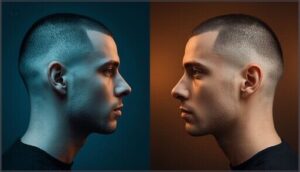
The difference between a skin fade and taper often comes down to shift sharpness. A taper delivers a gradual slope that reads natural and soft, blending hair over a wide area.
In contrast, a fade creates a sharp, dramatic break where length changes abruptly—perfect for emphasizing your facial structure. Your hair texture influences how visible each shift appears under different lighting.
Hair Length on Sides and Back
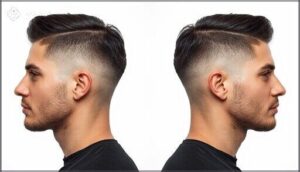
Side and back hair length defines your canvas. A taper leaves six to ten millimeters along your ears and nape, preserving visible texture and weight. A skin fade drops to zero at the bottom, erasing that baseline entirely.
- Taper: Keeps more hair on the sides, ideal for longer top styles
- Fade: Removes length down to bare skin for maximum contrast
- Measurement: Taper uses guards; fade techniques require blades or foil shavers
Natural Vs Dramatic Finish
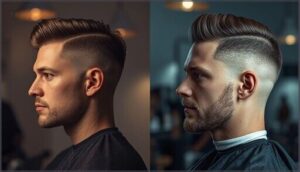
Think of your finish as the final signature on your cut. A natural finish softens transitions with gentle blending—perfect for taper styles that suit oval faces and casual settings.
A dramatic finish sharpens skin fade lines to bare skin, creating bold contrast that flatters square facial structure.
Your choice between tapered subtlety and fade precision shapes how your hair texture reads and your maintenance tips schedule.
Popular Skin Taper Styles
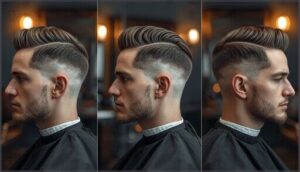
Skin tapers aren’t one-size-fits-all—there are several ways to wear this gradual fade depending on how subtle or noticeable you want the merge. Some guys keep it traditional with a clean taper all around, while others focus the blend just at the sideburns or neckline.
Here’s a breakdown of the most popular taper styles you’ll see in the chair.
Classic Skin Taper
A classic skin taper keeps your hair right at skin level around the back and sides while leaving just enough length to create that gradual taper barbers pride themselves on.
This tapered haircut emphasizes precision—you’ll notice a clean neckline that follows your natural hairline without going full-shaved.
The blending techniques deliver a polished, professional finish that works anywhere.
Sideburn and Neck Taper
Your barber zeroes in on key zones—where your sideburns frame your face and your neckline meets your collar. Tapered sideburns blend from temple down to mid-ear, creating a sleek hair shift that doesn’t scream for attention.
The neckline taper follows your natural curve, leaning gently toward your Adam’s apple for a balanced finish. Mastering these fade techniques transforms an ordinary skin taper into sharp, intentional style.
Modern Skin Taper Variations
Beyond traditional clean lines, today’s skin taper embraces textured crops and quiffs that boost volume on top while tapered layers flow smoothly toward bare skin.
Fade techniques like palm fading enhance hair blending across different skin texture types, letting you own a style evolution that’s equal parts sharp and lived-in.
Cross-grain clipping erases harsh seams, so your fade stays smooth through every angle.
Popular Skin Fade Styles
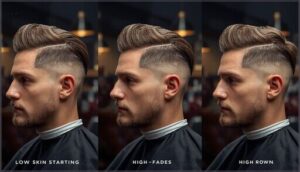
Skin fades give you three main height options, and each creates a completely different vibe. The height you choose determines where the fade starts and how much of your head shows that sharp, clean skin.
Let’s break down low, mid, and high skin fades so you know exactly what you’re asking for at the barbershop.
Low Skin Fade
A Low Skin Fade starts just above your ears, blending hair down to bare skin in the lower third of your head. This haircut delivers a clean, modern edge without going overboard—perfect if you want that sharp fade without the high-maintenance drama.
The gradual taper keeps things controlled while the shaved bottom creates serious contrast. Low fades work with nearly any hair texture, making them a flexible power move for your style arsenal.
Mid Skin Fade
Want balance between subtle and bold? A mid skin fade launches the shift around the midpoint between your temples and ears. This haircut blends longer top hair down to bare skin at the middle zone—right above your ears but below your temples.
You get modern edge without extremes, working with any hair texture. Pair it with textured styles or a side part, then keep that crisp shift sharp with trims every 2–4 weeks.
High Skin Fade
Looking for maximum drama? A high skin fade kicks off near your temples and parietal ridge, exposing serious scalp on the sides. This haircut delivers high contrast—longer textured top meeting bare skin for a bold, modern silhouette that emphasizes your jawline and head shape.
- Best for oval and square faces seeking pronounced definition
- Pairs with textured crops, slicked styles, or brushed-up looks
- Requires trims every 2–3 weeks to maintain crisp skin lines
- Regular scalp health routines prevent dryness on shaved areas
- Works with any hair texture when top length balances the fade
Suitability for Different Face Shapes
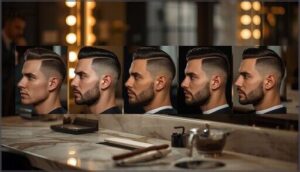
Your face shape is your blueprint—and it tells you exactly which cut will make you look sharper. A fade or taper that works with your natural structure creates balance and brings out your best features.
Here’s how to match your face shape with the right style.
Oval Faces
You’ve hit the genetic jackpot with an oval face—both skin tapers and skin fades work beautifully for you. Medium fades create natural balance by adding height at the crown without narrowing your silhouette. Side parts soften your symmetry while maintaining those proportional lines. Here’s your oval face styling playbook:
| Style Element | Skin Taper | Skin Fade |
|---|---|---|
| Crown Volume | Moderate height | Medium to high |
| Side Length | Slightly shorter than top | Clean shift to skin |
| Recommended Fade | Low to mid taper | Mid fade ideal |
| Balance Strategy | Gradual shifts | Sharp contrast works |
| Styling Flexibility | Professional polish | Bold modern edge |
Square Faces
Strong, angular features need softening moves—your square jaw styles benefit from high fades that slim the temples and lift attention upward. Facial symmetry improves when you contrast that chiseled jawline with rounded textures on top. Here’s your face shape analysis for commanding presence:
- Add medium length with gentle height to balance cheekbones
- Use tapers around ears to reduce width perception
- Choose side parts or swoops for diagonal hairline designs
- Soften angles with layered textures, not blunt cheekbone accent cuts
Round and Heart-Shaped Faces
Round faces demand vertical lines—skin fades with added crown height elongate your silhouette, while tapered sides slim cheek width. Heart-shaped faces need forehead reduction through soft fringe and volume at the back for jawline softening.
Your face shape analysis drives hairline adjustments: round cuts benefit from asymmetric texture, heart shapes from medium-length sides.
Cheekbone balancing happens when men’s hairstyles match your natural contours, not fight them.
Maintenance and Upkeep Comparison
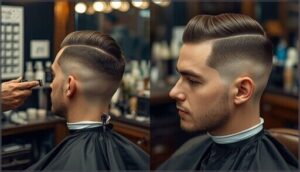
Once you’ve picked your style, the real commitment begins. Skin fades demand more attention at the barbershop than tapers, and each comes with its own upkeep routine.
Let’s break down what you’re signing up for with trimming schedules, product choices, and keeping your scalp healthy.
Frequency of Trims
Skin fades demand commitment—you’ll need to book barber visits every 2 to 3 weeks to maintain those sharp lines. Hair regrowth is noticeable fast at the skin line, especially if you have a coarse hair texture. On the other hand, skin tapers offer more flexibility, allowing 4 to 6 weeks between trims. This difference is crucial when balancing work, gym, and other life commitments. Choose your fade maintenance schedule based on how tight you want your edges to be.
| Style | Trim Frequency | Regrowth Visibility | Ideal For |
|---|---|---|---|
| Skin Fade | Every 2–3 weeks | High (stubble shows fast) | Bold, trendy looks |
| Skin Taper | Every 4–6 weeks | Moderate (blends longer) | Low-maintenance pros |
Styling Product Recommendations
Your hair texture dictates product hold—fine hair thrives with light-hold gels, while thick waves need pomades or waxes for fade maintenance. For skin tapers, try matte styling creams paired with a comb to define lines. Skin fades shine with salt spray or medium-hold products that won’t clump.
These haircare tips keep your style locked without the greasy buildup most guys hate.
| Product Type | Best For |
|---|---|
| Matte cream | Tapers, natural finish |
| Pomade | Fades, sleek control |
| Salt spray | Texture, volume boost |
| Light-hold gel | Fine hair, flexibility |
| Wax | Thick hair, strong grip |
Scalp Care Considerations
Beyond products, your scalp needs real attention—especially with a skin fade exposing more skin. Wash 2 to 3 times weekly to control sebum without stripping moisture balance. Use zinc-based shampoos for dandruff control and apply lightweight moisturizer to prevent dryness. Sun protection matters: wear a hat or scalp sunscreen. Fragrance-free grooming products reduce scalp sensitivity, keeping your haircut fresh and your skin comfortable.
| Scalp Care Need | Skin Fade | Taper |
|---|---|---|
| Wash frequency | 2-3x/week | 2x/week |
| Moisturizer | Essential | Optional |
| Sun protection | Critical | Moderate |
Versatility With Hairstyles
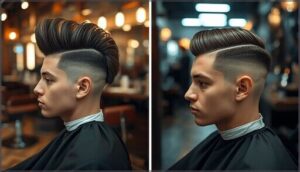
Both skin tapers and skin fades work with a surprising range of hairstyles, but they each shine in different ways. Your choice affects how adaptable your look can be—whether you’re rocking a pompadour, keeping it textured on top, or going for something sleek and professional.
Here’s what you need to know about pairing each cut with different hair lengths and styles.
Hair Lengths That Work Best
Your top length determines how much control you have over your final look. Both skin fade and taper haircuts work across different hair length options, but sweet spots exist. Here’s what performs best:
- Short tops (1–2 inches) suit high fades and create sharp contrast with minimal styling effort
- Medium lengths (2–3 inches) offer style versatility for mid fades and tapered cuts alike
- Textured crops (1.25–1.75 inches) define your haircut without adding bulk
- Longer tops (3+ inches) demand more maintenance schedules but optimize face shape considerations
- Fine hair needs 2–3 inches minimum while thick hair texture factors allow shorter options
Match your hair texture factors and lifestyle to your length choice.
Pairing With Textured or Slicked Styles
Once you’ve locked in your length, styling direction changes everything. Textured crops pair naturally with skin fade cuts—matte clays grip short hair without shine. Pompadour volume demands stronger hold pomades to stay slicked against taper sides. Your hair type dictates finish options and maintenance tips.
| Style Approach | Best Product Match |
|---|---|
| Textured Crop | Fiber clay or matte paste |
| Slicked Pompadour | Medium-hold pomade |
| Natural Waves | Sea salt spray |
Professional Vs Trendy Looks
Your styling direction shapes whether barbers read you as boardroom or street style. Corporate styles lean toward skin taper—clean lines without aggressive contrast fit formal settings. Fashion trends drive high skin fade popularity—dramatic transitions catch eyes at clubs and galleries. Your grooming tips should match where you spend time.
Here’s how mens hairstyles signal different worlds:
- Taper sides preserve conservative appeal for client-facing roles
- High fade creates bold contrast that amplifies fashion trends
- Hair texture dictates product choice—clay for matte, pomade for shine
- Style evolution happens faster with trendy cuts requiring frequent trims
- Barber consultation ensures your cut matches workplace expectations
Choosing The Best Option for You
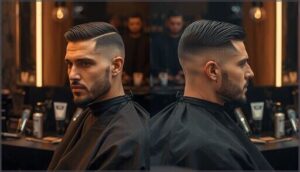
Picking between a skin taper and a skin fade isn’t just about what looks cool—it’s about what actually works for your life. Your daily routine, the vibe you’re going for, and even your workplace dress code all play a role in which cut you’ll rock best.
Here’s what to keep in mind before you sit down in that barber chair.
Lifestyle and Work Environment
Your daily grind shapes your cut more than you might think. Corporate dress codes favor the gradual shift of a skin taper—it projects polish without pushing boundaries. Creative industries give you runway for a bold skin fade.
Factor in climate impact too: humid weather demands frequent trims to keep sharp lines. Economic factors matter—maintenance every 2-4 weeks adds up, so budget accordingly for your grooming routine.
Personal Style Preferences
Your vision drives the chair—not trends, not influencers. Hair texture dictates whether a skin fade shows sharp or a taper flows smooth. Personal branding anchors your choice: bold cuts signal creative rebellion, while classic tapers project steady authority.
Consider these grooming habits that shape your hairstyle:
- Color preference impacts fade visibility and contrast
- Style evolution tracks your personal grooming journey
- Maintenance routines define your mens grooming commitment
- Texture demands specific blending techniques
Consulting With Your Barber
Your barber translates vision into reality through clear hair consultation and honest style guidance. Strong barber communication aligns client expectations with barbering realities—your hair texture, growth patterns, and lifestyle.
Bring reference photos, state exact guard numbers, and discuss maintenance schedules upfront. Quality barber services thrive on transparency.
Ask barber tips about blending depth, request test sections, and respect barber shop etiquette by staying still during clipper work.
Pros and Cons of Each Style

Every haircut comes with its own set of wins and trade-offs, and these two are no exception. Whether you’re leaning toward the clean-cut taper or the sharp skin fade, understanding what each style brings to the table helps you make the call with confidence.
Here’s what you gain—and what you give up—with each approach.
Benefits of Skin Taper
The skin taper gives you control without the commitment—keeping more hair length options while still delivering sharp tapered edges. This classic taper look works across different textures and face shapes, making it one of the most adaptable haircuts available.
- Maintains length near the crown for flexible styling
- Creates strong, defined edge lines around ears and temples
- Requires fewer trips to the barber than a fade
- Adapts seamlessly from boardroom to weekend
- Works with straight, wavy, or curly hair textures
Drawbacks of Skin Taper
While the tapered approach offers flexibility, it won’t deliver the sharp, dramatic contrast a fade brings. You’re trading boldness for subtlety—which means limited versatility if you want that modern, edgy look.
The gradual shift can read conservative, even boring, when you’re craving something that grabs focus.
Plus, if your hair thins unevenly, a skin taper might expose patchy growth patterns you’d rather keep hidden.
Benefits of Skin Fade
A sharp fade haircut delivers instant edge and modern attitude—it’s the cut that demands notice. Skin fades create bold hairline design, framing your face with precision that a taper can’t match.
They work beautifully as balding solutions, disguising thinning areas through strategic shaving techniques.
Plus, fade styling tips are endless: pair them with textured crops, pompadours, or slicked-back looks for versatility that matches your vibe.
Drawbacks of Skin Fade
Before you commit, know the trade-offs. Skin fades demand more from your schedule and your scalp:
- Fade maintenance requires trims every 2-3 weeks to keep those clean lines sharp
- Skin irritation and razor burns can flare up, especially if you’ve got skin sensitivity
- Hair regrowth shows fast, making fade haircuts look scruffy between appointments
- Haircut maintenance costs add up quickly with frequent barber visits
Frequently Asked Questions (FAQs)
What’s the difference between a taper fade and a skin fade?
Most people think a taper fade and skin fade are interchangeable—they’re not.
A taper fade gradually shortens hair while keeping some length at the bottom; a skin fade shaves down to bare scalp.
Are there different taper fades?
Yes, taper fades come in low, mid, and high variations based on where the blend starts. Low taper fade begins near the ear, mid taper fade sits higher, and high fade reaches the temple area.
Can skin fades work with thinning hair?
A skin fade can actually work in your favor with thinning hair. The uniform density along the sides creates contrast that makes your top look fuller, especially when fade techniques blend seamlessly into the scalp.
Does hair texture affect taper fade results?
Ironically, the texture everyone thinks makes fades easier—straight, fine hair—actually reveals every blending mistake.
Coarse, curly, or wavy hair naturally softens transitions, though it demands adjusted clipper guards and moisture-rich products for clean fade techniques and taper maintenance.
Are skin fades suitable for older men?
Absolutely. A well-executed skin fade complements aging hairlines and grey hair beautifully, giving mature styles a sharp, modern edge.
Senior grooming wins when you choose higher fade placements for easier elderly maintenance and clean mens grooming tips.
Can you combine taper and fade techniques?
You can merge both techniques to craft a unified look. Your barber tapers the upper section, then fades smoothly into skin below, creating a cohesive silhouette with refined edge refinement and flawless blending methods.
Conclusion
The irony? Most guys walk into the barbershop worried they’ll pick wrong, when both cuts deliver sharp results. The real mistake is leaving without understanding skin taper fade differences—because that confusion keeps you from owning your look.
A taper offers restraint and flexibility. A fade demands attention and upkeep.
Now you know exactly what to ask for, how it’ll look, and whether it fits your routine. Next chair appointment, you’re running the show.