This site is supported by our readers. We may earn a commission, at no cost to you, if you purchase through links.

A study published in the Journal of Evolutionary Biology found that men with well-groomed beards were rated 21% more trustworthy than their unkempt counterparts. That number shouldn’t surprise anyone who’s spent time behind a barber chair — a sharp beard speaks before you do. It tells the room you pay attention to details, and that carries weight whether you’re closing a deal or walking into a first interview.
Most men grow a beard without a plan, then wonder why it looks rough instead of refined. Getting the steps to a clean, professional-looking beard right comes down to a consistent routine, the right tools, and knowing what actually works.
Table Of Contents
- Key Takeaways
- Why a Clean, Professional Beard Matters
- Choosing The Right Beard Style
- Essential Beard Care and Hygiene Steps
- Trimming and Shaping for a Polished Look
- Daily Beard Maintenance Tips
- Frequently Asked Questions (FAQs)
- How to maintain a professional looking beard?
- What is the 3 month beard rule?
- What causes seborrheic dermatitis in beards?
- What is the 4 week beard rule?
- Can diet affect beard health and growth?
- How does stress impact facial hair quality?
- What ingredients should beard products avoid?
- How do you handle beard hair going grey?
- Can exercise influence beard thickness over time?
- Conclusion
Key Takeaways
- A well-groomed beard signals trustworthiness and discipline before you say a word — men rated 21% more trustworthy simply by keeping it clean and shaped.
- Your face shape, industry, and workplace culture should drive every style decision — there’s no universal beard that works for every room.
- Daily basics — washing two to three times a week, applying beard oil, and combing with intention — are what separate a sharp beard from a sloppy one.
- Neckline and cheek line placement are the real difference-makers; get those two lines right, and the whole beard pulls together.
Why a Clean, Professional Beard Matters
A well-kept beard says a lot before you open your mouth. It signals that you take pride in how you present yourself — and people notice.
From subtle cultural cues to grooming rituals that reinforce confidence, beard grooming tips for professional settings show just how much the details matter in shaping how others see you.
Here’s why that matters more than you might think.
Impact on Confidence and Professionalism
Beard psychology is real — how you carry your beard shapes how the world reads you. A well-kept professional beard isn’t just aesthetics; it’s a trust signal that commands respect before you speak.
Here’s what consistent beard grooming actually does:
- Builds daily confidence boosters through routine and self-discipline
- Strengthens your professional aura in client-facing moments
- Shifts social perception — groomed men are rated 21% more trustworthy
- Reinforces a professional appearance that reflects men’s grooming standards
By practicing good beard care habits, individuals can greatly boost their self-image and confidence.
First Impressions in The Workplace
Your professional appearance speaks before you do. In job interviews, neat facial hair — think a well-maintained corporate beard — has helped 63% of men land their current roles.
Workplace grooming policies increasingly favor beard maintenance over bans, but facial hair bias is real. Corporate culture still judges fast. Strong professional grooming signals competence, discipline, and respect — all before the handshake.
Professional grooming signals competence and respect before the handshake — even when bias still judges first
Understanding the impact of corporate beard styles is essential for making a good impression.
Beard Styles That Look Professional
Style choices shape how others read you — long before you speak. Corporate grooming isn’t about playing it safe; it’s about playing it smart. The right facial hair tells a story of control and intention.
Pairing sharp grooming with the best haircuts for oval-faced men turns two intentional choices into one cohesive, commanding image.
- Corporate beard (10–15 mm) — clean lines, sharp edges
- Designer stubble — defined neckline, intentional beard symmetry
- Executive full beards — structured, brushed, never wild
Professional trimming turns facial hair into authority.
Choosing The Right Beard Style

The right beard style isn’t one-size-fits-all — it depends on your face, field, and how you want to show up. Getting this choice right is what separates a beard that works for you from one that works against you.
Here’s what to think about before you commit to a style.
Matching Beard Styles to Face Shapes
Your face shape is the blueprint — everything else follows from it. Face Shape Analysis is the first step in any serious Beard Grooming plan.
Square jaws need softer Beard Style choices to ease sharp angles. Round faces need a Van Dyke for Jawline Enhancement and length. Oval faces enjoy real freedom.
Match your Facial Hair to your structure, and Facial Harmony takes care of itself.
Considering Workplace and Industry Norms
Your industry sets the rules — your beard just has to follow them. Corporate Policies in finance and client-facing roles demand sharp edges and conservative lengths. Creative fields give you more room.
Either way, Workplace Grooming Policies reward intentionality. Know your Workplace Culture before you grow. A well-shaped Professional Beard that respects Industry Standards and Grooming Expectations will always work in your favor.
Popular Professional Beard Styles
Not every beard works in every room. Match your Beard Length and Beard Style to where you sit.
A Corporate Beard — kept between 5 and 15 millimeters — is your safest bet for client-facing roles. The Short Boxed Beard adds jaw definition with clean, sharp lines. Stubble works when it’s deliberate and even. Executive Full Beards project authority but demand weekly trimming.
Essential Beard Care and Hygiene Steps
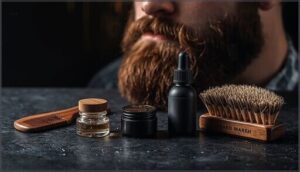
A great beard style means nothing if the hair underneath is dry, dirty, or rough to the touch. Think of your hygiene routine as the foundation everything else is built on.
Here’s what you need to do to keep your beard clean, soft, and sharp every day.
Washing Your Beard Properly
Think of your beard as skin — it needs consistent care, not just a quick rinse. Two to three times a week, use a dedicated beard wash with lukewarm water.
Work it down to the skin using circular motions with your fingertips. That’s where sweat and debris hide.
Proper beard hygiene keeps your grooming sharp and your beard health solid.
Using Beard Conditioner and Oils
Washing strips the hair — now you need to put something back. After cleansing, work a beard conditioner through from root to tip. It softens coarse hair and cuts down on flyaways.
Then follow with 2–4 drops of beard oil — argan or jojoba works best. These beard care products lock in hydration, feed each strand, and keep your beard grooming routine sharp.
Comb and Brush Techniques for Neatness
Your comb and brush are the real architects of a sharp beard. Master these beard grooming techniques and the shape practically builds itself.
- Beard Detangling first — Use a wide-tooth beard comb on slightly damp hair, starting at the tips for smooth hair alignment.
- Comb strokes upward, then down — Lift for volume, finish downward for natural beard styling.
- Beard brush last — A boar bristle beard brush smooths texture and locks in shape.
Trimming and Shaping for a Polished Look
A clean beard doesn’t happen by accident — it’s shaped with intention. Trimming and defining your lines is where a good beard becomes a great one. Here’s exactly what you need to focus on.
Defining The Neckline and Cheek Line

Your neckline placement makes or breaks the whole look. Place two fingers above your Adam’s apple — that’s your line. Follow a soft U-curve from ear to ear, never straight across the jaw.
For cheek line style, trace your natural growth and clean above it. Respecting your facial contours keeps beard symmetry sharp and your beard grooming on point.
Tools for Precision Trimming

Once your lines are set, the right tools keep them sharp. A quality beard trimmer with guard systems in the 0.5–10 mm range manages most trimming techniques cleanly. Use a fine-tooth comb to lift hairs before each pass.
For beard edging, precision razors trace tight curves where trimmers can’t reach. Sharp scissors catch any strays a trimmer guard misses.
Maintaining Symmetry and Length
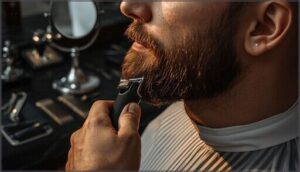
Sharp tools mean nothing without a consistent plan. Beard trimming becomes second nature once you lock in these beard grooming tips:
- Note your guard settings for cheeks, jaw, and chin — repeat them every trim.
- Use two mirrors for symmetry checks from four angles.
- Match your trimming a beard schedule to length — every 7–10 days for short facial hair.
- Step down guards gradually during length planning to avoid cutting too short.
- Comb before every pass for true, even beard maintenance.
Own the process.
Daily Beard Maintenance Tips

A great trim means nothing if you let the beard go between sessions. Daily habits are what separate a sharp beard from a sloppy one.
Here’s what you need to stay consistent.
Managing Beard Itch and Dryness
Itch is often the first thing that makes men give up on their beard — don’t let it stop you. Most itchy beard causes trace back to dry skin losing its natural moisture barrier.
Apply beard oil daily — jojoba or argan work best — as both deliver serious beard oil benefits without clogging pores. Pair that with skin hydration tips like drinking more water and avoiding hot showers for real dry skin solutions.
Preventing Common Beard Problems
Beyond itch relief, solid beard care means staying ahead of bigger issues. Beard dandruff? Wash regularly and use a moisturizing beard oil. Ingrown hairs? Shave with the grain and let it grow out. Fighting beard acne? Switch to non-comedogenic oils like argan or tea tree. Trim split ends every few weeks. These grooming tips keep your beard health on point.
When to See a Professional Barber
Even the most disciplined home routine hits a wall eventually. That’s your cue for professional trims and real grooming guidance.
Book a barber when you notice:
- Uneven growth or lost definition after 2–4 weeks
- Mustache creeping past the upper lip
- Asymmetry that home trimming can’t fix
Expert barbering and beard restoration reset your baseline — so daily maintenance actually works.
Frequently Asked Questions (FAQs)
How to maintain a professional looking beard?
Your professional beard starts with three habits: wash it, oil it, and trim it. Nail those, and your facial hair commands respect before you say a word.
What is the 3 month beard rule?
The 3 month beard rule means letting your beard grow untouched for 90 days. It reveals your natural beard growth patterns, thickness, and coverage — giving you enough length to choose a style that actually works.
What causes seborrheic dermatitis in beards?
Malassezia yeast overgrowth, excess sebum production, a weakened skin barrier, and a reactive immune response all trigger it. Poor beard hygiene and heavy beard oils make flare-ups worse.
What is the 4 week beard rule?
The 4 week beard rule means letting your facial hair grow untouched for 28 to 30 days. It reveals your true beard growth patterns before you make any trimming decisions.
Can diet affect beard health and growth?
Yes, diet absolutely affects beard health and growth. Protein intake, healthy fats, and vitamin supplements all fuel keratin production.
Strong beard nutrition means stronger, fuller hair — a simple dietary balance makes a real difference.
How does stress impact facial hair quality?
Stress wrecks hormone balance fast. Elevated cortisol suppresses testosterone, weakening beard health and disrupting normal hair growth patterns. Poor sleep compounds the damage.
Manage stress, and your facial hair care routine actually works.
What ingredients should beard products avoid?
Skip products with sulfates, parabens, synthetic fragrances, and mineral oils. These harsh chemicals dry out your beard and irritate skin. Choose sulfate free, gentle formulas built on natural oils instead.
How do you handle beard hair going grey?
Grey beard care starts with accepting that coarser texture needs extra moisture. Use hydrating oils like argan or jojoba daily.
For grey blending tips, try semi-permanent beard dye — it softens the contrast naturally.
Can exercise influence beard thickness over time?
Exercise won’t reshape your genetics, but a smart routine does move the needle.
Better hormone balance, increased blood flow, and stress reduction all quietly work in your favor — thickening what’s already there.
Conclusion
Most men treat their beard like a houseplant — water it occasionally, hope for the best, then act shocked when it looks wild.
Following the steps to a clean, professional-looking beard isn’t complicated, but it does require consistency. The tools exist. The techniques are proven. What separates a sharp beard from a forgettable one is whether you actually show up for it daily.
Your face is the first thing people see — make sure it’s saying the right thing.
- https://www.beardcoalition.com/
- https://beardcoalition.com/blogs/news/the-impact-of-beard-care-on-confidence-and-self-image
- https://mybeardbattle.com/blogs/news/beards-in-the-workplace-why-acceptance-matters-in-professional-careers
- https://www.forhims.co.uk/blog/facial-hair-for-job-interview-survey
- https://bigfootgrooming.com/blogs/news/the-psychological-and-social-implications-of-wearing-a-beard