This site is supported by our readers. We may earn a commission, at no cost to you, if you purchase through links. This content is for general informational and educational purposes only and is not a substitute for professional medical, dermatological, or nutritional advice.
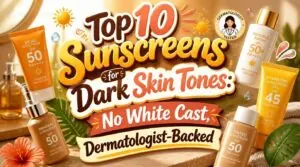
Sunscreen doesn’t matter much for darker skin"—patients tell me this all the time, usually right before I show them a photo of their own melasma creeping back after a summer without SPF. Melanin gives you some natural defense, sure, but it won’t stop UV rays from triggering dark spots, uneven tone, or that dreaded ashy cast so many tinted formulas leave behind.
The right sunscreen for dark skin tones protects without the chalky residue or greasy sheen that sends people running from SPF altogether. Below, you’ll find ten dermatologist-approved picks that actually disappear into your skin, plus what separates a great formula from a frustrating one.
Table Of Contents
- Key Takeaways
- Top 10 Sunscreens for Dark Skin
- 1. EltaMD UV Clear Tinted Sunscreen
- 2. Supergoop Protec Tint SPF 50
- 3. Black Girl Sunscreen Matte Gel
- 4. La Roche Posay Tinted Mineral Sunscreen
- 5. CoTZ Tinted Mineral Facial Sunscreen
- 6. Beauty of Joseon Tinted Sunscreen
- 7. Black Girl Sunscreen SPF 30 Lotion
- 8. Australian Gold SPF 30 Spray
- 9. La Roche Posay UV Clear Sunscreen
- 10. Good Molecules Sheer Mineral Sunscreen
- How We Chose These Sunscreens
- Why Dark Skin Needs Sunscreen
- Best Ingredients for Melanin-Rich Skin
- Mineral Vs Chemical Sunscreen
- Tinted Sunscreens for Dark Skin
- Choose by Skin Type
- SPF Level and Water Resistance
- Apply Sunscreen Without Ashiness
- Frequently Asked Questions (FAQs)
- Which sunscreen is best for dark skin tone?
- What is the best sunscreen for dark skin black people?
- Should black people use SPF 30 or 50?
- What sunscreen is good for African skin?
- What sunscreen is best for dark skin?
- Is SPF 30 or 50 better for dark skin?
- Do darker skin tones still need sunscreen?
- What color is best for dark skin tone?
- Does sunscreen prevent vitamin D absorption?
- Can dark skin get sun damage?
- Conclusion
Key Takeaways
- Melanin only provides natural protection equivalent to roughly SPF 13, so darker skin tones still need daily broad-spectrum sunscreen to prevent hyperpigmentation, melasma, premature aging, and skin cancer.
- Tinted mineral sunscreens with iron oxides are essential for melanin-rich skin because they block visible light (a melasma trigger) while blending into deeper undertones without leaving a white or ashy cast.
- Beneficial ingredients like niacinamide, vitamin C and E, hyaluronic acid, and ceramides work alongside SPF to fade discoloration, hydrate skin, and strengthen the skin barrier.
- Proper application—using enough product, reapplying every two hours or after swimming/sweating, and layering correctly with skincare—matters just as much as choosing the right formula for effective, ash-free protection.
Top 10 Sunscreens for Dark Skin
Finding a sunscreen that actually works with your skin tone shouldn’t feel like a guessing game. In my practice, I hear the same frustrations again and again: white cast, greasy finish, or formulas that just don’t deliver real protection.
That’s why I put together these sun protection tips for every skin tone to help you finally find a formula that blends in and holds up.
Here are ten options worth adding to your routine, each one chosen for how well it performs on melanin-rich skin.
1. EltaMD UV Clear Tinted Sunscreen
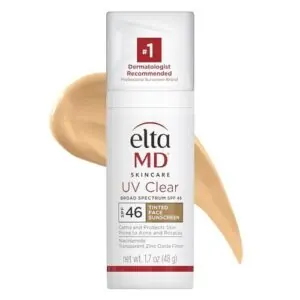
If your patients ask me one sunscreen to trust, it’s this one. 9% zinc oxide delivers broad-spectrum protection while niacinamide calms post-acne marks and rosacea flare-ups.
The sheer tint blends into deeper tones without that dreaded gray cast, and hyaluronic acid keeps things comfortable, not greasy.
It’s fragrance-free, noncomedogenic, and genuinely lightweight enough for daily wear under makeup — a real workhorse for sensitive, acne-prone skin.
| Best For | This sunscreen is best for those with acne-prone, oily, sensitive, or rosacea-prone skin who want daily facial sun protection with added skin-tone benefits. |
|---|---|
| SPF Rating | 46 |
| Broad Spectrum | Yes |
| White Cast | None |
| Fragrance Free | Yes |
| Product Weight | 1.7 oz |
| Skin Tone Focus | Discoloration Care |
| Additional Features |
|
- Broad spectrum SPF 46 protection with transparent zinc oxide as the active ingredient
- Oil-free, non-comedogenic, fragrance-free, and paraben-free formula suitable for sensitive skin
- Contains niacinamide to help improve skin tone and reduce discoloration or blemishes
- Tinted formula may alter the appearance of your natural skin tone
- Formulated specifically for facial use only, not for broader body application
- Designed mainly for normal to sensitive skin, which may limit suitability for other skin types
2. Supergoop Protec Tint SPF 50
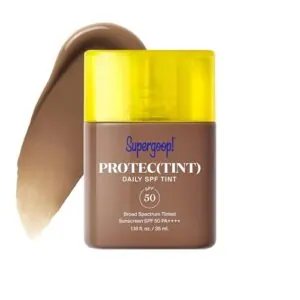
Want something you can wear like foundation? This one’s it. 83% skincare ingredients mean you’re getting real treatment while you protect, with Hyaluronic Acid-Infused Clay balancing moisture and oil so shine doesn’t creep back by noon.
Ectoin adds a layer most sunscreens skip, shielding skin from blue light and pollution, not just sun. The buildable coverage evens tone without masking texture, and that satin finish holds up in humidity without sliding off your face.
| Best For | Anyone who wants foundation-like coverage with serious SPF 50 protection and skincare benefits built right in, especially those dealing with oily or combination skin. |
|---|---|
| SPF Rating | 50 |
| Broad Spectrum | Yes |
| White Cast | None |
| Fragrance Free | Unspecified |
| Product Weight | 2.08 oz |
| Skin Tone Focus | Even Tone |
| Additional Features |
|
- Delivers a natural, buildable finish with zero white cast, even on deeper skin tones
- Packed with 83% skincare ingredients, including Hyaluronic Acid-Infused Clay to keep oil and moisture in check
- Guards against blue light and pollution thanks to Ectoin, going beyond typical sun protection
- Needs reapplication every two hours, plus immediately after swimming or sweating
- Requires a 30-second wait after application before it’s fully set
- With 14 shades to choose from, finding your exact match may take some trial and error
3. Black Girl Sunscreen Matte Gel
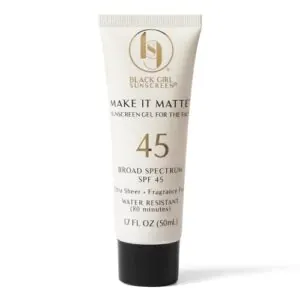
Prefer something oil-free with zero shine by lunchtime? This gel base dries down velvety matte, blending clear with no white cast on deeper tones. Aloe and squalane keep skin hydrated while shea butter smooths things over without feeling heavy.
Bonus: it doubles as a primer, so foundation glides on evenly after. Reef-friendly and free of parabens, fragrance, oxybenzone, and octinoxate, it’s water-resistant for 80 minutes, making it solid for workouts or humid days outside.
| Best For | This sunscreen is best for people with melanin-rich skin tones who want a lightweight, matte-finish SPF that doubles as a makeup primer. |
|---|---|
| SPF Rating | 45 |
| Broad Spectrum | Yes |
| White Cast | None |
| Fragrance Free | Yes |
| Product Weight | 1.7 oz |
| Skin Tone Focus | Melanin-Rich |
| Additional Features |
|
- Blends on clear with no white cast, thanks to its lightweight gel formula
- Infused with aloe and shea butter for added hydration without heaviness
- Reef-friendly and free from parabens, fragrance, oxybenzone, and octinoxate
- Needs to be reapplied every 2 hours to stay effective
- Only water-resistant for 80 minutes before reapplication is needed
- Must be applied a full 15 minutes before sun exposure to work properly
4. La Roche Posay Tinted Mineral Sunscreen
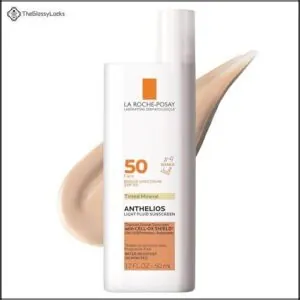
If gel formulas aren’t your thing, this one leans purely mineral: 100% titanium dioxide, SPF 50, no chemical filters at all.
The universal tint uses iron oxides to melt into deeper undertones without that chalky pull-back some mineral sunscreens are known for. It’s fragrance-free, lightweight, and gentle enough for sensitive or post-procedure skin. Water resistance runs 40 minutes, so plan reapplication around pool days or sweaty afternoons accordingly.
| Best For | People with sensitive or post-procedure skin who want a lightweight, fragrance-free mineral sunscreen with a natural tint. |
|---|---|
| SPF Rating | 50 |
| Broad Spectrum | Yes |
| White Cast | Minimal |
| Fragrance Free | Yes |
| Product Weight | 1.8 oz |
| Skin Tone Focus | Sensitive Skin |
| Additional Features |
|
- 100% mineral formula with SPF 50 broad-spectrum protection and no chemical filters
- Fragrance-free, paraben-free, and gentle enough for sensitive skin
- Tinted formula blends smoothly and doubles as a base for makeup
- Mineral formula may rub or sweat off more easily than chemical sunscreens
- Only water-resistant for 40 minutes, requiring frequent reapplication
- May leave a slight cast or matte finish that isn’t ideal for all skin types
5. CoTZ Tinted Mineral Facial Sunscreen
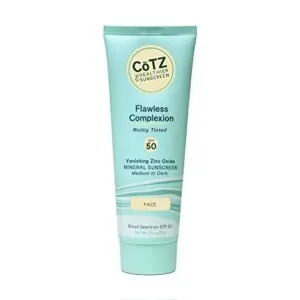
CoTZ takes a straightforward approach: zinc oxide at roughly 20%, delivering SPF 50 with purely physical protection.
No chemical filters means it’s reflecting UV rays rather than absorbing them, which matters if your skin reacts to typical sunscreen ingredients.
The tint leans on iron oxides for a semi-sheer finish that lets your natural texture show through while evening out tone. It’s oil-free, fragrance-free, and non-comedogenic, so breakouts shouldn’t be a worry here.
| Best For | People with medium to dark skin tones who want sensitive-skin-friendly, reef-safe sun protection with a natural, lightweight tinted finish. |
|---|---|
| SPF Rating | 50 |
| Broad Spectrum | Yes |
| White Cast | None |
| Fragrance Free | Yes |
| Product Weight | 2.5 oz |
| Skin Tone Focus | Medium to Dark |
| Additional Features |
|
- Broad-spectrum SPF 50 protection using gentle, non-irritating mineral ingredients (zinc oxide and titanium dioxide)
- Sheer, iron oxide-based tint blurs imperfections while letting natural skin texture show through
- Matte, oil-free, fragrance-free, and non-comedogenic formula that’s unlikely to cause breakouts
- Water resistance tops out at 40 minutes, so reapplication is needed during swimming or heavy sweating
- Formulated specifically for medium to dark skin tones, making it less suited to lighter complexions
- Contains coated nano-sized particles, which may be a concern for those who prefer to avoid nanoparticle ingredients
6. Beauty of Joseon Tinted Sunscreen
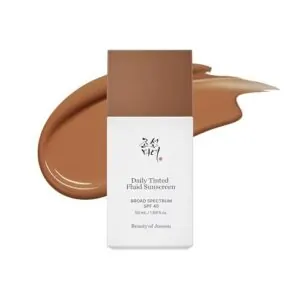
Fermentation meets sun protection here, which sounds unusual until you try it. Zinc oxide provides UVA/UVB defense while fermented rice and soybean extracts support your skin barrier and lock in hydration.
The tint oxidizes slightly after application, adapting to your undertone rather than fighting it. Reviewers in the MP200–MP220 range praise this blending quality.
It’s lightweight, buildable, and layers well under makeup, giving deeper skin tones a breathable glow without that chalky aftermath so many mineral formulas leave behind.
| Best For | This tinted sunscreen is best for people with deeper skin tones who want lightweight daily SPF protection with a natural, breathable finish instead of a chalky cast. |
|---|---|
| SPF Rating | 40 |
| Broad Spectrum | Yes |
| White Cast | None |
| Fragrance Free | Unspecified |
| Product Weight | 2.47 oz |
| Skin Tone Focus | Multi-Shade Match |
| Additional Features |
|
- SPF 40 broad spectrum protection with fermented rice and soybean extracts that support the skin barrier and lock in hydration
- Lightweight, buildable formula that layers well under makeup without leaving a white cast
- Tint oxidizes slightly after application to adapt to your undertone for a natural-looking finish
- Sheer tint doesn’t offer full coverage for discoloration or blemishes
- Shade matching can be tricky since undertone adaptation varies by skin type
- Oxidizing tint means the color you apply isn’t exactly the color you end up with
7. Black Girl Sunscreen SPF 30 Lotion
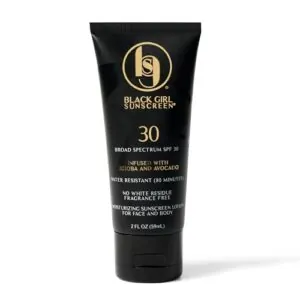
A brand built specifically for melanin-rich skin, and it shows. This lightweight lotion blends jojoba oil and avocado extract into an SPF 30 base that dries clear, no chalky residue left behind.
It’s fragrance-free and non-comedogenic, so acne-prone or reactive skin tolerates it well. The formula works for face and body, making your routine simpler.
If you’re still narrowing down which option suits your skin best, this roundup of daily wear sunscreen lotions breaks down formulas for every skin type and routine.
Applying it in thin, even layers lets each one settle before you add sunscreen, a trick worth knowing if you’re comparing sunscreen lotions for oily skin that won’t pill or clog pores.
Plus, it absorbs quickly without leaving a white cast or greasy feel, making it a smart pick if you’re achieving smooth legs with sensitive skin alongside a fuss-free facial routine.
Reapply every two hours outdoors, or after 80 minutes of swimming or sweating, same as most water-resistant formulas on this list.
| Best For | People with melanin-rich, acne-prone, or reactive skin who want daily sun protection without a white cast or added fragrance. |
|---|---|
| SPF Rating | 30 |
| Broad Spectrum | Yes |
| White Cast | None |
| Fragrance Free | Yes |
| Product Weight | 2 fl oz |
| Skin Tone Focus | Melanin-Rich |
| Additional Features |
|
- Leaves no white residue, even on deeper skin tones
- Lightweight, moisturizing formula with jojoba oil and avocado extract
- Reef-friendly and free from parabens, oxybenzone, and octinoxate
- Only SPF 30, which may not suit those needing higher protection
- Needs reapplication every 2 hours, or after 80 minutes of swimming or sweating
- Should be applied 15 minutes before sun exposure for full effectiveness
8. Australian Gold SPF 30 Spray
Sprays are a love-it-or-hate-it category, and this hybrid spray gel aims to win over skeptics. It combines octocrylene and avobenzone with glycerin and aloe for a texture that feels more gel than mist, rubbing in without streaks.
Water resistance holds up to 80 minutes, solid for pool days or a sweaty hike. Just remember: spray directly onto skin, then massage in, rather than misting your face straight on.
| Best For | Active, outdoor-loving people who want lightweight, non-greasy sun protection that holds up through sweat and water. |
|---|---|
| SPF Rating | 30 |
| Broad Spectrum | Yes |
| White Cast | None |
| Fragrance Free | Unspecified |
| Product Weight | 6 oz |
| Skin Tone Focus | All-Around Hydration |
| Additional Features |
|
- Nutrient-rich formula with Kakadu Plum, Tea Tree Oil, and Cocoa Seed Butter moisturizes while it protects
- Free from oxybenzone, PABA, phthalates, and gluten, plus vegan and cruelty-free certified
- Water resistant for up to 80 minutes, ideal for swimming or sweaty workouts
- Only SPF 30, so those needing higher protection may want to look elsewhere
- Spray application requires careful, even coverage to avoid missed spots
- Needs frequent reapplication to stay effective throughout the day
9. La Roche Posay UV Clear Sunscreen
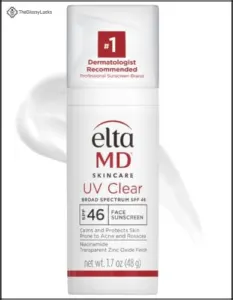
Skin that’s calm and clear doesn’t happen by accident, and this formula treats acne-prone, sensitive skin as the priority.
Azelaic acid does double duty here, easing redness while fading post-breakout marks over time. Cell-Ox Shield technology pairs photostable UVA/UVB filters with antioxidants to fend off free radicals.
The gel-like texture dries matte, no greasy sheen lingering by lunchtime. It layers beautifully under makeup, too, which your reactive skin will genuinely thank you for.
| Best For | This sunscreen is best for people with normal, oily, acne-prone, or sensitive skin who want daily sun protection without a greasy feel or white cast. |
|---|---|
| SPF Rating | 46 |
| Broad Spectrum | Yes |
| White Cast | None |
| Fragrance Free | Yes |
| Product Weight | 1.7 oz |
| Skin Tone Focus | Discoloration Care |
| Additional Features |
|
- Broad spectrum SPF 46 protection from transparent zinc oxide that won’t leave a white residue
- Niacinamide helps even out skin tone and fade discoloration while protecting skin
- Oil-free, fragrance-free, and paraben-free formula that’s gentle enough for sensitive and acne-prone skin
- Available in tinted and untinted versions, so you’ll need to pick the right one for your skin
- Small 1.7 ounce size may mean more frequent repurchasing for daily use
- Formula details in the source material were inconsistent, so it’s worth double-checking the exact ingredient list before buying
10. Good Molecules Sheer Mineral Sunscreen
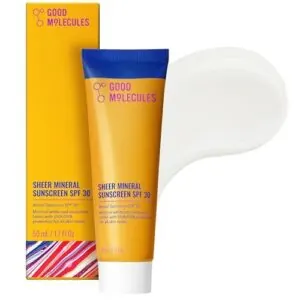
Sometimes the simplest formula wins. This 100% zinc oxide sunscreen skips chemical filters entirely, relying on micronized particles for a spreadable, non-chalky finish.
Fragrance-free and noncomedogenic, it’s gentle enough for reactive or acne-prone skin, drying down to a velvety, natural-looking base rather than a flat cast.
It layers well under makeup, offers light water resistance for everyday activity, and comes in a travel-friendly tube—budget-friendly proof that mineral sunscreen doesn’t have to mean chalky.
| Best For | Anyone with sensitive, reactive, or acne-prone skin who wants a budget-friendly, fragrance-free mineral sunscreen that layers smoothly under makeup. |
|---|---|
| SPF Rating | 30 |
| Broad Spectrum | Yes |
| White Cast | Minimal |
| Fragrance Free | Unspecified |
| Product Weight | 1.7 oz |
| Skin Tone Focus | All Skin Tones |
| Additional Features |
|
- Fragrance-free and noncomedogenic, making it gentle enough for reactive or breakout-prone skin
- Micronized zinc oxide particles create a spreadable, natural-looking finish instead of a chalky cast
- Travel-friendly tube with light water resistance, great for everyday wear
- Relies solely on zinc oxide, which some users find less cosmetically elegant than chemical-filter blends
- Only offers light water resistance, so it may not hold up well during heavy sweating or swimming
- As a mineral-only formula, it can still leave a subtle white cast on deeper skin tones
How We Chose These Sunscreens
Not every "dermatologist-approved" sunscreen actually earns that label, so I built my own checklist first. Every product on this list had to prove itself on formula, finish, and everyday wearability, not just marketing claims. Here’s exactly what I looked for before any sunscreen made the cut.
No White Cast
Nobody wants to look ghostly by noon. Every pick here uses micronized minerals or iron oxide tints designed for melanin-rich skin, so you get zero white residue, not a chalky finish.
Undertone matching and lightweight texture keep things blended, not ashy.
If a sunscreen leaves streaks at your jawline, it didn’t make our list.
Broad-spectrum Protection
Beauty is one thing; biology is another. Every sunscreen here passed critical wavelength testing at 370 nanometers or higher, confirming real UVA coverage, not just a UVB claim on the label.
It is important to understand broad-spectrum sunscreen labels to make sure you get complete protection.
- Blocks UVA (aging, DNA damage) and UVB (burns)
- Filter teamwork across 290–400nm
- Prevents cumulative skin damage
- Meets FDA broad-spectrum threshold
- Verified, not assumed, protection
Dark-skin-friendly Finish
Wavelength coverage tells you a sunscreen works, but finish tells you whether you’ll actually wear it. That’s why we tested each formula for undertone alignment and pigment dispersion, making sure iron oxides melt into deeper complexions instead of sitting on top.
No chalky residue, no gray cast, no "why do I look like a ghost" moments. We also checked texture minimization and finish stability, so wear stays smooth from morning to evening.
Skin Type Compatibility
A great finish means nothing if your skin rebels against it. So we matched each formula to real skin concerns: oily, dry, sensitive, acne-prone, combination.
We prioritized:
- Sebum regulation for oily zones
- Barrier hydration for dry patches
- Low pore clogging, noncomedogenic risk
- Minimal irritation on sensitive, reactive skin
Texture preferences varied, so tinted mineral sunscreens without white cast stayed our baseline across all types.
Daily Wear Comfort
Rarely do formulas earn a spot on our list without surviving actual daily wear, not just a swatch test. We checked texture weight, moisture wicking, and sweat resistance for real comfort.
| Factor | Why It Matters | What We Looked For |
|---|---|---|
| Residue transfer | Avoids masks/phones | Nongreasy formula |
| Sweat resistance | Sticks through heat | All-day stability |
| Texture weight | Prevents heaviness | Fast-absorbing tinted mineral sunscreens |
Why Dark Skin Needs Sunscreen

I have enough melanin, I don’t need sunscreen" is one of the most persistent myths in skincare, and it’s simply not true. Your skin faces real risks from UV exposure, no matter how deep your tone is. Let’s break down exactly why sunscreen belongs in your daily routine.
Melanin and UV Damage
Melanin isn’t a built-in sunscreen — it’s more like a partial shield with a temper. It absorbs UV and offers some radical scavenging, but it can also oxidize and trigger its own oxidative stress.
UVB still causes UV-induced DNA lesions in keratinocytes; deeper UVA adds melanin photosensitization risks. That’s why melanin-rich skin still needs broad-spectrum protection, not just confidence in your tone.
Hyperpigmentation Risk
Ever notice how a single breakout can leave a mark that outlasts the pimple itself? That’s post-acne inflammation at work, triggering UV-induced melanocytes to overproduce pigment.
Darker skin faces this more intensely, especially when:
- Hormonal pigment triggers flare
- Medication sensitivity heightens UV response
- Visible light exposure adds fuel
Daily sunscreen for darker skin tones, ideally tinted, helps prevent this hyperpigmentation cycle.
Melasma Prevention
Melasma doesn’t just react to sun, it reacts to light in general, including your phone screen. That’s why visible light shielding matters as much as SPF.
Tinted sunscreen with iron oxides blocks this trigger. Pair it with peak hour avoidance, a wide-brimmed hat, and gentle, fragrance-free skincare, and you’re covering every angle without irritating an already sensitive barrier.
Skin Cancer Awareness
Black patients are often diagnosed later, and that delay costs lives. Skin cancer isn’t a "pale skin problem" — it’s a detection problem.
Skin cancer isn’t a pale-skin problem, it’s a detection problem, and for Black patients, late diagnosis costs lives
Know your ABCDEs: asymmetry, border irregularity, color variation, diameter, evolving changes. Check monthly, including:
- Soles and between toes
- Palms
- Nail beds
- Scalp
- Less visible folds
Watch for non-melanoma signs too — crusty bumps, sores that won’t heal. Early evaluation saves skin, and lives.
Premature Aging Protection
Here’s the part nobody tells you: about 90% of visible aging comes from sun exposure, not birthdays. That’s photoaging prevention simply put.
UV rays break down collagen synthesis and speed up glycation, stiffening skin’s support structure. Daily SPF pairs antioxidant defense with cellular repair, protecting melanated skin care goals long-term. Consistent sunscreens for dark skin genuinely slow fine lines, sagging, and uneven texture.
Best Ingredients for Melanin-Rich Skin
Not all sunscreen ingredients are created equal, especially for melanin-rich skin. Some do the heavy lifting on protection, while others quietly support your skin’s texture and tone underneath. Here are the five worth knowing before you shop.
Iron Oxides
Iron oxides deserve real credit here: these reddish-brown mineral pigments block visible light, the wavelengths that trigger melasma in deeper skin. Unlike plain zinc, iron oxides tint sunscreen to match your undertone, preventing that dreaded white cast. Their color stability holds up beautifully under sun exposure, and with a long safety track record, they’re a trusted staple in tinted sunscreen for people of color.
Niacinamide
Niacinamide works quietly behind the scenes, and it’s a favorite in sunscreens for dark skin for good reason.
- Blocks melanosome transfer inhibition, easing dark spots
- Boosts ceramide synthesis for a stronger barrier
- Regulates sebum production without stripping skin
- Helps cellular energy in stressed skin cells
- Fades post-inflammatory hyperpigmentation over time
Gentle, multi-purpose, and easy on melanin-rich skin.
Vitamin C and E
Pair niacinamide with topical antioxidants like vitamin C and E, and you’ve got a powerful combination. Vitamin C fuels collagen synthesis support, while E guards against lipid peroxidation protection in cell membranes.
| Vitamin | Main Role | Skin Benefit |
|---|---|---|
| C | Antioxidant recycling | Brightens tone |
| E | Membrane defense | Calms irritation |
Together, they tackle hyperpigmentation and support cellular oxidative defense—smart additions to sunscreens for dark skin.
Hyaluronic Acid
Hyaluronic acid works quietly, but its impact on hydration is anything but subtle. It can hold up to 1,000 times its weight in water, plumping melanin-rich skin without ever tipping into that dreaded white cast.
- Locks in moisture beneath tinted sunscreen layers
- Helps create smoother, more resilient texture over time
- Suits nearly every darker skin tone, dry or combination
Safety and purity standards keep this ingredient gentle for daily use.
Ceramides
Think of ceramides as the mortar holding your skin’s bricks together. These lipids rebuild barrier lipid structure, sealing moisture into melanin-rich skin without any white cast residue.
With over eight ceramide species working together, they strengthen lipid matrix integrity and support genuine skin barrier repair—especially helpful if your darker skin tone tends toward dryness after daily sunscreen wear.
Mineral Vs Chemical Sunscreen
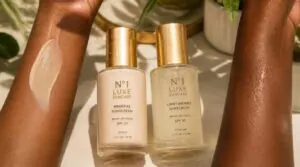
Mineral or chemical? It’s the question every dark-skin sunscreen shopper eventually asks, and honestly, the answer depends on your skin. Let’s break down what each type does well, so you can figure out which one deserves a spot in your routine.
Mineral Sunscreen Pros
What if your sunscreen started working the second it touched your skin? That’s mineral formulas for you. Zinc oxide and titanium dioxide sit on the surface, offering immediate protection with no waiting period.
| Benefit | Why It Matters |
|---|---|
| Photostable filters | Resist breakdown in sunlight |
| Non-comedogenic | Won’t clog pores |
| Reduced irritation | Gentle on sensitive skin |
| Reef-safe | Environmentally friendly |
| Broad-spectrum coverage | Blocks UVA and UVB |
Chemical Sunscreen Pros
Slip these on and forget they’re there—that’s the appeal of chemical filters. They absorb UV rays and convert them to heat, disappearing into melanin-rich skin with zero white cast.
Lightweight texture means fast absorption speed and an invisible finish under makeup.
| Benefit | Why It Matters |
|---|---|
| Photostability | Reliable UVA/UVB defense |
| Easy layering | Fits skincare routines |
Great sunscreen for medium dark skin tones craving comfort.
Hybrid Sunscreen Options
Why choose sides when your sunscreen can play both? Hybrid formulas pair zinc oxide with avobenzone or octocrylene, giving you the best of both worlds without the chalky trade-off.
The mix boosts photostability and texture blending, so melanin-rich skin gets broad-spectrum protection minus white cast.
| Filter Type | Role |
|---|---|
| Mineral | Reflects UV, adds stability |
| Chemical | Absorbs rays, smooths texture |
Solid pick for sunscreen for medium dark skin tones.
Sensitive Skin Concerns
Redness after cleansing? That’s your barrier waving a red flag. Chemical filters can sting compromised skin, so mineral sunscreens often feel gentler on melanin-rich skin prone to irritation.
| Trigger | Reaction | Fix |
|---|---|---|
| Alcohol | Burning | Avoid |
| Fragrance | Hives | Patch test |
| Cold air | Flaking | Ceramides |
Patch testing new sunscreen for medium dark skin tones prevents surprises before your whole face pays the price.
White Cast Differences
Ever wonder why one zinc formula ghosts your face while another melts right in? It comes down to particle size and concentration—nano particles sink in better, micronized versions offer more opacity.
| Formula Type | Cast Result |
|---|---|
| Nano zinc | Minimal |
| Micronized | Slight gray |
| Untinted, high % | Noticeable |
| Tinted mineral sunscreen | Nearly invisible |
| Chemical | None |
Emulsifiers affect absorption too—key for melanin-rich skin seeking a true match.
Tinted Sunscreens for Dark Skin
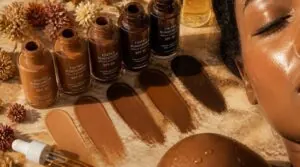
Tint isn’t just cosmetic, it’s what keeps your sunscreen from turning you gray. The right formula uses iron oxides and clever pigments to actually match deeper undertones instead of fighting them. Here’s what that looks like in practice, five things worth understanding before you pick your next bottle.
Why Tint Matters
Why does plain white sunscreen so often let melanin-rich skin down? Because untinted formulas can’t account for your natural undertone, leaving that dreaded white cast.
Tinted mineral sunscreen fixes this by blending pigment right into the formula.
- Matches deeper undertones
- Prevents ashy residue
- Layers well under makeup
- Offers tinted coverage assessment
- Reduces visible hyperpigmentation
Iron Oxide Benefits
Iron oxides do more than tint. They block visible light, including blue light from screens and sun, which helps prevent melasma flare-ups in melanin-rich skin.
That means better pigment stability, less hyperpigmentation, and a more uniform tone over time. So tinted mineral sunscreen isn’t just cosmetic — it’s genuine protection against the white cast and light-triggered dark spots.
Matching Deeper Undertones
Getting light protection right means nothing if the shade fights your skin. Undertone depth alignment matters more than SPF number here.
Try this:
- Test in natural light, not bathroom bulbs
- Note warm vs cool leanings
- Check jawline blending
- Look for iron oxides
- Use color correcting primers if needed
Richer pigment formula options serve medium-dark skin without turning gray or chalky.
Preventing Ashy Residue
Ash doesn’t come from the tint alone, it comes from the whole routine around it. Prep matters: exfoliate weekly, moisturize first, then layer sunscreen thinly rather than one thick swipe.
Choose gel or serum textures over pasty creams, and pick a mineral sunscreen with warm iron oxides matched to your depth. Set with translucent powder sparingly, only where needed, so melanin-rich skin keeps its natural glow instead of a ghostly cast.
Makeup-friendly Finishes
Two words settle most makeup debates for melanin-rich skin: matte vs radiant.
If you’re layering foundation, a matte or satin finish grips better underneath.
No pilling, no slip.
Prefer sheer coverage? Choose a dewy, radiant tinted sunblock and skip powder entirely.
Either way, sunscreen for medium-dark skin should feel like skin, not spackle, letting your complexion enhancement look natural, never heavy.
Choose by Skin Type

Not all skin behaves the same way, even within the same skin tone. What works for a shine-prone T-zone can feel all wrong on cheeks that run dry and tight. Here’s how to match your sunscreen to what your skin actually needs.
Whatever your skin type, always check that broad-spectrum label, and if the numbers on the bottle still confuse you, this breakdown of what different SPF levels actually mean makes choosing the right formula a lot less guesswork.
Oily Skin
Shine by 2 p.m.? Blame androgens driving sebum into overdrive, worse with humidity.
Choose an oil-free, noncomedogenic mineral sunscreen — it won’t feed pore-clogging or rebound oiliness.
Oddly, oily skin often hides dehydration underneath, so pick lightweight formulas with glycerin, never harsh strippers.
This keeps sunscreen for medium dark skin shine-controlled, no white cast, all day.
Acne-prone Skin
Acne-prone skin needs sunscreen that fights shine without feeding breakouts. Look for noncomedogenic, oil-free mineral sunscreen — it won’t clog pores or worsen comedone formation.
Skip heavy, pore-clogging ingredients that irritate inflammatory lesions.
Since post-breakout marks linger longer on deeper tones, gentle, non-irritating sunscreen for medium dark skin helps prevent new dark spots while your skin heals.
Dry Skin
Tight, flaky skin needs sunscreen that hydrates while it protects—not one that strips moisture further.
Look for a mineral sunscreen blended with humectants like hyaluronic acid alongside occlusives that seal in water, addressing both transepidermal water loss and lipid barrier repair.
For melanin-rich skin battling dryness, a nourishing sunscreen for medium dark skin skips the white cast while restoring natural moisturizing factors your skin’s lost.
Sensitive Skin
Redness that flares with fragrance or weather isn’t just bad luck—it’s your barrier waving a white flag.
Stick with mineral sunscreen (zinc oxide) to dodge irritant triggers, especially if rosacea’s part of your picture. Look for soothing ingredients like niacinamide and panthenol.
Good news: sunscreen for medium dark skin now comes with no white cast, so calming your skin doesn’t mean looking ashy. Patch testing new formulas? Always smart.
Combination Skin
Shiny by noon, dry by dinner? That’s combination skin for you—a shine-and-tight tug-of-war across your face.
Sebum production triggers uneven texture: oily T-zone, drier cheeks. Balancing facial zones means choosing sunscreen for medium dark skin that won’t clog pores or leave white cast.
Try a noncomedogenic mineral sunscreen, lightweight on melanin-rich skin, adjusting seasonally as hormonal oil fluctuations and seasonal skin shifts change your balance.
SPF Level and Water Resistance

Not all sunscreens hold up the same way once you factor in sweat, sun strength, and time spent outside. The number on the bottle and the water-resistance label actually tell you a lot about how well a formula will protect you. Here’s what those numbers mean and how to read them before your next reapplication.
SPF 30 Basics
SPF 30 blocks about 97% of UVB rays — solid daily protection for melanin-rich skin. Broad-spectrum labeling matters just as much, since it covers UVA too.
Apply a nickel-sized amount to your face, and reapply every two hours. Water resistance usually lasts 40–80 minutes.
Going higher than SPF 30 brings diminishing returns, but SPF 30 or higher remains your baseline for real protection, no white cast required.
SPF 50 Benefits
Bumping up to SPF 50 pushes UVB defense to roughly 98%, a small jump on paper but meaningful over a lifetime of cumulative damage reduction.
For sunscreen for medium dark skin, that extra margin helps with collagen preservation, photoaging prevention, and pigment uniformity, especially if melasma or dark spots are a concern.
Broad-spectrum SPF 50 with no white cast gives melanin-rich skin real protection without compromise.
Broad-spectrum Labels
That SPF 50 boost only counts if the label also says broad spectrum. This means passing FDA critical wavelength testing at 370 nanometers, confirming real UVA/UVB protection. Outside the US, look for:
- UVA circle symbol
- PA+ ratings
- Minimum SPF pairing requirements
For melanin-rich skin, broad spectrum protection prevents the pigment flare-ups that unbalanced UV protection invites.
Sweat-resistant Formulas
Sweat-resistant formulas rely on polymer film technology, acrylates and VP/Eicosene copolymers, to keep SPF intact during workouts. Anhydrous gels and silicone carriers like dimethicone resist thinning when you sweat. Microencapsulation shields UV filters from degradation, too.
Brands test this with sweat simulation before slapping "water-resistant" on the label. For melanin-rich skin, that durability means fewer touch-ups and steadier protection.
Swimming Reapplication Rules
Rarely does "water-resistant" mean waterproof, so check your label: most formulas protect for 40 to 80 minutes before UV radiation exposure sneaks back in.
Reapply the moment you’re out of the pool, especially after towel drying, which physically wipes product away. Sweat dilution works the same way.
Don’t skip ears, neck, or scalp edges—and refresh over makeup if you’re layering.
Apply Sunscreen Without Ashiness
Buying the right sunscreen is only half the job, how you put it on matters just as much. Even the best formula can look chalky or patchy if applied the wrong way. Here’s exactly how to get smooth, ash-free coverage every time.
Application technique matters even more when you’re working outdoors, so check out these best sunscreen lotions for outdoor workers that stay put through sweat for up to 80 minutes.
Correct Face Amount
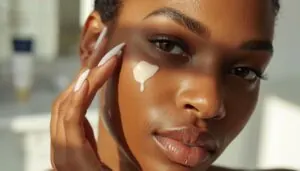
How much sunscreen are you actually using? Most people apply far too little.
For your face, aim for a nickel-sized amount, or three lines of product across your fingers, blended in fully. Stick formulas need at least three passes over each area.
Skimping causes uneven coverage, streaking, and yes, that dreaded ashy look on melanin-rich skin. More product, applied properly, means real broad-spectrum protection.
Layering With Skincare
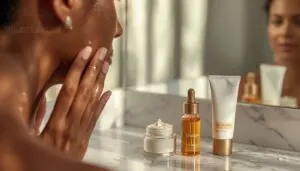
Layering sunscreen wrong can undo your whole routine. Follow texture layering rules: thinnest to thickest, always.
- Watery serums (vitamin C, niacinamide)
- Hydrating moisturizer to seal
- Sunscreen as your final step
Wait a minute between layers to prevent pilling. This sequence helps hyperpigmentation treatment and keeps melanin-rich skin protected without greasy buildup or uneven skin tone.
Reapplying Over Makeup

Blot before you mist — excess oil is enemy number one for pilling. A gentle mist held sideways, 6–8 inches away, refreshes sunscreen without smearing foundation. Prefer powder SPF for on-the-go touchups; it blots shine while protecting melanin-rich skin. Let everything settle 30 seconds before touching your face, preserving texture and that perfect finish underneath.
Stick Sunscreen Tips

One swipe won’t cut it. Use the four-pass technique with overlapping strokes across cheeks, forehead, nose, and chin, then rub in gently.
Around eyes, go light — stick beats spray here, since sprays risk irritation near your eyes and nose.
SPF sticks are perfect for midday makeup touchups on medium-dark skin, delivering real protection without disturbing your look or leaving a white cast.
Common Application Mistakes

Even the best sunscreen for medium dark skin fails if you skimp on it. Not using enough product is mistake number one — a nickel-sized dab, not a pea.
Skipping reapplication invites sun damage; UV rays don’t pause for your schedule. Rubbing instead of patting can streak tint unevenly on melanin-rich skin.
Read labels carefully — misjudging SPF strength is its own quiet mistake.
Frequently Asked Questions (FAQs)
Which sunscreen is best for dark skin tone?
For melanin-rich skin, EltaMD UV Clear Broad Spectrum SPF 46 stands out: lightweight, niacinamide-infused, and truly no white cast. It suits oily, acne-prone, or medium-dark skin beautifully, blending pigmentation care with daily comfort—proof that great sun protection doesn’t mean sacrificing texture or tone.
What is the best sunscreen for dark skin black people?
Picture rich mahogany skin glowing without a trace of chalky film — that’s the goal. Black Girl Sunscreen and EltaMD UV Clear Tinted both deliver broad-spectrum protection with no white cast, blending seamlessly into melanin-rich skin while controlling oil naturally.
Should black people use SPF 30 or 50?
Either works, honestly. Broad-spectrum SPF 30 covers daily errands just fine, while SPF 50 earns its keep during long beach days or active melasma flare-ups. What matters more than the number is applying enough and reapplying often.
What sunscreen is good for African skin?
Look for tinted mineral formulas with iron oxides and zinc oxide, like EltaMD UV Clear or Black Girl Sunscreen. They protect melanin-rich skin, address visible light exposure, and melt in perfectly for no white cast on medium to deep undertones.
What sunscreen is best for dark skin?
A tinted mineral or hybrid formula with iron oxides works best, blocking visible light that worsens pigmentation disorders. Look for broad-spectrum SPF 30+, a clear finish with no white cast, and lightweight coverage for medium dark to deep undertones daily.
Is SPF 30 or 50 better for dark skin?
Honestly, the UVB protection gap between SPF 30 and 50 is small (97% vs 98%). For daily wear, SPF 30 suffices; SPF 50 helps during intense sun. Prioritize tinted formulas with broad-spectrum coverage over chasing higher SPF numbers alone.
Do darker skin tones still need sunscreen?
Yes. Melanin offers only about SPF 13, nowhere near enough against UV rays and visible light. Melanin-rich skin still faces hyperpigmentation, melasma, premature aging, and skin cancer risk—so daily broad-spectrum protection remains essential, not optional.
What color is best for dark skin tone?
Think of your wardrobe as a jewelry box: jewel tones, warm terracottas, and gold metallics make melanin-rich skin glow, while pale pastels wash it out. For sunscreen, the same logic applies—no white cast formulas with iron oxides keep you glowing, not ashy.
Does sunscreen prevent vitamin D absorption?
Not entirely. Real-world sunscreen use rarely blocks all UVB synthesis pathways, so vitamin D production continues despite lab studies showing inhibition.
Still, if you’re worried about deficiency risks, pairing daily protection with dietary supplements keeps melanin-rich skin both protected and nourished.
Can dark skin get sun damage?
Absolutely, melanin-rich skin can suffer hidden sun damage — UV rays still cause subsurface cellular injury and melanin DNA damage without obvious sunburn signs.
That’s why sunscreen for medium dark skin tones matters: protecting melanocytes prevents unseen inflammation and long-term skin harm.
Conclusion
I’ve watched a thousand tubes of sunscreen die untouched in bathroom drawers, abandoned after one chalky application. That’s the real tragedy, not the sun itself.
Your skin deserves better than that trade-off. The best sunscreen for dark skin tones isn’t the one with the highest SPF number, it’s the one you’ll actually reach for tomorrow.
Find your match, apply it daily, and let melanin do its job alongside real protection. Healthy skin isn’t luck. It’s habit.