This site is supported by our readers. We may earn a commission, at no cost to you, if you purchase through links. This content is for general informational and educational purposes only and is not a substitute for professional medical, dermatological, or nutritional advice.
Losing 100 strands of hair daily sits within normal range—but when clumps gather on your pillow or clog the shower drain every morning, something deeper is usually going on.
Nutrient gaps, hormonal shifts, chronic stress, and even rapid weight loss can quietly push your follicles into overdrive shedding.
The frustrating part? Most people reach for a shampoo or a scalp serum when the real fix starts from within.
The right supplements to reduce hair fall work at the follicle level—delivering the building blocks your strands actually need to stay rooted, grow stronger, and keep cycling the way they should.
Table Of Contents
- Key Takeaways
- Top 10 Supplements to Reduce Hair Fall
- 1. Viviscal Women Hair Growth Supplements
- 2. Nutrafol Women Hair Growth Supplement
- 3. MaryRuths Liquid Multivitamin Hair Growth
- 4. Moon Juice SuperHair Hair Growth Vitamins
- 5. OLLY Heavenly Hair Gummies
- 6. Keranique Hair Scalp Biotin Supplements
- 7. Women’s Hair Growth Peptides Follicle Fortifying
- 8. Nutrafol Postpartum Hair Growth Supplement
- 9. Natures Bounty Biotin Softgels
- 10. Hairfinity Vegan Biotin Hair Vitamins
- Common Causes of Hair Fall
- Key Nutrients for Hair Growth
- Supplement Safety and Dosage
- Choosing The Right Hair Supplement
- Frequently Asked Questions (FAQs)
- What vitamins are good for hair loss?
- Can vitamins help reduce hair fall?
- Can hair growth supplements help thinning hair?
- Should you take supplements for hair loss?
- What vitamins are good for hair growth?
- What are the best supplements for hair fall?
- What is the best supplement to take for hair loss?
- Which vitamin is best to stop hair fall?
- What vitamin am I lacking if my hair is shedding?
- What am I lacking if my hair is falling out?
- Conclusion
Key Takeaways
- Hair supplements only work when they fix a real deficiency — get bloodwork done first, so you’re not guessing, because the right nutrient for the wrong problem won’t help your follicles at all.
- Biotin, iron, zinc, and vitamin D are the core nutrients behind most shedding issues, and correcting even one deficiency can meaningfully slow hair loss within 90 to 180 days of consistent daily use.
- The format you choose — liquid, capsule, or gummy — affects how fast your body absorbs the nutrients, so match it to your stomach sensitivity and lifestyle rather than just grabbing whatever’s cheapest.
- If you’re postpartum or have a seafood allergy, formula specifics matter a lot — marine-based supplements like Viviscal and Nutrafol contain shellfish-derived ingredients that can trigger reactions, and postpartum shedding needs adaptogen-rich, breastfeeding-safe formulas designed for that hormonal shift.
Top 10 Supplements to Reduce Hair Fall
Not all hair supplements are created equal, and the options worth your money are the ones backed by real ingredients and real results. These ten picks cover a range of formulas, from marine-based tablets to liquid vitamins and peptide capsules, so there’s likely something here that fits your needs.
If you’re also exploring color options alongside your supplement routine, natural hair dye solutions for grey hair can complement the overall health-focused approach these formulas support.
Let’s walk through each one.
1. Viviscal Women Hair Growth Supplements
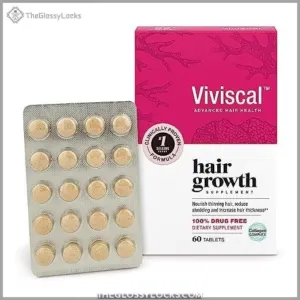
Viviscal has been around for over 25 years, and the research behind it’s solid.
Each serving delivers 450 mg of its proprietary AminoMar Marine Complex — a blend of collagen type II and oyster extract — alongside 10 mg of iron, 11 mg of zinc, and 120 mcg of biotin.
You take two tablets daily, and most women start seeing fuller strands around the three‑month mark.
At $39.99 for a 30‑day supply, it’s a straightforward option worth trying.
| Best For | Women dealing with thinning hair from stress, hormonal changes, or aging who want a clinically backed, drug-free supplement to support fuller, healthier strands. |
|---|---|
| Price | $39.99 |
| Supply Duration | 30 days |
| Key Ingredient | Marine Collagen & Biotin |
| Daily Dosage | 2 tablets |
| Results Timeline | 3+ months |
| Target Audience | Women (all ages) |
| Additional Features |
|
- Over 25 years of research behind it, with a well-studied marine complex that actually targets follicle health
- Covers multiple nutrient gaps at once — collagen, biotin, zinc, iron, and vitamin C in one daily dose
- Works for all hair types, including color-treated and fine hair, so it’s pretty versatile
- You’ll need at least three months before you notice real results — patience is a must
- At $39.99 a month, it’s pricier than your average hair vitamin off the drugstore shelf
- Some users report side effects like acne, stomach upset, or allergic reactions, so it doesn’t sit well with everyone
2. Nutrafol Women Hair Growth Supplement
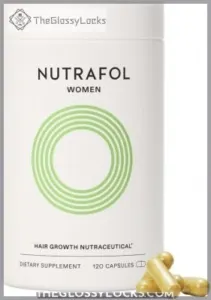
If you want to go deeper, Nutrafol Women is worth a serious look.
It packs 21 vitamins, botanicals, and minerals into four daily capsules — including ashwagandha for stress, saw palmetto to block DHT, marine collagen for hair structure, and curcumin to calm scalp inflammation.
In clinical studies, 90% of women reported overall hair improvement after six months.
Results usually show up around the three-to-six-month mark.
At $88 per bottle, it’s a premium commitment, but the formula is genuinely thorough.
| Best For | Women ages 18–44 dealing with stress-related shedding, postpartum hair loss, or early-stage thinning who want a well-rounded supplement backed by clinical research. |
|---|---|
| Price | $88.00 |
| Supply Duration | 30 days |
| Key Ingredient | Ashwagandha & Marine Collagen |
| Daily Dosage | 4 capsules |
| Results Timeline | 3–6 months |
| Target Audience | Women 18–44 |
| Additional Features |
|
- Tackles six root causes of hair loss with 21 ingredients, including ashwagandha, marine collagen, and saw palmetto
- Strong clinical backing — 90% of women saw overall improvement and 84% noticed less shedding after six months
- Dermatologist-recommended and can be paired with other treatments like minoxidil for better results
- At $88 a month, the cost adds up fast — especially since you need at least 3–6 months to see results
- Some women report side effects like jitteriness or palpitations, particularly those with thyroid sensitivities
- Only studied in women ages 18–44, so effectiveness outside that group is unclear
3. MaryRuths Liquid Multivitamin Hair Growth
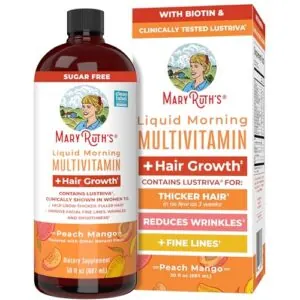
If capsules feel like too much, MaryRuth’s Liquid Morning Multivitamin + Hair Growth offers a pleasant switch. Two tablespoons daily deliver 10,000 µg biotin, vitamin D3, zinc citrate, and Lustriva — a clinically studied arginine silicate complex shown to support thicker hair in as little as three weeks.
It’s vegan, sugar-free, and easy on your stomach. The peach-mango flavor makes it simple to stay consistent.
At $74 for about 15 servings, repurchasing is frequent, but the absorption advantage is real.
| Best For | Women who struggle with pills or have sensitive stomachs and want a hair-growth-focused multivitamin with a pleasant flavor. |
|---|---|
| Price | $74.10 |
| Supply Duration | 15 days |
| Key Ingredient | Biotin 10,000 µg |
| Daily Dosage | 2 tablespoons |
| Results Timeline | 3+ weeks |
| Target Audience | Women |
| Additional Features |
|
- 10,000 µg of biotin plus Lustriva, which is clinically shown to support thicker hair in as little as three weeks
- Liquid formula absorbs faster and sits easier on the stomach than capsules or tablets
- Vegan, sugar-free, gluten-free, and made in a Clean Label Project-certified facility
- At $74 for only about 15 servings, the cost adds up fast with frequent repurchasing
- The bottle needs refrigeration after opening and takes up a decent chunk of fridge space
- Taste is hit or miss — some people notice a mild aftertaste and prefer to mix it with water
4. Moon Juice SuperHair Hair Growth Vitamins
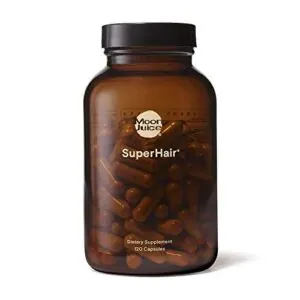
Moon Juice SuperHair takes a layered approach. Four capsules each morning deliver a clinical-strength blend of 10 bioavailable vitamins — including B-complex, D, E, and K2 — alongside KSM-66 ashwagandha to help keep stress-driven shedding in check.
Saw palmetto and pumpkin seed extract work to shield follicles from DHT, while biotin, horsetail, and kelp support strand strength.
At $66 per bottle, it’s a premium commitment, but the formula covers a lot of ground.
| Best For | People dealing with stress-related or hormonal hair thinning who want an all-in-one formula that covers nutrition, cortisol support, and DHT blocking. |
|---|---|
| Price | $66.00 |
| Supply Duration | 30 days |
| Key Ingredient | Ashwagandha & Saw Palmetto |
| Daily Dosage | 4 capsules |
| Results Timeline | 2–4 weeks |
| Target Audience | Women & general |
| Additional Features |
|
- Combines vitamins, adaptogens, and DHT blockers in one daily stack — no need to juggle separate supplements
- Ashwagandha (KSM-66) targets a real but often overlooked cause of hair loss: chronic stress
- Some users notice results within 2–4 weeks, including stronger nails as a bonus
- At $66 a bottle, the cost adds up fast if you need it long-term
- Quality control has been inconsistent, with some reports of empty capsules
- Results aren’t guaranteed — a few users saw early improvements that faded after the first month
5. OLLY Heavenly Hair Gummies
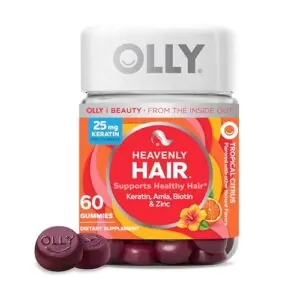
If you’d rather chew your way to healthier hair than swallow a handful of pills, OLLY Heavenly Hair Gummies make that pretty easy. Two gummies a day deliver 3,000 mcg of biotin, 5.5 mg of zinc, keratin, and amla extract — a solid lineup for supporting strand strength and reducing shedding.
If you prefer something more flexible, many of these same nutrients also come in capsule, tablet, and powder forms for targeted hair health support — so you’re not locked into gummies.
They’re gluten‑free with no synthetic flavors, and at $13.34 for a 30‑day supply, they’re genuinely budget‑friendly.
Just keep them away from heat, since they can get sticky fast.
| Best For | Anyone who hates swallowing pills and wants a tasty, no-fuss way to support hair health on a budget. |
|---|---|
| Price | $13.34 |
| Supply Duration | 30 days |
| Key Ingredient | Keratin & Biotin |
| Daily Dosage | 2 gummies |
| Results Timeline | Not specified |
| Target Audience | General |
| Additional Features |
|
- Packs a solid blend of biotin, keratin, zinc, and amla into a tropical gummy that actually tastes good
- Gluten-free with no synthetic flavors or colors — clean label, no weird stuff
- At $13.34 for a 30-day supply, it’s one of the more affordable hair supplement options out there
- Heat makes them melt and stick together, so storage matters more than you’d think
- Not vegan-friendly — gelatin is in the mix
- The FDA hasn’t evaluated the claims, and some users report mild dizziness or stomach discomfort
6. Keranique Hair Scalp Biotin Supplements
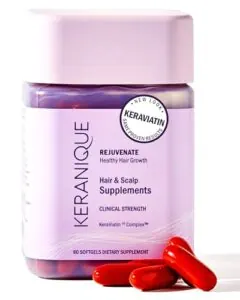
Keranique takes a targeted approach with its proprietary KeraViatin10 Complex — a 755 mg blend featuring biotin, zinc, selenium, saw palmetto, and curcumin.
Two capsules daily deliver nutrients through their Intelli-Dose delivery system, designed to get ingredients where your follicles actually need them.
At $39.99, it’s mid-range in price.
Most women see real results after three consistent months.
Worth noting: the capsules contain gelatin and sesame oil, so check that ingredient list if you have sensitivities.
| Best For | Women dealing with thinning hair who want a nutrient-rich supplement to support thicker, healthier growth over time. |
|---|---|
| Price | $39.99 |
| Supply Duration | 30 days |
| Key Ingredient | Biotin & Zinc |
| Daily Dosage | 2 capsules |
| Results Timeline | 3+ months |
| Target Audience | Women |
| Additional Features |
|
- Packed with key hair-health nutrients like biotin, zinc, and selenium in one daily dose
- 98% of users in clinical statements reported noticeable improvement in hair growth
- Some users saw scalp coverage increase by an average of 24% after three months
- Results take at least three months — don’t expect quick wins
- Capsules can be large and have a noticeable odor, which some find off-putting
- Not a solution for serious hair-loss conditions like androgenic alopecia or chronic telogen effluvium
7. Women’s Hair Growth Peptides Follicle Fortifying
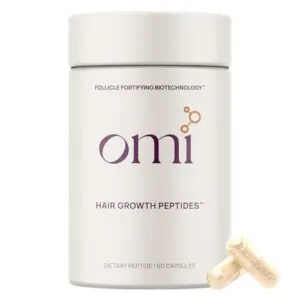
If you’re dealing with thinning that feels frustratingly slow to respond, this peptide-based formula takes a different approach. Instead of just loading up on biotin, it targets the follicle itself — using signaling peptides like biotinoyl tripeptide-1 to help anchor hair and encourage the growth phase.
At $79 per bottle, it’s a premium pick.
But women in clinical trials saw a 46% reduction in hair loss within 90 days.
Doctor-recommended and easy to swallow, it fits right into your existing supplement routine.
| Best For | Women experiencing age-related thinning or increased shedding who want a science-backed supplement that goes beyond basic vitamins. |
|---|---|
| Price | $79.00 |
| Supply Duration | 30 days |
| Key Ingredient | Peptides & Biotin |
| Daily Dosage | 2 capsules |
| Results Timeline | 1–3 months |
| Target Audience | Women |
| Additional Features |
|
- Targets follicles directly with signaling peptides, not just generic hair vitamins
- Easy to add to your existing supplement routine with no reported digestive issues for most users
- Clinical data backs it up — women saw a 46% reduction in hair loss within 90 days
- At $79 a bottle, it’s a real commitment, especially since results can take 3 months
- Some users see strengthening benefits but not actual new growth, so expectations matter
- A small number of people do experience stomach upset and end up stopping use
8. Nutrafol Postpartum Hair Growth Supplement
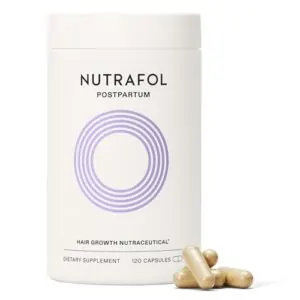
Postpartum hair loss hits differently — it’s not just thinning, it’s your body signaling a major shift.
Nutrafol Postpartum was developed by OBGYNs specifically for that first year after birth, and the numbers back it up: 91% of users reported less shedding within two months, and 98% saw improvement by four months.
Its 26-ingredient blend includes shatavari, tocotrienols, algae-derived DHA, and marine collagen — all breastfeeding-friendly.
At $88 per month, it’s an investment, but one built for exactly where you’re right now.
| Best For | New moms dealing with postpartum hair shedding who want an OBGYN-developed, breastfeeding-safe supplement to support recovery in that first year after birth. |
|---|---|
| Price | $88.00 |
| Supply Duration | 30 days |
| Key Ingredient | Shatavari & Tocotrienols |
| Daily Dosage | 4 capsules |
| Results Timeline | 2–4 months |
| Target Audience | Postpartum women |
| Additional Features |
|
- Strong clinical backing — 91% saw less shedding in just two months, and 98% noticed improvement by four months
- 26-ingredient blend is specifically formulated to be safe while breastfeeding, including adaptogens like shatavari to help with hormonal balance
- Developed by OBGYNs, so it’s designed with postpartum physiology in mind, not just general hair loss
- At $88 a month, it’s a significant ongoing cost — and subscription discounts don’t move the needle much
- Four large capsules a day can be tough to keep up with, especially in the chaos of new parenthood
- No third-party certification, and some users report infant fussiness — worth a conversation with your doctor before starting
9. Natures Bounty Biotin Softgels
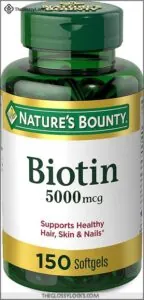
Sometimes the simplest option is the right one.
Nature’s Bounty Biotin Softgels deliver 5,000 µg of biotin in a single easy-to-swallow softgel — no complicated regimen, no hefty price tag.
At just $9.17 for a month’s supply, it’s most accessible ways to support hair growth and nail strength.
Take one softgel daily, preferably with a meal.
Just keep in mind that high-dose biotin can interfere with certain lab tests, so mention it to your doctor before bloodwork.
| Best For | Anyone who wants a no-fuss, budget-friendly biotin boost to support hair growth, stronger nails, or general B-vitamin intake. |
|---|---|
| Price | $9.17 |
| Supply Duration | 30 days |
| Key Ingredient | Biotin 5,000 µg |
| Daily Dosage | 1 softgel |
| Results Timeline | Varies |
| Target Audience | General |
| Additional Features |
|
- Great value at $9.17 for a full month’s supply — hard to beat
- High 5,000 µg dose in one small, easy-to-swallow softgel
- Clean formula — non-GMO, gluten-free, no artificial junk
- Results vary a lot depending on what’s actually causing your hair or nail issues
- Softgels can melt if left in heat, so storage and shipping matter
- High-dose biotin can throw off certain lab tests, so worth mentioning to your doctor
10. Hairfinity Vegan Biotin Hair Vitamins
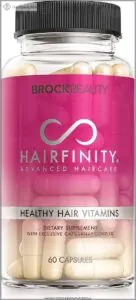
If you’re plant-based and watching your budget, Hairfinity Vegan Biotin Hair Vitamins might be your sweet spot. Each serving delivers 2,500 µg of biotin alongside the Capilsana Complex — a blend of hydrolyzed collagen amino acids, MSM, and horsetail silica — all packed into veggie capsules.
At $25.99 for a 30-day supply, it works for both women and men. Some users notice breakouts initially, likely from the biotin, so ease in and watch how your skin responds.
| Best For | Plant-based folks on a budget who want a simple daily vitamin to support hair growth and nail strength, especially those dealing with thinning or post-medication hair loss. |
|---|---|
| Price | $25.99 |
| Supply Duration | 30 days |
| Key Ingredient | Biotin & Collagen |
| Daily Dosage | 2 capsules |
| Results Timeline | Varies |
| Target Audience | Women & men |
| Additional Features |
|
- Solid biotin dose (2,500 µg) paired with the Capilsana Complex — collagen amino acids, MSM, and horsetail silica — gives you more than just a basic biotin pill
- Works for all hair types, including 4C, and users report real improvements in thickness, shine, and less breakage
- Vegan capsules at $25.99 for a 30-day supply makes it one of the more affordable options out there
- Biotin can trigger breakouts, especially early on, so sensitive skin folks should ease in slowly
- Results vary a lot person to person, and it works best when paired with a solid hair care routine
- A few users have reported receiving damaged capsules or ones with an off smell, which is a quality control concern worth noting
Common Causes of Hair Fall

Hair doesn’t just fall out for no reason — something is almost always going on beneath the surface. Before reaching for a supplement, it helps to know what’s actually driving the shedding in the first place.
Here are the most common causes worth looking at.
Nutrient Deficiencies That Trigger Shedding
When your hair starts shedding more than usual, nutrient deficiencies and hair loss are often quietly to blame.
Low iron triggers telogen effluvium, pushing follicles into early rest.
The role of vitamin D in hair follicles is real — deficiency disrupts cycling.
Biotin, zinc, Vitamin B12, Omega-3 Fatty Acids, Copper Balance, Selenium Deficiency, and Protein Intake all keep strands strong.
Without them, your follicles simply can’t keep up.
Research shows that iron deficiency and hair loss can cause diffuse thinning over months.
Hormonal Changes and Postpartum Hair Loss
Beyond nutrient deficiencies, hormonal imbalance is one of the biggest triggers most people don’t see coming. After delivery, estrogen withdrawal and a progesterone crash happen almost overnight — and your follicles feel it. Many shift into a resting phase together, causing noticeable shedding around three to four months postpartum.
Signs your hormones are driving postpartum hair loss:
- Sudden, diffuse shedding rather than patchy loss
- Thyroid fluctuations causing fatigue alongside hair changes
- Prolactin influence from breastfeeding delaying your hair cycle shift back to normal
Genetics and Pattern Hair Thinning
Sometimes hormones aren’t the only culprit — your DNA plays a bigger role than most people realize. Androgenetic alopecia is driven by hereditary risk and polygenic susceptibility, meaning multiple genome-wide loci work together to shrink follicles over time.
Androgen receptor sensitivity triggers DHT to shorten your growth phase, causing gradual hair thinning.
Family history matters more than you think.
| Pattern Feature | Men | Women |
|---|---|---|
| Thinning Location | Vertex and temples | Crown and central part |
| Hairline Behavior | Recedes noticeably | Usually retained |
| Family History Rate | High hereditary link | 62% report it |
| Onset Timing | Post-puberty | Often after 40 |
| Progression Speed | Faster visible loss | Slow, gradual thinning |
Hair follicle nourishment through supplements won’t reverse genetics, but clinical evidence supporting hair supplement claims shows targeted nutrients can slow the process meaningfully.
Stress-related Shedding and Telogen Effluvium
Genetics isn’t the only thing quietly working against you — stress hormones and hair thinning connection are real and well-documented. Cortisol Impact disrupts follicle cycling through Stress Hormone Pathways, forcing up to 70% of growing hairs into a resting state.
That’s the Telogen Timing Shift. Shedding usually appears 2–3 months after Psychological Triggers hit:
- A sudden life shock — grief, illness, burnout
- Chronic daily pressure building silently over weeks
- Emotional overload that spikes cortisol repeatedly
Your Recovery Timeline with telogen effluvium averages six months once stress resolves.
Weight Loss and Low-calorie Dieting
Cutting calories quickly can shock your follicles. Rapid weight loss often creates Micronutrient Gaps — especially in iron and zinc — that leave hair roots starved.
Without Calorie Deficit Strategies and Protein Timing, your body prioritizes essential organs over hair growth. Diet Adherence Tips matter here: a steadier, less extreme deficit reduces the impact of weight loss on hair shedding substantially.
Key Nutrients for Hair Growth

Your hair doesn’t grow on good intentions alone — it runs on specific nutrients your follicles genuinely can’t do without. Getting these right can mean the difference between shedding that slows down and hair that actually starts coming back stronger.
Here are the key nutrients worth paying attention to.
Biotin and Keratin Support
Think of biotin as the spark plug behind keratin synthesis — without it, your follicles can’t build strong strands. As a biotin cofactor role, vitamin B7 activates the enzymes that drive keratin cross-linking, which directly strengthens hair shaft integrity.
Follicle signaling means less hair shedding over time. Consistent biotin intake improves nutrient absorption and gives follicle nourishment the steady foundation keratin production actually needs.
Iron and Ferritin for Follicle Health
When your hair starts shedding more than usual, low serum ferritin levels are often the quiet culprit. Ferritin stores iron for your follicles, and without enough, hemoglobin oxygen delivery to your scalp drops—pushing more hairs into the shedding phase.
This is iron deficiency and telogen effluvium in action.
Getting your blood ferritin levels tested first ensures monitoring iron therapy actually targets your real need.
Vitamin D and Follicle Cycling
Your follicles actually have vitamin D receptors built right in — and when those receptors go quiet, your hair cycle can stall. VDR activation nudges follicles to stay in the anagen extension phase longer while triggering telogen suppression, basically keeping more hairs growing. Cyclin D1 upregulation is part of how vitamin D pushes follicle cells to divide actively.
Vitamin D receptors in your follicles keep hair growing — when they go quiet, your hair cycle stalls
Here’s what vitamin D does for your hair:
- Activates follicle receptors to restart dormant growth cycles
- Extends the anagen phase so strands grow longer before resting
- Suppresses early shedding by delaying telogen onset
- Supports granulosa cell signaling, linking scalp and hormonal follicle health
Low vitamin D is one of the most common nutrient deficiencies and hair health issues women overlook. A daily dose of 1,000–2,000 IU vitamin D₃ can meaningfully support your hair growth cycle phases within three months.
Zinc for Repair and Growth
Zinc is quietly one of the hardest-working minerals your body depends on.
It drives Zinc DNA Synthesis and acts as a Zinc Enzyme Cofactor for protein synthesis, including keratin production. Zinc Cellular Proliferation keeps follicles renewing on schedule, while Zinc Matrix Remodeling and Zinc Immune Modulation support repair after shedding.
Nutrient deficiencies and hair health go hand in hand — correcting low zinc can meaningfully support hair regrowth.
Vitamin E and Scalp Antioxidant Protection
Your scalp takes daily hits from UV Radiation Defense failures, pollution, and stress — and vitamin E is one of your best shields against that damage. Its Free Radical Scavenging action neutralizes oxidative stress before it disrupts follicle function.
Here’s what vitamin E delivers:
- Lipid Barrier Protection that keeps the scalp surface stable
- Anti-Inflammatory Relief that calms irritation linked to hair shedding reduction strategies
- Scalp Oxidative Stress control through the Antioxidant effects of vitamin E on scalp tissue
Collagen, Peptides, and Hair Structure
Think of collagen as the scaffolding your follicles grow inside. When Collagen Matrix Reinforcement is strong, Follicle Scaffold Stabilization keeps each strand anchored and supported.
Marine collagen peptides improve Collagen Bioavailability, feeding Shaft Protein Alignment and Peptide Elasticity from within. This promotes collagen and keratin synthesis for hair structure, directly improving hair follicle health and boosting hair thickness and density outcomes over time.
Supplement Safety and Dosage
Taking the right supplement is only half the story — knowing how to take it safely is the other half. More isn’t always better, and timing, dosage, and a few key warnings can make a real difference in your results.
Here’s what you need to know before you start.
How Long Results Usually Take

Patience is part of the process.
Most clinical studies show a Shedding Reduction Timeline of 8–12 weeks with daily dosing before you notice fewer loose hairs.
Thickness Improvement Lag runs longer — often 3–6 months — because the hair growth cycle moves slowly.
Postpartum Recovery Time can stretch further still.
Consistency Impact Period matters most: skipping doses resets your results timeline.
Side Effects of Excess Vitamins and Minerals

More isn’t always better with supplements.
Too much iron causes Gastrointestinal Distress — nausea, cramping, constipation.
Excess fat-soluble vitamins like A and D build up in your body, risking Liver Toxicity, hypercalcemia, and even Cardiovascular Risks like irregular heartbeat.
High-dose zinc creates Mineral Imbalance by blocking copper absorption.
Neurological Symptoms can follow long-term B6 overuse.
Supplement safety and side effects come down to one thing: dosage consistency within safe ranges.
Biotin Interference With Lab Tests

Here’s something most people don’t know: high-dose biotin can throw off your blood testing results.
When biotin floods your system, it competes with streptavidin binding inside immunoassays — causing assay false lows in some tests and competitive assay elevation in others.
Thyroid panels and troponin levels are common casualties.
Hold time matters, so pause biotin before labs and prioritize lab communication with your doctor.
Allergy Warnings for Marine-based Formulas

If you have a seafood allergy, marine-based formulas deserve a hard look before you buy. Products like Viviscal and Nutrafol contain marine complex ingredients — including shellfish-derived collagen and marine collagen peptides — that can trigger serious reactions.
Watch for these seafood allergy warnings for marine-based supplements:
- Fish protein trace from hydrolyzed fish skin or scales
- Shellfish-derived collagen sourced from shrimp, crab, or lobster
- Mollusk cross-reactivity across mussels, oysters, and scallops
- Cross contact risk during shared manufacturing processing
- Marine allergen labeling listed under broad names — always read the full ingredient panel
When in doubt, contact the manufacturer directly.
Importance of Consistent Daily Use

Think of daily supplement use like watering a plant — skip too many days, and nothing grows. Dose Timing Consistency matters because hair follicles respond to sustained nutrient exposure, not occasional spikes.
Building Routine Integration into your morning or mealtime helps Adherence Tracking and keeps your Progress Monitoring honest.
Consistent daily dosing aligns with the hair regrowth timeline your supplement was actually designed for.
Choosing The Right Hair Supplement

Not every supplement works the same way for every person, and that’s exactly why format, ingredients, and price point all matter. Your lifestyle, diet, and specific hair concerns should drive what you reach for.
Here’s what to think about before you buy.
Capsules Versus Gummies Versus Liquids
format you pick matters more than you’d think.
Liquids win on absorption speed — they hit your system fast, with no capsule to dissolve first. For digestive comfort, liquids are gentlest, especially if pills are a struggle.
Capsules offer better ingredient stability and dose precision, keeping nutrients protected and consistent.
Gummies are convenient, but their sugar content adds up daily.
Vegan-friendly Hair Supplement Options
Going vegan with your hair routine doesn’t mean sacrificing results. Today’s vegan hair supplement options use cellulose capsules, skip marine ingredients entirely, and swap animal collagen for smart alternatives — think Plant Protein Boost blends, Mushroom Extracts, and Hyaluronic Acid.
Allergen Screening still matters, though: ashwagandha as an adaptogen for hair health, saw palmetto, and pumpkin seed extract are plant-based but not sensitivity-free.
Always read the label.
Budget-friendly Versus Premium Formulas
Price per ounce matters more than the label. Budget-friendly hair vitamin choices often deliver the same core nutrients — biotin, zinc, iron — as premium picks, because both must meet regulatory standards.
The real additive differences come down to ingredient sourcing, extras like prebiotics, and testing transparency. Clinical studies support specific formulas, so match ingredients to your concern, not the price tag.
Best Choices for Postpartum Shedding
Postpartum hair shedding and nutrient deficiencies often hit at the same time, which makes supplement choice matter more than usual. Nutrafol Postpartum stands out — it’s one of the few Breastfeeding Safe Formulas with Adaptogen Enriched Blends and Postpartum Iron Support to address iron deficiency and telogen effluvium directly.
Prefer Marine-Free Options or Low-Sugar Gummies? Ritual and OLLY both fit that need while covering vitamin D receptors in hair follicles.
Best Options for Seafood Allergies
If you have a seafood allergy, skip anything containing a marine complex — those formulas often carry hidden fish or shellfish proteins.
Look for Allergen-Free Labels and do Supplement Allergen Screening before buying.
Vegan formula options like OLLY and Nature’s Bounty naturally avoid marine ingredients.
Cross-Contact Prevention matters too, so check that the manufacturer doesn’t process seafood in the same facility.
Matching Ingredients to Your Hair Concerns
Once you’ve ruled out marine ingredients, match what’s inside the bottle to what’s actually happening with your hair.
- Low Iron Absorption — pair iron with vitamin C and vitamin D.
- Thinning strands — look for biotin, zinc, and Peptide Matrix Reinforcement blends.
- Hormonal shedding — saw palmetto and curcumin support Hair Cycle Synchronization.
- Scalp inflammation — Mineral Antioxidant Synergy through selenium, niacinamide, and Vitamin D‑Zinc. Pairing works well here.
Frequently Asked Questions (FAQs)
What vitamins are good for hair loss?
Several vitamins quietly shape your hair’s future.
Biotin, Vitamin D, zinc, B vitamins, Vitamin C absorption, folate cell division, Vitamin B12 metabolism, Vitamin A regulation, and Vitamin K2 calcium balance all play real roles.
Can vitamins help reduce hair fall?
Yes, vitamins can help reduce hair fall — but only when they fix a real deficiency.
Low iron, vitamin D, zinc, or biotin are common culprits. Correcting them gives your follicles what they need to stay in growth mode.
Can hair growth supplements help thinning hair?
Hair growth supplements can genuinely help thinning hair, especially when nutrient deficiencies are the root cause.
Clinical trial evidence shows visible improvements in hair counts and reduced shedding within 90 to 180 days of consistent use.
Should you take supplements for hair loss?
Get bloodwork guidance first. If deficiencies show up, supplements make real sense. Without that data, you’re guessing. Medical evaluation beats random product trials every time.
What vitamins are good for hair growth?
Biotin, Vitamin D, Vitamin C, and B vitamins are your hair’s best friends.
Add Vitamin A Balance, Vitamin K2 Synergy, and Selenium Antioxidant support, and your follicles have everything they need to thrive.
What are the best supplements for hair fall?
The best supplements for hair fall target your actual gaps—biotin, zinc, and saw palmetto show real clinical trial evidence. Matching ingredients to your deficiencies is what makes the difference.
What is the best supplement to take for hair loss?
No single supplement wins for everyone.
Nutrafol stands out for its Clinical Trial Evidence and Ingredient Synergy — showing saw palmetto, biotin, and marine collagen working together with strong User Compliance Factors and Cost-Effectiveness Ratio.
Which vitamin is best to stop hair fall?
No single vitamin stops hair fall on its own.
Vitamin D, biotin, vitamin C, and vitamin E each play a role — but results depend on which deficiency is actually driving your shedding.
What vitamin am I lacking if my hair is shedding?
Shedding often points to iron deficiency anemia, low vitamin D, or biotin deficiency. Vitamin B12 deficiency and folate shortfall also trigger diffuse loss, while insufficient protein quietly accelerates it too.
What am I lacking if my hair is falling out?
Think of your hair like a garden — it only thrives when the soil is right.
Iron deficiency anemia, low vitamin D, zinc, and biotin are the most common gaps behind shedding.
Conclusion
Like a garden that won’t bloom without the right soil, your hair can’t thrive when your body is running on empty. The best supplements to reduce hair fall work because they address what’s actually missing—not just what’s visible in the mirror.
Biotin, iron, zinc, and vitamin D aren’t magic; they’re maintenance. Give your follicles consistent nourishment for three to six months, and you’ll likely see the difference not just in your brush, but in your confidence.