This site is supported by our readers. We may earn a commission, at no cost to you, if you purchase through links. This content is for general informational and educational purposes only and is not a substitute for professional medical, dermatological, or nutritional advice.
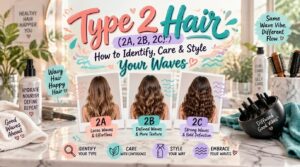
Your hair isn’t broken, and it isn’t "almost curly." It’s type 2 hair, and it behaves by its own rules. Waves look defined when wet, then loosen, flatten, or frizz as they dry, which makes millions of people think they have a hair problem when they have a product problem.
I’ve watched clients smother fine 2A waves in butters meant for coils, then wonder why everything falls flat. The pattern you see in the mirror depends on follicle shape, strand weight, and how much you disturb it while drying.
Here’s how to identify your subtype, wash without stripping, and style for waves that hold.
Table Of Contents
- Key Takeaways
- What is Type 2 Hair? Key Characteristics and Wave Patterns
- How to Identify Type 2A, 2B, and 2C Hair
- Type 2 Hair Care Routine: Washing, Conditioning, and Moisture Balance
- How to Style Type 2 Hair for Definition, Volume, and Frizz Control
- Type 2 Hair Vs. Type 3 and Type 4 Hair
- Frequently Asked Questions (FAQs)
- What is type 2 hair type?
- How do I know if my hair is 2A or 2b?
- What are hair types 1, 2, 3, and 4?
- What ethnicity has type 2 hair?
- Can hormonal changes change my wave pattern?
- Does Type 2 hair need protein treatments?
- What causes protein overload in wavy hair?
- Which haircuts work best for wavy hair?
- How does humidity affect Type 2 hair?
- Conclusion
Key Takeaways
- Type 2 hair is wavy, not "almost curly," and its subtype (2A loose, 2B defined S-waves, 2C tight voluminous waves) dictates which products work—fine 2A needs lightweight, water-based formulas while heavy butters designed for curls will flatten it.
- Wash based on your scalp’s oil buildup rather than a fixed schedule, shampoo only the roots, condition mid-length to ends, and remember that limp waves signal too much product while frizz signals too little.
- Most frizz comes from disturbance, not dryness: apply leave-in and gel to soaking-wet hair, avoid brushing, rough towels, and high heat, then leave it untouched until fully dry before scrunching out the gel cast.
- Since scalp oils slide easily down wavy strands, stop borrowing routines built for Type 3 and 4 hair—match your products to how your strands actually behave, and use protein only when damage testing shows you need it.
What is Type 2 Hair? Key Characteristics and Wave Patterns
If you’ve ever wondered why your hair bends instead of staying flat, you’re probably working with Type 2 wavy hair. Your strands form S-shaped waves, not spirals, and that bend comes from your follicle shape and how each strand curves under its own weight.
Once you understand what’s behind that bend, building a routine around it—like this wavy hair routine guide—becomes much easier.
Here’s what surprises most people: your wave definition isn’t fixed. Damp hair clumps into clearer waves, then loosens as it dries. Humidity, product buildup, and uneven porosity can turn the same pattern into frizz by afternoon.
Your wave pattern also won’t match everywhere on your head. Finer strands separate and fall straighter, while thicker sections hold their bend. That’s normal, not a flaw. Whether you land at 2A vs 2B vs 2C, you’re dealing with hair that sits right on the edge between wave and frizz, and small changes make a big difference.
How to Identify Type 2A, 2B, and 2C Hair
Here’s where most people get it wrong: they assume all waves behave the same, so they buy the same products and wonder why nothing works. Your subtype changes everything, from how often you wash to how heavy your styling products can be. Below, I’ll break down 2A, 2B, and 2C so you can identify yours with confidence.
Type 2A: Loose, Fine Waves

At the loosest end of wavy hair, Type 2A hair shows a soft S-bend that lives in your mid-lengths and ends, not your roots. You’ll recognize it by these markers:
If you’re still unsure whether your hair qualifies, this guide to 2A hair breaks down the texture in detail.
- Fine strands that fall flat fast
- Roots that dry straighter than ends
- Waves that loosen in humidity
- Definition that fades under heavy product
- A pattern that strengthens when damp
Compared in any 2A vs 2B vs 2C chart, yours needs lightweight, water-based styling and a light hand with conditioner to keep wave definition alive. Your hair texture rewards restraint, not layering.
Type 2B: Defined S-Shaped Waves

One step up from 2A, 2B hair forms S-shaped waves that start closer to your roots and hold their shape at rest. You’ll see clumped strands, not loose bends. Identify and manage yours with this quick reference:
| Marker | What you’ll see | What to do |
|---|---|---|
| Wave pattern | Defined S | Scrunch out the crunch |
| Frizz | Hairs escape clumps | Light frizz control |
| Roots | Flatter | Diffuse upward |
| Product | Drops waves | Use less |
That’s 2B: definition worth protecting, not fighting.
If you’re not sure where your hair actually falls, this guide to recognizing your hair type breaks down the telltale signs so you can stop guessing and start choosing products that fit.
Type 2C: Tight, Voluminous Waves
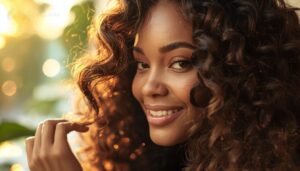
If 2B waves flirt with curls, 2C hair commits. These voluminous waves form tight, springy S-bends close to your root, and they’re the waviest pattern that still reads as waves, not a curl pattern. Stretch a strand and it snaps back wavy.
Your challenge shifts: frizz control and clumping, since dryness breaks definition. Keep wavy hair care lightweight but hydrating.
Type 2 Hair Care Routine: Washing, Conditioning, and Moisture Balance

The biggest mistake I see with Type 2 clients? Washing on a rigid schedule instead of reading their scalp. Your wavy hair care should follow oil buildup, not the calendar. If your roots get greasy by day two, wash then; if they don’t, don’t.
Use a gentle or co-washing cleanser to avoid stripping. Shampoo your scalp only, and let the suds rinse through your lengths. Skip scalding water, since heat lifts the cuticle and invites frizz and tangles.
Condition from mid-length to ends, never the scalp. Fine 2A hair wants a thin, lightweight formula; 2B hair and 2C hair can handle slightly richer conditioners. Finger-comb while it’s in, then rinse thoroughly, because leftover product flattens waves.
Watch your moisture balance: limp waves mean too much product, frizz means too little.
How to Style Type 2 Hair for Definition, Volume, and Frizz Control

Because wave styling lives or dies on what you do while hair dries, timing matters more than product choice. Apply a lightweight leave-in plus a thin layer of gel to soaking-wet hair, then stop touching it. That’s it. Most frizz comes from disturbance, not dryness.
Here’s what quietly wrecks your wave definition:
- Rough-drying with a terry towel, which lifts cuticles and multiplies flyaways
- Brushing after product, which shatters the clumps you just built
- High-heat blow-drying that stretches waves straight before they set
- Heavy butters on fine 2A/2B hair, which flatten everything by midday
- Product piled at the roots, killing root volume before you’ve started
Instead, try scrunching hair upward while damp, micro-plopping for five minutes, then diffusing on low heat. For frizz control, keep hands off until hair’s fully dry, then scrunch out the crunch.
Just like picking the right shaving product comes down to your skin type and how you apply it, the best drying method depends on your wave pattern and how much patience you’ve got.
Type 2 Hair Vs. Type 3 and Type 4 Hair
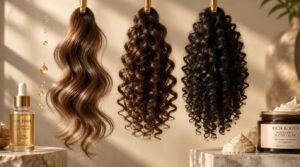
The same head of hair can read as two different types, and that’s where most people get lost. Here’s the honest truth: the hair typing system measures pattern, not beauty, and Type 2 sits in its own category for good reason.
| Feature | Type 2 (Wavy) | Type 3–4 (Curly/Coily) |
|---|---|---|
| Shape | Open "S" waves | Springy ringlets or tight coils |
| Shrinkage | Minimal, shows true length | High, hides length |
| Oil travel | Scalp oils slide down easily | Oils stall at the scalp |
| Volume source | Wave lift and separation | Curl spring plus shrinkage |
That last row matters most. Your 2A hair or 2C hair gets weighed down by heavy butters that feed Type 4 coils beautifully. Curl pattern identification isn’t about hierarchy; it’s about matching products to how your strands actually behave. Stop borrowing routines built for tighter textures.
Frequently Asked Questions (FAQs)
What is type 2 hair type?
Here’s the honest answer: Type 2 hair is wavy hair from the Andre Walker Hair Typing System, sitting between straight and curly. Your hair follicle shape is slightly oval, so strands bend into S-shaped waves instead of lying flat.
How do I know if my hair is 2A or 2b?
Here’s the clearest test: 2A hair dries nearly straight with soft bends, while 2B holds true S-shaped waves. Check your wave definition after air-drying, no product. Clear segments mean 2B.
What are hair types 1, 2, 3, and 4?
Funny how a number can define your entire hair life. The Andre Walker Hair Typing System sorts hair into four types: type 1 is straight, wavy hair types are 2, curly hair types are 3, and coily hair types are
What ethnicity has type 2 hair?
Like asking which soil grows daisies, the answer spreads wide: no ethnicity owns type 2 hair. The Andre Walker system labels waves, not ancestry. You’ll find 2A through 2C across populations, though East Asian descent skews straighter.
Can hormonal changes change my wave pattern?
Tides reshape a shoreline without moving the land. Yes, hormonal shifts can change how your waves look, mostly through oil, moisture, and shedding, but your genetics set the basic pattern, so true structural change is rare.
Does Type 2 hair need protein treatments?
Here’s the straight answer: curl type isn’t a protein prescription. Type 2 hair (2A, 2B, 2C) needs protein only when damaged. Test your hair’s elasticity; if it stretches and stays stretched, use protein. Otherwise, moisture and clarifying beat guessing.
What causes protein overload in wavy hair?
Protein overload happens when you stack protein-heavy products without enough moisture, or your hair porosity levels are high from chemical overprocessing. Damaged, porous waves absorb protein fast, and that stiff film kills your wave pattern.
Which haircuts work best for wavy hair?
The right haircut changes everything. Ask for face-framing layers and long layers to prevent the triangle shape. Keep graduation consistent so your wave pattern stays defined, and blunt ends beat heavy thinning for tousled texture.
How does humidity affect Type 2 hair?
Like a chameleon, your waves shift with the air. Humidity swells the cuticle, so 2A waves loosen fastest while 2C shows better humidity resistance. Use water-resistant gels for frizz control.
Conclusion
Picture your waves the way they look five minutes after you step out of the shower, clumped, glossy, unmistakably wavy. That’s the truth your type 2 hair keeps showing you, and it disappears only when weight and handling erase it.
Work with that wet-state pattern instead of against it. Choose lightweight products, stop touching your hair while it dries, and trust the pattern you already own. Your waves were never missing. They were waiting.