This site is supported by our readers. We may earn a commission, at no cost to you, if you purchase through links. This content is for general informational and educational purposes only and is not a substitute for professional medical, dermatological, or nutritional advice.
You’ve been popping a biotin gummy every morning for months, and your hairbrush still looks like a small animal lost a fight. Here’s the catch: biotin only works if you’re actually deficient, and most people aren’t. Hair thickness depends on a wider cast of characters—ferritin, vitamin D, zinc, selenium—each playing a specific role in keratin production and follicle cycling.
Before spending more on supplements, it’s worth understanding what actually triggers new hair growth—because targeting the right deficiency often matters more than the supplement itself.
Guessing your way through the supplement aisle wastes money and time you don’t have. The right vitamins and supplements for hair thickness depend on what your bloodwork actually shows, not what the label promises. Let’s break down what’s clinically backed, what’s hype, and which products deliver real results.
Table Of Contents
- Key Takeaways
- Best Vitamins and Supplements for Hair Thickness
- Key Minerals That Support Thicker Hair Growth
- Top 8 Supplements for Hair Thickness
- 1. hair growth biotin supplement gummies
- 2. Nutrafol hair growth supplements for women
- 3. Biotin for Hair Skin and Nails
- 4. Viviscal Women Hair Growth Vitamins 30 Day
- 5. Vitafusion Multivitamin Gummy Beauty Hair Skin Nails
- 6. Womens Daily Multivitamin Softgels Supplement
- 7. Nature’s Bounty Hair Skin Nails
- 8. Biotin Collagen Hair Skin Nails Supplement
- How to Choose Hair Thickness Supplements
- Safety, Results, and Realistic Hair Growth Timelines
- Frequently Asked Questions (FAQs)
- What is the best vitamin to thicken hair?
- What supplements are good for Hashimoto’s hair loss?
- Will HRT make my hair grow?
- What vitamins are good for lupus hair loss?
- Do supplements and vitamins work to thicken hair?
- Is it possible to speed up hair growth?
- Which vitamin deficiency causes hair loss?
- Does biotin work for hair growth?
- How do you use rosemary oil for hair growth?
- Which vitamin makes your hair thicker?
- Conclusion
Key Takeaways
- Get bloodwork for ferritin, vitamin D, zinc, and thyroid function before buying any supplement, since most nutrients only improve hair thickness if you’re actually deficient in them.
- Biotin gets the most hype, but it mainly works for people with confirmed deficiency, and high doses can cause false abnormal thyroid and cardiac lab results, so always tell your doctor before bloodwork.
- Thicker hair depends on a team of nutrients working together, including vitamin D for follicle cycling, vitamin C for collagen production, and zinc and iron for keratin synthesis and absorption balance.
- Give any supplement routine three to six months of consistent use before judging results, and watch for imbalances like zinc-copper competition or excess vitamin A when combining multiple products.
Best Vitamins and Supplements for Hair Thickness
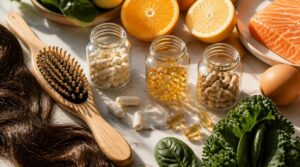
If your hair’s been thinning out, the right vitamins can make a real difference, but not every nutrient pulls its own weight.
Knowing which nutrients actually support hair growth, and which ones are just hype, makes it easier to build a routine around the best vitamins to prevent hair loss.
Some, like biotin and vitamin D, tackle shedding head-on, while others work behind the scenes to support collagen and scalp health.
Here’s what actually earns a spot in your routine, backed by real research.
Biotin for Thinning Hair
Biotin (B7) feeds into the metabolic pathways that build keratin, the protein your hair’s actually made of. But here’s the catch: it mainly helps if you’re deficient, which shows up as brittle nails or scalp changes. Otherwise, evidence for boosting hair thickness stays thin.
Available in capsules, gummies, or blends with zinc and collagen, dosage should match your actual need, not just the biggest number on the label.
Pregnant or breastfeeding women may experience pregnancy-related biotin deficiency, which can affect hair health.
Vitamin D and Shedding
If biotin’s a maybe, vitamin D deficiency has firmer evidence behind hair shedding.
It works through vitamin D receptors in follicle cells, supporting follicle cycle regulation and helping hair move out of the resting telogen phase. Low levels also tie to scalp inflammation.
A simple 25-hydroxy blood test confirms deficiency, so you’re not guessing before considering supplementation.
Vitamin C Collagen Support
Getting your D levels checked is smart, but your collagen matters too.
Vitamin C acts as a cofactor for hydroxylation enzymes, the reactions that mature collagen into stable fibers supporting hair thickness. It also fights oxidative stress that can damage follicle structure.
RDN tip: pair 75-90mg daily vitamin C with collagen peptides (2.5g) for better absorption and cross-linking strength.
Vitamin E Scalp Protection
Think of vitamin E as your scalp’s bodyguard. It’s a lipid-soluble antioxidant, meaning it works right within the scalp’s oily layers to neutralize free radicals and calm oxidative stress before it damages follicle tissue.
At around 100mg daily, vitamin E also provides hydration barrier support and eases scalp inflammation, two things that keep follicles working the way they should for lasting hair thickness.
B-complex Nutrient Support
Where biotin gets the spotlight, vitamin B complex works quietly in the background, covering multiple micronutrient support roles at once.
- B6 and folate: amino acid metabolism
- B12: DNA synthesis, red blood cell development
- B-vitamins: metabolic ATP production
- Water-soluble: needs daily intake
This nutrient teamwork matters since B vitamins aren’t stored long-term. RDN insight: pairing B complex with biotin covers gaps single supplements miss.
Key Minerals That Support Thicker Hair Growth

Vitamins get most of the attention, but minerals do a lot of the heavy lifting for hair thickness, too. Your follicles need specific building blocks to produce strong, dense strands, and skimping on any one of them can show up on your scalp. Here are the five minerals worth knowing about.
Since your strands reflect months of past nutrition rather than what you ate today, it’s worth comparing vitamins and minerals for hair growth side by side to see where your diet might be falling short.
Iron and Ferritin Levels
Low blood ferritin levels often show up before shedding even starts, which is why iron deserves top billing on your mineral checklist.
Iron deficiency diagnosis shouldn’t rely on ferritin alone—inflammation skews results, so pair it with transferrin saturation for accuracy.
Aim for ideal ferritin thresholds between 40–70 ng/mL. Ask your doctor about testing before supplementing; pairing iron with vitamin C boosts iron absorption enhancement naturally.
Zinc for Keratin Production
Your body relies on zinc as an enzyme cofactor, quietly directing keratinocyte differentiation—the process that turns skin cells into keratin producers.
Zinc helps the zinc-keratin bond, strengthening disulfide connections that give strands strength. Disrupted cellular zinc homeostasis weakens scalp barrier integrity, too.
RDN tip: 15–30 mg elemental zinc daily normalizes levels, supporting hair thickness without tipping into the copper-depleting territory above 40 mg.
Selenium Antioxidant Support
Selenium works behind the scenes, powering glutathione peroxidase and thioredoxin reductase—selenoproteins that neutralize oxidative stress before it damages follicles.
This antioxidant support extends to mitochondria and plasma transport via selenoprotein P, calming redox signaling that otherwise disrupts growth cycles.
RDN tip: Brazil nuts or a 55 mcg daily supplement covers your needs—selenium nutraceuticals rarely require higher doses for hair health.
Magnesium Protein Synthesis
Ever wonder why hair growth stalls even when you’re eating enough protein? The missing link might be magnesium, not protein itself.
Magnesium stabilizes ribosome structure, helps ATP coupling, and drives amino acid activation—the cellular signaling steps behind actual follicle protein building.
RDN tip: aim for 310-420 mg daily. Without it, protein synthesis for hair stalls, undercutting hair thickness no matter how many supplements you’re taking.
Mineral Balance Matters
Here’s the catch: popping extra minerals in isolation can backfire. Zinc-copper competition is real—too much zinc blocks copper absorption, disrupting iron metabolism too.
Watch for:
- Zinc-Copper Competition
- Gut Absorption Efficiency
- Electrolyte Regulation Risks
- Medication Mineral Interactions
- Trace Mineral Ratios
Selenium, magnesium, iron, and copper all need proportional balance, not maximal dosing, for hair follicles to actually benefit.
Top 8 Supplements for Hair Thickness
Now that you know which nutrients matter, let’s talk actual products you can grab off the shelf. You’ll find a mix here, from single-ingredient biotin gummies to full multivitamins built around hair, skin, and nails. Here are eight worth putting on your radar.
1. hair growth biotin supplement gummies
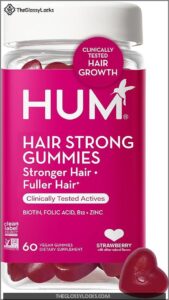
Chewing your vitamins might sound gimmicky, but for a lot of my clients, it’s the difference between consistent daily use and a bottle gathering dust. Hair growth biotin gummies pack 2,500 to 10,000 mcg of vitamin B7, usually alongside zinc, folic acid, and B12 to support keratin production.
One 2024 trial found daily users saw a 10.1% density boost over six months, versus a 2% decline with placebo. That’s meaningful, but context matters.
Most benefit shows up when you’re actually deficient, not simply thinning by chance. High doses can also throw off thyroid lab results, so flag your supplement routine before bloodwork. Ask yourself: is this fixing a real gap, or just an expensive habit?
| Best For | People who struggle to stick with traditional pills and want a convenient, chewable way to supplement biotin for stronger, fuller-looking hair. |
|---|---|
| Format | Gummy |
| Contains Biotin | Yes |
| Daily Dosage | Varies |
| Time To Results | 6 months |
| Gluten Free | Not specified |
| Target Audience | General adults |
| Additional Features |
|
- Easy-to-take gummy format that makes daily consistency simpler than swallowing pills or capsules
- Contains biotin (Vitamin B7), a nutrient tied to supporting healthy hair
- Portable and convenient for on-the-go lifestyles
- Exact biotin dosage per gummy isn’t disclosed, making it hard to know exactly what you’re getting
- Gummy supplements often contain added sugar, which may not fit low-sugar diets
- Only moderate market ranking, so results may vary from person to person
2. Nutrafol hair growth supplements for women
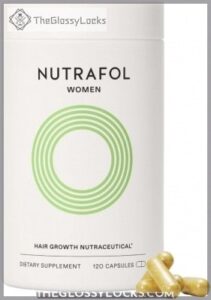
If gummies are the low-commitment option, Nutrafol is the multivitamin equivalent of a full-body workout plan. Its formula packs 21 botanicals and nutrients—saw palmetto, ashwagandha (an adaptogen that helps buffer stress hormones), marine collagen, and tocotrienols—aimed at DHT, inflammation, and stress-driven shedding all at once.
A six-month trial backing the brand found 90% of women reported visible improvement, with measurable hair-count gains showing up by 90 days.
Dosing is simple: four capsules, once daily, for 3-6 months before you judge results. Most participants tolerated it well, though rare reports of liver issues and bloating mean you should loop in your doctor first, especially on other medications.
At $88 a month, you’re paying for reach, not just one nutrient.
| Best For | Women ages 18-44 dealing with thinning or shedding hair who want a comprehensive, physician-formulated supplement and are willing to commit to several months of daily use for visible results. |
|---|---|
| Format | Capsule |
| Contains Biotin | Yes |
| Daily Dosage | 4 capsules |
| Time To Results | 3-6 months |
| Gluten Free | Not specified |
| Target Audience | Women 18-44 |
| Additional Features |
|
- Targets multiple root causes of hair thinning at once, including DHT, inflammation, and stress-driven shedding, thanks to a 21-ingredient blend
- Backed by a six-month study where 90% of participants reported visible improvement, with some measurable gains as early as 90 days
- Compatible with GLP-1 medications, making it a solid option for women managing weight or diabetes alongside hair concerns
- Requires 3-6 months of consistent daily use before you’ll see real results, so it’s not a quick fix
- At $88 a month, it’s a pricier commitment compared to simpler gummy-based options
- Only formulated for women ages 18-44, and a doctor’s input is recommended beforehand given rare reports of bloating or liver issues
3. Biotin for Hair Skin and Nails
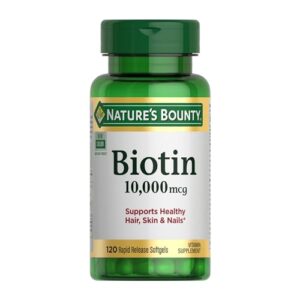
Nature’s Bounty takes the opposite approach from Nutrafol’s 21-ingredient mix: one nutrient, 10,000 mcg per softgel, over 300 times the daily requirement of 30 mcg. That’s the dose that shows up in labs as false abnormal results, since high-dose biotin is known to skew thyroid and cardiac assays.
Here’s the catch, though: biotin only does real work if you’re actually low on it. Brittle nails, hair breakage, patchy skin rash—these are deficiency signs, and clinical evidence backs biotin’s benefits mainly for people showing them, not for otherwise healthy adults chasing extra thickness.
Tolerability is solid. Mild stomach upset or rash turns up occasionally, but no confirmed toxicity has been linked to even extreme doses.
| Best For | People with an actual biotin deficiency—those noticing brittle nails, hair breakage, or patchy skin rashes—rather than healthy adults simply looking for extra thickness. |
|---|---|
| Format | Softgel |
| Contains Biotin | Yes |
| Daily Dosage | 1 softgel |
| Time To Results | Not specified |
| Gluten Free | Yes |
| Target Audience | Deficient adults |
| Additional Features |
|
- Single high-potency ingredient (10,000 mcg) with a simple, no-frills formula
- Free of GMOs, gluten, sugar, and artificial flavors or sweeteners
- Well tolerated overall, with no confirmed toxicity even at high doses
- Dose is over 300 times the daily requirement, which may be unnecessary if you’re not deficient
- Can cause false abnormal results on thyroid and cardiac lab tests
- May interact with certain medications, so a healthcare professional should be consulted first
4. Viviscal Women Hair Growth Vitamins 30 Day
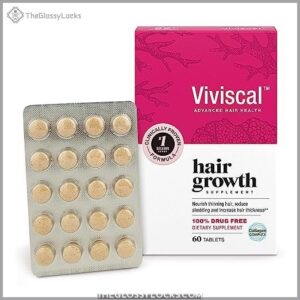
If biotin alone feels like a gamble, Viviscal takes a broader swing. Its AminoMar marine complex, built from marine collagen and oyster extract, anchors a 60-tablet, 30-day supply dosed at two tablets daily.
Each serving delivers 118 mg vitamin C, 240 mcg biotin, 20 mg iron, and 22 mg zinc, alongside horsetail and millet extracts rounding out the mix. That’s a genuine multivitamin approach rather than one nutrient doing all the heavy lifting.
Viviscal markets itself as 100% drug-free and clinically proven, positioning it for women dealing with fine or thinning hair. It won’t work overnight, and it’s not a fix for pre-existing medical conditions, but the ingredient breadth makes it a reasonable pick if you suspect more than one deficiency is behind your shedding.
| Best For | Women with fine or thinning hair who want a broad, multi-nutrient approach rather than relying on a single ingredient like biotin. |
|---|---|
| Format | Tablet |
| Contains Biotin | Yes |
| Daily Dosage | 2 tablets |
| Time To Results | Up to 3 months |
| Gluten Free | Not specified |
| Target Audience | Women |
| Additional Features |
|
- Combines marine collagen, biotin, zinc, vitamin C, and iron in one clinically studied formula
- Drug-free and safe for color-treated, fine, or thinning hair
- Backed by over 25 years of research supporting thicker, fuller hair with consistent use
- Requires up to three months of consistent use before visible results appear
- Must be taken twice daily, and missed doses can reduce effectiveness
- Not a solution for severe or medically-driven hair loss conditions
5. Vitafusion Multivitamin Gummy Beauty Hair Skin Nails
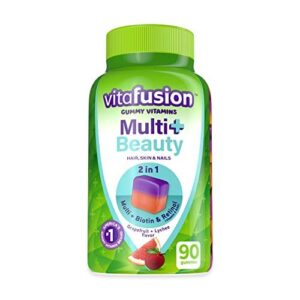
A raspberry-flavored gummy with a beauty-brand halo, Vitafusion leans hard on convenience. Two gummies pack 5,000 mcg biotin (167 times the standard adequate intake), 90 mg vitamin C, 720 mcg vitamin A, and 7.5 mg zinc, sweetened with glucose syrup and colored using purple carrot concentrate rather than synthetic dyes.
That biotin dose sits well within the 2,500–10,000 mcg range shown to boost hair density by roughly 10% over six months, which is reassuring. Where I’d pump the brakes is vitamin A: 720 mcg daily edges close to the 900 mcg ceiling, so pairing this with a separate multivitamin could tip you into excess territory. Good for filling small gaps, not for replacing bloodwork-guided supplementation.
| Best For | Women looking for a convenient, gummy-based daily supplement to support energy, hair, skin, nails, and bone health alongside a balanced diet. |
|---|---|
| Format | Gummy |
| Contains Biotin | Yes |
| Daily Dosage | 2 gummies |
| Time To Results | Not specified |
| Gluten Free | Yes |
| Target Audience | Women |
| Additional Features |
|
- Blends key vitamins and minerals (A, C, D, E, B6, B12, biotin, zinc, calcium, folate) tailored to women’s health needs
- Free from high-fructose corn syrup, artificial sweeteners, gluten, dairy, and synthetic dyes
- Easy-to-take chewable format with a pleasant natural berry flavor
- Not a substitute for a varied, balanced diet
- Risk of nutrient excess (like vitamin A) if combined with other supplements
- Gummy texture may not appeal to those who prefer traditional pills or capsules
6. Womens Daily Multivitamin Softgels Supplement
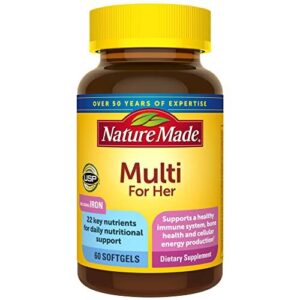
A single 60-day softgel supply covers 22 nutrients, which is a lot of ground for one daily dose. You get vitamins A, C, D3, E, and a full B-complex, plus iron for bone and muscle support. It’s gluten-free, USP-verified for potency, and skips artificial flavors, which matters if you’re wary of fillers.
The oil-based softgel format experiences fat-soluble vitamins like D3 and E more efficiently than dry tablets, since these nutrients need lipids for absorption. That’s a real advantage if your bloodwork shows a D deficiency, which affects roughly 35% of adults dealing with diffuse thinning.
One softgel daily with food is the standard protocol, and it’s designed for general nutrient gaps rather than targeted hair therapy. If you have iron-overload conditions, talk to your doctor first. Think of it as your nutritional safety net, not a specialized hair fix like the marine-collagen or biotin-forward formulas above.
| Best For | Adult women looking for a convenient, all-in-one daily multivitamin to help cover general nutrient gaps rather than target a specific concern like hair health. |
|---|---|
| Format | Softgel |
| Contains Biotin | Yes |
| Daily Dosage | 1 softgel |
| Time To Results | Not specified |
| Gluten Free | Yes |
| Target Audience | Adult women |
| Additional Features |
|
- Covers 22 essential nutrients, including vitamins A, C, D3, E, and a full B-complex, in a single daily softgel
- Softgel format may support better absorption of fat-soluble vitamins like D3 and E compared to dry tablets
- Gluten-free, USP-verified for potency, and free of artificial flavors
- Contains iron, so it’s not suitable for those with iron-overload conditions without medical guidance
- Not intended for children or pregnant/breastfeeding women without a doctor’s approval
- Designed for general nutritional support, not as a targeted solution for specific concerns like hair thinning
7. Nature’s Bounty Hair Skin Nails
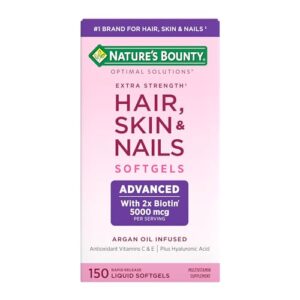
This drugstore staple leans on 150 rapid-release softgels packed with antioxidant vitamins A, C, and E, plus biotin and hyaluronic acid for hair, skin, and nail support.
You’ll also find a mineral trio—zinc gluconate, selenium yeast, and manganese gluconate—rounding out the "key nutrients" list, alongside argan oil, hydrolyzed collagen, and horsetail extract for good measure.
That’s a lot of actives in one bottle, which appeals if you want broad coverage without juggling separate supplements. Just know the softgel shell contains gelatin, so it’s a no-go for vegans.
Consistency matters most here: skipping doses or expecting overnight thickness will leave you disappointed. Taken daily as directed, it’s a reasonable, budget-friendly option for filling nutritional gaps tied to hair and nail health.
| Best For | Anyone looking for an affordable, all-in-one daily supplement to support healthy hair, skin, and nails without juggling multiple bottles. |
|---|---|
| Format | Softgel |
| Contains Biotin | Yes |
| Daily Dosage | Varies |
| Time To Results | Gradual |
| Gluten Free | Yes |
| Target Audience | General adults |
| Additional Features |
|
- Combines biotin, vitamins A, C, and E, and hyaluronic acid in one convenient rapid-release softgel
- Free from artificial colors, flavors, sugar, dairy, soy, gluten, wheat, yeast, fish, and sodium
- Budget-friendly way to fill nutritional gaps tied to hair, skin, and nail health
- Softgel shell contains gelatin, making it unsuitable for strict vegans
- Requires consistent daily use, with results that build gradually rather than overnight
- Not a substitute for medical treatment if hair, skin, or nail issues stem from an underlying deficiency
8. Biotin Collagen Hair Skin Nails Supplement
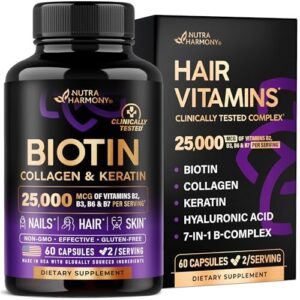
Here’s a formula that goes all-in: 25,000 mcg of biotin paired with collagen peptides, keratin, and hyaluronic acid, all in one capsule stack.
That biotin dose sits well above typical needs, so it’s really built for people with a confirmed deficiency rather than everyday maintenance. Collagen and keratin bring the amino acids your hair actually uses to build structure, while hyaluronic acid helps scalp and skin hydration.
Expect 90 days minimum before judging results. One caveat worth remembering: high-dose biotin can throw off thyroid and cardiac lab tests, so mention it to your doctor before bloodwork. If you’re not deficient, don’t expect miracles—just steady, incremental support.
| Best For | Men and women looking for daily support for hair strength, nail resilience, and skin hydration, especially those with a confirmed biotin deficiency rather than general maintenance needs. |
|---|---|
| Format | Capsule |
| Contains Biotin | Yes |
| Daily Dosage | 2 capsules |
| Time To Results | 30-90 days |
| Gluten Free | Yes |
| Target Audience | Men and women |
| Additional Features |
|
- Combines biotin, collagen, keratin, and hyaluronic acid in one convenient daily formula
- Made in the USA in GMP-certified facilities and third-party lab tested, with no GMOs or gluten
- Works for all hair types, including color-treated hair, while also supporting skin elasticity
- Requires 30–90 days of consistent use before visible results appear
- High-dose biotin can interfere with thyroid and cardiac lab test results, so doctors should be informed before bloodwork
- Not a substitute for medical treatment, and those with health conditions should consult a professional first
How to Choose Hair Thickness Supplements
With so many hair supplements on shelves, picking the right one can feel overwhelming fast. The truth is, the best choice depends on your specific needs, not just flashy packaging or bold claims. Here’s what actually matters when you’re comparing your options.
Match Supplement to Deficiency
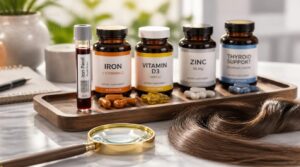
Guessing your deficiency wastes money. Get blood tests for ferritin, vitamin D, zinc, and thyroid function before buying anything.
Fatigue points to iron deficiency; low sun exposure suggests vitamin D deficiency. Malabsorption issues like celiac disease or bariatric surgery raise your risk.
Once you know the gap, choose a targeted supplement addressing it directly, not a random multivitamin promising thicker hair overnight.
Compare Ingredient Dosages

Numbers lie when labels hide behind mixes. A bottle boasting "5,000 mcg biotin" per serving might mean two capsules daily, not one.
- Elemental zinc vs. compound weight
- Serving size vs. daily total
- Proprietary mix transparency gaps
- Bioavailability differences across forms
Check whether iron’s elemental amount is listed, and watch for nutrient stacking if you’re already taking a multivitamin alongside your hair supplement.
Gummies Vs Capsules
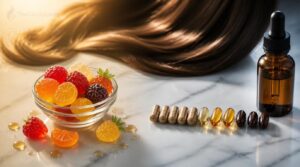
Gummies vs. capsules often comes down to taste vs. potency. Gummies win on flavor but pack sugar and additives, plus lower doses per piece.
Capsules and softgels deliver higher-potency oral supplements with fewer swallowing-friendly compromises. Nutrient stability also favors capsules—dry formulations resist degradation better than gummies’ moisture-heavy matrix, which affects how these dietary supplements for hair perform over time.
Single Nutrient Vs Multivitamin
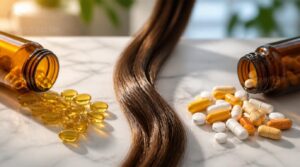
Single-nutrient supplements shine for targeted deficiency correction—think vitamin D alone if labs show you’re low. Single options simplify adjusting specific doses without nutrient absorption competition.
Multivitamins spread B vitamins, zinc, and others across one dose, filling dietary gaps but diluting each nutrient.
Managing cumulative intake matters either way: stacking multiple dietary supplements for hair without checking totals risks overdoing it.
Budget and Daily Use

Whether you go single-nutrient or multivitamin, cost per serving decides if you’ll stick with it. Check price against servings per bottle—larger containers often beat small ones per day.
Subscription savings help with routine restocking, but only if daily dose consistency stays solid. Pair doses with meals for absorption, and track intake so you’re paying for results, not guesswork.
Safety, Results, and Realistic Hair Growth Timelines

Popping a supplement is the easy part—knowing what to actually expect is where most people get tripped up. Hair growth runs on a slow biological clock, and safety matters just as much as patience here. Let’s walk through the timelines, risks, and red flags you need on your radar before you commit to a bottle.
When Results May Appear
Patience matters here: your hair growth cycle means new strands need weeks to travel from follicle to visible length, so density lags behind what’s actually happening beneath the scalp. Early shedding signs often ease first, within a month or two.
True thickness—driven by nutrient absorption speed and growth phase progression—usually shows up around the three-to-six-month mark, matching most clinical efficacy trial timelines.
Possible Side Effects
Because more nutrients don’t always mean better results, side effects deserve real attention. Iron gastrointestinal distress—nausea, constipation, dark stools—is common.
Zinc causes similar stomach upset and, over time, zinc-copper imbalance. High selenium risks selenium toxicity symptoms like brittle nails and garlic breath.
Magnesium may trigger diarrhea, and magnesium kidney risks matter if function’s impaired. Watch for biotin acne breakouts, too.
Biotin Lab Test Warnings
Here’s something most bottle labels won’t tell you: biotin can throw off blood test results.
- Falsely abnormal thyroid readings
- Dangerous false cardiac marker (troponin) results
- Skewed hormone panels
- Clinical mismatch between labs and symptoms
- Risk highest with megadose gummies/capsules
Always disclose supplement use before bloodwork—laboratory test interference from biotin is real, and the FDA’s flagged it directly.
Always tell your doctor about biotin use before bloodwork—the FDA warns it can skew lab results
Iron and Vitamin Toxicity
More is not always better, especially with iron. Doses above 20 mg/kg elemental iron can cause GI toxicity; over 60 mg/kg risks severe, even lethal poisoning—kids face the highest danger from adult formulas. Since some nutrient deficiencies can increase the risk of iron toxicity, it’s wise to keep an eye on your overall intake and consider how scalp pH balance and related nutrient needs might impact your hair and skin health, too.
Chronic overload harms the liver and heart over time. Excess vitamin A and D (hypervitaminosis D) carry similar risks, plus magnesium toxicity causes GI upset. Blood testing—serum iron, not ferritin—confirms severity.
When to Ask a Doctor
Not every hair-thinning case is DIY-friendly. Call your provider if shedding suddenly worsens, you notice a rash, swelling, or fever, or new medications trigger odd symptoms—biotin can skew thyroid and cardiac lab tests, so mention it before any blood test.
Severe pain, dizziness, or signs of a serious allergic reaction warrant urgent care, not another supplement bottle.
When in doubt, get deficiency testing first.
Frequently Asked Questions (FAQs)
What is the best vitamin to thicken hair?
Funny thing: there’s no single magic vitamin that thickens hair overnight, despite what the bottle promises. Biotin, vitamin D, and zinc each support keratin production and follicle cycling individually, but correcting a true deficiency matters more than megadosing any one nutrient.
What supplements are good for Hashimoto’s hair loss?
Since Hashimoto’s often lowers vitamin D and disrupts hormone balance, focus on vitamin D, selenium, and iron to support thyroid function, manage inflammation, and address nutrient deficiency-related shedding alongside your endocrinologist’s care.
Will HRT make my hair grow?
Possibly, if hormones are the cause. Estrogen helps the anagen growth phase, and restoring it can counter androgen-related shrinkage. Expect reduced shedding first, with thickness improving over months—genetic or nutrient-driven thinning may need vitamins and supplements for hair thickness too.
What vitamins are good for lupus hair loss?
Quiet inflammation, active shedding: lupus pulls follicles between calm and chaos.
Vitamin D, iron, and zinc support follicle cell development and immune balance, while vitamin E eases oxidative scalp stress—together helping manage lupus-related hair loss alongside proper medical treatment.
Do supplements and vitamins work to thicken hair?
Yes, but only when a real nutrient deficiency is fueling the shedding—iron, vitamin D, or biotin, for example. Genetic thinning won’t budge from a bottle. Results depend on correcting actual imbalances, not stacking supplements hoping for hair density gains you weren’t nutritionally missing.
Even vitamin K plays a supporting role here, since its different forms affect how well your body actually uses the nutrients that matter for hair growth.
Is it possible to speed up hair growth?
Genetics set your baseline—about half an inch monthly, no supplement changes that. But correcting nutrient deficiencies like low iron or vitamin D promotes healthier follicle cycling, reducing shedding. Diet and supplements won’t outrun biology, but they can help you reach your natural potential.
Which vitamin deficiency causes hair loss?
Iron and vitamin D deficiencies top the list, often causing diffuse thinning.
Low ferritin, impaired vitamin D receptor activity, poor B12 absorption, and zinc deficiency (hurting keratin production) contribute too—while true biotin deficiency stays rare.
Bloodwork confirms which nutrient gap needs correcting.
Does biotin work for hair growth?
Think of it as a lock that only opens for the right key: biotin mainly helps when deficiency symptoms exist, supporting keratin production and hair follicle cycles. Otherwise, standalone benefits stay limited, so gummies work best paired with balanced nutrition.
How do you use rosemary oil for hair growth?
Mix 3 drops rosemary oil per teaspoon of carrier oil (coconut or jojoba), massage into your scalp for coverage, then leave on 5–10 minutes to overnight. Start 1–2 times weekly, increasing frequency only as your scalp tolerates it.
Which vitamin makes your hair thicker?
Truth is, no single vitamin builds thicker hair alone—it’s teamwork. Vitamin D helps with follicle cycling, biotin aids keratin only if you’re deficient, vitamin C drives collagen synthesis, and zinc plus iron enable absorption balance your scalp actually needs.
Conclusion
Thicker hair grows like a garden, slow and dependent on the right soil, not a magic seed.
Your bloodwork tells the real story, and the smartest vitamins and supplements for hair thickness fill the gaps: ferritin, zinc, or vitamin D actually reveal.
Skip the guesswork, test first, then choose with precision. Give it a full three to six months, stay consistent, and let your strands do the talking, because real results grow from data, not hope.