This site is supported by our readers. We may earn a commission, at no cost to you, if you purchase through links.
Your hair can grow half an inch every month, yet many people struggle to retain even a fraction of that length. The culprit? Daily manipulation that weakens strands, creates friction, and leads to breakage faster than new growth can compensate.
Protective hairstyles for hair growth flip this script entirely by keeping your hands off your hair, tucking away fragile ends, and creating a low-stress environment where length accumulates naturally. Instead of fighting a losing battle with combs, heat tools, and constant restyling, you’re giving your strands weeks or even months to thrive undisturbed.
Whether you’re dealing with shrinkage that hides your progress or breakage that sabotages your goals, the right protective style transforms hair care from a daily chore into a growth-focused strategy that actually works.
Table Of Contents
- Key Takeaways
- What Are Protective Hairstyles for Hair Growth?
- How Protective Hairstyles Minimize Hair Damage
- Popular Protective Hairstyles for Growth
- Choosing The Right Protective Style for You
- Maintaining Hair Health in Protective Styles
- Frequently Asked Questions (FAQs)
- What is the best protective style for hair growth?
- Which hairstyle grows hair faster?
- What are protective styles for natural hair?
- What works best for hair growth quickly?
- What is the most protective hairstyle?
- Does wearing a protective hairstyle improve hair growth?
- Do protective hairstyles work?
- What are the best protective hairstyles for curly hair?
- What protective style is best for hair growth?
- Which hairstyle is best for hair growth?
- Conclusion
Key Takeaways
- Protective hairstyles work by minimizing daily manipulation and tucking ends away from friction, which doesn’t speed up growth but dramatically improves length retention by preventing breakage that typically outpaces your natural half-inch monthly growth rate.
- Knotless braids, box braids, and twist styles (Senegalese, Marley, flat twists) rank as top protective options because they reduce scalp tension while shielding strands from environmental damage, clothing friction, and constant styling stress that quietly sabotages your growth goals.
- Installation matters as much as the style itself—tension-free braiding techniques, lightweight extensions, and proper edge protection prevent traction alopecia and follicle damage, while rushed or overly tight installations turn “protective” styles into growth saboteurs.
- Maintenance between installation and removal determines whether you’ll see real results: consistent scalp moisturizing every 2-3 days, silk or satin nighttime protection to reduce friction, and gentle removal with conditioner are non-negotiable steps that separate length retention from wasted effort.
What Are Protective Hairstyles for Hair Growth?

Protective hairstyles are low-manipulation styles that tuck your hair ends away, reducing friction from daily styling, clothing, and environmental exposure.
These easy protective hair styling tips can help you maintain healthy hair without sacrificing style or spending hours on maintenance.
By keeping your strands secure and minimizing breakage, these styles create the ideal conditions for length retention and healthier growth over time. Let’s break down what makes a style truly protective, how it helps your hair goals, and the key features to look for.
Definition and Purpose
Protective hairstyles are styles that minimize manipulation and stress on your scalp, keeping strands aligned and shielded from daily wear. They’re your hair’s best friend when you’re chasing length, because they create a barrier against friction, reducing breakage and moisture loss while supporting hair growth through gentle styling practices.
Hair Growth Benefits you’ll love:
- Low manipulation means fewer opportunities for breakage during your hair growth and maintenance journey
- Protective hairstyle options like braids and twists keep ends tucked safely away from environmental damage
- These hair health tips reduce combing frequency, preserving cuticle integrity for stronger strands
- Protective style goals include easier moisture retention and a stable scalp environment for hair protection
How Protective Styles Support Hair Growth
When you shield your strands from constant combing and heat, you’re giving hair follicle health a real boost. Low manipulation protective styling reduces mechanical stress that weakens the cuticle, while gentle styling practices keep ends tucked away from friction.
This protective hairstyles approach fosters hair growth and maintenance by preserving moisture, minimizing breakage, and creating the stable environment your hair needs to thrive—that’s the real protective style benefits magic.
For specific techniques that minimize hair breakage, see these best protective hairstyles for growth.
Key Characteristics of Protective Hairstyles
Understanding what makes a style truly protective helps you choose the right option for your hair growth journey. Authentic protective hairstyles for growth share these defining traits:
- Low manipulation styling that keeps hands off your strands for weeks at a time
- Hair shielding through tucked ends and minimal friction with clothing
- Style versatility across different hair texture types while supporting growth stimulation
These low maintenance hair styles work because they prioritize protective styling principles over fleeting trends.
They keep your strands tucked away from daily friction and breakage, which is especially helpful if you’re dealing with split ends and want natural repair solutions.
How Protective Hairstyles Minimize Hair Damage

The real magic of protective hairstyles isn’t just about looking good—it’s about giving your hair a break from the daily wear and tear that quietly causes damage over time.
When you tuck those ends away and minimize the constant touching, brushing, and styling, you’re creating a shield that lets your strands thrive instead of just survive. Here’s how protective styles work behind the scenes to keep your hair healthier and stronger.
Protective styles create a shield that lets your hair thrive by minimizing daily manipulation and environmental damage
Reducing Daily Manipulation
Think of minimal handling as your hair’s best friend during its growth journey. Low manipulation hair styles lock strands at the scalp and ends, cutting daily combing by up to 50 percent after the first week.
You’ll spend less time detangling because protective hairstyles for growth create one cohesive area to manage. Gentle tension and reduced friction mean fewer brushing sessions, letting your hair rest while you go about your day.
Preventing Breakage and Split Ends
Sealed ends are the secret to real hair retention strategies. When you tuck your ends into box braids or twists, you stop split end repair from becoming a monthly ritual.
Low manipulation hair styles reduce friction against fabric by 30 percent, so frizz prevention and damage control happen naturally. That’s hair strengthening in action—your protective styling for hair growth keeps fragile tips intact.
Shielding Hair From Environmental Stress
Beyond manipulation, your hair faces daily attack from UV protection threats, air pollution, and humidity control challenges.
Protective styles weave a natural shield against wind damage and temperature extremes—box braids block 90 percent of direct sun exposure, while cornrows limit pollutant contact with your strands.
This hair care and maintenance approach anchors the natural hair movement, turning protective styling for hair growth into your environmental defense system. For more on how pollution and other external factors influence hair health, explore these environmental stressors affecting hair.
Popular Protective Hairstyles for Growth
Now that you understand how protective styles work, let’s talk about your options. From classic braids to modern twists, there’s a style that fits your hair texture, lifestyle, and growth goals.
Here are the most popular protective hairstyles that deliver real results.
Box Braids and Knotless Braids
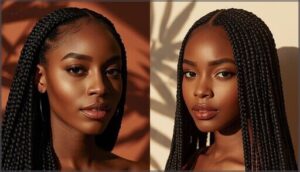
Box braids and knotless braids stand out as top protective styles, each offering unique benefits for your hair growth strategies. Both use braiding techniques with hair extension options to create stunning braid patterns that last 4 to 8 weeks, shielding your strands from daily wear.
- Box braids feature classic, defined sections with visible roots and crisp parting
- Knotless braids use a feed-in method that reduces scalp tension dramatically
- Proper scalp massage and moisture care boost braid durability between sessions
- Quality braiding tools guarantee even tension and prevent unnecessary breakage during installation
Twists (Senegalese, Marley, Flat Twists)
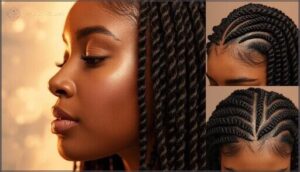
Twists offer textured hair a wonderful range of protective styles, from sleek Senegalese twists with silky hair extension fibers to chunky Marley twists that celebrate natural volume.
Flat twists hug the scalp closely, creating intricate patterns with minimal braiding tools. Each twist variation reduces daily manipulation, and proper twist installation on moisturized strands ensures your protective styles stay fresh for weeks while supporting healthy growth.
Cornrows and Fulani Braids
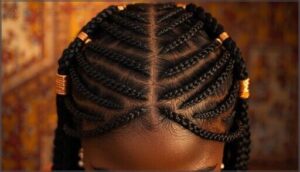
Cornrows keep your strands tucked close to the scalp in sleek, continuous braid patterns, reducing friction and protecting hair ends from daily wear.
Fulani braids, rooted in West African Fulani culture, add a signature central cornrow plus decorative side sections often adorned with beads or metallic accents. Both cornrow techniques deliver long-lasting protective styles for textured hair, supporting growth while celebrating artistry and heritage.
Faux Locs and Crochet Styles
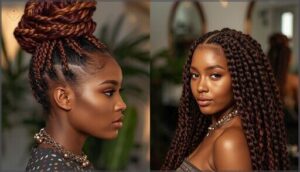
Faux locs mimic traditional dreadlocks by wrapping synthetic hair around your natural strands, offering a commitment-free option that lasts four to eight weeks.
Crochet braids use a hook to attach pre-styled extensions onto cornrows, cutting installation time while delivering diverse protective styles. Both shield natural hair from manipulation, support hair growth, and offer endless crochet style variations with proper faux loc maintenance and hair extension care.
Choosing The Right Protective Style for You

Not every protective style works for everyone, and choosing the wrong one can actually slow down your progress.
Your hair’s unique texture, your daily routine, and how you care for your scalp all play a role in which styles will help you thrive. Let’s break down how to pick a protective style that actually protects your hair instead of stressing it out.
Matching Styles to Hair Type and Texture
Your hair’s unique personality guides every styling decision you make. Fine strands thrive with looser braids and tension reduction techniques, while thick, Afro textured hair accommodates chunky cornrows beautifully.
Hair texture analysis reveals that coily curl pattern preservation needs stretched styles, and porosity considerations mean low-porosity hair requires moisture-rich prep before installation. Style customization matched to your natural hair texture and type prevents damage while maximizing protective styles’ growth benefits.
Considering Lifestyle and Maintenance Needs
Lifestyle considerations shape your protective style choice just as much as hair texture does. Your daily routines dictate maintenance schedules, whether you’re hitting the gym five days weekly or working long shifts without time for hair care.
Low maintenance options like box braids or faux locs suit busy schedules, while styles requiring frequent moisture checks demand more commitment. Style customization means matching natural hair protection to your real life, not an imaginary one.
Avoiding Styles That Cause Tension or Damage
Even low maintenance styles backfire when installed incorrectly. Tension free braids start with loose, evenly distributed bases that don’t tug at your scalp or edges.
Edge protection matters most at your hairline, where follicles are most vulnerable to traction alopecia. Gentle styling with lightweight extensions prevents hair breakage while supporting natural hair retention.
If your scalp aches after installation, that’s hair maintenance gone wrong, not hair health.
Maintaining Hair Health in Protective Styles

Getting your protective style installed is just the beginning—the real work happens in how you care for it.
Your hair and scalp still need attention while they’re tucked away, or you’ll undo all the growth benefits you’re aiming for. Let’s walk through the essential maintenance steps that keep your hair thriving from installation to takedown.
Scalp and Moisture Care
Keeping your scalp hydrated is the secret ingredient to thriving hair beneath protective styles. You can’t expect hair retention without moisture balance, and pH levels matter more than you might think—low pH products lock in hydration and smooth your strands.
Here’s your essential routine:
- Moisturize scalp and hair every 2–3 days with lightweight oils like jojoba or a glycerin-based spray to support natural hair growth tips.
- Gently exfoliate your scalp weekly to remove buildup and boost blood flow.
- Cleanse bi-weekly with diluted, pH-balanced shampoo to maintain hair health and beauty.
Understanding your hair porosity guides which products seal moisture best, ensuring your hair care and styling efforts actually work. Your scalp needs consistent attention—not just at install—to keep follicles happy and hair moisturizing effective throughout your protective journey.
Nighttime Protection (Silk/Satin)
While your scalp thrives on moisture during the day, nighttime hair care determines whether you’ll wake up with breakage or length retention. Friction reduction with a silk bonnet benefits your protective hairstyles by smoothing cuticles overnight, while a satin pillowcase offers backup protection for natural hair when sleep cap styles slip off—your secret weapon against morning frizz and damaged strands.
| Protection Method | Best For | Key Advantage |
|---|---|---|
| Silk Bonnet | Braiding and Twisting styles | Stays secure, preserves curl pattern |
| Satin Pillowcase | All hair types | Reduces moisture loss while you sleep |
| Sleep Cap Styles | Loose natural hair | Breathable, prevents edge compression |
| Combination Approach | Maximum hair health and beauty | Doubles friction protection for hair care and styling |
Safe Installation and Removal Practices
The way you put in and take out protective styles makes or breaks your growth journey. Start with hair sectioning using wide-tooth combs to avoid snagging, then practice tension free braiding that doesn’t pull at your roots.
When it’s time for gentle removal, saturate box braids or cornrows with conditioner first—this simple damage prevention step in your braiding and twisting techniques keeps strands intact for your next braided updo.
Frequently Asked Questions (FAQs)
What is the best protective style for hair growth?
Box braids and knotless braids stand out for Natural Hair Growth because they reduce tension, tuck ends away, and allow easy scalp access—combining Protective Benefits with Style Durability across all Hair Texture types.
Which hairstyle grows hair faster?
No hairstyle grows hair faster—growth patterns stay consistent at roughly half an inch monthly.
However, protective hairstyles like box braids, cornrows, and braided updos retain length by reducing breakage, supporting natural hair growth and thickness over time.
What are protective styles for natural hair?
Protective hairstyles for natural hair include braids, twists, cornrows, and updos that tuck ends away from friction.
These style options reduce daily manipulation, preserve moisture, and support hair growth by minimizing breakage across all hair texture types.
What works best for hair growth quickly?
Consistent moisture, regular scalp massages, and gentle protective hairstyles like box braids or twist-outs support fast regrowth.
Pair these hair growth tips with balanced nutrition, healthy scalp care, and stress management for quick lengthening results.
What is the most protective hairstyle?
Looking for maximum protection? Cornrows reign paramount for hair growth tips, offering low manipulation techniques and shielding ends from friction.
Box braids and Senegalese twists follow closely, delivering hairstyle durability with gentle hair care.
Does wearing a protective hairstyle improve hair growth?
Yes, but indirectly. Protective styles don’t accelerate your Hair Growth rate—genetics determines that.
Instead, they improve length retention by reducing Hair Breakage through less manipulation, helping you keep what grows naturally.
Do protective hairstyles work?
Yes, when installed correctly and maintained with regular scalp care, protective hairstyles work by reducing breakage and retaining length—though they don’t accelerate Hair Growth Rates, they preserve what grows.
What are the best protective hairstyles for curly hair?
Box braids, knotless braids, Senegalese twists, and Marley twists are ideal for curly hair.
Flat twists, cornrows, and twist-outs preserve curl definition while minimizing breakage, making them adaptable protective hairstyles for natural hair.
What protective style is best for hair growth?
Knotless braids and box braids offer the best hair growth results, reducing tension while protecting ends.
Marley twists and Senegalese twists also excel when properly installed, allowing scalp access for moisture care during growth phases.
Which hairstyle is best for hair growth?
Twist and shout—knotless braids, box braids, and Marley twists win for hair growth tips. These low manipulation, gentle styling braiding techniques suit any hair texture, while cornrows and micro braids protect your strands beautifully.
Conclusion
Protective hairstyles for hair growth work because they remove constant stress, reduce friction from daily styling, and give your ends the break they desperately need.
When you stop fighting your hair and start working with it—locking in moisture, choosing tension-free installations, respecting your texture—length retention becomes automatic instead of accidental. Your strands were always capable of growing; now you’re finally creating the conditions where that growth can stay on your head instead of ending up on your pillowcase.
- https://www.rev-320.com/blogs/hair-care-blogs/protective-hairstyles-that-promote-hair-growth
- https://www.davines.com/blogs/news/protective-hairstyles
- https://www.garnierusa.com/tips-how-tos/what-are-protective-hairstyles-and-why-are-they-good-for-you
- https://www.curlynikki.com/preventing-and-treating-natural-hair.html
- https://mielleorganics.com/blogs/texture-toolkit/10-protective-styles-for-hair-growth