This site is supported by our readers. We may earn a commission, at no cost to you, if you purchase through links. This content is for general informational and educational purposes only and is not a substitute for professional medical, dermatological, or nutritional advice.

That weedy yellow flower taking over your lawn? It’s been used as an herbal remedy for centuries, and your scalp might actually love it. Dandelions pack iron, potassium, and antioxidants that plain water rinses can’t touch.
Washing hair in dandelion tea sounds like something out of your grandmother’s kitchen, and honestly, it kind of is. But there’s real chemistry behind it: taraxasterol calms irritation, natural acids lift buildup, and polysaccharides give your scalp a gentle detox.
Grab a mason jar and some dried root, because you’re about to turn your kitchen into a DIY hair apothecary.
Table Of Contents
- Key Takeaways
- What is a Dandelion Tea Hair Rinse?
- Potential Dandelion Tea Benefits for Hair
- How to Make Dandelion Tea for Hair
- How to Wash Hair With Dandelion Tea
- Dandelion Hair Rinse Safety Precautions
- Frequently Asked Questions (FAQs)
- How often should dandelion tea be used for hair washing?
- Are there any precautions to take when using dandelion tea on hair?
- Are there any natural alternatives to dandelion tea for hair washing?
- Are there any benefits to using dandelion tea for hair washing?
- How long before seeing dandelion hair results?
- Does dandelion tea work on chemically treated hair?
- Can you combine dandelion with other herbs?
- Is dandelion tea safe during pregnancy breastfeeding?
- How long until you notice results from dandelion rinses?
- Can dandelion tea rinse be used on colored hair?
- Conclusion
Key Takeaways
- Dandelion tea rinses work through real chemistry—compounds like taraxasterol calm irritation while natural acids and polysaccharides lift buildup and give your scalp a gentle detox.
- Brewing is simple: steep a tablespoon of dried root per cup of near-boiling water for 10-15 minutes, cool it, strain twice, then pour it onto your scalp after shampooing (never instead of).
- Always patch test before your first rinse, since dandelion is a ragweed cousin and can trigger allergic reactions in pollen-sensitive folks.
- The science is promising but still thin—most studies are small and short-term—so treat this as a gentle scalp booster rather than a proven hair-growth miracle.
What is a Dandelion Tea Hair Rinse?

So what’s actually going on when you pour cooled tea over your strands? It’s less mysterious than it sounds, but there’s real chemistry behind it. Here’s what you need to know before you try it yourself.
For deeper results, many people swear by a burdock root tea rinse for hair growth, which pairs the same pour-over method with roots known for nourishing the scalp.
How The Herbal Rinse Works
Picture warm tea soaking straight into your scalp instead of your cup. That’s the magic here: nutrient absorption delivers iron, potassium, and vitamin A to follicles, while polysaccharides trigger scalp detox, dissolving buildup.
Antioxidants fight oxidative stress, anti-inflammatory compounds calm irritation, and yes, some studies suggest gene expression shifts, supporting real hair growth, not just a temporary shine.
Dandelion Root Versus Leaves
Now, root or leaf? They’re the same plant, but not the same rinse.
- Root: earthy, fibrous, rich in inulin
- Leaves: bitter, tender, packed with vitamins A, C, K
- Harvest: leaves all season, roots come fall
Leaves lean toward hair growth support; roots bring grounding, mineral-heavy depth to your herbal hair rinse. For best results, roots should be gathered following proper dandelion root harvesting guidelines in late autumn, when inulin content is at its peak. Your scalp health goals decide which one wins.
Hair Rinse Versus Shampoo
Root or leaf, either way this rinse isn’t shampoo, and that’s the point. Shampoo uses surfactants for real cleansing mechanism, lifting sebum and buildup. A dandelion rinse skips the foam entirely.
Think hair feel impact instead of deep clean. Routine fitting matters too, use it after shampoo, not instead of it, and it plays nice with most product compatibility needs in natural hair care.
Potential Dandelion Tea Benefits for Hair

So what’s this weed actually doing for your hair? Turns out, quite a bit — from calming an angry scalp to giving your strands some real backbone. Here’s what the research (and plenty of curious rinsers) have found so far.
Soothing Scalp Irritation
An itchy, burning scalp is miserable, and dandelion’s anti-inflammatory compound taraxasterol goes straight after that discomfort. Chemical triggers, weather, even stress can spark redness and tingling.
- Calming itchy scalp after long days
- Real scalp irritation relief, not masking
- Fading uncomfortable redness naturally
- Gentle relief for reactive skin
- Confidence from a soothing herbal rinse
Massage it in. Your scalp deserves that kindness.
Managing Oil and Dandruff
Greasy roots by day two? Dandelion tea has mild antifungal action against Malassezia, the yeast behind flaky, itchy scalps. It also nudges sebum regulation, so oil doesn’t build into that yellow, sticky mess.
For more ways to rebalance a Malassezia-prone scalp, this guide to natural remedies for dandruff pairs well with a dandelion tea rinse routine.
Pair your rinse with washing more often for real dandruff control. Together, they support scalp health without stripping strands, keeping oily scalp balance in check between washes.
Removing Product Buildup
Wax, gel, dry shampoo, that film builds up fast, and dandelion tea helps with it through natural acid cleansing that breaks residue down at the source.
- Gentle exfoliation lifts flakes and product film
- Mild acids target buildup prevention long-term
- Helps cuticle penetration for real cleansing
- Works as a natural hair rinse, not harsh clarifying wash
Supporting Hair Strength
Think of dandelion tea as a nutrient IV drip for your strands. Iron, calcium, magnesium, and potassium fuel mineral fortification and hair shaft nourishment, while vitamins A, C, and E drive antioxidant protection and hair strand strengthening.
Dandelion tea works like a nutrient IV drip, feeding strands iron, calcium, magnesium, and potassium for real strength
| Nutrient | Hair Benefit |
|---|---|
| Iron | Oxygen delivery |
| Calcium | Breakage reduction |
| Potassium | Scalp hydration |
Limits of Scientific Evidence
Before you get too excited, let’s talk hype versus hard data. Most dandelion tea studies use fewer than 50 participants, run just 4-12 weeks, and lack standardized prep methods, some steep leaves, others roots. Follow-up data beyond six months? Basically nonexistent.
Promising, sure, but treat dandelion rinses as a gentle scalp health booster, not a proven hair growth miracle.
How to Make Dandelion Tea for Hair
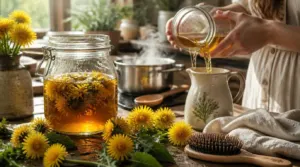
Ready to brew your own batch? Making a dandelion hair rinse is easier than you’d think, and you’ve got some choices to make along the way. Here’s exactly what you’ll need, step by step.
Choosing Fresh or Dried Dandelion
Fresh or dried, does it matter? A bit. Fresh leaves picked in spring pack the most punch before sun exposure adds bitterness.
Dried dandelion offers convenience and longer shelf life once properly dried and stored. Root gets dried and ground separately.
Since potency shifts with region, soil, and part used, dried, labeled products often give more consistent results for your natural hair care routine.
Dandelion Hair Rinse Recipe
Ready to build your base recipe? Start with 1 tablespoon dried dandelion root per cup of near-boiling water, poured into a glass jar (metal reacts with the compounds).
Boost it with:
- A pinch of rosemary for scalp circulation
- A splash of apple cider vinegar for pH balance
- A teaspoon of honey, a natural humectant
Skip added sugar. Your scalp doesn’t need the extra buildup.
Steeping, Cooling, and Straining
Once your jar’s ready, cover it and let it steep 10-15 minutes. That covered lid traps heat, so extraction stays strong instead of fading fast.
| Time | Result | Fix |
|---|---|---|
| Under 10 min | Weak rinse | Steep longer |
| 10-15 min | Balanced | None needed |
| Over 20 min | Bitter, harsh | Strain sooner |
Cool completely before straining twice through cloth. Clear liquid prevents gritty residue in hair.
Optional Herbs and Flaxseeds
Once you’ve got clear dandelion tea, why stop there? A flaxseed mucilage boost adds serious slip and shine. Try mixing in:
- Nettle chamomile mix for silica and scalp calm
- Burdock root combination to fight dandruff
- Marshmallow hydration for detangling
- Calendula soothing properties for irritation
- Flaxseeds for elasticity and gloss
This herbal hair tonic upgrade turns a simple rinse into something special.
Storing Leftover Hair Rinse
Made extra? Pour your dandelion hair rinse into a clean, dry, tightly-lidded container, label it with the date, and refrigerate.
| Storage Factor | Best Practice |
|---|---|
| Container | Clean, fully dried |
| Temperature | Refrigerated |
| Shelf life | A few days |
| Labeling | Date it |
| Signs to toss | Cloudiness, odor |
Use a clean spoon when pouring, never dip used items back in. This herbal hair care staple deserves the same hygiene as any natural conditioner.
How to Wash Hair With Dandelion Tea
Got your tea brewed and cooled? Good, now comes the fun part. This isn’t complicated, but a few small details make the difference between a so-so rinse and one that actually works. Here’s exactly how to pull it off, step by step.
Gather Your Rinse Supplies

Before you get your hair wet, line up your gear. You’ll want a fine-mesh strainer, a heat-resistant glass pitcher, and a digital scale for accuracy. Amber bottles keep your rinse fresh for days, while a spray bottle makes application a breeze. Toss in a silicone spatula for stirring, and you’ve got everything for smooth, mess-free herbal rinsing.
Shampoo and Rinse Hair

Start with warm, not hot, water, since heat strips your scalp’s natural oils and leaves it feeling tight and irritated.
Work your shampoo into a lather with a 30-second scalp massage, letting those surfactants lift dirt and sebum.
Rinse thoroughly, this step matters because leftover cleanser residue can dull your dandelion tea’s effects before it even touches your strands.
Apply From Roots to Ends

Pour that cooled dandelion tea straight onto your scalp first, not your ends, you want those roots soaked where oil and buildup actually live.
Sectioning for coverage matters here, small sections plus circular massage motion get rinse into every inch, crown included.
- Section hair, apply at roots
- Massage in circles, fingertips only
- Smooth downward through mid-lengths
- Detangle as you go
- Saturate ends last
Let The Rinse Sit

Patience pays off here. Give it 5 to 10 minutes while conditioner processes, that’s your sweet spot.
Massage the scalp gently as it sits, boosting circulation and helping nutrients actually penetrate rather than sitting on the surface. Skip the shortcuts. That short window is enough for compounds to support scalp health and hair growth without over-drying strands.
Frequency and Aftercare Tips

How often should you actually do this? It depends on your hair type, so don’t just copy your friend’s routine.
- Oily or normal hair: once weekly
- Dry or damaged: every two weeks
- Sensitive scalp: monthly
- Very oily, tolerant scalp: twice weekly
- New to rinsing: start every 10-14 days
Finish with cool water to seal cuticles, then refrigerate leftover rinse up to 10 days for continued scalp hydration and breakage reduction.
Dandelion Hair Rinse Safety Precautions

Before you go pouring dandelion tea all over your scalp, let’s talk safety for a second. This rinse is gentle, but it’s not risk-free for everyone, especially if you’ve got allergies or a sensitive scalp. Here’s exactly what to check before — and after — you try it.
Perform a Patch Test
Skipping the patch test is how good hair days turn into itchy scalp regrets. Dab diluted dandelion tea (1:4 ratio) on a clean patch behind your ear or forearm, then leave it uncovered.
Watch it for 24-48 hours. Redness, tingling, or swelling? That’s your allergy sensitivity check doing its job before scalp inflammation becomes a bigger headache.
Check for Ragweed Allergies
Ragweed and dandelion are botanical cousins, so if pollen already wrecks your sinuses, proceed carefully.
- Sneezing fits
- Itchy, watery eyes
- Nasal congestion
- Throat irritation
- Symptoms peaking in late summer/fall
That seasonal pattern matters: ragweed allergy timing overlaps with peak dandelion season. If you’re pollen-sensitive, ask your allergist about a ragweed allergy test before brewing this rinse for your scalp.
Watch for Scalp Irritation
Beyond pollen worries, keep an eye on your scalp itself. Dandelion’s anti-inflammatory properties usually calm irritation, but everyone’s skin reacts differently.
Watch for prickling, burning, or unusual itchy scalp sensations after rinsing, that’s your cue something’s off. Mild redness or discomfort without a rash still counts as a sensitivity trigger.
If symptoms linger, skip next application and reassess.
Avoid Contaminated Wild Dandelions
Your scalp isn’t picky about what it absorbs, so where you pick matters as much as how you brew.
Contaminated wild dandelions may carry:
- Pesticide residues from roadside spraying
- Heavy metal buildup from traffic-heavy soil
- Microbial contamination or plant misidentification risks
Stick to organic dandelion tea or verified patches, and wash everything thoroughly before your hair rinse touches your scalp health.
When to Consult a Dermatologist
Even organic dandelions have limits, and so does home care.
If persistent scalp irritation lasts past two weeks, or covers over 10% of your scalp, see a dermatologist. Same goes for hives, unexplained hair loss beyond 100 strands daily, dandruff that won’t quit after three months, or any changing mole. Your scalp health deserves that follow-through.
Frequently Asked Questions (FAQs)
How often should dandelion tea be used for hair washing?
Frequency depends on your hair type. Normal hair does well with once weekly, oily scalps can handle twice weekly, and dry or damaged strands should stick to once every two weeks to avoid over-drying.
Are there any precautions to take when using dandelion tea on hair?
Better safe than sorry: patch test first, since asteraceae plants can trigger allergic reactions. Watch your scalp health closely, source dandelion safely, avoid contaminated storage, and consult a dermatologist if irritation lingers.
Are there any natural alternatives to dandelion tea for hair washing?
You’ve got options beyond your kitchen pot. A shikakai rinse lathers gently with natural saponins, witch hazel scalp tonic calms oily roots, and apple cider vinegar rinse restores shine, giving your herbal scalp treatment routine some variety.
Are there any benefits to using dandelion tea for hair washing?
Yes, and the perks go beyond hype. Its antioxidant protection fights free radical damage, helps sebum balance, and calms scalp irritation. Though research is still limited, many find antiinflammatory properties genuinely helpful for a calmer, healthier scalp.
How long before seeing dandelion hair results?
Good things come to those who rinse. Expect softer strands within days, less flaking by week two, and real hair follicle stimulation by week six, thanks to better scalp circulation and balanced sebum production.
Does dandelion tea work on chemically treated hair?
Chemically treated strands won’t get repaired here, dandelion tea doesn’t match relaxer or dye chemistry. It won’t reverse color fade or fix texture, but as a gentle rinse, it can still ease scalp sensitivity post-treatment.
Can you combine dandelion with other herbs?
Definitely, and dandelion’s herbal mix shines here. Try steeping with ginger for scalp circulation, or add lemon for vitamin content and shine. Start small, one teaspoon per herb, then adjust flavor balance and always patch test first.
Is dandelion tea safe during pregnancy breastfeeding?
Research is too thin here, so check with your doctor first. Dandelion’s diuretic effect can affect fluid balance, and ragweed allergy cross-reactivity is real. As a topical rinse, though, risk stays low.
How long until you notice results from dandelion rinses?
Patience pays off here. You’ll feel scalp relief within a week, spot dandruff reduction in 7-10 days, and notice thickness by week three as hair follicle activation kicks the growth cycle into gear.
Can dandelion tea rinse be used on colored hair?
Your color isn’t off-limits, just cautious territory. Dye type and steeping time affect color fading concerns, so patch test first, keep contact time modest, and rinse thoroughly to dodge residue buildup while still enjoying gentle, natural hair cleansing.
Conclusion
That weedy lawn invader just might become your scalp’s best friend. Washing hair in dandelion tea won’t replace every product on your shelf, but it earns a spot next to them.
You’ve got a gentle, low-cost ritual backed by real botany, not just folklore. Patch test first, stay consistent, and give it a few weeks.
If your scalp tends toward dryness or flaking, this guide to the best essential oils for a healthy scalp helps you match each oil to your needs.
Some habits skip the hype and just quietly work. This one’s worth the mason jar space.