This site is supported by our readers. We may earn a commission, at no cost to you, if you purchase through links.
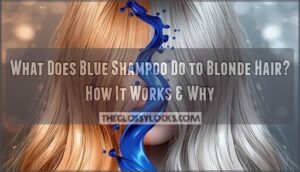
You’ve spent good money turning your hair the perfect shade of blonde, only to watch it morph into something resembling a brassy tangerine within weeks. That warm, orange-tinged disaster staring back at you in the mirror isn’t a reflection of your colorist’s skills—it’s simply chemistry at work, and it happens to nearly every blonde who’s ever lightened their hair.
Blue shampoo steps in as your defense against these unwanted warm tones, using color theory to deposit blue-violet pigments that directly counteract orange and brassy hues on your hair shaft. The process works similarly to how artists mix complementary colors on a palette, neutralizing warmth and restoring the cool, ash-toned blonde you originally paid for, all while you’re standing in your own shower.
Table Of Contents
- Key Takeaways
- What is Blue Shampoo for Blonde Hair?
- How Blue Shampoo Works on Blonde Hair
- Why Blonde Hair Develops Brassiness
- Blue Shampoo Vs. Purple Shampoo
- Benefits of Using Blue Shampoo on Blonde Hair
- How to Use Blue Shampoo Effectively
- Factors That Influence Blue Shampoo Results
- Precautions and Common Mistakes to Avoid
- Top 5 Blue Shampoos for Blonde Hair
- Maintaining Healthy Blonde Hair After Blue Shampoo
- Frequently Asked Questions (FAQs)
- Can blue shampoo be used on blonde hair?
- What are the benefits of using blue shampoo?
- How does blue shampoo work to neutralize brassiness?
- Can blue shampoo be used on virgin hair?
- How often should blue shampoo be used?
- Can blue shampoo lighten already blonde hair?
- Does blue shampoo work on naturally blonde hair?
- Will blue shampoo stain my shower or hands?
- Can I mix blue shampoo with regular shampoo?
- Conclusion
Key Takeaways
- Blue shampoo deposits blue-violet pigments that neutralize orange and brassy tones in blonde hair by using color theory—blue sits opposite orange on the color wheel, so the pigments cancel out unwanted warmth during each wash.
- You should use blue shampoo one to two times weekly for two to five minutes per application, adjusting frequency based on how quickly brassiness reappears and your hair’s porosity level to avoid over-toning or dryness.
- Blue shampoo targets orange and copper undertones in darker blondes and brunettes, while purple shampoo handles yellow brassiness in platinum and icy blondes—choosing the wrong one won’t fix your specific color problem.
- Overuse or leaving blue shampoo on too long can cause ashy, dull, or even greenish casts on porous hair, so you need to follow up with moisturizing conditioners and monitor your hair’s response to prevent damage while maintaining cool tones.
What is Blue Shampoo for Blonde Hair?
If you’ve noticed your blonde hair picking up unwanted orange or brassy tones, blue shampoo might be the solution you’re looking for. This specialized toning product works differently than your everyday shampoo, using color-depositing pigments to neutralize warmth and keep your color looking fresh.
If you’re new to this, understanding how to use blue shampoo correctly can help you get the best toning results without overdoing it.
Understanding what blue shampoo actually is and how it differs from regular formulas will help you decide if it’s the right choice for your hair.
For anyone with dyed blue hair, knowing how purple shampoo works for blue tones can make all the difference in keeping your color vibrant.
Definition and Purpose of Blue Shampoo
Blue shampoo uses blue-violet pigments to neutralize warm brassy tones in lightened blonde hair. Unlike purple shampoo, which targets yellow, this toning shampoo specifically counteracts orange undertones through color correction.
For best results, pair blue shampoo with nourishing treatments for color-treated hair to maintain vibrancy and prevent damage.
The blue pigment deposits onto your hair with each wash, creating hair neutralization that leaves you with cooler, ash-toned results. Different shampoo formulas offer varying toning effects based on concentration and application time.
For darker grays prone to warmth, choosing the right blue or purple shampoo for gray hair ensures you maintain those cooler, ashier tones without overdoing it.
How Blue Shampoo Differs From Regular Shampoo
What separates a toning shampoo from your everyday cleansing product comes down to color correction chemistry. Regular shampoos focus on cleansing without altering tone, while blue shampoo contains copper-neutralizing pigments that deposit onto blonde hair during each wash.
These formulas use specialized chelating agents to remove mineral buildup contributing to brassiness—something standard shampoo selection doesn’t address.
Hair porosity and toning effects are key considerations when choosing between products.
How Blue Shampoo Works on Blonde Hair
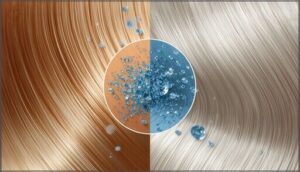
Blue shampoo isn’t magic, but it’s based on solid color science that gives you real control over unwanted warmth in your blonde hair.
Blue shampoo uses proven color science to give you real control over unwanted warmth in blonde hair
Understanding how the blue pigments interact with your hair’s underlying tones helps you use the product more effectively and avoid common mistakes.
Here’s what’s actually happening when you lather up with blue shampoo.
Color Theory and Pigment Neutralization
Understanding pigment science starts with the color wheel, where blue sits directly opposite orange, creating the foundation for effective color correction. When you apply blue shampoo, you’re using color theory to achieve tonal balance through these five neutralization techniques:
- Blue pigments deposit onto hair strands during washing
- Complementary hues cancel unwanted warmth
- Hair porosity determines pigment absorption rates
- Blue-violet dyes target copper-orange undertones specifically
- Repeated applications progressively shift tones cooler
Targeting Orange and Brassy Tones
Once you understand complementary color interactions, you’ll see how blue-leaning toning neutralizes orange and brassiness on blonde hair by depositing color that counteracts warm tones.
The effectiveness depends on your current shade, as lighter blondes may require weaker formulations to avoid over-toning.
Regular use with appropriate wash frequency maintains cooler undertones and reduces gradual brassiness between salon visits.
Why Blonde Hair Develops Brassiness
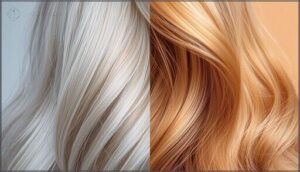
You didn’t sign up for orange tones when you went blonde, but brassiness has a way of showing up uninvited. Understanding why your hair shifts warm helps you fight back and keep that cool, polished color you’re after.
Let’s break down what’s actually happening beneath the surface and what’s triggering those unwanted tones.
Causes of Brassy and Orange Tones
When you lighten blonde hair, you’re stripping out cool pigments and exposing underlying warm molecules—red and orange tones that oxidation brings to the surface. Hair oxidation happens during coloring when melanin shifts toward brass, especially if toning isn’t thorough.
Mineral buildup from water quality clings to your strands, reflecting yellow-orange light, while heat damage and color drift from semi-permanent dyes accelerate brassiness, making blue shampoo essential for neutralizing those stubborn orange tones.
Environmental and Chemical Factors
Beyond the bowl, ultraviolet damage accelerates hair oxidation, pushing blonde hair toward brassy tones as sunlight breaks down cool pigments. Chlorinated water deposits greenish hues, while mineral buildup from hard water—calcium and magnesium—dulls your color and enhances yellowing.
Air pollution settles particulates that shift tone perception, making blue shampoo essential for color correction across varying hair porosity levels and water quality conditions.
Blue Shampoo Vs. Purple Shampoo
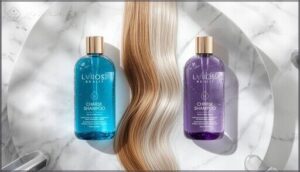
You’ve probably seen both blue and purple shampoo on the shelf and wondered what the difference really is—they’re both toning products, but they don’t do the same thing. The distinction comes down to which pigment each one uses and what specific brassy tones it’s designed to neutralize.
Understanding when to reach for blue versus purple shampoo gives you full control over keeping your blonde looking exactly how you want it.
Key Differences in Pigments and Effects
The real power split between blue shampoo and purple shampoo comes down to pigment composition and what each formula actually neutralizes. Blue deposits cobalt or indigo pigments that cancel orange and red undertones through color neutralization, while purple shampoo uses violet pigments for brassiness reduction by targeting yellow warmth. Your cool tone enhancement depends on matching the right pigment to your specific brassy tones—not all color toning techniques work universally across blonde hair shades. Understanding the role of color maintenance products is essential for achieving the desired tone.
| Feature | Blue Shampoo | Purple Shampoo |
|---|---|---|
| Pigment Type | Cobalt, indigo, blue-violet direct dyes | Violet, purple pigments |
| Neutralizes | Orange to red undertones (coppery brass) | Yellow undertones (pale gold brass) |
| Best For | Brunettes, darker blondes, balayage with orange warmth | Light blondes, silver, gray hair with yellow warmth |
| Tonal Correction Result | Cooler, more neutral or ash-leaning cast | Brighter, icier appearance with reduced yellow |
| Overuse Risk | Muddy, overly cool cast on porous hair | Grayish or lavender overtone on very light hair |
Which Shampoo to Use for Your Blonde Shade
Your exact blonde shade—whether it’s golden, platinum, or somewhere in between—dictates which toning shampoo you’ll reach for, and choosing wrong won’t just waste product, it’ll sabotage your color goals entirely. Using a color correcting shampoo can help achieve the desired blonde color by neutralizing brassy tones.
| Blonde Hair Shade | Recommended Shampoo | Targeted Brassy Tones |
|---|---|---|
| Dark blonde, honey, caramel highlights | Blue shampoo | Orange, copper warmth |
| Platinum, icy blonde, silver | Purple shampoo | Yellow undertones |
| Ash blonde, cool-toned highlights | Purple shampoo | Golden, yellow warmth |
| Balayage with warm dimension | Blue shampoo | Orange-red through mid-lengths |
| Natural blonde with minimal processing | Purple shampoo (diluted) | Subtle yellowing |
Shade selection for tonal correction starts with hair typing—darker blondes battling orange need blue shampoo for color preservation and a cool-toned look, while platinum shades require purple shampoo’s product comparison advantage against yellow brassiness.
Benefits of Using Blue Shampoo on Blonde Hair
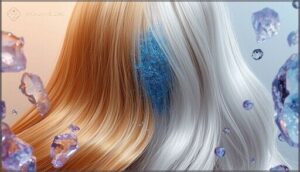
Blue shampoo isn’t just about fixing brassy tones—it’s about taking control of your color and making it work for you between salon visits. When you use it correctly, you’ll notice your blonde looks cooler, brighter, and more intentional, exactly the way you want it.
Here’s what blue shampoo actually does for your hair.
Enhancing Cool Tones and Vibrancy
Blue shampoo delivers powerful color correction by depositing blue undertones that neutralize brassy orange hues, shifting your blonde hair toward a cool-toned look with ashy undertones.
When you use this toning shampoo correctly, you’ll achieve a vibrancy boost and a platinum finish that reflects cooler, brighter tones under most lighting.
The tone enhancement depends on your hair’s porosity and the formula’s intensity, giving you control over brassiness correction between treatments.
Prolonging Salon Results Between Appointments
When brassiness starts creeping in around week three, blue shampoo steps in to neutralize those orange undertones and restore the cool tones you walked out with. By using it once or twice weekly, you’re actively maintaining blonde hair between salon visits, extending color longevity and preserving that fresh-from-the-chair vibrancy.
This tonal maintenance approach aids in hair protection while delaying your next salon refresh, giving you control over color preservation through strategic color maintenance and precise hair color correction.
How to Use Blue Shampoo Effectively
Getting the best results from blue shampoo isn’t complicated, but you need to know the right techniques to avoid over-toning or missing those brassy spots entirely. The application process, timing, and frequency all work together to determine whether you’ll achieve that cool, vibrant blonde you’re after or end up with uneven color.
Here’s exactly how to use blue shampoo to neutralize brassiness while keeping your hair healthy and balanced.
Recommended Application Steps

Start by wetting your blonde hair thoroughly with lukewarm water to open the cuticle and activate the toning shampoo benefits.
Apply blue shampoo generously from roots to ends, massaging it into a rich lather that coats every strand. Focus extra product on visibly brassy tones where orange undertones show through.
This prep method ensures even pigment deposit across all sections, delivering consistent hair toning results that neutralize unwanted warmth effectively.
Frequency and Timing Tips
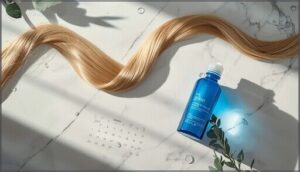
Once you’ve applied blue shampoo correctly, timing your toning intervals makes all the difference. Most blonde hair benefits from weekly schedules—use blue shampoo one to two times per week depending on how fast brassy tones reappear. Hair type and color fade rate determine your ideal application frequency, so watch how your hair responds:
- Lock in cooler tones without overdoing pigment deposit
- Prevent brassiness from creeping back between salon visits
- Maintain vibrant blonde without risking unwanted ashy casts
- Adjust frequency as your hair’s needs shift over time
How Long to Leave Blue Shampoo On

Timing your blue shampoo application determines whether you neutralize brassiness or risk over-toning.
Most blonde hair needs two to five minutes of contact time for effective pigment uptake and color deposit, though lighter or porous strands may show toning results in under three minutes.
Heavily brassy hair can tolerate up to ten minutes with close monitoring, but exceeding recommended durations invites unwanted blue or gray casts that defeat the purpose of brassiness correction.
Factors That Influence Blue Shampoo Results
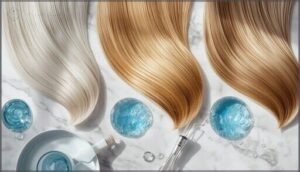
You won’t get the same results every time you use blue shampoo, and that’s because several variables come into play. Your hair’s unique characteristics, the product you choose, and how you apply it all work together to determine the final outcome.
Let’s break down the three main factors that control how blue shampoo performs on your blonde hair.
Hair Porosity and Condition
Your hair’s porosity—the cuticle’s ability to absorb and hold moisture—dictates how aggressively blue shampoo deposits pigment and how long those cool tones stick around. Damaged, over-processed blonde hair with lifted cuticles grabs color fast, while low-porosity strands resist it.
- High porosity hair absorbs blue pigment rapidly, requiring shorter contact times to avoid over-toning and patchy results
- Low porosity hair needs extended processing because tightly sealed cuticles slow pigment penetration
- Moisturizing shampoos and conditioning agents help restore cuticle health, improving color retention and evening out toning results
Porosity tests and damage repair strategies let you take control of your blonde’s fate.
Shampoo Formula Strength
Not all blue shampoos pack the same punch—formula strength hinges on pigment concentration, dye delivery systems, and active ingredients that dictate toning effectiveness. EU regulations cap Acid Blue 9 at 0.5 percent in cosmetics, but brands boost color retention through cationic encapsulation and proprietary technologies.
Semi-permanent formulas deliver intense deposits in minutes, while milder maintenance shampoos offer gentler correction. Sulfates heighten cleansing but can strip moisture, so formula variations balance pigments with conditioning agents to control how aggressively your blonde transforms.
Duration of Application
How long you let blue shampoo sit on your blonde hair directly controls color deposit intensity and toning effects. Most formulas require two to five minutes of contact time, but hair porosity shifts that window—damaged strands grab pigment faster, while healthy cuticles need longer exposure for visible hair color maintenance.
- Barely-there brass? One to two minutes prevents over-toning and keeps your blonde luminous.
- Moderate warmth creeping in? Three to four minutes delivers balanced color correction techniques without staining.
- Aggressive orange takeover? Five minutes maximum neutralizes stubborn tones, but check at three to avoid blue-gray surprises.
Strand-test first, adjust application frequency based on results, and always time it—guessing turns hair toning methods into a gamble you don’t want to lose.
Precautions and Common Mistakes to Avoid
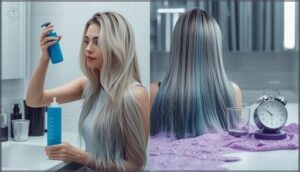
Blue shampoo can work wonders on blonde hair, but using it incorrectly can leave you with results you weren’t expecting. Over-toning, dryness, and even color mishaps are all preventable when you know what to watch out for.
Let’s cover the key precautions and common mistakes that can sabotage your toning routine, so you can keep your blonde looking cool and vibrant without any unwanted surprises.
Risks of Over-Toning or Discoloration
When you cross the line from toning to over-toning, you’re not just neutralizing brass—you’re risking an ashy, dull, or even greenish cast that can turn your blonde into a color correction nightmare.
Over-toning creates tonal imbalance, where excessive blue pigment overwhelms your hair’s underlying warmth, leading to uneven fading risks that compound with each wash, making brassiness harder to manage long-term.
Potential Dryness and Damage
Beyond tonal mishaps, blue shampoo can accelerate surfactant damage and cuticle disruption, especially when formulated with harsh sulfates that strip your hair’s natural moisture barrier. Frequent use on already porous blonde hair compounds moisture loss and hair breakage, while alkaline pH levels lift cuticle scales, increasing friction and color fading.
Without adequate moisturizing components, you’re trading brass for brittleness—making hair damage prevention essential through strategic conditioning and frequency management.
When Not to Use Blue Shampoo
You should pause blue shampoo use if your blonde hair is platinum-level, highly porous, or already neutral—purple shampoo handles yellow brassiness better on icy blondes, while blue targets orange undertones.
Skip it entirely on compromised scalps or severely damaged strands to prevent overuse risks and uneven tone correction.
Before major color changes, discontinue pigmented formulas to avoid staining complications and guarantee ideal damage prevention.
Top 5 Blue Shampoos for Blonde Hair
Now that you know how blue shampoo works and what to watch out for, you need a formula that actually produces results without turning your hair into a science experiment gone wrong. The right blue shampoo can make the difference between brassy disaster and salon-fresh color that lasts.
Here are five standout products that colorists trust to neutralize orange tones and keep your blonde looking cool, vibrant, and completely under your control.
1. Joico Blue Shampoo For Brassy Hair
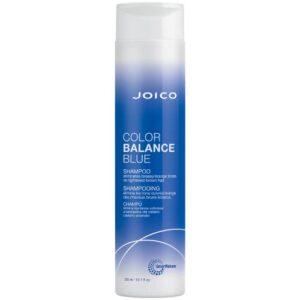
You’re looking at a powerhouse formula if serious color correction matters to you: Joico Color Balance Blue Shampoo delivers blue pigment deposits through SmartRelease Technology, targeting brassy tones in lightened blonde hair with precision.
This shampoo formula combines UV absorbers and green tea extract to fight fading, while keratin, arginine, and rosehip oil repair damage.
For aggressive tone correction on orange-leaning blonde hair, apply for 3–5 minutes twice weekly. The gel consistency allows controlled application, though the sulfate-based formula requires follow-up conditioning to counter potential dryness.
| Best For | Color-treated blondes dealing with stubborn orange or brassy tones who want salon-level toning at home and don’t mind a bit of extra conditioning afterward. |
|---|---|
| Brand | Joico |
| Item Form | Gel |
| Hair Type | Color Treated |
| Price | $24 |
| Free From | Not specified |
| Age Range | Adult |
| Additional Features |
|
- Blue pigments actually attach to your hair and neutralize warm tones progressively over multiple washes, so you get real color correction instead of just a temporary fix
- SmartRelease Technology continuously delivers keratin, rosehip oil, and arginine to repair damage while you tone, plus UV filters help prevent future fading
- Works on multiple shades from bronde to lighter blonde, giving you flexibility if your color isn’t perfectly uniform
- The sulfate-based formula can dry out your hair with regular use, so you’ll need a good conditioner and might want to alternate with a gentler shampoo
- Blue dye is potent enough to stain your hands, shower, and anything else it touches if you’re not careful during application
- Results build gradually rather than showing up instantly, which means patience is required if you’re hoping for dramatic change after one wash
2. Matrix Blue Shampoo For Brunettes
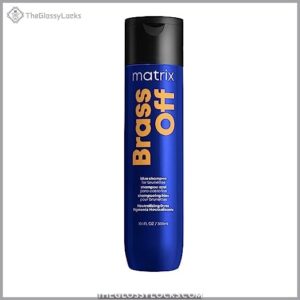
Matrix Total Results Brass Off Blue Shampoo targets brunette brassiness, not blonde hair—its blue-violet pigment system deposits onto lightened brown and dark blonde levels where orange, copper, and red undertones surface after highlighting or balayage.
You’ll apply it to wet hair for 3–5 minutes every other day, allowing the clarifying sulfate base to strip buildup while depositing pigment along porous sections of the cuticle.
The formula includes amodimethicone and polyquaternium polymers to reduce roughness post-cleanse, though you’ll need follow-up conditioning to counter potential dryness from sodium laureth sulfate.
| Best For | Brunettes who’ve lightened their hair through highlights, balayage, or overall color treatment and want to neutralize orange, copper, or red brassiness between salon visits. |
|---|---|
| Brand | MATRIX |
| Item Form | Liquid |
| Hair Type | Color Treated, Blonde |
| Price | $22 |
| Free From | Sulphate-free |
| Age Range | Not specified |
| Additional Features |
|
- Deposits blue-violet pigments in just one 3–5 minute wash, visibly reducing orange and brassy tones on lightened brown and dark blonde hair
- Clarifying formula strips buildup while toning, so you get cleaner, cooler-looking color in a single step
- Includes conditioning agents like amodimethicone to soften hair after the strong cleansing action, though you’ll still want to follow with conditioner
- Contains sodium laureth sulfate and sodium lauryl sulfate, which can dry out chemically lightened hair if you skip the conditioning step
- Can over-tone or leave a flat, slightly blue cast on very porous sections if used too often or left on longer than recommended
- May temporarily stain hands, nails, and bathroom surfaces due to concentrated pigments, so gloves are recommended during application
3. Redken Blue Toning Shampoo For Brunettes
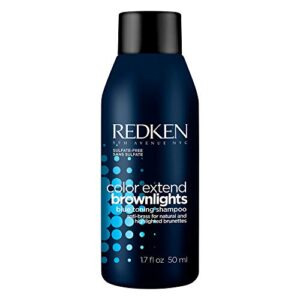
Redken Color Extend Brownlights flips the script with a sulfate-free formula that deposits blue pigment through a progressive system—you’re not getting the harsh strip-and-tone approach, but rather a gentler accumulation of cool tones across multiple washes.
You’ll work it into wet hair for 3–5 minutes once or twice weekly, letting the pH-balanced color depositing formula neutralize orange undertones without compromising hair porosity or moisture levels.
The tonal correction builds gradually, making it ideal for brunette care when you want controlled blue toning that doesn’t overpower your base in one session.
| Best For | Color-treated or natural brunettes looking to gradually neutralize brassy orange tones without the harshness of sulfate-based shampoos. |
|---|---|
| Brand | Redken |
| Item Form | Liquid |
| Hair Type | Chemically-treated |
| Price | Not specified |
| Free From | Not specified |
| Age Range | Adult |
| Additional Features |
|
- Progressive deposit system builds cool tones over multiple washes instead of shocking your hair with intense pigment all at once
- Sulfate-free and pH-balanced formula cleanses without stripping existing color or compromising moisture
- Simple 3–5 minute application once or twice a week gives you control over how much toning you actually want
- Can dry out hair with frequent use, so you’ll need to watch how often you’re applying it
- Blue pigment may stain your skin or shower surfaces if you’re not careful with rinsing
- Results aren’t universal—some users see little to no color shift depending on their hair’s starting condition
4. Not Your Mothers Blue Shampoo Conditioner
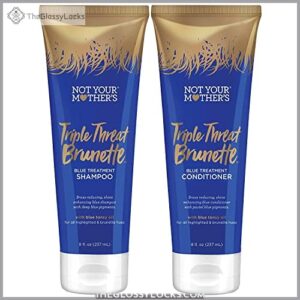
Not Your Mother’s Triple Threat Brunette Blue Treatment Shampoo and Conditioner delivers sulfate-surfactant-free toning for those pushing back against orange undertones. You’ll apply the blue pigment-infused cream formula two to three times weekly in place of your regular shampoo, letting the Blue 1 CI 42090 and Ext Violet 2 CI 60730 colorants deposit onto your hair surface for visible brass neutralization.
The system pairs blue tansy oil with gentle cocamidopropyl hydroxysultaine surfactants, giving you color depositing action without stripping moisture or compromising your hair’s integrity between salon visits.
| Best For | Brunettes with natural, dyed, or highlighted hair battling orange or red brassiness who want a sulfate-free toning routine they can use at home between salon appointments. |
|---|---|
| Brand | Not Your Mother’s |
| Item Form | Cream |
| Hair Type | Curly |
| Price | Not specified |
| Free From | Sulfate, silicone, paraben, phthalate, gluten free |
| Age Range | Not specified |
| Additional Features |
|
- Blue pigments neutralize orange tones using color theory, depositing directly onto the hair surface to counteract warmth without permanently altering your base color.
- Sulfate-surfactant-free formula with blue tansy oil cleanses gently while adding moisture and shine, so you won’t strip your hair just to tone it.
- Two to three weekly uses let you maintain cool brunette tones without over-depositing pigment or replacing your entire wash routine.
- Specified only for curly hair in the product details, which may leave you guessing if your straight or wavy brunette hair will respond the same way.
- Requires swapping in and out of your regular shampoo rotation rather than offering a simple everyday wash, adding an extra step to track in your routine.
- Won’t address yellow brassiness effectively since the blue pigments target orange tones, meaning blondes or lighter brunettes with yellow warmth need a purple system instead.
City Beauty Sculpting Face Cream (if Relevant to Hair Care)
City Beauty Sculpting Face Cream targets skin concerns rather than hair toning needs, making it irrelevant to your blonde maintenance routine and your fight against brassiness.
You won’t find blue shampoo, purple shampoo, or any hair color toning benefits in this facial product.
Skip the cosmetic science confusion and redirect your focus to dedicated blonde hair formulas that actually neutralize unwanted tones rather than moisturizing skin tissue.
Maintaining Healthy Blonde Hair After Blue Shampoo

Using blue shampoo is just one piece of the puzzle for keeping your blonde hair in top condition. You need to balance the toning benefits with proper hydration and moisture, since color-correcting formulas can strip away natural oils and leave your hair feeling dry or brittle.
The key is establishing a smart routine that protects your hair’s health while maintaining those cool, vibrant tones you’re after.
Moisturizing and Conditioning Routines
You’ll need to follow every blue shampoo session with a hydrating mask or conditioner to restore moisture and prevent dryness, according to 2024 guidance from L’Oréal Paris.
Apply a sulfate-free conditioning treatment from mid-shaft to ends, then layer on a leave-in conditioner or hair serum for moisture-locking benefits that keep your blonde hair soft, manageable, and salon-fresh between washes.
Monitoring and Adjusting Usage Over Time
You’ll want to reassess your blue shampoo frequency every two to four weeks, tracking how quickly brassiness reappears after each application. Start with once-weekly toning adjustments for brassiness control, then extend to every 10–14 days as your blonde hair maintains its cool tone.
Because hair color demands and porosity shift over time, ongoing tone maintenance and shampoo frequency refinement are required in your color-treated hair care routine.
Frequently Asked Questions (FAQs)
Can blue shampoo be used on blonde hair?
Yes, blue shampoo works on blonde hair, particularly when orange brassiness appears—though it seems counterintuitive. Blue pigments neutralize warm tones in lightened hair, helping you maintain cooler, more vibrant blonde shades between salon visits.
What are the benefits of using blue shampoo?
Blue shampoo delivers brass reduction and cool toning by neutralizing orange undertones, enhancing hair vibrancy with tonal enhancement.
It extends color correction results between salon visits, maintaining that coveted ash-blonde finish you’re working to preserve.
How does blue shampoo work to neutralize brassiness?
Orange tones crash against cool ambitions—enter color correction. Blue shampoo deposits pigment onto blonde hair, creating tonal balance through strategic brassiness removal, while purple shampoo neutralizes yellow. Cool tone enhancement happens when blue counteracts unwanted warmth.
Can blue shampoo be used on virgin hair?
Absolutely—virgin hair toning with blue shampoo works, though hair porosity matters greatly. Blue pigment effects remain milder on untreated strands since intact cuticles resist color deposit.
Control toning frequency and monitor carefully to avoid unwanted blue casts.
How often should blue shampoo be used?
For ideal brassiness control and color maintenance, you’ll want to use blue shampoo one to two times weekly, rotating it with your regular moisturizing shampoo to maintain healthy blonde hair without over-toning.
Can blue shampoo lighten already blonde hair?
Most toning shampoos contain blue pigments designed for color balance, not hair lightening. While blue shampoo neutralizes brassy orange tones in blonde hair, it won’t genuinely lift your existing level—that requires professional bleaching for tonal correction.
Does blue shampoo work on naturally blonde hair?
Natural blondes can use blue toning shampoo when brassiness appears, though color correction effects won’t be as dramatic.
Hair porosity determines tonal balance results—virgin blonde hair maintenance usually needs purple shampoo for best blonde hair care instead.
Will blue shampoo stain my shower or hands?
Yes, blue pigment effects can temporarily mark surfaces and skin. Hand staining prevention is simple—wear gloves and wash immediately.
For shower stain removal, rinse surfaces right away or use baking soda paste.
Can I mix blue shampoo with regular shampoo?
Think of mixing blue shampoo with regular shampoo as your personal dimmer switch for toning control—you absolutely can blend them, and dilution methods give you shampoo ratios that dial back pigment intensity while maintaining color correction safety.
Conclusion
Think of blue shampoo as your color-correction tool, always ready when brassiness tries to hijack your blonde. What does blue shampoo do to blonde hair? It neutralizes unwanted orange tones through precise pigment deposit, giving you control over your color between salon visits.
You now understand the chemistry, application timing, and exact techniques that separate disappointing results from professional-level maintenance. Your blonde stays cooler, brighter, and completely under your command.