This site is supported by our readers. We may earn a commission, at no cost to you, if you purchase through links. This content is for general informational and educational purposes only and is not a substitute for professional medical, dermatological, or nutritional advice.

Freshly washed hair should feel light, yet some people step out of the shower with roots that feel like candle wax and strands that catch on their fingers. That tacky coating can show up even when your hair looks clean.
If you’re asking, “why does my hair feel sticky after washing,” the answer sits on the hair surface, not inside the strand. Leftover conditioner, styling residue, hard-water minerals, and scalp oil can leave a film. The timing offers clues.
A sticky feeling right away points toward rinse or product issues. Stickiness that returns by lunchtime may call for another fix.
Table Of Contents
- Key Takeaways
- Why Does My Hair Feel Sticky After Washing?
- Product Buildup, Poor Rinsing, or Hard Water Usually Causes It
- How to Get Rid of Sticky Hair
- How to Prevent Sticky Hair After Washing
- When Persistent Sticky Hair Needs Attention
- Frequently Asked Questions (FAQs)
- How can I prevent my hair from feeling sticky after washing?
- What are some natural remedies for removing buildup from my hair?
- What are some good shampoos and conditioners for oily hair?
- What are some tips for washing my hair with hard water?
- How can I tell if my hair products are causing a sticky feeling?
- Conclusion
Key Takeaways
- Sticky hair after washing usually means residue from conditioner, styling products, heavy oils, silicones, or hard-water minerals is coating your strands.
- Tackiness that starts right after washing often comes from poor rinsing or too much product, while stickiness that returns within hours may point to fast scalp oil production.
- Reset your routine by rinsing longer, conditioning only the mid-lengths and ends, using lighter products, and clarifying or chelating when buildup is the likely cause.
- See a dermatologist if stickiness persists despite routine changes or comes with redness, painful scaling, unusual shedding, pustules, or signs of an allergic reaction.
Why Does My Hair Feel Sticky After Washing?
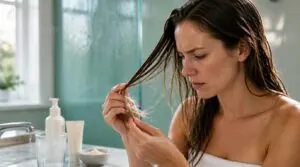
That sticky feeling after washing your hair is one of the most frustrating hair problems to figure out — mostly because it shouldn’t happen after a full wash. It usually points to a few specific things going on with your hair, your products, or even your water. Here’s what to look at first.
For a closer look at common causes, this guide explains why hair feels waxy after washing.
Sticky Versus Greasy Hair
These two actually feel different in your hands. Sticky hair after washing points to something left behind, like product buildup or hard water minerals. Greasy hair means your scalp’s sebum production is working overtime. An oily scalp can also cause itchiness, dandruff, or limp roots, so focus on balancing sebum production.
- Sticky feels tacky or waxy to the touch
- Greasy feels slick and heavy at the roots
- Each one calls for a different fix
Waxy Roots and Strands
Waxy roots and strands point to product buildup. Scalp oil balance can shift when conditioner, wax, or silicone accumulation remains after improper rinsing. For wax buildup prevention, conditioner film reduction, and silicone residue removal, use clarifying shampoo. Hard water effects can leave a mineral film.
| Sign | Cause | Fix |
|---|---|---|
| Roots | Oil | Clarify |
| Lengths | Conditioner | Rinse |
| Shine | Wax | Reduce |
| Dullness | Minerals | Chelate |
When Stickiness Appears
Timing offers useful clues. Immediate post-wash tackiness usually points to Improper Rinsing, Overconditioning, or a Hard Water reaction time measured in seconds.
If Sticky Hair After Washing appears after one to four hours, delayed oil migration may be mixing with Product Residue. Product buildup onset is gradual, while humidity-induced stickiness can return as hair dries in damp air.
Product Buildup, Poor Rinsing, or Hard Water Usually Causes It

Sticky hair after washing usually points to something left behind on your hair or scalp. The source may be your products, your rinse routine, or the water itself. Check these common causes first.
Styling Product Residue
Styling product residue can leave hair sticky after rinse. Film former buildup coats strands, while siliconebased ingredients, waxbased formulations, and oilbased product buildup cling near the scalp.
- Hair feels heavy and coated
- Roots seem tacky soon after washing
- Certain sections feel worse
- You lose that clean, light feeling
Residue placement roots matters. Wax transfer patterns and layering product effects can concentrate product buildup where you style most.
For easier cleanup between looks, explore adaptable men’s hairstyles for oval faces that suit flexible product use.
Shampoo and Conditioner Residue
Shampoo and conditioner residue can make clean hair feel sticky after washing. A wrong shampoo or conditioner, especially a rich SulfateFree Shampoo or heavy conditioner, may leave a film when you use too much or rinse too fast.
Use firm fingertip massage, then rinse longer than you lather. Keep conditioner off roots. Check strands after drying: overly slick or gritty hair suggests conditioner film buildup and product stacking effects. Use Clarifying Shampoo for cleansing residue prevention.
Hard Water Mineral Deposits
Hard Water Mineral Deposits can leave a mineral film of calcium and magnesium on each strand. This Mineral composition characteristics issue makes hair sticky, dull, and less Residue Free.
- Rough lengths
- Weak lather
- Itchy scalp from Scalp follicle impact
- Use Clarifying Shampoo for the Chelation process
- Fit a Water Filter, then use an Apple Cider Vinegar Rinse. Water softener mechanisms prevent deposits before washing begins.
Silicones, Waxes, and Heavy Oils
Film-forming agents can cling to each strand after washing. Silicones create slip, but silicone residue may leave hair feeling slick, sticky, or coated when it builds up.
Waxes have low wax solubility, so they may not rinse away easily. Heavy Oils can also upset the oil phase balance, causing heavy oil buildup that weighs down Hair Texture. Limit rich creams, pomades, and oil-based styling products.
Excess Scalp Oil
Excess oil production can make clean hair feel sticky within hours. Your sebaceous glands keep making sebum after rinsing. That is why oily hair causes often start at the scalp, not the shower.
For scalp oil balance and sebum production control, adjust hair wash frequency. Avoid heavy root products. Consistent hair oil management helps natural oil regulation and sebum regulation.
How to Get Rid of Sticky Hair
Sticky hair usually improves once you remove residue and change a few wash-day habits. Start with the simplest step and give it a wash or two to work. These targeted fixes can help your hair feel clean and light again.
Use Clarifying Shampoo Weekly

Clarifying Shampoo gives your scalp a deeper reset when Sticky Hair After Washing points to Product Buildup. Use it once weekly, or twice weekly if you use heavy styling products, have oily roots, or wash often.
Massage it into your damp scalp for one to two minutes, then work the lather through the lengths. Follow with conditioner after clarifying to restore softness.
Rinse for Longer

Rinse for Longer to remove the shampoo film that can leave hair tacky. Use lukewarm water, then massage your scalp with fingertips, especially at the crown, behind ears, and nape.
- Fine hair: rinse 60 seconds
- Oily scalp: rinse 90 seconds
- Thick curls: rinse 2 minutes
- Section long hair
- Hard water: use a shower filter
This Rinsing Technique limits Product Buildup from heavy products or Using Too Much Conditioner.
Condition Mid-Lengths and Ends
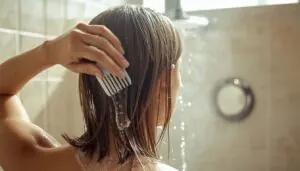
After a thorough rinse, apply Conditioner Application from mid-lengths to ends. Squeeze out dripping water first, then use a quarter-sized amount for shoulder-length hair. Start at the oldest ends and work upward with fingers or a wide-tooth comb.
Keep it off your scalp for a ResidueFree finish. This helps Moisture Balance, protects the Hair Shaft, and suits your Hair Porosity.
Try a Diluted Vinegar Rinse

After conditioning your mid-lengths and ends, use an apple cider vinegar rinse to clear film. Mix 1 tablespoon with 1 cup water. Pour, massage 30 seconds, leave briefly, then rinse cool.
This helps pH balance restoration, product buildup breakdown, mineral deposit removal, and cuticle smoothing after hard water. Use weekly, or twice weekly for oily hair; dry or color-treated hair, every other week.
Install a Shower Filter

If hard water keeps leaving mineral buildup, install a shower water filter. Carbon and KDF media can reduce chlorine, metals, and residue that clarifying shampoo may not fully remove.
Unscrew the shower head, apply plumber tape, then fit the filter between the wall arm and head. Choose NSF/ANSI 177 certified models. Expect slightly lower flow, and replace cartridges every 6 to 12 months.
How to Prevent Sticky Hair After Washing

Sticky hair often comes down to small habits that leave residue behind between washes. A few changes to your routine can keep your scalp and strands feeling cleaner for longer. Start with these practical prevention steps.
Choose Lightweight Hair Products
Choose Lightweight Products to prevent Sticky Hair After Washing and Product Buildup.
- Pick water-first formulas with glycerin or hyaluronic acid for light hydration.
- Look for propanediol, a light carrier that spreads moisture without coating strands.
- Choose alcohol-free formulations and minimal fragrance options if your scalp feels reactive.
- Avoid Using Too Many Silicones, waxes, and heavy oils.
This keeps hair hydrated without the heavy film associated with Overwashing Your Hair.
Adjust Your Washing Frequency
Set Hair Washing Frequency by your scalp, not a rule. Fine oily hair may need washing every one to two days. Curly, dry, aging, or color-treated hair needs longer gaps.
High Sebaceous Gland Activity, workouts, and humid weather raise Product Buildup risk and Sticky Hair After Washing. In dry climates, wash sparingly. Avoid Overwashing Your Hair to keep scalp balance.
Brush Before Shampooing
Before shampooing, detangle dry hair to stop knots tightening once water hits. Use a cushioned paddle brush for straight or wavy hair, or a wide-tooth comb for curls.
Start at the ends with short strokes, then work upward. Finish with gentle root-to-tip strokes to spread natural oils. This can reduce breakage pre-wash and help shampoo remove product buildup and hard-water residue more evenly.
Clean Brushes and Pillowcases
Brush before washing, then keep that tool clean. Dirty brushes and combs transfer oil, residue, and bacteria back onto fresh hair. Remove hair after each use; weekly, soak bristles in warm soapy water, scrub with a toothbrush, dry bristles-down, and store in a ventilated holder. Wash pillowcases every few days, or weekly minimum. Clean all your tools regularly to reduce buildup.
Limit Oil-Based Styling Products
Reduce oil usage if Sticky Hair After Washing keeps returning. Oil-Based Product Buildup often means Hair Products Are Too Heavy or you are Using Too Many Silicones.
- Apply sparingly.
- Use lightweight oils.
- Target hair ends.
- Limit daily application.
- Avoid Product Residue Transfer from hands and brushes.
These small changes prevent a heavy film and let shampoo rinse cleanly each time.
When Persistent Sticky Hair Needs Attention

If your hair stays sticky after you improve your washing routine, there may be more going on than simple buildup. Your scalp, hair condition, or body’s oil production can affect how hair feels after cleansing. These signs can help you decide what to check next.
Seborrheic Dermatitis and Psoriasis
Sticky Hair After Washing can signal scalp inflammation, not leftover shampoo. Seborrheic dermatitis often causes yellow, greasy, waxy scales and redness beneath them. Malassezia yeast and excess oil drive it.
Sticky hair after washing may signal seborrheic dermatitis, marked by greasy yellow scales, redness, excess oil, and Malassezia yeast
Psoriasis causes thicker, drier, silvery flakes with sharply defined red plaques, sometimes beyond the hairline. It is autoimmune, not yeast-related. Both are chronic, so medicated shampoos help manage flares well.
Shampoo Ingredient Sensitivities
Shampoo Allergies can make freshly washed hair feel tacky, coated, or irritated. Fragrance triggers, preservatives, colorants, and strong surfactants may inflame your scalp or leave hair rough.
If you’re curious how gentler dye options hold up, this guide on whether bubble hair dye is damaging to your hair and scalp explains what to watch for before your next color session.
Even a sulfatefree shampoo can cause trouble. Siliconebased ingredients, thickeners, or other hair products are too heavy for some hair types, creating product buildup. Stop the new product, patch test, and choose a simple fragrance-free formula.
Hormonal Oil Production Changes
If a simple shampoo still leaves your roots tacky, hormonal changes may be raising oil production. Androgen activity stimulates sebaceous glands, so an oily scalp can return quickly after washing.
Puberty, menstrual cycles, pregnancy, menopause, stress, and some medicines can affect sebum regulation. Sebum overproduction coats hair at the roots. Adjust your hair washing frequency, but seek advice if sudden oiliness comes with acne or scalp symptoms.
Damaged, Porous Hair
Hair Porosity can rise after heat or chemical damage causes Cuticle Layer Disruption. Damaged, Porous Hair absorbs products quickly but loses moisture, so strands may feel tacky, rough, or coated after rinsing.
Try Porosity level testing, Moisture retention tips, Protein treatment benefits, and Heat protection methods. Together support Cuticle damage repair, Hair Texture Improvement, Hair Elasticity, and less Hair Breakage.
When to Seek Professional Help
Damage can cause tackiness, but persistent symptoms need a dermatologist for warning signs:
- Redness, scaling, pain, or shedding, possible seborrheic dermatitis or psoriasis.
- Pustules, crusts, odor, fever, infection symptoms.
- Hives, facial swelling, or breathing trouble, an allergic reaction.
- Fatigue, weight changes, or irregular periods, a medical condition involving hormonal changes or thyroid conditions.
- Home treatment failure after three weeks.
Frequently Asked Questions (FAQs)
How can I prevent my hair from feeling sticky after washing?
Use lightweight products, rinse for at least 30 seconds, and apply conditioner only to mid-lengths and ends. Use clarifying shampoo weekly, choose oil-free styling, and finish with filtered water to control product buildup and hard water.
What are some natural remedies for removing buildup from my hair?
Evidence shows Vinegar acid rinse: Apple Cider Vinegar Rinse, then Cool water rinse.
For Scalp Detox, rotate Clarifying Shampoo, Baking soda paste, Clay mask treatment, Aloe Vera, and Essential oil mix with Tea Tree Oil.
What are some good shampoos and conditioners for oily hair?
Choose Clarifying Shampoos Oily Hair with charcoal or salicylic acid to lift oil and buildup. Pair them with Lightweight Conditioners Oily Scalp, applying sparingly from mid-lengths to ends. Skip heavy oils, silicones, and rich butters.
What are some tips for washing my hair with hard water?
Install shower softener to reduce hard water mineral buildup. Use chelating shampoo weekly, then condition ends only. Rinse with filtered water for a filtered water hair rinse. Apply vinegar rinse monthly. Clarifying shampoo helps, too.
How can I tell if my hair products are causing a sticky feeling?
Stick with this: check product labels, test rinsing effectiveness, feel hair texture, and observe lint attraction. Try a vinegar rinse. Sticky hair after washing signals heavy products, too many silicones, overwashing, or too much conditioner.
Conclusion
Picture two bottles beside the same shower drain: one leaves a clear puddle, the other leaves a cloudy ring. That small coincidence mirrors your hair, because residue and minerals often reveal themselves through a tacky film.
When you ask why does my hair feel sticky after washing, check timing, rinse thoroughly, and simplify products first. If the coating persists with itching or flakes, seek clinical advice. Clean hair should move freely, not cling like wax.