This site is supported by our readers. We may earn a commission, at no cost to you, if you purchase through links. This content is for general informational and educational purposes only and is not a substitute for professional medical, dermatological, or nutritional advice.

You rinse, condition, and style, yet by Wednesday your ends already feel like straw. The culprit isn’t always your products. Often, moisture escapes before your hair can use it.
The baggy method fixes that by wrapping a water-based moisturizer and a light oil under a plastic cap, so hydration stays pressed against each strand instead of evaporating into dry air. Winter heaters, wash-day tangles, and chemical treatments all drain moisture fast, and this trick fights back using a shower cap and about twenty minutes.
Here’s how to do it right, how often to repeat it, and which treatments boost your results.
Table Of Contents
- Key Takeaways
- What is The Baggy Method for Hair?
- How to Do The Baggy Method Step-by-Step
- Baggy Method Timing: How Long and How Often?
- Top 4 Hair Treatments to Consider Alongside The Baggy Method
- Common Baggy Method Mistakes to Avoid
- Frequently Asked Questions (FAQs)
- What is the baggy method?
- Does the loc method really work?
- What are the benefits of wearing a plastic bag over your hair?
- What is low poo?
- Can the baggy method be done on wet hair?
- How long should I leave the moisturizer or deep conditioner on for?
- Will the baggy method make my hair greasy or weighed down?
- Can I baggy with wet or damp hair?
- How often should I use the baggy method?
- Does bagging work on color-treated or bleached hair?
Key Takeaways
- You’ll lock in moisture by smoothing a water-based moisturizer through damp (not dripping) hair, sealing it with a light oil, and covering it with a plastic cap.
- Keep sessions to 15 to 30 minutes, two or three times a week, and skip overnight bagging because it invites hygral fatigue and mildew.
- Match your routine to your hair: fine or low-porosity strands do best once a week, while thick or coarse hair can handle up to three sessions.
- Pair bagging with the right treatment, using protein for damage and breakage and a rich moisturizing masque for dryness, and skip the bag when a treatment like Aphogee needs heat.
What is The Baggy Method for Hair?

The Baggy Method is a moisture-locking technique that traps hydration against your hair with a plastic covering. You apply a water-based moisturizer, seal it with oil, then cover your hair with a shower cap or bag. It works as an easy overnight treatment, and it’s great for moisture retention.
If your curls still feel dry after sealing, try pairing the baggy method with the squish to condish technique to help your hair absorb even more moisture.
Hair porosity matters here, so choose products your strands can absorb. It also helps protective styling, helping braids stay soft.
How to Do The Baggy Method Step-by-Step
You’ve got a few ways to bag your hair, and the right method depends on your hair’s needs and how much time you have. Below, we’ll walk through each option so you can pick one that fits your routine. Start with whichever feels easiest, and you can always switch later.
Before you bag, smooth a leave-in moisturizer for dry hair through your strands so the moisture gets locked in overnight.
Full-Head Baggying
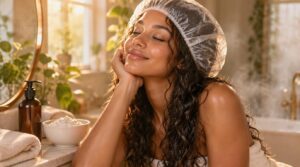
Plastic caps do more for your hair than you’d expect. Full-Head Baggying traps body heat and locks in moisture retention, so your leave-in keeps working instead of evaporating. Apply a water-based moisturizer to clean, damp hair, then cover it with a shower cap.
- Feel your dry ends turn soft again
- Wake up to hair that finally feels cared for
- Take back control of your length
Ends-Only and Ponytail Baggying

Short on time? Ends-only baggying targets your oldest, most fragile hair. Smooth moisturizing conditioner over your ends, slip on a plastic cap or small bag, and let hair moisture retention do the work. Prefer less handling? The ponytail baggy method works the same way.
| Step | Action |
|---|---|
| 1 | Saturate ends |
| 2 | Bag ends |
| 3 | Add satin bonnet |
| 4 | Remove after hours |
Baggy Method Timing: How Long and How Often?
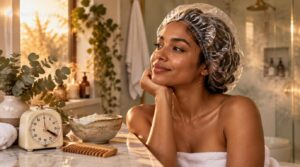
Once you’ve picked your style, the next question is how long to keep the bag on. Good baggy method timing boosts moisture retention without leaving your hair soggy.
Pairing the right timing with the right sealing oil matters, and this guide on how to prevent moisture loss in natural hair shows how to lock in hydration longer.
Most people do best with 15 to 30 minutes, two or three times a week. Skip overnight bagging, since it invites hygral fatigue and mildew.
Bag your hair for 15 to 30 minutes, two or three times a week, but never overnight, which invites hygral fatigue and mildew.
Adjust the baggy hair method to fit you:
- Fine or low-porosity hair: once a week.
- Thick or coarse hair: up to three sessions weekly.
- Curly and coily textures: 20 to 30 minutes.
- Straight or wavy hair: 10 to 15 minutes.
- Damaged hair: start with 10 minutes.
Humidity changes things. Shorten sessions when the air’s damp, and add one in dry winter weeks. That’s real hair porosity management.
Top 4 Hair Treatments to Consider Alongside The Baggy Method
The baggy method works best when your hair is already healthy and well cared for. That’s why we’re pairing it with four treatments that can help you build strength and softness before you bag. Take a look at each one below, then choose what fits your hair and your routine.
If your 4C hair is also low porosity, this guide to growing low porosity 4C hair shows how to help moisture absorb before you bag.
1. Protein Hair Repair Treatment Mask
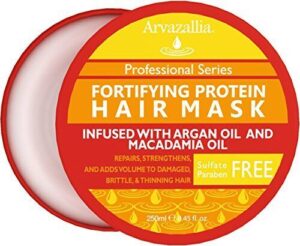
Is your hair stuck in a cycle of snapping and dryness? A Protein Hair Repair Treatment Mask could be the reset you need. Hydrolyzed proteins and amino acids slip into damaged cuticles, fill the gaps, and help strands feel stronger and smoother, which helps Hair Breakage Prevention.
Here’s how it fits the Baggy Method. Apply the mask to clean, damp hair, focusing on mid-lengths and ends. Cover with a cap for 10 to 20 minutes, adding a towel for heat if your hair is low porosity. Skip overnight wear, since too much protein can leave hair stiff and brittle.
Treat it as Deep Conditioning, used every 6 to 8 weeks. Follow with extra moisture for better Moisture Retention.
| Hair Type | N/A |
|---|---|
| Key Ingredients | N/A |
| Usage Frequency | N/A |
| Main Benefit | N/A |
| Treatment Type | N/A |
| Baggy Use | N/A |
2. Aphogee Protein Hair Repair Treatment
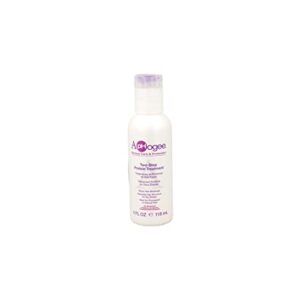
The Aphogee Protein Hair Repair Treatment is the one to reach for when perms, tints, or relaxers have left your strands weak. Its magnesium and modified proteins fill in depleted spots, so you’ll see less breakage and more shine and silkiness.
Here’s the twist: it needs heat, so skip the bag while you apply it. Sit under a hooded dryer or use a blow dryer until your hair feels hard, and don’t touch it while it sets. Rinse, then follow with Aphogee Balancing Moisturizer.
Save your baggy session for after the moisturizer, since hair can feel dry afterward. Repeat every 4 to 6 weeks. It smells, but it works.
| Best For | People with permed, tinted, or relaxed hair that has lost strength and needs a protein boost to reduce breakage and restore shine. |
|---|---|
| Hair Type | Permed, tinted, relaxed hair |
| Key Ingredients | Magnesium, modified proteins |
| Usage Frequency | Every 4 to 6 weeks |
| Main Benefit | Reduces breakage, restores shine |
| Treatment Type | Protein repair treatment |
| Baggy Use | After moisturizer, not during application |
| Additional Features |
|
- Magnesium and modified proteins fill in depleted spots to help reduce breakage and damage
- Restores shine and silkiness to weakened hair
- Made for chemically treated hair, including permed, tinted, and relaxed strands
- Can leave hair feeling dry afterward, so a moisturizer is needed
- Hair can turn rock hard for some users
- Customers describe the smell as unpleasant
3. Giovanni Hair Reconstruct Deep Conditioner
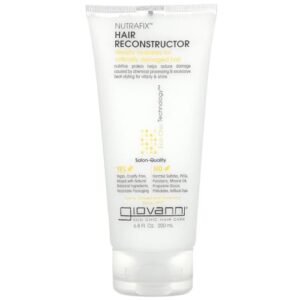
Picture brittle, straw-dry strands soaking up a creamy mix of plant proteins until they feel soft and bouncy again. That’s what Giovanni Hair Reconstruct Deep Conditioner is made to do.
Its sunflower oil and soybean proteins fill in porous spots, while vitamin E and botanicals like chamomile, lavender, and rosemary nourish. It’s also color-safe and vegan.
Apply it to clean, damp hair, cover with a cap, and leave it on for exactly 10 minutes before rinsing with cool or tepid water. Work in sections, since some people find detangling harder during application.
Use it weekly or bi-weekly. If your hair runs dry, stretch it to once a month. Rarely, shedding increases, so stop if that worries you.
| Best For | People with dry, damaged, or chemically treated hair who want a protein-rich deep treatment to restore softness, shine, and manageability. |
|---|---|
| Hair Type | Dry, damaged, chemically treated hair |
| Key Ingredients | Proteins, plant extracts |
| Usage Frequency | Weekly or bi-weekly |
| Main Benefit | Softness, shine, manageability |
| Treatment Type | Deep conditioner |
| Baggy Use | Pairs well with baggy |
| Additional Features |
|
- Strengthens weakened strands with plant-based proteins and nourishing botanicals
- Restores softness, shine, and manageability
- Helps reduce breakage and split ends
- Can make detangling harder during application for some users
- May increase shedding in rare cases
- Not meant for every wash, and dry hair may need it only once a month or less
4. Shea Moisture Intensive Hair Masque
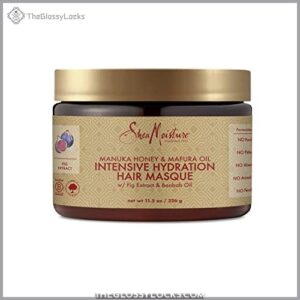
Think of a thick, honey-gold cream melting into thirsty curls, softening every strand it touches. That’s SheaMoisture’s Intensive Hair Masque, an 11.5-ounce jar packed with organic shea butter, honey, mafura and baobab oils.
It’s a great baggy partner. Smooth it through clean, wet hair, then cover and let it work to restore moisture, fight frizz and ease breakage. It’s suitable for color-treated or damaged hair, too.
Know the tradeoffs, though. It’s not a protein treatment, so pair it with a strengthening mask if your hair is badly damaged. Fine, low-porosity hair may feel weighed down, and the scent is strong. Test a little first.
| Best For | People with dry, curly, color-treated, or damaged hair who want deep moisture and less frizz and don’t mind a rich, heavy cream. |
|---|
- Infuses dry curls with intensive moisture, leaving hair softer and frizz-free
- Made with organic shea butter, honey, mafura and baobab oils, without sulfates, parabens, phthalates, mineral oil, or petrolatum
- Smooths and fortifies follicles to reduce breakage, and is suitable for color-treated or over-processed hair
- Can feel heavy and weigh down fine, low-porosity hair
- Has a strong, distinctive scent that some people may not like
- Isn’t a protein treatment, so severely damaged hair may need a strengthening mask alongside it
Common Baggy Method Mistakes to Avoid

The Baggy Method rewards restraint. Dodge these five slip-ups to protect your overnight hair treatment, moisture retention gains, hair elasticity improvement, and split ends prevention:
- Piling on too much product, which leaves strands mushy.
- Tying bands tightly against your strands.
- Baggying nightly instead of once or twice weekly.
- Skipping a cleanse or satin bonnet.
- Forgetting water-based moisturizer before heavy oils.
Frequently Asked Questions (FAQs)
What is the baggy method?
Ever wonder how to keep your hair soft all night?
The Baggy Method traps moisture under a plastic cap. Try the full head baggy method or overnight bagging for moisture retention, unlike the Greenhouse Effect.
Does the loc method really work?
Yes, the LOC method works, especially when hair porosity runs high. Layering leave-in, oil, then cream boosts moisture retention, and you can pair it with the Baggy Method. It won’t directly speed hair growth, though.
What are the benefits of wearing a plastic bag over your hair?
It looks odd, but a plastic bag works.
The greenhouse effect warms your hair, boosting moisture retention and moisture locking, so your conditioner sinks deeper and ends break less. Few hair hydration techniques are easier.
What is low poo?
Low poo means low shampoo. You’ll use a gentle, sulfate-free cleanser that lifts dirt without stripping your natural oils. It lathers less, so don’t worry if you see few suds.
Can the baggy method be done on wet hair?
Picture a sponge: squeezed, not dripping. Your wet hair should feel like that before the baggy method. Gently blot it damp, smooth on a water-based moisturizer, then add a plastic cap to boost moisture retention.
How long should I leave the moisturizer or deep conditioner on for?
Think of your hair as a sponge: it only soaks up so much. Leave moisturizer or deep conditioner on for one to four hours.
Overnight works, but porosity changes absorption, so cap it at eight.
Will the baggy method make my hair greasy or weighed down?
Ever finish baggying with limp strands? The baggy method can do that when heavy oils meet long sessions.
Use a lightweight leave-in, seal sparingly, and watch cuticle permeability, moisture retention, protein moisture balance, hair elasticity.
Can I baggy with wet or damp hair?
Soaking wet hair will turn your plastic cap into a sauna that never ends, so go with damp hair instead. It’s the sweet spot: towel-dry until the dripping stops, then seal in moisture before covering up overnight.
How often should I use the baggy method?
More isn’t always better. Start with the baggy method once or twice a week if your strands are fine and low porosity. High porosity hair can handle two to four sessions, so adjust gradually.
Does bagging work on color-treated or bleached hair?
Worried bleach already wrecked your strands? Good news, though: the Baggy Method works on color-treated hair and bleached hair. Pair it with a protein treatment, and expect better moisture retention, stronger strands, and longer-lasting color.