This site is supported by our readers. We may earn a commission, at no cost to you, if you purchase through links. This content is for general informational and educational purposes only and is not a substitute for professional medical, dermatological, or nutritional advice.
You feel it before you see it: a tender, warm bump under the skin, a day away from becoming a full-blown pimple. So you dab on spot treatment, then dab again an hour later, and wake up with a red, peeling patch that looks worse than the original problem.
Spot treatment works, but only when you match the right ingredient to the right blemish and apply it at the right moment. Most people get at least one of those wrong.
Learning how to use spot treatment correctly takes about five minutes of knowledge and saves weeks of irritated skin. Here’s the method.
Table Of Contents
- Key Takeaways
- What Does Acne Spot Treatment Do?
- Which Spot Treatment Fits Your Blemish?
- When Should You Apply Spot Treatment?
- How Do You Apply Spot Treatment Correctly?
- How Often Should You Use Spot Treatment?
- When Should You Stop or Seek Help?
- Frequently Asked Questions (FAQs)
- How should spot treatment be applied?
- Should I put on acne spot treatment before or after moisturizer?
- When is the best time of day to apply spot treatment?
- Can I put spot treatment on an open pimple?
- Can I use spot treatment on healed dark marks?
- Does spot treatment work on cystic acne?
- Can I leave spot treatment on overnight?
- Will spot treatment stain my pillowcase or towels?
- Can I use spot treatment while pregnant?
- Conclusion
Key Takeaways
- Match your active to your blemish: benzoyl peroxide for red, tender bumps, salicylic acid for clogged or flesh-toned ones, and sulfur or clay for oily, shiny spots.
- Treat only a blemish that’s actually there, applying a thin dab of product to clean, dry skin and nowhere else, and skip it on open, broken, or irritated skin.
- Using it once or twice a day is plenty, and more product won’t clear a pimple faster; it’ll only leave you peeling and irritated.
- Stop at the first sign of burning, swelling, or crusting, and see a dermatologist if a blemish hasn’t improved in a week or two or your breakouts linger past eight weeks.
What Does Acne Spot Treatment Do?
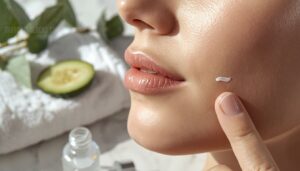
A spot treatment puts a concentrated dose of active ingredient on one blemish instead of spreading it across your whole face. That’s the whole job, and it does it well. Think of it as targeted acne therapy: small area, strong product, short timeline.
Since each blemish type responds to a different active, this guide to how acne spot treatments work helps you choose between benzoyl peroxide, salicylic acid, and hydrocolloid patches.
Most formulas work in one of three ways. Benzoyl peroxide delivers bacterial control and calms inflammatory acne. Salicylic acid is comedolytic, meaning it loosens the clogged material inside the pore. Sulfur and clay-based products lean on absorbing oil and pus near the surface, which helps a lesion look flatter and drier.
What a spot treatment can’t do is stop new breakouts from forming elsewhere. It grips the blemish you’re looking at, not the ones brewing underneath.
Which Spot Treatment Fits Your Blemish?
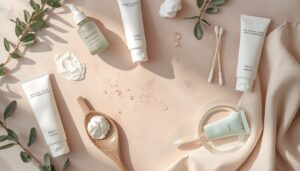
The right product depends on what kind of blemish you’re looking at, and that comes down to one question: is it red and sore, or is it clogged?
Inflamed bumps count as inflammatory acne, and benzoyl peroxide is the better match. Closed bumps and blackheads are noninflammatory acne, so salicylic acid suits them. Picking correctly is what makes targeted acne therapy work.
- Red, tender bump, no head: benzoyl peroxide.
- Whitehead with a visible center: benzoyl peroxide or salicylic acid.
- Small, flesh-toned bump: salicylic acid.
- Surface oil and a shiny lesion: sulfur or clay.
Strength matters too. Higher percentages hit harder but dry you out, which can leave you redder than before. Start low, because you can always step up later.
If breakouts keep returning even with the right strength, these effective acne prevention tips for adults can help you build habits that keep your skin calmer long term.
When Should You Apply Spot Treatment?
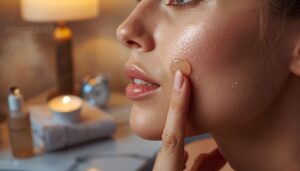
Once you’ve picked the right product, timing decides whether it works or just irritates you.
Treat a blemish only when one is actually there, ideally while the bump is still forming. That’s when the active can calm inflammation and bacteria at the site. Skip deep, tender bumps with no head, since a surface product can’t reach them.
Start after cleansing and toning, on clean, dry skin. Keep sunscreen and makeup off the spot. Never treat shaved or broken skin, and stop at the first sign of localized irritation. Night is easiest for consistent application.
| Situation | Spot treat? |
|---|---|
| Forming bump or visible head | Yes |
| Deep bump, no head | Limited results |
| Irritated or broken skin | No |
| Spot has healed | Stop |
| Normal skin | No |
How Do You Apply Spot Treatment Correctly?
Timing is settled, so now it’s about technique, and a little restraint goes a long way.
If you’re still unsure how many hours your first lift will take, this guide on how long it takes to bleach black hair helps you plan sessions without rushing the process.
If your skin runs sensitive, do a patch test first. Dab a tiny amount on your jawline for a day before treating a face blemish.
- Cleanse and tone, then wait until your skin is fully dry.
- Transfer a pinpoint amount to a clean cotton swab, not your fingertip straight from the tube.
- Dab it onto the lesion only, leaving the surrounding skin untouched.
That’s precision application: a thin film, no rubbing, no second layer. More product doesn’t mean faster results, just more peeling.
Wash your hands afterward. If your skin tolerates it well, a gradual frequency increase is possible later, but start out slow.
How Often Should You Use Spot Treatment?
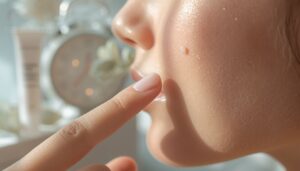
Usually, once or twice a day is plenty. How often should you use spot treatment depends on the active, though, and benzoyl peroxide calls for a lighter hand than salicylic acid.
Your skin care routine sets the ceiling. Consistency beats volume in any acne treatment, so adjust with these points in mind:
- Apply only to the lesion, never the surrounding skin.
- Drop to once daily if you use a retinoid.
- Skip it on days you exfoliate.
- Cut back when peeling or stinging appears.
- Taper off once redness and swelling fade.
More isn’t faster. A pimple that isn’t improving just gets irritated, and that’s a poor trade. Steady, targeted skincare clears a blemish with much less collateral damage than constant dabbing.
Piling on more product won’t clear a pimple faster, it only irritates your skin, so steady, targeted care wins
When Should You Stop or Seek Help?
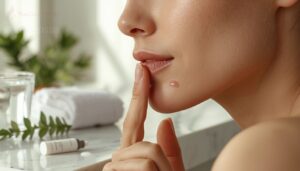
While spot treatment is meant to calm a blemish, it shouldn’t leave your skin worse off. So when should you stop or seek help? Quit the product if redness, burning, or swelling climbs fast after you apply it, or if the skin breaks, weeps, or crusts. That’s skin irritation, and pushing through it only delays healing.
Treat allergic reaction screening as a quick daily habit. Widespread hives, lip or facial swelling, or trouble breathing means you stop and get emergency care immediately.
Otherwise, retire the product once the spot flattens and the redness fades. If nothing improves within one to two weeks, reassess.
Frequently Asked Questions (FAQs)
How should spot treatment be applied?
Slathering on a mountain won’t clear anything faster. After cleanser, apply a thin film with a clean fingertip to the blemish only.
Gentle application protects skin sensitivity, helps pores cleanse, and shortens your breakout cycle.
Should I put on acne spot treatment before or after moisturizer?
Apply your moisturizer first in most cases, then dab spot treatment on the blemish. This application order cushions skin absorption and cuts irritation. If the product pills, flip it. Layering skincare products shouldn’t cause stinging.
When is the best time of day to apply spot treatment?
Night wins. After cleansing and toning, your skin is clean and calm, so active ingredients can work undisturbed while you sleep. Oncedaily application at bedtime improves product absorption and makes skin purging easier to monitor.
Can I put spot treatment on an open pimple?
An open pimple is a door ajar, and strong actives rush in.
Skip spot treatment on raw skin; it stings and stalls pimple healing.
Wait until it closes, then resume bacteria reduction and inflammation reduction.
Can I use spot treatment on healed dark marks?
Up to 65% of acne patients develop postinflammatory hyperpigmentation. Skip spot treatment on those lingering dark spots; it targets active pimples and can irritate your skin healing process. For hyperpigmentation fading, check ingredient compatibility first.
Does spot treatment work on cystic acne?
Mostly no. Spot treatment works on the surface, but cystic acne sits deeper. Benzoyl peroxide or a hydrocolloid patch may calm small nearby pimples. Tea tree oil won’t reach a cyst. If nothing improves in a week, see a clinician.
Can I leave spot treatment on overnight?
It depends on the product. Benzoyl peroxide and salicylic acid treatments usually aren’t meant for hours of contact, so overnight wear can bring redness and peeling.
Hydrocolloid pimple patches are generally the safer overnight choice.
Will spot treatment stain my pillowcase or towels?
Benzoyl peroxide can bleach a towel faster than you’d believe.
Let your spot treatment dry completely before touching fabric. Salicylic acid rarely bleaches. Use white linens, and with sensitive skin, apply moisturizer around the spot.
Can I use spot treatment while pregnant?
Yes, but check the active first. Dab benzoyl peroxide, salicylic acid, or sulfur onto lesions only, in tiny amounts, to limit exposure.
Skip retinoids unless your clinician confirms they’re pregnancy safe. Stop if irritation flares.
Conclusion
A 2.5% benzoyl peroxide formula clears blemishes nearly as well as a 10% one, with far less irritation. That’s the whole lesson in miniature: stronger isn’t smarter, and precision beats volume.
Knowing how to use spot treatment correctly means matching the ingredient to the blemish, applying a thin layer to clean, dry skin, and limiting it to once or twice daily. Stop if peeling starts, and see a dermatologist if breakouts linger past eight weeks.