This site is supported by our readers. We may earn a commission, at no cost to you, if you purchase through links. This content is for general informational and educational purposes only and is not a substitute for professional medical, dermatological, or nutritional advice.

Five blades. Five edges dragging across the same patch of skin in one stroke. No wonder your neck looks like a sunburn by lunchtime.
Razor burn isn’t a mystery. It’s friction, plus hairs cut so low they retreat into the follicle and grow back sideways. That’s the real reason safety razors cause less razor burn than disposables: one edge, a flat guard bar, and a cut at the surface instead of below it.
The numbers back it up. A 70 to 100 gram handle does the cutting for you, and one or two passes replace three. Here’s how each piece works, and what to do if your skin still stings.
Table Of Contents
Key Takeaways
- A safety razor’s single blade and flat guard bar keep skin taut and cut hair at the surface, so you get less friction than the five edges of a cartridge dragging over the same spot.
- Cartridges can cut hair below the skin line, and that’s how sharp-tipped hairs retreat into the follicle and turn into ingrowns and razor bumps.
- You’ll get the best results from the razor’s own 70 to 100 gram weight, a light touch, and a blade angle around 30 degrees, so don’t press down.
- Swap blades after three to five shaves, shave with the grain, and give your skin two to four weeks to recover, since irritation can linger after you switch.
Why Might Safety Razors Cause Less Razor Burn?
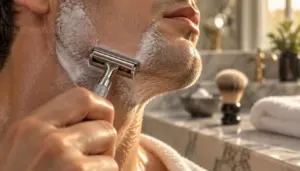
How does a simple metal handle beat the fancy gear in your drugstore aisle? It comes down to design. A safety razor has a bar that stretches your skin taut just before the blade arrives, so contact stays uniform, even on curved spots like your jaw and neck.
Keeping a steady blade angle helps too, and this guide to the best razors for a smooth shave highlights models that make technique easier.
The blade gap also limits how much hair enters per stroke, so less skin gets engaged. On later passes, the bar re-flattens settled skin, which cuts down that plucking feeling. Neat, right? A gap that’s too mild makes hair harder to cut, which pushes people toward extra pressure and repeat passes, so understanding blade gap and exposure helps you avoid irritation.
Fewer Blade Edges Can Reduce Friction
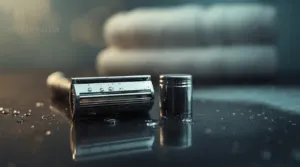
Here’s the other half of the story. A five-blade cartridge drags five edges over the same patch of skin in one stroke, so you get fivefold friction before you’ve even rinsed. Each edge lifts away a bit of sebum and surface skin, and that adds up fast.
A single blade changes the math. One edge per stroke means less mechanical abrasion, and the flat guard keeps skin from bulging between blades. Want calmer skin? Use fewer passes, not more gear.
Below-Surface Cuts Can Trigger Razor Bumps
Here’s where cartridges can bite back. That first blade hooks the hair and tugs it up, so the next blade slices it below the skin line. Sounds smooth, right? But a hair cut under the surface can retreat into its follicle with a sharp, angled tip, and that’s how ingrown hairs start.
A single-blade safety razor skips the problem by cutting at skin level in one pass, as this single-blade razor ingrown hair prevention guide explains.
A safety razor cuts at or near the surface, so the tip stays put and grows out cleanly.
Pulling skin taut or shaving against the grain raises the odds of those bumps too.
Light Pressure and Blade Angle Matter

Pulling the skin tight and shaving against the grain are habits worth dropping, but there’s more to it. Pressure and blade angle matter too.
A safety razor weighs 70 to 100 grams. That weight does the cutting, so let go of the handle.
Since the blade does the cutting, choosing a sharp, forgiving option matters, and these beginner-friendly safety razor blades are a good place to start.
- Hold the handle at 40 to 45 degrees.
- Aim for a 30-degree working angle.
- Skip the downward push completely.
- Adjust 5 to 10 degrees over your jaw and neck.
Tilt too far and the blade just stops cutting. Easy fix.
Dull Blades Can Tug and Irritate Skin
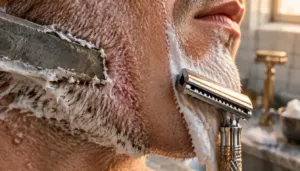
A dull blade doesn’t slice your whiskers. It grabs them. Tiny chips along the edge turn a clean cut into a drag, and that pull travels straight down to the follicle. Sound familiar? That tug is your first warning.
When that drag leaves your edges jagged, this uneven beard trimming guide shows how to even things out and keep your lines clean.
A worn-out blade tears at hair instead of cutting it, and that yank reaches the follicle before you ever see redness
Here’s the catch: you’ll probably need three or more passes instead of one or two, and each one scrapes skin that’s already lost its protective oils. Redness shows up fast.
Swap safety razor blades after three to five shaves, and cartridges after five to seven.
Razor Burn Can Persist After Switching

You might expect the burn to vanish the day you switch. It often doesn’t, and that’s normal.
Your skin needs time to recover from months or years of multi-blade abuse. Some post-switch irritation sticks around while it heals.
Try these fixes:
- Use light pressure only.
- Shave with the grain.
- Swap blades weekly.
- Skip daily passes to avoid skin abrasion.
- Moisturize afterward.
Stay patient. Give it two to four weeks, and ingrown hairs should calm down. You’ve got this!
Frequently Asked Questions (FAQs)
Can safety razors be used on sensitive skin?
Yes, they can, and many sensitive-skin shavers swear by them. One thin blade means less drag and less skin irritation. Pick a mild head, use light pressure, and keep a 15 to 30 degree angle.
How do I choose the right safety razor?
Think of a razor as a key: it only works if it fits your lock. Match the gap to your skin and stubble. Daily shavers with sensitive skin should pick something mild, while coarse growth needs more bite.
What shaving cream works best with a safety razor?
Go with a shaving soap or cream that stays wet and slick through every pass. Taylor of Old Bond Street Sandalwood is a great pick: an almond-sized dab builds dense lather for a full three-pass shave.
Are safety razors safe for beginners to use?
Wondering if a safety razor will shred your face? It won’t, if you go slow. A mild razor with a closed comb helps, and light pressure matters most. Expect a few nicks early, then it clicks.
Do safety razors give a closer shave than cartridges?
Not by default. Both can get you equally close, but they get there differently. A cartridge often does it in one pass, while a safety razor usually takes two. Your technique, angle and blade sharpness decide the result.
How should I clean and store a safety razor?
Rinse your safety razor under warm water right after each shave, loosen the handle, and towel-dry it. Then store it dry, upside down in a stand, away from the shower. Remove the blade before long breaks.
Conclusion
Is it true that more blades mean a closer, smoother shave? Not for your skin. Understanding why safety razors cause less razor burn than disposables comes down to one thing: less stress on every stroke.
One sharp edge, a light touch, and a fresh blade beat five edges dragging across your neck. Still stinging? Check your angle, ease off the pressure, and give your skin a few weeks to adjust.
Go shave smarter, not harder.