This site is supported by our readers. We may earn a commission, at no cost to you, if you purchase through links. This content is for general informational and educational purposes only and is not a substitute for professional medical, dermatological, or nutritional advice.
You did the work. Soaked your hair, raked in the gel, scrunched like a pro. Then you dried it and watched your curls fall apart into frizz and limp strands instead of defined, bouncy ringlets.
Why won’t my curls clump? Your hair isn’t broken, and you’re not doing it wrong. Something is standing between your strands and the water they need. Buildup coats them, dryness starves them, damage scrambles them, and porosity decides whether moisture stays or escapes.
Once you spot your culprit, the fix gets surprisingly simple. Here’s how to find it and finally get the clumps you’ve been chasing.
Table Of Contents
- Key Takeaways
- Common Reasons Curls Won’t Clump: Buildup, Dryness, and Damage
- How to Balance Curl Moisture for Your Hair Porosity
- Styling and Drying Techniques for Better Curl Clumping
- Choosing Curl Products That Define Without Weighing Hair Down
- Top 3 Products to Support Your Curl-Clumping Routine
- Frequently Asked Questions (FAQs)
- How can I get my curls to clump together?
- Why is my curly hair not clumping?
- Why do my curls clump together after curling?
- How to get big chunky curls?
- What is the best way to apply product to my hair for clumping?
- How can I tell if my hair is properly moisturized?
- What is the 30, 60, 80 rule for product application?
- How can I prevent my curls from frizzing after they’re dry?
- Does hair texture affect how curls clump?
- Should I change products with seasonal weather shifts?
- Conclusion
Key Takeaways
- Your curls aren’t broken, they’re blocked, and the usual culprits are product or mineral buildup, dryness, heat or chemical damage, porosity, and styling on hair that isn’t wet enough.
- Clarify first, then run a float test to learn your porosity, so you can match your products: lightweight and water-based for low porosity, richer creams and sealing oils for high porosity.
- Style on soaking wet hair by layering leave-in then gel, raking and scrunching upward, and keep your hands off until your hair is completely dry so the clumps set.
- Choose flexible, water-based formulas, skip strong alcohols and heavy butters, and use bond-building treatments, a hydrating mask, and a gentle detangler to repair damage and protect your curl pattern.
Common Reasons Curls Won’t Clump: Buildup, Dryness, and Damage
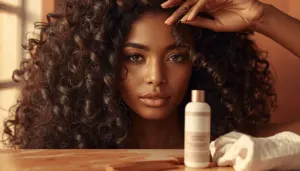
Your curls aren’t broken, they’re just blocked. Five culprits are usually standing between you and defined, grouped curls. Let’s walk through them one by one so you can spot yours and take back control.
If you spot those telltale splits, trimming them away is the fastest way to restore curl definition, and this guide on how to trim split ends at home walks you through it safely.
Product And Mineral Buildup
You might think your curls are rebelling, but they’re probably just buried. Product buildup from gels, creams, and oils forms a coating that blocks water, while hard water residue leaves a stiff mineral film. Hard water contains high levels of dissolved calcium and magnesium, and minerals in hard water can strip natural oils, leaving hair dry, brittle, and less elastic.
Here’s what it looks like:
- Curls feel heavy, coated, or crunchy.
- Clumps form unevenly, then collapse.
- Conditioner seems to slide right off.
Reset with a clarifying shampoo, then use a chelating shampoo monthly. An apple cider vinegar rinse helps too.
Dryness And Dehydration
Once your hair is clean, thirst is the next suspect.
Dry curls lack oil, but dehydrated curls lack water, and oils alone only mask that. They need water, not shine.
Your hair porosity decides how well strands drink and hold curl hydration. Try deep conditioning weekly, then mist with water before styling.
Restore moisture balance, and curl clumping finally follows.
Heat And Chemical Damage
Hydrated but still not clumping? Check for damage next.
Heat and bleach rearrange bonds inside the strand, so curl damage leaves some sections springy and others limp. Spot it fast:
- Curls loosen only in certain spots.
- Ends snag and split.
- Hair breakage shows up when you detangle.
- Strands feel rough, then frizz.
Try bondbuilding treatments, a gentle protein treatment, and a trim.
If color is part of the damage, you can also remove hair color naturally at home with gentler methods that won’t undo your repair work.
Porosity And Moisture Retention
Damage isn’t the only culprit. Your hair porosity decides how well strands take in and hold water, and that drives moisture retention.
Low porosity hair repels water, so products sit on top. Warm up your deep conditioner with heat. High porosity hair drinks fast but leaks fast, so seal with oils or butters right after curl hydration.
Test it with a float test.
Styling Without Enough Water
You might be doing everything right and still skipping the one step that matters most: water. Curls need soaking wet hair to clump, not damp strands.
Here’s your fix:
- Rake products through dripping sections
- Re-spritz before each scrunch
- Practice smart sectioning tips
- Master water distribution
- Scrunch upward gently
How to Balance Curl Moisture for Your Hair Porosity
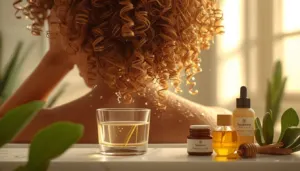
You can’t fix clumping until you know your hair porosity. Run the float test: a clean strand in room-temperature water for 3 to 5 minutes tells you plenty.
Here’s what to do with the result:
- Low porosity: Choose lightweight, water-based products with glycerin or honey. Skip heavy butters, which sit on the cuticle and cause limpness.
- Medium porosity: Keep hair moisture steady with conditioner and a weekly mask.
- High porosity: Reach for richer creams, sealing oils, and slightly acidic products to help the cuticle lie flat.
Strands can differ from roots to ends, so treat sections separately. Watch for feedback. Mushy, stretchy curls need protein; stiff, snappy ones need curl hydration. Moisture balance is what gives you curl clump definition.
Styling and Drying Techniques for Better Curl Clumping
Think of your curls as a crowd of strangers. Left alone, they wander. Give them a reason to stand together, and they move as one.
Curls are like strangers in a crowd: left alone they wander, but give them a reason and they move as one
Start with wet styling. Apply product to soaking hair, section by section, so strands can line up as they dry. Fine waves love the praying hands method, which smooths product down without breaking anything apart. Curlier textures do better with raking techniques: rake through with your fingers, then give a gentle shake for bounce.
Next, scrunch upward to coax each curl back into shape. If you’re diffusing, keep heat and airflow low. High settings shatter clumps and invite frizz.
Then hands off. Whether you diffuse or airdry, let your hair dry completely before touching it. That’s when the cast sets, and your clumps lock in.
Choosing Curl Products That Define Without Weighing Hair Down
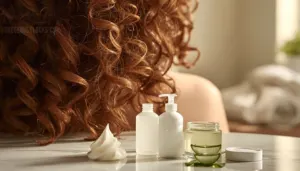
Picture a silk scarf dipped in wet cement. That’s your curl when the wrong formula coats it. Great curl definition starts with lighter choices, not more product.
Pick curl products that match your hair porosity. Fine or low porosity strands need thin gels and mousses. Heavy oils and butters cause product buildup fast.
Here’s your filter:
- Choose water-based formulas. Gels, mousses, and light creams spread evenly.
- Favor glycerin over heavy butters in leave-ins.
- Look for flexible polymers like PVP or acrylates for curl hold with bounce.
- Layer a lightweight leave-in first, then gel on top.
Skip strong alcohols. They dry strands and sabotage clumping. Refresh with a spray between washes instead of piling on more. Curls will thank you.
Top 3 Products to Support Your Curl-Clumping Routine
You’ve cleared the buildup, balanced your moisture, and picked gels that won’t weigh you down, so now it’s time to back up your routine. These three products each support a different part of the clumping process, from repairing strands to hydrating deeply to detangling without breaking up your curl pattern. Here’s what’s worth adding to your lineup.
1. Olaplex Hair Bond Building Perfector
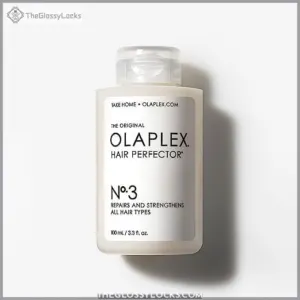
Think of your curls as a rope with frayed fibers inside. Pull it, and it snaps instead of coiling. That’s what broken bonds do to your clumps.
Olaplex No. 3 Hair Bond Building Perfector is a pre-shampoo treatment that rebuilds all three hair bonds. Its patented bond building technology repairs disulfide bonds, and it’s clinically proven to make hair 3X stronger after one use. Stronger strands hold their curl pattern, which gives your clumps a solid foundation.
Apply it before you shampoo, then follow with a moisturizing conditioner, because this isn’t a hydrator. Some users report heaviness or dryness, so watch how your hair responds.
The 100 mL bottle is small. If your hair is long or thick, expect to repurchase often. Still, fewer broken bonds means less future breakage, plus softer, shinier, more manageable curls.
| Best For | People with damaged, chemically treated, or breakage-prone curls who want a pre-shampoo treatment that strengthens hair from the inside. |
|---|---|
| Product Type | Pre-shampoo treatment |
| Best For | Damaged, chemically treated curls |
| Main Benefit | Strengthens hair bonds |
| Breakage Reduction | Reduces future breakage |
| Size | 100 mL |
| Main Drawback | Small bottle, some report dryness |
| Additional Features |
|
- Rebuilds all three hair bonds and is clinically proven to make hair 3X stronger after one use
- Reduces future breakage, helping curls hold their pattern
- Leaves hair softer, shinier, and more manageable
- The 100 mL bottle is small, so long or thick hair may need frequent repurchasing
- Some users report hair feeling heavy, dry, or brittle afterward
- It isn’t a hydrator, so it needs a moisturizing conditioner, and some find the value mixed for the price
2. Briogeo Acai Hair Mask
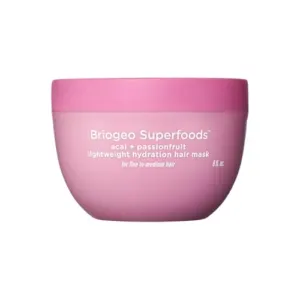
Think of this mask as a cold glass of water for thirsty curls. Briogeo’s Superfoods Açaí Mega Moisture Mask hydrates in just five minutes, so you get moisture without the weight that flattens fine curls.
Here’s why it works. Hyaluronic acid pulls in hydration, passionfruit oil adds shine and elasticity, and açaí antioxidants help calm frizz. Hydrated strands clump. Dry ones don’t.
Use it once or twice a week in place of conditioner. Apply it evenly through your lengths and ends after washing, leave it on for five minutes, then rinse thoroughly. Want more? Cover your hair with a plastic cap, sit under a dryer for 30 minutes, then rinse.
It’s silicone-free, sulfate-free, and safe for color-treated hair with weekly use. One caution: some users find the container tricky to dispense, so squeeze slowly and take your time. Your curls are worth it.
| Best For | People with dry hair of any texture, from straight to coily, who want lightweight hydration and easier detangling without silicones or sulfates, including those with color-treated hair. |
|---|---|
| Product Type | Hydrating hair mask |
| Best For | Dry hair, any texture |
| Main Benefit | Lightweight hydration |
| Breakage Reduction | N/A |
| Size | 2 oz |
| Main Drawback | Mixed feedback, hard to dispense |
| Additional Features |
|
- Hydrates dry hair without weighing it down, thanks to açaí and passionfruit antioxidants and vitamins
- Clean vegan formula that is 97% naturally derived, silicone-free, and sulfate-free
- Safe for color-treated hair with weekly use and helps detangle and improve manageability after washing
- Mixed customer feedback on softness and value for money
- Some users report the container feels underfilled or is difficult to dispense
- The small 2 oz size may require frequent repurchase for regular use
3. Tangle Teezer Curly Hair Detangler Brush
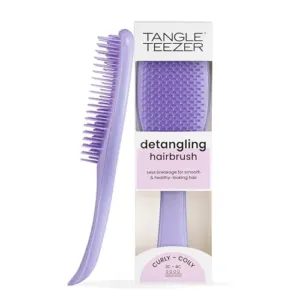
You’ve hydrated your strands. Now protect that moisture with the right tool. If your clumps fall apart the second you touch them, a rough detangling session is often the culprit.
The Tangle Teezer Curly Hair Detangler Brush uses patented two-tier teeth. Longer, firmer teeth sink into thick curls and loosen knots, while shorter teeth smooth the cuticle to cut frizz. It’s built for 3C to 4C curls and coils, but works on 2A to 3B textures too. In a user study, it cut detangling time in half.
Here’s how to use it. Work through damp, conditioned sections, starting at the ends and moving up toward the roots. Go slowly. It also spreads your curl products evenly, so every strand gets its share.
Two cautions: the firm teeth can feel harsh on a sensitive scalp, and the smooth handle gets slippery when wet. Grip it firmly and detangle gently.
| Best For | People with 3C to 4C curls and coils (including those with 2A to 3B textures) who want to detangle faster and spread their hair products evenly. |
|---|---|
| Product Type | Detangling hair brush |
| Best For | 3C to 4C curls and coils |
| Main Benefit | Faster detangling |
| Breakage Reduction | Helps minimize breakage |
| Size | 8.66 inches long |
| Main Drawback | Firm bristles, slippery handle |
| Additional Features |
|
- Patented two-tier teeth pair longer, firmer teeth for loosening knots with shorter teeth for smoothing
- Cuts detangling time in half, based on a user study
- Distributes hair products evenly and helps minimize breakage and frizz
- Firm bristles may feel harsh on sensitive scalps
- Smooth plastic handle can be slippery when wet
- Mixed user feedback on comfort and hair breakage
Frequently Asked Questions (FAQs)
How can I get my curls to clump together?
Maya’s curls stayed frizzy until she styled soaking wet hair. Now they clump.
Match products to your hair porosity, then use scrunching methods to build curl clumping. Let the gel cast dry for curl definition.
Why is my curly hair not clumping?
Your curls aren’t clumping because something’s blocking moisture balance. Buildup, dryness, heat damage, uneven porosity, or styling on barely damp hair all stop strands from grouping. Clarify first, then style soaking wet.
Why do my curls clump together after curling?
Your curls clump because water lets hydrogen bonds form as strands dry together. Cuticle smoothness and moisture balance keep that bond tidy, while your hair porosity and styling products decide whether curl clumping holds well.
How to get big chunky curls?
Soak your hair, then layer a curl-defining cream and plenty of gel while it’s dripping wet. Rake with tension, scrunch up toward your scalp, diffuse gently, and let a cast form. Scrunch out the crunch last.
What is the best way to apply product to my hair for clumping?
About 70% of curlies apply product wrong, so you miss peak clumping.
Start with soaking wet hair. Layer leave-in conditioner, then gel. Section small portions, rake with tension, then use praying hands and scrunch upward.
How can I tell if my hair is properly moisturized?
Stretch one wet strand gently. If it bounces back, your hair hydration is on point. Snaps? It’s thirsty.
Moisturized curls feel soft, glide under your fingers, and clump with bounce. Your hair porosity test results shape how long that lasts.
What is the 30, 60, 80 rule for product application?
Ready to master your timing?
The 30-60-80 rule is a styling technique for product layering: leave-ins at 30 percent saturation, creams at 60, light oils at 80, boosting hair hydration, curl definition, and curl clumping.
How can I prevent my curls from frizzing after they’re dry?
Think of dry curls as a sealed envelope. Don’t tear it open. Smooth a pea-sized drop of lightweight serum or gel over them, then add leave-in for hair moisture balance. Keep your hands off, and use humidity resistance products.
Does hair texture affect how curls clump?
Yes, hair texture directly shapes your curl clumping. Fine strands form tighter, smaller groups, while coarse hair makes looser, bigger clumps. Match your products to strand thickness, and curl separation and hair manageability get easier.
Should I change products with seasonal weather shifts?
Is it a myth that your curls need seasonal swaps? Not at all. Seasonal hair care matters: go lightweight and anti-humidity in summer for frizz control, richer in winter for moisture retention, and adjust for porosity.
Conclusion
Still asking yourself, why won’t my curls clump? Now you know the suspects: buildup, dryness, damage, porosity, and too little water.
Name your culprit, then fix it first. Clarify, hydrate, and style on soaking wet hair with a gentle hand. Your strands are ready to cooperate.
Curls don’t need a miracle. They need the right conditions. Give them that, and those defined, bouncy clumps will finally show up and stay. Now go claim your curls.