This site is supported by our readers. We may earn a commission, at no cost to you, if you purchase through links.
Sunburned skin is technically a radiation injury—your body’s inflammatory response to UV damage, not just a surface inconvenience. That distinction matters, because how you treat it in the first few hours determines how quickly it heals.
Aloe vera has earned its reputation as the go-to remedy for good reason: its active compounds reduce inflammation and support skin barrier repair in ways that most drugstore creams can’t match. But slapping on any green gel from your bathroom cabinet won’t cut it.
Knowing how to use aloe vera for sunburn correctly—right product, right technique, right timing—makes the difference between genuine relief and wasted effort.
Table Of Contents
- Key Takeaways
- Cool Sunburned Skin First
- Apply Pure Aloe Vera Thinly
- Choose The Right Aloe Product
- Reapply Aloe for Sunburn Relief
- Know When to Skip Aloe
- Frequently Asked Questions (FAQs)
- How do you apply aloe vera gel on a sunburn?
- How to apply aloe vera on sunburn blisters?
- How to treat a sunburn with Aloe vera & cucumber?
- Does aloe vera cause sunburn?
- Is aloe vera good for Burns?
- What is the best aloe for sunburn symptoms?
- Can I use aloe vera straight from the plant on a burn?
- Can I use aloe vera straight from the plant?
- How do you use aloe vera after sun?
- What heals sunburn fast?
- Conclusion
Key Takeaways
- Sunburn is a radiation injury, so cool your skin with water or a cold compress before applying anything — putting aloe on hot skin cuts its effectiveness short.
- Pure aloe vera gel (look for "aloe barbadensis leaf juice" near the top of the label) works best; avoid formulas with alcohol, fragrance, or oils, which irritate already‑damaged skin.
- Apply a thin, even layer with clean hands, let it air‑dry completely, and reapply two to four times daily until redness is fully gone — consistency matters more than a single heavy dose.
- Skip the aloe and seek medical help if you see widespread blisters, a fever above 102°F, signs of infection, or dizziness — these signal damage that no gel can fix.
Cool Sunburned Skin First
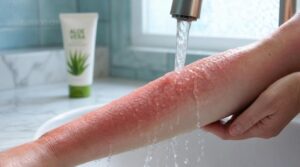
Before you even think about reaching for that aloe, your skin needs to cool down first. Applying gel to hot, inflamed skin cuts its effectiveness short. Here’s how to prep your skin the right way.
Start with a cold compress for a few minutes, then follow the full razor burn and ingrown hair relief routine before reaching for the aloe.
Rinse With Cool Water
Start by holding the sunburned area under cool running water for a few minutes. Research shows that rinsing within 30 seconds can markedly limit burn depth.
Cool — not ice‑cold — is the sweet spot; freezing temperatures can shock already‑damaged skin. Let the water flow gently over you without rubbing.
This draws heat out continuously, slowing the burn before it worsens. Once your skin feels noticeably cooler, step away and let it settle.
Use Cold Compresses
Once your skin feels cooler from rinsing, a cold compress keeps that relief going. Soak a clean cloth in cold water, wring it out, and lay it gently over the burned area.
Never apply ice directly — it can damage already-sensitive skin. A few minutes on, a few minutes off. Repeat as needed until the heat settles.
Pat Skin Dry Gently
Once the compress comes off, your skin needs a moment before anything else touches it.
Pat dry with a soft, clean towel — no rubbing, no wiping. Friction on inflamed skin only makes things worse.
Keep it light, keep it brief. A little residual dampness is actually fine; it helps aloe spread evenly when you apply it next.
Avoid Scrubbing or Exfoliating
This is exactly where most people slip up. Your skin barrier is already compromised — scrubbing or exfoliating now is like sanding a fresh bruise. Skip the scrubs entirely, whether physical or chemical.
- No grainy scrubs
- No acid toners
- No washcloths
- No circular rubbing
- No peeling away flakes
Gentle wins here. Let the healing happen on its own terms.
Apply Pure Aloe Vera Thinly
Once your skin is cooled down, it’s time to actually get the aloe on — and how you apply it matters more than you’d think. A few small habits make the difference between real relief and accidentally making things worse. Here’s what to do from the moment the gel hits your skin.
Use Clean Hands

Your hands carry more bacteria than you’d expect — even after a quick rinse.
That’s why pairing good handwashing habits with a scalp-care routine matters — especially if you’re trying natural remedies for oily scalp at home that involve direct contact with roots and skin.
Before any topical application of aloe to sunburned skin, wash thoroughly with soap and water for at least 20 seconds. This simple step is the foundation of safe home first aid. Skipping it risks introducing bacteria to already‑stressed skin, increasing your infection risk considerably.
Spread Even, Light Layer
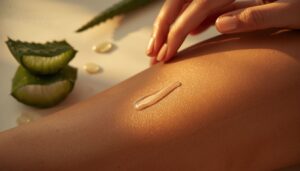
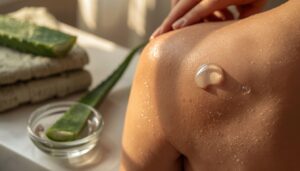
Once you’ve got clean hands ready, apply a small amount of aloe vera to the center of the sunburned area — think pea-sized for a palm-width zone. Then use gentle strokes technique: short, soft sweeps outward from the middle.
- Start small, add more if needed
- Sweep outward using light pressure
- Cover edges with edge coverage tips — hairline, sleeve borders, shoulders
- Check absorption: gel should look like a lightly coated film, not wet
- Wait briefly before dressing to avoid preventing transfer onto fabric
Spreading aloe vera gel evenly matters more than applying it generously. A thin, even layer actually helps the gel moisturize the skin better than clumping it on. If it looks slick and wet, you’ve used too much.
Let Gel Air-Dry

After spreading the gel, let it air-dry completely before reaching for clothing or a sheet. This isn’t impatience — it’s strategy.
As the water in pure aloe vera gel evaporates, it forms a thin protective film that stays in contact with your skin longer, so the active compounds actually do their job instead of wiping off on your shirt.
Avoid Oils and Fragrance
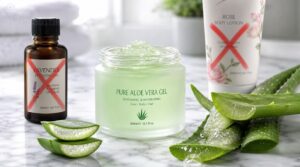
Once the gel is on, what you put near it matters just as much. Avoid oils and fragrance entirely — oils trap heat against already inflamed skin, making discomfort worse, while fragranced products can trigger contact dermatitis on reactive, sunburned tissue.
Always check ingredient labels for perfume, essential oils, or alcohol. Stick to 100 percent pure aloe vera gel for real burn relief.
Cover With Loose Clothing

Once the aloe gel dries, loose, breathable clothing is your next move. Cotton or linen lets air circulate, keeps heat from building up, and won’t drag against tender skin. It also holds the gel in place longer.
If the area gets sun exposure, UPF-rated fabric adds a protective layer without pressing directly onto the burn.
Choose The Right Aloe Product
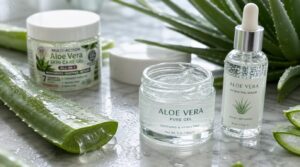
Not all aloe products are created equal, and the wrong one can do more harm than good on already-irritated skin. What’s in the bottle matters just as much as how you apply it. Here’s what to look for before you reach for the shelf.
Look for Pure Aloe Gel
Not all aloe products are created equal. Your best bet is 100 percent pure aloe gel — look for "aloe barbadensis leaf juice" sitting near the top of the ingredient list. Here’s what to prioritize when choosing:
- Pure gel extracted from the plant with minimal processing
- Short ingredient lists centered on fresh aloe gel
- No added fragrances or colorants
- Gentle preservatives like potassium sorbate
- Clear shelf-life labeling for safety
Check Ingredient Labels
Once you’ve spotted "aloe barbadensis leaf juice" near the top of the label, scan the full ingredient list before buying. On prepackaged aloe vera gel, ingredients appear in descending order by concentration — so if aloe sits far down the list, you’re mostly buying filler.
Identify allergens like chamomile or calendula extracts, which can irritate already-inflamed skin.
Avoid Alcohol-Based Formulas
Once you’ve confirmed aloe sits high on the label, check whether the formula carries any alcohol. Look for alcohol denat, ethanol, isopropyl alcohol, or methanol — these appear under different names but behave similarly on tender skin, pulling moisture out and intensifying that stinging sensation. Avoid hidden alcohols by scanning every ingredient, not just the top few.
A true water-based gel stays cooler, spreads evenly, and won’t dry your skin out mid-heal.
Store Gel in Refrigerator
Once you’ve ditched the alcohol-heavy formulas, where you store your aloe matters just as much as what’s in it. Refrigerate for freshness — your typical home fridge runs around 35–38°F, which slows spoilage greatly.
Keep the gel in an airtight container, separate from food, and away from door shelves where temperatures fluctuate. Once opened, monitor shelf life closely and discard it if the color or smell changes.
Use Fresh Aloe Safely
If you have a fresh aloe plant at home, you can skip the store entirely — but hygiene matters. Rinse the leaf thoroughly, drain the yellow latex (aloin) for 10–15 minutes, then scoop only the clear inner gel.
Always patch test first on your forearm and wait 24 hours. People prone to allergic reactions should be especially cautious.
Reapply Aloe for Sunburn Relief
One application won’t cut it — sunburned skin needs consistent care over several days to actually heal. How often you reapply, how you apply it, and what you do in between all make a real difference. Here’s what to keep in mind as you work through the recovery process.
Apply Two to Four Times
For mild sunburns, aim for two to three applications daily, and up to four if an area feels particularly hot or uncomfortable. Let your skin dryness cue guide you — reapply when skin starts feeling tight, not on a rigid clock. Here’s a simple frequency adjustment guide to follow:
- Reapply after toweling off or getting dressed
- Space applications farther apart as redness eases
- Use chilled fresh aloe vera gel for better sunburn relief
- Pat gently — never rub — for a safe topical application technique
- Skip a session if skin already feels calm and moist
Continue Until Redness Fades
Most sunburns take three to seven days to settle down, so consistent application matters more than intensity. Think of it like watering a plant — steady, patient effort wins. Use this simple guide to track your progress:
| Day | Redness Level | Aloe Action |
|---|---|---|
| 1–2 | High | Apply 3–4 times daily |
| 3–4 | Moderate | Apply 2–3 times daily |
| 5–6 | Fading | Apply 1–2 times daily |
| 7 | Nearly clear | Apply once if needed |
| 8+ | Clear | Stop when clear |
Keep applying aloe vera gel until the anti-inflammatory work is done — meaning redness is genuinely gone, not just hidden under moisturizer. Patience during healing pays off with smoother, healthier skin.
Use Chilled Aloe Gel
Refrigerating your aloe vera gel before each application is one of the simplest upgrades you can make to your sunburn routine. The cooling effect works by drawing heat away from inflamed skin, giving you faster, more noticeable relief than room-temperature gel ever could.
Here’s how to get the most from chilled aloe gel:
- Refrigerate the extracted gel for 20–30 minutes before applying
- Keep your aloe vera gel stored between uses — don’t leave it on the counter
- Apply cold gel directly to clean, cooled skin for maximum comfort
- If it warms up between applications, chill it again before reusing
- Never apply gel that’s been sitting in a hot environment — the cooling effect disappears fast
Storage temperature tips matter more than most people realize. A consistently cold product stays effective and helps prevent bacterial growth after opening.
Moisturize Peeling Skin Gently
Peeling skin is fragile, and your instinct to rub or scratch it off can actually slow healing.
Instead, use a gentle moisturizing technique: scoop chilled aloe onto clean fingertips and press it against the skin using minimal skin contact — flat, light pressure only.
The light gel film left behind locks in hydration without friction, supporting recovery naturally.
Do Not Pop Blisters
That urge to pop a blister is hard to resist — but don’t do it. The blister roof acts as your skin’s built-in bandage, keeping bacteria out and raw tissue protected. Piercing it removes that shield entirely.
- Leave blister intact to preserve the natural barrier
- Intact blisters reduce infection risk greatly
- The fluid cushions movement, preventing further skin damage
- Keep blister sealed until it resolves on its own
- Watch for redness, warmth, or pus — those need medical attention
Know When to Skip Aloe
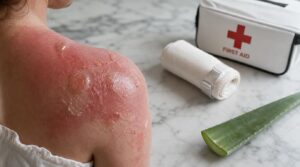
Aloe is helpful for mild sunburns, but it’s not always the right move. Some situations call for medical attention instead of reaching for the gel. Here’s when you should skip aloe and take a different approach.
Severe Blistering
If you’re seeing widespread, fluid-filled blisters, skip the aloe entirely. That level of damage — technically a second-degree burn — goes beyond what any gel can safely manage.
Blisters protect raw tissue underneath, and applying anything risks rupturing them, opening the door to infection. At this point, your skin needs a clinician, not a plant.
When blisters appear, your skin needs a clinician, not a plant
Fever or Chills
Blisters are one red flag — fever and chills are another. If you develop a temperature above 102°F, your body isn’t just reacting to surface damage anymore.
That’s a systemic response, meaning the burn has stressed your body well beyond your skin. Aloe won’t touch that. You need fluids, rest, and a doctor’s evaluation — not a gel.
Signs of Infection
Fever and chills signal systemic stress — but infection is a different warning sign, and it shows up locally, right on your skin.
Watch for these clinical signs of infection:
- Increasing redness that spreads beyond the original burn area
- Swelling and tenderness that worsens instead of settling
- Pus or discharge — thick, cloudy, or foul-smelling
- Red streaks moving outward from the wound
- Wound worsening rather than gradual improvement
If you spot any of these, skip the aloe and get medical treatment.
Aloe Allergy Symptoms
Infection shows up on your skin — but an allergic reaction to aloe vera shows up there too, and it’s easy to confuse the two.
Watch for allergic rash patterns: redness, raised hives, or blisters right where the gel touched. Itching duration matters — if it intensifies rather than eases, that’s a red flag. Swelling onset can happen fast. If you have allergies to plants in the lily family, your risk is higher. Do a quick skin sensitivity test on your forearm first.
Dehydration or Dizziness
Aloe won’t fix everything your skin is dealing with — and dehydration is one gap it can’t close. Sunburn drives serious dehydration risk, pulling fluids from your body even when you’re just sitting still. Watch for these warning signs:
- Lightheadedness when standing — your blood pressure is dropping
- Dark urine or reduced trips to the bathroom
- Dry mouth alongside persistent thirst
- Heat dizziness that worsens in warm rooms
- Confusion or a racing heartbeat
Skip the aloe and focus on hydration therapy first. Drink 2–3 liters of water daily, and if you’ve been sweating heavily, reach for an electrolyte drink — plain water won’t correct an electrolyte imbalance fast enough. Dizziness that doesn’t ease after fluids and rest signals possible heat exhaustion, which needs medical attention, not a gel.
Frequently Asked Questions (FAQs)
How do you apply aloe vera gel on a sunburn?
Cool the skin first, then wash your hands, spread a light layer of aloe vera gel, and let it air-dry. Refrigerate gel beforehand for extra relief.
How to apply aloe vera on sunburn blisters?
Blisters mean your skin is already in crisis mode. Keep hands clean, apply a thin layer of chilled pure aloe gel, and let it air-dry completely before covering with loose clothing.
How to treat a sunburn with Aloe vera & cucumber?
Think of cucumber and aloe vera as a cooling duo — cucumber draws heat out while aloe’s anti-inflammatory compounds calm redness, supporting skin healing naturally. Blend chilled cucumber with pure aloe gel, apply, and rehydrate well.
Does aloe vera cause sunburn?
No, aloe vera doesn’t cause sunburn. However, aloin sun sensitivity is real — the latex layer can trigger a photosensitivity response, increasing UV radiation risk. Always do a patch test first.
Is aloe vera good for Burns?
Yes, aloe vera helps burns. Clinical evidence validates its use on first- and second-degree burns, where its anti-inflammatory and antimicrobial properties soothe redness and support the skin healing process. It won’t help severe burns.
What is the best aloe for sunburn symptoms?
For sunburn, 100 percent pure aloe gel works best. Look for Aloe barbadensis listed first on the label. Avoid formulas with alcohol or fragrance — they irritate already-angry skin more than they help.
Can I use aloe vera straight from the plant on a burn?
Straight from the plant works fine for minor sunburns — cut a leaf, drain the yellowish latex, then scoop the clear inner gel. Skip it on severe burns, and patch-test first if you have sensitive skin.
Can I use aloe vera straight from the plant?
Fresh aloe? Absolutely. Drain the latex first — that yellow sap irritates skin. Then scoop the clear inner gel, keeping hands clean. Do a quick patch test before applying it directly.
How do you use aloe vera after sun?
After sun exposure, cool your skin first, then apply 100 percent gel directly. The cooling sensation calms heat fast. Reapply two to four times daily until redness fades.
What heals sunburn fast?
No single fix exists, but the fastest path forward combines cooling the skin, anti-inflammatory support, hydration, and aloe vera’s moisturizing barrier — working together to ease pain and kickstart skin regeneration.
Conclusion
Studies show aloe vera can reduce sunburn healing time by up to 72 hours compared to untreated skin—a meaningful difference when every layer of damaged tissue counts. Knowing how to use aloe vera for sunburn correctly isn’t complicated, but the details matter: product purity, timing, and consistent reapplication.
Your skin is already working hard to repair itself. Give it the right tool, applied the right way, and it won’t have to work alone.
- https://knoxvillecampground.com/camping-tips/homemade-aloe-recipe-for-sunburns
- https://www.webmd.com/skin-problems-and-treatments/what-to-know-about-aloe-vera-sunburns
- https://www.bswhealth.com/blog/lathering-aloe-vera-six-ways-treat-sunburn
- https://sascoproducts.com/blogs/news/how-often-to-apply-aloe-vera-to-sunburn-for-optimal-benefits
- https://bluelizardsunscreen.com/blogs/news/when-it-s-too-late-for-prevention-how-to-heal-a-sunburn