This site is supported by our readers. We may earn a commission, at no cost to you, if you purchase through links. This content is for general informational and educational purposes only and is not a substitute for professional medical, dermatological, or nutritional advice.

Mulch can cut soil evaporation by up to 90%—yet most gardeners apply it too thin, too late, or with the wrong material, then wonder why their plants still struggle through dry spells.
A two-inch layer of the right mulch works quietly beneath the surface, slowing moisture loss, moderating soil temperature, and feeding roots between waterings.
The difference between a garden that weathers a dry August and one that doesn’t often comes down to what’s covering the soil.
Choosing the best products for moisture retention means matching your climate, plant type, and budget to materials that genuinely hold water where it counts.
Table Of Contents
- Key Takeaways
- Best Products for Moisture Retention
- 1. Cedarcide Natural Cedar Insect Repellent
- 2. Pine Bark Fines for Bonsai Orchids
- 3. Hull Farm Cocoa Shell Mulch
- 4. Michigan Peat Compost Manure Blend
- 5. HealthiStraw Garden Mulch Wheat Straw
- 6. SuperMoss Coco Mulch Natural Brown
- 7. Legigo Organic Orchid Bark Potting Mix
- 8. Scotts Sierra Red Mulch
- 9. Gardenera Premium Brown Mulch
- 10. Fresh Antioxidant Rich Blueberries
- How Mulch Conserves Soil Moisture
- Organic Vs Synthetic Mulch Performance
- Mulch Types for Climate Adaptation
- Best Practices for Mulch Application
- Environmental Impact of Moisture Retaining Mulches
- Soil Amendments for Enhanced Moisture
- Cost-Effective Moisture Retention Solutions
- Water-Saving Landscaping Techniques
- Frequently Asked Questions (FAQs)
- How do I help my hair retain moisture?
- How to put moisture back into over-processed hair?
- How do I bring moisture back into my hair?
- Can mulch help retain moisture in containers?
- Which mulches work best for indoor plants?
- How does mulch affect soil pH over time?
- Are moisture-retaining mulches safe for vegetable gardens?
- Can skin moisturizers benefit from mulch-derived ingredients?
- Conclusion
Key Takeaways
- Applying mulch 2–3 inches deep can cut soil moisture loss by up to 90%, but most gardeners apply it too thin or too late to see that benefit.
- Matching your mulch to your climate matters—coconut coir works best in hot, dry regions, while pine needles and wood chips handle high-rainfall zones by improving drainage instead of just holding water.
- Organic mulches like compost and cocoa shell feed your soil as they break down, while synthetic options like rubber mulch last longer but can leach chemicals near edibles and shed microplastics over time.
- Watering early in the morning and pairing it with the right mulch can reduce evaporation by up to 40%, giving roots a real head start before the heat of the day sets in.
Best Products for Moisture Retention
Keeping your soil consistently moist doesn’t have to feel like a guessing game.
The right mulch or soil product can make a real difference, whether you’re growing orchids on a windowsill or managing a full garden bed. Here are ten options worth knowing about.
1. Cedarcide Natural Cedar Insect Repellent
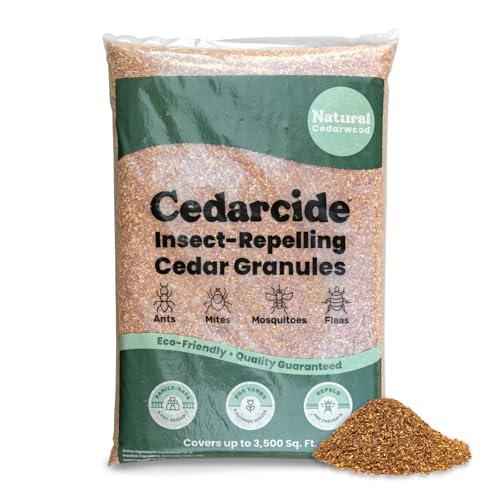
Cedarcide Natural Cedar Insect Repellent offers yard protection without synthetic chemicals, relying instead on 100% natural cedar wood granules. Each bag covers up to 3,500 square feet, creating a barrier against pests through its aromatic properties.
Application is straightforward: sprinkle the granules by hand or with a spreader around high-traffic areas like patios, dog runs, and garden beds. The cedar scent acts as a natural deterrent, effectively repelling mosquitoes, ticks, fleas, and chiggers while remaining safe for kids, pets, and wildlife.
To maintain protection, reapply every three to four weeks, as the scent—and its effectiveness—gradually fades over time.
If you wash your beard often or use strong cleansers, you may need to touch up sooner—check out this guide on how long beard dye actually lasts to fine-tune your routine.
| Best For | Families and pet owners who want a chemical-free way to keep mosquitoes, ticks, and fleas out of their yard without worrying about kids or animals getting into something harmful. |
|---|---|
| Material Type | Cedar wood granules |
| Package Weight | 8 lb |
| Organic Material | Yes |
| Moisture Retention | Low |
| Indoor Use | No |
| Price Per Unit | $42.99 |
| Additional Features |
|
- 100% natural cedar granules — no synthetic chemicals, safe for kids, dogs, cats, and backyard wildlife
- Easy to apply across a big area (up to 3,500 sq ft) by hand or with a spreader
- Tackles a wide range of pests — mosquitoes, ticks, fleas, chiggers — all from one product
- The cedar scent fades fast — sometimes within a day — so protection doesn’t last as long as you’d hope
- It won’t kill insects outright, so if you’ve got a serious infestation, you’ll likely need backup
- At $42.99 a bag, the cost adds up quickly if you’re reapplying every few weeks on a large property
2. Pine Bark Fines for Bonsai Orchids
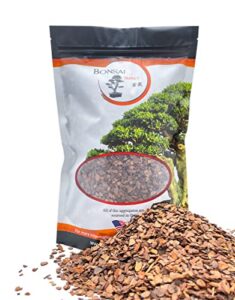
For smaller, more delicate plants like orchids and bonsai, Pine Bark Fines offer a different kind of protection. These ¼-inch fines absorb moisture slowly and release it gradually, so your roots stay consistently hydrated without sitting in soggy soil. They also create a porous structure that keeps oxygen circulating around fine feeder roots.
Mixed with pumice or lava rock, they prevent compaction while acidifying the substrate — a natural advantage for acid-loving species.
One 2 qt pouch works well for container-scale projects.
| Best For | Hobbyists growing bonsai, orchids, succulents, or other small-pot plants who want a natural, organic way to improve drainage and moisture balance in their soil mix. |
|---|---|
| Material Type | Pine bark fines |
| Package Weight | ~1 lb |
| Organic Material | Yes |
| Moisture Retention | Moderate |
| Indoor Use | Yes |
| Price Per Unit | Not listed |
| Additional Features |
|
- Slowly absorbs and releases moisture, keeping roots hydrated without waterlogging them
- Creates an airy, porous structure that lets oxygen reach delicate feeder roots
- 100% organic with no synthetic additives, and naturally acidifies soil to benefit acid-loving plants
- The 2 qt pouch is pretty small — it won’t go far if you’re working on anything beyond a few containers
- Needs to be blended with coarser materials like pumice or lava rock, or it can compact over time
- The added acidity isn’t great for every plant, so you’ll want to keep an eye on soil pH if you’re mixing different species
3. Hull Farm Cocoa Shell Mulch
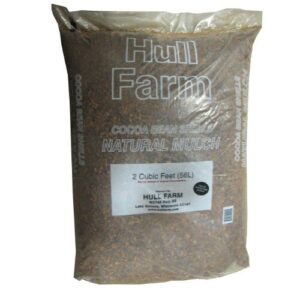
Hull Farm Cocoa Shell Mulch eases the transition from container plants to garden beds. Made from cocoa bean shells, it nourishes soil with a gentle NPK of 2.5-1-3 as it decomposes, preventing root burn.
Its porous structure forms a protective layer that locks in moisture, reducing surface evaporation. This feature ensures consistent hydration for plants while suppressing weeds.
However, the mulch’s chocolate scent attracts dogs, so pet owners must keep animals away. One 2-cubic-foot bag costs $40.79, offering both functional and aromatic benefits for gardens.
| Best For | Gardeners who want to enrich their soil naturally, retain moisture, and add a little charm to their beds or container plantings. |
|---|---|
| Material Type | Cocoa bean shells |
| Package Weight | 1 lb |
| Organic Material | Yes |
| Moisture Retention | High |
| Indoor Use | Yes |
| Price Per Unit | $40.79 |
| Additional Features |
|
- Slow-release nutrients (NPK 2.5-1-3) feed your soil without burning roots
- Forms a moisture-locking layer that cuts down on how often you need to water
- That fresh chocolate smell doubles as a natural squirrel deterrent
- At $40.79 a bag, it adds up fast if you’re covering a large area
- The scent draws dogs in like a magnet, which can be a real headache for pet owners
- It’s so lightweight that a windy day can scatter it before it even settles in
4. Michigan Peat Compost Manure Blend
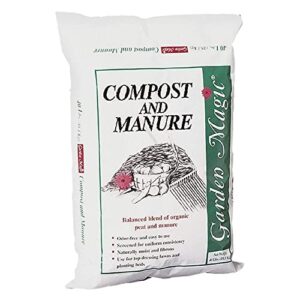
While cocoa shell mulch feeds your garden with a light touch, the Michigan Peat Compost Manure Blend takes soil nourishment a step further. It combines reed-sedge peat with composted animal manure, delivering a steady release of nitrogen, phosphorus, and potassium without risking root burn.
The peat component improves water retention and drainage simultaneously, ensuring moisture reaches root zones efficiently.
One 40-pound bag covers 0.75 cubic feet and costs $26.99.
| Best For | Gardeners who want an all-in-one organic soil booster for raised beds, containers, or in-ground plantings without the hassle of mixing amendments themselves. |
|---|---|
| Material Type | Reed-sedge peat & manure |
| Package Weight | 40 lb |
| Organic Material | Yes |
| Moisture Retention | Moderate |
| Indoor Use | Yes |
| Price Per Unit | $26.99 |
| Additional Features |
|
- Ready to use straight from the bag — no mixing, no prep, no fuss.
- Works for a wide variety of plants, from tomatoes and squash to hostas and turf grass.
- The peat-manure combo improves both drainage and moisture retention at the same time.
- Can lower soil pH, so acid-sensitive plants may need a lime adjustment.
- A 40-pound bag is a lot to wrestle with for small pots or tight storage spaces.
- Some buyers have received bags that were short on weight, which means dealing with the vendor to sort it out.
5. HealthiStraw Garden Mulch Wheat Straw
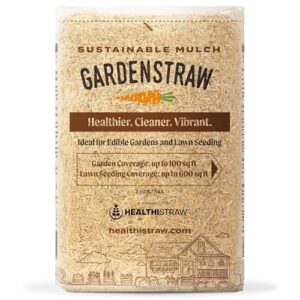
HealthiStraw Garden Mulch Wheat Straw is made from 100% non-GMO wheat straw, cleaned to remove most seeds and dust before reaching your garden.
Spread it 2–3 inches deep and water it in; the fibers interlock to stay put without chemical binders. One bale covers approximately 100 square feet.
It can cut your irrigation needs by up to 50% and, as it breaks down, feeds your soil with valuable organic matter.
| Best For | Gardeners who want a natural, chemical-free way to hold moisture, suppress weeds, and build healthier soil over time. |
|---|---|
| Material Type | Wheat straw |
| Package Weight | ~20 lb per bale |
| Organic Material | Yes |
| Moisture Retention | High |
| Indoor Use | No |
| Price Per Unit | Not listed |
| Additional Features |
|
- Locks in moisture well — can cut watering needs in half, which adds up fast over a whole season
- Breaks down into organic matter, so it’s actually improving your soil while it works
- No chemical binders; the fibers interlock on their own once you water them in
- Some stray seeds make it through the cleaning process, so the occasional weed sprout is possible
- Three bales at roughly 20 lbs each is a lot to haul around — not the most back-friendly purchase
- Wind can still shift it around if you skip the watering step or live somewhere particularly breezy
6. SuperMoss Coco Mulch Natural Brown
SuperMoss Coco Mulch Natural Brown is crafted from coconut husk fibers, offering a smart, renewable swap for traditional peat moss.
Its composition allows it to hold about 33% more water than peat, ensuring soil stays consistently moist without waterlogging roots. The pH level (5.7–6.24) remains gentle for most plants.
Spread it 2 to 3 inches deep; it won’t compact or crust over time. One bag covers 200 cubic inches, though larger beds may require multiple bags.
| Best For | Gardeners who want a cleaner, eco-friendly alternative to peat moss for containers, hanging baskets, or raised beds—especially in hot, dry climates where consistent moisture matters. |
|---|---|
| Material Type | Coconut coir fiber |
| Package Weight | 8 oz |
| Organic Material | Yes |
| Moisture Retention | Very High |
| Indoor Use | Yes |
| Price Per Unit | $15.34 |
| Additional Features |
|
- Holds about 33% more water than peat, so you’re watering less often
- Won’t harden or crust over time, keeping roots happy and healthy
- Neutral-ish pH works well for a wide range of plants
- The bag is small—200 cubic inches doesn’t go far if you’re covering a larger bed
- Arrives compressed, so you’ll need to soak it thoroughly before it’s ready to use
- Not a great fit for acid-loving plants that need a lower pH
7. Legigo Organic Orchid Bark Potting Mix
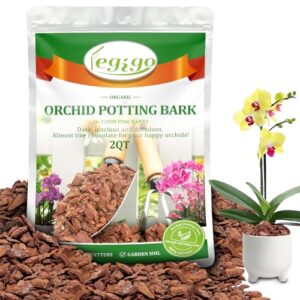
Legigo Organic Orchid Bark Potting Mix is a go-to for orchid growers who want healthy roots without the guesswork. Made from 100% untreated pine bark, its small 3/8-inch nuggets create natural air pockets that keep roots oxygenated and rot-free.
The pH sits between 5.0 and 6.5, which is right where Phalaenopsis and Cattleya orchids thrive. It retains just enough moisture between waterings without staying soggy, ensuring optimal hydration without waterlogging.
The resealable 2-quart bag keeps leftovers fresh for your next repotting session, maintaining quality and convenience over time.
| Best For | Orchid hobbyists and houseplant enthusiasts who want a clean, reliable bark medium that takes the guesswork out of repotting. |
|---|---|
| Material Type | Pine bark chips |
| Package Weight | ~1 lb |
| Organic Material | Yes |
| Moisture Retention | Moderate |
| Indoor Use | Yes |
| Price Per Unit | Not listed |
| Additional Features |
|
- Pure, untreated pine bark with a pH of 5.0–6.5 — right in the sweet spot for most orchids
- Small, uniform nuggets promote great airflow and drainage, keeping roots healthy and rot-free
- Resealable bag keeps leftover bark fresh for your next repotting session
- At just 2 quarts, one bag won’t go far if you’re repotting a whole collection
- The small nugget size isn’t ideal for larger pots that do better with chunkier bark
- In humid conditions, the sealed bag can trap moisture — you’ll want to crack it open to keep things dry
8. Scotts Sierra Red Mulch
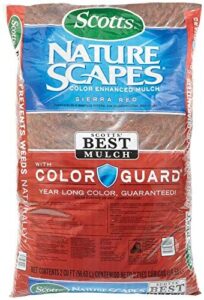
Scotts Sierra Red Mulch holds moisture and keeps its color all season long, thanks to its ColourGuard technology, which resists fading from sun and rain. This ensures your garden beds remain vibrant without frequent replenishing.
Crafted from natural hardwood and pine bark fibers, the mulch is free from construction debris or coal tar, offering a clean, eco-friendly option.
A 2-to-3-inch layer reduces surface evaporation, moderates soil temperature, and suppresses weeds. For best results, keep it away from plant stems to prevent moisture buildup at the base.
| Best For | Gardeners who want low-maintenance curb appeal and a mulch that actually holds its color through the season. |
|---|---|
| Material Type | Colored wood mulch |
| Package Weight | ~0.5 lb |
| Organic Material | No |
| Moisture Retention | Moderate |
| Indoor Use | No |
| Price Per Unit | Not listed |
| Additional Features |
|
- Color stays rich and red all season — no fading from sun or rain
- Locks in moisture and buffers soil temps, which is great for roots during cold snaps
- Easy to use straight out of the bag, no extra prep needed
- Pricier per bag than what you’d grab off a store shelf
- Shipping costs can make bulk orders hurt the wallet
- Some buyers feel the bag runs light on actual volume for its listed size
9. Gardenera Premium Brown Mulch
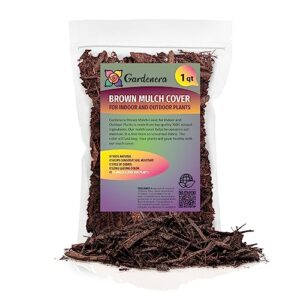
Gardenera Premium Brown Mulch keeps things simple without cutting corners. Made from shredded hardwood bark, it’s free from synthetic dyes and fillers, so what you spread is exactly what your soil gets.
A 2-to-3-inch layer reduces surface evaporation, buffers root temperatures, and blocks light to slow weed germination.
At $10.96 per quart, it’s best suited for container plants or small beds. Just keep it clear of plant stems to avoid moisture buildup against the crown.
| Best For | Gardeners who want a clean, natural-looking mulch for container plants, small raised beds, or indoor pots—especially those who prefer organic, dye-free options. |
|---|---|
| Material Type | Brown wood mulch |
| Package Weight | ~1 lb |
| Organic Material | Yes |
| Moisture Retention | Moderate |
| Indoor Use | Yes |
| Price Per Unit | $10.96 |
| Additional Features |
|
- Holds moisture well, so you’re watering less often
- Blocks enough light to slow down weed growth without any extra effort
- No synthetic dyes or fillers—just straightforward, natural hardwood bark
- One quart doesn’t go far—large beds will need several bags
- At $10.96 per quart, it gets pricey fast compared to buying bulk mulch
- Has to be kept away from plant stems, or you risk moisture buildup and rot
10. Fresh Antioxidant Rich Blueberries
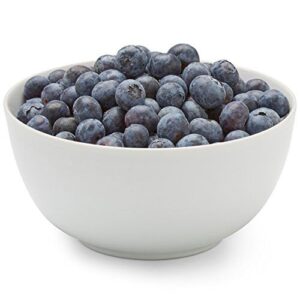
Blueberries might seem out of place in a mulch guide, but fresh antioxidant-rich blueberries pull double duty as a garden snack and a soil companion. Their discarded stems and leaves break down into nutrient-rich compost, enriching the earth as you enjoy their health benefits.
Each cup delivers about 84 calories, fiber, vitamin C, and anthocyanins that support your health while you tend your garden.
At roughly $2.97 per pint, they’re an easy, wholesome addition to any outdoor routine.
| Best For | Anyone who wants a healthy, ready-to-eat snack that’s easy to grab fresh and works just as well tossed into smoothies or baked goods. |
|---|---|
| Material Type | Fresh blueberries |
| Package Weight | 10.4 oz |
| Organic Material | Yes |
| Moisture Retention | N/A |
| Indoor Use | Yes |
| Price Per Unit | $2.97 |
| Additional Features |
|
- Packed with antioxidants and anti-inflammatory compounds that are actually good for you
- Comes cold-packed in an insulated bag, so they arrive fresh and ready to eat
- At $2.97 a pint, they’re an affordable way to add real nutrition to your day
- They’re perishable, so you need to refrigerate them right away or they won’t last long
- A few berries may arrive bruised or squished from the shipping process
- Sourcing varies by region, and some reviewers have raised concerns about growing practices in certain countries
How Mulch Conserves Soil Moisture
Mulch does more than just make your garden look tidy—it’s quietly working to keep moisture where your plants need it most.
There are a few key ways it pulls this off, from blocking out the sun to shielding roots from stress. Here’s how each one has an impact.
Reducing Evaporation Rates
When you layer mulch over bare soil, you’re effectively giving the ground a shield against heat and wind — two of the biggest drivers of water evaporation. Floating covers, shade structures, and UV-resistant membranes take this further for larger systems, cutting evaporation rates dramatically.
In hydroelectric reservoirs, floating covers can achieve up to 90% reduction in surface water loss. Here’s how mulch promotes soil moisture regulation:
- Blocks direct sunlight, lowering surface temperatures
- Disrupts wind flow, acting as a natural windbreak design
- Reduces water evaporation by up to 90% with proper coverage
- Evaporation films and membranes create a near-impermeable barrier
- Consistent moisture retention capabilities mean less frequent watering
Improving Water-holding Capacity
Mulch actively improves what’s underneath — far beyond just blocking evaporation. Compost Mulch and Leaf Mold Mulch break down into organic matter, boosting Micro‑porosity and strengthening Aggregate Stability so soil retains water longer.
Compaction Relief opens the root zone, giving roots room to reach deeper moisture reserves. This structural improvement enhances water infiltration and storage capacity.
Here’s how different mulches compare for soil moisture retention:
| Mulch Type | Moisture Retention Capabilities |
|---|---|
| Compost Mulch | Raises water-holding capacity 15–30% |
| Cedar Mulch | Lasts 4–5 years, steady retention |
Rainwater Harvesting potential also increases with Root Zone Expansion, as deeper roots access moisture more efficiently.
Shading Soil Surface
Canopy shade does something water alone can’t — it keeps your soil from losing moisture before plants ever get a chance to use it. A residue layer of Cedar Mulch or Shredded Bark Mulch creates microclimate control by blocking direct sun.
- Surface roughness cuts evaporation at the source
- Wood Chip Mulch stabilizes near-surface temperatures under hot conditions
- Pine Bark Nuggets improve infiltration dynamics after rainfall
- Leaf Mold Mulch maintains higher surface humidity beneath its cover
- Shredded Bark Mulch enhances moisture retention through dense coverage
Canopy shade combined with mulch extends soil moisture through dry spells.
Protecting Root Zones
Shade helps, but roots still need physical protection.
Installing Physical Barriers along the drip line keeps foot traffic and equipment from compacting soil and blocking water penetration.
| Root Guard Strategy | Benefit |
|---|---|
| Physical Barriers | Prevent compaction |
| Root Guard Materials | Retain root zone hydration |
| Traffic Management | Reduce soil disturbance |
| Compaction Prevention | Support soil structure improvement |
| Aeration Techniques | Boost moisture retention capabilities |
Organic Vs Synthetic Mulch Performance

Choosing between organic and synthetic mulch isn’t just a matter of preference — it affects how well your soil holds water, how long your mulch lasts, and what happens to your garden over time. Each type brings real trade-offs worth knowing before you commit.
Here’s how they compare across the factors that matter most.
Longevity and Decomposition
Not all mulches age the same way. Cedar resists breakdown for 1–2 years, while straw disappears within 3–6 months.
Microbial Activity Impact and Decomposition Rate Factors like warmth and moisture drive organic matter decomposition faster than most gardeners expect.
Understanding Mulch Material Lifespan helps you plan smarter.
| Mulch Type | Mass Loss Metrics | Longevity |
|---|---|---|
| Cedar | 25–50% (year 1) | 1–2 years |
| Straw | Rapid breakdown | 3–6 months |
| Coco Mulch | Moderate loss | 1–3 years |
Water Retention Efficiency
Regarding moisture retention capabilities, mulches exhibit distinct performance differences. Cedar Mulch leverages capillary rise to retain soil moisture 15–30% more effectively than bare soil, while Rubber Mulch forms a near-impermeable barrier that drastically reduces evaporation for up to a decade. Both mulch porosity and soil texture critically influence water accessibility for roots.
| Mulch Type | Retention Efficiency Index | Soil Moisture Regulation |
|---|---|---|
| Cedar Mulch | 15–30% above bare soil | Moderate, 5–15 cm depth |
| Pine Bark | 25% higher than bare soil | Slow-release, 2-day span |
| Rubber Mulch | Near-impermeable barrier | Decade-long evaporation reduction |
Hydrogel integration with organic mulches further enhances water availability, particularly in sandy soils where texture impacts retention most significantly.
Environmental Impacts
Choosing between organic and synthetic mulch isn’t just a garden decision — it’s an environmental one. Organic options support biodiversity and enhance microbial activity, but their decomposition under wet conditions releases methane emissions and contributes to your carbon footprint. Synthetic mulches reduce long-term resource consumption yet risk waterway pollution and habitat disruption through microplastic breakdown. Sustainable gardening practices and soil erosion prevention depend critically on this choice.
Organic mulch offers high environmental sustainability when responsibly sourced, though it poses risks like nutrient leaching if misapplied. Its decomposition under anaerobic conditions generates methane emissions, creating a moderate carbon footprint during breakdown. Synthetic alternatives minimize methane and maintain a lower carbon footprint during use, but their end-of-life microplastic risk threatens habitats and waterways.
| Factor | Organic Mulch | Synthetic Mulch |
|---|---|---|
| Carbon Footprint | Moderate during decomposition | Lower during use phase |
| Methane Emissions | Present in anaerobic conditions | Minimal |
| Habitat Disruption | Possible during sourcing | Microplastic risk at end-of-life |
| Waterway Pollution | Nutrient leaching if misapplied | Microplastics from weathering |
| Environmental Sustainability | High with responsible sourcing | Moderate with long service life |
Soil Enrichment Benefits
Organic mulch doesn’t just sit on top of your soil — it quietly rebuilds it from the ground up.
As it breaks down, you get enhanced nutrient cycling, increased cation exchange, and boosted microbial diversity that synthetic mulch simply can’t offer.
| Benefit | Organic Mulch |
|---|---|
| Greater Water Holding | Holds moisture deep in root zone |
| Improved Soil Tilth | Loosens compacted, dense soil |
| Microbial Activity Enhancement | Feeds beneficial bacteria and fungi |
| Nutrient Enrichment | Releases nitrogen, phosphorus naturally |
Mulch Types for Climate Adaptation
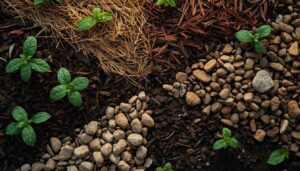
Not every mulch works the same way in every climate, and choosing the wrong one can actually make moisture problems worse. Your local weather plays a bigger role than most people realize for keeping soil hydrated all season.
Here’s how different mulch types stack up depending on where you garden.
Hot, Arid Regions
When temperatures push past 104°F, soil moisture can evaporate within hours. In hot, arid regions, implementing the right mulch strategy is critical for effective water conservation.
Three key approaches include:
- Deep-Root Mulch with Wood Chip Mulch locks in soil moisture and buffers temperature swings.
- Low-Humidity Mulch like coconut coir excels at sand stabilization and holding water longer.
- Rubber Mulch with Shade Net Integration blocks evaporation while offering lasting temperature buffering.
High-rainfall Zones
Too much rain can be just as tricky as too little. In high-rainfall zones, the focus shifts from water retention to managing where it goes.
Pine needles and wood chip mulch improve the water infiltration rate while supporting runoff management and flood mitigation. They also reduce soil leaching and help prevent root disease, addressing multiple challenges simultaneously.
This makes adaptive planting with cedar mulch far more effective for sustainable landscaping in such environments.
Temperate Climates
Temperate climates offer gardeners predictability through seasonal patterns, enabling advanced planning. Straw and compost mulch provide ideal support, maintaining soil moisture as spring warmth arrives and reducing water loss during rising temperatures.
An autumn mulch refresh—using cedar or wood chip varieties—sustains year-round water conservation. Leaf litter utilization adds a cost-free benefit to this sustainable approach.
Frost-prone Areas
Cold nights hit harder in valleys and low-lying areas, where frost pockets form as cold air settles overnight. These conditions pose risks to plants, particularly in root zones.
Dark-colored cedar mulch and wood chip mulch act as a protective barrier, helping moderate soil temperature by holding daytime heat longer. This natural insulation shields roots from abrupt temperature drops.
While radiative cooling mitigation, windbreak design, and frost forecast alerts offer support, a consistent mulch layer delivers reliable longevity for root protection. Its enduring presence ensures sustained defense against cold damage.
Best Practices for Mulch Application
Getting mulch right isn’t just about tossing it on the ground. How deep you layer it, when you apply it, and how you maintain it over time all make a real difference in how well your soil holds water.
Here are the key practices that help you get the most out of whatever mulch you choose.
Recommended Depth for Moisture
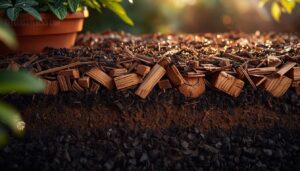
Getting the depth right makes all the difference for soil moisture. For most garden beds, 2 to 4 inches works well—whether you’re using Cedar Mulch, Wood Chip Mulch, or Compost Mulch.
Root zone alignment matters: shallow-rooted plants need about 2 inches, while deeper systems benefit from closer to 4. In containers, keep mulch thickness to 1 to 2 inches to avoid waterlogging.
Timing and Layering Techniques
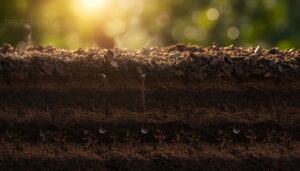
Once you’ve nailed your depth, timing becomes your next lever. Start with a 1 to 2-inch foundation, then build up with incremental mulch additions in alternating passes to keep air moving through.
- Apply mulch in spring after soil warms for steady decomposition
- Use moisture sync scheduling tied to your irrigation routine
- Practice layering intervals between rainfall events
- Adjust depth adjustment strategies seasonally—thicker in summer heat
- Apply mulch during early morning watering windows for minimal evaporation loss
Preventing Waterlogging
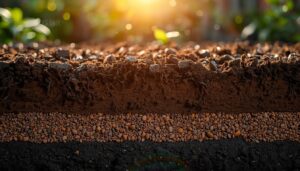
Too much of a good thing applies to moisture, too. Avoid waterlogging by integrating a proper drainage layer beneath your beds. Combining mulch particle size choices—coarser options like Rubber Mulch or Compost Mulch—works better than fine Cocoa Hull Mulch in low spots.
Raised bed design keeps roots above saturation. Subsoil aeration techniques and perimeter swale installation redirect water runoff naturally.
Maintaining Mulch Effectiveness
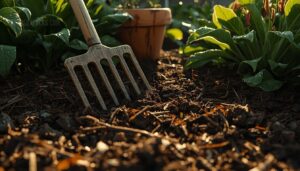
Rake your Compost Mulch periodically for Mulch Aeration and Compaction Prevention, letting water reach the soil instead of sheeting off.
An Annual Mulch Refresh restores ideal depth, while Edge Maintenance prevents exposed soil from drying out quickly.
Watch for pests, and consider a wetting agent to enhance soil moisture retention and reduce water evaporation year-round.
Environmental Impact of Moisture Retaining Mulches

Choosing the right mulch goes beyond keeping your soil hydrated — it also shapes how your garden interacts with the wider world around it. From recycling waste materials to keeping your pets safe, these choices carry more weight than most people realize.
Here’s what you should know about the environmental side of moisture-retaining mulches.
Waste Reduction and Recycling
Choosing the right mulch isn’t just about your garden — it’s about the bigger picture. Rubber mulch diverts old tires from landfills, while compost mulch closes the loop through community composting and industrial symbiosis.
Take-back programs, packaging minimization, and digital documentation all support eco-friendly lawn practices. These initiatives ensure sustainability extends beyond material choice to systemic waste reduction.
Organic options naturally biodegrade, making sustainable lawn care genuinely low-waste from start to finish. This holistic approach aligns environmental stewardship with practical gardening solutions.
Soil Erosion Prevention
Mulch does more than hold water — it holds your soil in place. When rain hits bare ground, it dislodges particles and carries them away. Mulch breaks that impact before it starts. Here’s how moisture-retaining mulches prevent erosion:
- Compost mulch and organic matter amendment improve soil structure, reducing runoff-mitigation challenges on slopes
- Contour farming and terracing steps slow water flow, increasing infiltration time
- Grassed waterways and check dams capture sediment before it reaches streams
- Geotextile blankets stabilize disturbed surfaces while maintaining soil moisture underneath
Pet Safety Considerations
Your pets and your garden can coexist — but only if you choose wisely. Toxic mulch alerts exist for a reason: cocoa shell mulch is genuinely dangerous for dogs if ingested.
Stick to organic options like Pine Bark Nuggets or Compost Mulch, and always prioritize supervised outdoor play.
For chew-safe alternatives, synthetic options like Rubber Mulch work well with proper pet barrier design in place.
Biodegradability
Cocoa Hull Mulch and Compost Mulch decompose quickly through microbial activity, returning nutrients to the soil. Pine Bark Nuggets have a slower degradation rate, lasting years before fully mineralizing.
Certification standards help verify end-of-life pathways, as some materials require industrial composting to fully biodegrade. Choosing certified products keeps soil moisture balanced and ensures your garden remains genuinely sustainable.
Soil Amendments for Enhanced Moisture

Mulch does a lot of heavy lifting, but the soil beneath it needs support too. The right amendments can fundamentally change how your soil holds and moves water.
Here are three treatments worth knowing about.
Humic Acid-based Treatments
Humic acid treatments act like a repair crew for tired, compacted soil. Products such as Humawet combine humic substances with chelation benefits, releasing micronutrients to stimulate microbial activity and enhance soil moisture retention.
By reducing bulk density, these treatments foster stronger root architecture. Foliar application further boosts chlorophyll production, directly benefiting plant health.
With proper pH optimization, humic acids effectively transform hydrophobic soil into a moisture-friendly environment, creating ideal conditions for plant growth.
Wetting Agents for Lawns
Where humic acids fix the soil itself, wetting agents fix how water moves through it. Think of them as the release mechanism for hydrophobic soil — surfactant chemistry breaks surface tension so water actually penetrates instead of beading up and running off.
Look for products offering:
- Penetrant action for deep root-zone moisture
- Lawn species compatibility with turf like Bermuda or fescue
- Biodegradable formulations with seasonal scheduling guidance
Fast-acting surfactants like Duration restore soil moisture holding quickly.
Soil Structure Enhancement
Wetting agents move water in — but soil structure determines where it goes next. Healthy aggregate stability, built through earthworm activity and mycorrhizal networks, creates the pore networks water actually needs. Reduced tillage keeps those channels intact.
Biochar integration and shredded bark mulch add long-term soil porosity. Together, these organic options deliver real soil health improvement that no surfactant alone can match.
Cost-Effective Moisture Retention Solutions
Keeping your soil moist doesn’t have to drain your wallet. There are smart, affordable ways to achieve the same results as premium products—whether you’re shopping for mulch, mixing your own, or stretching a bag further than you thought possible.
Here’s what’s worth your attention.
Affordable Mulch Choices
You don’t have to spend a lot to keep your soil happy. Pine Bark Nuggets run about $20–$40 per cubic yard, and Straw Mulch comes in even cheaper at $8–$15 per bale.
Cocoa Hull Mulch and Shredded Bark Mulch offer a solid price-performance comparison in the mid-range.
With smart bulk pricing strategies and regional material costs in mind, these low-cost substrates and organic options deliver real results.
Maximizing Product Longevity
Seasonal replenishment keeps depth consistent, since most mulches need topping up every 8–14 months due to microbial decay.
To retain moisture longer, choose products with protective coating use and UV degradation mitigation built in.
Smart storage condition guidelines also extend longevity, supporting better soil moisture and reducing water evaporation year-round.
DIY Mulch Options
Making your own mulch costs almost nothing and works surprisingly well. Leaf shredding transforms fall debris into a moisture-locking layer, while straw mulch, shredded bark mulch, and pine needles are easy to source locally.
Coffee grounds, newspaper mulch, and grass clippings also pull their weight as effective options.
Even pine bark nuggets, cocoa hull mulch, and rubber mulch can be repurposed creatively from existing materials you already have.
Budget-friendly Soil Amendments
Kitchen scrap compost, leaf mold amendment, and grass clippings mulch each improves moisture retention without much effort or expense. A worm castings boost adds microbial life that locks in hydration longer.
Coffee grounds mix, straw mulch, shredded bark mulch, and cocoa hull mulch deliver strong overall value for budget-conscious gardeners.
Water-Saving Landscaping Techniques
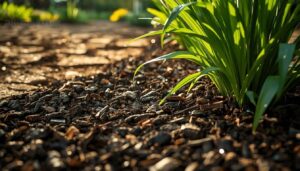
Saving water doesn’t have to mean sacrificing a healthy, lush garden.
A few smart adjustments to how and when you water can make a surprising difference in how much moisture your soil actually holds.
Here are the techniques that do the most work.
Mulch for Irrigation Reduction
A 2–3 inch layer of mulch reduces evapotranspiration by up to 50%, meaning your irrigation system doesn’t have to work nearly as hard.
Smart mulch irrigation scheduling, combined with mulch moisture sensors, keeps root zone hydration steady without guesswork.
Here’s where different mulches shine for water conservation and garden irrigation efficiency:
- Straw mulch — lightweight, affordable, reduces soil moisture loss quickly
- Rubber mulch — long-lasting, near-impermeable barrier that slows evaporation for years
- Organic options — wood chips and bark improve water use efficiency while feeding soil life
Deep Watering Strategies
Deep watering means delivering water slowly until it reaches 12–18 inches down, which pushes roots to follow. Soaker hose placement along the root zone makes saturating the root zone easier without waste.
Pairing these with soil moisture sensors and smart irrigation scheduling eliminates guesswork.
Rain barrel integration keeps costs low, while adding a wetting agent or soil penetrant helps water move through compacted soil faster.
Early-morning Watering Benefits
Watering at dawn is one of the simplest upgrades to your watering schedule. Cooler air and higher humidity reduce evaporation loss by up to 40%, while dawn soil infiltration ensures more water reaches roots before heat peaks. This enhances root uptake and boosts nutrient transport efficiency throughout the day.
Watering at dawn cuts evaporation by up to 40%, giving roots a head start before the heat of the day
- Reduces the risk of fungal diseases by allowing foliage to dry before nightfall
- Helps retain soil moisture by moderating temperature
- Reduces evapotranspiration during the hottest hours
- Pairs effectively with Cocoa Hull Mulch to lock in morning moisture
Low-pressure Irrigation Heads
Once your watering schedule is dialed in, the right hardware makes a real difference. Low-pressure irrigation heads run at 20–30 psi, cutting energy use while producing larger droplets that resist wind drift — a key win for water-use efficiency.
Their uniformity coefficient often exceeds 0.8, ensuring even coverage across irrigated areas. This consistency minimizes dry spots and overwatering, further optimizing resource use.
Retrofit compatibility allows seamless upgrades to existing systems, while maintenance simplicity ensures long-term reliability and reduces operational downtime.
Frequently Asked Questions (FAQs)
How do I help my hair retain moisture?
Give your hair what it needs, and it will hold onto what matters.
Start with a sulfate-free shampoo, then try conditioner layering, oil sealing with jojoba, and sleeping on a silk pillowcase.
How to put moisture back into over-processed hair?
Over-processed hair needs a reset. Start with deep conditioning masks weekly, then layer humectant leave-ins with protective oils.
Keratin treatments, protein balance, and hydrolyzed silk protein help restore moisture retention, even for low-porosity hair.
How do I bring moisture back into my hair?
Like a plant starved of rain, dry hair just needs the right routine.
Start with a sulfate-free shampoo, follow with leave-in conditioner, and seal with moisture-locking oils for lasting deep conditioning.
Can mulch help retain moisture in containers?
Yes, mulch absolutely helps retain moisture in containers. It slows evaporation, stabilizes soil temperature, and extends time between waterings.
This gives your potted plants a steadier, more consistent water supply throughout the day.
Which mulches work best for indoor plants?
Think of mulch as a cozy blanket for your plant’s roots.
Coir expansion boosts moisture.
Bark aeration prevents rot.
Straw insulation steadies soil temperature.
Orchid bark humidity keeps delicate roots thriving indoors.
How does mulch affect soil pH over time?
Mulch type and decomposition rate both shape soil pH over time. Acidifying mulches like pine bark can drop pH by 5 units, while compost’s buffering capacity helps stabilize swings.
pH monitoring keeps your soil balanced.
Are moisture-retaining mulches safe for vegetable gardens?
Ironically, the very layer meant to protect your garden can cause harm if the wrong choice is made.
Organic options like Straw Mulch are safe, but avoid Rubber Mulch near edibles due to chemical leaching risks.
Can skin moisturizers benefit from mulch-derived ingredients?
Surprisingly, yes. Polysaccharide Humectants and Antioxidant Mulch Extracts from sources like Cocoa Hull Mulch act as humectants and hydrating ingredients.
These ingredients offer a Mineral Skin Boost through Sustainable Cosmetic Ingredients that meet Regulatory Compliance standards.
Conclusion
Picture your garden in peak summer heat—soil dark and cool beneath a generous blanket of mulch, roots drawing steady moisture while neighboring beds crack and fade. That’s what the best products for moisture retention actually deliver: quiet, consistent protection that works between every watering.
Match the right material to your soil, apply it at the proper depth, and your plants won’t just survive dry spells—they’ll barely notice them.