This site is supported by our readers. We may earn a commission, at no cost to you, if you purchase through links. This content is for general informational and educational purposes only and is not a substitute for professional medical, dermatological, or nutritional advice.

A dull blade doesn’t make you safer. It makes you sloppier. You press harder, make extra passes, and end up with scratches and razor burn from a edge that’s already failing.
So you start eyeing that old blade and wondering about razor blade sharpening for womens safety. Leather strops, denim, a quick regrind. Sounds thrifty. Sounds smart. It isn’t.
Double-edge blades are thin, coated, and built to be replaced, not revived. Here’s what sharpening actually does to the steel, how to care for a blade between shaves, and three razors that make swapping it painless.
Table Of Contents
- Key Takeaways
- Can You Sharpen Women’s Safety Razor Blades Safely?
- Leather and Denim Stropping: Does It Work on Double-Edge Blades?
- How to Clean, Dry, and Store Safety Razor Blades
- When to Replace a Safety Razor Blade Instead of Sharpening It
- Women’s Safety Razors Compared for Easy Blade Replacement
- Frequently Asked Questions (FAQs)
- What is the best razor for a woman’s pubic area?
- Can you strop a safety razor?
- What is the sharpest razor blade for a safety razor?
- Can you sharpen a safety razor blade?
- How to sharpen a women’s razor?
- How often should you change your safety razor blade for ladies?
- How to use a safety razor for females?
- How do you not cut yourself when shaving with a safety razor?
- How to keep safety razors sharp?
- How often should women sharpen their safety razor blades?
- Conclusion
Key Takeaways
- You can’t safely sharpen a double-edge blade at home, because regrinding changes the edge angle and strips thin, coated steel, which leaves a brittle, uneven edge near your skin.
- Leather or denim stropping only realigns a bent edge, so don’t expect it to restore a worn blade, and pressing too hard just rounds the edge off faster.
- Rinse the blade right after you shave, pat it dry, and store it in a closed, dry case, because that’s what actually keeps an edge working longer.
- Swap in a fresh blade every 5 to 7 shaves, or the moment you feel tugging, since a dull edge means more pressure, nicks, and razor burn.
Can You Sharpen Women’s Safety Razor Blades Safely?
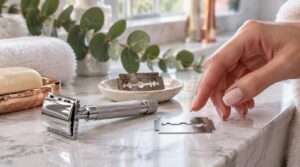
Two problems kill the idea of razor blade sharpening fast. Geometry and metal.
Since a dull blade can’t be rescued at home, the smarter fix is protecting your skin afterward with one of these soothing after-shave balms for mature men.
A DE blade is a thin, heat-treated strip. Regrind it and you change the edge angle. Do it repeatedly and you strip enough steel to leave the blade uneven or brittle. Not great when it’s inches from your face.
Here’s the womens safety angle. A sloppy edge means more passes, more pressure, more irritation. Burrs that aren’t removed can snap off mid-shave and scratch your skin. That’s a skin protection failure, plain and simple.
Chipped, pitted, or nicked? Done. Toss it.
Your safety razor performs best with a consistent factory edge. Good blade maintenance means knowing when sharpening isn’t worth the risk. Don’t gamble with your face.
Leather and Denim Stropping: Does It Work on Double-Edge Blades?

So what about the old tricks? Leather and jeans get tossed around online like they’re magic. They’re not.
A leather strop can align a bent edge. That’s it. It doesn’t remove steel, and it can’t fix worn chromium coating on double edge blades. Press too hard and you round the edge, which kills blade sharpness faster.
Denim stropping is the same story. Tight-weave cotton gives a gentler touch, but loose fibers can lodge in the edge and leave it unstable.
Tests show inconsistent results. Many feel sharper for one shave, then fall apart. If you try it anyway, keep it dry, use 5 to 8 light passes per side, and wipe the blade clean. Good blade maintenance beats wishful thinking.
How to Clean, Dry, and Store Safety Razor Blades
Skip the stropping and stick to basic blade cleaning. Proper blade maintenance keeps an edge working longer than any leather trick.
If your razor still feels dull after a good cleaning, these natural ways to sharpen a razor can restore the edge without any special equipment.
Rinse right after your shave. Soap film and skin oils turn into gritty residue, and good razor hygiene means they never get the chance. Don’t touch the edge. Your fingertips leave salt and oil that hold moisture.
Here’s the routine:
- Rinse under warm running water, flowing along the blade, never across it.
- Pat the edge dry, don’t wipe, or lint sticks.
- Dab with rubbing alcohol to push out trapped droplets.
- Blade storage means a closed, dry case, away from bathroom steam.
Blade drying matters most. Shaking won’t do it. Droplets hide in corners and rust quietly. Cool, dry, covered.
A simple safety razor stand holds the head upright so air reaches every corner while the blade dries.
When to Replace a Safety Razor Blade Instead of Sharpening It
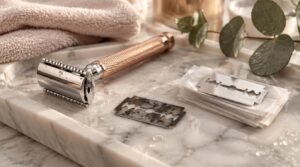
Rinsing and drying only protect an edge for so long. Eventually, every blade quits, and no amount of care brings it back.
Here’s the call: replace it. Sharpening a blade from a safety razor for women risks more than it saves. A dull edge drags, and drag means nicks, razor burn, and angry skin. Blade replacement is your simplest move for razor burn prevention and skin irritation reduction.
Watch for these signs:
| Sign | What it means |
|---|---|
| Tugging | Edge is worn |
| Extra pressure | Replace now |
| Skipped patches | Edge is chipped |
| Coating gone | Replace after 2–3 uses |
Feel a tug? Stop. Don’t push through it, pressure causes nasty nicks. Trust your skin. Regular blade replacement is your best blade sharpness retention strategy.
Women’s Safety Razors Compared for Easy Blade Replacement
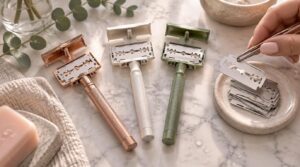
Sharpening a blade is a gamble, and swapping in a fresh one isn’t. Here are three women’s safety razors that make easy blade replacement a quick, no-fuss habit. Pick the one that fits your hand, your routine, and your idea of control.
Sharpening a blade is a gamble, but a fresh one is a sure thing, so pick the razor that fits your hand
Bambaw Razor With Stand
Want a razor that forgives your rookie mistakes? The Bambaw’s closed comb design keeps the blade from digging in, so you stay in control from your very first pass. The Bambaw Razor With Stand also fits womens safety goals beyond shaving. Blade sharpening? Skip it. Swap the blade instead.
This safety razor makes blade maintenance simple:
- Rinse the blade after every pass.
- Dry it fully before storing.
- Park it on the stand.
- Replace dull blades fast.
Dull blades tug and slip. That’s how nicks happen. Stay sharp, stay safe.
MÜHLE Companion
The MÜHLE Companion is a safety razor built for quick blade swaps. Blade sharpening? Don’t. Regrinding weakens the edge and raises nicking risk, which undermines womens safety.
Simple blade maintenance stretches blade longevity:
| Step | Do | Why |
|---|---|---|
| Rinse | Warm water | Clears residue |
| Dry | Fully | Stops rust |
| Swap | 5-7 shaves | Dull edges |
| Store | In a case | Protects edge |
Tugging means swap it.
Henson AL13 Mild
Imagine this: you’re rushing before a late shift, and a dull blade tugs, nicks, and bleeds. Lousy start.
The Henson AL13 Mild fixes that. It takes standard double-edge blades, and you swap one in seconds, no tools, no drama.
Forget razor blade sharpening. For womens safety and shaving safety, fresh steel wins. Pair a mild safety razor with blade maintenance.
Frequently Asked Questions (FAQs)
What is the best razor for a woman’s pubic area?
Pick a mild safety razor built for sensitive skin. Forget razor blade sharpening. Fresh blades mean skin irritation prevention, and blade replacement ease keeps you in control. The Henson AL13 Mild is your best move.
Can you strop a safety razor?
You can, but you shouldn’t. Stropping a safety razor on a leather strop rarely helps coated blades, and one sloppy pass can nick the edge.
Skip razor blade sharpening. Blade edge maintenance? Rinse, dry, replace.
What is the sharpest razor blade for a safety razor?
A fresh blade cuts like a whisper, and a dull one drags like a rake. For the sharpest edge, grab Swedish Steel Blades or platinum coated blades. Sharp blades win. Swap them early.
Can you sharpen a safety razor blade?
Short answer: no. Blade sharpening on a safety razor just doesn’t work. Stropping or blade oiling won’t give you sharp blades again.
Swap it out. A fresh blade costs pennies, and your skin’s worth more.
How to sharpen a women’s razor?
Sharpening old razor blades? DIY blade sharpening only goes so far. Wipe with razor blade cleaning solution, then 10 denim strokes, edge trailing, for blade edge refinement. Dry, then try blade oiling. Dull? Replace it.
How often should you change your safety razor blade for ladies?
A dull blade is a bad bouncer: it drags, scrapes, and lets trouble in. Make blade replacement a habit every 5 to 7 shaves.
Tugging is your blade replacement indicator. Don’t ever push through it.
How to use a safety razor for females?
One wrong swipe feels like a hundred. Nail your shaving preparation: warm water, lather.
Your safety razor demands blade angle precision, 30 degrees. Short strokes, with the grain, zero pressure. Rinse often. Add postshave care.
How do you not cut yourself when shaving with a safety razor?
Double-edge blades are about 1 millimeters thick, so pressure is your enemy. Hold a 30-degree angle, let the razor’s weight glide, and stretch skin taut. Sensitive skin? Go with the grain, go slow, rinse often.
How to keep safety razors sharp?
Make blade edge maintenance part of your razor maintenance routine.
Rinse, dry stainless steel blades fully, then strop lightly on leather or denim. Store them dry. Skip aggressive blade sharpening, and fix your shaving technique.
How often should women sharpen their safety razor blades?
You don’t really sharpen these. Real blade sharpening means grinding, so skip it. Instead, strop gently on leather after each shave, then rinse and dry. Once tugging returns, swap the blade. Your skin deserves better.
Conclusion
Picture a woman rubbing her blade on old denim before a Sunday shave, then wincing at the nick on her ankle. That shortcut cost her skin.
Skip razor blade sharpening for womens safety experiments. Thin, coated steel doesn’t survive them. Rinse your blade, dry it, store it dry, and swap it when it tugs.
Pick a razor that makes swapping easy. Fresh blades are cheap. Skin isn’t. Own the edge. Replace it before it fails.