This site is supported by our readers. We may earn a commission, at no cost to you, if you purchase through links. This content is for general informational and educational purposes only and is not a substitute for professional medical, dermatological, or nutritional advice.
Ninety-one percent of women get a breakout within a week of their period starting. Most patients tell me they’ve tried everything: new cleansers, spot treatments, cutting out chocolate. Yet the pimples keep showing up in the same spots, month after month.
Here’s what’s actually happening: breakouts follow patterns, and those patterns point to specific, fixable causes. Your skin type, your hormones, even your phone screen all play a role in what lands on your face.
Once you know how to prevent breakouts at their source, clear skin stops feeling like guesswork and starts feeling like a routine you can trust.
Table Of Contents
- Key Takeaways
- Identify Your Skin Type and Breakout Triggers
- Prevent Breakouts With Gentle, Consistent Skincare
- Choose Acne-Safe Products and Ingredients
- Avoid Habits That Cause Acne Flare-Ups
- Treat Breakouts Early and Seek Help
- Frequently Asked Questions (FAQs)
- How do I stop my face from breaking out?
- What are the main causes of breakouts?
- What reduces acne naturally?
- What am I lacking if I have acne?
- What triggers breakout?
- How to have clear skin in 2 days?
- How can I prevent acne from forming?
- How can I protect my skin from breakouts?
- Can certain medications cause acne breakouts?
- How can makeup application affect acne-prone skin?
- Conclusion
Key Takeaways
- Breakouts almost always follow patterns tied to hormones, stress, sweat, or specific products, so tracking your triggers is the first real step toward preventing them.
- A gentle, consistent routine—twice-daily cleansing, a noncomedogenic moisturizer, and daily SPF 30—does more for your skin long-term than harsh treatments or constant product-switching.
- Salicylic acid helps clear clogged pores while benzoyl peroxide targets inflamed, bacteria-driven pimples, but both work best introduced slowly and one at a time.
- Everyday habits like touching your face, popping pimples, over-exfoliating, and skipping phone or pillowcase cleaning quietly fuel breakouts just as much as skincare choices do.
Identify Your Skin Type and Breakout Triggers
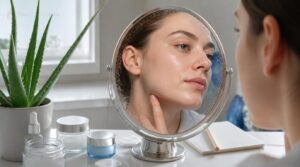
Before you can prevent breakouts, you need to know what’s actually causing them. Every face reacts differently to hormones, stress, sweat, and even the products sitting in your bathroom cabinet. Here’s where to start looking.
If your usual routine isn’t cutting it, brushing up on proven effective acne treatment methods can help you figure out what’s actually worth trying next.
Identify Your Skin Type
Figuring out your skin type starts with a simple bare-face observation. Wash with a gentle cleanser, wait 30 minutes, then check for shine.
Once you’ve identified your skin type, choosing the right exfoliator for your specific skin type is one of the best ways to keep your barrier healthy and your complexion genuinely glowing.
Oily skin shows visible T-zone shine and larger pores. Dry skin feels tight and looks dull. Combination skin mixes both, and is actually reported as the most common of the five skin types. Try the blotting paper method for a clear sebum level assessment before choosing products.
Track Hormonal Breakout Patterns
Once you know your skin type, watch how it shifts with your cycle. If breakouts cluster around your chin before your period, that’s hormonal, not random.
Apps like Clue support cycle phase logging and breakout severity tracking, mapping flares to hormone shifts. Predictive alert settings flag high-risk days early, since 91% of women see breakouts within a week of menstruation starting.
Monitor Stress, Sleep, and Diet
Hormones aren’t the only pattern worth logging. Poor sleep, high stress, and rough diet choices can all show up on your skin days later.
Aim for seven to eight hours of sleep, keep a simple stress log, and eat a balanced diet rich in fruits and vegetables. Stay consistent with water intake too. A quick daily checkup connecting these habits often reveals your real triggers.
Notice Sweat and Friction Triggers
Sweat itself isn’t the enemy, but trapped sweat is. Tight gear and synthetic fabrics cause friction acne on your back, chest, and forehead.
Swap in breathable cotton, wash workout clothes every use, and shower right after exercise. Wipe your phone screen and change pillowcases weekly, since both hold onto oil and bacteria long after you’ve cleaned your face.
Review Pore-Clogging Products
Every product touching your face deserves a product ingredient audit, even ones labeled noncomedogenic.
Run a noncomedogenic label check, then verify with ingredient checker tools using a comedogenicity rating guide to spot pore clogging culprits.
Test new picks with a patch testing routine on your jawline for two weeks before trusting your facial cleanser, moisturizer, or sunscreen fully.
Prevent Breakouts With Gentle, Consistent Skincare
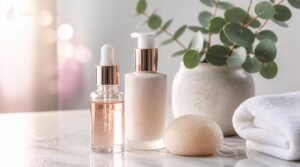
Once you know your skin type and triggers, the next step is building a routine that actually protects it. Good skincare doesn’t need to be complicated or expensive to work. Here are five simple habits that keep breakouts away without stressing your skin out.
Cleanse Gently Morning and Night
Water temperature matters more than most people think. Use lukewarm water, not hot, and massage a gentle facial cleanser in soft circles for 30 seconds.
- Wash your face daily, morning and night
- Pat dry, don’t rub
- Double cleanse if wearing makeup
- Keep timing consistent for best results
A consistent daily skincare routine trains your skin to behave.
Pick a starting point that matches your skin’s needs by exploring these top-rated acne treatment products for clearer skin before adding anything else to your regimen.
Moisturize Without Clogging Pores
Skipping moisturizer because your skin feels oily is a mistake. Dry skin overproduces oil, worsening breakouts.
A lightweight, non-comedogenic moisturizer actually helps regulate oil production over time — find out how it fits into a full routine with acne treatments that prevent future breakouts.
Choose lightweight moisturizers with a gel-based texture and humectant ingredients like hyaluronic acid or glycerin. Always pick a noncomedogenic moisturizer or oilfree moisturizer labeled nonirritating skincare.
Patch test new products first. Proper hydration protects skin barrier function, reducing breakouts long-term.
Apply Broad-Spectrum SPF 30
Sunscreen isn’t optional, it’s breakout prevention. Choose noncomexdogenic, broad-spectrum SPF 30, apply generously 15 minutes before sun exposure, and layer it after moisturizer, before makeup.
- Use a nickel-sized amount for face and neck
- Apply 15 minutes before going outside
- Reapply every two hours outdoors
- Choose gel or water-based formulas
- Pick zinc oxide or titanium dioxide
Remove Makeup Before Bed
Sleeping in makeup clogs pores fast. Try double cleansing: an oil cleanser or balm first, massaged in, rinsed, then a gentle cleanser.
| Step | Method |
|---|---|
| 1 | Oil cleanser/balm |
| 2 | Rinse, emulsify |
| 3 | Gentle cleanser |
| 4 | Remove eye makeup separately |
| 5 | Pat dry with towel |
Use micellar water for quick removal. Avoid rubbing, especially near eyes.
Keep Your Routine Consistent
Your skin doesn’t care how motivated you feel on a given day, it just reacts to patterns.
Your skin doesn’t respond to motivation, only to consistent patterns
Routine timing consistency trains your skin’s repair cycle.
- Wash your face twice daily with a gentle cleanser
- Follow the same product application sequence each time
- Use a noncomedogenic moisturizer morning and night
- Keep evening morning balance, don’t skip either session
Consistency beats being perfect here.
Choose Acne-Safe Products and Ingredients
The right skincare routine only works if the products behind it are actually built for acne-prone skin. Some ingredients calm breakouts, while others quietly feed them, so label reading matters more than you’d think. Here’s what to look for, and what to skip, when you’re choosing what touches your face.
Match Cleanser to Skin Type
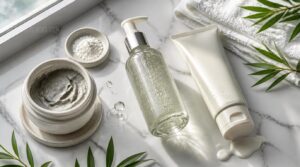
Once you know your skin type, cleanser choice gets easy.
Oily skin does well with clay-based or sulfate-free gels; dry or sensitive skin needs a gentle, pH-balanced, fragrance-free cleanser.
Niacinamide helps regulate oil, while tea tree oil calms irritation.
Combination skin? Balance both zones gently, never scrub.
Salicylic Acid for Clogged Pores

For clogged pores, salicylic acid is your best friend. This beta hydroxy acid dissolves oil, letting it clear blackheads and whiteheads from within.
Start with a low-strength salicylic acid serum (0.5-1%), applied as a leave-on treatment or spot application. Test tolerance first, then pair with a lightweight, noncomedogenic moisturizer to prevent dryness while treating breakouts.
Benzoyl Peroxide for Inflamed Pimples
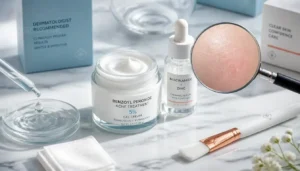
Red, swollen pimples need a different approach: benzoyl peroxide. Its mechanism of action kills acne-causing bacteria on contact.
| Concentration | Best For |
|---|---|
| 2.5% | First-time users, sensitive skin |
| 5% | Standard inflammatory acne |
| 10% | Rarely more effective, higher irritation risk |
Apply nightly, leaving on 60-90 seconds. If dryness appears, cut frequency, not concentration, your dermatologist can help fine-tune combination therapy.
Choose Noncomedogenic Makeup and Moisturizer
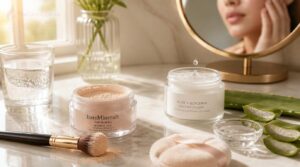
Once inflammation calms, what you put on top matters. Choose noncomedogenic makeup and moisturizer, checking labels for coconut oil or isopropyl myristate. Mineral makeup, like BareMinerals or Jane Iredale, works well since it lists fewer ingredients.
Look for glycerin, niacinamide, or aloe in noncomedogenic moisturizers, skip fragrance, and always patch test new products first.
Avoid Irritating Toners and Oils
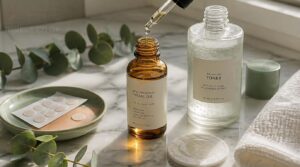
Skip toner if it stings. Alcohol-free toners are worth using, but many drugstore versions rely on drying alcohols that trigger rebound oil.
Watch oils too: coconut oil and mineral oil clog pores. Choose non-comedogenic oils, skip essential oils and fragrance, and always patch test new products for 24 hours before applying them to your whole face.
Avoid Habits That Cause Acne Flare-Ups

Great skincare only works if your daily habits aren’t working against it. Some of the biggest breakout triggers come from things you do without even thinking, not from what you put on your skin. Here are five habits worth breaking today.
Keep Hands Off Your Face
You touch your face up to 162 times an hour, often without noticing. Each contact transfers bacteria and oils from doorknobs, keyboards, and phones straight into your pores.
Stop touching your face by keeping hands busy, washing them regularly, and wiping down your phone daily. Small habit shifts add up to noticeably clearer skin.
Never Pick or Pop Pimples
Popping zits feels satisfying, but it’s one of the worst things you can do for your skin. Picking drives bacteria deeper, raising infection risk and often causing ice-pick or hypertrophic scars that take months, sometimes years, to fade.
- Stop touching your face and pick-prone spots
- Keep hands, phones, and makeup brushes clean
- Let breakouts heal untouched to avoid permanent scarring
Exfoliate Gently Once or Twice
More scrub, more clear? Not quite, over-scrubbing wrecks your barrier and fuels breakouts.
Exfoliation frequency depends on your skin:
| Skin Type | Frequency | Best Method |
|---|---|---|
| Oily/acne-prone | 2-3x weekly | Salicylic acid |
| Normal/combination | 1-2x weekly | Lactic acid |
| Dry/sensitive | 1x weekly | Enzyme exfoliant |
Always moisturize after exfoliating, and watch for redness, stinging, or flaking, signs you’ve overdone it.
Clean Pillowcases, Phones, and Brushes
Your phone carries more bacteria than a toilet seat, and it presses right against your cheek daily.
- Wash pillowcases weekly at 140°F
- Sanitize phone screens twice daily with 70% isopropyl alcohol wipes
- Clean foundation brushes weekly, eye brushes biweekly
- Use fragrance-free detergent
- Skip abrasive cleaners on silk cases
These habits limit bacterial transfer that fuels breakouts, protecting your skin barrier consistently.
Prevent Shaving and Sweat Irritation
Razor bumps aren’t just annoying, they’re a real breakout trigger.
Shave with the grain, keep blades fresh and rinsed, and soak skin first for pre shave prep. Time it right around workouts, shave 4-8 hours before sweating.
Finish with cold water for post shave cooling and a soothing balm to protect your skin barrier from bacteria transfer.
Treat Breakouts Early and Seek Help
Even with the best habits, breakouts still happen sometimes, and that’s okay. The key is catching them early and knowing what to do next. Here’s how to treat them right, and when it’s time to call in extra help.
Start Over-the-Counter Treatments Slowly
Rushing acne treatment backfires. Start benzoyl peroxide at 2.5% or salicylic acid at 0.5%, once daily, always patch test first on your jawline for 24 hours.
Give it a full week before judging results. Gradual frequency increase beats aggressive use, since your skin barrier needs time to adjust without excess dryness or irritation.
Introduce One Active at Once
One active at a time, that’s the rule. Once your first product settles in, wait 3-5 days before adding another, benzoyl peroxide, salicylic acid, or a retinoid.
Testing separately shows you what’s actually working, and what’s causing trouble. Keep using each new product consistently for 2-3 weeks before judging results or introducing anything else.
Watch for Irritation and Dryness
Even careful testing can backfire. Watch for tight, flaky skin, pink patches spreading past pimples, or itching with no rash, all signs your skin barrier is compromised.
Pair treatment with a gentle cleanser and noncomedogenic moisturizer, applied within five minutes to lock in hydration. A pH balancing toner and ceramide-rich cream restore what active ingredients strip away.
Know When to See Dermatologists
Some breakouts need more than patience. See a dermatologist if you notice:
- Persistent rash or itching unresolved by basic care
- A changing mole, new growth, or ABCDE warning signs
- Acne treatment failure after months of consistent use
Treatment adherence matters, but plateaus happen. A dermatologist consultation clarifies your acne treatment plan, and annual skin exams support earlier breakout prevention and detection.
Treat Severe or Scarring Acne
For scarring, dermatologists offer microneedling, chemical peels, laser resurfacing, and scar revision, individualized to your scar type.
Frequently Asked Questions (FAQs)
How do I stop my face from breaking out?
Funny enough, most stubborn breakouts trace back to the same few culprits: skipped cleansing, harsh products, or touching your face.
Try a gentle cleanser twice daily, noncomedogenic moisturizer, salicylic acid for clogged pores, and consistency, real breakout prevention takes weeks, not days.
What are the main causes of breakouts?
Four culprits team up: excess sebum, dead skin cells, and bacterial overgrowth clog pores, while hormonal fluctuations, stress, diet, and external irritants like sweat or pore-clogging products fuel inflammation, triggering those stubborn bumps.
What reduces acne naturally?
Nature offers gentle tools, not magic fixes. Tea tree oil, witch hazel, and a zinc supplement can calm inflammation, while a low glycemic diet, hydration, and steady sleep quality support clearer skin from the inside out.
What am I lacking if I have acne?
Acne isn’t always about what you’re lacking, but low zinc, essential fatty acids, or vitamin D can weaken your skin barrier. Poor hydration and stress management also disrupt hormonal balance and your skin’s microbiome, making breakouts more likely.
What triggers breakout?
A teen breaking out only before her period isn’t random: hormonal fluctuations, stress-driven cortisol, high glycemic foods, dairy, sweat friction, and pore-clogging products all spike oil production and bacteria growth, disrupting hormonal balance and clogging pores.
How to have clear skin in 2 days?
Two full days won’t erase acne, but you can calm it fast: cool compress therapy for swelling, a dab of salicylic acid on spots, a gentle cleanser, and hands-off skin. Small steps, real results, no picking allowed.
How can I prevent acne from forming?
Stick to a consistent skin care routine: cleanse twice daily, moisturize with noncomedogenic products, apply SPF 30 sunscreen, manage stress and sleep, stay hydrated, eat balanced meals, and avoid touching your face or popping pimples.
How can I protect my skin from breakouts?
Think of your skin as a wall guarding a castle. Protect it with gentle cleansers, noncomedogenic moisturizer, and daily SPF Skip harsh scrubs and constant face-touching, they weaken hydration balance and invite inflammation instead of calm.
Can certain medications cause acne breakouts?
Yes. Medication induced acne is real, common culprits are corticosteroids, lithium, anticonvulsants, and certain hormonal therapies. New breakouts after starting a drug warrant a dermatology consultation to weigh alternatives before stopping anything on your own.
How can makeup application affect acne-prone skin?
Picture pores as tiny doorways sealed shut by thick foundation. Heavy coverage traps sebum, causing breakouts.
Choose noncomedogenic, oil-free formulas, mineral options when possible, and always remove makeup nightly to keep acne-prone skin clear.
Conclusion
Clear skin isn’t luck, and it isn’t genetics alone. Patients often assume their breakouts are random, but that theory rarely holds up once you track patterns. Your triggers, whether hormonal, cosmetic, or habit-based, leave clues if you pay attention. Learning how to prevent breakouts means reading those clues consistently, not chasing quick fixes. Stick with a gentle routine, use proven ingredients, and treat flare-ups early. Your skin remembers consistency. Give it a few months, and clear days will start outnumbering breakout ones.