This site is supported by our readers. We may earn a commission, at no cost to you, if you purchase through links. This content is for general informational and educational purposes only and is not a substitute for professional medical, dermatological, or nutritional advice.
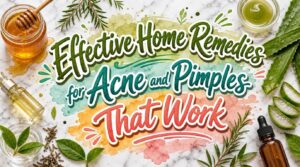
Acne affects around 85% of people at some point in their lives, yet most treatments focus on what you can buy rather than what’s already in your kitchen or bathroom cabinet. That gap matters—especially when over-the-counter products cause dryness, irritation, or just don’t work for your skin type.
most well‑studied ingredients for calming breakouts aren’t found in a pharmacy aisle. Raw honey, tea tree oil, aloe vera, and green tea each carry measurable antimicrobial or anti‑inflammatory properties backed by clinical research.
These effective home remedies for acne and pimples won’t replace a dermatologist when your skin needs serious intervention, but for mild to moderate breakouts, the evidence is worth knowing.
Table Of Contents
- Key Takeaways
- Best Home Remedies for Acne
- Natural Ingredients That May Help
- DIY Acne Remedies to Avoid
- Acne-Friendly Skin Care Routine
- Lifestyle Habits for Clearer Skin
- Frequently Asked Questions (FAQs)
- What is the best homemade remedy for pimples and acne?
- What is the fastest way to get rid of acne and pimples?
- What kills acne the fastest?
- What kills acne and pimples?
- How do you get rid of acne and pimples fast at home?
- What clears up pimples fast?
- How to remove body acne naturally?
- How to treat hormonal acne naturally?
- How can I prevent acne scars from forming?
- What are the best ways to reduce redness and swelling?
- Conclusion
Key Takeaways
- Raw honey, tea tree oil, aloe vera, and green tea all have real clinical backing for mild to moderate acne — they’re not folk remedies; they’re chemistry.
- Some popular DIY fixes like undiluted lemon juice, baking soda scrubs, and straight apple cider vinegar can quietly wreck your skin barrier and make breakouts worse.
- What you eat, how you sleep, and how stressed you are directly affect your sebum levels and inflammation — your skin is keeping score even when you aren’t.
- Home remedies have a ceiling: if breakouts keep coming back, turn painful and deep, or leave marks, a dermatologist isn’t a last resort — it’s the right next step.
Best Home Remedies for Acne
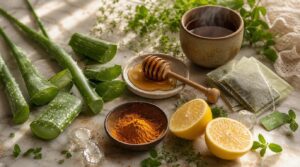
Some remedies sitting in your kitchen right now have real science behind them. These aren’t folk tales — they’re options that have shown measurable results in studies. Here are five worth knowing about.
If you’re curious which ones actually hold up, this roundup of science-backed natural skin care remedies breaks down what’s worth trying and why.
Raw Honey Spot Treatment
Raw honey isn’t just a kitchen staple — it’s a surprisingly effective spot treatment. Its pH range of 3.2 to 4.5 creates an acidic environment where acne-causing bacteria struggle to survive. On top of that, its high sugar concentration draws moisture out of bacterial cells through osmosis, effectively dehydrating them.
The flavonoid antioxidants in raw honey also calm redness and reduce swelling around inflamed pimples. Apply a small amount directly to a blemish, leave it on for 10 to 30 minutes, then rinse with lukewarm water.
Here’s a simple routine to follow:
- Patch test first — dab a small amount on your inner arm and wait 24 hours.
- Apply to clean skin once or twice daily for active pimples.
- For stubborn spots, try overnight use under a pimple patch to lock in contact.
Always use raw, unprocessed honey for the best antibacterial properties. It also supplies natural antibacterial compounds that help keep breakouts at bay.
Fresh Aloe Vera Gel
Honey works well for active spots, but if your skin leans more inflamed and sensitive, fresh aloe vera gel is worth adding to your routine.
Scrape the clear inner gel directly from a leaf and apply it to pimples. Its natural salicylic acid calms swelling while forming a moisture barrier that protects without clogging pores.
Always patch test first — contact dermatitis is possible.
Diluted Tea Tree Oil
If aloe feels gentle, tea tree oil plays a little bolder.
A 5% tea tree oil gel has been shown to reduce acne lesion number and severity noticeably over 45 days. The key word is diluted — never apply it straight.
- Dilute to 1–3%: mix 1–3 drops into a carrier like jojoba oil
- Patch test first: apply to your inner arm and wait 24 hours
- Spot apply only: use a cotton swab directly on each pimple
Green Tea Compress
For something even gentler on irritated skin, try a green tea compress. Brew a cup, let it cool to around 10–15 °C, then soak a clean cotton pad and press it directly onto each pimple.
The catechins — especially EGCG — deliver real anti‑inflammatory and antimicrobial action right where it’s needed.
A 2017 study linked topical green tea to an 89 % drop in whiteheads after eight weeks.
Mint Yogurt Oatmeal Mask
This three-ingredient DIY face mask is one of the gentler home remedies for acne you can pull together in minutes.
Blend 2 tablespoons each of chopped fresh mint, plain yogurt, and oatmeal into a thick paste.
The yogurt provides mild lactic acid exfoliation, oatmeal soothes inflammation, and mint cools irritated skin.
Apply for 10 minutes, rinse with cool water, then moisturize.
Patch test first if you have sensitive skin.
Natural Ingredients That May Help
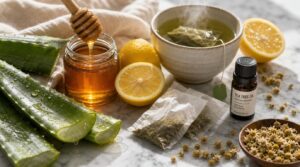
Some ingredients found in your kitchen or health store have real science backing them up. They won’t replace a dermatologist, but for mild breakouts, a few are worth knowing about. Here’s what the research actually says.
Zinc for Inflamed Pimples
Few people realize that low zinc levels show up more often in those with acne than in clear‑skinned individuals. Research links zinc deficiency directly to increased skin inflammation.
Oral zinc dosage in studies commonly runs 30–45 mg of elemental zinc daily, targeting inflammatory papules specifically.
Its anti-inflammatory effects help calm redness and swelling — making it a genuinely useful addition to any natural acne treatment plan.
Aloe’s Soothing Compounds
What makes aloe vera genuinely useful for acne isn’t just tradition — it’s chemistry. The gel contains acemannan moisturizer compounds that bind moisture to skin while supporting its natural barrier, plus sterols anti-inflammatory agents like beta-sitosterol that calm irritation directly at the source.
| Compound | Benefit for Acne |
|---|---|
| Acemannan | Hydrates and soothes inflamed skin |
| Sterols | Reduce redness and irritation |
| Aloe emodin | Offers antioxidant and anti-inflammatory support |
Phenolic antioxidants, including aloe emodin, add another layer of protection by fighting the oxidative stress tied to skin inflammation. That combination makes aloe a credible part of any natural acne treatment plan.
Green Tea for Sebum
Green tea might be the quietest overachiever in your skincare cabinet. Its EGCG polyphenols directly influence sebum-producing pathways in skin cells, making it a genuinely useful tool against oily, acne-prone skin.
- Targets excess oil at a cellular level
- Delivers anti-inflammatory effects alongside oil control
- A 3% green tea emulsion reduced sebum over 60 days in studied volunteers
- Measurable results confirmed via Sebumeter readings
- Available in serums, creams, and DIY compress formats
Honey’s Antibacterial Effects
Honey doesn’t just taste good — it actively fights the bacteria behind your breakouts. Raw honey’s antibacterial power comes from several sources working together: methylglyoxal, hydrogen peroxide production, low pH, phenolic compounds, and bee defensin-1 peptide.
That layered chemistry makes it genuinely effective against Cutibacterium acnes.
For topical application, spread a thin layer directly on pimples and let it sit for about an hour before rinsing.
Omega-3 Anti-Inflammatory Support
Most people don’t connect what they eat to what appears on their skin — but the link is real.
EPA and DHA, omega-3 fatty acids found in oily fish and fish oil, work deep inside your cell membranes to quiet acne inflammation. A 2019 study found they measurably reduced inflammatory markers.
Think of them as your skin’s internal fire crew.
DIY Acne Remedies to Avoid
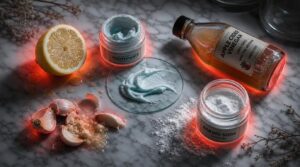
Not every DIY remedy you find online is actually good for your skin. Some popular home treatments can irritate, burn, or make acne noticeably worse. Here are the ones worth skipping.
Undiluted Essential Oils
Skip applying essential oils directly to your skin — it can do more harm than good. Undiluted essential oils, including tea tree oil, deliver volatile compounds at full strength, raising the risk of skin irritation, chemical burns, and worsening acne inflammation.
Before any topical treatment:
- Dilute 1 part oil to 9 parts carrier
- Patch test on your inner arm first
- Wait 24 hours for allergic reactions
- Limit use to once or twice daily
Harsh Lemon Juice Use
Lemon juice might seem like a quick fix for pimples, but acidic burn risk is real. Its high acidity disrupts your skin barrier, causing stinging, redness, and increased inflammation — especially on already‑irritated acne spots.
There’s also a sun sensitivity warning to take seriously: lemon juice raises UV sensitivity, which can worsen dark marks.
Patch test first, limit contact time, and rinse promptly.
Strong Apple Cider Vinegar
Apple cider vinegar has real antibacterial effects — its acetic acid concentration sits around 5–6%, giving it a pH near 2.5. That’s aggressive on broken skin. Used straight, it disrupts skin pH balance, burns active pimples, and worsens inflammation fast.
- Contains acetic acid as its primary active compound
- pH around 2.5–3.0 — too harsh for inflamed skin
- Polyphenol content doesn’t offset its irritation risk
- Must follow a strict dilution ratio: ½ tablespoon to 2 tablespoons water
- Antimicrobial properties don’t justify undiluted use on acne
Daily Baking Soda Scrubs
Baking soda scrubs follow the same pattern as apple cider vinegar — they feel effective but quietly cause damage. Baking soda disrupts skin pH balance because it’s alkaline, sitting far above your skin’s natural acidic range. That mismatch weakens your skin barrier protection over time, leaving acne-prone skin drier and more vulnerable to irritation with every use.
| Factor | Why It’s Problematic |
|---|---|
| pH Balance Impact | Alkaline formula disrupts skin’s natural acid mantle |
| Exfoliation Type | Mechanical friction inflames active pimples |
| Moisture Retention | Strips natural oils, increasing dryness risk |
| Gentle Exfoliation Frequency | Daily use far exceeds safe limits |
| Patch Test Results | Stinging and redness are common early warning signs |
If burning or tightness appears during a patch test, stop immediately and rinse well.
Abrasive Physical Exfoliants
Reaching for a gritty scrub feels satisfying, but abrasive physical exfoliants can silently wreck acne-prone skin. Hard, jagged particles create uneven friction that tears at your skin barrier protection rather than smoothing it. On already inflamed pimples, that mechanical force makes redness and irritation noticeably worse.
Gentle exfoliation pressure — minimal rubbing, soft circular motion — is always the safer path.
Acne-Friendly Skin Care Routine
What you put on your skin matters, but so does how you treat it every single day. A consistent routine doesn’t have to be complicated — it just has to be right for acne-prone skin. Here’s what that actually looks like.
Gentle Twice-Daily Cleansing
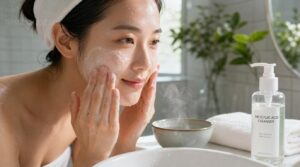
Your skin picks up oil, sweat, and grime around the clock — so cleanse twice daily to keep pores clear.
Use a mild, fragrance-free cleanser and lukewarm water. Massage gently with fingertips for one to two minutes, then rinse well and pat dry.
Look for non-comedogenic or salicylic acid formulas to target acne without stripping your skin’s natural barrier.
Oil-Free Moisturizer
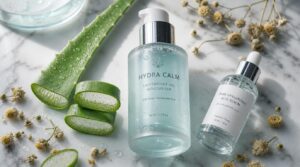
Cleansing is only half the job. Many people with acne skip moisturizer, worried it’ll make things worse — but that’s a mistake. Oil-free moisturizer keeps your skin hydrated without clogging pores.
- Choose a non-comedogenic formula
- Look for humectant hydration ingredients like glycerin or hyaluronic acid
- Pick a lightweight gel texture for oily skin
- Apply before acne treatments to reduce dryness
- Support your skin’s barrier with ceramides or niacinamide
Daily Broad-Spectrum Sunscreen
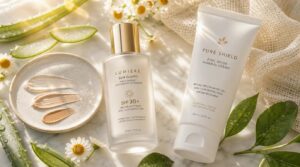
Sunscreen isn’t optional — it’s a daily non-negotiable, especially when you’re treating acne. Many topical acne treatments increase sun sensitivity, making unprotected skin more vulnerable to UV damage and post-inflammatory darkening.
| Feature | What to Look For | Why It Matters |
|---|---|---|
| SPF 30 Protection | SPF 30 or higher | Blocks most UVB rays |
| UVA UVB Coverage | Broad spectrum label | Prevents photoaging and pigmentation |
| Mineral UV Filters | Zinc oxide or titanium dioxide | Reflects UV without clogging pores |
| Oilfree sunscreen | Oil-free, noncomedogenic formula | Won’t trigger new breakouts |
| Daily Sunscreen Routine | Apply every morning | Consistent UV protection matters |
Choose a broad spectrum application with at least SPF 30. Zinc oxide offers the widest mineral UV filter coverage and suits sensitive, acne-prone skin well. Skip tanning beds entirely — UV exposure inflames skin and worsens scarring. Used daily, the right sunscreen quietly helps your acne prevention goals without disrupting the rest of your routine.
No Picking Pimples
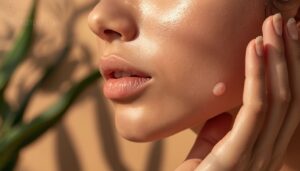
It’s tempting, but stop picking — it’s one of the most damaging habits for acne-prone skin.
Squeezing pushes bacteria deeper, delays faster healing, and raises your risk of pitted scars that may need professional procedures to fix.
Practice mindful touch: keep hands away, let the lesion resolve naturally, and your skin barrier does the rest.
Lifestyle Habits for Clearer Skin

What you put in your body and how you manage your days matters more than most people realize. Your skin is affected by food, stress, movement, and hormones in very real, measurable ways. Here’s what the research says about the lifestyle habits that can actually make a difference.
Low-Glycemic Food Choices
What you eat can quietly fuel your breakouts. A low glycemic diet keeps blood sugar steady, and a 2018 study found it lowered a key acne-driving hormone within just two weeks.
Swap refined carbs for fiber rich legumes, oats, and berries. These low glycemic snacks digest slowly, reducing the insulin spikes that ramp up sebum production.
Dairy and Breakouts
Dairy is another quiet culprit worth examining. Milk contains hormones like IGF-1 that can directly influence acne pathways — the same hormone your low-glycemic diet works to keep in check.
Surprisingly, skim milk often shows a stronger link to breakouts than full-fat versions. Not everyone reacts the same way, so track your intake and see what your skin tells you.
Stress and Sebum Production
Dairy affects hormones — and so does stress, often in ways you don’t see coming.
When stress spikes, your brain triggers a cortisol sebum link that pushes your sebaceous glands into overdrive. More cortisol means more oil. More oil means more clogged pores. That’s stress-induced acne in short.
What makes it worse:
- Cortisol rises fast — even a bad afternoon can trigger a flare
- Sebum production rise follows within hours of elevated stress hormones
- Anxiety-induced oil combines with inflammation to worsen breakouts
- Neuroimmune sebum signals intensify redness and pore blockage simultaneously
Stress doesn’t just sit in your head. It shows up on your skin.
Stress doesn’t stay in your mind—it migrates to your skin, written in oil and inflammation
Exercise for Hormonal Balance
Exercise is one of the most underrated tools for fighting hormonal acne. When stress hormones like cortisol stay elevated, your skin pays the price. Moving your body regularly helps bring those levels back down.
Moderate aerobic exercise — brisk walking, cycling, swimming — lowers cortisol over time. Aim for at least 150 minutes weekly, spread across several days rather than crammed into one session.
When to See Dermatologists
Home remedies and a solid home skincare routine can take you far — but they have limits. If your acne vulgaris isn’t improving after several weeks of consistent nonprescription acne therapy, that’s your skin telling you something. A dermatologist consultation isn’t giving up. It’s the smarter move.
See a dermatologist if you notice any of these:
- Persistent acne cases — breakouts that keep returning despite weeks of careful self-care
- Severe painful inflammation — deep, cyst-like lumps that throb under the skin
- Unusual rashes — itchy, spreading redness that doesn’t look like a typical pimple
- Skin lesion changes — a mole or bump that shifts in size, shape, or color near breakout areas
- Medication reaction signs — skin worsening after using any topical product, home or store-bought
Breakout prevention only works if the underlying cause is understood. Scarring, for instance, can become permanent if nodular acne goes untreated too long. Don’t wait for that.
Frequently Asked Questions (FAQs)
What is the best homemade remedy for pimples and acne?
No single remedy wins — raw honey, tea tree oil, and aloe vera each target different acne triggers. Used together consistently, they cover bacteria, inflammation, and excess oil better than any one ingredient alone.
What is the fastest way to get rid of acne and pimples?
For immediate acne relief, apply tea tree oil, aloe vera, or honey directly to pimples. Over-the-counter salicylic acid or benzoyl peroxide work fastest for rapid pimple reduction and emergency breakout control.
What kills acne the fastest?
Like a fire you can’t ignore, fast acne relief comes down to a few proven options. Benzoyl peroxide kills bacteria within 24–72 hours. Salicylic acid unclogs pores fast. An ice compress cuts redness immediately.
What kills acne and pimples?
Several ingredients kill acne-causing bacteria and unclog pores. Benzoyl peroxide eliminates bacteria directly. Tea tree oil disinfects naturally. Zinc and apple cider vinegar offer additional support.
Salicylic acid exfoliates blocked pores.
Retinoids prevent new clogged pores.
How do you get rid of acne and pimples fast at home?
Roughly 85% of people deal with acne at some point. Cold compress therapy, a hydrocolloid patch, diluted tea tree oil, or pure aloe vera can visibly calm a pimple fast at home.
What clears up pimples fast?
A dab of benzoyl peroxide kills bacteria fast. Salicylic acid clears blocked pores. Wrap ice in cloth for quick pimple cooling. A hydrocolloid patch protects and draws out fluid overnight.
How to remove body acne naturally?
Body acne responds well to non-comedogenic soap, aloe vera, diluted tea tree oil, and honey. Exfoliation, loose clothing, and moisturizing after showers help. Apple cider vinegar toner can reduce bacteria when properly diluted.
How to treat hormonal acne naturally?
Hormonal acne often flares around your cycle or during stress. Spearmint tea, zinc, and an anti-inflammatory diet can help regulate androgens and calm breakouts naturally over time.
How can I prevent acne scars from forming?
Act early. The best way to prevent acne scars is to stop picking, treat breakouts quickly, and protect healing skin with daily sunscreen. Deep, painful lesions need a dermatologist.
What are the best ways to reduce redness and swelling?
To calm redness fast, apply a cold compress for 10–15 minutes. Follow with cooled aloe vera gel or a green tea compress. Both reduce skin inflammation without irritating already-sensitive skin.
Conclusion
Your skin isn’t waiting for a miracle in a bottle—it’s already surrounded by ingredients that actually work. The most effective home remedies for acne and pimples don’t demand a prescription or a hefty price tag.
Honey, aloe, green tea, and smart daily habits quietly do the heavy lifting. Pair them with a consistent routine, and your skin starts to shift.
If breakouts persist, a dermatologist can take it from there.