This site is supported by our readers. We may earn a commission, at no cost to you, if you purchase through links. This content is for general informational and educational purposes only and is not a substitute for professional medical, dermatological, or nutritional advice.
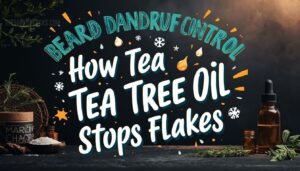
White flakes scattered across a dark shirt collar tell a familiar story—one that gets more complicated when a beard enters the picture. The skin beneath facial hair creates a warm, sebum-rich environment where Malassezia yeast thrives, triggering the flaking and itch most people recognize as beard dandruff.
What makes this frustrating is that standard face wash rarely reaches the skin underneath, leaving the problem untreated.
Tea tree oil, a concentrated botanical extract with clinically studied antifungal properties, works differently—its active compound terpinen-4-ol directly disrupts fungal cell membranes, cutting the problem at its source.
Table Of Contents
- Key Takeaways
- Does Tea Tree Oil Help Beard Dandruff?
- What Causes Beard Dandruff?
- What The Research Says
- How to Use Tea Tree Oil Safely
- Beard Routine to Prevent Flakes
- Frequently Asked Questions (FAQs)
- Does tea tree oil help with beard dandruff?
- Is tea tree oil good for face dandruff?
- Can tea tree oil reduce dandruff?
- Does tea tree oil effect dandruff?
- Can tea tree oil cause skin allergies?
- What are alternative remedies to tea tree oil?
- How do I store tea tree oil properly?
- Are there side effects of overusing beard oil?
- Does beard length affect dandruff severity or frequency?
- Are certain beard types more prone to flaking?
- Conclusion
Key Takeaways
- active compound, terpinen-4-ol, directly disrupts the fungal cell membranes of Malassezia yeast—the root cause of beard dandruff—with clinical studies showing a 5% formula cuts flaking by about 41% within four weeks.
- Never apply tea tree oil straight to your skin; dilute it to 2–3% in a carrier oil like jojoba, and always patch test first, since roughly 1–3.5% of people develop an allergic reaction.
- Beard dandruff usually isn’t one problem, but several layered together—yeast overgrowth, a weakened skin barrier, product buildup, and environmental triggers like cold weather and indoor heating all play a role.
- If flaking, redness, or itch don’t improve after six weeks of consistent care, it’s time to step up to medicated options like ketoconazole cream and get a dermatologist involved.
Does Tea Tree Oil Help Beard Dandruff?
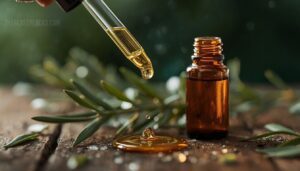
Tea tree oil has been used for decades to fight the kind of fungal overgrowth that causes dandruff, and your beard skin is no exception.
Used consistently, it can restore balance to your beard’s skin microbiome—something explored in depth in this guide on natural oils for beard dandruff control.
science behind how it works — and when it actually produces outcomes — is worth understanding before you add it to your routine.
what you need to know.
Why Tea Tree Oil is Used for Facial Flaking
Tea tree oil earns its spot in beard care for good reason. Its terpinen‑4‑ol delivers real, targeted results for facial flaking linked to seborrheic dermatitis and beard dandruff.
Clinical studies show a 5% tea tree shampoo can cut dandruff severity by over 40%. Here’s what it actually does:
- Keratin Softening loosens stubborn flakes so they wash away cleanly
- Inflammation Reduction calms the redness and irritation driving discomfort
- Itch Suppression breaks the scratch‑flake cycle before it worsens
How Antifungal Action Targets Malassezia
The antifungal properties of tea tree oil work against Malassezia through several precise mechanisms.
Terpinen-4-ol triggers membrane disruption, physically deforming fungal cells until they can’t survive. It also causes ergosterol inhibition, collapsing the yeast’s structural integrity, while enzyme blockade cuts off essential metabolic processes.
Add oxidative stress to the mix, and Malassezia simply can’t sustain growth — though species susceptibility varies between individuals.
Tea Tree Oil Benefits for Itch and Redness
Beyond fighting the fungus, Tea Tree Oil also calms the irritation that comes with it.
anti-inflammatory compounds help with redness reduction and anti-itch relief almost immediately — many people notice a cooling sensation after diluted application.
It strengthens your skin barrier, too, acting as a gentle antimicrobial that keeps beard dandruff from triggering that cycle of no itching or irritation turning into constant scratching.
When Tea Tree Oil Works Best
It works best when Malassezia yeast is the actual culprit — not dry skin or contact irritation. Post-shower application of your diluted blend helps too, since clean skin absorbs it better.
Beard length impact matters: longer beards trap more moisture, raising the microbial load threshold. Pair it with zinc pyrithione for synergistic ingredients that keep skin pH balance in check.
What Causes Beard Dandruff?
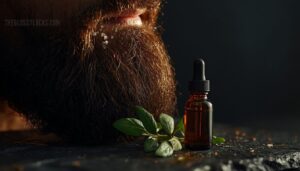
Beard dandruff rarely comes from just one thing — it’s usually a mix of factors working against your skin at once. Understanding triggering the flakes is the first step to actually fixing them.
Here’s what’s most likely behind the problem.
Malassezia Yeast Overgrowth Under The Beard
Malassezia yeast lives on everyone’s skin — it’s only when conditions tip out of balance that beard dandruff begins. Your beard traps warmth and moisture, and higher Sebum Production feeds this lipophilic yeast directly. That combination of Warm Humidity and oily follicles triggers yeast overgrowth fast.
Beard dandruff begins when warmth, moisture, and excess sebum tip Malassezia yeast from harmless to harmful
- Malassezia thrives where sebum meets hair follicles
- Warm, humid beard skin accelerates yeast activity
- Follicle Inflammation drives visible flaking and itch
- Skin Microflora Balance in yeast dominance
- Immune Modulation changes how skin reacts to overgrowth
Tea Tree Oil’s antifungal properties directly disrupt this cycle.
That said, if your skin runs sensitive, it’s worth reading up on choosing the right aftershave lotion for sensitive skin before adding tea tree oil to your routine.
Dry Skin and Weak Skin Barrier
Even without yeast overgrowth, dry skin alone can trigger beard flaking. When your stratum corneum — the skin’s outermost protective layer — loses moisture, Ceramide Deficiency sets in, TEWL Increase follows, and Natural Moisturizing Factor drops. Skin barrier repair becomes essential.
| Barrier Problem | What It Means |
|---|---|
| Ceramide Deficiency | Lipid loss weakens protection |
| TEWL Increase | Moisture escapes faster |
| Low Stratum Corneum Hydration | Skin dries and flakes |
| Reduced Natural Moisturizing Factor | Barrier can’t self-regulate |
| Poor Barrier Repair Strategies | Irritation cycle continues |
Tea Tree Oil helps skin moisturization while addressing skin irritation directly.
Product Buildup and Poor Cleansing Habits
What you put on your beard matters — but so does what you leave behind. Residue Layer Formation happens when grooming products aren’t fully rinsed out, mixing with sebum and dead skin to form stubborn buildup.
Incomplete Rinsing Effects and Skipping Wash Days compound this fast. Product Accumulation Timing worsens with heavy Conditioner Residue Impact.
A sulfate-free beard wash with tea tree oil clears that film before poor hygiene takes hold.
Cold Weather and Indoor Heating Effects
Winter turns your bathroom mirror into a dandruff report card. Low humidity, dryness, and radiator heat drying strips moisture from facial skin, accelerating winter skin turnover and loosening dry white flakes into your beard. Sudden temperature shifts between cold air and warm rooms compound environmental damage quickly. Indoor heat itch signals a weakening skin barrier — exactly where tea tree oil’s anti‑inflammatory action helps most.
- Low humidity pulls moisture from the outer skin layer, leaving it tight and flaky
- Radiator heat dries nearby air, making existing flakes more brittle and easier to shed
- Sudden temperature shifts trigger rapid moisture loss, worsening beard dandruff flare‑ups
- Indoor heat itch intensifies when dry skin barriers allow irritation signals through more easily
- Winter skin turnover builds dead cell accumulation, clogging beard follicles with dry scalp debris
Seborrheic Dermatitis and Irritation Triggers
Sometimes beard dandruff isn’t just flakes — it’s seborrheic dermatitis fighting back.
Harsh chemicals in grooming products, alcohol‑based skincare, and lifestyle irritants like smoking or excess alcohol all provoke flare‑ups.
Stress triggers weaken your skin barrier quickly.
Friction and moisture trapped under thick growth worsen contact dermatitis.
The antifungal properties of Tea Tree Oil help calm these cycles before they escalate.
| Trigger | How It Affects Skin | Management Tip |
|---|---|---|
| Harsh chemicals | Strips skin barrier, worsens flaking | Switch to sulfate-free wash |
| Alcohol‑based skincare | Dries skin, invites Malassezia overgrowth | Use oil-based alternatives |
| Stress triggers | Disrupts immune response, drives flare-ups | Consistent sleep and routine |
| Friction & Moisture | Traps sweat, feeds yeast growth | Dry beard thoroughly after washing |
| Lifestyle Irritants | Smoking and alcohol worsen inflammation | Reduce exposure where possible |
What The Research Says
Tea tree oil sounds promising, but what does the actual evidence say? handful of studies have looked at how well it works against dandruff—and the results are worth knowing before you commit to a routine.
Here’s what the research shows across four key areas.
Tea Tree Oil Shampoo Studies on Dandruff
The strongest evidence for tea tree oil comes from a well-designed randomized trial — the kind where half the participants used a placebo shampoo and half used a 5% tea tree oil antidandruff shampoo daily for four weeks.
The trial measured four key outcomes:
- Trial Design — single-blind, placebo comparison with matched groups
- Concentration Efficacy — the 5% formulation was the tested dose
- Patient Reported Outcomes — participants self-assessed itchiness and greasiness
- Safety Profile — no adverse events reported throughout
Clinical studies on tea tree oil efficacy confirm its antifungal properties; tea tree oil tackles the underlying problem directly. Always patch test first.
Reduction in Flake Severity and Microbial Growth
That 5% tea tree oil shampoo delivered real, measurable results — a 41 percent reduction in flake severity after just four weeks. Separately, microbial growth dropped by 78%.
Its antifungal properties of tea tree oil tackle Malassezia directly, supporting sebum regulation and barrier restoration. Consistent use also aids residue removal, humidity control, and sweat management — keeping the skin environment less hospitable to beard dandruff triggers.
Why Results Vary by Beard and Skin Type
Those numbers don’t tell the whole story, though. Your beard density, beard length, and hair curliness all change how well Tea Tree Oil reaches your skin.
Higher sebum output can dilute its effect, while low skin pH or sensitive skin may react before results show.
Seborrheic dermatitis in beards often needs more targeted care — and patch testing helps you find your tolerance first.
Limits of Tea Tree Oil for Stubborn Dandruff
Even with consistent use, tea tree oil hits a ceiling. It works best for mild to moderate flaking — but when malassezia (also called Pityrosporum ovale) overgrowth is severe, essential oil alone won’t cut it.
High concentration limits mean that pushing past 5% risks allergic reaction without better results. That’s when adjunct antifungal strategies and medicated treatments for beard dandruff, like ketoconazole, become necessary.
How to Use Tea Tree Oil Safely
Tea tree oil works well, but only when you use it the right way. Pure, undiluted oil on facial skin can cause burning, redness, and dryness — especially if your skin is sensitive.
Here’s exactly what you need to know before applying it to your beard.
Diluting Tea Tree Oil With Carrier Oils
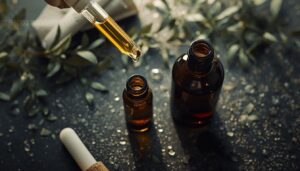
Pure tea tree oil is potent enough to burn facial skin — never apply it straight. Aim for a 2–3% dilution: roughly 12 drops per 30 mL of carrier oil.
Jojoba oil and olive oil both work well for carrier oil selection.
Mix in a dark glass bottle, shake thoroughly, and store somewhere cool.
Label it with the date so you track storage shelf life easily.
Mixing Tea Tree Oil Into Beard Wash or Shampoo
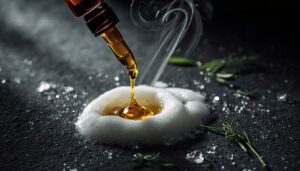
Adding tea tree oil straight to your beard wash sounds simple, but emulsion stability is the real challenge — oil and water separate fast. For a safe ratio calculation, use 5–10 drops per 30 mL of beard shampoo.
Shake well before every use, and work the lather into your skin for at least 60 seconds. That contact duration is what makes DIY tea tree oil shampoo recipes actually work.
Patch Testing Before First Use
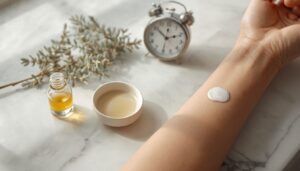
Before applying anything new to your face, a quick patch test can save you real trouble. About 1.4% of people develop reactions to tea tree oil — small odds, but worth checking. Use your inner arm as the Arm Patch Site, and apply your Carrier Dilution Ratio mixture there first.
- Apply diluted oil and leave it undisturbed for 24‑Hour Evaluation
- Watch for Positive Reaction Signs: redness, raised skin, or spreading itch
- Photo Documentation Steps — photograph the site at application and again at 24 hours
- If burning starts early, remove and rinse immediately
How Often to Apply It
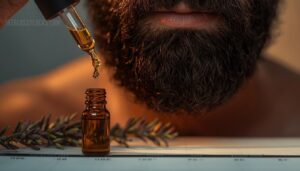
Most people do best starting with once daily — that’s your Start Low Frequency baseline. Give it 2–4 weeks before judging results.
Use this Severity‑Guided Schedule to Adjust Contact Duration and Shift to Maintenance:
| Phase | Frequency |
|---|---|
| Week 1–2 | Once daily |
| Week 3–4 | Twice daily if tolerated |
| Maintenance | 2–3x weekly |
| Flare‑up | Resume daily temporarily |
Always Monitor Irritation Signs after each topical application.
Signs of Irritation or Allergy
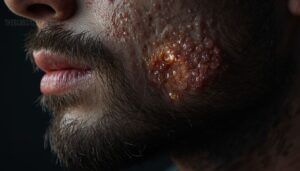
Your skin will tell you when something’s wrong — learn to listen. Stop using tea tree oil immediately if you notice any of these warning signs:
If irritation strikes, consider switching to a gentler routine like using magic shaving powder for smooth, nick-free skin instead.
- Burning Sensation — stinging that starts right after application
- Redness Pattern — skin that looks angrier than before
- Dry Itching — flaking that worsens instead of improving
- Swelling Blisters — raised, fluid-filled skin near the beard
- Hives Breathing — bumps plus throat tightness need emergency care
Allergic reactions to tea tree oil affect roughly 1.4% of users. That’s why patch testing before use matters — and why skin sensitivity deserves respect. Persistent symptoms warrant dermatologist consultation.
Beard Routine to Prevent Flakes
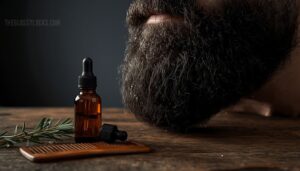
Tea tree oil alone won’t keep beard dandruff away for long. A consistent daily routine is what actually stops flakes from coming back. Here’s what that routine should look like.
Washing The Beard Without Over-drying
How you wash your beard matters just as much as what you wash it with. lukewarm water rinse keeps facial oils intact — hot water strips them fast.
sulfate-free, hydrating beard wash and massage it down to the skin. Pat dry technique beats rough toweling every time.
seal in hydration immediately with beard oil while skin is still slightly damp.
Daily Brushing to Lift Flakes and Spread Oils
Think of your beard brush as a daily reset button. Wet brushing with gentle circular motion loosens flaking skin and moves natural oil production down each hair shaft.
Use sectioned brushing to cover every area evenly — don’t just hit the front.
Brush selection matters too: flexible bristles cause less irritation. Keep brush hygiene tight; a dirty brush redeposits what you just removed.
Moisturizing With Beard Oil After Showering
Brushing lifts the flakes — but moisturizing keeps them from coming back.
After your shower, pat your beard damp, not dripping, then work 2–3 drops of tea tree beard oil through to the skin. That damp beard application is your moisture lock technique: carrier oils like jojoba or argan absorb faster than on dry hair, sealing hydration before it escapes.
Exfoliating Gently to Remove Buildup
Moisture alone won’t clear stubborn product buildup — that’s where gentle exfoliation earns its place.
On damp skin, try a Gentle Physical Scrub with small jojoba beads, or an exfoliating beard wash with Enzyme Exfoliation to lift dead cells without micro-tears. Rinse thoroughly afterward.
Timing matters: 1–2 sessions weekly keep buildup controlled, and adding a drop of tea tree oil post-exfoliation maximizes results.
When to Use Medicated Treatment or See a Dermatologist
Even with a solid routine, sometimes your skin needs more than Tea Tree Oil can offer. Persistent itching, severe redness, hair loss patches, or infection signs like yellow crusting mean it’s time to move beyond over-the-counter options.
Failed OTC therapy calls for medicated treatments for beard dandruff — ketoconazole cream is the go-to antifungal treatment.
See a dermatologist for beard issues that don’t resolve within six weeks.
Frequently Asked Questions (FAQs)
Does tea tree oil help with beard dandruff?
Yes, tea tree oil’s antifungal properties genuinely help reduce beard dandruff. It targets Malassezia yeast — the main culprit behind flaking — making it a practical natural dandruff remedy worth trying.
Is tea tree oil good for face dandruff?
Tea tree oil works remarkably well for face dandruff—its antifungal properties of tea tree oil directly target Malassezia yeast, the main culprit behind flaking.
As a natural dandruff remedy, it delivers real results.
Can tea tree oil reduce dandruff?
It can. Tea tree oil’s antifungal properties target Malassezia yeast — the root cause of most flaking. A 5% formula reduced dandruff severity by 41% in clinical trials within just one month.
Does tea tree oil effect dandruff?
Think of it as a targeted weapon against the yeast driving your flakes. Tea tree oil’s antifungal treatment properties directly suppress Malassezia, reducing beard dandruff by roughly 41% within a month.
Can tea tree oil cause skin allergies?
It can. About 1–5% of people develop allergic contact dermatitis from tea tree oil. Oxidation increases that risk. Patch testing before use is essential, especially if you have sensitive skin.
What are alternative remedies to tea tree oil?
If tea tree oil irritates your skin, zinc pyrithione shampoos, ketoconazole cream, apple cider vinegar rinse, salicylic acid cleansers, or ceramide moisturizers with shea butter or coconut oil all offer effective, well-tolerated alternatives.
How do I store tea tree oil properly?
Store your tea tree oil in an amber bottle, in a cool dark place away from heat and light.
Keep the cap sealed tight, and label the date you opened it.
Are there side effects of overusing beard oil?
Yes — overusing beard oil invites clogged pores, excess greasiness, contact dermatitis, and skin redness. eye burning can occur near the eye area.
Always follow essential oil dilution guidelines, prioritize patch testing before use, and respect basic safety precautions for essential oils.
Does beard length affect dandruff severity or frequency?
Beard length doesn’t cause dandruff, but it does change how it behaves.
Longer hair affects flake visibility, heat retention, and sebum distribution — shifting the microclimate under your beard in ways that can worsen or mask symptoms.
Are certain beard types more prone to flaking?
Certain beard types genuinely are more prone to flaking. Dense, long, or coarse-textured beards trap sweat and oils against the skin, reducing airflow and worsening beard dandruff.
Curly hair and sensitive skin under the beard compound the problem further.
Conclusion
Think of Malassezia like a slow leak—ignore it, and the damage spreads.
Effective beard dandruff control with tea tree oil isn’t complicated: dilute it correctly, work it into your routine consistently, and let terpinen-4-ol do the heavy lifting against the fungal overgrowth underneath.
Most people see measurable improvement within two to four weeks.
Your beard should be something you wear with confidence—not something you’re constantly brushing off your shoulders.