This site is supported by our readers. We may earn a commission, at no cost to you, if you purchase through links.

By late afternoon, your face can tell the story of the day: a clenched jaw, puffy under-eyes, a brow held tighter than you realized. A few slow minutes of touch won’t rewrite your bone structure, but it can change how your skin looks and how your muscles feel.
The benefits of facial massage begin with circulation and fluid movement. Gentle strokes can bring a short-lived glow, help move retained fluid toward drainage points, and create a quieter moment for an overworked nervous system. With pressure and technique, you can safely target puffiness, tension, product application, and skin-supporting habits without barrier irritation.
Table Of Contents
- Key Takeaways
- Top Skin Benefits of Facial Massage
- Therapeutic and Emotional Massage Benefits
- How Facial Massage Benefits Work
- Best Techniques for Different Benefits
- Maximize Facial Massage Benefits Safely
- Frequently Asked Questions (FAQs)
- What are the benefits of facial massage?
- What is a facial massage?
- Does a facial massage really work?
- Why should you massage your face?
- What is a face massage & how does it work?
- Does face massage improve Skin radiance?
- How often should I massage my face daily?
- Can facial massage replace professional skincare treatments?
- Whats the best time of day for massage?
- How long before seeing visible massage results?
- Conclusion
Key Takeaways
- Gentle facial massage can temporarily boost circulation, reduce puffiness, ease muscle tension, and leave your skin looking more refreshed.
- Light, consistent strokes with clean hands and enough serum or oil help prevent irritation while improving product spread and supporting relaxation.
- Results such as a glow and reduced swelling are short term, while lasting changes in firmness or fine lines are limited and require realistic expectations.
- Avoid massage over active irritation, broken skin, infections, painful swelling, or recent procedures, and seek professional care for persistent pain, TMJ symptoms, or difficult scars.
Top Skin Benefits of Facial Massage

Facial massage can make your skin look more rested, refreshed, and well supported when you practice it consistently and use gentle pressure. Some effects appear right away, while others depend on your technique, skincare routine, and the condition of your skin. Here are the skin changes you may notice most.
Pairing massage with anti-aging facial exercises may further relax tense muscles and support a naturally lifted appearance.
Brighter, Healthier-Looking Complexion
A healthy glow begins with circulation. Gentle facial massage helps oxygen delivery and nutrient absorption, helping skin cells renew themselves more efficiently for clearer skin and visible skin vitality.
As cellular renewal improves, you may notice a more even tone, radiant glow, and skin rejuvenation. The calming ritual can also support improved mood and selfesteem, creating enhanced feelings of rejuvenation and wellbeing. Gentle lymphatic drainage techniques may also help reduce puffiness by encouraging fluid movement away from the face.
Reduced Puffiness and Fluid Retention
That rested look comes from better fluid movement. Lymphatic facial massage uses featherlight strokes toward drainage points, supporting lymphatic flow and reducing puffiness and inflammation when fluid retention collects beneath the eyes or along the cheeks.
Salt intake, hormonal water balance, heat, and sleep can worsen swelling. Pair massage with a cool compress for temporary relief and skin detoxification support.
Smoother Texture and More Plumpness
Once fluid retention eases, massage can support a smooth skin appearance by distributing hydrating serums evenly. It won’t replace exfoliation or volume enhancement techniques, but consistent contact complements:
- Exfoliation and Texture care
- Hydration and Plumpness support
- Collagen Boosting Effects
- Lymphatic drainage
Hyaluronic acid helps skin hold water, creating more plumpness, while moisturization aids smoother texture, skin elasticity, and collagen production.
Softer Fine Lines and Wrinkles
As skin looks more hydrated and cushioned, massage may also make fine lines appear softer. Gentle strokes encourage circulation improvement and facial tension release, which can temporarily smooth expression-related creasing around the forehead, eyes, and mouth.
With regular practice, collagen stimulation may support collagen production, while lymphatic drainage and product absorption enhancement help antiaging and wrinkles treatments sit and perform more evenly on the skin.
Improved Firmness and Elasticity
As you massage upward through the cheeks, jaw, and neck, you help facial muscle toning while easing the habitual tension that can pull features downward.
Better circulation aids collagen synthesis and collagen production, creating a gradual Collagen Boost and Elastin Support that enhances skin elasticity.
Lymphatic movement also contributes to temporary Skin Tightening, while consistent practice encourages lasting Firmness Enhancement and skin elasticity improvement.
Therapeutic and Emotional Massage Benefits
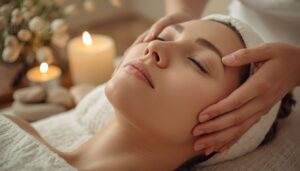
Facial massage can support more than your skin’s appearance, especially when stress shows up in your jaw, temples, and forehead. Its calming effects are often subtle but meaningful, helping you feel more comfortable and grounded in your routine. Here are the therapeutic and emotional benefits to think about.
Gentle facial massage may also support firmness over time; explore simple anti-aging techniques for healthier-looking skin.
Stress Relief and Relaxation
Facial massage can become a quiet reset when stress shows up in your expression. Slow strokes, paired with mindful breathing, encourage parasympathetic activation, slowing the heart rate and easing the nervous system toward deep relaxation.
Slow facial strokes and mindful breathing can calm the nervous system, turning stress into deep relaxation
As forehead and temple tension releases, cortisol reduction and endorphin release may support emotional wellbeing. A few unhurried minutes of relaxation and stress relief can make self-care feel grounding, not indulgent.
Jaw Tension and TMJ Comfort
Although jaw tension often settles into the cheeks and temples, gentle facial muscle relaxation may support TMJ pain relief alongside professional care. Try TMJ self-care:
- Rest tongue behind upper teeth.
- Lower jaw slowly for jaw mobility exercises.
- Soften cheeks with strokes.
These jaw relaxation techniques encourage facial tension release, muscle tension relief, stress reduction, and easier chewing during TMJ pain.
Temporary Sinus Congestion Relief
When congestion makes your face feel pressurized, facial acupressure and facial tension easing can offer temporary sinus congestion relief. Work from cheeks toward ears, then down neck for nasal drainage stimulation, lymphatic drainage, and lymphatic system support.
Cheek and jaw pressure release may encourage sinus airflow improvement and mucus clearance techniques, which helps with sinus pressure. Use sterile saline rinses.
Facial Scar Flexibility and Comfort
Once a scar has closed and your clinician approves, facial massage helps manage scar tissue through gentle myofascial release and adhesion breakdown techniques. Scar Tissue Remodeling and Circulation Boost Healing can soften tight, rope-like areas, while lymphatic drainage aids comfort. Consistent work encourages Nerve Sensitivity Reduction.
For Long-Term Scar Management, use light pressure, never massage inflamed, open, or painful scars.
Improved Mood and Self-Care
Mood Boosting Rituals turn a few quiet minutes into meaningful self-care. Gentle, Mindful Touch can support endorphin release, ease stress reduction, and strengthen your mindbody connection. Try this selfcare ritual:
- Breathe slowly for one minute.
- Stroke cheeks and temples rhythmically.
- Massage the jaw with light circles.
- Finish with serum, reinforcing whole-body skincare and Emotional Wellness through hormonal balance.
How Facial Massage Benefits Work
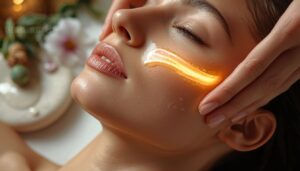
Facial massage can change how your skin looks and feels, but the reasons behind those changes matter. Some effects are immediate, while others depend on technique, consistency, and your skin’s individual needs. Here’s what’s happening beneath the surface when you massage your face.
Increased Blood Flow and Oxygen
Use facial massage to gently wake local microcirculation: pressure and release can encourage vasodilation effects, increasing blood circulation through superficial tissues. This helps oxygen delivery and oxygenation of skin, because better circulation improves tissue oxygenation where capillary perfusion is present.
| Change | What you may notice |
|---|---|
| Increased blood flow | Brief warmth |
| Nitric oxide release | Easier vessel relaxation |
| Capillary perfusion | Fresher-looking skin |
Better Lymphatic Drainage
After circulation brings oxygen to tissues, lymphatic facial massage helps clear fluid linked to puffiness.
With gentle pressure methods, stretch and release skin, guiding fluid from jaw and ears down the neck toward collarbones.
These neck flow patterns encourage lymph node stimulation, puffiness reduction, toxin elimination, and skin elasticity.
Fluid reduction techniques with deep breathing support practices support lymphatic drainage.
Reduced Facial Muscle Tension
As fluid clears, facial massage can reveal stress-induced tightness in the brow, cheeks, jaw, and neck. For facial tension relief, try these muscle release techniques:
- Begin with warmth.
- Use a gentle circular motion.
- Soften jaw tightness.
- Rest teeth apart.
- Stop before soreness.
These jaw relaxation methods support facial muscle relaxation; tension prevention tips include noticing daytime clenching during your usual routine.
Collagen Claims and Evidence
Facial massage may support collagen stimulation through improved microcirculation, though the evidence is more complex than most claims suggest.
Collagen makes up roughly 30% of total body protein, and skin elasticity depends heavily on collagen density.
Hydrolyzed collagen supplements show wrinkling reductions in reviewed trials, but many are manufacturer-funded, which limits how confidently you can read those results.
Temporary Versus Lasting Results
Some results arrive fast, others take weeks. Immediate glow effects appear within minutes, while your antiaging skincare goals like skin elasticity and facial contouring from collagen production need 6-8 weeks on a steady maintenance frequency schedule.
- Muscle tension relief lasts 12-24 hours
- Lymphatic drainage clears fluid retention cycles for roughly 48 hours
- Your product absorption window peaks right after massage
Best Techniques for Different Benefits
The best facial massage technique depends on what you’d like to support, whether that’s relaxation, de-puffing, or muscle comfort. Your skin’s sensitivity, current concerns, and preferred tools also matter. Here are the most useful approaches and when each one may fit your routine.
Classic Kneading, Tapping, and Stroking
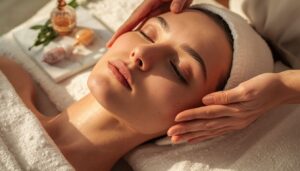
Classic facial massage works like a reset for overworked expressions. Kneading lifts and rolls cheeks, jaw, and temples to ease muscle tension, while gentle Tapping gives skin a quick circulation boost. Use long Effleurage Stroking passes from center outward, then down the neck. Integrate pressure points at temples or jaw joints. Clean rollers, gua sha, or vibrating tools provide pressure.
Lymphatic Drainage Massage
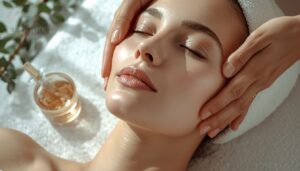
With featherlight, rhythmic strokes, lymphatic drainage massage moves excess fluid toward drainage points, which reduces puffiness and inflammation around the eyes, cheeks, and jaw.
- Helps fluid retention reduction and toxins elimination
- Creates temporary jawline sculpting effects
- Encourages stress response modulation
This calming technique helps circulation, toxin elimination support, and sinus pressure relief, especially when you sweep gently down the neck.
Gua Sha and Facial Rollers

Gua sha and facial rollers suit days when your face feels puffy, tense, or dull. Choose jade or another smooth tool, apply slip, then begin with a neck shoulder routine to support lymphatic drainage. Keep strokes flat, light, outward and upward, never back and forth. Facial rollers encourage even circulation. Use three times weekly for 10 to 15 minutes; avoid pressure that causes petechiae, irritation, or broken skin.
Shiatsu Acupressure Techniques
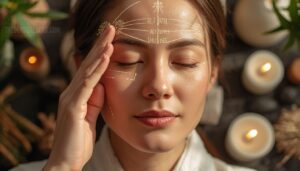
Shiatsu turns facial massage into a pause for facial tension release. With hands, press Shiatsu pressure points, never painfully: Yin Tang between the brows, beneath each pupil, behind the earlobes, and at the skull base. Hold each point for two minutes, then use gentle circles.
This self-care Shiatsu practice helps with acupressure point stimulation, meridian energy balancing, and skin health.
Kobido Facial Massage
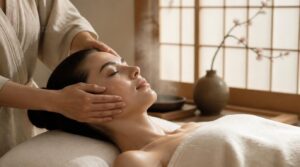
Kobido, a Japanese tradition often called a natural facelift, blends lifting, percussion, myofascial release, acupressure, and lymphatic drainage massage across the face, neck, and scalp. A trained Kobido practitioner tailors its 47 maneuvers for facial rejuvenation and skin elasticity.
Unlike gua sha’s tool-based gliding, Kobido is hands-only. Book weekly initially, then practice gentle home strokes between sessions as needed.
Maximize Facial Massage Benefits Safely
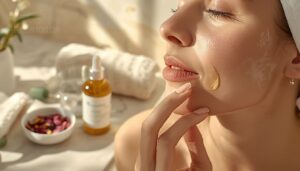
A thoughtful approach helps you get the calming, skin-supporting effects of facial massage without irritating your skin or worsening an existing concern. Your technique, products, and timing all matter more than pressure. Keep the following practical guidelines in mind before you begin.
Simple At-Home Massage Steps
Start with clean hands and enough serum, oil, or cleansing balm to prevent drag.
- Use light jawline pressure flow below the ears, circling toward temples.
- Apply temple circular motion at comfortable pressure points.
- Sweep along the hairline toward the forehead’s center.
- Use neck base thumb rolls down tight muscles.
- Keep consistent directional strokes, increasing pressure gradually.
This helps with tension relief and product absorption without pulling skin.
Ideal Frequency and Session Length
Let your skin’s response guide the rhythm. For self-massage, aim for 10 to 15 minutes daily or two to three times weekly, using light pressure and stopping if redness lingers.
For deeper tension, stress reduction therapy, or drainage concerns, try weekly sessions for two to four weeks, then every other week, settling into monthly maintenance. Longer 25-minute sessions suit focused jaw work.
Choosing Oils and Serums
After facial massage becomes part of your skincare routine, match slip to your skin type: a cleansing balm or serum oil helps dry skin, while jojoba suits oily skin.
For serum layering, apply water-based hyaluronic acid or niacinamide first, then oil. This helps serum absorption rates, reduces friction, and gives antioxidant oils, such as marula, time to help skin barrier.
Contraindications and Safety Precautions
Skin barrier support and cortisol reduction never justify massage when you have skin conditions: broken skin, eczema flares, rashes, or oozing lesions. Friction can worsen inflammation and infection risks, rather than aid inflammatory response reduction.
Pause with blood disorders, anticoagulants, vascular cautions, trauma, or eye pain. Avoid cold sores and shingles. A professional massage therapist helps with eye safety and dermatological wellness.
When to Seek Professional Treatment
When should you call in help? Seek a professional massage therapist or Registered Massage Therapists RMTs for Medical Concerns, dermatological wellness, and Self-Massage Limits:
- TMJ Indicators: locking, numbness, swelling, or swallowing difficulty.
- Scar Treatment requiring individualized care.
- Acne Expertise for cystic, painful breakouts.
- buccal intraoral massage from providers.
If pain, bruising, or symptoms persist two weeks, seek noninvasive treatment promptly.
Frequently Asked Questions (FAQs)
What are the benefits of facial massage?
Like dew clearing a window, facial massage offers a skin radiance boost through blood circulation and lymphatic drainage, while collagen stimulation helps with collagen production, skin elasticity, muscle tension release, lymphatic detoxification, and stress relief enhancement.
What is a facial massage?
A facial massage uses stroking, kneading, tapping, and facial rollers to support blood circulation and skin elasticity. You can receive it from an esthetician or perform lymphatic facial massage at home after washing hands and face.
Does a facial massage really work?
Yes, facial massage really works, though results vary. It measurably improves blood circulation, lymphatic drainage, and short-term puffiness, with a 2024 RCT confirming improved skin elasticity after eight consistent weeks.
Why should you massage your face?
Massage works on your skin the same way exercise works on your muscles, pushing circulation, encouraging collagen synthesis, and draining stagnant fluid, so your face looks fresher and feels noticeably firmer.
What is a face massage & how does it work?
Facial massage is a hands-on technique that applies rubbing, pressing, lifting, and upward gliding motions across your face, using fingertips, palms, or tools, to stimulate circulation and support lymphatic flow through skin tissues.
Does face massage improve Skin radiance?
Gentle facial massage can create a radiant glow enhancement by boosting circulation, supporting oxygen delivery and nutrient flow. This temporary cellular renewal stimulation improves skin glow, skin health, and the appearance of a youthful complexion.
How often should I massage my face daily?
For skin health and antiaging, use facial massage daily for 5–10 minutes, or 3–5 minutes several times weekly. Try lymphatic facial massage in the morning, tension release at night. Consistency matters.
Can facial massage replace professional skincare treatments?
Think of someone using facial massage between peels: it helps home maintenance within your skincare routine, muscle tone, and contour measurements, but cannot replace professional antiaging, skin tightening, or corrective treatment for lasting deeper concerns.
Whats the best time of day for massage?
Morning offers a circulation boost; afternoon suits recovery; evening helps relaxation.
Schedule facial massage two to four hours pre-workout, and keep a consistent rhythm.
Skin tightening, facial yoga, jade roller, and facial cupping work anytime.
How long before seeing visible massage results?
You may feel calmer immediately, but visible results usually take several weeks of consistent facial massage. Gradual skin changes vary with technique, facial muscle thickness, facial contour measurements, facial symmetry, and your individual response.
Conclusion
When the day leaves its fingerprints on your face, gentle touch can help soften the evidence. The benefits of facial massage are most reliable when you use light pressure, clean hands, sufficient slip, and realistic expectations: less tension, temporarily reduced puffiness, and a refreshed-looking complexion.
Respect active irritation, recent procedures, persistent pain, or swelling that needs medical attention. Treat each session as quiet maintenance, not a miracle, and your mirror may reflect your calmer self.