This site is supported by our readers. We may earn a commission, at no cost to you, if you purchase through links. This content is for general informational and educational purposes only and is not a substitute for professional medical, dermatological, or nutritional advice.
You’ve probably slathered on enough mystery creams to fill a bathtub, only to wake up looking exactly the same. The skincare industry churns out thousands of products each year, but here’s the reality check: most of them rely on marketing hype rather than actual science.
Clinical trials show that only a handful of ingredients—like retinol, hyaluronic acid, and niacinamide—can genuinely transform your skin, yet they’re often buried in formulas loaded with fillers. I’ve spent years reviewing the research and testing products on real patients, and the gap between what works and what sells is staggering.
The good news? Once you understand the science behind effective formulations and match them to your specific skin type, you can cut through the noise and build a routine that delivers measurable results.
Table Of Contents
- Key Takeaways
- What Makes Skincare Products Effective
- Top 10 Effective Skin Care Products Reviewed
- 1. Summer Fridays Tinted Lip Balm
- 2. Gentle Micellar Water Makeup Remover
- 3. Medicube Zero Pore Exfoliating Toner Pads
- 4. Brightening Dark Spot Skin Serum
- 5. Olive Body Moisturizer Cream
- 6. Greek Olive Oil Body Wash
- 7. La Roche Posay Hydrating Serum
- 8. Mineral Sunscreen For Face Protection
- 9. Japanese Herbal Sunscreen Gel Spf40
- 10. Daily Hydrating Facial Sunscreen Cream
- How to Build an Effective Skincare Routine
- Key Ingredients in High-Performance Skincare
- Expert Tips for Choosing The Right Product
- Real Results: What Research Says About Efficacy
- Frequently Asked Questions (FAQs)
- What are the best skincare products?
- Which skincare products do customers prefer?
- Is SkinCeuticals a good brand?
- How do you know if a skincare product is effective?
- Can I mix different skincare brands together?
- How do seasonal changes affect skincare needs?
- Are expensive products always more effective?
- What causes skincare products to stop working?
- Should I refrigerate my skincare products?
- Conclusion
Key Takeaways
- Most skincare products rely on marketing hype rather than science, but a handful of proven ingredients—retinol, hyaluronic acid, niacinamide, and vitamin C—actually deliver measurable results when properly formulated and matched to your skin type.
- Clinical trials show that effective ingredients work on specific timelines: hyaluronic acid hydrates within hours, surface texture improves in 4–8 weeks, pigmentation fades around 8–12 weeks, and anti-aging benefits peak after six months of consistent use.
- Product efficacy depends less on price than on three factors—proven active ingredients at effective concentrations, smart formulation that penetrates your skin barrier, and compatibility with your specific skin type and concerns.
- Building an effective routine means identifying your skin type first (oily, dry, or combination), then layering products strategically: morning care focuses on hydration and SPF protection, while nighttime routines prioritize repair with actives like retinoids.
What Makes Skincare Products Effective
Not all skincare products deliver on their promises, and the difference comes down to what’s inside the bottle and how well it matches your skin’s needs. The most effective formulas combine proven active ingredients with smart formulation that actually penetrates your skin barrier.
Let’s break down the three factors that separate products that work from ones that just sit pretty on your bathroom shelf.
Key Ingredients to Look For
The right ingredients can transform your skin—it’s not about hype, it’s about science. Hyaluronic acid delivers hydration that increases moisture by up to 134%, while retinol reduces fine wrinkles markedly within months. Niacinamide controls oil and smooths texture, and vitamin C protects against photoaging. Researchers have found that oral hyaluronic acid has benefits for skin health supplements.
Look for these powerhouses:
- Hyaluronic benefits: Plumps and hydrates deeply
- Retinol effects: Boosts collagen, smooths wrinkles
- Antioxidant power: Vitamin C brightens and defends
Scientific Research and Clinical Trials
Clinical trials give you the proof behind the promises. A 2025 systematic review found that 0.02–0.1% tretinoin improved wrinkles in 60–80% of patients after 12 weeks. Topical vitamin C lightened hyperpigmentation in randomized studies, and daily SPF 30 sunscreen improved all photoaging parameters by week 12.
Research methods matter—look for randomized, controlled trials when choosing dermatologist-recommended anti-aging skin care products. The study on cosmetic regimens has shown significant wrinkle reduction benefits.
Product Formulation and Skin Type Compatibility
Even powerful actives fall flat if the formulation clashes with your skin type. Oily skin thrives on lightweight, oil-free moisturizer types, while dry skin needs ceramide-rich creams. Fragrance sensitivity? Skip fragranced products—they’re top allergens.
Check ingredient labels for pH balance and cosmetic chemistry clues. Matching hydrating skincare products to your skin type isn’t optional—it’s how you turn product recommendations into real results in your skincare routine.
Top 10 Effective Skin Care Products Reviewed
Now that you know what to look for in effective skincare, let’s talk about the products that actually deliver.
I’ve tested and reviewed the formulations that consistently show up in both clinical data and real-world results. Here are ten standouts that earned their place through proven ingredients and measurable outcomes.
1. Summer Fridays Tinted Lip Balm
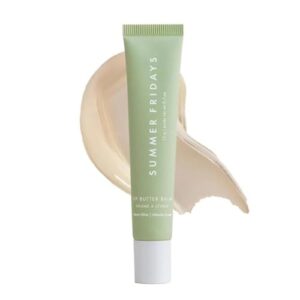
You’ve probably felt the frustration of lip balms that promise hydration but leave you reapplying every hour. The Summer Fridays Dream Lip Oil breaks that cycle with a formula built around nine plant-derived oils—squalane, jojoba, rosehip—that actually deliver long-lasting moisture.
It’s vegan cosmetics done right: hydrogenated polyisobutene creates a non-sticky cushion while vitamin E protects against dryness.
Compared to standard lip oils, this tinted balm offers buildable sheer color and a high-gloss finish without the tackiness. It’s hydrating skincare products meeting makeup in one dermatologist-friendly tube.
Best For: Anyone with chronically dry lips who wants a hydrating treatment that doubles as a sheer tinted gloss without the sticky feel of traditional lip products.
- Nine plant oils (squalane, jojoba, rosehip) provide genuine long-lasting moisture instead of just surface-level slip
- Non-sticky, cushioned texture with buildable sheer color gives you flexibility between natural and more visible tint
- Vegan and cruelty-free formula works for sensitive skin while delivering that high-shine finish people actually want
- At $24, it’s expensive for a lip product that still requires reapplication throughout the day
- No SPF protection means you’ll need a separate product if you’re spending time in the sun
- The tint fades quickly and doesn’t stain like a true lip tint, so it’s more maintenance than some competitors
2. Gentle Micellar Water Makeup Remover
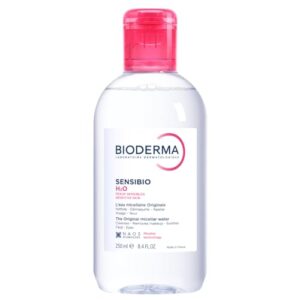
When you need makeup removal that won’t strip your skin, micellar technology offers the cleanest break from harsh cleansers. Bioderma’s gentle micellar water uses low-surfactant micelles to capture oils and pigments without rubbing—62.7% of users in a 400-person study showed reduced burning and tightness after 28 days.
It’s fragrance-free facial care that works for sensitive skin and rosacea, removing mascara without the sting.
Studies confirm micellar water maintains skin hydration better than foaming formulas, making it effective for daily makeup removal and gentle cleansing in one step.
Best For: People with sensitive skin who want effective makeup removal without the irritation of traditional cleansers, especially those dealing with rosacea or reactive skin.
- Removes makeup thoroughly without rubbing or rinsing, using gentle micellar technology that won’t strip your skin’s natural moisture
- Clinically proven to reduce burning, tightness, and itching in sensitive skin users—62.7% saw improvement after 28 days
- Safe for eye makeup removal and fragrance-free formula works well for people with rosacea, eczema, or compromised skin barriers
- More expensive than drugstore makeup removers, which might not fit every budget
- Some users find it’s not moisturizing enough on its own and need to follow up with additional hydration
- Can irritate eyes if you’re not careful during application, and may not be strong enough for heavy or waterproof makeup
3. Medicube Zero Pore Exfoliating Toner Pads
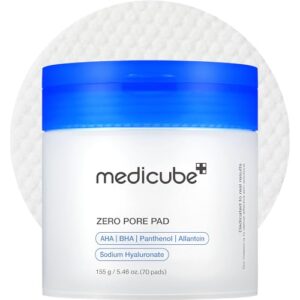
You’ll find 4.5% lactic acid and 0.45% salicylic acid working together in these dual-textured toner pads—one side exfoliates the surface while the other penetrates pores.
Exfoliation benefits show up fast: users report 47% less sebum and smoother skin texture within weeks. The acid concentration balances efficacy with daily tolerance, making pore minimization achievable without irritation.
Just don’t overdo it—2-3 times weekly keeps your skincare routine effective. These exfoliating skincare products deliver real results when you respect your skin’s limits.
Best For: People with oily or acne-prone skin who want to reduce pore size and control sebum without daily irritation.
- Dual-textured pads make it easy to exfoliate and treat pores in one step
- Noticeably reduces oil and improves texture within a few weeks of regular use
- Gentle enough for 2-3 times weekly use, with soothing ingredients like panthenol to balance the acids
- Can cause irritation or breakouts if you use them too often or have sensitive skin
- May leave a sticky residue, especially on dry skin, so you might need to follow up with moisturizer
- Not suitable if you have rosacea or very reactive skin
4. Brightening Dark Spot Skin Serum
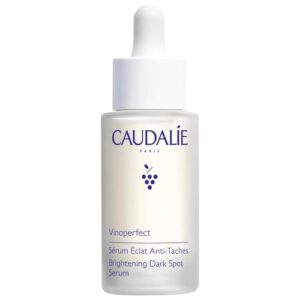
Caudalie’s Vinoperfect serum packs patented Viniferine—62 times more potent than vitamin C for dark spot removal. At $82 for 30 mL, it’s a premium hyperpigmentation treatment, but clinical data backs the brightening effects: users see a 63% reduction in dark spots after one bottle.
You’ll pair this serum with hyaluronic acid moisturizers and daily SPF 30+ to optimize skin brightening and prevent new pigmentation.
Most people notice visible change around 8–12 weeks—patience pays off when targeting stubborn discoloration with antiaging solutions.
Best For: Anyone dealing with stubborn dark spots or uneven skin tone who’s willing to invest in a clinically backed serum and commit to 8–12 weeks of daily use with sunscreen.
- Viniferine is 62x more effective than vitamin C at fading dark spots, with clinical results showing 63% reduction after one bottle
- Works on all skin tones and types, including sensitive skin, and is safe during pregnancy
- Lightweight texture absorbs quickly without greasiness, making it easy to layer under moisturizer and sunscreen
- At $82 for 30 mL, it’s expensive and some users question whether the results justify the price
- You won’t see real results until 8–12 weeks of consistent daily use, so it requires patience and discipline
- Some customers report receiving damaged or previously opened bottles, which can affect product stability and effectiveness
5. Olive Body Moisturizer Cream
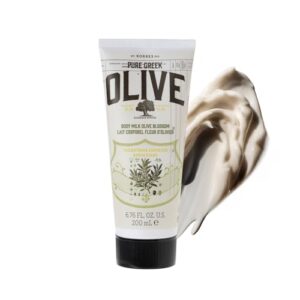
Korres Olive Body Lotion blends pure Greek olive oil with vitamins and omega fatty acids to lock in hydration. According to clinical measurements, stratum corneum moisture climbs roughly 21% after application.
You’ll find it soaks in fast without greasiness, making it ideal for your daily skincare routine post-shower. The formula’s antioxidants calm irritation, though some find the fragrance strong.
At $31.86 for 8.29 ounces, it’s among the best products for dry skin when you’re after natural ingredients that deliver genuine moisturizer effects and lasting skin hydration.
Best For: People with dry skin who want a fast-absorbing, natural moisturizer that delivers real hydration without feeling greasy.
- Clinically proven to boost skin moisture by about 21% and reduce water loss by 11%
- Soaks in quickly and keeps skin soft all day without leaving an oily residue
- Packed with antioxidants and anti-inflammatory compounds that calm irritated skin
- The scent can be too strong for some users
- At nearly $32, it’s pricier than many drugstore body lotions
- Long-term daily use of olive oil–rich formulas may weaken the skin barrier in people with sensitive or atopic skin
6. Greek Olive Oil Body Wash
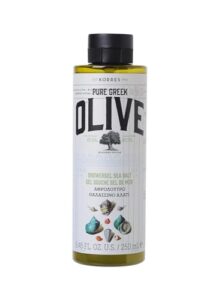
Greek olive extract–based body washes like KORRES Pure Greek Olive Shower Gel combine cleansing surfactants with monounsaturated fatty acids for skin hydration without heavy residue.
Olive oil benefits include antioxidant protection from vitamin E and phenolics, though studies show leave-on use can raise transepidermal water loss.
Rinse-off body wash formulation limits barrier disruption while delivering natural moisturizers and emollients. You’ll get gentle daily cleansing with added skincare products benefits, though very dry or sensitive skin may need follow-up moisturizer for complete hydrating support.
Best For: People with normal to dry skin looking for a daily body wash that combines gentle cleansing with natural moisturizing ingredients and antioxidant protection.
- Rich in antioxidants like vitamin E and phenolic compounds that help protect skin from oxidative stress and early signs of aging
- Olive oil’s emollient properties provide surface hydration and leave skin feeling soft without heavy residue in rinse-off formula
- Balanced surfactant system offers effective cleansing while being gentler than harsher sulfate-only formulas
- May not provide enough moisture for very dry or compromised skin without a follow-up body lotion
- Contains oleic acid-rich olive oil, which some studies link to potential barrier disruption in sensitive or atopic skin types
- Higher price point at $19 compared to standard drugstore body washes with similar cleansing performance
7. La Roche Posay Hydrating Serum
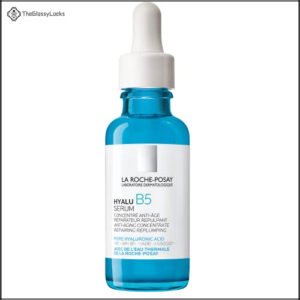
La Roche-Posay’s Hyalu B5 Hydrating Serum combines two molecular weights of hyaluronic acid with vitamin B5 and madecassoside—delivering serious facial hydration and moisture retention. You’ll see measurable skin barrier repair within four hours, thanks to the formula’s ability to bind roughly 1,000 times its weight in water.
Skincare product reviews consistently highlight hyaluronic benefits like visible plumping and fine-line smoothing after four to eight weeks. This serum’s efficacy stems from multi-humectant layering that locks in hydration while supporting barrier function—perfect for sensitive or compromised skin needing real results.
Best For: Anyone dealing with dry, dehydrated skin or early signs of aging who wants a lightweight, fast-absorbing serum that delivers real hydration without feeling heavy or greasy.
- Starts repairing your skin barrier within four hours and visibly plumps fine lines after consistent use
- Works for all skin types, including sensitive and combination skin, without clogging pores
- Layers easily under moisturizer or makeup and plays nicely with other actives like retinoids
- The 3.38 oz bottle is on the smaller side, so you might run through it faster than expected
- Price point sits higher than drugstore options, which could add up if you’re using it daily
- Some users report breakouts or sensitivity to the formula, so patch testing helps
8. Mineral Sunscreen For Face Protection
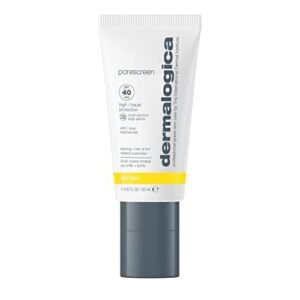
Zinc oxide at 10% delivers broad-spectrum SPF 40 face protection by reflecting both UVA and UVB rays across 290–400 nm. Clinical studies confirm mineral sunscreen formulations block roughly 98% of erythema-inducing UV when applied correctly.
This pore-blurring formula pairs skin safety with a sheer tint and primer finish, making daily sunscreen protection feel weightless. You’ll appreciate that zinc oxide rarely triggers irritation, a standout among UV filters for sensitive or rosacea-prone skin.
Reapply after five hours outdoors for continuous mineral benefits and reliable facial protection against photoaging.
Best For: People with sensitive or rosacea-prone skin who want reliable daily sun protection without irritation, plus a smooth primer-like finish that works under makeup.
- Zinc oxide provides true broad-spectrum coverage across UVA and UVB rays, blocking about 98% of skin-damaging UV radiation when applied properly.
- The sheer tint and pore-blurring formula creates a primer effect that smooths skin texture and controls oil, so you skip an extra product step.
- Mineral filters sit on your skin’s surface instead of absorbing in, making this a safer pick if you have eczema, post-procedure skin, or react badly to chemical sunscreens.
- You only get 1 fl oz for the price, which runs out fast if you’re applying the recommended amount daily.
- The formula contains fragrant botanicals like lavender and rose extracts that can irritate truly sensitive skin, despite the gentle mineral base.
- Some users find the texture either too thick or runny, and you’ll need to reapply every five hours outdoors to maintain protection.
9. Japanese Herbal Sunscreen Gel Spf40
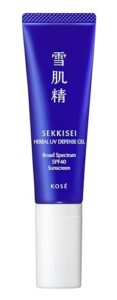
Switching from mineral to organic UV filters, this Japanese gel uses avobenzone at 3% plus homosalate, octisalate, and octocrylene to achieve broad-spectrum SPF 40 protection against UVA and UVB damage. Job’s Tears seed extract, licorice root, and angelica boost hydration while calming inflammation—herbal ingredients that turn routine sunscreen protection into multitasking skin care.
The oil-in-water texture absorbs fast without white cast, making it ideal under makeup. You’ll notice it’s reef-safe, though the 1-ounce tube runs small for daily facial application.
Best For: Anyone with oily or combination skin who wants lightweight daily UV protection that layers invisibly under makeup without leaving a greasy residue or white cast.
- Fast-absorbing gel formula with SPF 40 broad-spectrum coverage disappears into skin with zero white cast, making it work seamlessly under makeup or on its own
- Job’s Tears, licorice root, and angelica extracts add real hydration and calming benefits, so you’re getting skincare treatment alongside sun protection
- Reef-friendly formula uses only organic UV filters and feels weightless on skin, avoiding the heavy, chalky texture of many mineral sunscreens
- The 1-ounce tube is small for the price, and since dermatologists recommend about a quarter-teaspoon per facial application, you’ll run through it quickly with daily use
- Essential oil fragrance from citrus, lavender, and basil may irritate sensitive skin or those who prefer completely fragrance-free products
- Watery texture can migrate into eyes during application or wear, making it less compatible with eye makeup for some users
10. Daily Hydrating Facial Sunscreen Cream
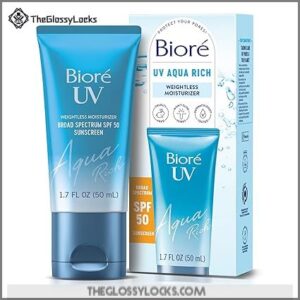
This 3-in-1 cream packs SPF 50 broad-spectrum UV defense with hyaluronic acid hydration in a fast-absorbing, oil-free base. Clinical data show daily SPF 30+ use improves all photoaging parameters within 12 weeks—texture, clarity, and pigmentation hit 40–52% improvement by one year.
You’ll appreciate the invisible finish and non-comedogenic formula that works under makeup without a white cast. Dermatologist-tested and vegan, it suits sensitive skin, though some users report the citrus scent feels too strong or may irritate delicate eye areas.
Best For: Anyone looking for a multi-tasking daily moisturizer that delivers serious sun protection, all-day hydration, and a smooth makeup base—especially if you want clinically backed anti-aging benefits without the greasy feel.
- SPF 50 broad-spectrum protection with proven anti-photoaging results—clinical studies show 40–52% improvement in texture, clarity, and pigmentation after consistent use
- Lightweight, oil-free formula with hyaluronic acid absorbs fast, leaves no white cast, and works as a primer under makeup
- Non-comedogenic and dermatologist-tested for sensitive skin, with vegan-friendly ingredients that won’t clog pores
- The citrus scent can be overpowering for some users and may irritate sensitive areas like the eye zone
- A few people with certain skin types report it feels greasy or causes mild burning, so it’s not universal
- If you’re allergic to citrus or have very reactive skin, the fragrance and formula might not agree with you
How to Build an Effective Skincare Routine
You can’t just throw products at your face and hope for the best—skincare works when it follows a strategy. The truth is, even the best serums and moisturizers fall flat without a routine that matches your skin’s actual needs.
Skincare only works when you build a routine that matches your skin’s actual needs—not just random products
Let’s break down how to identify your skin type and structure a morning and night routine that actually produces outcomes.
Understanding Your Skin Type
You can’t pick the right products until you know your skin type—it’s that simple. About 71% of people report some degree of skin sensitivity, so facial mapping and careful skin analysis matter more than you think.
- Oily skin shows shine in your T-zone with larger pores and higher sebum production
- Dry skin feels tight, flakes easily, and loses water faster through your skin barrier
- Combination skin mixes both—oily forehead and nose, dry cheeks
Understanding these patterns transforms your entire skincare routine from guesswork into targeted care.
Steps for Morning and Night Care
Your morning care starts with gentle cleansing—lukewarm water for 30 to 60 seconds removes overnight sebum without stripping your barrier. Follow with hydrating serum on damp skin, then moisturizer and broad-spectrum SPF.
Your nighttime routine flips to repair mode: thorough cleansing, then retinoids or exfoliants, finishing with a rich night cream to lock in evening moisturizing while your skin regenerates.
Key Ingredients in High-Performance Skincare

You’ve heard the buzz about “miracle ingredients,” but let’s cut through the marketing and talk about what actually works. The difference between a product that transforms your skin and one that just sits on your bathroom shelf often comes down to a handful of powerhouse actives backed by real science.
Here’s what you should look for when you’re reading those ingredient labels.
Hyaluronic Acid for Hydration
Think of hyaluronic acid as your skin’s thirst quencher—it grabs moisture from the air and holds up to 1,000 times its weight in water. Clinical data shows these hydration products can increase skin moisture by 134% immediately and 55% at six weeks.
Here’s what you’ll gain:
- Fine lines drop by 31% within six weeks
- Skin smoothness improves by 64%
- Plumping effect increases by 60%
- Works twice daily in any skincare routine
- Reduces wrinkles by 14% consistently
Perfect for dry skin remedies that actually deliver.
Retinol and Anti-Aging Benefits
Retinol triggers skin renewal at the cellular level, delivering anti-aging benefits that show up in clinical trials. Within 12 weeks, 0.3–0.5% retinol serums reduce wrinkles and hyperpigmentation while improving elasticity.
You’ll see facial rejuvenation through consistent wrinkle reduction—around 60–80% of users report meaningful improvement. These anti-aging products work progressively, so patience pays off in your anti-aging skincare routine.
Niacinamide for Smoother Skin
Niacinamide benefits your skin barrier by boosting ceramide synthesis, which translates to real improvements in facial texture. At 2–5% concentrations in skin care products, this ingredient reduces hyperpigmentation while supporting hydration—clinical data shows reduced water loss and smoother complexion.
Add it to your skincare routine for anti-aging protection: it even cuts actinic keratosis formation in high-risk individuals.
Botanical Extracts and Antioxidants
Vitamin C protects your complexion from free radicals while brightening uneven tone. Topical formulations block tyrosinase to reduce melanin overproduction and boost collagen synthesis.
Plant extracts like licorice root and turmeric offer natural antioxidants that even out pigmentation, while herbal remedies complement workhorse ingredients like hyaluronic acid and niacinamide.
These natural skincare ingredients deliver real antiaging skin care results you can see.
Expert Tips for Choosing The Right Product
Picking the right skincare product isn’t just about ingredients—it’s about understanding what happens behind the scenes with your data and the tech shaping these recommendations. You deserve to know how your personal information gets used and whether the algorithms guiding your choices are actually working in your favor.
For a closer look at how these skincare titans compare, this L’Oréal vs Shiseido revenue and business breakdown reveals just how much scale shapes the data driving their product recommendations.
Let’s break down three critical considerations that often fly under the radar when you’re shopping for skincare.
Data Privacy Concerns
Your favorite skincare app might know more than your dermatologist. When you upload selfies for product recommendations, many beauty platforms collect biometric risks like facial geometry and skin texture—sensitive data covered by privacy laws.
Before you share, check if the brand respects user consent and data security. Look for clear policies on how long your images are stored and whether digital rights let you delete them. Smart skincare products shouldn’t compromise your privacy.
AI in Healthcare
Healthcare is embracing machine intelligence faster than you might imagine. By 2024, 71% of U.S. hospitals integrated predictive tools into patient records—up from 66% the year before. AI diagnostics and medical imaging now account for nearly half of clinical use cases, boosting patient outcomes and streamlining workflows.
- AI in digital pathology shows 96% sensitivity in detecting disease
- Predictive models help hospitals forecast demand and allocate resources
- Clinical trials increasingly test AI-powered diagnostics against specialist benchmarks
- Healthcare robotics assist surgeons with precision and real-time data
- Hydrating serums and skincare products benefit from AI-driven formulation research
Bias in Algorithms
Just as AI improves diagnostics, it can stumble when training data skews results. Facial recognition systems showed false positive rates 10 to 100 times higher for darker skin tones in 2019 NIST tests—a glaring bias detection failure. Algorithmic fairness matters in skincare product reviews too: machine learning models recommending beauty products must respect data privacy and AI ethics, or you’ll get skewed recommendations that don’t match your actual skincare needs.
| Bias Type | Impact on Skincare | What You Can Do |
|---|---|---|
| Training Data Gaps | Product recommendations favor majority demographics | Seek brands with diverse testing panels |
| Algorithm Design Flaws | Tailored skincare routines miss your unique needs | Read independent beauty product reviews |
| Privacy Violations | Your sensitive skin data shared without consent | Check app permissions before sharing |
Real Results: What Research Says About Efficacy
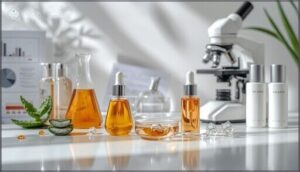
You’ve seen the promises on every bottle and tube, but what does the science actually say? Let’s cut through the marketing hype and look at what clinical research tells us about these ingredients and how they perform in real life.
Here’s what you need to know about proven results, realistic timelines, and what both dermatologists and everyday users are reporting.
Clinical Outcomes of Popular Ingredients
You’ll see solid proof in the numbers when you look at controlled trials. Hyaluronic Acid boosted skin hydration by 59% in just one hour, while Retinol Therapy reduced wrinkle severity over 12 weeks.
Niacinamide Benefits include cutting sebum and lightening melasma with fewer side effects than hydroquinone. Vitamin C Effects improve texture and pigmentation, and Ceramide Research shows measurable barrier repair.
These AntiAging ingredients deliver real, documented change.
How Long to See Noticeable Change
Timeframe Expectations matter more than most people realize. You’ll start seeing Noticeable Results from hyaluronic acid within hours, but deeper Skin Improvement needs two to four weeks. For actives like retinol and niacinamide:
- Surface texture smooths in 4–8 weeks
- Pigmentation fades around 8–12 weeks
- AntiAging benefits peak after six months
- Daily sunscreen protects gains long-term
Patience pays off with consistent Skincare Routine habits.
Dermatologist and Consumer Reviews
Trust builds on evidence. Dermatologist Insights reveal 93.8% compliance when physicians direct complete skin care regimens, while Consumer Feedback shows satisfaction varies—moisturizers score 4.5/5, but serums hit only 64%. Online Review Analysis drives younger buyers’ choices, yet nearly half stockpile unused products. Real Dermatologist Recommendations align Product Ratings with Skin Care Trends, bridging clinical outcomes and everyday Skincare Product Recommendations you’ll actually use.
| Category | Dermatologist Data | Consumer Feedback |
|---|---|---|
| Acne Regimens | 93.8% compliance rate | 70%+ value SPF moisturizers |
| Moisturizers | Ceramide formulas improve SCORAD scores | 4.5/5 satisfaction leader |
| Serums & Masks | Clinical wrinkle improvement 60–80% | 64% satisfied; 32% trust anti-aging claims |
Frequently Asked Questions (FAQs)
What are the best skincare products?
Your best skincare products depend on skin type and concerns. Hyaluronic acid boosts hydration, retinol addresses aging, and niacinamide balances oil.
Look for evidence-backed ingredients in formulations suited to your unique needs.
Which skincare products do customers prefer?
Customers gravitate toward facial cleansers and moisturizers—used by roughly 72% and 70% of consumers—while sunscreens and anti-aging serums rank high.
Natural formulations and recognizable ingredients drive skincare trends and consumer behavior today.
Is SkinCeuticals a good brand?
Yes, SkinCeuticals earns strong marks for product efficacy and brand reputation. Dermatologists consistently recommend it for evidence-based formulas—especially antioxidant serums—backed by clinical trials showing measurable skin benefits like wrinkle reduction and photoprotection.
How do you know if a skincare product is effective?
The best skincare products often show results slowly—your patience matters more than hype.
Look for clinical trials, objective skin analysis data, consistent user reviews, and proven ingredient research to confirm whether cosmetic products genuinely work.
Can I mix different skincare brands together?
You can, but proceed carefully. Mixing brands risks pH imbalance and ingredient interactions—like retinol with acids—causing irritation.
Over 31% of adverse reactions stem from combining different products, so layer mindfully.
How do seasonal changes affect skincare needs?
Your skin doesn’t recognize calendar dates, but it feels every humidity shift and temperature swing.
Winter strips moisture faster—transepidermal water loss nearly doubles—while summer heat floods sebaceous glands, demanding lighter hydrating formulas and diligent sunscreen protection.
Are expensive products always more effective?
Not necessarily. Clinical trials show drugstore and luxury skincare products with matched actives deliver similar results.
Premium ingredients, formulation quality, and your skin type matter more than price for anti-aging skincare efficacy.
What causes skincare products to stop working?
Your skin doesn’t really develop tolerance to skincare products. Most perceived failures trace back to barrier damage from overuse, product instability, environmental shifts, or simply inconsistent application of your hydrating skincare routine.
Should I refrigerate my skincare products?
Most skincare products remain stable at room temperature. Refrigeration benefits heat-sensitive formulas like vitamin C serums and retinoids, extending shelf life and preserving potency.
Store moisturizers and hydrating products away from direct heat for ideal skin health.
Conclusion
The more products you try, the less you might actually need. Armed with this effective skin care products review, you can finally ditch the guesswork and invest in formulas backed by clinical evidence.
Your skin won’t transform overnight, but consistency with the right ingredients—retinol, niacinamide, hyaluronic acid—produces outcomes you can see and measure.
Stop chasing trends. Start building a routine that respects both science and your skin’s unique needs.