This site is supported by our readers. We may earn a commission, at no cost to you, if you purchase through links. This content is for general informational and educational purposes only and is not a substitute for professional medical, dermatological, or nutritional advice.

Your skin doesn’t get a maternity leave. Within days of delivery, estrogen levels drop sharply, stripping away the moisture your skin relied on for nine months—leaving your face dry, sensitive, and sometimes breaking out worse than it did in high school.
Add sleep deprivation, night sweats, and the fluid demands of breastfeeding, and your skin barrier is genuinely working against the odds.
The good news: the right ingredients make a real difference, and plenty of them are safe for nursing mothers. Knowing which facial moisturizers for new mothers actually deliver—and which ones to quietly avoid—makes rebuilding your skin far less overwhelming.
Table Of Contents
- Key Takeaways
- Postpartum Skin Changes That Matter
- Best Ingredients for New Mothers
- Ingredients Nursing Mothers Should Avoid
- Best Facial Moisturizers Reviewed
- How to Choose The Right Moisturizer
- Frequently Asked Questions (FAQs)
- What is the safest face moisturizer during pregnancy?
- Can diet affect postpartum skin moisture levels?
- How long do postpartum skin changes typically last?
- Does stress from newborn care worsen skin dryness?
- Are facial oils safe to use while breastfeeding?
- Can sleep deprivation directly impact skin hydration?
- Conclusion
Key Takeaways
- After delivery, estrogen drops sharply, weakening your skin barrier and triggering dryness, breakouts, and melasma — all at once, often for months.
- Hyaluronic acid, ceramides, squalane, niacinamide, and azelaic acid are your safest, most effective ingredients for rebuilding hydration and barrier function while nursing.
- Retinoids, hydroquinone, salicylic acid in leave-on formulas, and chemical sunscreen filters like oxybenzone are best avoided — they absorb into your bloodstream and can reach your baby through breast milk.
- A simple three-step routine — fragrance-free cleanser, ceramide-rich moisturizer, mineral SPF — is genuinely enough to support postpartum skin recovery, even with three hours of sleep.
Postpartum Skin Changes That Matter
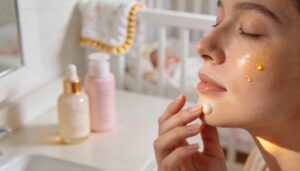
Your body just did something remarkable, and your skin is still catching up. After delivery, shifting hormones can throw your complexion into full chaos — dryness, breakouts, dark patches, and more.
Postpartum skin reacts so dramatically because hormonal shifts affect skin sensitivity at every stage of life, not just after birth.
Here’s what’s actually happening beneath the surface.
Hormonal Dryness and Dehydration
After delivery, estrogen drops fast — and your skin feels it immediately. Hormone-driven tightness, postpartum skin dryness, and sweat-induced dryness from night sweats all stack against you.
Breastfeeding raises your fluid intake needs, while poor blood circulation and electrolyte balance keep moisture from reaching skin’s surface.
Hyaluronic acid and ceramides are safe skincare ingredients for nursing mothers that genuinely restore hydration and barrier repair postpartum.
Estrogen stimulates hyaluronic acid production helps skin moisture retention.
Weakened Skin Barrier and Sensitivity
That hormone drop doesn’t just steal moisture — it weakens the skin barrier itself, leaving nerve endings closer to the surface and far easier to trigger. Suddenly, your favorite cleanser stings. That’s postpartum skin sensitivity at work.
A compromised barrier increases Transepidermal Water Loss, raises Skin Surface pH, and opens pathways for Irritant Penetration and even Microbial Access.
- Ceramides and hydrating ingredients support skin barrier repair from the inside out
- Higher skin surface pH accelerates enzyme activity that breaks down your skin’s natural protective layer
- Safe skincare ingredients for nursing mothers skip harsh triggers that overstimulated nerve endings can’t handle
Postpartum Acne Flare-ups
That weakened barrier also sets the stage for breakouts.
A hormone oil surge after delivery throws sebum production off balance, clogging pores fast.
Add the sleep deprivation impact and stress‑triggered breakouts, and your skin barely stands a chance.
Breastfeeding hormone effects can stretch the flare window for months.
Dietary triggers don’t help either.
Safe skincare ingredients for nursing mothers — found in noncomedogenic options like La Roche‑Posay Toleriane Double Repair Face Moisturizer and Vanicream Moisturizing Lotion — make postpartum acne treatment manageable without the guesswork.
Melasma and Uneven Skin Tone
Those same hormonal swings that trigger breakouts can also paint brown patches across your cheeks and forehead — that’s melasma.
Estrogen shifts activate pigment cells, and Sun Exposure Management becomes non‑negotiable because even brief UV or Visible Light Protection lapses worsen spots fast.
Genetic Risk Factors mean some skin reacts more intensely.
Anti‑Inflammatory Strategies using niacinamide, hyaluronic acid, and azelaic acid are dermatologist‑recommended postpartum skincare for Targeted Brightening Techniques safe for nursing.
Fine Lines From Moisture Loss
When your skin loses moisture, fine lines don’t just appear — they sharpen. For new moms, dropping estrogen accelerates trans-epidermal water loss, leaving skin tight, dull, and crepey.
That dehydration drains surface plumpness boost and disrupts epidermal water retention, making microtexture rougher and lines more visible. Hyaluronic acid and ceramides restore skin hydration and support fine lines reduction, even countering low environmental humidity impact.
Best Ingredients for New Mothers
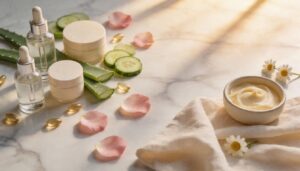
Not all moisturizer ingredients are created equal, especially when your body is still recovering from delivery.
Some work harder than others to rebuild what postpartum hormones took away.
Here are the ones worth knowing about.
Hyaluronic Acid for Lasting Hydration
Think of hyaluronic acid as a sponge your postpartum skin desperately needs — it binds water deep into depleted tissue, restoring what hormonal shifts have stripped away. As a safe skincare ingredient for nursing mothers, it’s a dermatologist-recommended cornerstone of postpartum skin care.
Hyaluronic acid acts like a sponge for postpartum skin, binding water deep into tissue to restore what hormonal shifts stripped away
Here’s why it works so well for new mothers:
- Molecular Weight Variants target different skin depths — high-weight hydrates the surface, low-weight reaches deeper layers.
- Multi-Weight Blends combine both to deliver layered, more complete skin hydration throughout the day.
- Film-Forming Hydration creates a thin seal that slows water evaporation, keeping moisture locked in longer.
- Cationic Hyaluronic Benefits include better adhesion to skin, so hydration actually stays where you need it.
- Layering with Hyaluronic under your moisturizer amplifies the effect, a simple trick backed by dermatologist advice for postpartum skin.
Ceramides for Barrier Repair
Your barrier is basically the brick-and-mortar of your face — ceramides are the mortar holding everything together. After delivery, that structure breaks down fast. Ceramides work by restoring the Lipid Lamellae, the dense layers between skin cells that lock moisture in and keep irritants out. That’s why they’re a cornerstone of postpartum skin care.
| Ceramide Feature | What It Does | Why It Matters for New Mothers |
|---|---|---|
| Ceramide Ratios | Balances lipid types in the barrier | Maintains normal Barrier Lipid Mix after hormonal shifts |
| Tri Lipid Balance | Combines ceramides, cholesterol, fatty acids | Speeds up barrier recovery in compromised skin |
| Ceramide Delivery | Emulsion-based formulas spread evenly | Ensures skin barrier support without heavy residue |
| Concentration (2–5%) | Routine to intensive repair range | Adjusts for mild or severe postpartum dryness |
| Multi-Ceramide Blends | Uses several ceramide types together | Broader repair versus single-type formulas |
For dermatologist advice on postpartum skin, look for moisturizers listing Ceramide 1 and Ceramide 3 — both are safe skincare ingredients for nursing mothers and fit easily into any postpartum skin care routine.
Squalane for Lightweight Moisture
Squalane is one of those rare postpartum skin care ingredients that works quietly and brilliantly.
Its sebum-mimicking lipids blend into your skin’s natural lipid film, cutting transepidermal water loss and boosting extended hydration for up to 12 hours.
It’s lightweight, non-comedogenic, and offers oxidation-resistant stability — making it one of the safest skincare ingredients for nursing mothers to add to any postpartum skin care routine.
Niacinamide for Redness and Balance
Niacinamide is one of the hardest-working ingredients new moms can reach for. This vitamin B3 derivative delivers redness calming by modulating inflammatory signals, while its barrier lipid boost — ceramides and fatty acids — helps rebuild what hormonal shifts have broken down.
It also manages oil control and pore refinement without clogging pores.
Fragrance-free, safe skincare ingredients for nursing mothers, and dermatologist recommended products often feature it for good reason: layering compatibility makes it easy to stack with everything else in your routine.
Azelaic Acid for Acne and Melasma
Azelaic acid is quietly one of the best-kept secrets in safe skincare ingredients for nursing mothers. At 10–15%, it addresses postpartum acne and melasma through three pathways:
- Clogged pore reduction by normalizing skin cell turnover inside pores
- Anti-inflammatory action that calms redness without antibiotics — a true non-antibiotic alternative
- Pigment inhibition mechanism that fades melasma patches gradually
The Ordinary Azelaic Acid Suspension 10 is a well-tolerated starting point, though mild skin tolerability strategies — like applying every other day initially — help sensitive postpartum skin adjust.
Zinc Oxide and Titanium Dioxide Benefits
While azelaic acid works from within, zinc oxide and titanium dioxide protect from the outside.
These mineral sunscreen ingredients sit on top of your skin — no absorption, no hormonal interference — making them ideal for safe skincare during lactation.
Their UV Shielding, Sensitive Skin Calming, and Barrier Strengthening properties come built in, and their Non-comedogenic Formula means new moms won’t clog pores.
Add Water-Resistant Protection, and you’re covered.
Ingredients Nursing Mothers Should Avoid
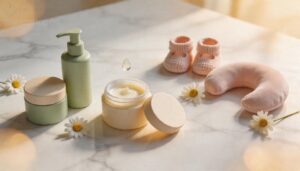
Not every ingredient that works wonders in your pre-baby routine is safe to use while nursing. Some common skincare actives can absorb into your bloodstream and potentially reach your baby through breast milk.
Here are the ones worth keeping off your shelf for now.
Retinoids and Vitamin a Derivatives
Retinoids are off the table while nursing — and that means all of them. From low-potency retinol to prescription tretinoin, every vitamin A derivative follows metabolic conversion pathways that can transfer into breast milk.
Retinoid potency levels vary by formulation type, but none are considered safe during lactation. Skip them entirely and protect your postpartum skin care regimen with gentler, proven alternatives.
Hydroquinone and Skin-lightening Agents
Like retinoids, hydroquinone belongs off your postpartum skin care regimen while nursing. It works through tyrosinase inhibition — blocking melanin production to fade melasma and hyperpigmentation — but its high systemic absorption makes it risky during lactation.
Watch for these concerns with hydroquinone:
- Ochronosis risk from extended use causes lasting bluish-black discoloration
- Systemic absorption can reach breast milk
- Regulatory concerns limit over-the-counter availability
- Prescription dosage requires dermatologist recommended postpartum skincare guidance
- Alternative brighteners like azelaic acid 10% treat hyperpigmentation safely
Salicylic Acid in Leave-on Formulas
Salicylic acid is another ingredient to set aside for now. It’s oil-soluble, meaning it penetrates deep into pores — great for acne pore targeting normally, but its leave-on formulas maintain prolonged skin contact that raises absorption concerns during breastfeeding.
Even at 2% with careful pH optimization, postpartum skin care regimens skip it entirely, favoring gentler, pregnancy-safe alternatives for new moms.
Oxybenzone and Avobenzone Concerns
Chemical-based sunscreens deserve a closer look when you’re nursing. Oxybenzone and avobenzone both show measurable systemic absorption — they enter your bloodstream after application.
Beyond that, oxybenzone raises endocrine disruption concerns and has triggered regulatory bans in places like Hawaii over reef safety issues.
Chemical byproducts in chlorinated water add further pause.
Mineral sunscreen benefits for expecting mothers are clear: zinc oxide and titanium dioxide offer safe ingredients during pregnancy without these tradeoffs.
Added Fragrance and Common Irritants
Fragrance allergens deserve real caution postpartum, when your skin barrier is already running on empty. That single word — "fragrance" — can hide dozens of contact dermatitis risk chemicals, including essential oil triggers like citrus compounds.
Preservative sensitizers and solvents increase skin penetration, making reactions worse. Stick to fragrance-free, paraben-free formulas with safe ingredients during pregnancy — and always choose noncomedogenic moisturizers to avoid teratogenic chemicals hiding in plain sight.
Best Facial Moisturizers Reviewed
Finding the right moisturizer postpartum doesn’t have to feel overwhelming. Each pick below was chosen with nursing-safe ingredients, barrier support, and real skin concerns in mind.
Here’s what’s worth your attention.
Belli Vitamin C Facial Moisturizer Review
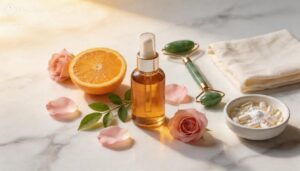
Belli’s Vitamin C Facial Moisturizer earns its place on the postpartum shelf. Its vitamin C antioxidant complex targets hyperpigmentation and helps collagen — two real wins for postpartum skin recovery.
The lightweight texture sits well under mineral sunscreen without pilling. Ascorbic acid stability is decent for the price point, and nursing-safe packaging keeps hands clean.
Solid cost performance for a dermatologist-recommended option.
Bella B Pregnancy Safe Face Lotion Review
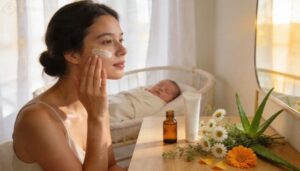
If you want something organic and no-fuss, Bella B delivers. This 3.4 oz lotion is paraben‑free, fragrance‑free, and built on natural oils and plant extracts — exactly the kind of safe ingredients for lactating mothers that matter most right now.
- Texture feel is lightweight, non‑greasy, and absorbs quickly
- Ingredient transparency is clear: no artificial fragrance, no parabens
- An accessible price point makes it practical for new moms on a budget
Best for Dry Postpartum Skin
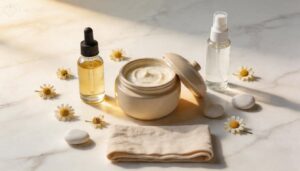
Dry postpartum skin needs more than a quick splash of moisturizer — it needs layers that actually hold. ceramide-rich cream with hyaluronic acid works as your Sealant Layer, locking in water and rebuilding what hormones stripped away.
Add a Lightweight Oil Serum with squalane, then a Hydrating Facial Mist mid-day.
These postpartum dry skin solutions fit any postpartum skin care routine without adding stress.
Best for Sensitive Nursing Skin
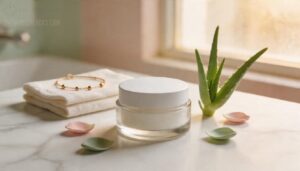
Sensitive nursing skin is a lot like a raw nerve — it picks up on everything. For you, less is genuinely more.
Look for a fragrance-free, paraben-free, non-comedogenic moisturizer built on a silicone-free base with low-irritant actives like ceramides and niacinamide.
minimalist ingredient list, rapid absorption, and pH-balanced care help nursing mothers manage skin sensitivity without the guesswork.
Best for Acne-prone New Mothers
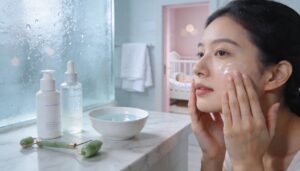
Breakouts after birth can feel like a cruel twist — you’re sleep-deprived, and now your skin is acting up too. Postpartum acne responds well to NonComedogenic Moisturizers for Pregnant Skin that balance hydration without clogging pores.
Look for gentle gel moisturizers with a non-oily finish, hypoallergenic textures, and niacinamide. Nighttime barrier repair formulas with ceramides help calm skin sensitivity while spot-treating moisturizers tackle active breakouts.
Best for Brightening Postpartum Melasma
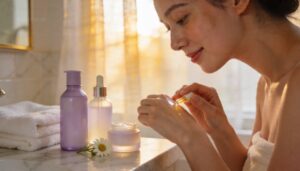
Melasma is one of the trickier postpartum skin issues to manage — hormonal changes trigger it, but light keeps it going. A moisturizer with niacinamide, azelaic acid, and hydration-boosted brightening ingredients works steadily on pigment while keeping your barrier calm.
Look for Blue Light Filtering tinted mineral SPF layered over pigment-targeting peptides. Consistent sun exposure timing and your postpartum skincare routine do most of the heavy lifting.
How to Choose The Right Moisturizer
Picking the right moisturizer postpartum doesn’t have to feel overwhelming, even when you’re running on three hours of sleep. A few key factors make all the difference between a product that works and one that sits untouched on your shelf.
Here’s what to look for before you buy.
Fragrance-free and Non-comedogenic Labels
Labels like "fragrance-free" and "non-comedogenic" aren’t just marketing fluff — for new moms, they’re your first filter. Here’s what to check:
- Fragrance-free means no added scent ingredients, unlike "unscented," which can still hide fragrances.
- Non-comedogenic signals pore-friendly formulation, helpful for postpartum acne-prone skin.
- Ingredient list analysis confirms what labels actually promise.
- Dermatologist-recommended postpartum skincare often pairs both claims together for sensitive skin protection.
Day Vs. Night Moisturizer Needs
Once you’ve nailed your labels, the next step is matching your moisturizer to the time of day.
Formulation Lightness matters here — daytime calls for a lotion like La Roche-Posay Toleriane Double Repair Face Moisturizer, which absorbs fast and won’t interfere with sunscreen.
Nights are for Hydration Intensity: richer creams like CeraVe Skin Renewing Night Cream complete your Skin Comfort Cycle, supporting Active Scheduling of repairs while you sleep.
Pairing Moisturizer With Mineral Sunscreen
Moisturizer goes on first — always. Apply a nickel-sized amount of La Roche-Posay Toleriane Double Repair Face Moisturizer, then wait one to two minutes for full absorption. Wait before layering your sunscreen. This Pilling Prevention step matters.
For safe sunscreen for breastfeeding moms, ALASTIN Skincare HydraTint Pro Mineral Sunscreen SPF 36 or EltaMD UV Clear Face Sunscreen offer ideal texture compatibility, coverage amount, and layering timing without irritating postpartum skin issues.
Simplifying a Postpartum Skincare Routine
When sleep is scarce, a Three Step Routine — cleanse, moisturize, SPF — is all you really need. This Barrier Focused Approach addresses postpartum skin issues without overwhelming you.
- Morning Night Simplicity: cleanse and moisturize nightly
- Minimalist Product List: fewer products, fewer reactions
- Time Saving Tips: one moisturizer for both AM and PM
- Helps postpartum skin recovery strategies, acne, and melasma management
Application Tips for Busy New Mothers
Timing after cleansing matters more than you’d think — apply your moisturizer while skin is still slightly damp to lock in hydration fast.
Pump dispenser use keeps things hygienic and quick.
Layering technique is simple: one pea-sized amount, pressed gently in.
Fragrance-free, paraben-free picks like CeraVe Skin Renewing Night Cream or La Roche-Posay Toleriane Double Repair Face Moisturizer fit perfectly into any Minimalist Product List for Nighttime Quick Hydration.
When to Ask a Dermatologist for Help
Some postpartum skin concerns go beyond what a moisturizer can fix.
If you notice any of the following, it’s time to call a board-certified dermatologist:
- Sudden Rash, Severe Hives, or Persistent Itching that don’t ease up
- Mole Changes or new pigmented spots developing quickly
- An Unhealing Ulcer or worsening postpartum hormonal imbalance affecting your skin
Dermatologist-recommended postpartum skincare and postpartum skin recovery strategies start with the right diagnosis.
Frequently Asked Questions (FAQs)
What is the safest face moisturizer during pregnancy?
Finding a truly safe option doesn’t have to feel overwhelming.
Look for fragrance-free, paraben-free formulas with hyaluronic acid and ceramides — dermatologist-recommended, hypoallergenic-certified, and non-comedogenic — to keep pregnancy skin calm and hydrated.
Can diet affect postpartum skin moisture levels?
Yes, diet genuinely affects postpartum skin moisture levels.
Omega-3 intake from salmon and walnuts strengthens your postpartum skin barrier, while hydration through water and antioxidant-rich foods like berries fuel postpartum skin recovery from within.
How long do postpartum skin changes typically last?
Ironically, your skin may look its worst just when you have the least time to fix it.
Most postpartum skin changes ease within a Three‑Month Window, with Six‑Month Stabilization common for dryness and acne.
Does stress from newborn care worsen skin dryness?
Absolutely, it does.
Stress hormone surges and sleep deprivation impact your skin barrier postpartum, accelerating dryness.
Emotional cortisol levels rise with psychological fatigue, disrupting routine and slowing postpartum skin recovery strategies naturally.
Are facial oils safe to use while breastfeeding?
facial oils are generally safe while breastfeeding. Since they stay on the skin’s surface, milk transfer risk is low.
simple formulas, patch test first, and wash your hands after applying.
Can sleep deprivation directly impact skin hydration?
Sleep deprivation directly disrupts skin hydration.
Barrier TEWL increase, inflammatory cytokines, and circadian rhythm disruption all reduce moisture retention—compounding postpartum skin concerns and slowing postpartum skin barrier restoration when your body needs recovery the most.
Conclusion
Imagine skin thriving again, with the right facial moisturizers for new mothers. As you navigate postpartum changes, prioritize gentle, effective ingredients like hyaluronic acid and ceramides.
Choose a safe, nourishing facial moisturizer that works for you, and rediscover radiant, healthy-looking skin, with a reliable facial moisturizer for new mothers by your side, every step of the way, for a brighter you.