This site is supported by our readers. We may earn a commission, at no cost to you, if you purchase through links. This content is for general informational and educational purposes only and is not a substitute for professional medical, dermatological, or nutritional advice.

Most people blame their skin for post-shave redness. Dry skin, sensitive skin, bad technique—the razor rarely gets accused.
But within minutes of touching your face, a used blade starts collecting bacteria, dead skin cells, and trapped moisture. That combination breeds biofilm: a sticky microbial layer that turns every subsequent shave into a small infection risk.
A contaminated blade drags, nicks, and pushes bacteria directly into open hair follicles. Learning to disinfect your razor and reduce inflammation isn’t complicated—but the difference it makes to your skin is hard to argue with.
Table Of Contents
- Key Takeaways
- Why Razor Disinfection Matters
- Signs Your Razor is Contaminated
- Supplies for Safe Razor Cleaning
- Rinse The Razor The Right Way
- Remove Buildup Without Damaging Blades
- Disinfect With Alcohol or Peroxide
- Use Bleach, Barbicide, or Heat Safely
- Try Natural Disinfecting Alternatives
- Dry and Store Razors Properly
- Reduce Inflammation After Every Shave
- Frequently Asked Questions (FAQs)
- Conclusion
Key Takeaways
- A used blade collects bacteria and dead skin within minutes, forming biofilm that turns every shave into a low-grade infection risk.
- Rinsing every 3–4 strokes, soaking in 70% isopropyl alcohol for 5–10 minutes, and patting dry before storage removes the contamination that causes razor burn and folliculitis.
- Storing your razor upright in a ventilated holder outside the shower — not on the shower shelf — is the single most overlooked step in preventing bacterial regrowth between shaves.
- Replace your blade every 5–7 shaves, sooner if you have coarse hair or reactive skin; tugging is your signal that the edge is already damaging your skin barrier.
Why Razor Disinfection Matters
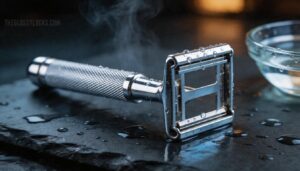
Your razor touches broken skin every time you shave — that’s not a minor detail. Bacteria don’t wait long to set up a colony on a wet blade.
Keeping your blade clean between shaves matters more than most people realize — proper razor cleaning and infection prevention starts with a few simple habits that take seconds.
Here’s what’s actually happening and why it affects your skin more than you might think.
How Biofilm Forms on Blades
Within minutes of your last shave, bacteria are already setting up camp on the blade. Tiny scratches and nanoscale niches in the metal give them a foothold — that’s microbial attachment in action. Then they secrete an EPS matrix, basically biological glue, locking the biofilm in place. Surface roughness makes it worse.
Three things accelerate biofilm formation on razor blades:
- Moisture trapped in blade gaps feeds bacterial growth
- Skin proteins create a conditioning layer that attracts microbes
- The detachment cycle spreads contamination to new blade surfaces
The formation of extracellular polymeric substances helps the biofilm adhere strongly to the razor surface.
Why Dirty Razors Trigger Razor Burn
Biofilm formation on razor blades isn’t just a hygiene issue — it directly triggers razor burn.
High microbial load combined with residue friction turns each stroke into a rough scrape.
Edge corrosion from moisture retention drags against skin instead of cutting cleanly, causing skin barrier disruption.
mechanical stress, layered with microbial contamination, creates the redness and sting you feel minutes after shaving.
Folliculitis, Ingrowns, and Infection Risk
That skin barrier damage doesn’t stop at redness. When micro-cuts open hair follicles, bacteria — especially Staphylococcus aureus — move straight in. The result is folliculitis: red, pus-filled bumps clustered around follicles.
Ingrown hairs follow the same path, especially with curly hair. biofilm-coated blade cross‑contamination undermines your immune health and skin barrier integrity with every single stroke.
How Clean Blades Reduce Inflammation
A clean blade does more than just cut cleanly — it actively protects your skin. Consistent blade sanitation lowers microbial load reduction at the source, meaning fewer pathogens reach open follicles. Less debris means reduced mechanical friction, which directly enhances skin barrier integrity.
Here’s what that looks like in practice:
- Less drag — a clean edge glides, cutting hair without grinding skin
- Lower cytokine release — fewer microbes mean less immune response, less redness
- Infection risk reduction — dry storage keeps bacteria from resettling between shaves
Signs Your Razor is Contaminated
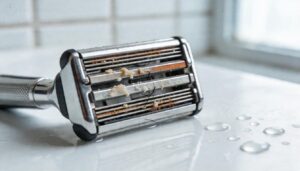
Your razor won’t always tell you it’s dirty — you have to know what to look for. Some signs are obvious, others are easy to miss until your skin starts reacting.
Here’s what to watch for before your next shave.
Visible Hair, Soap Scum, and Skin Flakes
Your razor collects more than you think between shaves.
| Contaminant | Where It Hides | What It Causes |
|---|---|---|
| Hair | Hair Entrapment Zones between blades | Blade Edge Occlusion, dragging |
| Soap scum | Soap Film Layers on cartridge gaps | Reduced sharpness, sticky residue |
| Dead skin cells | Micro-Particle Adhesion along edges | Skin Flake Buildup, increased friction |
Cleaning removes debris before it compounds.
Dry storage slows recontamination.
Rust, Pitting, or Blade Discoloration
Visible corrosion tells you something important — the blade’s edge integrity is already compromised. Orange rust spots, small pits, or rainbow discoloration aren’t cosmetic; they signal real metal surface damage.
Chloride exposure from tap water and cleaning products accelerates blade corrosion fast. Pitting traps bacteria that disinfectants can’t reach.
Don’t try rust removal on a damaged blade. Dry storage and proper airflow in razor drying are your best preventive coatings against this.
Bad Odor or Sticky Residue
That sour, stale smell isn’t random — it’s a signal. Microbial Odor Sources include bacteria breaking down trapped oils and skin cells into volatile compounds.
Sticky Residue Types range from soap scum to dried body oils, feeding protective biofilm growth. Moisture Retention accelerates this cycle fast.
Poor Ventilation Impact compounds it. Surface Film Breakdown only happens with proper biofilm removal and dry storage in a ventilated holder.
More Tugging, Redness, and Bumps After Shaving
Tugging is a red flag — not just annoying friction. A clogged or dull blade creates micro-clip trauma with every stroke, disrupting your skin barrier recovery before it even starts. Wrong blade angle or shaving against hair growth direction makes it worse.
The result? Razor burn, folliculitis, and ingrown hairs. Consistent disinfection methods for razors keep skin irritation from becoming your new normal.
Supplies for Safe Razor Cleaning
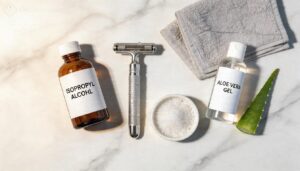
You don’t need a cabinet full of products to clean your razor properly. A few basic supplies — most of which you probably already own — are all it takes to keep your blade safe and your skin clear.
Here’s what to have on hand before you start.
Lukewarm Water and Mild Soap
You don’t need a special kit — just two things you likely already own.
Warm water between 95–105°F is your starting point. That temperature range — lukewarm softening at work — loosens hair, soap scum, and skin flakes without warping the blade coatings. Pair it with a mild soap that has a pH between 5.5 and 7.0. That soap pH balance matters: it cleans without stripping blade coatings or disrupting your skin microbiome preservation goals.
- fragrance-free formulas for better surfactant compatibility with stainless steel.
- Baby shampoo works well as a low‑irritation alternative.
- Avoid dish soaps — they’re too alkaline and damage blade coatings.
- Lather fully to reach microscopic gaps between blades.
- This simple cleaning protocol manages 85% of organic debris in one pass.
Done right, this alone manages most of the heavy lifting for skin irritation prevention and blade edge longevity.
Soft Toothbrush or Silicone Cleaning Pad
A soft-bristle toothbrush is one of the smartest tools for razor hygiene — and you probably already own one. Its bristle flexibility lets it reach tight blade gaps where debris hides.
A silicone pad works faster across wider surfaces and lasts two to three years, making it a clear cost efficiency win. Both prevent skin irritation prevention failures, without scratching your blade’s finish.
70% Isopropyl Alcohol
Once your blade is physically clean, 70 isopropyl alcohol is your strongest everyday disinfectant. Its lower evaporation rate gives it better contact time on metal than higher concentrations — meaning it actually works longer.
Pour some into a small cup and soak the razor head for five to ten minutes. Use this in a ventilated area; flammability precautions aren’t optional.
Material compatibility is excellent with stainless steel blades.
3% Hydrogen Peroxide
Alcohol isn’t your only option. 3% hydrogen peroxide works well as a backup disinfectant — soak your razor head for 10 minutes, and it combats most bacteria and fungi reliably. Its microbial efficacy is solid without being harsh on stainless steel.
One caveat: light sensitivity shortens shelf life fast, so store it in a dark bottle. Always rinse after soaking to protect the blade.
Clean Towel and Ventilated Holder
Once disinfection is done, drying matters just as much. Pat the blade gently using a lint‑free towel — microfiber works best. Aggressive wiping dulls the edge fast.
Then place your razor in a ventilated holder outside the shower:
- Choose a ventilated rack design with open airflow channels
- Position it away from steam — holder placement strategy matters
- Store upright for blade moisture management through natural drainage
- Keep the surrounding area dry for effective dry storage and moisture control
Rinse The Razor The Right Way

Rinsing sounds simple, but most people get it wrong. The water temperature, timing, and technique all affect how clean your blade actually gets. Here’s what to do at each step.
Best Water Temperature for Rinsing
Lukewarm water — around 37°C (98.6°F) — hits the sweet spot for Ideal Warmth without stripping your Skin Barrier Protection.
Hot water alone isn’t enough justification for the tradeoff: it loosens debris but accelerates Corrosion Mitigation challenges and irritates sensitive skin.
A steady lukewarm water rinse helps Blade Edge Preservation and meaningful Microbial Reduction, clearing residue efficiently without the downsides of temperature extremes.
How Long to Rinse After Shaving
Thirty seconds is your target — that’s your ideal rinse duration and blade hygiene window combined. Hold the razor under lukewarm water, letting it flush hair, cream, and debris fully.
This skin calming interval also matters for acne preventive timing and sensitive skin timing: lingering residue raises infection risk fast. Don’t rush it.
Clean water, 30 seconds, every single shave.
Why Rinsing Every Few Strokes Helps
Rinsing every 3–4 strokes does more than you’d think. Each pass deposits hair, gel, and dead skin onto the blade — that’s instant microbial load building up in real time.
Cleaning removes debris before it hardens, giving you blade friction reduction and better cutting efficiency stroke after stroke. Skip it, and you’re dragging grime across your skin barrier protection zone.
That’s razor burn waiting to happen.
Checking Blade Gaps for Trapped Debris
Even a quick rinse can miss what’s hiding between blade edges. Use these four checks to catch what you’d otherwise shave into your skin:
- Light Angle Check — Tilt the cartridge 45° under bright light; shadows reveal trapped soap scum instantly.
- Magnification Inspection — Your phone’s zoom catches biofilm and skin cells smaller than 0.5 mm.
- Tapping Debris Removal — Three to five firm taps, blades down, dislodge roughly 80% of visible buildup.
- Toothbrush Gap Scrub — Five to ten light strokes per gap; cleaning removes debris that tapping misses.
Residue Mapping — noting where buildup concentrates — helps you spot patterns before microbial contamination takes hold.
Remove Buildup Without Damaging Blades
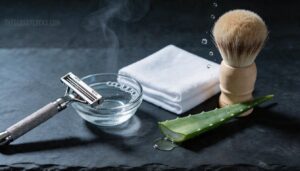
Rinsing gets the obvious stuff off, but some buildup clings deeper — oil, dead skin, and product residue that water alone won’t touch. The way you clean matters just as much as whether you clean at all.
Here’s how to remove that buildup without sacrificing your blade’s edge.
Washing With Mild Soap
A little soap goes a long way in your shaving hygiene routine. Use a mild soap with water — fragrance‑free works best for skin pH balance and won’t leave a harsh mild soap residue on the blade.
Foam penetration reaches tight gaps, lifting dried cream and skin flakes.
Good soap and water cleaning also helps blade lubrication by removing drag‑causing buildup.
| Soap Type | Skin Irritation Risk | Best For |
|---|---|---|
| Fragrance-free mild | Very low | Sensitive skin |
| Eco-friendly soap | Low | Daily hygiene routine |
| Antibacterial bar | Moderate | Occasional deep clean |
Gentle Swirling Instead of Scraping
Think of your blade as a scalpel — force ruins it.
Gentle circular motion benefits the edge by letting the antiseptic solution do the heavy lifting. Swirl efficiency optimization means, slow, controlled loops loosen debris without dragging metal against metal.
That reduced microabrasion risk matters: micro-scratches invite bacteria and worsen shave irritation, breaking down your skin barrier faster than a dull blade ever could.
Cleaning The Underside and Blade Gaps
The underside is where most people go wrong. Hair, dried soap, and skin flakes pack into blade gaps and block Gap Water Flow completely.
Disassemble your safety razor, then use the Brush Angle Technique — hold a soft toothbrush at 45 degrees and work along blade edges in short strokes. The Vibration Agitation Method and Compressed Air Blow both help dislodge stubborn debris from seams, your rinse water never reaches.
Mistakes That Dull The Blade Faster
Cleaning right is half the battle. How you handle the blade afterward matters just as much.
- Over‑pressing blade edges against a towel rounds the cutting surface quickly.
- Scraping hard objects across the blades chips the edge immediately.
- Skipping rinse lets soap residue dry into drag‑causing buildup.
- Hot water soaks weaken protective coatings over time.
Harsh abrasives do similar damage. Stick to gentle methods — your blade replacement schedule will stretch further.
Disinfect With Alcohol or Peroxide
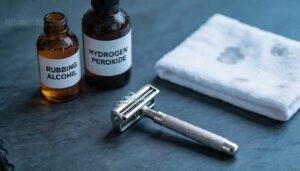
Once your razor is rinsed and free of debris, it’s time to kill what you can’t see. Two options do the job well: rubbing alcohol and hydrogen peroxide.
Here’s how to use each one correctly.
How to Soak in Rubbing Alcohol
Soaking your razor in 70% isopropyl alcohol is the fastest way to kill surface bacteria. Pour rubbing alcohol into a small glass or plastic cup — Container Material Choice matters here; skip metal.
Follow these Immersion Depth Guidelines:
| Situation | Soak Duration | Notes |
|---|---|---|
| Routine shave | 3–5 seconds | Quick dip works |
| Weekly clean | 5–10 minutes | Full disinfection |
| Post-nick | 15 minutes | Extended kill time |
Observe Ventilation Safety Measures — open a window. Consider Glove Protective Use if disinfecting multiple razors. Follow the Alcohol Disposal Procedure: pour used rubbing alcohol down the drain with running water. Proper postshave skin care starts here — disinfecting your razor directly reduces skin irritation before the blade even touches you.
When to Use Hydrogen Peroxide
Alcohol manages Rapid Bacterial Kill well — but sometimes you need something different.
Hydrogen peroxide, at Low Concentration Use of 3%, works best when Visible Contamination Check reveals grime that rinsing didn’t clear.
It’s a smart option for Post-Shave Disinfection when alcohol isn’t available. Use it for Metal Blade Safety concerns too:
- Razor looks visibly dirty after rinsing
- Folliculitis or razor burn keep recurring
- You’ve nicked yourself during shaving
- Alcohol irritates your skin post-shave
- You’re alternating disinfection methods for razors weekly
Ideal Soak Times for Each Method
Timing is everything here.
For isopropyl alcohol, your alcohol soak duration is 5–10 minutes — keep the blade fully submerged the whole time.
Peroxide contact time runs 10–15 minutes for hydrogen peroxide to work properly.
Barbicide immersion length and bleach soak timing both require exactly 10 minutes.
Natural soak intervals are less precise, but 10 minutes is a safe standard.
Rinsing After Chemical Disinfection
Once the soak is done, don’t skip the post-disinfection rinse — it’s not optional.
Chemical residue elimination matters because leftover alcohol or bleach irritates your skin barrier on the next shave. Rinse their razor under lukewarm water for 20–30 seconds, rotating the head to hit every angle.
- Use rinse angle technique: tilt the blade to direct water into gaps
- Blade gap flushing clears hidden chemical pockets
- Rinse pressure settings should be moderate — strong enough to flush, gentle enough to protect the edge
- Shake vigorously after rinsing
- Then dry properly before storage — dry storage and moisture control prevent bacterial regrowth
Which Option is Better for Sensitive Skin
For sensitive skin, the choice comes down to one thing: how much your skin barrier can take after shaving.
| Factor | Isopropyl Alcohol | Hydrogen Peroxide |
|---|---|---|
| Irritation threshold | High sting risk | Lower sting risk |
| Residue dryness | Significant | Minimal |
| Comfort after sanitizing | Harsh on raw skin | Gentler overall |
Peroxide wins for postshave skin care. It cleans the razor without the allergy potential or moisture retention loss that alcohol causes.
Use Bleach, Barbicide, or Heat Safely
Alcohol and peroxide aren’t your only options.
Bleach, Barbicide, and boiling water can all disinfect a razor effectively — but each one comes with rules you shouldn’t skip.
Here’s what you need to know before using any of them.
Safe Dilution for Bleach
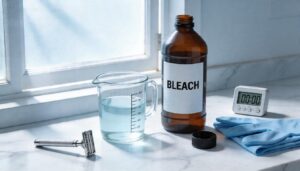
Bleach is powerful — but concentration matters. CDC dilution ratio for home disinfection is 4 teaspoons of bleach per quart of water.
Always use cold water mixing, since heat breaks down sodium hypochlorite fast. Make a fresh solution, timing it daily; mixed bleach loses strength within 24 hours.
Work in proper ventilation, wear gloves, and store unmixed bleach in an opaque container away from sunlight.
Barbicide Soaking Guidelines
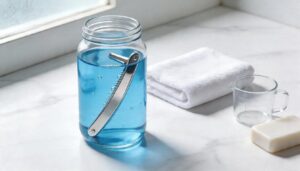
Barbicide is a salon-grade disinfectant with a clear protocol — and it works only when you follow it exactly.
- Mix at a 1:16 ratio for proper concentration
- Pre-Soak Cleaning comes first: wash the razor with soap, rinse, and dry
- Contact Time is 10 full minutes of complete immersion
- Soak Duration Limits apply — don’t leave metal tools soaking indefinitely
- Post-Soak Drying prevents rust; never store tools wet
- Solution Renewal means changing jar solution daily for infection prevention
When Boiling Water is Appropriate

Boiling water disinfection works well for all-metal safety razors — but only under the right conditions. Think of it like an Emergency Water Advisory rule: heat kills vegetative bacteria in five minutes at a full rolling boil.
At higher elevations, Altitude Boiling Time extends to three minutes due to lower boiling points. After boiling, Post-Boil Cooling and Safe Container Storage prevent recontamination before use.
Razors That Should Not Be Boiled

Not every razor can handle boiling water disinfection.
Gold or nickel plating risks Plated Blade Damage — heat causes Sealed Finish Degradation, inviting Heat-Induced Corrosion beneath the surface.
Wood Handle Swelling cracks and warps wooden grips.
Plastic Deformation Risk is real too — Plastic Components soften under temperature shock damage, misaligning the blade.
Electric razors should never be boiled. Stick to alcohol for these.
Preventing Corrosion After Sanitizing
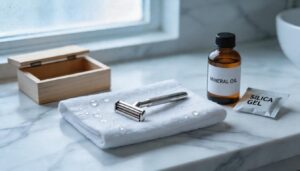
Once sanitizing is done, don’t let moisture linger. Rapid Blade Drying with a lint-free towel removes surface water before rust starts.
Follow with a Chloride-Free Rinse — tap minerals accelerate metal corrosion quickly.
Apply a thin Protective Oil Film, then store in a Low-Humidity Cabinet with a Silica Gel Desiccant nearby.
dry storage techniques make blade rust prevention straightforward.
Try Natural Disinfecting Alternatives
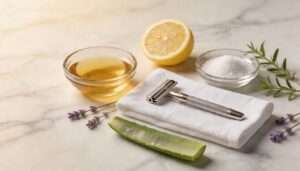
Not everyone wants to reach for a chemical bottle every time they clean their razor. There are gentler options sitting in most kitchens and bathrooms that can do a solid job.
Here’s what actually works.
Tea Tree Oil Soak
Tea tree oil works as a gentle option when alcohol feels too harsh. Its active compound, terpinen-4-ol, gives it real antimicrobial efficacy for skin infection prevention.
Use a dilution ratio of about 10 drops per basin of warm water — adding Epsom salt helps disperse the oil evenly. Soak time runs 10 minutes.
Always do a skin patch test first; oxidized oil can irritate.
White Vinegar for Mineral Buildup
White vinegar deals with something alcohol can’t — mineral buildup. Hard water leaves calcium and magnesium deposits in blade crevices, dulling edges and trapping bacteria. The acid concentration in plain vinegar, around pH 2.4, triggers a limescale reaction that dissolves those crusty films in minutes.
The dilution ratio is simple: equal parts vinegar and warm water. Soak for 60–90 seconds after shaving. For stubborn rust spots, use undiluted vinegar for five minutes. Stainless steel coating compatibility is solid — stainless steel deals with brief exposure fine. Rinse thoroughly after.
It’s a genuinely eco-friendly alternative to commercial descalers.
- Restores smoothness hidden under chalky mineral buildup
- Targets blade corrosion before rust spots become permanent
- Costs almost nothing compared to replacement cartridges
- Leaves zero toxic residue — safe for skin contact after rinsing
- Extends blade life up to 40 percent with weekly use
Baking Soda Paste for Residue
Vinegar deals with minerals. Baking soda deals with the rest — shave cream residue, skin oils, and stubborn grime that clings between blade gaps.
Mix three parts baking soda with one part warm water until you get a thick paste consistency that stays put. Apply the paste with an old toothbrush. Its mild abrasive action lifts residue without scratching — surface compatibility holds on stainless steel.
Rinse completely. Good razor hygiene, simple ingredients.
Apple Cider Vinegar as an Occasional Option
Apple cider vinegar won’t replace alcohol, but it earns a spot in your rotation. Its acetic acid strength — around 5 to 6 percent — delivers a real antimicrobial spectrum against bacteria and fungi. Dilution ratios matter here.
For disinfecting your razor occasionally:
- Mix one part vinegar with one part water
- Soak the blade for 5 to 10 minutes
- It dissolves soap scum and mineral deposits without chrome damage
- Helps skin pH restoration after contact
- Contributes a mild blade longevity boost by cutting corrosive buildup
Rinse thoroughly afterward. Solid natural remedy, used smartly.
Limits of Natural Disinfectants
Natural remedies like tea tree oil and vinegar have real limits you should know.
| Limit | What It Means | Why It Matters |
|---|---|---|
| Spore Inactivation Limits | Natural disinfectants don’t kill bacterial spores | Stubborn microbes survive |
| Organic Matter Shielding | Debris blocks contact with metal | Disinfectant can’t reach microbes |
| Acidic Corrosion Risk | Repeated vinegar use degrades blades | Shortens razor lifespan |
Contact Time Requirement and Volatile Compound Evaporation further undercut natural disinfectants for shaving tools — aloe vera soothes but doesn’t sanitize.
When infection risk is real, reach for alcohol.
Dry and Store Razors Properly
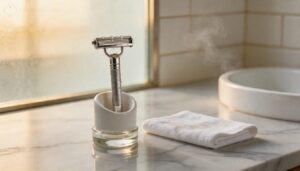
Cleaning your razor is only half the job. How you dry and store it decides whether bacteria move back in before your next shave. Here’s what actually works.
Pat-drying Without Dulling The Edge
Don’t wipe your blade like you’re drying a countertop. Aggressive rubbing causes blade dullness faster than most people realize.
Instead, use edge-friendly patting — press a clean, lint-free towel gently against the blade with controlled towel pressure.
Drying timing optimization matters here: start within seconds of rinsing. A few firm shakes first handle visible water, then gentle edge preservation patting finishes blade moisture extraction without scraping those thin, vulnerable edges.
Why Humidity Increases Bacterial Growth
Your bathroom is basically a petri dish. Humidity above 60% keeps surface liquid films on your blade long after you’ve rinsed — and bacteria exploit that moisture retention hard.
Your bathroom is a petri dish, and every drop of humidity left on your blade is an open invitation for bacteria
Reduced evaporation means nutrients stay dissolved on the metal, giving microbes exactly what they need to multiply.
Airflow stagnation makes it worse. Without moving air, microbial growth accelerates, turning a damp blade into a contamination risk fast.
Storing Razors Outside The Shower
The shower zone stays humid long after you’ve turned off the water.
Move your razor to a cabinet for dry storage — somewhere with low humidity and stable airflow in razor drying. Keep it separate from towels and other tools to avoid cross‑contamination. A silicone blade sleeve or magnetic blade rack works well. Proper storage practices for razors in a dry and ventilated area slow corrosion noticeably.
Upright Holders and Airflow Benefits
upright holder does more than organize your counter — it actively works for you. Elevated Blade Drainage lets gravity pull water off the edge instead of trapping it. Ventilated Storage Design keeps air moving around the head, boosting Moisture Evaporation Speed considerably.
- Store blade-down for Blade Edge Exposure to open air
- Choose open-sided holders for Airflow Reduces Corrosion
- Keep it in a dry and ventilated area, away from steam
- Use a ventilated holder daily — airflow in razor drying cuts bacterial growth fast
Using Mineral Oil for Long-term Storage
Airflow manages daily moisture control well — but for longer breaks between shaves, blade oil takes over.
The Oil Immersion Technique is simple: submerge your razor head in food-grade mineral oil inside a sealed jar or glass. Container Selection matters less than having a lid.
This Moisture Exclusion method blocks oxygen, halts rust, and extends blade life considerably. Wipe lightly before your next shave.
Reduce Inflammation After Every Shave
Disinfecting your razor is only half the equation. What you do right after shaving shapes how your skin recovers — especially if it’s sensitive.
These five habits make the difference between lasting irritation and a clean, calm finish.
Using a Clean Blade on Sensitive Skin
Sensitive skin has a thinner margin for error. A clean blade delivers edge sharpness that glides instead of drags — that friction reduction is what keeps your skin barrier intact.
Disinfecting a razor before each shave removes residue that stiffens the blade coating and disrupts gentle glide technique.
For postshave skin care recommendations, this single habit matters more than most products.
Avoiding Pressure and Repeated Passes
A clean blade only helps if your technique backs it up. Use a light grip — let the handle’s weight do the work.
One single pass with a gentle stroke angle beats three aggressive ones every time.
Blade load awareness matters too: a clogged razor tempts you to press harder. That extra pressure is where razor hygiene and infection prevention break down and skin irritation begins.
Post-shave Rinsing and Calming Care
Once the blade is down, your skin needs the same care you gave your razor. A cold water splash slows inflammation before it starts. Gentle pat-dry with a clean cloth — never rub. Apply an aloe soothing balm or fragrance-free moisturizer right after.
Aloe vera calms micro-irritation fast. anti-redness serum helps with reactive skin. That’s postshave care done right.
When to Replace Blades to Prevent Irritation
Most people should replace their blade every 5–7 shaves. But that’s not a fixed rule — it shifts based on your situation.
- Shave frequency impact: Daily shavers burn through the blade’s lifespan faster; weekly shavers get more mileage.
- Hair type influence: Coarse or thick hair accelerates edge wear indicators noticeably.
- Sensitive skin timing: Reactive skin needs earlier swaps for razor burn prevention and folliculitis control.
Blade dullness doesn’t announce itself loudly. Tugging does.
Habits That Prevent Recurring Razor Bumps
Recurring razor bumps aren’t random — they follow predictable habits. Shave with grain every time, and limit shave frequency to every two or three days when your skin stays inflamed.
Use a gentle brush direction to map hair growth before starting.
Avoid over-shaving the same patch twice. Moisturize post-shave to restore the barrier.
These steps are the foundation of preventing razor bumps and ingrown hairs.
Frequently Asked Questions (FAQs)
Can shaving frequency affect razor contamination levels?
Yes, shave frequency directly shapes microbial load.
More sessions mean faster blade wear, quick debris buildup, and shorter shave interval hygiene windows — raising contamination prevention stakes and infection risk assessment concerns with every additional pass.
Does shaving direction influence inflammation and irritation?
Direction is a silent variable. Shaving against the grain increases blade pressure, skin tension, and hair curling — all triggers for irritation.
Grain alignment and controlled pass frequency make a measurable difference.
Are shared razors safe between household members?
No. Shared razors carry real cross contamination risk. Bloodborne pathogen transmission — including hepatitis B and C — is possible from dried blood in blade gaps. Treat razors like toothbrushes: strictly personal.
How does skin type affect disinfection needs?
Your skin type quietly shapes every step. Mild skin needs less; oil-rich skin care demands more. Match your routine to your biology, and the razor does the rest.
Conclusion
Swapping blades feels expensive until you tally the razor bumps, infections, and cortisone cream. math shifts fast.
When you disinfect your razor and reduce inflammation consistently, you’re not following a routine—you’re removing a daily source of skin damage.
Clean blade, dry storage, post-shave rinse. Three steps most people skip.
Your skin isn’t the problem. Your razor maintenance is. Fix that, and the redness you’ve accepted as normal quietly disappears.