This site is supported by our readers. We may earn a commission, at no cost to you, if you purchase through links. This content is for general informational and educational purposes only and is not a substitute for professional medical, dermatological, or nutritional advice.
Bananas sitting on your counter are doing more for your hair than most salon treatments costing ten times as much. That’s not hyperbole—potassium, silica, and a cluster of vitamins packed into one ripe banana work together to reinforce keratin, the protein your strands are literally built from.
When hair is damaged, that structure breaks down, leaving it brittle, frizzy, and prone to snapping at the slightest tension.
A banana hair mask for damaged hair targets that breakdown directly, feeding your strands the nutrients they’ve lost.
These recipes are simple, the ingredients are probably already in your kitchen, and the results show up faster than you’d expect.
Table Of Contents
- Key Takeaways
- Why Bananas Help Damaged Hair
- How to Make The Base Mask
- Best Banana Mask Recipes
- How to Apply and Rinse
- How Often to Use It
- Top 8 Banana Hair Mask Ingredients
- 1. Nate Pure Raw Unfiltered Honey
- 2. Pompeian USDA Organic Smooth Extra Virgin Olive Oil
- 3. Viva Naturals Organic Coconut Oil
- 4. Thai Kitchen Organic Unsweetened Coconut Milk
- 5. Sky Organics Organic Castor Oil
- 6. Whole Foods 365 Organic Rolled Oats
- 7. Swanson Keratin Supplement for Joints Hair Skin
- 8. Kate Blanc Organic Argan Oil
- Frequently Asked Questions (FAQs)
- Conclusion
Key Takeaways
- Bananas pack potassium, silica, and vitamins A, B6, and C — nutrients that rebuild keratin, seal the cuticle, and lock in moisture, which is exactly what damaged hair needs to stop breaking.
- Blending your mask completely smooth isn’t just a texture preference — lumps mean uneven coverage, so pulse-blend first, then run continuously for 20–30 seconds, thinning with lukewarm water if needed.
- Leave the mask on damp (not soaking wet) hair for 20–30 minutes under a shower cap, then rinse with lukewarm water and follow with a clarifying shampoo — skipping the shampoo step leaves sticky banana residue behind.
- Most hair types do well with once-a-week use, but if your hair is severely damaged and brittle, bump it to twice weekly and track elasticity progress after two weeks to see real improvement.
Why Bananas Help Damaged Hair
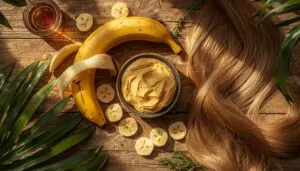
Bananas are quietly one of the best things you can put on damaged hair — and the reason comes down to what’s actually inside them. They’re packed with handful of nutrients that work directly on your strands and scalp.
From silica to vitamin B6, these nutrients work together to rebuild elasticity and reduce breakage — exactly what’s behind these DIY banana hair mask recipes for frizzy, damaged hair.
Here’s what makes them worth your time.
Potassium and Silica for Stronger Strands
Bananas bring real mineral synergy to your hair care routine.
Potassium — a key electrolyte — works as a natural pH balancer, helping your scalp stay healthy and free from unwanted microbes. Meanwhile, silica gets to work on silica fiber strength, literally thickening each strand from within.
One trial showed a 12.8% increase in hair thickness after consistent silica intake. That’s your homemade banana hair mask doing serious work.
Vitamins and Antioxidants for Moisture Retention
That mineral boost pairs naturally with something just as powerful — vitamins.
Banana Benefits for Hair go beyond minerals. Vitamins A, B6, and C work together through antioxidant synergy to protect and hydrate each strand. Think of it as your hair’s internal shield.
- Vitamin E barrier locks in moisture and guards against dryness
- Vitamin C collagen supports keeps strands resilient and plump
- B‑vitamin hydration and Niacinamide moisture balances your scalp’s lipid layer
- Antioxidant effects of banana on hair reduce oxidative stress that causes brittleness
Improved Elasticity to Reduce Breakage
When hair snaps instead of springs back, elasticity is the issue. A Banana Hair Mask provides Elastic Recovery by delivering potassium and amino acids that reinforce keratin inside each strand — think Keratin Reinforcement from the inside out.
A banana hair mask rebuilds elasticity from within, reinforcing keratin so strands spring back instead of snap
Hydration Lock keeps fibers flexible, while Cuticle Sealing reduces friction during Gentle Detangling. The result? Real Hair Breakage Prevention. Maintaining a balanced diet importance helps preserve hair elasticity.
| Strand Problem | What Bananas Provide | Benefit |
|---|---|---|
| Low elasticity | Potassium, amino acids | Hair elasticity improvement |
| Cuticle damage | Natural oils, silica | Cuticle Sealing, less friction |
| Brittle, dry strands | Moisture, vitamins | Hydration Lock, hair repair |
Smoother Texture, Less Frizz, and More Shine
Better elasticity naturally sets the stage for smoother, more manageable strands. A Banana Hair Mask works by delivering Cuticle Coating that smooths the hair cuticle, creating a Humidity Barrier for real frizz control.
The result? hair shine enhancement through improved Light Reflection.
- Slip Enhancement makes detangling easy
- Flyaway Reduction tames unruly strands
- Moisturizing hair prevents dryness-related puffiness
- Smoother cuticles reflect light more evenly
- Less surface roughness means less visible frizz
Scalp Nourishment for Softer, Healthier Hair
Your scalp needs just as much love as your strands. A banana hair mask delivers real Scalp nourishment and elasticity improvement — potassium and natural oils sink in during Leave-On Time, supporting Microbiome Support and Omega-3 Balance.
Add Massage Distribution to spread the mask evenly, and you’ve got a DIY natural hair treatment for all hair types that leaves your scalp calm, soft, and genuinely nourished.
How to Make The Base Mask
Making the base mask is simpler than you’d think — no fancy tools, no complicated steps. You just need a few basics and about five minutes.
Here’s exactly what to grab and how to get started.
Once you’ve got your ingredients ready, this apple cider vinegar face toner recipe walks you through the exact mixing ratio and routine for glowing skin.
Ingredients and Tools You Need
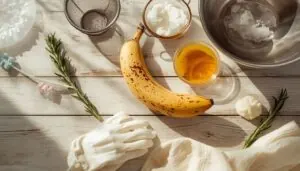
You don’t need much to get started. Grab one ripe banana, your chosen add-ins, and a blender or immersion blender for a lump-free mix.
Use a nonreactive mixing bowl — glass or stainless steel works great.
Keep a fine mesh strainer nearby for stubborn fibers, plus sectioning clips, gloves for hygiene, and a shower cap.
That’s honestly it.
Choose a Ripe Banana for Blending
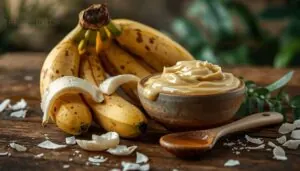
Spotting ripeness is your first real step in any DIY homemade hair treatment. For a banana hair mask that actually works on damaged hair, look for a ripe banana with yellow skin and brown speckles — those spots signal starch conversion into softer sugars, which means it’ll blend well into a smooth paste.
Avoid green bananas entirely. Texture indicators like softness and sweetness levels tell you it’s ready.
Blend Until Completely Smooth
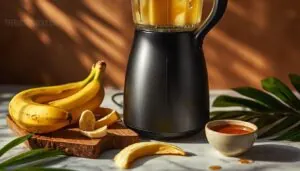
Lumpy masks are the enemy of even coverage. Pulse blending technique first — short bursts to break down large chunks — then run your blender continuously for 20–30 seconds. Use the scrape-side method to push stray bits toward the blade.
Warm water thinning helps emulsification when your homemade banana hair mask feels too dense. Blend well until your DIY hair mask pours smoothly, with zero graininess.
Fixing a Mask That is Too Thick
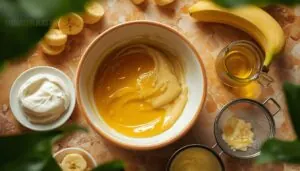
Sometimes your blender does everything right, but the banana hair mask still comes out paste‑thick. Don’t panic — it’s a quick fix.
- Water Thinning: Add lukewarm water one teaspoon at a time, blending between each addition.
- Oil Adjustment or Conditioner Dilution: Drizzle in a lightweight oil or a spoonful of conditioner until it loosens.
- Pulp Straining: Run it through a fine‑mesh strainer to ditch fibrous bits.
Best Consistency for Easy Application
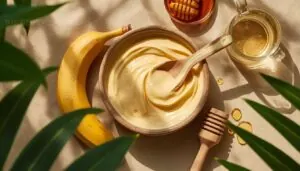
Think thick yogurt — that’s your target consistency for a banana hair mask. It without dripping.
Your viscosity adjustment is simple: blend with lukewarm water (temperature effects matter — cold stiffens banana), adding one teaspoon at a time.
Fingers or a tint brush both work well with this texture.
Nail this blend consistency guide, and your DIY natural hair treatment applies evenly every time.
Best Banana Mask Recipes
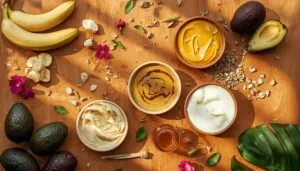
The base mask works great on its own, but adding a few extra ingredients can make it work even harder for your specific hair needs. different hair types respond best to different combinations, so there’s a recipe here for just about everyone.
Here are five options worth trying.
Banana and Honey for Dry, Weak Hair
If your hair feels dry and snaps easily, this banana and honey hair mask is a great dry hair remedy to start with.
The ingredient ratios are simple: one ripe banana blended with one teaspoon of honey.
Honey acts as a humectant — it pulls moisture into your strands.
Together, they work as a banana and honey hair mask for all hair types, supporting hair repair and moisture for dry hair while helping maintain scalp pH balance.
Always check allergy precautions before applying.
Banana and Olive Oil for Brittle Hair
If honey was your first step toward softer hair, olive oil takes things further.
For a banana and olive oil mask, blend one ripe banana with one to two tablespoons of extra-virgin olive oil. Olive oil penetration mechanics work by coating each strand, locking moisture in, and smoothing frizz.
Homemade banana hair mask recipe suits brittle hair beautifully — just patch-test first for allergy considerations.
Banana, Egg, and Coconut Oil for Damage
This one’s a powerhouse for hair repair. Blend half a banana, one egg, and one tablespoon of coconut oil into a smooth paste. The egg delivers protein penetration, coating and strengthening each strand. Coconut oil’s oil sealing benefits lock that moisture in. Together, the nutrient synergy is real.
- Half a ripe banana, mashed
- One whole egg
- One tablespoon coconut oil, warmed
- Blend until lump-free
- Apply to mid-lengths and ends first
Banana, Avocado, and Coconut Milk for Curls
Curly hair needs slip — that gliding quality that lets strands move without snagging. This coconut avocado banana hair mask delivers exactly that. Blend half a banana, half an avocado, and three tablespoons of coconut milk into a lightweight, creamy mask.
| Ingredient | Key Benefit | Amount |
|---|---|---|
| Ripe Banana | Curl Definition Boost, frizz control | ½ banana |
| Avocado | Curl Slip Enhancement, softens texture | ½ avocado |
| Coconut Milk | Lightweight Creaminess, scalp moisture | 3 tbsp |
This nutrient fusion promotes scalp balance while coating each curl for smoother, bouncier results — your go-to homemade banana hair mask recipe for frizzy hair.
Banana, Keratin, and Argan Oil for Severe Damage
When damage runs deep, your strands need more than basic moisture — they need a full rebuild.
This banana hair mask blends one ripe banana, one keratin capsule, and one tablespoon of argan oil into a powerful protein treatment for hair.
The Keratin Bonding Process fills cuticle gaps, while Argan Shine Boost and Banana Moisture Lock seal everything in through deep conditioning and Oil Penetration Mechanics.
How to Apply and Rinse

Getting the application right matters just as much as the recipe itself. few simple steps make the difference between a mask that actually works and one that leaves you picking banana bits out of your hair for days.
Here’s exactly how to apply and rinse your banana mask the right way.
Start With Clean, Damp Hair
Before you reach for that banana mixture, your scalp preparation matters more than most people realize. Starting with clean, damp hair is the foundation of even distribution — and skipping is like painting a dirty wall.
Here’s what "damp" actually means for your DIY hair mask:
- Not dripping wet — squeeze a section lightly; no water should run off
- Not bone dry — strands feel cool and slightly heavy
- Clean scalp — removes buildup, blocking natural hair care ingredients from absorbing
- Detangling ease — use a wide-tooth comb to minimize hair breakage before applying
This sweet spot helps your banana hair mask spread evenly, helps moisture retention, and reduces breakage from stretching fragile strands.
Apply From Roots to Tips
Divide your hair into sections before you apply the mask — this is the key to even layering and full coverage. Start root first, massaging with your fingertips in small circles, then pull the banana hair mask through the midlength distribution zone before focusing on tip saturation.
These hair mask application steps guarantee your DIY hair mask truly promotes hair health from scalp to ends.
Cover Hair to Keep in Moisture
Once your banana hair mask is in, don’t skip this step — cover it. A heat-trapping cap or silicone bonnet traps warmth and creates real moisture lock, helping the natural humectants in banana do their job.
A microfiber towel wrap works too. That moisture-sealing wrap keeps air off your strands, slows evaporation, and gives your hair cap setup excellent scalp breathability. Worth every minute.
Leave on for 20 to 30 Minutes
Set a timer for 20 to 30 minutes — that’s your absorption window. This timing benefit is real: it lets the banana hair mask fully coat each strand without drying out or becoming harder to remove.
For dry hair, push toward the full 30 minutes.
Sensitive scalp? Stick to 20.
Skip going over — residue risk increases fast, and buildup gets sticky.
Rinse With Lukewarm Water
Lukewarm water — right around 35–38°C — is your sweet spot here. It’s warm enough for residue removal and slip enhancement, so the banana hair mask rinses clean without a fight.
Too hot, and you’re raising the cuticle, inviting frizz. Too cold, and product clings.
Lukewarm hits cuticle relaxation and scalp comfort balance, DIY natural hair treatments need. Rinse thoroughly, working fingers through slowly.
Shampoo Well to Remove Banana Residue
Once your lukewarm rinse is done, don’t skip the shampoo step.
Banana residue is sticky — it clings.
Use a clarifying shampoo choice here, and try the double cleansing method if your first wash feels slippery.
Comb before wash to break up any clumps, then let the shampoo sit briefly for real shampoo saturation time.
Your banana hair mask routine works best when you finish clean.
How Often to Use It

Using a banana mask too often — or not enough — can make a real difference in your results. The good news is that figuring out your ideal schedule is pretty straightforward once you know what to look for.
Here’s how to time your treatments based on your hair type and how it responds.
Once Weekly for Most Hair Types
For most people, once a week hits the sweet spot. A weekly banana hair mask gives your strands consistent moisture without overwhelming them.
Here’s what works well with this Maintenance Frequency Guidance:
- Wavy and straight hair types respond well to weekly mask timing benefits.
- Fine hair won’t feel weighed down at this pace.
- Normal hair stays smooth with a simple weekly hair mask routine for best results.
- Heat-styled or color-treated hair fits this DIY natural hair treatments for all hair types, schedule easily.
- Hair Type Adaptation is simple — apply mid-length to ends if your scalp runs oily.
Think of it as a weekly reset your hair actually looks forward to.
Twice Weekly for Very Damaged Hair
If your hair snaps easily or feels brittle, bump your banana hair mask up to twice weekly. Severely damaged strands need a tighter Repair Cycle Timing to rebuild elasticity before the next wash.
Think of it as your Protein Replenishment Schedule — wash, treat, repeat.
Track your Elasticity Progress by checking for less breakage after two weeks. Your homemade banana hair mask recipes do the heavy lifting here.
Every Two Weeks for Oily Scalps
Got an oily scalp? Dial back your banana hair mask to once every other week.
That Two-Week Timing benefits your Oil Production Management by giving sebum a chance to regulate naturally.
Over-treating can tip the Scalp Moisture Balance the wrong way.
Between sessions, lean on Dry Shampoo Scheduling for Grease Reduction Techniques that keep roots fresh without adding weight.
Signs The Mask is Working
After a few uses, your hair starts sending clear signals.
Detangling feels easier — less snagging, less breakage.
You’ll notice uniform moisture from roots to ends, plus real hair elasticity improvement that lets strands stretch instead of snapping.
Hair softness increases, shine comes back, and that scalp itchiness quietly fades.
Even split ends prevention shows up as a lighter, more manageable feel overall.
Avoid Buildup, Flakes, and Greasy Roots
Even the best mask can backfire if you’re not careful with removal. Banana’s natural sugars turn sticky fast, so Mask Thickness Management matters — a thinner blend rinses cleaner every time.
To keep your Scalp Oil Balance in check:
- Shampoo thoroughly after every session
- lukewarm water for Water Temperature Control
- Residue Free Ingredients near the scalp
- once a week maximum for oily scalps
This protects Leave-In Product Compatibility too.
When to Stop if Irritation Occurs
Stop the moment your scalp sends a clear signal. Redness Threshold, Itching Signs, and Swelling Alerts aren’t overreactions — they’re your skin talking.
| Symptom | What to Do | When to Get Help |
|---|---|---|
| Scalp irritation or redness | Rinse immediately | If it spreads |
| Allergic Reactions or hives | Stop all use | Same day |
| Emergency Symptoms, swelling | Seek urgent care | Immediately |
Never reapply once symptoms return.
Top 8 Banana Hair Mask Ingredients
Not all add-ins are created equal, and the ones you pick can make or break your results. Pairing banana with the right ingredients is what takes a basic mask from decent to actually impactful.
Here are eight tried-and-true options worth keeping in your routine.
1. Nate Pure Raw Unfiltered Honey
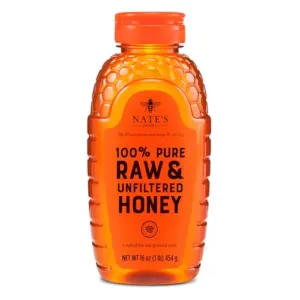
For honey in your banana mask, Nate Pure Raw Unfiltered Honey is worth keeping on your shelf. It’s 100% pure — just honey, nothing else. No preservatives, no pasteurization, no fillers.
That matters because raw honey acts as a humectant, pulling moisture into your strands and holding it there. It also retains natural pollen and enzymes that processed honey loses.
At $7.97 for 16 oz, it’s an easy addition. The squeeze bottle makes measuring mess‑free, too.
| Best For | Anyone who wants a clean, additive-free honey for DIY hair masks, cooking, or sweetening drinks without any mystery ingredients. |
|---|---|
| Organic Certified | No |
| Primary Use | Sweetener |
| Package Size | 16 oz |
| Single Ingredient | Yes |
| Non-GMO | No |
| Gluten Free | Yes |
| Additional Features |
|
- 100% pure honey — no fillers, no preservatives, just honey
- Raw and unfiltered, so it keeps the natural pollen and enzymes that processed honey loses
- Squeeze bottle makes it easy to measure and use without making a sticky mess
- May crystallize faster than processed honey, which can affect the texture
- Only comes in a 16 oz size, so no bulk option if you go through it quickly
- Not safe for babies under 1 year old due to the risk of botulism spores in raw honey
2. Pompeian USDA Organic Smooth Extra Virgin Olive Oil
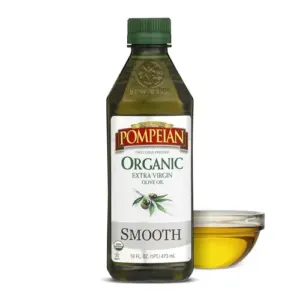
Olive oil in your banana mask? It’s most effective choices for brittle or frizzy hair.
Pompeian’s USDA Organic Smooth Extra Virgin Olive Oil is first cold-pressed, which means it keeps its polyphenols and antioxidants fully intact — exactly what stressed strands need.
The flavor is mild and smooth, but more importantly, it absorbs well without leaving a heavy residue.
It’s non-GMO verified and gluten-free.
One to two tablespoons blended with your banana does the job beautifully.
| Best For | Anyone who wants a clean, organic olive oil that works just as well in the kitchen as it does in a hair mask. |
|---|---|
| Organic Certified | Yes |
| Primary Use | Cooking Oil |
| Package Size | 16 fl oz |
| Single Ingredient | Yes |
| Non-GMO | Yes |
| Gluten Free | Yes |
| Additional Features |
|
- USDA Certified Organic and first cold-pressed, so you’re getting the full hit of polyphenols and antioxidants.
- Mild, smooth flavor that won’t overpower your food — great for everything from drizzling to high-heat cooking.
- Non-GMO verified, kosher, gluten-free, and non-allergenic — covers a lot of dietary bases.
- Comes in a plastic bottle, which isn’t ideal if you care about sustainability or prefer glass.
- At 16 oz, it goes fast if you cook a lot — you’ll be reordering more often than you’d like.
- Tends to cost more than store-brand options, and the price can vary depending on where you buy it.
3. Viva Naturals Organic Coconut Oil
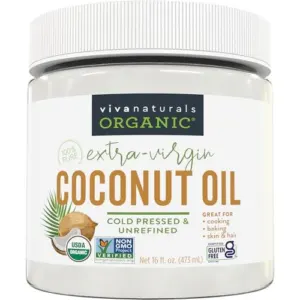
Coconut oil is basically the Swiss Army knife of hair care — and Viva Naturals’ version earns its spot in your mask. It’s cold-pressed, unrefined, and USDA Organic, which means none of the good stuff gets stripped out before it reaches your strands.
The rich natural fats sink deep into the hair shaft, helping to hydrate and strengthen from within.
Add one tablespoon to your banana blend for damaged or thinning hair. Just warm it slightly first if it’s solidified.
| Best For | Anyone looking for a clean, versatile coconut oil that pulls double duty in the kitchen and as a hair or skin treatment. |
|---|---|
| Organic Certified | Yes |
| Primary Use | Hair & Cooking |
| Package Size | 16 fl oz |
| Single Ingredient | Yes |
| Non-GMO | Yes |
| Gluten Free | Yes |
| Additional Features |
|
- Cold-pressed and unrefined, so the nutrients stay intact
- Works for cooking, hair care, and skin — genuinely multipurpose
- USDA Organic, Non-GMO, keto- and paleo-friendly
- Solidifies at room temp, so you’ll need to warm it up before use
- The coconut flavor can clash with savory dishes
- Easy to over-apply on hair or skin if you’re not careful
4. Thai Kitchen Organic Unsweetened Coconut Milk
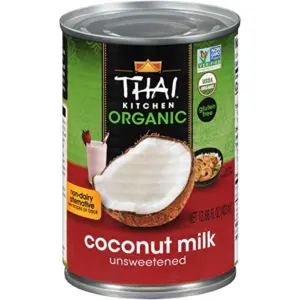
While coconut oil works from the inside out, coconut milk brings something different — a lighter, creamier moisture that coats and softens without weighing your hair down.
Thai Kitchen’s organic unsweetened version is a solid pick.
It’s dairy-free, preservative-free, and made with just coconut and water.
For curly or textured hair especially, it smooths the cuticle beautifully.
Use about three tablespoons in your banana blend.
Give the can a good shake first — it separates naturally, and you want both layers in the mix.
| Best For | Anyone cooking dairy-free Asian dishes or looking for a clean, creamy substitute for heavy cream in coffee, baking, and desserts. |
|---|---|
| Organic Certified | Yes |
| Primary Use | Cooking & Baking |
| Package Size | 13.66 fl oz |
| Single Ingredient | No |
| Non-GMO | Yes |
| Gluten Free | Yes |
| Additional Features |
|
- Organic, non-GMO, and completely free of dairy, gluten, and preservatives — about as clean as it gets
- Rich and creamy enough to stand in for heavy cream or half-and-half without missing a beat
- Versatile in the kitchen — works great in curries, soups, sauces, and even hair care blends
- Separates in the can, so you’ll need to shake or warm it before use every time
- Cans sometimes arrive dented, especially when ordered through certain shipping channels
- The price jumps around, and it tends to run higher than standard coconut milks
5. Sky Organics Organic Castor Oil
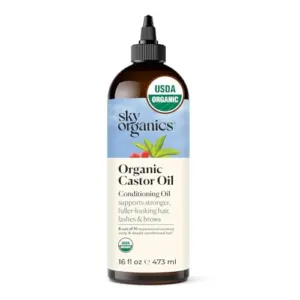
Now, if your hair is severely dry or brittle, castor oil is worth keeping on your shelf. Sky Organics makes a cold-pressed, hexane-free version that’s as clean as it gets.
It’s thick — almost like a gel — because it’s naturally rich in ricinoleic acid, a fatty acid that deeply conditions the scalp and strand. A little really go a long way.
Add just one tablespoon to your banana blend, or it’ll be tough to rinse out.
| Best For | Anyone with dry, brittle hair or a flaky scalp who wants a clean, organic oil without a long ingredient list. |
|---|---|
| Organic Certified | Yes |
| Primary Use | Hair & Skin |
| Package Size | 16 oz |
| Single Ingredient | Yes |
| Non-GMO | Yes |
| Gluten Free | Yes |
| Additional Features |
|
- Cold-pressed and hexane-free, so you’re getting pure oil with nothing sketchy added
- Works beyond hair — great for brows, lashes, dry skin, and even sore muscles
- The pointed spout makes it easy to apply without making a mess
- It’s very thick, so rinsing it out takes some effort
- Can irritate sensitive eyes when used near lashes or brows
- Pricier than regular castor oils, and the plastic bottle isn’t ideal for everyone
6. Whole Foods 365 Organic Rolled Oats
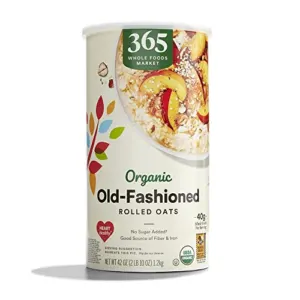
Oats might surprise you here — but hear me out. Whole Foods 365 Organic Rolled Oats are old-fashioned, USDA-certified rolled oats with zero additives.
Ground into a fine powder and mixed into your banana mask, they gently soothe an irritated or flaky scalp without stripping it. Think of them as a soft reset for sensitive skin up there.
Use about two tablespoons, blended smoothly with your banana. They absorb beautifully and won’t weigh your hair down.
| Best For | Anyone who wants a clean, versatile oat they can use in everything from morning porridge to baked goods — or even a DIY scalp treatment. |
|---|---|
| Organic Certified | Yes |
| Primary Use | Food & Baking |
| Package Size | 42 oz |
| Single Ingredient | Yes |
| Non-GMO | Yes |
| Gluten Free | Yes |
| Additional Features |
|
- 100% certified organic with no additives, preservatives, or glyphosate residues — what you see is what you get
- Packed with beta-glucan fiber, which is genuinely good for your heart and keeps you full longer
- Works in pretty much any recipe — hot oats, overnight oats, baking, savory dishes, you name it
- Takes longer to cook than instant oats, so not great if you’re always in a rush
- The cardboard packaging is flimsy and has a habit of popping open in transit — grab an airtight container
- The texture runs on the thick and dense side, so if you like smooth, creamy oatmeal, these might not be your thing
7. Swanson Keratin Supplement for Joints Hair Skin
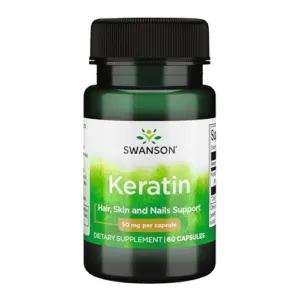
Now, here’s one you might not expect in a hair mask — but it works. Swanson Keratin gives you 50 mg of hydrolyzed keratin per capsule, sourced from Tibetan wool.
Hydrolyzed just means it’s broken down into smaller pieces, your hair can actually use. Open one capsule and mix the powder right into your banana blend.
It fills in weak spots along the strand, helping seriously damaged hair feel smoother and more resilient after just a few uses.
| Best For | Anyone looking to support hair strength, joint health, and skin from the inside out — especially those dealing with hair thinning or brittle nails who want a budget-friendly supplement. |
|---|---|
| Organic Certified | No |
| Primary Use | Hair & Joints |
| Package Size | 60 capsules |
| Single Ingredient | No |
| Non-GMO | No |
| Gluten Free | Yes |
| Additional Features |
|
- Sourced from Tibetan wool and made in GMP-certified facilities with third-party testing, so you know what you’re getting
- Covers a lot of ground — joints, hair, skin, and nails — for just $9.99
- Users report real results like faster hair growth and less hair loss
- Not FDA-evaluated, so health claims come with the usual supplement caveats
- Some customers have received bottles with missing safety seals, which is a bit unsettling
- Results can be hit or miss, especially when stacking it with other supplements like bamboo extract or horsetail
8. Kate Blanc Organic Argan Oil
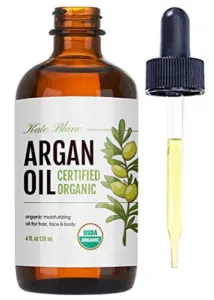
Kate Blanc’s argan oil is the finishing touch your banana mask needs. It’s cold-pressed, USDA certified organic, and 100% pure — no fillers, no fragrance, just straight argan oil.
A single tablespoon blended into your mask adds serious frizz control and shine without weighing strands down. It’s especially good for severely damaged hair that feels rough or brittle.
Just don’t overdo it — a little goes a long way, and too much can make fine hair feel heavy.
| Best For | Anyone with dry, damaged, or frizzy hair who wants a clean, no-fuss oil they can use on their hair, face, and body. |
|---|---|
| Organic Certified | Yes |
| Primary Use | Hair & Skin |
| Package Size | 4 oz |
| Single Ingredient | Yes |
| Non-GMO | Yes |
| Gluten Free | Yes |
| Additional Features |
|
- USDA certified organic and cold-pressed — totally pure, no fillers or fragrance added
- Works for multiple uses: hair, skin, face, and even DIY masks or homemade soap
- A little goes a long way, so the 4 oz bottle lasts a good while
- Has a strong earthy/nutty smell at first that some people find off-putting (it fades though)
- Can weigh down fine hair if you use too much — you really need to keep it to just a few drops
- Rare reports of receiving the wrong product (like Neem oil instead), so worth double-checking the label when it arrives
Frequently Asked Questions (FAQs)
Does hair color or dye affect mask results?
Yes, it can — but not in the way most people expect. A banana mask won’t strip your color, but it can make dyed hair look temporarily glossier and more even after rinsing.
How long until visible improvement becomes noticeable?
Most people notice softer, smoother hair after just one use.
Frizz reduction and shine usually show up within two to three sessions.
For real elasticity and texture changes, give it two to four weeks of consistent use.
Can banana masks be used on hair extensions?
You can, but keep it away from the bonds. Apply only to the lengths and ends, blend it completely smooth, and shampoo thoroughly after.
Residue near attachments can weaken adhesives or cause tangling.
Should the mask be applied to wet or dry ends?
Damp ends work best. Water-plumped strands absorb conditioning ingredients more easily, so your mask actually gets in rather than sitting on top. Towel-dry first — damp, not dripping.
Conclusion
Think of damaged hair like a frayed rope—each missing nutrient loosens another fiber. A banana hair mask for damaged hair reweaves that structure from the inside out, using what’s already sitting on your counter.
Potassium, vitamins, and moisture work together every time you apply it. Pick the recipe that fits your hair’s needs, stay consistent, and within a few weeks, you’ll feel the difference before you even look in the mirror.
- https://www.ncbi.nlm.nih.gov/pmc/articles/PMC5337831/
- https://pubmed.ncbi.nlm.nih.gov/27041291/
- https://www.cambridge.org/core/services/aop-cambridge-core/content/view/AFEE32B45AD3798A320732575F6C1D4C/S0007114505002503a.pdf/provisional_database_for_the_silicon_content_of_foods_in_the_united_kingdom.pdf