This site is supported by our readers. We may earn a commission, at no cost to you, if you purchase through links. This content is for general informational and educational purposes only and is not a substitute for professional medical, dermatological, or nutritional advice.
Damaged hair doesn’t just look dry—it hemorrhages moisture at a structural level, and most people are fighting that loss with the wrong weapons. When bleach, heat, or repeated chemical processing breaks down the cuticle layer, those microscopic scales lift and separate, leaving gaps through which water escapes faster than any conditioner can replace it.
The result is a cycle: you hydrate, it evaporates, you hydrate again. Breaking that cycle means understanding what’s actually happening inside the strand—then choosing treatments that match the specific deficit.
These water retention damaged hair tips address the mechanism, not just the symptoms.
Table Of Contents
Key Takeaways
- Damaged hair loses moisture through lifted cuticle scales, and sealing those gaps with ceramides, cool-water rinses, and protein treatments is the only way to break the constant hydrate-and-lose cycle.
- High-porosity strands absorb water fast but can’t hold it, so layering products in the LOC or LCO sequence—liquid, then oil or cream—gives moisture somewhere to stay instead of evaporating within minutes.
- Washing with sulfate-free shampoo, limiting clarifying treatments to once monthly for damaged hair, and filtering hard water minerals all protect the moisture you’ve already worked to build in.
- Daily habits like sleeping on satin, using heat protectant below 350–400°F, and eating omega-3s and zinc quietly determine whether your hair keeps its hydration between wash days or quietly drains it overnight.
Why Damaged Hair Loses Water
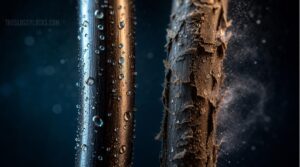
Damaged hair doesn’t just look dry — it’s actually losing water faster than healthy hair can. The structure of your strands matters more than most people realize, and a few specific factors are quietly working against your moisture retention every day. Here’s what’s breaking down that barrier.
Choosing the right conditioner for dry damaged hair can actually help rebuild that compromised barrier and slow down moisture loss over time.
Raised Cuticles
Think of your hair cuticle like roof shingles — when those edges lift instead of lying flat, everything underneath becomes exposed.
Raised cuticles create surface gaps where moisture escapes rapidly, leaving strands feeling rough and dry even minutes after washing.
A cool-water rinse after conditioning drives those scales back down, restoring your hair’s natural moisture barrier almost immediately.
High-porosity Strands
High-porosity strands take water in fast, but can’t hold onto it — the lifted cuticle gaps that speed up moisture absorption are the same ones letting it escape just as quickly. That’s why high porosity hair often feels dry within minutes of washing, no matter how much product you apply.
High-porosity hair drinks water instantly — then loses it just as fast through the same gaps that let it in
Heavy sealants and hydrolyzed proteins help close those gaps and extend hydration longevity.
Understanding the high porosity hair characteristics helps you choose the right products.
Heat and Chemical Damage
Where high-porosity hair already struggles to hold moisture, heat and chemical damage push that problem further. Repeated heat styling denatures structural proteins, permanently roughening the fiber surface so strands can’t lie smoothly or seal in water.
Bleaching and relaxers compound this through oxidative reactions that break internal bonds — making moisture retention collapse faster with every additional service.
Mineral Buildup
Hard water adds another layer to this problem.
Calcium and magnesium ions coat each strand, leaving a chalky mineral residue that roughens the cuticle surface and blocks moisture from penetrating. Even well-hydrated hair can feel coarse and dull when mineral buildup sits on the shaft — because the deposits interfere with light reflection and reduce slip during detangling.
Hygral Fatigue
There’s one moisture problem that often gets overlooked: hygral fatigue.
This happens when hair repeatedly absorbs water and then dries out — a swelling-and-shrinking cycle that stresses already weakened fibers. Over time, that cycle breaks down protein bonds, leaving strands limp, frizzy, and paradoxically drier.
Overdoing deep conditioning without protein balance makes it worse.
Tell Dry From Dehydrated Hair
Dry and dehydrated hair might look similar, but they’re actually two different problems that need two different fixes. Treating one like the other is how moisture routines go sideways fast. Here’s how to read the signs and figure out exactly what your hair is asking for.
Dry Hair Signs

Dry hair doesn’t just feel unpleasant — it signals a breakdown in your scalp’s ability to produce enough sebum to coat and protect each strand. The most visible clue is a dull, lifeless appearance: when cuticles are raised and uneven, light can’t reflect off the surface smoothly. Run your fingers down a dry strand and you’ll notice that rough, coarse texture immediately.
Frizz patterns and static build-up follow closely — both are signs that moisture retention has collapsed and the cuticle surface is no longer lying flat. At the ends, look for split ends and breakage, the clearest evidence that dry, brittle hair has lost elasticity. Severely dry hair can snap mid-shaft with almost no resistance — a warning that cuticle damage has gone deep.
Dehydrated Hair Signs

Dehydrated hair is a different problem from dry hair — it’s not about oil, it’s about water. When your hair strand can’t hold onto moisture, four signs tend to show up fast:
- Frizz patterns spike in humidity, because compromised cuticles absorb atmospheric moisture unevenly.
- Rough texture makes strands feel sandy, not smooth.
- Elasticity loss causes snapping under minimal tension.
- Quick tangling returns minutes after brushing.
Product slip is another giveaway — leave-ins seem to vanish instead of absorbing, signaling poor moisture retention and cuticle damage.
Stretch Test Clues
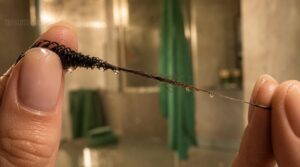
The stretch test cuts through guesswork fast. Pull a single wet strand between two fingers — healthy hair stretches up to 50% and springs back.
If your strand stretches far but returns slowly or not at all, elasticity is already compromised.
A strand that snaps immediately signals brittleness, while one that feels rubbery before breaking points to weakened internal bonds.
Oil Versus Water Needs

Once the stretch test reveals the problem, what you reach for next defines whether your hair actually recovers.
Dry hair needs oil — its sebum channels are underactive, so natural oil production isn’t coating the cuticle efficiently.
Dehydrated hair needs water first, delivered through humectants like glycerin that pull moisture into the fiber before any sealant is applied.
Texture-specific Symptoms

Your hair texture changes everything about how dehydration shows up. Curly and coily strands lose curl definition first — coils go stringy, frizz builds at the root, and clumping disappears.
Fine hair goes limp and develops a ropey, straw-like feel, while thick hair turns dull and brittle.
Both snap under tension, a clear sign of compromised elasticity and moisture loss.
Wash Without Stripping Moisture

How you wash matters just as much as what you put on your hair afterward. The wrong routine can undo every bit of moisture you’ve worked to lock in. Here’s what to adjust at the sink to stop stripping your strands before conditioning even begins.
After squeezing out excess water, follow up with a leave-in and oil while damp to complement [washing-frizz-prone-male-hair-with-the-right-technique](https://theglossylocks.com/how-to-deal-with-frizzy-hair-male/) and keep moisture locked in.
Sulfate-free Shampoo
Most shampoos strip more than just dirt — they pull out the natural oils your strands desperately need.
Sulfate-free shampoo skips harsh surfactants like SLS and SLES, using gentler alternatives like cocamidopropyl betaine or decyl glucoside that cleanse without wrecking your hair moisture balance or irritating a sensitive scalp.
Wash Frequency Tips
Choosing the right sulfate-free shampoo is only half the equation — how often you wash matters just as much for moisture retention in damaged strands.
- Wash 2–3 times per week to preserve scalp oil balance without letting buildup accumulate
- Use a partial cleanse method — focus shampoo only on the scalp, letting it rinse through the ends
- After workouts, a sweat rinse routine with plain water keeps roots fresh without stripping
- Longer hair needs less frequent washing since sebum takes more time to travel down the shaft
Overwashing forces your scalp into oil overdrive, which ironically leaves strands drier faster.
Clarifying Shampoo Limits
Washing 2–3 times per week keeps your scalp balanced, but some weeks call for a deeper reset — and that’s where clarifying shampoo earns its place.
| Situation | Recommended Frequency | Risk if Overused |
|---|---|---|
| Normal hair, mild buildup | Once every 2–3 weeks | Minimal |
| Damaged or dry hair | Once per month maximum | Dryness, brittleness |
| Color-treated hair | Once every 4–6 weeks | Accelerated color fade |
| High mineral buildup | Once per week, short-term | Lipid stripping |
| Fine or dehydrated hair | Once per month or less | Moisture loss, breakage |
Clarify frequency guidelines exist for a reason: these formulas use stronger surfactants — sodium lauryl sulfate, ammonium laureth sulfate — that remove mineral buildup and product residue effectively, but strip natural oils aggressively with overuse. Buildup removal balance means using clarifying only when dullness or coating signals real accumulation, not as a routine step. Always follow with deep conditioning to restore what’s lost. If you’re color-treated, moisture retention drops fast — so don’t clarify more than monthly. A sulfate-free shampoo manages everything in between.
Shower Filter Benefits
Clarifying shampoos reset buildup, but what if the water itself is the problem? Hard water minerals — calcium and magnesium — coat your strands after every rinse, leaving hair stiff, dull, and harder to hydrate.
- Chlorine Removal reduces dryness and scalp irritation
- Mineral Filtration limits residue that blocks moisture absorption
- Water Softening leaves hair feeling smoother after washing
- Filter Maintenance — replace cartridges on schedule to keep performance consistent
A quality shower filter using activated carbon or KDF media can reduce chlorine by up to 90%, directly cutting the chemical exposure that strips your cuticle with every wash.
Cool-water Rinsing
Finishing with a cold rinse — just 20 to 60 seconds at 65–75°F — closes the cuticle scales that hot water lifts open, directly supporting moisture lock and reducing frizz as hair dries.
| Benefit | Effect |
|---|---|
| Cuticle Flattening | Seals scales for shine boost |
| Frizz Reduction | Hair dries compact, not poofy |
| Scalp Refresh | Calmer feel post-wash |
Seal Water Into Damaged Strands
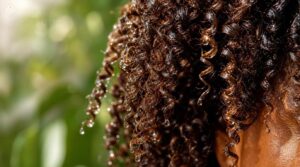
Getting moisture into damaged strands is only half the battle — keeping it there is where most people fall short. The right sealing strategy depends on your hair’s texture, porosity, and how much product it can actually handle. Here’s what works.
Damp Leave-in Application
The moment a leave‑in conditioner meets fully dry, damaged hair, absorption drops considerably — timing your application to damp strands makes the difference.
Once you’ve squeezed out excess water so hair isn’t dripping, work the product through in sections, starting at the ends where damage concentrates.
Use a small amount, detangle gently with a wide‑tooth comb, then leave hair completely undisturbed until dry to lock in moisture and control frizz.
LOC Method
The LOC method — Liquid, Oil, Cream — is a three-step layering system designed to trap water inside the shaft before it can escape.
- Liquid layer (leave-in conditioner or water) provides the moisture foundation
- Oil step creates a hydrophobic seal, slowing evaporation
- Cream layer locks everything in and reinforces curl definition
- Layer order matters — skipping or swapping steps reduces effectiveness considerably
LCO Method
The LCO sequence — Liquid, Cream, Oil — flips the final two steps, placing the cream layer between your leave-in and oil. This moisture sandwich works best for fine or low-porosity hair that buckles under heavy sealants too early.
Apply a moisturizing leave-in conditioner first, follow with a curl cream for softness, then seal with a lightweight oil to complete moisture locking.
Lightweight Hair Oils
Not all oils are created equal — and for damaged hair, choosing the wrong one can leave strands weighed down instead of restored.
Lightweight hair oils work because they absorb quickly rather than sitting on the surface, delivering barrier support without the greasy residue that clogs the cuticle.
Here are five reliable options for effective moisture locking:
- Argan oil — rich in vitamin E and fatty acids, it smooths the cuticle and tames frizz on dry hair without heaviness.
- Jojoba oil — mimics your scalp’s natural sebum, making it one of the most scalp-safe natural oils available.
- Squalane — non-comedogenic and fast-absorbing, it restores the lipid barrier and improves manageability on fine or sensitive strands.
- Camellia oil — absorbs rapidly and leaves a silky finish, ideal for sealing hair hydration after a leave-in.
- Fractionated coconut oil — lighter than traditional coconut oil, it offers quick absorption with minimal buildup potential.
Massaging a few drops through dry, heat-stressed lengths can help restore softness, and pairing it with other gentle home remedies for dry hair makes for an easy, nourishing routine.
Apply a few drops to damp hair post-leave-in, or use on dry hair after styling for frizz control and shine. Their styling versatility makes them a reliable final step in any moisture-sealing routine.
Butters for Thick Hair
Thick hair needs more than a few drops of oil — it needs a real seal. Shea butter, cupuaçu butter, and murumuru butter work together to coat each strand with a dense, emollient layer that slows moisture escape between wash days.
Apply a small amount to damp sections using the butter layering method: mid-lengths first, then ends.
Repair Cuticles With Treatments

Damaged cuticles don’t seal themselves — they need targeted treatments that actively fill gaps, reinforce the shaft, and restore the protective layer that keeps moisture in. The good news is that a handful of consistent, well-timed treatments can make a real difference. Here’s what actually works.
Deep Conditioning Schedule
Start with weekly treatment timing as your baseline — once a week keeps medium-porosity hair balanced, while high-porosity or chemically treated strands often need twice weekly, especially during the first two weeks post-treatment.
- Apply your deep conditioning mask generously to damp, sectioned hair, focusing on mid-lengths and ends
- Use a shower cap for heat-enhanced absorption
- Leave on 20–45 minutes
- Adjust if hair feels limp or still dry
Protein Treatment Timing
Think of protein treatment as the structural repair step that follows your deep conditioning work.
Schedule a full protein reconstruction every 4–6 weeks — more frequent use risks protein overload, leaving strands stiff and prone to snapping. If hair already feels firm or strawlike, extend that interval.
Apply heat during the dwell period, 20–30 minutes, to drive the protein deeper into the cuticle, then follow immediately with a moisture conditioner to restore the protein-moisture balance.
Ceramide-rich Products
Where protein rebuilds the scaffold, ceramide-rich products reseal the surface. Ceramides — particularly Ceramide NP, AP, and EOP — are lipids that slot into cuticle gaps, reinforcing the barrier that slows moisture evaporation.
- Pair ceramides with humectants like sodium hyaluronate to attract water while ceramides lock it in
- Layer within the LCO system — apply a ceramide leave-in before your cream and oil
- Choose leave-on formats for maximum dwell time and deeper barrier support
Coconut Oil Pre-wash
Once ceramides have resealed the surface, a coconut oil pre-wash gives damaged strands a protective layer before shampoo even touches them.
Warm the oil between your palms — heat activation improves spreadability — then apply a thin coating from mid-lengths to ends on dry hair. Leave it on for 30 minutes to 2 hours, then shampoo normally.
Apple Cider Vinegar Rinses
After shampooing, an apple cider vinegar rinse helps flatten raised cuticles and restore your hair’s natural pH-balanced state.
Mix 1 part ACV with 2–3 parts filtered water, apply for 3–5 minutes, then rinse cool. Use it once or twice monthly — enough to dissolve mineral deposits and seal moisture into dry hair without irritating your scalp.
Prevent Daily Moisture Loss

Once you’ve repaired your cuticles, the next challenge is keeping that moisture from escaping throughout the day. Every small habit — from how you sleep to what you eat — either protects your hair’s water content or quietly drains it. Here’s what actually counts.
Heat Protectant Use
Every time you skip heat protectant, you’re trading moisture for speed. Heat protectants form a thin protective film on each strand, slowing heat conduction so your hair warms gradually rather than taking a sudden thermal hit. Silicone-based formulas — those containing dimethicone or amodimethicone — seal the cuticle, reducing water loss and controlling frizz during styling.
Apply your spray or cream protectant at least 15 minutes before reaching for any hot tool, and keep temperatures at or below 350°F for fine hair, 400°F for coarse.
Satin Pillowcases
While your heat protectant guards hair during styling, your pillowcase determines what happens during the other eight hours.
A satin or silk pillowcase uses a smooth-weave surface that lets hair glide freely rather than snag and pull overnight — reducing friction-induced moisture loss by up to 80% compared with cotton, preserving your natural oils while you sleep.
Protective Hairstyles
Protective hairstyles work like a shield — keeping your ends tucked away from friction, tangling, and daily manipulation that quietly drain moisture.
Braids, twists, and buns reduce how often strands rub against clothing and surfaces, limiting breakage at the ends where damage is most common.
Less handling means less moisture loss, giving damaged hair real recovery time between wash days.
UV and Chlorine Protection
Sun and pool water are two of the most underrated culprits behind daily moisture loss.
UV-protective coatings shield the cuticle from ultraviolet penetration, while chlorine barrier products — applied before swimming — reduce how deeply pool water strips your hair’s natural oils.
Rinsing immediately after swimming limits chlorine contact time, and UPF swimwear reduces scalp-adjacent UV exposure during peak hours.
Hydration and Nutrition
What you eat and drink feeds your hair hydration system from the inside out. Omega-3 fatty acids, biotin, zinc, and vitamin E support cuticle integrity, while water-rich foods like cucumbers and leafy greens supplement your eight daily glasses.
Electrolyte balance matters too — sodium helps cells retain fluid.
Betaine, a natural osmolyte, stabilizes cellular water balance, reinforcing everything your leave‑ins and deep conditioners do externally.
Frequently Asked Questions (FAQs)
Can stress worsen hair moisture retention issues?
Yes — stress floods your body with cortisol, which disrupts follicle stem cells, triggers scalp inflammation, and accelerates moisture loss. The result? Drier, more brittle strands that no humectant can easily fix.
Does hair porosity change with age?
Hair porosity absolutely shifts as you age. Reduced sebum production, cumulative heat effects, UV photoaging, and chemical processing history all gradually lift the cuticle, nudging strands from low or medium porosity hair toward higher porosity over time.
How does sleep deprivation affect hair hydration?
Poor sleep raises cortisol, weakens your scalp’s barrier, and disrupts overnight repair — leaving strands drier and more brittle by morning.
Conclusion
Locking in moisture is less about chasing hydration and more about closing the door behind it. Every water-retention-damaged hair tip in this guide targets a specific gap—raised cuticles, high porosity, daily environmental drain—and gives you a precise tool to seal it.
Protein rebuilds the structure, oils hold the water, and protective habits stop the leak before it starts.
Fix the mechanism, and your hair finally gets to keep what you give it.