This site is supported by our readers. We may earn a commission, at no cost to you, if you purchase through links. This content is for general informational and educational purposes only and is not a substitute for professional medical, dermatological, or nutritional advice.
That tight, burning bump after shaving isn’t just annoying—it’s your skin staging a protest. When a hair curls back into the follicle instead of growing outward, your immune system treats it like a foreign invader, flooding the area with blood and fluid. The result: redness, swelling, and that telltale itch that makes you want to scratch everything off.
Left alone, mild irritation can quietly escalate into a bacterial infection with pus, fever, and swollen lymph nodes. Soothing ingrown hair inflammation takes more than willpower—it takes the right ingredients, applied the right way, at the right time.
Table Of Contents
- Key Takeaways
- Why Ingrown Hairs Become Inflamed
- Fast Ways to Soothe Inflammation
- Top 10 Ingrown Hair Products
- 1. Topicals High Roller Ingrown Hair Serum
- 2. Hyland’s PRID Drawing Salve
- 3. Mario Badescu Drying Lotion Blemish Spot Treatment
- 4. Paula’s Choice Salicylic Acid Liquid Exfoliant
- 5. Neosporin Original First Aid Antibiotic Ointment
- 6. Aloe Hydrocortisone Itch Relief Cream
- 7. Fur Ingrown Concentrate Exfoliating Oil Kit
- 8. Neutrogena Oil Free Acne Face Wash
- 9. Billie Ingrown Preventing AHA Spray
- 10. Thayers Original Witch Hazel Facial Toner
- Best Ingredients for Calming Bumps
- Home Remedies That Help Safely
- Prevent Future Ingrown Hair Irritation
- Frequently Asked Questions (FAQs)
- Conclusion
Key Takeaways
- Ingrown hairs get inflamed because your immune system reacts to the trapped hair like an invader, causing redness, swelling, and itching that can worsen into infection if ignored.
- Fast relief comes from warm compresses, hydrocortisone for itching, hypochlorous acid for gentle disinfecting, and hydrocolloid patches to draw out fluid.
- Watch for infection warning signs like pus, spreading redness, fever, or swollen lymph nodes, and stop shaving immediately if any of these show up.
- Preventing future flare-ups means shaving with the grain using sharp blades, exfoliating twice a week, moisturizing with noncomedogenic products, and wearing loose, breathable clothing.
Why Ingrown Hairs Become Inflamed
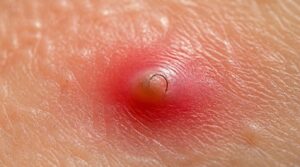
Ingrown hairs aren’t just a cosmetic annoyance — they’re your skin’s way of signaling that something’s gone wrong beneath the surface. Understanding why they get inflamed helps you treat them smarter and prevent them from coming back. Here’s what’s actually happening under your skin.
Regular exfoliating to prevent ingrown hairs clears away the dead skin cells that trap hairs before they cause trouble.
Trapped Hair Beneath Skin
An ingrown hair starts when a hair curls back and reenters the follicle, growing beneath the skin instead of outward. Dead skin cells and sebum harden around it, forming a keratin plug that blocks the follicle completely.
That blockage traps the hair, triggers inflammation, and causes the persistent bump you can feel under the surface. This irritation can sometimes lead to various types of cysts that may require medical attention.
Redness and Swelling Signs
That trapped hair doesn’t stay quiet for long. Your body notices it fast, sending extra blood flow to the area, which shows up as redness, called erythema.
Edema assessment is just checking for swelling, fluid pooling near the bump, changing its contour. Look for a tender spot with clear boundaries.
Witch hazel or hydrocortisone can calm this inflammation quickly.
Itching, Pain, and Warmth
That redness often comes with itching, pain, and a warm feeling. Heat-induced itch happens because temperature changes can intensify itch signals. This thermal pain overlap means warmth can make scratching urges stronger.
To soothe: 1) Apply warm compresses, 2) Use hydrocortisone for itch relief, 3) Try aloe vera for cooling, 4) Dab witch hazel for calming skin relief.
Infection Warning Symptoms
Sometimes irritation crosses a line into real infection, called folliculitis. Watch for pus drainage, spreading redness, or a bump that grows instead of shrinking.
Fever, chills, or swollen lymph nodes signal your body is fighting harder. Any rapid worsening over 24-48 hours means a bacterial infection may need antibiotic ointment—or a doctor’s help.
Common Irritation Triggers
A handful of everyday habits can quietly fuel that flare-up. Clothing friction from tight leggings traps heat and sweat, while laundry residue and fragrance in detergents irritate already-angry skin.
Common culprits include:
- Tight clothing rubbing against bumps
- Scented lotions or product fragrance
- Heavy shaving pressure or dull blades
- Dryer sheet residue on underwear
Each one can turn a mild ingrown hair into full-blown folliculitis fast.
Fast Ways to Soothe Inflammation
Okay, so your skin is angry and you just want relief, right now. Good news: you don’t need anything fancy to calm things down. Here are five simple fixes you can start using today.
Warm Compress Routine
Heat is your best friend here. Soak a clean washcloth in warm water, wring it out, and hold it on the bump for 15-20 minutes. It should feel cozy, not scalding.
Reapply when it cools. Stop if redness or pain worsens. This simple step boosts circulation and calms inflammation fast, paving the way for soothing aloe vera afterward.
Hydrocortisone for Itching
Itching driving you crazy? Reach for 1% hydrocortisone cream, an OTC topical steroid that calms inflammation fast. Apply a thin layer once or twice daily for a few days—no longer.
Watch for burning or dryness. Avoid it on broken or infected skin, and if itching worsens or spreads, stop and call your dermatologist instead of reapplying repeatedly.
Hypochlorous Acid Benefits
Hypochlorous acid is one of the gentlest antiseptic treatments you can use on irritated skin. It offers antimicrobial skin defense against bacteria without harsh stinging.
Spritz it on for redness reduction and calming inflammation around bumps. It also helps wound healing in broken skin.
Best part? It’s gentle enough for daily application, adding a layer of barrier protection while your skin recovers.
Hydrocolloid Patch Use
Think of a hydrocolloid patch as a tiny bandage with a job to do. Stick it on clean, dry skin over the bump.
The gel absorbs fluid, swelling, and softens as it works. Leave it on for several hours or overnight, until it looks puffy and saturated. Peel it off gently—your skin underneath should look calmer already.
When to Stop Shaving
Your razor isn’t always your friend. Stop shaving if a bump turns red, hot, or oozes pus—signs of inflammation or infection.
- Visible swelling or warmth
- Open, raw skin
- Pus or drainage
- Spreading redness
- Fever
Give skin a recovery period: warm compresses, salicylic acid, gentle postshave care. Avoid razor burn worsening things. Persistent symptoms? See a dermatologist.
Top 10 Ingrown Hair Products
Sometimes the right product makes all the difference between a stubborn bump and clear skin. You don’t need a full skincare overhaul to get results, just a few targeted picks that actually work. Here are ten products worth keeping in your routine.
1. Topicals High Roller Ingrown Hair Serum
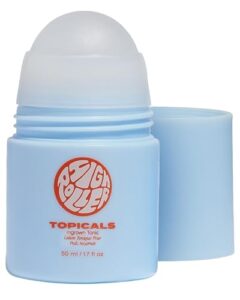
This roll-on serum targets bumps with a smart glycolic and salicylic acid combo, exfoliating skin while clearing clogged pores. It’s alcohol-free, fragrance-free, and gentle enough for your bikini line, underarms, or beard area. Niacinamide, allantoin, and centella asiatica calm redness as the acids work.
At $26 for 1.7 fl oz, it’s pricier than drugstore options, but the mess-free applicator makes treating stubborn spots simple. Just remember sunscreen afterward, since these acids increase sun sensitivity.
| Best For | Anyone dealing with ingrown hairs, razor bumps, or dark spots on the bikini line, underarms, legs, or beard area who wants a gentle, fragrance-free exfoliating treatment. |
|---|---|
| Format | Roll-on serum |
| Skin Type | All skin types |
| Key Active | Salicylic/glycolic acid |
| Cruelty-Free | Yes |
| Fragrance-Free | Yes |
| Primary Use | Ingrown hair treatment |
| Additional Features |
|
- Roll-on applicator makes it easy to target specific spots without mess
- Gentle formula (alcohol-free, fragrance-free, paraben-free) that’s safe for sensitive areas
- Vegan and cruelty-free
- Higher price point than similar drugstore products
- Requires daily sunscreen to avoid sun sensitivity
- Results can vary from person to person.
2. Hyland’s PRID Drawing Salve
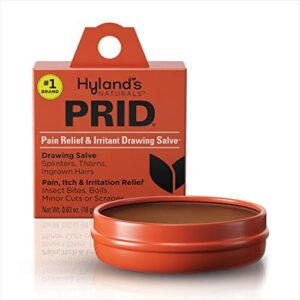
If serums feel too high-tech, this old-school drawing salve takes a different approach. It’s a thick, tar-like ointment made with ichthammol and silicea, plus arnica and calendula, that helps pull out trapped hair and reduce bump size.
Clean the area, apply a small amount, then cover with a bandage. Reapply every 8 to 12 hours.
The smell is strong and the texture is sticky, but for stubborn cysts, it’s a reliable backup.
| Best For | People dealing with stubborn ingrown hairs, splinters, or cysts who want an old-school remedy that actually pulls things out. |
|---|---|
| Format | Topical ointment |
| Skin Type | All skin types |
| Key Active | Ichthammol/Silicea |
| Cruelty-Free | Not specified |
| Fragrance-Free | Not specified |
| Primary Use | Drawing out splinters/boils |
| Additional Features |
|
- Made with natural active ingredients like ichthammol and silicea
- Helps draw out splinters, thorns, ingrown hairs, and reduce bump size
- Paraben-free and made in the USA
- Strong, tar-like smell that takes some getting used to
- Thick, sticky texture that’s hard to spread evenly
- Container can be tricky to open
3. Mario Badescu Drying Lotion Blemish Spot Treatment
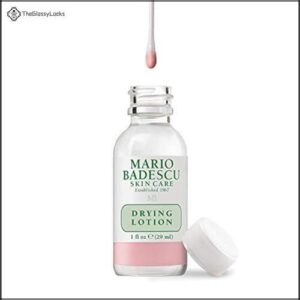
If salve isn’t your style, this classic pink bottle offers a cleaner option. Shake-free by design, it separates into liquid and sediment, with calamine and zinc oxide settling at the bottom.
Dip a cotton swab into the sediment and dab it directly onto the bump before bed. Salicylic acid and sulfur work together to dry out the blemish overnight, reducing redness by morning.
Skip it on broken skin, and keep eyes clear.
| Best For | Anyone dealing with occasional surface breakouts who wants a no-fuss overnight spot treatment to calm redness fast. |
|---|---|
| Format | Spot treatment liquid |
| Skin Type | All skin types |
| Key Active | Salicylic acid/sulfur |
| Cruelty-Free | Yes |
| Fragrance-Free | Not specified |
| Primary Use | Overnight blemish spot treatment |
| Additional Features |
|
- Dries out blemishes and reduces redness by morning
- Works on face, back, chest, and neck for active breakouts
- Vegan, cruelty-free, and free of sulfates, phthalates, parabens, and gluten
- Strong medicinal smell that some people find off-putting
- Won’t help with blackheads or deep cystic acne
- Overuse can lead to dryness or flaky residue
4. Paula’s Choice Salicylic Acid Liquid Exfoliant
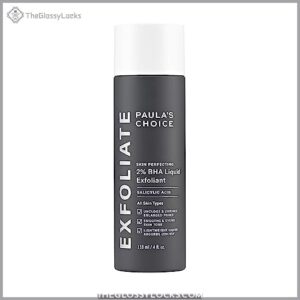
For prevention, this leave-on liquid uses 2% salicylic acid to clear pores before bumps form. It’s fragrance-free and paraben-free, with green tea extract calming skin as it works.
Apply with a cotton pad after cleansing, no rinsing needed. It smooths texture and fades dark marks from old ingrowns, though it raises sun sensitivity, so sunscreen is a must the next morning.
| Best For | Anyone dealing with clogged pores, blackheads, or recurring ingrown hairs who wants a gentle, no-rinse exfoliant they can build into a nightly routine. |
|---|---|
| Format | Leave-on liquid |
| Skin Type | All skin types |
| Key Active | Beta hydroxy acid |
| Cruelty-Free | Not specified |
| Fragrance-Free | Yes |
| Primary Use | Pore-clearing exfoliant |
| Additional Features |
|
- Unclogs pores and helps prevent new breakouts before they start
- Smooths rough texture and fades old dark marks over time
- Fragrance-free, paraben-free, and calmed with green tea extract
- Makes skin more sensitive to the sun, so daily SPF is non-negotiable
- Can cause some initial purging or flaking as skin adjusts
- The bottle’s dispenser can get messy and lead to product waste
5. Neosporin Original First Aid Antibiotic Ointment
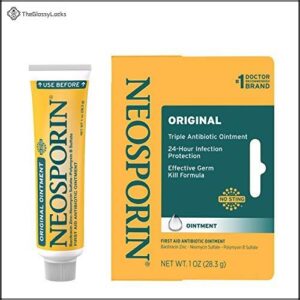
This classic ointment combines bacitracin zinc, neomycin, and polymyxin B sulfate to fight infection in minor cuts and bumps. If an ingrown spot looks open, red, or oozing, dab a small amount, about a fingertip’s worth, after cleaning the area.
Cover with a bandage and reuse up to three times daily. Just know it’s for infection prevention, not exfoliation, and the greasy texture can stain clothes. Use sparingly and only on irritated, broken skin.
| Best For | Anyone who wants a reliable, no-fuss ointment to keep small cuts, scrapes, or irritated spots clean and protected while they heal. |
|---|---|
| Format | Ointment |
| Skin Type | All skin types |
| Key Active | Triple antibiotic |
| Cruelty-Free | Not specified |
| Fragrance-Free | Not specified |
| Primary Use | Wound infection protection |
| Additional Features |
|
- Triple antibiotic formula tackles infection-causing germs fast
- No-sting formula makes it easy on sensitive or broken skin
- Compact size is perfect for tossing in a bag, kit, or medicine cabinet
- Greasy texture can feel heavy and leave residue on skin
- Can stain clothing or bedding if it’s not fully absorbed
- Only meant for minor wounds, so it won’t help with bigger injuries
6. Aloe Hydrocortisone Itch Relief Cream
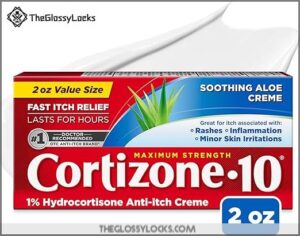
When an ingrown hair just won’t stop itching, this cream delivers fast relief. The 1% hydrocortisone works as a topical corticosteroid, calming inflammation and quieting the itch in about five minutes. The aloe vera base adds a soothing, moisturizing feel without clogging follicles — a smart pairing for irritated skin.
It’s fragrance-free and dye-free, making it gentle enough for sensitive areas. Apply a small amount to clean skin up to twice daily, but limit use to a few days.
| Best For | Anyone dealing with ingrown hair irritation, eczema flare-ups, or bug bites who wants fast, no-fuss relief without fragrance or dyes. |
|---|---|
| Format | Cream |
| Skin Type | All skin types |
| Key Active | Hydrocortisone |
| Cruelty-Free | Not specified |
| Fragrance-Free | Yes |
| Primary Use | Itch and rash relief |
| Additional Features |
|
- Works fast — noticeable itch relief in about five minutes
- Fragrance-free and dye-free, so it plays nicely with sensitive skin
- Compact 2 oz size slips easily into a travel bag or first aid kit
- The aloe formula can sting on extra-sensitive or broken skin
- Not safe for kids under 2, so it’s not a true all-ages option
- Should only be used for a few days at a time, not as an ongoing fix
7. Fur Ingrown Concentrate Exfoliating Oil Kit
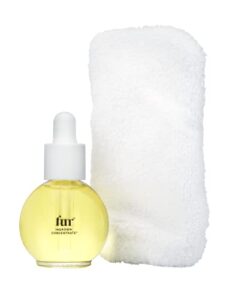
This two-piece kit pairs a lightweight concentrate oil with an exfoliating finger mitt — and together, they work in tandem to soften trapped hairs and clear clogged pores. The oil blends fractionated coconut oil, tamanu seed oil, and tea tree leaf oil to fight bacteria while hydrating without greasiness. Chamomile and lavender calm redness gently.
In the shower, use the mitt to buff problem areas, then apply a few drops directly onto bumps or razor burn outside of it.
| Best For | Anyone dealing with ingrown hairs from shaving or waxing, especially those with sensitive or reactive skin who need a gentle but effective solution. |
|---|---|
| Format | Facial oil |
| Skin Type | Sensitive skin |
| Key Active | Tea tree/tamanu oil |
| Cruelty-Free | Not specified |
| Fragrance-Free | Not specified |
| Primary Use | Ingrown hair prevention |
| Additional Features |
|
- The oil blend — tamanu, tea tree, and coconut — fights bacteria and hydrates without leaving that sticky, greasy feeling behind
- Chamomile extract helps calm redness and irritation, making it safe for sensitive and intimate areas
- The included exfoliating mitt gives you a complete two-step routine in one kit
- At $34 for just 0.5 fl. oz., the price-to-volume ratio is a tough sell
- Too targeted for full-body use, so your coverage is limited
- Frequent users will likely burn through it fast and find themselves reordering often
8. Neutrogena Oil Free Acne Face Wash
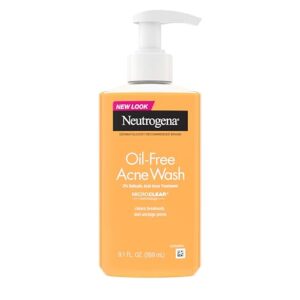
Most people don’t think of a face wash when treating ingrown hairs — but salicylic acid cuts through dead skin and excess oil that trap hairs beneath the surface.
Neutrogena Oil-Free Acne Wash delivers that same BHA exfoliation in a daily foaming cleanser. It’s non-comedogenic and oil-free, so it won’t clog follicles. Use it in the shower before shaving to prep skin and reduce buildup that contributes to irritation and repeat bumps.
| Best For | People with oily, acne-prone skin who want a daily cleanser that also helps prevent ingrown hairs and breakouts. |
|---|---|
| Format | Foaming wash |
| Skin Type | Oily/acne-prone |
| Key Active | Salicylic acid |
| Cruelty-Free | Not specified |
| Fragrance-Free | Not specified |
| Primary Use | Daily acne cleansing |
| Additional Features |
|
- Salicylic acid exfoliates dead skin and unclogs pores, making it great for both acne and ingrown hair prevention
- Non-comedogenic and oil-free, so it cleans without adding to the problem
- Foaming texture rinses clean and works well as a pre-shave prep in the shower
- Can dry out skin with regular use, so you’ll want to follow up with a moisturizer
- The scent is noticeable and might not work for everyone
- Not a standalone ingrown hair treatment — it’s more of a preventative step than a fix
9. Billie Ingrown Preventing AHA Spray
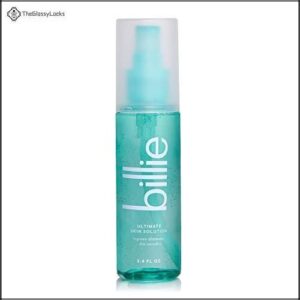
A spray that works before the bump ever forms — that’s the idea behind Billie’s AHA Spray. It combines AHAs, BHAs, and salicylic acid to dissolve dead skin buildup and keep follicles clear. Aloe vera softens the skin so it doesn’t feel stripped after use.
The all-over nozzle makes application easy anywhere you shave. It’s vegan, paraben-free, and dermatologist-approved for all skin types, including sensitive skin.
Because a product’s stable ingredient forms, balanced pH, and delivery vehicle determine whether it works, this review of effective skin care products shows what to look for beyond the label claims.
Its skin-restoring formula pairs beautifully with guidance on choosing a shaving cream with moisturizer that rebuilds natural lipids and wards off razor burn.
| Best For | Anyone who shaves regularly and deals with razor bumps, ingrown hairs, or rough skin texture. |
|---|---|
| Format | Spray |
| Skin Type | All skin types |
| Key Active | AHA/BHA blend |
| Cruelty-Free | Yes |
| Fragrance-Free | Not specified |
| Primary Use | Razor bump prevention |
| Additional Features |
|
- Combines AHAs, BHAs, and salicylic acid to tackle ingrowns before and after they form
- Aloe vera keeps skin calm and hydrated — no tight, stripped feeling after use
- Easy spray nozzle means you can reach anywhere without any fuss
- Can sting on sensitive or intimate areas, so patch testing is a must
- Strong fumes if you go overboard with the spray — keep it in a ventilated space
- Absorbs slower than some similar products, so a little patience is needed
10. Thayers Original Witch Hazel Facial Toner
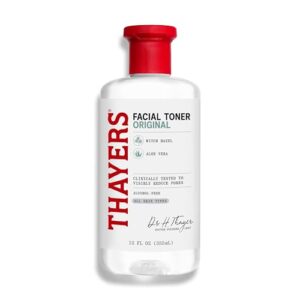
Witch hazel has a long history as a skin calmer, and Thayers Original Toner puts it to good use against ingrown irritation. The alcohol-free formula combines organic witch hazel, aloe vera, and glycerin — soothing inflammation without stripping moisture. It helps reduce redness and minimize pore congestion after hair removal.
For best results, apply it as part of a thoughtful routine — understanding when to apply facial toner in your skincare routine ensures the formula works with your other products, not against them.
Apply it with a cotton pad directly on irritated areas. It’s dermatologist-tested, vegan, and cruelty-free — a gentle daily option your skin won’t fight back against.
| Best For | Anyone dealing with post-hair-removal irritation, oily skin, or clogged pores who wants a gentle, no-fuss daily toner. |
|---|---|
| Format | Toner liquid |
| Skin Type | All skin types |
| Key Active | Witch hazel |
| Cruelty-Free | Yes |
| Fragrance-Free | Not specified |
| Primary Use | Skin toning aftershave |
| Additional Features |
|
- Alcohol-free, so it soothes and calms without drying your skin out
- Multi-use — works as a toner, aftershave, makeup prep, or sunburn relief
- Clean formula: vegan, cruelty-free, and dermatologist tested
- Some skin types may still need a moisturizer on top
- Packaging isn’t consistent, so what shows up might look different than expected
- The scent is pretty mild — not great if you like something with a little more fragrance
Best Ingredients for Calming Bumps
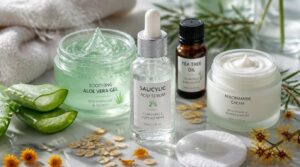
Not all skincare ingredients are created equal regarding ingrown hairs. Some calm the bump, some clear the blockage, and some do both at once. Here are the ones actually worth reaching for.
Salicylic Acid Exfoliation
Salicylic acid works differently from other chemical exfoliants because it’s an oil-soluble BHA, meaning it penetrates into the pore lining rather than just buffing the surface. That depth matters when a clogged follicle is trapping a hair underneath.
Unlike surface exfoliants, salicylic acid penetrates deep into pores to dissolve the buildup that traps hairs beneath your skin
| What It Does | Why It Matters |
|---|---|
| Oil-soluble penetration | Reaches debris inside the pore |
| Keratolytic mechanism | Loosens dead skin cell buildup |
| Comedolytic action | Dissolves sebum blocking follicles |
| Frequency adjustment | Start 2–3x weekly; increase slowly |
| Post-exfoliation hydration | Moisturize after to prevent dryness |
Glycolic and Lactic Acids
Where salicylic acid works inside the pore, glycolic and lactic acids work at the surface — loosening the dead skin layer that traps hairs underneath. Glycolic acid penetrates deeper due to its smaller molecule, while lactic acid hydrates as it exfoliates, making it gentler for inflamed skin.
Introduce either gradually, always follow with moisturizer, and apply sunscreen afterward.
Niacinamide for Redness
Where acids work on the surface, niacinamide targets redness at a cellular level — calming inflammation by reducing irritant signals and reinforcing your skin barrier with ceramides. At 5% concentration, it’s safe and effective for sensitive skin prone to ingrown hair irritation, used daily.
- Lowers inflammatory mediator release
- Boosts ceramide production
- Reduces irritant penetration into follicles
- Gentle enough for daily, redness-prone routines
Aloe and Centella Soothing
Niacinamide addresses redness from within, but sometimes your skin just needs a cooling layer on top. That’s where aloe vera and cica (centella asiatica) come in.
Aloe’s polysaccharides hydrate the surface and calm tightness around inflamed ingrown bumps. Centella’s triterpenes — asiaticoside and madecassoside — help reduce visible redness and support your skin barrier after irritation.
Antibiotic Ointment Use
Reaching for an antibiotic ointment makes sense when an ingrown hair bump shows signs of bacterial infection — think pus, spreading redness, or increasing warmth. Options like bacitracin or mupirocin treat localized infections without overwhelming your skin. Apply a thin, pea-sized layer once to three times daily using a clean swab, then layer a calming ingredient like aloe or niacinamide on top.
- Use only when infection signs are present
- Avoid neomycin if your skin is sensitive — it can trigger contact dermatitis
- Don’t apply to intact, non-infected bumps; it delays proper care
- Stop use and see a doctor if redness spreads or worsens
Home Remedies That Help Safely
Sometimes the best fixes are already in your bathroom cabinet. A few simple ingredients can calm redness, soften the skin around a trapped hair, and help your body do the rest. Here are five home remedies worth trying.
Diluted Tea Tree Oil
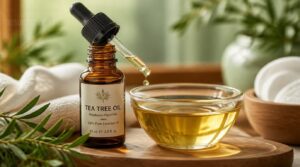
Tea tree oil is one of the oldest tricks in the book for calming an angry ingrown hair. Its terpinen-4-ol content — roughly 35 to 48 percent — is what does the real work, breaking down bacteria around the trapped follicle.
| Dilution Guide | Ratio |
|---|---|
| Sensitive skin | 0.5–1% tea tree oil |
| Normal skin | 1–3% tea tree oil |
Always dilute before applying — undiluted oil risks irritation and allergic contact dermatitis. Mix with a carrier like jojoba or coconut oil for even, gentle absorption.
Aloe Vera Cooling Paste
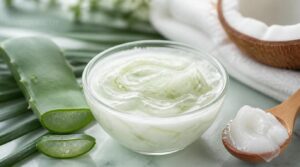
Mixing equal parts aloe vera and coconut oil creates a cooling paste that soothes inflamed ingrown bumps fast. Aloe barbadensis leaf juice forms the gel base, while glycerin helps it cling to irritated skin.
Apply a thin layer directly onto the bump, leave it briefly, then rinse. Before using widely, patch test — menthol-containing versions especially can sting sensitive areas.
Witch Hazel Compress
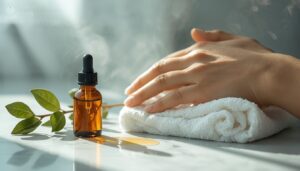
Witch hazel is one of those quiet workhorses that earns its spot in any natural skincare routine. Made from the leaves and bark of Hamamelis virginiana, it contains tannins like hamamelitannin that give it that signature astringent, calming feel on irritated skin.
For ingrown hair inflammation, a witch hazel compress works by cooling and tightening the area, which helps reduce redness and swelling fast. Here’s how to apply it safely:
- Soak a clean cloth or gauze with witch hazel liquid.
- Press it gently onto the inflamed bump for a few minutes.
- Repeat two to three times daily for consistent skin soothing results.
- Choose an alcohol-free version with vegetable glycerin if your skin runs sensitive.
If you’re prone to dryness or stinging, ethanol-based formulas can irritate already-compromised skin. That’s why the alcohol-free option matters — it still delivers natural ingrown hair relief without the added sting. Avoid applying it to broken or cracked skin, and stop use if redness worsens.
Black Tea Bag Compress
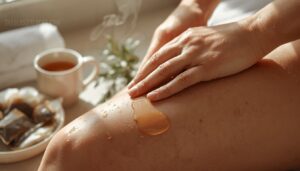
Black tea bags offer more than your morning cup — they bring anti-inflammatory properties that help quiet irritated, inflamed skin around ingrown hairs. The tannins inside act as a natural astringent, gently tightening the affected area and easing redness.
| Step | Details |
|---|---|
| Brew time | Steep for 10–15 minutes in boiling water |
| Application | Press warm bag directly onto the bump |
Always use a fresh bag each session to avoid reintroducing bacteria. Apply two to three times daily for consistent skin soothing and natural ingrown hair relief.
Gentle Aspirin Paste
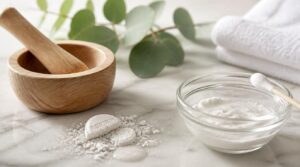
Aspirin paste is one of those old-school remedies that still earns its place. Acetylsalicylic acid — aspirin’s active ingredient — acts as a topical anti-inflammatory, reducing swelling and redness around an ingrown hair bump.
- Crush one uncoated tablet into fine powder
- Add a few drops of water to form a thick paste
- Apply directly to the bump for 10–15 minutes, then rinse
Use it as a gentle exfoliation spot treatment only.
Prevent Future Ingrown Hair Irritation
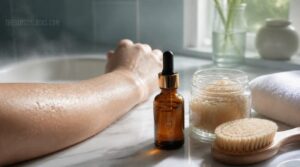
Treating an ingrown hair is only half the battle — keeping them from coming back is where real change happens. A few consistent habits can make a noticeable difference in how your skin responds after shaving, waxing, or any hair removal routine. Here’s what actually works.
Shave With Hair Growth
The direction you shave matters more than most people realize. Shaving with hair growth — not against it — reduces friction on the skin and lowers your chance of hairs curling back beneath the surface. Short, single strokes keep pressure light and controlled.
After shaving, apply a moisturizer to maintain your skin’s barrier and support the healing process.
Use Sharp Fresh Blades
A dull blade drags across skin, increasing friction and raising your risk of ingrown hair. Replace your razor every five to seven shaves, or sooner if it starts tugging.
- Rinse and dry blades fully after each use
- Store razors in a dry spot
- Hold the razor at a shallow angle
- Use light pressure — let the blade do the work
Exfoliate Two Weekly Times
Keeping blades fresh is only half the equation — exfoliating twice weekly gives hair a clear path out.
Chemical exfoliants, like salicylic acid (a BHA), dissolve dead skin without harsh scrubbing. On non-shave days, apply a thin layer, wait, then rinse.
After exfoliating, always use a non-irritating moisturizer to support your skin barrier and prevent dryness that worsens ingrown hair bumps.
Moisturize Without Clogging Pores
After exfoliating, your skin needs moisture — but the wrong product can trap oils and block follicles.
Choose a noncomedogenic, water-based moisturizer with barrier-friendly ingredients like hyaluronic acid and ceramides. A lightweight gel texture absorbs cleanly without leaving residue.
- Apply to slightly damp skin
- Use only a small amount
- Pat gently, don’t rub
- Focus on dry areas only
- Avoid heavy creams on hair-bearing zones
Wear Loose Breathable Clothing
Tight clothing is one of the quietest contributors to ingrown hair inflammation — it traps heat, blocks airflow, and presses fabric directly against irritated follicles.
| Factor | Tight Clothing | Loose Breathable Clothing |
|---|---|---|
| Airflow | Restricted | Improved circulation |
| Moisture | Trapped against skin | Moisture wicking away |
| Follicle pressure | Constant friction | Minimal skin contact |
Choose loose-fitting cotton or linen to support hair follicle health and reduce skin irritation.
Frequently Asked Questions (FAQs)
Why do ingrown hairs get so inflamed?
When a hair curls back into the skin, your immune system treats it like an invader — triggering redness, swelling, and pain. Bacteria can join in, turning a minor irritation into a full-blown infected follicle fast.
Does diet or hydration affect ingrown hair frequency?
Yes — and more than most people realize. Well-hydrated skin lets hair exit follicles smoothly, while dehydration worsens friction and blockage. Anti-inflammatory foods rich in omega-3s and low glycemic load can reduce flare frequency noticeably.
Are certain body areas more prone to ingrown hairs?
Absolutely — some spots are much more vulnerable than others. The beard growth area, pubic bikini line, and armpit hair curl zones are top offenders, especially if you have curly or coarse hair.
Can hormonal changes trigger more frequent ingrown hairs?
Hormones really do hair you out. Androgen impact ingrowns rises when testosterone spikes during puberty or with PCOS. Pregnancy hormonal effects and menopause follicle sensitivity further disrupt growth, making ingrown hair inflammation more frequent.
Is it safe to pop or squeeze ingrown hair bumps?
Don’t squeeze that ingrown hair—squeezing risks pushing bacteria deeper, causing infection or scarring. Instead, try warm compresses and gentle exfoliating. If it’s stubborn, dermatologists offer professional extraction with proper post-popping care to calm inflammation safely.
Conclusion
Think of your skin as a guard at the gate, reacting to anything that sneaks in sideways, including a hair curling back instead of growing out.
Soothing ingrown hair inflammation means giving that guard a reason to stand down: cool it with a compress, calm it with the right ingredients, and stop poking the gate with dull blades. Treat your skin gently, and it stops sounding alarms, leaving calm, clear skin behind.