This site is supported by our readers. We may earn a commission, at no cost to you, if you purchase through links. This content is for general informational and educational purposes only and is not a substitute for professional medical, dermatological, or nutritional advice.

That small red bump after shaving isn’t just annoying—it’s your skin reacting to a hair that couldn’t find its way out. For people with curly or coarse hair, this happens constantly, and standard advice like "moisturize more" rarely makes a dent.
The real fix starts before the razor even touches skin. Knowing what pushes a hair sideways into the follicle gives you a clear path to stop it from happening. The tips, remedies, and care steps ahead cover exactly that—from prep routines to natural treatments that actually work.
Table Of Contents
Key Takeaways
- Shaving with the grain using a sharp, single-blade razor — and replacing it every five to seven shaves — cuts your risk of ingrown hairs before they even start.
- Dead skin and keratin buildup quietly trap hairs beneath the surface, so exfoliating two to three times a week with a sugar scrub, glycolic acid, or dry brushing keeps follicles clear.
- After hair removal, reach for a fragrance-free, non-comedogenic moisturizer or lightweight oil like jojoba — heavy balms with beeswax or cocoa butter can clog freshly opened follicles.
- If a bump shows spreading redness, pus, fever, or keeps coming back in the same spot, home remedies won’t cut it — that’s your skin asking for a dermatologist.
What Causes Ingrown Hairs
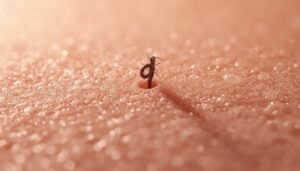
Ingrown hairs don’t just happen randomly — there’s always a reason behind them. A few key factors make your skin more likely to trap a growing hair beneath the surface. Here’s what’s actually going on.
Understanding these triggers is the first step — and this guide on common causes and fixes for ingrown hair bumps breaks down exactly what your skin is reacting to.
Curly or Coarse Hair
If you have curly or coarse hair, you’re already working against the odds. Each strand grows along a curved path and can easily bend back into the skin during regrowth. Coarse fibers — often wider than 80 microns — are less flexible and harder to redirect once they start curling sideways, making natural ingrown hair relief a daily priority.
Blunt Shaving Edges
Your razor blade does more damage than you think. A dull edge doesn’t cut hair — it drags and bends it, pushing strands sideways into the follicle opening. That’s how razor bumps start.
Replace blades every five to seven shaves, use light, even pressure, and keep the guard aligned. A clean edge is your first defense against ingrown hairs.
Clogged Hair Follicles
Even after swapping out your dull blade, another problem may already be forming beneath the surface. Keratin buildup can quietly block the follicle opening, trapping the hair before it even breaks through. Add sweat and debris to that mix, and you’ve created the perfect environment for bacterial growth — the kind that leads to red, swollen bumps and, over time, chronic folliculitis.
Additionally, using non-comedogenic skincare products can help prevent further clogging.
Dead Skin Buildup
Blocked follicles aren’t the only thing working against you. Dead skin buildup is just as sneaky. When keratinocyte shedding slows, old cells pile up, forming a surface film that seals hair underneath. Here’s what that buildup actually does:
- Traps growing hairs below the skin
- Thickens the stratum corneum
- Congests pores with debris
- Makes gentle exfoliation harder to achieve
Tight Clothing Friction
Wearing tight clothing right after hair removal is asking for trouble. Snug fabrics stay in constant contact with your skin, and repeated rubbing cycles build friction fast — especially when sweat enters the picture. That skin friction interaction can push freshly cut hairs sideways, right back into the follicle.
Stick to loose-fitting clothing for 24 to 48 hours post-removal.
Natural Shaving Prevention Tips
Most ingrown hairs are a shaving problem, and shaving smarter is your first line of defense. A few small changes to your routine can make a real difference before irritation even starts. Here’s what to adjust next time you reach for the razor.
Shave With Hair Growth
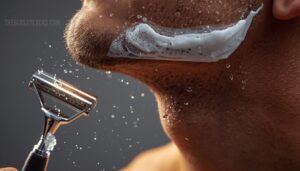
One small habit can stop most ingrown hairs before they start: shave with the grain. That means moving the blade in the same direction your hair grows, not against it. Shaving against the grain leaves a sharper, shorter tip that curls back into the skin. Follow the natural direction, and you cut that risk greatly.
Use Sharp Single Blades
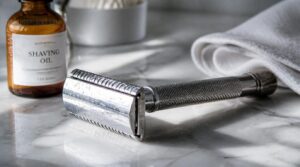
Your razor matters more than you think. A sharp single-blade razor cuts hair cleanly instead of dragging it sideways into the skin. Dull blades tug, and that tugging bends hair tips toward the follicle — exactly where ingrown hairs start.
Replace your blade every five to seven shaves and rinse it dry after each use.
Soften Hair First

Warm water is your first line of defense. Rinse the area for two to three minutes before picking up your razor. That short soak softens the hair shaft, making it pliable instead of stiff and wiry.
Here’s what pre-shave hydration does for you:
- Softens the hair shaft so blades cut cleanly
- Reduces razor tugging on dry, coarse strands
- Improves razor glide across the skin surface
- Lowers follicle irritation during the first passes
- Keeps hair from curling back into the skin after cutting
Apply Shaving Oil
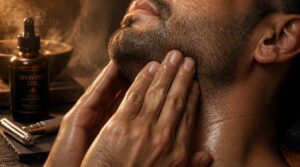
Think of shaving oil as a shield you build before the blade ever touches your skin. Massage it gently into your stubble, working it down to the skin underneath. Wait 30 to 60 seconds — that absorption time softens hair and prepares your follicles. The oil creates a pre-shave barrier that lets the razor glide without dragging or catching.
| Step | Action | Benefit |
|---|---|---|
| 1 | Massage oil into stubble | Reaches skin under hair |
| 2 | Wait 30–60 seconds | Softens hair, aids absorption |
| 3 | Shave with the blade | Smooth razor glide, less irritation |
Avoid Daily Shaving
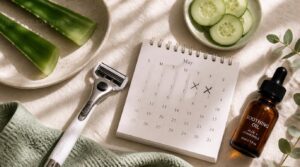
Daily shaving keeps your skin in a constant state of recovery — and it never quite catches up.
Skipping shave days gives your skin barrier time to rebuild. Aim for every two to three days. That small interval reduces razor burn, calms inflamed follicles, and lowers your chances of ingrown hairs forming with each new pass.
Gentle Exfoliation Methods
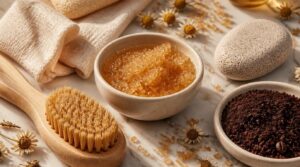
Exfoliating regularly is one of the best ways to keep ingrown hairs from forming in the first place. It clears away the dead skin cells that trap hairs beneath the surface before they become a problem. Here are five gentle methods worth adding to your routine.
Regular exfoliation also helps reduce the redness and irritation that can follow shaving—learn more about what causes razor burn and how to prevent it so you can tackle both issues at once.
Sugar Scrub Routine
Mixing a sugar scrub at home is one of the simplest ways to clear dead skin cells and help free trapped hairs.
Combine one part white granulated sugar with one part coconut oil to form a paste. White sugar offers gentle exfoliation without micro-tears.
Use it two to three times weekly, then moisturize immediately after rinsing.
Baking Soda Paste
Baking soda is another option worth trying. It works as a gentle exfoliant by creating an alkaline skin effect that loosens dead cells sitting over trapped hairs.
Mix baking soda with water to a toothpaste-like consistency. Apply a thin layer, leave it on briefly — no more than two minutes — then use the residue rinse technique: rinse thoroughly with cool water and pat dry. Always moisturize after paste removal to prevent dryness. Do a patch test on a small area first, especially if your skin runs sensitive.
For stubborn pimples, this guide on how to use spot treatment correctly shows how to keep applications gentle and avoid over-drying your skin.
Oatmeal Skin Polish
Oatmeal takes a softer approach than baking soda. Colloidal oatmeal benefits skin by forming a protective film that calms irritation while gently buffing away dead cells. It’s mild enough for sensitive, freshly shaved areas.
Here’s a simple routine:
- Mix oatmeal polish ingredients: finely milled oats with a splash of water or oat milk.
- Massage onto damp skin using small circles.
- Rinse, then moisturize immediately.
Limit oatmeal application frequency to two to three times weekly.
Weekly Dry Brushing
Dry brushing takes exfoliation up a notch from oatmeal’s gentle touch.
Use a firm natural-bristle brush on dry skin before your shower. Stroke toward your heart — upward on legs, outward on arms. Keep it light.
One session per week helps reduce dead skin buildup, lowering the chance of hairs getting trapped beneath the surface.
Glycolic Acid Option
If physical scrubs feel too harsh, glycolic acid is a gentler step. It’s a chemical exfoliant that dissolves dead skin cells sitting on top of your follicles — no scrubbing needed.
Start with an 8% leave-on serum at night, a few times per week. Always follow with SPF the next morning, since exfoliated skin burns faster.
Soothing Natural Skin Remedies
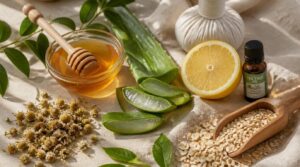
Once the skin is calm and clear, keeping it that way is where these remedies shine. Your kitchen and bathroom cabinet likely already hold a few of these go-to solutions. Here’s what actually works when irritation flares up.
Warm Compresses
A warm compress is one of the simplest ways to calm an angry ingrown hair. The gentle heat relaxes the skin, increases blood flow, and helps draw the trapped hair closer to the surface.
Here’s how to do it right:
- Soak a clean washcloth in warm — not hot — water
- Wring it out so it doesn’t drip
- Press it gently against the bump
- Hold it there for up to 20 minutes
- Reheat the cloth as it cools to keep warmth consistent
Repeat this two to three times daily until the area settles. One important note: skip the compress if the skin is broken or the bump has opened — heat on an open wound can make things worse.
Aloe Vera Gel
Aloe vera gel is nature’s built-in first aid for irritated skin. It’s 99.5% water, which makes it instantly cooling and hydrating without clogging pores. Its natural polysaccharides and anti-inflammatory compounds help reduce redness and swelling around ingrown hairs.
Apply a thin layer of pure aloe vera gel directly to the bump once or twice daily and let it absorb completely.
Diluted Tea Tree Oil
Tea tree oil is one of the most trusted natural remedies for calming ingrown hairs. Its active compound, terpinen-4-ol, delivers real antimicrobial properties that fight bacteria around the bump.
Never apply it straight. Mix 8 drops per ounce of a carrier oil like jojoba. Apply once daily, watch your skin tolerance, and stop if redness increases.
Alcohol-free Witch Hazel
Witch hazel is a quiet powerhouse in your ingrown hair toolkit. Its natural astringent power comes from tannins that tighten pores and calm visible irritation without harsh chemicals.
Choose alcohol-free witch hazel — it delivers post shave calm and skin tone refresher benefits while skipping the drying sting of ethanol. Apply it with a cotton pad after hair removal for gentle, natural ingrown hair relief.
Chamomile Skin Calming
Chamomile is one of those natural remedies that quietly earns its place. Its bioactive compounds — bisabolol, apigenin, and chamazulene — work together to calm redness and reduce irritation around angry follicles.
Brew a strong chamomile tea, let it cool, and press a soaked cotton pad onto the area. For daily use, chamomile hydrosol is gentler and perfect for sensitive skin.
Moisturizing After Hair Removal
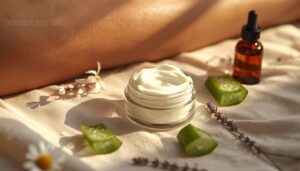
What you put on your skin right after hair removal matters more than most people think. The wrong product can clog follicles and set off a fresh round of ingrown hairs before they even start. Here’s what actually works.
Use Non-comedogenic Moisturizers
After shaving, your skin barrier is vulnerable — moisturizing right away helps it recover. Reach for a non-comedogenic moisturizer to hydrate without trapping debris in freshly opened follicles.
Look for these skin-friendly ingredients:
- Glycerin or hyaluronic acid for lightweight skin hydration
- Niacinamide to calm post-shave redness
- Dimethicone for smooth coverage without greasiness
Gentle application matters too — pat, don’t rub.
Choose Fragrance-free Formulas
Non-comedogenic is a great start, but fragrance-free matters just as much. Scented products often contain "parfum" or "fragrance" on the label — umbrella terms hiding dozens of aromatic chemicals that can sting freshly shaved skin and irritate hair follicles.
Check the ingredient list directly. If you spot "aroma," "perfume," or essential oils, set it down.
Try Jojoba Oil
Jojoba oil is worth keeping on your shelf. Technically, it’s a liquid wax, not an oil — and that matters. It mimics your skin’s natural sebum, hydrates without clogging pores, and carries mild antimicrobial properties that help protect freshly shaved skin.
- Apply a few drops post-shave
- Smooth over bumpy areas
- Use it undiluted or blended
- Skip heavy lotions after
- Repeat daily until skin calms
Apply Grapeseed Oil
Grapeseed oil is a quiet workhorse for post-shave skin care. It’s lightweight, absorbs fast, and its linoleic acid content helps reinforce your skin’s natural moisture barrier without blocking follicles.
Massage a few drops in gentle circular motions over areas prone to ingrown hairs. It also works beautifully before shaving to soften hair and skin, reducing razor drag.
Avoid Pore-clogging Balms
Not every balm belongs on freshly shaved skin. Heavy formulas with beeswax, cocoa butter, lanolin, or multiple thick waxes can trap sweat and dead cells right at the follicle opening — exactly where you don’t want buildup.
Skip balms that clog and reach for:
- Lightweight balm application with fast-absorbing oils like jojoba or grapeseed
- Balms without waxes or heavy butters near freshly shaved areas
- Fragrance-free formulas that won’t trigger extra inflammation
Always do an ingredient label check before applying anything post-shave.
Safe Ingrown Hair Care
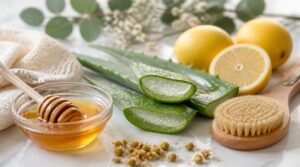
Dealing with an ingrown hair the wrong way can turn a small bump into a bigger problem. There’s a safe way to handle it at home — and it comes down to a few key steps. Here’s what to keep in mind before you start.
Sterilize Tweezers First
Always pre-clean with soap and water first. Before your tweezers touch skin, they need to be properly sterilized. Soak them fully in 70% isopropyl alcohol for several minutes — tips, joints, and all. If you don’t have alcohol, boil them in water for a few minutes instead.
After disinfecting, let them air dry completely before use.
Remove Visible Hair Only
Once your tweezers are sterile, focus only on visible, protruding hairs — hairs you can clearly see breaking the skin surface. Don’t chase anything still buried. Use a magnifying mirror and good light for spot treatment precision.
Gently lift the tip out. After, rinse the area and apply a thin, non-greasy moisturizer for gentle skin recovery.
Never Squeeze Bumps
Squeezing an ingrown hair bump is one of the worst things you can do. It breaks the skin barrier, pushes bacteria deeper, and turns a minor bump into a lasting problem. Inflammation spreads, healing slows, and dark marks linger long after.
Squeezing an ingrown hair bump drives bacteria deeper, spreads inflammation, and leaves lasting dark marks
Instead, apply warm compresses and tea tree oil to naturally encourage resolution without causing damage.
Wash Hands Thoroughly
Your hands carry more bacteria than you’d think.
Before touching any bump, wash with soap and water for at least 20 seconds — scrub between fingers, under nails, and around your thumbs. Dry completely with a clean towel. Damp hands transfer germs faster.
No sink nearby? Use a hand sanitizer with 60% alcohol minimum.
Watch Infection Signs
Most ingrown hairs clear up on their own — but some don’t, and knowing the difference matters.
Watch for these warning signs:
- Red Streak Alert: A streak radiating outward signals spreading infection
- Pus Formation Signs: Thick discharge or pustules mean bacterial infection is active
- Warmth Increase Indicator: Skin hotter than surrounding areas suggests inflammation
- Systemic Fever Response: Fever plus a worsening bump needs urgent care
- Delayed Healing Timeline: No improvement after 10 days — see a doctor
Top 7 Natural Care Items
You don’t need a fancy skincare cabinet to manage ingrown hairs at home. A few simple, affordable items can cover everything from exfoliation to sterilization. Here are seven natural care items worth keeping on hand.
1. Natural Lava Pumice Stone Callus Remover
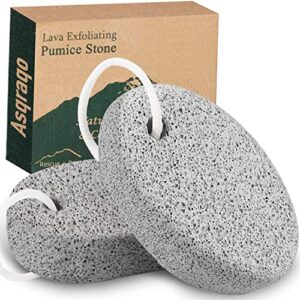
A natural lava pumice stone is one of the simplest tools you can add to your ingrown hair routine. Its porous volcanic surface buffs away dead skin cells that trap hairs beneath the surface.
Soak your skin in warm water first, then use light circular pressure to exfoliate rough patches on feet, heels, or elbows.
Rinse the stone after each use and hang it to dry. Replace it once it starts showing significant wear.
| Best For | Anyone dealing with rough calluses, dry heels, or ingrown hairs who wants a simple, natural way to keep their skin smooth. |
|---|---|
| Form | Solid Stone |
| Net Weight | 3.84 oz |
| Primary Use | Exfoliation |
| Skin Application | Direct |
| Added Additives | None |
| Packaging | Stone with rope |
| Additional Features |
|
- Made from real lava stone, so it naturally buffs away dead skin without any chemicals
- The ergonomic shape and rope loop make it easy to hold and hang up to dry
- Works great in the shower or during a warm soak — fits right into your routine
- The stone can flake and wear down over time, so you’ll need to replace it eventually
- Not safe to use on sensitive or irritated skin
- Takes a little extra care to rinse and dry properly after each use
2. Whole Foods Organic Raw Apple Cider Vinegar
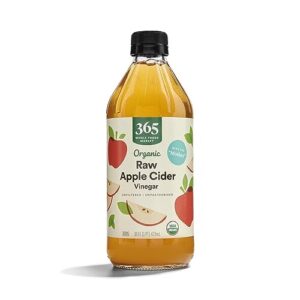
Another staple worth keeping nearby is Whole Foods Organic Raw Apple Cider Vinegar. This 365 brand bottle comes raw, unfiltered, and with the "mother" — the cloudy strands that signal it hasn’t been stripped of its natural properties.
Dilute it with water before applying to irritated skin. Its antimicrobial and astringent qualities help calm redness and reduce bacteria around bumps. At 5% acidity, it’s effective but still gentle enough for regular use when properly diluted.
| Best For | Anyone who wants a versatile, everyday apple cider vinegar for cooking, wellness shots, or natural cleaning on a budget. |
|---|---|
| Form | Liquid |
| Net Weight | 16 fl oz |
| Primary Use | Health & Culinary |
| Skin Application | Diluted |
| Added Additives | None |
| Packaging | Glass bottle |
| Additional Features |
|
- Raw and unfiltered with the "mother" intact, so you’re getting the real deal
- Works for a ton of things — salad dressings, marinades, digestion shots, even household cleaning
- Certified organic, non-GMO, kosher, and vegan at a solid price point ($3.99)
- The 16 oz size runs out fast if you’re using it regularly for cooking or cleaning
- Shipping packaging can be lacking, so leaks during delivery aren’t unheard of
- At 5% acidity, you’ll want to dilute it — drinking it straight can be rough on a sensitive stomach
3. Arm and Hammer Pure Baking Soda
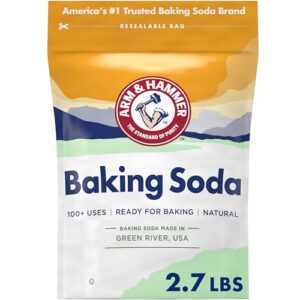
Baking soda is a surprisingly capable ingredient for gentle skin exfoliation. Arm & Hammer Pure Baking Soda is 100% sodium bicarbonate — no additives, no fragrance, nothing extra. Mix a small amount with water to form a paste, then gently rub it over bumpy areas in slow circular motions. Rinse thoroughly afterward.
Keep the resealable bag sealed between uses to prevent moisture from clumping the powder. It’s a simple, affordable step that fits easily into your routine.
| Best For | Anyone looking for a simple, no-frills baking soda for cooking, cleaning, or light skincare without paying for unnecessary additives. |
|---|---|
| Form | Powder |
| Net Weight | 2.7 lbs |
| Primary Use | Baking & Cleaning |
| Skin Application | Dissolved or mixed |
| Added Additives | None |
| Packaging | Resealable bag |
| Additional Features |
|
- Pure 100% sodium bicarbonate — no fillers, fragrance, or cornstarch sneaking in
- Incredibly versatile: bakes bread, scrubs sinks, deodorizes your fridge, and more
- Made with certified renewable energy, so it’s a cleaner choice for the environment
- Has to stay sealed tight or it’ll absorb moisture and clump up
- Packaging is pretty basic — nothing fancy on the shelf
- The 2.7 lb bag might feel bulky if you only need it for occasional skincare use
4. Organic Raw Unrefined Shea Butter
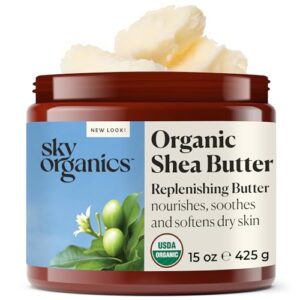
Where baking soda buffs the surface, shea butter seals it. After exfoliating, your skin needs something to hold moisture in — and raw unrefined shea butter does exactly that.
Apply a small amount to your palms and let it melt from body heat. Then smooth it over shaved or bumped areas. Its fatty acids coat the skin, reducing dryness that makes ingrown bumps more noticeable. Just note: a little goes a long way, or it’ll feel greasy.
| Best For | Anyone dealing with dry skin, ingrown hairs, or rough patches who wants a simple, no-fuss natural moisturizer they can use head to toe. |
|---|---|
| Form | Solid Butter |
| Net Weight | 15 oz |
| Primary Use | Skin Moisturizing |
| Skin Application | Direct |
| Added Additives | None |
| Packaging | Tub |
| Additional Features |
|
- Pure, single-ingredient formula with no additives or fillers
- Deeply nourishes dry skin, eczema, and cracked heels with lasting moisture
- Doubles as a DIY beauty base — great for mixing into your own recipes
- Needs to be warmed up in your hands before it spreads easily
- The natural earthy scent can be a bit strong if you’re sensitive to it
- Can feel greasy if you use too much, so it takes some getting used to
5. Njoy Sugar, 20 Oz. Canisters, Pack Of 3

Sugar scrubs don’t require a fancy product — just pure granulated cane sugar. Njoy’s 20 oz canisters give you plenty to work with, and the pack of 3 means you won’t run out mid-routine.
Mix a small amount with coconut oil, then gently massage over shaved areas in circular motions. It buffs away dead skin that traps hairs beneath the surface. The flip-top pour spout keeps things clean and mess-free between uses.
| Best For | Anyone who needs a bulk sugar supply for coffee stations, office break rooms, or high-volume food service settings. |
|---|---|
| Form | Crystals |
| Net Weight | 5 lbs |
| Primary Use | Muscle Relief |
| Skin Application | Dissolved in water |
| Added Additives | None |
| Packaging | Resealable bag |
| Additional Features |
|
- Three 20 oz canisters give you a solid supply without constant restocking
- The flip-top pour spout makes it easy to use without making a mess
- Pure cane sugar with no additives — straightforward and versatile
- Containers can crack or split during shipping
- Packaging doesn’t hold up great in transit
- The canisters themselves aren’t the most durable
6. Colgate Total Whitening Mint Toothpaste
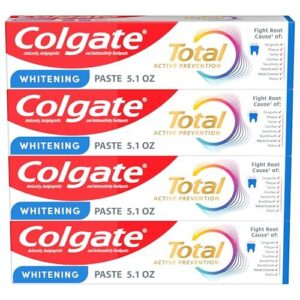
Toothpaste for ingrown hairs? It sounds odd, but Colgate Total Whitening Mint has a surprisingly useful role here. Its stannous fluoride formula carries antibacterial properties that help calm minor inflammation around irritated follicles.
Dab a small amount directly onto a red bump, leave it for a few minutes, then rinse clean. The mint cooling effect soothes on contact.
Keep a tube in your bathroom kit — it’s a quick, low-cost option between your regular treatments.
| Best For | Families or anyone who wants an all-in-one toothpaste that fights bacteria, whitens, and keeps gums healthy without buying multiple products. |
|---|---|
| Form | Granules |
| Net Weight | 60 oz total |
| Primary Use | Sweetening |
| Skin Application | Mixed with oil |
| Added Additives | None |
| Packaging | Canister |
| Additional Features |
|
- Stannous fluoride gives you real antibacterial protection that lasts all day with regular brushing
- Tackles multiple issues at once — whitening, sensitivity, tartar, and bad breath
- Comes in a 4-pack, so you’re stocked up and saving money per tube
- You need to brush twice a day consistently, or the antibacterial benefits fade
- Gum improvements take about three months to show — not a quick fix
- Not a fit for anyone looking for a clean or all-natural formula
7. Unscented Ethyl Rubbing Alcohol Antiseptic
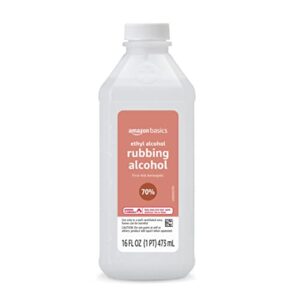
Sterilizing your tools properly is non-negotiable — and that’s exactly where unscented ethyl rubbing alcohol antiseptic earns its place. At 70% ethyl alcohol, it kills bacteria on tweezers and needles before you extract a visible ingrown hair.
Apply it directly to your tool, wait a moment, then proceed. You can also dab it lightly on skin after extraction to reduce infection risk.
Keep a 16-ounce bottle handy. It’s simple, affordable, and it does its job without question.
| Best For | Anyone who needs a reliable, no-frills antiseptic for sterilizing tools, treating minor cuts and scrapes, or DIY projects like herbal tinctures and cosmetic cleaning. |
|---|---|
| Form | Paste |
| Net Weight | 20.4 oz |
| Primary Use | Oral Care |
| Skin Application | Oral or topical |
| Added Additives | Multiple synthetic |
| Packaging | Tube |
| Additional Features |
|
- Kills bacteria fast — 70% ethyl alcohol is the sweet spot for effective disinfection
- Unscented formula means no harsh chemical smell when you’re working up close
- Versatile beyond first aid — works for botanical extractions, nail tools, and perfume making
- Highly flammable, so you need to keep it far from heat sources and open flames
- Contains denatonium benzoate and other additives, making it unsafe to ingest or use in skincare
- External use only — not a substitute for isopropyl alcohol in applications that need a purer formula
When Natural Care is Not Enough
Natural remedies work well for most ingrown hairs, but sometimes your skin is telling you something bigger is going on. Knowing when to stop treating at home and get professional help can save you from a much worse problem. Watch for these signs that it’s time to call a dermatologist.
If irritation keeps coming back, it may point to a weakened moisture barrier, so check these signs your skin barrier needs healing before trying another remedy.
If the area also looks red and inflamed, it’s worth checking whether underlying dry, flaky skin is making the irritation worse.
Spreading Redness
Redness that keeps spreading is your skin waving a red flag. Spreading redness can move outward over hours — not days — especially when bacteria enter through small shaving cuts.
Heat, sweat, and tight clothing only make it worse. If the area feels warm, looks puffy, or grows past the original spot, stop home care and see a doctor.
Excessive Pus Drainage
Thick, milky discharge from a bump isn’t just unpleasant — it’s your body signaling a bacterial infection that’s gone past the surface. This purulent drainage can appear white, yellow, or green, and may carry a foul odor.
If it’s increasing in amount, the infection is likely worsening. Don’t delay — see a doctor before it spreads further.
Fever or Warmth
A fever isn’t just a number — it’s your immune system fighting hard. When an ingrown hair becomes deeply infected, prostaglandin E2 signals your hypothalamus to raise its temperature set point, triggering chills, then warmth, then sweating as heat loss mechanisms kick in.
Watch for these warning signs:
- Skin that feels warm to the touch
- Chills followed by sweating
- A low-grade fever above 38°C
- Spreading redness around the bump
Skip the warm compress. See a doctor immediately.
Recurring Painful Bumps
Once fever passes, watch whether bumps keep coming back in the same areas. True ingrown hairs rarely repeat like that.
Bumps in skin folds suggest hidradenitis diagnosis. Sinus tracts, scar tissue, hormonal triggers, and genetic factors all drive flares. Warm compresses, tea tree oil, and gentle exfoliation offer natural ingrown hair relief — but won’t stop recurrence.
Dermatologist Treatment Options
When natural remedies can’t break the cycle, a dermatologist steps in with real tools. They may prescribe Prescription Topical Steroids, retinoid medication like adapalene gel, or salicylic acid to clear follicles. For infected bumps, Oral Antibiotic Therapy or antibiotic ointment helps fast.
Deeper cysts need Incision Drainage Procedure or Professional Extraction Techniques. Laser Hair Reduction cuts long-term recurrence substantially.
Frequently Asked Questions (FAQs)
Can diet affect ingrown hair frequency or severity?
Yes, diet plays a real role. High glycemic foods spike inflammation, while omega-3s and zinc support skin healing. Vitamin A helps balance follicle cell turnover, making breakouts less likely.
Do hormonal changes increase ingrown hair development?
Hormones pull strings behind the scenes. Androgen level impact on hair follicle health is real — higher testosterone makes hair coarser, raising PCOS ingrown risk and worsening skin inflammation during pregnancy and menopause.
Which body areas are most prone to ingrowns?
Ingrown hairs hit hardest where hair removal meets friction. The beard and neck zone, bikini line, armpits, legs, and even the scalp are the most common trouble spots.
Can stress or sleep impact skins healing ability?
Both yes. Chronic stress delays wound recovery by disrupting collagen and slowing skin repair. Poor sleep weakens your skin barrier, increases inflammation, and makes even small irritation take longer to heal.
Are ingrown hairs more common during certain seasons?
Seasons do play a role. Winter dry skin thickens the surface, trapping hairs more easily. Summer sweat and friction from lighter clothing irritate follicles after shaving — making bumps more likely year-round.
Conclusion
Think of your skin like a garden—neglect it, and unwanted things take root below the surface. But tend to it with consistent daily care, and everything grows exactly as it should.
To reduce ingrown hair occurrence naturally, it always starts with solid prep: soften the hair, use sharp single blades, and exfoliate weekly. Follow up with soothing aftercare and a light moisturizer. Stay consistent, and those stubborn red bumps will finally stop showing up.