This site is supported by our readers. We may earn a commission, at no cost to you, if you purchase through links. This content is for general informational and educational purposes only and is not a substitute for professional medical, dermatological, or nutritional advice.
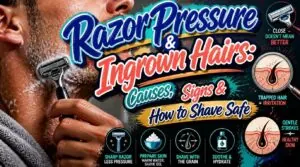
Most people blame ingrown hairs on shaving against the grain, but pressure is often the real culprit—and it works against you before the blade even finishes its stroke. Multi-blade cartridges lift each hair upward, then cut it below the skin surface, leaving a sharp, angled tip buried beneath the epidermis. That tip doesn’t wait. Within hours, it curves inward like a fishhook and triggers an inflammatory response that peaks at 48–72 hours, swelling the surrounding tissue enough to trap the hair shaft completely.
Razor pressure makes this worse at every step. Press too hard, and you’re not getting a closer shave—you’re creating micro-tears in the skin barrier that take up to three days to heal, leaving follicles exposed and vulnerable. Understanding exactly how razor pressure ingrown hair causes stack up gives you the clearest path to stopping them before they start.
Table Of Contents
- Key Takeaways
- Why Razor Pressure Causes Ingrowns
- Shaving Habits That Increase Risk
- Who Gets Ingrown Hairs Most
- Signs Pressure Caused Razor Bumps
- Top 10 Ingrown Hair Products
- 1. Inkey List Glycolic Body Stick
- 2. CeraVe SA Moisturizing Lotion
- 3. High Roller Ingrown Hair Serum
- 4. Hyland’s PRID Drawing Salve
- 5. Mario Badescu Drying Blemish Lotion
- 6. Paula Choice BHA Liquid Exfoliant
- 7. Neosporin Original Triple Antibiotic Ointment
- 8. Cortizone 10 Maximum Strength Aloe Cream
- 9. Fur Ingrown Hair Oil
- 10. Neutrogena Oil Free Acne Face Wash
- How to Shave Without Pressure
- Frequently Asked Questions (FAQs)
- Conclusion
Key Takeaways
- Multi-blade razors lift hair before cutting it, leaving a sharp tip just below the skin’s surface — and that tip is what curls back and causes ingrown hairs, not just shaving direction.
- Pressing too hard with your razor tears tiny gaps in your skin barrier that take up to three days to heal, leaving follicles open to bacteria and making each pass more damaging than the last.
- Curly or coily hair, coarse beard growth, higher androgen levels, and deeper skin tones all raise your personal risk — so the same shaving habits can cause far more ingrown hairs for some people than others.
- Switching to a sharp single-blade razor, shaving with the grain, and letting the blade’s own weight guide the stroke are the most effective changes you can make to stop ingrown hairs before they start.
Why Razor Pressure Causes Ingrowns
Razor pressure does more damage than most people realize — and it all starts the moment the blade meets your skin. The force you apply while shaving sets off a chain of events inside the follicle that can end in painful, stubborn bumps. Here’s exactly how that happens.
Even the angle you hold your razor at plays a direct role — a blade tilted too steeply compounds pressure damage and worsens every problem that follows.
Hair Cut Below Skin
Most razors cut hair below the skin surface. Multi-blade cartridges work by lifting the hair first, then slicing it just beneath skin level.
That sub-surface cut leaves a sharp, angled tip pointing inward. When the hair starts growing back, that tip doesn’t always find its way out — it curves into surrounding tissue instead.
Additional irritation from tight clothing friction can further encourage hairs to grow inward.
Forced Hair-tip Reentry
Once a hair is cut beneath the skin, it becomes a problem in waiting. The angled hair tip left behind acts like a tiny needle — instead of growing outward through the follicle opening, it curves and pierces surrounding tissue.
- Sharp tips point inward after sub-surface cutting
- Blade-induced depth drives the hair below the epidermis
- Follicular re-entry triggers inflammation and bumps
- Avoid applying pressure to prevent this cycle
Follicle Trauma and Swelling
When a hair pierces back into the skin, your body doesn’t stay quiet. Cytokine release begins within 1–2 hours — inflammatory signals that trigger swelling around the hair follicle.
By 48–72 hours, that peak edema can expand the affected area by 2–4 mm. Fibrinogen in the fluid can actually trap the hair shaft, locking it deeper in place.
Micro-tears From Pressure
Swelling isn’t the only problem pressure creates. Every time you press down too hard, the blade scrapes away the outermost skin cells, causing microtrauma from razor strokes that most people never notice — until the damage adds up.
Here’s what that pressure actually does to your skin:
- Strips the lipid layer, removing the natural oils that keep your skin barrier intact
- Creates micro-cuts that expose the deeper dermis to bacteria
- Delays epidermal healing — barrier repair stretches from 24 hours to up to 72 hours
- Invites bacterial invasion through open micro-wounds before they close
- Triggers micro-cut scarring with each repeated pass over unhealed skin
That’s how skin barrier disruption quietly builds into razor burn and lasting skin irritation.
Pressure Versus Glide
Think of it this way: pressure forces the blade into your skin, while proper glide lets it pass across it. A safety razor held at 30–50 degrees — using only its own weight — cuts cleanly at skin level.
Add generous shaving gel, pull skin taut, and the blade glides. No digging. No microtrauma. No ingrowns.
Shaving Habits That Increase Risk
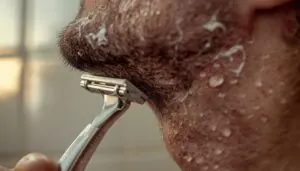
The razor itself isn’t always the whole problem — how you use it matters just as much. Certain habits quietly stack the odds against you every time you shave. Here are five common ones worth knowing.
Pressing Too Hard
Most people assume pressing harder means a closer shave — it doesn’t. Skin compression is the real problem: the blade pushes your skin down, cuts below its natural resting level, and when skin springs back, the hair tip sits trapped beneath the surface.
- Compressed skin causes the blade to cut below the skin line
- Heat builds from friction, irritating follicles microscopically
- Cut hair ends reenter the follicle after skin rebounds
- Light gliding pressure reduces sub-surface cuts greatly
- Short strokes with minimal force prevent accumulated skin trauma
Let the razor’s weight do the work.
Shaving Against The Grain
Shaving against the grain — running the blade opposite your hair’s natural growth — pulls each follicle upward before cutting. That tension forces the blade to sever hair below the skin surface. Keeping your blade at the right razor angle for a close, safe shave — ideally 27°–30° — helps prevent that sub-surface cut in the first place.
When the follicle relaxes, the blunt hair tip has nowhere to go but inward. Curly hair types face three to four times the ingrown risk with this method.
Too Many Passes
Each pass you make removes a thin layer of your skin barrier. By the third pass, your skin isn’t just irritated — it’s open to bacteria and has multiple hairs cut dangerously below the surface. That trapped hair has a sharp tip ready to curl back into the follicle. Limit yourself to one or two passes.
Dull Blade Tugging
A dull blade doesn’t just shave poorly — it tugs and drags across your skin, pulling hairs rather than slicing cleanly through them. That repeated pulling forces hair tips to break unevenly, creating jagged edges that curve back into the follicle.
Shaving with the grain on sensitive skin reduces that drag even further, giving a sharp blade the best chance of a clean, irritation-free pass.
Replace your blade every three to five shaves, or the moment you feel any snag.
Multi-blade Cartridge Effects
Most cartridges pack three to five blades within millimetres of each other.
The first blade lifts each hair upward before the next blade cuts it — often below skin level.
That’s what makes multi-blade designs so prone to razor bumps: the hair retracts beneath the surface and curls back into the follicle before it can grow out normally.
Who Gets Ingrown Hairs Most
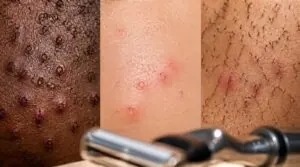
Some people are simply more prone to ingrown hairs than others, and it’s not just about how you shave. Your hair type, skin tone, hormone levels, and even what you wear can all quietly stack the odds against you. Here are the factors that put certain people at higher risk.
Curly or Coily Hair
If you have curly or coily hair, your follicles are already working against you when you shave. The natural curve of each strand means a freshly cut tip can loop back and pierce the surrounding skin before it ever reaches the surface — turning a simple shave into a setup for ingrown hair formation.
Curly hair doesn’t need help working against you — its natural curve does that the moment the blade leaves your skin
Coarse Beard Growth
Coarse beard hair creates its own set of challenges.
DHT sensitivity drives follicles to produce thicker, denser strands — some reaching 0.2 mm in diameter — with cuticles roughly 30% thicker than fine hair.
That rigidity means a freshly cut tip is stiff enough to push sideways into surrounding skin rather than growing cleanly outward, making razor bumps more likely with every shave.
Deeper Skin Tones
If coarse beard hair sets the stage for razor bumps, skin tone changes what happens next.
People with deeper skin tones have larger, more active melanosomes — the cells responsible for producing pigment. When a follicle becomes inflamed from an ingrown hair, those melanosomes release extra melanin, leaving dark marks called post-inflammatory hyperpigmentation (PIH) that can linger for months.
Higher Androgen Levels
Androgens — the hormones behind vellus-to-terminal conversion — also increase hair density and thickness, meaning more follicles competing for limited space beneath your skin.
People with elevated androgen levels, including those with PCOS, tend to grow coarser, denser terminal hairs that are far more likely to curl back and trigger an ingrown hair after shaving.
Tight Clothing Friction
What you wear right after shaving matters more than most people realize. Tight clothing and rough seams create repeated friction against freshly shaved skin, bending hair shafts sideways so they grow inward instead of straight out — a direct setup for razor bumps.
Cotton or bamboo fabrics reduce this risk considerably compared to synthetics. Dermatologists recommend waiting at least two to four hours before pulling on tight jeans, shapewear, or workout gear.
Signs Pressure Caused Razor Bumps
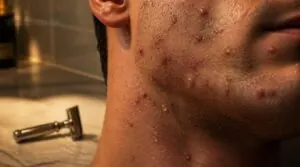
Knowing what to look for makes all the difference when you’re trying to connect your shaving habits to what’s showing up on your skin. Too much razor pressure leaves behind some pretty telling signs — and once you know them, you can’t unsee them. Here’s what your skin is actually trying to tell you.
Red Raised Bumps
One of the clearest signs that razor pressure is working against you is a cluster of raised red bumps appearing within a day or two of shaving.
These are papules — small, firm swellings that form when a cut hair curls back and irritates the surrounding tissue. Your immune system reads this as a threat, triggering skin inflammation that pushes the bump upward.
Itchy or Tender Skin
Itching and tenderness are your skin’s alarm bells. When razor pressure cuts too deep, the immune system floods the area with inflammatory chemicals — the same response your body uses against a splinter. This makes the skin feel raw, tight, and sensitive to touch, especially in the first 24 to 48 hours after shaving.
Visible Trapped Hair Loop
One tell-tale sign that razor pressure went too deep is a visible hair loop — a fine, curved strand you can actually see just beneath the skin surface. On fair skin it often shows as a light line; on deeper skin tones, it appears as a dark shadow beneath the bump.
A warm compress for 10–15 minutes softens the skin enough to make the loop easier to spot, which matters because seeing it clearly is what separates a true ingrown hair from folliculitis, a bacterial condition where no trapped hair is visible at all.
Pus or Infection Signs
When an ingrown hair gets infected, the bump stops feeling like mild irritation and starts to throb.
- Clear fluid — early inflammation, not yet infected
- Yellow-white pus — bacterial infection has set in
- Green pus — active staph infection, needs treatment
- Redness spreading outward — cutaneous infection moving through tissue
- Fever or swollen lymph nodes — systemic infection; see a doctor today
Dark Spots After Shaving
Those dark patches that linger after shaving aren’t a new mole — they’re post-inflammatory hyperpigmentation, your skin’s pigment response to repeated irritation. When shaving trauma triggers inflammation, melanocytes ramp up melanin production as part of healing.
In skin of color, this reaction runs deeper and lasts longer, making hyperpigmentation treatment especially important before irritation accumulates further.
Top 10 Ingrown Hair Products
The right product can make a real difference when ingrown hairs keep showing up after every shave. Some options exfoliate, some soothe, and others target infection — so knowing which to reach for helps you treat the problem more effectively. Here are ten products worth keeping on your shelf.
1. Inkey List Glycolic Body Stick
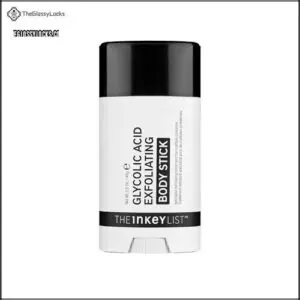
The INKEY List Glycolic Acid Exfoliating Body Stick is a solid-format exfoliant built around 7% glycolic acid, which dissolves the dead skin cells that trap hair beneath the surface. It also contains 0.5% salicylic acid to clear clogged follicles — exactly where ingrown hairs form. Shea butter softens the skin immediately after.
The stick design lets you apply it precisely to problem areas like the bikini line or underarms without mess or rinsing. Use it once daily on clean, dry skin, and pair it with a moisturizer.
| Best For | Anyone dealing with keratosis pilaris, ingrown hairs, or rough bumpy skin on areas like arms, legs, or the bikini line — especially those with sensitive skin who want a fragrance-free, easy-to-use option. |
|---|---|
| Product Form | Solid stick |
| Key Ingredient | 7% Glycolic Acid |
| Size | 1.59 oz |
| Primary Concern | Ingrown hairs, KP |
| Application Area | Arms, legs, back, knees |
| Skin Type | Sensitive skin safe |
| Additional Features |
|
- The 7% glycolic acid salicylic acid combo tackles both dead skin buildup and clogged pores, making it genuinely effective for smoothing "chicken skin" and reducing ingrown hairs
- The solid stick format means precise, no-mess application — no dripping, no rinsing, just target the problem area and go
- Fragrance-free and shea butter-infused, so it’s gentle enough for sensitive skin while still delivering real exfoliation
- The stick runs out faster than you’d expect, especially with regular use — the cost can add up over time
- Acids like glycolic and salicylic make skin more sun-sensitive, so you’ll need to apply sunscreen or stick to nighttime use
- Some users notice a mild chemical smell, and overuse can cause dryness or irritation, so it’s best saved for targeted spots rather than head-to-toe daily application
2. CeraVe SA Moisturizing Lotion
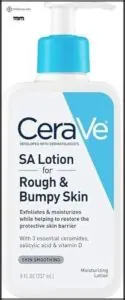
Where the INKEY stick targets specific spots, CeraVe SA Moisturizing Lotion works differently — it covers broader areas like your legs, arms, and back where post‑shave bumps tend to spread.
Its 2% salicylic acid and lactic acid gently dissolve dead skin cells that block follicles, while three ceramides and MVE delivery technology restore your skin barrier and lock in moisture for up to 24 hours.
Fragrance‑free and non‑comedogenic, it’s safe for daily use on sensitive skin.
| Best For | People dealing with post-shave bumps, keratosis pilaris, or rough, dry skin on larger body areas like legs, arms, and back who want a daily moisturizer that also exfoliates. |
|---|---|
| Product Form | Lotion |
| Key Ingredient | 2% Salicylic + Lactic Acid |
| Size | 8 fl oz |
| Primary Concern | Rough, bumpy skin |
| Application Area | Legs, arms, back |
| Skin Type | All skin types |
| Additional Features |
|
- Dual chemical exfoliation (salicylic acid lactic acid) smooths bumpy, uneven skin without harsh scrubbing
- Ceramides and MVE technology keep your skin barrier healthy and hydrated for up to 24 hours
- Fragrance-free, hypoallergenic, and non-comedogenic — gentle enough for daily use on sensitive skin
- May not be strong enough for severe keratosis pilaris or very stubborn, thickened skin
- Some users notice a faint chemical smell or a slightly oily finish, especially in the morning
- Not suitable for use on broken skin, the face, or for anyone sensitive to BHAs like salicylic acid
3. High Roller Ingrown Hair Serum
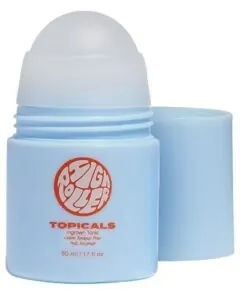
For bump-prone skin that needs more than a broad lotion can offer, High Roller Ingrown Hair Serum steps in with a targeted approach. Its roll-on applicator lets you treat exact spots — the bikini line, underarms, or beard area — without spreading product everywhere.
The formula pairs salicylic and glycolic acid to clear follicular debris while niacinamide and zinc PCA calm redness and support your skin barrier. Alcohol-free and fragrance-free, it’s gentle enough for regular use.
| Best For | Anyone dealing with stubborn razor bumps, ingrown hairs, or post-shave dark spots in targeted areas like the bikini line, underarms, or beard zone. |
|---|---|
| Product Form | Roll-on serum |
| Key Ingredient | Salicylic + Glycolic Acid |
| Size | 1.7 fl oz |
| Primary Concern | Razor bumps, irritation |
| Application Area | Face, underarms, bikini, legs |
| Skin Type | All skin types |
| Additional Features |
|
- The roll-on applicator makes it easy to treat specific spots precisely and hygienically, with no mess
- Salicylic and glycolic acids work together to exfoliate and clear out follicular buildup at the source
- Completely free of alcohol, fragrance, and parabens — gentle enough for sensitive or easily irritated skin
- At $19.50, it’s on the pricier side compared to similar drugstore options
- Some users may find it loses effectiveness after a few months of consistent use
- Can cause mild irritation, so you’ll need to ease in slowly (2–3 times a week) before using it more frequently
4. Hyland’s PRID Drawing Salve
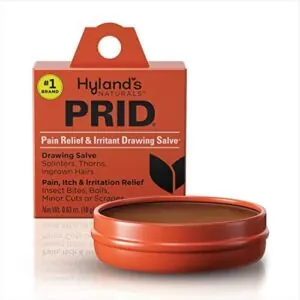
When a targeted serum isn’t enough to coax out what’s already lodged under the skin, you need something with drawing power. That’s where Hyland’s PRID Drawing Salve earns its place. Its key ingredients — ichthammol and silicea — work to soften the area and help pull embedded hairs toward the surface.
Apply it twice daily over a clean, dry bump, cover with a bandage, and let it work. Fair warning: the tar-like odor is noticeable.
| Best For | Anyone dealing with stubborn under-skin issues like ingrown hairs, splinters, boils, or insect bites who wants a natural, no-fuss drawing salve for their home first-aid kit. |
|---|---|
| Product Form | Drawing salve |
| Key Ingredient | Natural drawing agents |
| Size | 0.63 oz (18 g) |
| Primary Concern | Boils, ingrown hairs |
| Application Area | Any affected area |
| Skin Type | General use |
| Additional Features |
|
- Effectively draws out embedded foreign bodies like splinters, thorns, and ingrown hairs
- Natural, paraben-free formula with no known drug interactions
- Simple squeeze-tube application and made in the USA
- Strong, tar-like odor that many users find unpleasant
- Thick, sticky texture makes it tricky to spread evenly on small areas
- The small tube lid can be frustratingly difficult to open
5. Mario Badescu Drying Blemish Lotion
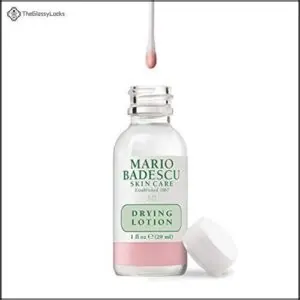
Not every ingrown bump needs to be drawn out — sometimes you just need to dry it down fast. Mario Badescu’s Drying Blemish Lotion targets inflamed surface bumps overnight using a sulfur, calamine, and zinc oxide formula that absorbs excess oil and calms redness while you sleep.
Dip a cotton swab into the pink sediment — don’t shake the bottle — and dab it directly on the bump. By morning, you’ll usually notice visible shrinkage.
| Best For | Anyone dealing with sudden, above-the-skin breakouts who wants a fast, overnight spot treatment that actually delivers visible results by morning. |
|---|---|
| Product Form | Drying lotion |
| Key Ingredient | Salicylic Acid + Sulfur |
| Size | 1 fl oz |
| Primary Concern | Surface blemishes |
| Application Area | Face, back, chest, neck |
| Skin Type | All skin types |
| Additional Features |
|
- Works overnight — most people wake up to noticeably smaller, less red blemishes after a single use
- A tiny dab goes a long way, so the small bottle lasts for months of regular spot treating
- Clean formula (no sulfates, parabens, or phthalates) and vegan/cruelty-free, so it suits most skin care philosophies
- Only works on active, surface-level bumps — won’t help with blackheads, cystic acne, or prevention
- The bottle can’t be shaken or the two-layer formula loses effectiveness, which makes it a bit fussy to use
- The medicinal scent is noticeable, and using too much can cause dryness or flaking
6. Paula Choice BHA Liquid Exfoliant
Salicylic acid works differently from most spot treatments — it goes into the follicle itself. Paula’s Choice BHA Liquid Exfoliant delivers 2% salicylic acid in a lightweight, leave-on formula that dissolves the dead skin buildup blocking hair from exiting cleanly.
Apply a small amount to freshly cleansed skin a few times weekly. It’s fragrance-free and paraben-free, so it’s gentle enough for daily use on most skin types. Just pair it with sunscreen — exfoliated skin burns more easily.
| Best For | Anyone dealing with blackheads, clogged pores, or uneven skin texture who wants a gentle, no-fuss chemical exfoliant they can use daily. |
|---|---|
| Product Form | Liquid exfoliant |
| Key Ingredient | 2% Salicylic Acid |
| Size | 4 oz |
| Primary Concern | Blackheads, clogged pores |
| Application Area | Face |
| Skin Type | All skin types |
| Additional Features |
|
- 2% salicylic acid penetrates deep into pores to clear out buildup, reduce blackheads, and visibly smooth skin over time
- Fragrance-free and paraben-free formula is gentle enough for all skin types, including sensitive skin
- Lightweight leave-on liquid fits easily into any routine — morning or night — and layers well under makeup or sunscreen
- Can cause tingling, dryness, or flaking if you use too much too soon, especially for those new to BHA exfoliants
- Requires daily sunscreen use since exfoliated skin is more vulnerable to sun damage
- The bottle’s dispensing design tends to be messy and can lead to wasted product
7. Neosporin Original Triple Antibiotic Ointment
When an ingrown hair gets infected, you need more than a warm compress. "Neosporin’s" triple antibiotic formula — bacitracin zinc, neomycin sulfate, and polymyxin B — targets bacteria through two different mechanisms, attacking cell walls and blocking protein synthesis at the same time.
Apply a thin layer 1–3 times daily to the affected area. Its HeliDerm technology keeps the wound moist, which helps reduce scarring. If you’re sensitive to neomycin, watch for redness or itching.
| Best For | Anyone dealing with minor cuts, scrapes, burns, or infected ingrown hairs who wants fast, reliable infection protection with added scar-reducing benefits. |
|---|---|
| Product Form | Antibiotic ointment |
| Key Ingredient | Triple antibiotic blend |
| Size | 1 oz |
| Primary Concern | Minor cuts, infection |
| Application Area | Minor wound sites |
| Skin Type | Normal skin |
| Additional Features |
|
- Triple antibiotic formula attacks bacteria two ways at once, giving you broad-spectrum protection that kills 99.9% of germs within 15 minutes
- HeliDerm technology keeps the wound moist to support faster healing and help reduce the appearance of scars
- Versatile and compact — works great in home medicine cabinets, travel kits, sports bags, or emergency kits
- Contains neomycin and bacitracin, which can trigger allergic reactions like redness or itching in sensitive users
- Leaves a greasy, shiny residue that can stain clothing and feel uncomfortable on visible skin
- Not suitable for deep puncture wounds, serious burns, or infections that need prescription-strength treatment
8. Cortizone 10 Maximum Strength Aloe Cream
When inflammation and itching take over after a shave, Cortizone 10 Maximum Strength Aloe Cream gives you a reliable first response. Its 1% hydrocortisone reduces swelling and calms the immune reaction driving that maddening itch — usually within about five minutes.
The added aloe vera offers a cooling sensation on irritated skin. It’s fragrance-free and dye-free, making it gentler for sensitive areas. Use it on inflamed razor bumps, but remember it treats irritation, not infection.
| Best For | Anyone dealing with post-shave inflammation, razor bumps, or mild skin irritation who wants fast, no-fuss itch relief without fragrances or dyes. |
|---|---|
| Product Form | Hydrocortisone cream |
| Key Ingredient | 1% Hydrocortisone |
| Size | 2 oz |
| Primary Concern | Itching, rashes |
| Application Area | Any irritated skin |
| Skin Type | Adults and children 2+ |
| Additional Features |
|
- Starts easing itching in about five minutes thanks to maximum-strength 1% hydrocortisone
- Fragrance-free and dye-free formula makes it a safe pick for sensitive skin
- The added aloe vera delivers a cooling, soothing sensation on top of the itch relief
- The aloe cooling effect can cause mild stinging on broken or very sensitive skin
- Only treats minor irritation — not a replacement for prescription treatments or anything involving infection
- Not recommended for children under 2 or for use over large areas of the body without a doctor’s okay
9. Fur Ingrown Hair Oil
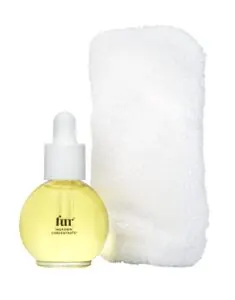
Think of Fur Ingrown Hair Oil as a softening agent rather than a spot treatment. Its mix of grape seed and tamanu oils absorbs quickly without leaving a greasy residue, hydrating skin while helping trapped hairs loosen from the follicle.
Chamomile extract and tea tree oil work together to calm redness and reduce bacterial load. Apply it after shaving on ingrown‑prone areas.
Patch test first — tea tree oil can irritate sensitive skin.
| Best For | Anyone dealing with ingrown hairs after shaving or waxing who wants a gentle, clean-formula oil safe enough for sensitive or intimate skin. |
|---|---|
| Product Form | Exfoliating oil |
| Key Ingredient | Tea Tree + Tamanu Oil |
| Size | 0.5 fl oz |
| Primary Concern | Post-shave ingrowns |
| Application Area | Body, intimate, scalp |
| Skin Type | Sensitive skin |
| Additional Features |
|
- Fast-absorbing and non-greasy, so it works well on sensitive areas like the bikini line or scalp without clogging pores
- Calming blend of chamomile and tea tree oil helps reduce redness and irritation right after hair removal
- Clean, vegan formula free of parabens, silicones, and synthetic fragrance — plus it comes with a mini exfoliating mitt
- At just 0.5 oz, the bottle goes fast if you’re using it all over your body regularly
- It’s on the pricier side for the amount you get, which might not suit every budget
- Tea tree oil can be irritating for some people, so a patch test is a must before diving in
10. Neutrogena Oil Free Acne Face Wash
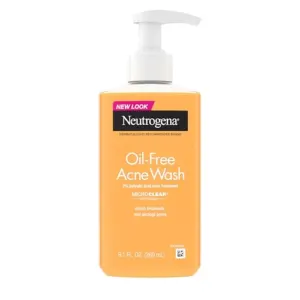
When a shaving routine leaves your skin prone to bumps and blocked pores, a face wash with 2% salicylic acid can make a real difference. Neutrogena Oil-Free Acne Wash uses MicroClear technology to push the active ingredient deeper into pores, dissolving the keratin debris that traps hairs beneath the surface.
Use it twice daily — morning and night — and follow with a moisturizer, since salicylic acid can dry skin out with regular use.
| Best For | People with oily or acne-prone skin who want a daily face wash that clears breakouts and unclogs pores, especially those dealing with post-shave bumps or excess oil. |
|---|---|
| Product Form | Foaming face wash |
| Key Ingredient | Salicylic Acid |
| Size | 9.1 fl oz |
| Primary Concern | Acne, breakouts |
| Application Area | Face |
| Skin Type | Oily, acne-prone |
| Additional Features |
|
- Salicylic acid formula actively treats and helps prevent acne while deep-cleaning pores
- Oil-free and non-comedogenic, so it won’t contribute to future breakouts
- Works as a makeup remover too, making it a solid all-in-one daily cleanser
- Can dry out skin with regular use, so pairing it with a moisturizer is a must
- The scent may be off-putting for those sensitive to fragrance
- Not ideal as a standalone routine for dry or dehydrated skin types
How to Shave Without Pressure
Shaving without pressure isn’t complicated once you know what actually makes the difference. A few small adjustments to your routine can cut your ingrown hair risk dramatically. Here’s what to change first.
Use a Sharp Blade
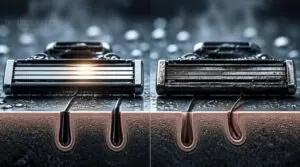
A dull blade is one of the biggest drivers of razor bumps. When the blade tip radius grows beyond 0.1 microns, it stops slicing and starts dragging, pulling hair instead of cutting it clean.
That tugging forces the tip below the skin surface. Replace your blade every 5–7 shaves — the moment it tugs, it’s already too late.
Choose Single-blade Razors
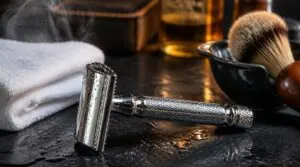
Swapping to a single-blade razor can genuinely change your shave. Unlike multi-blade cartridges that lift and cut below skin level, a single blade cuts at the surface — so hair tips don’t get buried in the follicle.
A weighted handle helps you let the razor do the work, and a closed safety guard keeps blade exposure controlled automatically.
Shave With The Grain
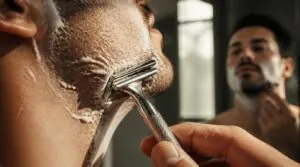
Your razor’s direction matters as much as its sharpness. Shave with the grain — meaning in the same direction your hair naturally grows — to cut at skin level rather than below it, which keeps hair tips from curling back into the follicle.
Run your fingers across your stubble to find where it feels smoothest. That’s your grain direction.
Use Protective Shaving Gel
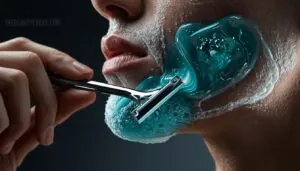
Direction gets you far, but without the right product, your skin is still exposed. Shaving gel creates a protective barrier between the blade and your skin, reducing friction that would otherwise drag the razor and force hairs below the surface — a direct path to ingrown hairs and razor bumps.
Think of it as your blade’s best protection.
Limit Passes and Friction
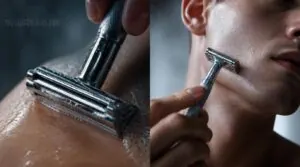
Every pass you make is another chance for irritation. For sensitive skin, two passes — with the grain, then across — are enough.
Rinse the blade after every stroke to prevent clogging and tugging. Re-lather between passes to keep lubrication fresh. Short, controlled strokes beat long drags every time. Less friction means fewer ingrown hairs.
Frequently Asked Questions (FAQs)
Can ingrown hairs cause permanent scarring or keloids?
Yes, they can. Chronic inflammation from repeated ingrown hairs can damage dermal tissue, triggering collagen overproduction and keloid formation. Post-inflammatory hyperpigmentation often lingers for months, especially on darker skin tones.
For those dealing with persistent scarring or discoloration, exploring laser therapy benefits and risks for acne-prone skin may offer a clearer path to long-term improvement.
When should you see a dermatologist for ingrowns?
Most ingrown hairs resolve on their own. See a dermatologist if you notice pus, fever, or spreading redness, bumps lasting over four weeks, or dark spots that won’t fade.
Can ingrown hairs become seriously infected?
Yes — an ingrown hair can turn into a serious skin infection. Bacteria, especially staph, can enter the follicle, causing folliculitis, cellulitis, or even a boil-like sore requiring antibiotics. Fever means see a doctor immediately.
Do hormones affect how often ingrowns develop?
Yes — hormones play a real role. Higher androgen levels increase hair density and thickness, raising the odds a cut hair re-enters the follicle. PCOS, puberty, and pregnancy can all shift this risk.
Conclusion
Pressure is a habit, not a requirement. Every razor pressure that causes ingrown hair begins with a small, correctable choice—pushing down instead of letting the blade do its work.
Switch to a sharp, single-blade razor. Shave with the grain. Let friction replace force.
Your skin doesn’t need to pay the price for a closer shave. Give it the right conditions, and it will respond. Less pressure, fewer ingrowns—it really is that simple.