This site is supported by our readers. We may earn a commission, at no cost to you, if you purchase through links.
That bump you’ve been ignoring for two weeks isn’t going away on its own. Ingrown hairs—especially in the bikini line, underarms, and beard area—affect an estimated 80% of people who shave regularly, yet most reach for the wrong fix: squeezing, picking, or waiting.
The problem runs deeper than the surface. When a shaved hair curls back into the follicle instead of growing outward, your immune system treats it like a foreign invader. The result is swelling, redness, and sometimes a painful abscess that no amount of tweezing resolves.
Professional ingrown hair solutions work precisely because they address the root causes—blocked follicles, bacterial buildup, and compromised skin barriers—rather than the symptoms. Knowing which products actually contain the right active ingredients makes all the difference.
Table Of Contents
- Key Takeaways
- What Are Professional Ingrown Hair Solutions?
- What Causes Ingrown Hairs to Keep Returning?
- Top 10 Professional Ingrown Hair Solutions
- 1. High Roller Ingrown Hair Serum
- 2. Hyland’s PRID Drawing Salve
- 3. Mario Badescu Drying Blemish Lotion
- 4. Paula Choice BHA Liquid Exfoliant
- 5. Neosporin Original Triple Antibiotic Ointment
- 6. Cortizone 10 Maximum Strength Aloe Cream
- 7. Fur Ingrown Hair Oil
- 8. Neutrogena Salicylic Acid Acne Cleanser
- 9. AHA Ingrown Hair Spray
- 10. Thayers Alcohol Free Witch Hazel Toner
- How We Tested and Picked Each Product
- What Ingredients Actually Treat Ingrown Hairs?
- How to Prevent Ingrown Hairs While Shaving
- When Do Professionals Remove Ingrown Hairs?
- Frequently Asked Questions (FAQs)
- How do professionals remove ingrown hairs?
- Can estheticians remove ingrown hairs?
- Can ingrown hairs cause permanent scarring if untreated?
- Are ingrown hair treatments safe during pregnancy?
- How long does it take ingrown hairs to heal?
- Do ingrown hairs go away on their own naturally?
- Can ingrown hairs spread to surrounding skin areas?
- Conclusion
Key Takeaways
- Ingrown hairs form when shaved hair curls back into the follicle, triggering an immune response that causes swelling and sometimes infection — squeezing or waiting rarely fixes the underlying problem.
- The most effective treatments combine exfoliating acids like salicylic or glycolic acid to clear blocked follicles with calming ingredients that prevent additional skin irritation.
- Consistent habits — shaving with the grain, replacing blades every 3–5 uses, exfoliating 2–3 times weekly, and wearing loose fabrics after hair removal — address the root causes of recurring ingrown hairs better than any single product.
- When bumps spread, produce pus, or keep returning in the same spot, it’s time to see a dermatologist, since professional options like cortisone injections, antibiotics, or laser hair removal are the only reliable solutions for chronic or infected cases.
What Are Professional Ingrown Hair Solutions?
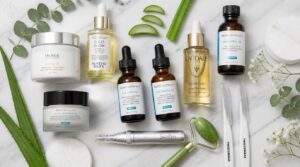
Professional ingrown hair solutions range from targeted serums and exfoliating acids to clinical procedures that stop the problem at the root. Knowing which option fits your skin type and the severity of your ingrowns makes all the difference. Here’s a breakdown of the top 10 solutions worth your attention.
For a closer look at which formulas actually deliver, the best products for ingrown hairs often combine salicylic or glycolic acid with calming ingredients that prevent irritation while clearing blocked follicles.
How Ingrown Hairs Form Under Skin
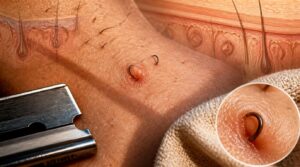
When a shaved hair regrows with a sharper edge, it can curl back and pierce the skin instead of growing outward. That trapped hair acts like a foreign object, triggering hair follicle inflammation and sometimes cystic fluid buildup beneath the surface.
Dead skin and keratin buildup block the follicle pathway, forcing the hair sideways — creating the tender, pimple-like bump you’re dealing with. To manage this, you should avoid self-popping cysts to prevent increased pain and scarring.
Who Gets Ingrown Hairs Most Often
Some people are just built more vulnerable to this problem. Thick, coarse, or curly hair is the biggest risk factor — it naturally curves back toward the skin during regrowth.
Black men who shave facial hair face much higher rates than their white counterparts, a pattern linked to both hair texture and genetic predisposition. Hormonal shifts that increase overall hair volume raise the odds too.
When to Seek Professional Treatment
Knowing your risk profile helps you catch trouble early. Most ingrown hairs resolve with consistent home care, but some cross into dermal infection territory fast.
Seek a dermatologist if you notice spreading redness, pus, fever, or chills — these signal folliculitis or a deeper abscess. Persistent dark marks or bumps that keep cycling back in the same spot also warrant professional evaluation.
What Causes Ingrown Hairs to Keep Returning?
Ingrown hairs rarely happen by accident — there are real, repeatable reasons they keep showing up in the same spots. Your hair type, skincare habits, and even what you wear all play a role. Here are the four most common culprits worth knowing.
Coarse and Curly Hair Vulnerability
Curly hair naturally curves at the follicle level, not just on the surface.
- Curved paths redirect cut tips back toward skin
- Coarse shafts snap instead of bending outward
- Cuticle friction irritates follicles repeatedly
- Porosity shifts change how hair lays post-wash
- Mechanical stress narrows the follicle’s exit path
Thick, coarse strands often break near the skin, leaving sharp tips trapped below.
Dead Skin Cell Buildup and Blockage
Think of your follicle like a drain — when dead skin cell buildup accumulates at the opening, hair has nowhere to go. The stratum corneum naturally sheds surface cells, but when that process slows, keratin and sebum bind together into a plug that redirects growing hair sideways.
When dead skin clogs your follicle like a drain, trapped keratin redirects growing hair sideways
Regular skin exfoliation with salicylic acid or an exfoliating body scrub clears that congestion before it traps you in a cycle.
Improper Shaving and Hair Removal Habits
Shaving mistakes are often the root cause of repeat ingrown hairs. Dull blade drag pulls hair rather than cutting it cleanly, while applying extra pressure or stretching skin too tight causes the shaft to recoil beneath the follicle opening.
Waxing and plucking carry the same risk — both remove hair below the surface, making sideways regrowth almost inevitable.
Tight Clothing Friction and Hormonal Factors
Tight waistbands and synthetic fabrics create skin friction microtrauma along the groin and inner thighs, pushing emerging hairs sideways before they can exit cleanly. Three compounding triggers make it consistently worse:
- Trapped heat and moisture weaken your skin barrier
- Constant clothing pressure compresses follicle openings
- Hormonal surges increase sebum output, deepening blockage
Sweat-induced irritation can escalate into painful folliculitis quickly.
Top 10 Professional Ingrown Hair Solutions
Not every ingrown hair solution is created equal, and what works for one person’s skin may do nothing for another’s. The products below were chosen based on their active ingredients, dermatological backing, and real-world effectiveness across different skin types. Here’s what actually made the cut.
1. High Roller Ingrown Hair Serum
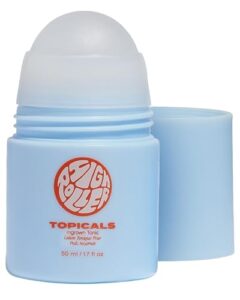
The High Roller Ingrown Hair Serum earns its spot at the top of this list for good reason. Its roll-on applicator delivers salicylic acid and glycolic acid directly to problem areas — no fingers, no mess. Those two acids work together to dissolve dead skin buildup and clear clogged follicles.
Soothing extras like centella asiatica, allantoin, and zinc PCA calm irritation without drying your skin out. At $19.50 for 1.7 oz, it’s alcohol-free, fragrance-free, and vegan — a clean formula that doesn’t compromise.
| Best For | Anyone dealing with razor bumps, ingrown hairs, or post-shave irritation on the face, underarms, bikini line, or legs who wants a clean, no-fuss treatment. |
|---|---|
| Key Active | Salicylic & Glycolic Acid |
| Form Factor | Roll-on serum |
| Primary Concern | Ingrown hairs & razor bumps |
| Product Size | 1.7 fl oz |
| Usage Frequency | 2-3x/week to twice daily |
| Skin Suitability | All skin types |
| Additional Features |
|
- The roll-on applicator keeps things hygienic and precise — no need to touch irritated skin with your fingers
- Salicylic and glycolic acid team up to exfoliate and unclog follicles, while soothing ingredients prevent over-drying
- Alcohol-free, fragrance-free, vegan, and cruelty-free — a genuinely clean formula that works for sensitive skin
- At $19.50, it’s pricier than some drugstore alternatives that use similar active ingredients
- Some users may find it loses effectiveness over time with continuous daily use
- Can cause mild irritation, so you’ll want to ease in slowly (2–3 times a week) before using it more frequently
2. Hyland’s PRID Drawing Salve
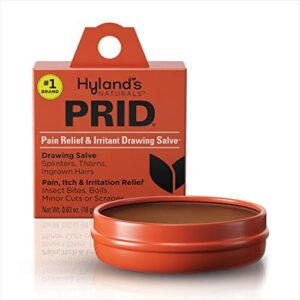
Hyland’s PRID Drawing Salve takes a different approach — it doesn’t exfoliate or kill bacteria. Instead, this homeopathic drawing salve pulls embedded irritants upward through the skin, making it useful when a hair is too deep to reach topically.
Natural ingredients like calendula, echinacea, and arnica soothe surrounding tissue while the salve works. Apply it to a clean, dry area and keep it covered. Fair warning: the texture is thick and the odor is strong, but the 18 g tube earns its place in any first-aid kit.
| Best For | Anyone dealing with deep splinters, ingrown hairs, boils, or embedded irritants that can’t be reached by surface-level treatments. |
|---|---|
| Key Active | Ichthammol |
| Form Factor | Squeeze tube |
| Primary Concern | Embedded debris & boils |
| Product Size | 0.63 oz |
| Usage Frequency | As needed |
| Skin Suitability | All skin types |
| Additional Features |
|
- Draws out splinters, thorns, ingrown hairs, and other embedded debris without invasive digging
- Natural, paraben-free formula with soothing ingredients like calendula, echinacea, and arnica
- No known drug interactions, making it a safe addition to home first-aid kits
- Strong, tar-like odor that many users find unpleasant
- Thick, sticky texture makes it tricky to spread evenly, especially on small areas
- The small tube lid can be stubborn and difficult to open
3. Mario Badescu Drying Blemish Lotion
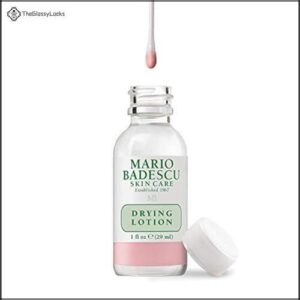
Mario Badescu Drying Lotion works on a simple principle: dry it out overnight. The bi-phase formula separates into a clear liquid and a pink sediment — don’t shake it. Dip a cotton swab straight into the pink layer and dab it directly onto the bump.
Salicylic acid and calamine target pore congestion and redness while sulfur absorbs excess oil. By morning, most surface-level bumps shrink noticeably. One small bottle lasts months with spot-only application.
| Best For | Anyone dealing with sudden, surface-level breakouts who wants a simple, no-fuss overnight spot treatment that actually delivers visible results by morning. |
|---|---|
| Key Active | Salicylic Acid & Sulfur |
| Form Factor | Bi-phase drying lotion |
| Primary Concern | Surface blemishes & acne |
| Product Size | 1 fl oz |
| Usage Frequency | Overnight spot use |
| Skin Suitability | All skin types |
| Additional Features |
|
- Works fast — most blemishes shrink noticeably overnight thanks to the salicylic acid, sulfur, and calamine combo
- A tiny dab goes a long way, so one small bottle can last months of regular spot use
- Clean formula — free of sulfates, parabens, and phthalates, and it’s vegan and cruelty-free
- Only works on active, above-the-skin blemishes — won’t help with blackheads, cystic acne, or prevention
- The bottle can’t be shaken or the two-phase formula loses effectiveness, which makes it a little fussy to use
- Has a strong medicinal smell and can cause dryness or flaking if you apply too much
4. Paula Choice BHA Liquid Exfoliant
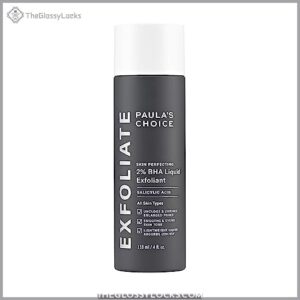
Where the Mario Badescu lotion targets individual spots, Paula’s Choice takes a wider approach — keeping pores clear before bumps even form. The 2% salicylic acid works at a low pH of 3.2–3.8, penetrating the pore lining to dissolve dead skin and trapped sebum. Green tea extract calms any irritation during that process.
Apply it after cleansing, let it absorb, then follow with moisturizer. Use sunscreen daily — BHA increases photosensitivity.
| Best For | Anyone looking to prevent breakouts and keep pores clear with a gentle, daily-use exfoliant that works for all skin types. |
|---|---|
| Key Active | Salicylic Acid 2% |
| Form Factor | Leave-on liquid |
| Primary Concern | Blackheads & enlarged pores |
| Product Size | 4 oz |
| Usage Frequency | Daily morning or evening |
| Skin Suitability | All skin types |
| Additional Features |
|
- 2% salicylic acid penetrates deep into pores to dissolve dead skin and sebum before breakouts form
- Fragrance-free and suitable for all skin types, including sensitive skin
- Versatile enough for morning or evening use and layers well under makeup and sunscreen
- Can cause tingling, dryness, or flaking if you use too much, especially when first starting out
- Daily sunscreen becomes non-negotiable since BHA increases your skin’s sensitivity to the sun
- The dispenser design is a bit messy and can lead to wasted product
5. Neosporin Original Triple Antibiotic Ointment
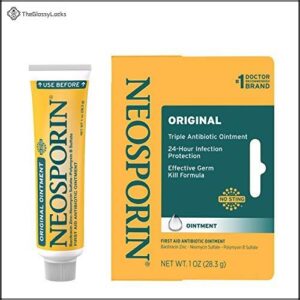
When an ingrown hair turns into an angry, infected bump, Neosporin shifts the focus from exfoliation to damage control. Its triple antibiotic formula — bacitracin zinc, neomycin sulfate, and polymyxin B sulfate — targets bacteria directly, claiming 99.9% germ elimination within 15 minutes.
Apply a small amount one to three times daily. The HeliDerm technology locks in moisture to support healing, while reducing visible scarring over time. It won’t free the trapped hair, but it stops infection from making things worse.
| Best For | Anyone dealing with a minor infected ingrown hair who needs to stop the infection in its tracks and support faster healing. |
|---|---|
| Key Active | Triple Antibiotic Blend |
| Form Factor | Ointment tube |
| Primary Concern | Minor cuts & infection |
| Product Size | 1 oz |
| Usage Frequency | As needed |
| Skin Suitability | All skin types |
| Additional Features |
|
- Triple antibiotic formula kills 99.9% of germs within 15 minutes, making it fast and effective against infection
- HeliDerm technology keeps skin moisturized during healing and helps reduce scarring over time
- Versatile and easy to keep on hand — works great in medicine cabinets, travel kits, or sports bags
- Contains neomycin and bacitracin, which can trigger allergic reactions in people with sensitive skin
- Leaves a greasy, shiny residue that can feel uncomfortable or stain clothing
- Won’t remove the ingrown hair itself — it only manages infection, not the root cause
6. Cortizone 10 Maximum Strength Aloe Cream
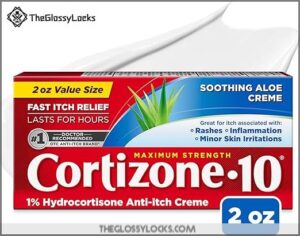
Once the infection is under control, the next priority is calming the inflammation that makes ingrown bumps swell, itch, and linger. Cortizone 10 Maximum Strength Aloe Cream takes care of exactly that. Its active ingredient — hydrocortisone 1% — reduces itching, redness, and swelling directly at the site.
The formula is fragrance-free and dye-free, which matters on already-irritated skin. Aloe barbadensis leaf juice adds a cooling effect, and most people notice relief within about five minutes.
| Best For | Anyone dealing with itching, redness, or swelling from ingrown hairs, bug bites, mild rashes, or other minor skin irritations who wants fast, no-frills relief without fragrances or dyes. |
|---|---|
| Key Active | Hydrocortisone 1% |
| Form Factor | Cream tube |
| Primary Concern | Itching & skin rashes |
| Product Size | 2 oz |
| Usage Frequency | As needed |
| Skin Suitability | Ages 2+, all types |
| Additional Features |
|
- Maximum-strength 1% hydrocortisone tackles itching and inflammation quickly, with most people feeling relief in about five minutes
- Fragrance-free and dye-free formula is gentle enough for already-irritated or sensitive skin
- Compact 2 oz tube is easy to toss in a first-aid kit, gym bag, or travel pouch
- The aloe cooling effect can cause mild burning or stinging if the skin is broken or extra sensitive
- Only suitable for minor irritations — it’s not a replacement for prescription-strength treatments or anything involving infection
- Not recommended for children under 2 or for use over large areas of the body without a doctor’s okay
7. Fur Ingrown Hair Oil
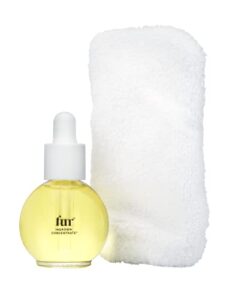
Hydrocortisone controls inflammation well, but prevention needs a different tool. Fur Ingrown Hair Oil takes a daily-use approach — a lightweight mix of tea tree, tamanu, and chamomile extract that softens trapped hairs before they spiral beneath the surface. The omega fatty acids hydrate without grease, and the clean formula skips parabens, silicones, and synthetic fragrance.
It’s gynecologist-tested, which matters for intimate areas. The dropper applicator keeps dosing precise. At 0.5 oz, frequent full-body use will drain the bottle quickly.
| Best For | Anyone prone to ingrown hairs after shaving or waxing — especially those with sensitive skin or who need something safe for intimate areas. |
|---|---|
| Key Active | Tea Tree & Tamanu Oil |
| Form Factor | Dropper oil |
| Primary Concern | Ingrown hairs & irritation |
| Product Size | 0.5 fl oz |
| Usage Frequency | Post hair removal |
| Skin Suitability | Sensitive skin |
| Additional Features |
|
- Tea tree, tamanu, and chamomile work together to soften trapped hairs and calm irritation before it starts
- Clean, gynecologist-tested formula with no parabens, silicones, or synthetic fragrance — safe for sensitive and intimate skin
- Fast-absorbing and non-greasy, so it hydrates without leaving residue
- At just 0.5 oz, the bottle won’t last long if you’re using it on larger areas regularly
- Premium price for a small size may feel steep for budget-conscious shoppers
- Those sensitive to tea tree oil or botanicals should patch test before committing to daily use
8. Neutrogena Salicylic Acid Acne Cleanser
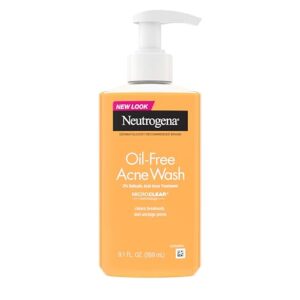
Salicylic acid at 2% concentration is the workhorse here — a BHA that dissolves dead skin cells and unclogs follicles before trapped hairs get a chance to curl back under. Neutrogena’s oil-free formula pairs that active with glycerin, aloe, and chamomile extract to offset dryness during daily morning and nighttime use.
The foaming texture rinses clean without stripping. One caveat: the formula contains fragrance and synthetic dyes, so sensitive skin types should patch-test first.
| Best For | People with oily or acne-prone skin who want a daily cleanser that actively treats and prevents breakouts. |
|---|---|
| Key Active | Salicylic Acid |
| Form Factor | Foaming face wash |
| Primary Concern | Acne & oily skin |
| Product Size | 9.1 fl oz |
| Usage Frequency | Daily AM & PM |
| Skin Suitability | Oily & acne-prone |
| Additional Features |
|
- Salicylic acid (BHA) penetrates pores to dissolve dead skin cells and prevent clogged follicles
- Oil-free and non-comedogenic, so it cleans thoroughly without making breakouts worse
- Soothing ingredients like glycerin, aloe, and chamomile help balance out the drying effects of daily use
- Contains fragrance and synthetic dyes, which may irritate sensitive skin — patch-test first
- Salicylic acid increases sun sensitivity, so daily SPF is a must
- Can cause dryness with regular use, so pairing it with a moisturizer is recommended
9. AHA Ingrown Hair Spray
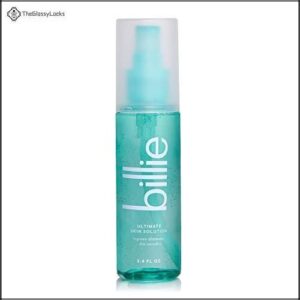
Two acids do the heavy lifting in this spray — AHAs dissolve the dead skin layer sitting on top of trapped hairs, while salicylic acid clears the follicle from within. The all-over spray nozzle covers larger areas like legs and bikini line without the need for aggressive rubbing, which matters when skin is already irritated.
At $17.49 for 3.4 fl oz, it’s practical for routine use. Expect mild tingling on freshly shaved skin — that’s the exfoliating acids working, not a reaction to avoid.
| Best For | Anyone who deals with recurring razor bumps, ingrown hairs, or rough skin after shaving — especially on sensitive areas like the bikini line, underarms, or legs. |
|---|---|
| Key Active | AHAs & BHAs |
| Form Factor | Aerosol spray |
| Primary Concern | Razor bumps & ingrown hairs |
| Product Size | 3.4 fl oz |
| Usage Frequency | Between shaves |
| Skin Suitability | All skin types |
| Additional Features |
|
- Dual-acid formula (AHAs salicylic acid) tackles ingrown hairs both on the surface and inside the follicle
- Spray nozzle makes it easy to cover large areas without rubbing irritated skin
- Dermatologist approved and free from parabens, sulfates, and animal testing
- Can cause mild burning or tingling when applied right after shaving
- The aerosol mist may irritate airways if sprayed too close to the face
- Feels slightly sticky and absorbs more slowly than a typical lotion or moisturizer
10. Thayers Alcohol Free Witch Hazel Toner
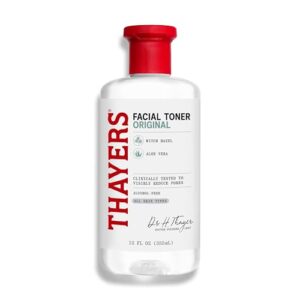
Witch hazel has a long history as a skin-calming staple, and Thayers earns its place on this list for a specific reason — it’s alcohol-free and aloe-enriched, so it soothes irritated follicles without stripping the moisture barrier that freshly shaved skin needs most.
The certified organic witch hazel reduces redness and tightens pores, while aloe vera hydrates immediately. Use it after exfoliating or shaving as a calming prep step before your moisturizer, especially if your skin leans sensitive.
| Best For | Anyone with sensitive, acne-prone, or post-shave skin who wants a gentle, hydrating toner that calms irritation without the harshness of alcohol. |
|---|---|
| Key Active | Witch Hazel & Aloe |
| Form Factor | Toner bottle |
| Primary Concern | Pores & razor burn |
| Product Size | 12 oz |
| Usage Frequency | Daily use |
| Skin Suitability | Sensitive & acne-prone |
| Additional Features |
|
- Alcohol-free formula with aloe vera soothes and hydrates without stripping the skin’s natural moisture barrier
- Certified organic witch hazel tightens pores and reduces redness — great for daily use, even during pregnancy
- Vegan, cruelty-free, and dermatologist-tested, making it a trustworthy pick for sensitive skin types
- Not a standalone moisturizer — dry skin types will need to follow up with a separate hydrating product
- A light fragrance is present, which may be an issue for users who are especially sensitive to scents
- Packaging and label design can vary between shipments, so don’t be surprised if your bottle looks a little different than expected
How We Tested and Picked Each Product

Not every product on shelves earns a spot on this list — each one had to prove itself across three specific criteria before making the cut.
We looked at active ingredients and dermatological backing, compatibility across different skin types, and how practical each product is to actually use. Here’s what that process looked like.
Ingredients and Dermatological Backing
Every product on this list earned its place through its active ingredient profile. BHA pore penetration via salicylic acid, AHA resurfacing through glycolic acid, and benzoyl peroxide’s antibacterial action each target ingrown hairs through distinct, dermatologist-recognized mechanisms.
Corticosteroids like hydrocortisone address inflammation directly, while botanical astringents provide calming support — meaning no filler ingredients, only compounds with documented folliculitis treatment value.
Skin Type Compatibility Criteria
Not every formula works for every skin type, and that mismatch alone can make ingrowns worse.
Each product was assessed across four compatibility factors:
- Moisture balance needs — dry skin requires hydrating carriers; oily skin needs lighter textures
- Sensitivity tolerance — fragrance-free, low-irritant formulas protect the skin barrier function
- Pore-clogging risk — noncomedogenic options only for acne-prone types
- Curly hair texture — coarser hair needs consistent exfoliation support
Ease of Use and Application Method
A product that’s hard to apply won’t get used consistently — and consistency is everything with ingrown hair care.
Precision applicators, like squeeze tubes and pointed tips, help you target individual bumps without spreading actives onto healthy skin. Drying lotions absorb quickly; thicker salves stay put. Most spot treatments work best applied at night, left undisturbed while you sleep.
What Ingredients Actually Treat Ingrown Hairs?

Not every ingredient earns its place on an ingrown hair label. The ones that actually work have a clear job — clearing pores, resurfacing skin, or calming the inflammation that makes things worse. Here’s what to look for and why each one matters.
Salicylic Acid BHA for Pore Clearing
Salicylic acid is a beta hydroxy acid that’s oil-soluble — meaning it can actually penetrate into sebum-filled pores.
- Dissolves dead skin inside follicles
- Breaks down pore-clogging debris bonds
- Prevents new blackhead formation
- Calms redness in active bumps
- Available in 0.5%–2% OTC formulas
That keratolytic action keeps congestion from building up and makes pores look visibly smaller with consistent use over time.
Glycolic Acid AHA for Skin Resurfacing
Where salicylic acid works inside the pore, glycolic acid works on top — clearing the surface barrier that traps hairs underneath. As an alpha hydroxy acid, it weakens corneodesmosomes, the bonds holding dead cells together, so built-up layers shed more readily.
Its small molecular size lets it penetrate deeper than most AHAs, supporting skin cell turnover and, with consistent use, fading post-bump hyperpigmentation within weeks.
Benzoyl Peroxide for Bacterial Bumps
While glycolic acid clears the surface, some bumps run deeper — driven by bacteria, not just blockage.
Benzoyl peroxide kills bacteria through oxidative activity, damaging bacterial components directly inside the follicle. Unlike antibiotics, it carries no resistance risk.
Three things worth knowing:
- 2.5–5% concentrations suit sensitive skin
- Twice-daily application targets active bumps
- Expect dryness — start slow to manage skin irritation
Witch Hazel and Calamine Soothing Properties
Once bacteria are addressed, the skin still needs calming. That’s where witch hazel and calamine step in — not to treat the root cause, but to quiet the aftermath.
Witch hazel’s tannin astringency tightens irritated tissue, reducing redness and that persistent burning sensation. Calamine works as a skin barrier protectant, absorbing excess fluid while visibly cooling inflamed bumps — giving your skin a moment to recover without added irritation.
Hydrocortisone for Inflammation and Itching
When an ingrown hair turns into a red, itchy welt, hydrocortisone 1% cream calms the immune response driving that inflammation.
It works best when the bump isn’t infected — just angry. Apply a small amount directly to the irritated skin up to four times daily:
- Targets itch and redness fast
- Reduces localized swelling
- Safe for short-term use only
How to Prevent Ingrown Hairs While Shaving
Preventing ingrown hairs really comes down to what you do before, during, and after you shave. Small adjustments to your routine can make a significant difference in how your skin reacts to hair removal. Here’s what actually works.
Shave After Showering for Softer Skin

Your razor works best when hair is already halfway defeated. Warm shower steam rehydrates coarse hair, making each strand softer and easier to cut cleanly without repeated passes. That reduced drag means less pulling at the follicle — exactly where ingrown hairs start.
Shave promptly after stepping out, while skin stays pliable, before moisture evaporates and hair stiffens again.
Always Shave in Hair Growth Direction
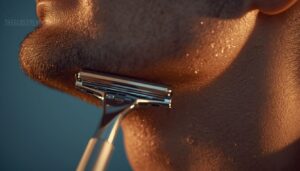
Direction matters more than pressure. Run your fingers over a regrown area — if it feels rough, you’re moving against the grain. Hair grows in different directions across zones like the neck or bikini line, so map each area separately before shaving.
Cutting with the grain keeps sharp tips from curling sideways under the skin, which is exactly how razor bumps start.
Replace Razors Every Three to Five Shaves
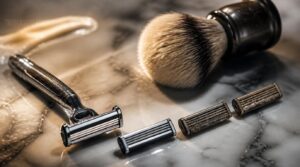
A dull blade doesn’t just shave poorly — it drags, tugs, and leaves jagged hair edges that curl back into the skin. After three to five shaves, debris and skin oils cling to the edge, making each pass dirtier than the last.
Swapping blades on schedule means cleaner cuts, fewer nicks, and less chance of bacteria slipping into irritated follicles.
Exfoliate Two to Three Times Weekly
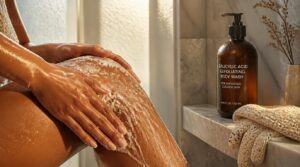
Dead skin is the silent gatekeeper blocking new hair from growing upward. Clearing it 2–3 times weekly keeps follicles open before hairs ever get the chance to curl sideways.
Salicylic acid body washes handle this well for oily skin — they penetrate the pore lining rather than just buffing the surface. Sensitive skin does better starting once weekly, then building from there.
Wear Loose Breathable Fabrics After Shaving
What you wear after shaving matters more than most people realize. Tight fabric compresses freshly shaved skin, trapping heat and moisture against sensitive follicles — exactly the conditions that trigger inflammation.
Choose post-shave clothing wisely:
- Loose cotton reduces skin-on-fabric friction
- Breathable fabrics improve airflow and lower heat buildup
- Moisture-wicking materials pull sweat away from vulnerable skin
- Non-compressive fits let irritated follicles settle without disruption
When Do Professionals Remove Ingrown Hairs?

Sometimes, home remedies just don’t cut it — and that’s exactly when a dermatologist steps in. Professional options range from quick cortisone injections to more permanent solutions like laser hair removal. Here’s what clinical care actually looks like when your skin needs more than a serum.
Dermatologist Cortisone and Antibiotic Options
When an ingrown hair becomes deeply inflamed, a dermatologist may inject cortisone directly into the bump to shrink swelling fast. For bacterial involvement — think pus, spreading redness, or warmth — topical or oral antibiotics target the infection cortisone can’t touch.
Prolonged steroid use risks skin thinning, so dermatologists limit duration carefully, matching each treatment to whether the lesion is inflamed, infected, or both.
Laser Hair Removal for Chronic Cases
Where antibiotics treat infection, laser hair removal eliminates the source entirely. Concentrated light — at 600–1200 nm wavelengths — is absorbed by melanin in the follicle, progressively damaging it across sessions spaced 4–8 weeks apart to align with growth cycle timing.
Clinicians weigh several factors before treating:
- Melanin absorption levels in both hair and surrounding skin
- Hair-to-skin tone contrast for safe targeting
- Skin tone safety through adjusted energy settings
- Body area, since density and pigment vary
- Treatment session intervals matched to your hair’s growth phase
Fewer active follicles means fewer opportunities for folliculitis to develop.
Incision and Drainage for Severe Abscesses
Laser sessions reduce follicles; when an ingrown hair becomes a deep, pus-filled abscess, the approach shifts entirely.
A clinician numbs the area using local anesthetic injected around the site, makes a linear incision along the abscess length with a scalpel, then irrigates the cavity with saline. Packing gauze controls the wound, and healing happens gradually through secondary intention.
Microdermabrasion for Improved Skin Texture
Once the wound from drainage has healed, microdermabrasion helps rebuild what infection leaves behind. A diamond-tipped device buffs away dead surface cells, clearing the keratin buildup that traps new hair growth.
Over a series of sessions, skin texture improves progressively — pores look refined, shallow acne scars soften, and tone brightens as fresher skin emerges. It’s resurfacing, not a quick fix.
Signs an Ingrown Hair Needs Clinical Care
Some ingrown hairs simply won’t respond to home care — and your skin will tell you when that threshold is crossed. Spreading redness, pus drainage, or red streaks extending outward signal bacterial infection requiring dermatologist attention. Fever or feeling unwell alongside a swollen bump points to systemic involvement.
Redness and pustules persisting beyond a week, or recurring folliculitis in the same spot, warrant professional treatment.
Frequently Asked Questions (FAQs)
How do professionals remove ingrown hairs?
Back in the barber’s day, a hot towel and a steady hand solved everything. Now, professionals use sterile extraction tools — needles, scalpels, or comedone extractors — sometimes under local anesthesia, then clean the area to support healing.
Can estheticians remove ingrown hairs?
Yes, licensed estheticians can remove superficial ingrown hairs using sterile tools, but only when the hair is visible and non-infected. Deeply embedded or infected cases require a dermatologist.
Can ingrown hairs cause permanent scarring if untreated?
An ounce of prevention is worth a pound of cure. Untreated ingrown hairs can cause permanent dark spots or raised scars — especially when prolonged inflammation reaches deeper skin layers or a bacterial infection sets in.
Sun protection matters even post-treatment — wearing sunscreen year-round helps prevent UV rays from darkening healing skin and making scars more stubborn.
A gentle scalp massage with your fingertips can also help dislodge trapped sand or debris before it irritates hair follicles, a simple habit detailed in this guide on how to get sand out of hair.
Are ingrown hair treatments safe during pregnancy?
Some treatments need extra caution during pregnancy. Salicylic acid and chemical exfoliants should only be used with clinician approval, as absorption increases over large areas. Stick to warm compresses and gentle physical exfoliation until your doctor weighs in.
How long does it take ingrown hairs to heal?
Mild cases clear up in 3 to 7 days. With more inflammation, expect 1 to 2 weeks. Infected or cyst-like bumps can take 4 to 6 weeks, especially if picked at.
Do ingrown hairs go away on their own naturally?
Like a splinter working its way out, mild ingrown hairs often resolve naturally as the trapped hair finds its path to the surface — but deeper, infected bumps rarely disappear without some form of targeted treatment.
Can ingrown hairs spread to surrounding skin areas?
Ingrown hairs don’t spread like a rash, but localized inflammation can extend beyond the follicle. If bacteria enter, folliculitis may develop — causing redness, pustules, and warmth in the surrounding skin.
Conclusion
The best time to plant a tree was twenty years ago; the second best is now.
Your skin doesn’t need to keep suffering through painful, recurring bumps when the right tools exist. The professional ingrown hair solutions covered here target blocked follicles, bacterial buildup, and compromised barriers—not just surface symptoms.
Pick one product, stay consistent, and pair it with smarter shaving habits. Real results don’t happen overnight, but they do happen.
- https://www.pzlaser.com/does-dermatologist-remove-ingrown-hair
- https://www.trulybeauty.com/blogs/body/can-dermatologists-remove-ingrown-hairs
- https://www.nbcnews.com/select/shopping/best-ingrown-hair-treatments-prevention-rcna101598
- https://castlederm.com/ingrown-hairs
- https://patrolgrooming.com/blogs/patrol-grooming/ingrown-hair-treatment-for-men-5-methods-that-actually-work-in-2026